
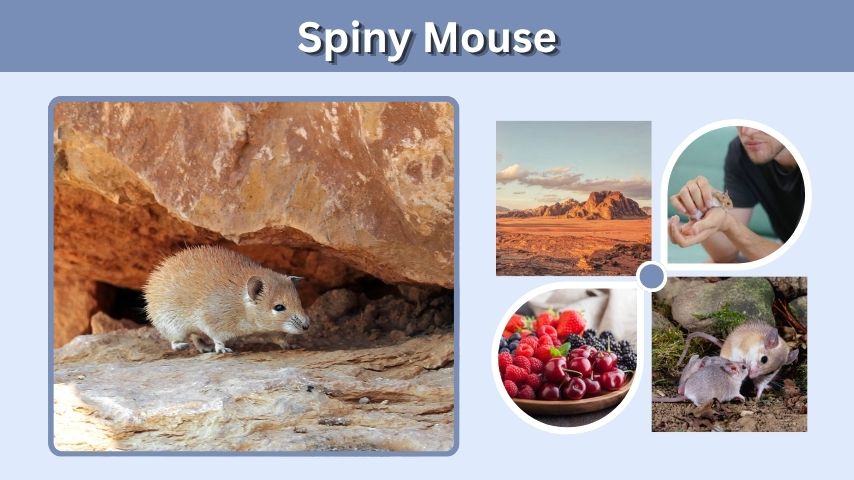
The spiny mouse is a small rodent known for its stiff, bristle-like fur, desert survival skills, and unusual healing ability. Several species belong to the genus Acomys, including the African spiny mouse, Cairo spiny mouse, Egyptian spiny mouse, and golden spiny mouse. These animals interest pet keepers, biologists, and medical researchers because of their adaptations, behavior, and remarkable tissue regeneration.
What Is a Spiny Mouse?
A spiny mouse is a small rodent in the genus Acomys. Although it looks similar to a common house mouse at first glance, it has a rougher coat, larger ears, and a more delicate body structure. The “spiny” name comes from the stiff guard hairs along the back, which can feel coarse compared with the soft fur of many other mice.
Spiny mice are native to parts of Africa, the Middle East, and nearby regions. They are often linked with dry, rocky, or desert-like habitats, although exact habitat preferences vary by species. Some live in rocky outcrops, scrubland, dry grasslands, and areas close to human settlements.
Main Physical Features
Spiny mice are usually small, quick, and alert. Their body shape helps them move through rocky spaces and avoid predators. Their large eyes and ears also support nighttime activity.
Common features include:
- Stiff, spiny hairs on the back
- Softer fur on the belly
- Large rounded ears
- Long whiskers
- Slender tail
- Quick, nervous movement
- Strong climbing and hiding behavior
The tail is more fragile than many people expect. In some spiny mice, the tail or skin can tear easily as a defense response, which helps the animal escape predators.
Spiny Mouse vs Common Mouse
A spiny mouse is not just a regular mouse with rough fur. It has different adaptations, different care needs in captivity, and unique biological traits. Compared with common laboratory mice, spiny mice are especially notable for wound healing, skin regeneration, and reproductive biology.
| Feature | Spiny Mouse | Common House Mouse |
| Coat | Coarse, bristle-like hairs on the back | Softer fur |
| Habitat | Often dry, rocky, desert, or scrub areas | Highly adaptable around humans |
| Tail/Skin | More fragile in some species | Less likely to tear easily |
| Research Interest | Regeneration, menstruation, development | Genetics, disease models, behavior |
| Pet Care | Needs careful handling and warm, dry housing | More widely kept and studied |
Where Does the African Spiny Mouse Live?
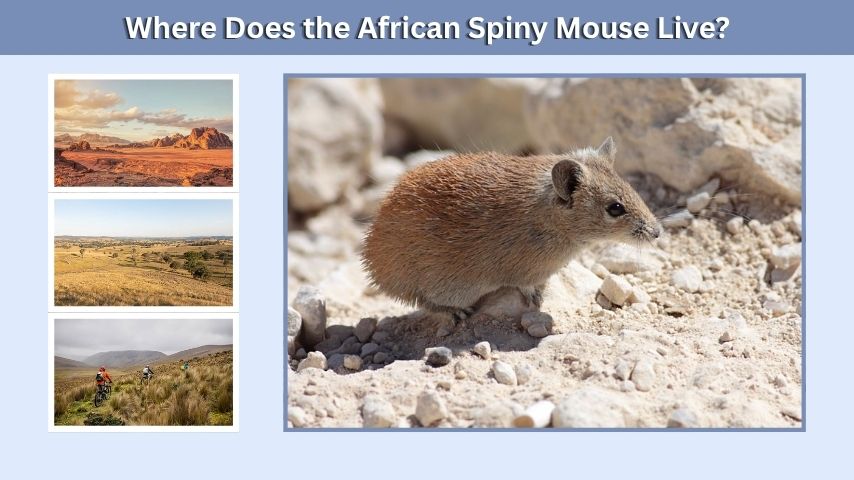
The African spiny mouse lives in parts of Africa and nearby regions, depending on the exact species. Many spiny mice prefer warm, dry habitats where they can hide among rocks, roots, shrubs, and crevices. Their small bodies and quick movement help them escape into narrow spaces.
The phrase “African spiny mouse” is often used broadly, but it can refer to different Acomys species. Some are found in North Africa, East Africa, or parts of the Middle East. The Cairo spiny mouse, also called the Egyptian spiny mouse, is one of the better-known species.
Natural Habitat
Spiny mice are often associated with arid and semi-arid environments. They may live in rocky deserts, dry grasslands, scrublands, savannas, and areas near farms or villages. Rocks and vegetation provide shelter from predators and harsh weather.
They usually need:
- Warm temperatures
- Dry shelter
- Hiding spaces
- Access to seeds, insects, and plant material
- Protection from larger predators
- Nesting areas in cracks, burrows, or sheltered corners
In the wild, spiny mice must avoid snakes, owls, foxes, cats, and other predators. Their speed, hiding behavior, and fragile skin defense may all help them survive.
Cairo and Egyptian Spiny Mouse
The Cairo spiny mouse and Egyptian spiny mouse are commonly associated with Acomys cahirinus. This species is important in both animal care and scientific research. It has been studied for unusual reproductive biology and tissue repair.
The Egyptian spiny mouse is especially interesting because researchers have used it to study menstruation-like reproductive cycles. This makes it different from many standard laboratory rodents, which do not naturally menstruate in the same way.
Spiny Mouse Diet and Feeding Habits

Spiny mice are generally omnivores. In the wild, they may eat seeds, grains, leaves, roots, fruits, insects, and other small food sources. Their diet changes depending on season, location, and food availability.
A wild spiny mouse must be flexible. In dry habitats, food can be limited, so these animals may rely on seeds, dry plant matter, and occasional insects. Their ability to use different foods helps them survive in harsh environments.
What Spiny Mice Eat in the Wild
A natural spiny mouse diet may include:
- Seeds and grains
- Dry grasses
- Fruits and berries when available
- Leaves and shoots
- Roots and plant fragments
- Insects and larvae
- Small amounts of other protein sources
They are usually active when temperatures are cooler, often in the evening or night. This helps reduce water loss and avoid daytime heat.
Feeding Spiny Mice in Captivity
Pet spiny mice need a balanced diet that supports their energy, teeth, digestion, and natural behavior. A suitable diet often includes a high-quality rodent mix, small seeds, limited fruits, vegetables, and occasional protein.
Fresh water should always be available. Sweet fruit and fatty seeds should be limited because small rodents can gain weight quickly. Any new food should be introduced gradually to avoid digestive upset.
Spiny Mouse Adaptations
Spiny mice have several adaptations that help them live in warm, dry, predator-filled environments. Their adaptations include physical traits, behavior, and unusual healing responses.
Their spiny coat may help protect them from bites or make them harder for predators to grip. Their quick movement and hiding behavior also help them escape danger. Some species have skin that tears more easily than typical mouse skin, allowing them to slip away if caught.
Desert and Survival Adaptations
Many spiny mice are adapted to dry regions. They are often active during cooler periods and hide during intense heat. They also use rocky spaces and sheltered nests to avoid predators and temperature extremes.
Important adaptations include:
- Nocturnal or crepuscular activity
- Ability to hide in narrow spaces
- Coarse protective fur
- Fast escape behavior
- Flexible diet
- Low-profile movement along rocks and ground cover
- Careful nesting in protected spaces
These traits make the spiny mouse well suited to dry habitats where food, water, and shelter can be unpredictable.
Skin Shedding and Autotomy
One of the most unusual spiny mouse traits is skin fragility. Some spiny mice can lose patches of skin when grabbed by a predator. This is sometimes described as autotomy, which means sacrificing a body part or tissue to escape.
Unlike many mammals, spiny mice can repair damaged skin with reduced scarring. This has made them important in regeneration research. Scientists study them to better understand why some mammals scar badly while spiny mice can restore skin, hair follicles, and other tissue structures more effectively.
Spiny Mouse Regeneration
Spiny mouse regeneration is one of the biggest reasons these animals are studied. Researchers have found that Acomys species can heal skin injuries in unusual ways compared with standard laboratory mice. They can repair wounds with less scarring and regenerate tissue in the ear and skin.
This does not mean a spiny mouse is indestructible. It can still be injured, stressed, or infected. However, its healing ability is remarkable for a mammal.
Why Scientists Study Spiny Mouse Healing
Most mammals heal deep wounds by forming scar tissue. Scar tissue closes the wound, but it does not fully restore the original structure. In spiny mice, healing can involve more complete tissue repair.
Researchers study spiny mice to learn about:
- Scarless wound healing
- Skin regeneration
- Hair follicle regrowth
- Ear tissue repair
- Immune response during healing
- Fibrosis reduction
- Regenerative medicine possibilities
Understanding these processes may help future research into human wound healing, burns, organ damage, and scarring. However, human medical applications are still a research goal, not a guaranteed outcome.
Skin and Ear Regrowth
Studies on spiny mice have reported impressive repair of skin and ear tissue. In some cases, damaged tissue can regrow with structures such as hair follicles, glands, cartilage, and muscle-related tissue. This is unusual among adult mammals.
This ability has made Acomys a valuable model for comparing normal scarring with regeneration. Scientists want to understand which genes, cells, and immune signals allow better repair.
Spiny Mouse Reproduction and Menstruation
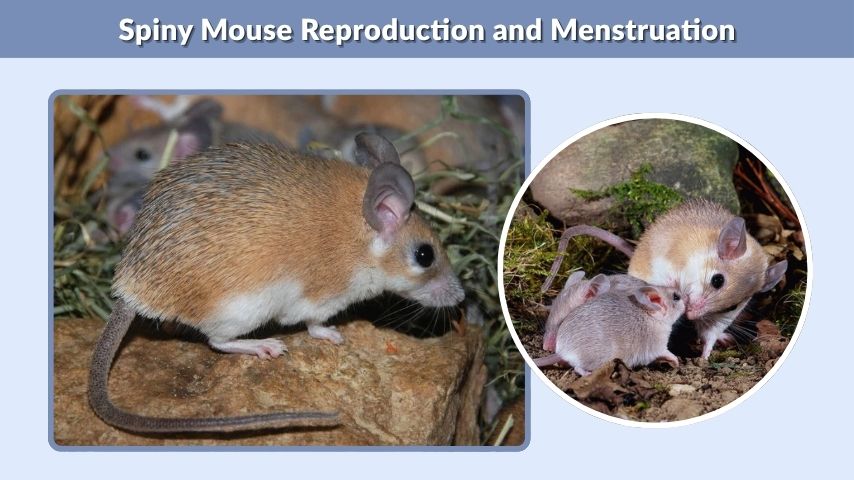
The Egyptian spiny mouse has attracted attention because of its reproductive biology. It has been described in scientific research as a rodent with a menstruation-like cycle. This makes it useful for studying reproductive health questions that are harder to examine in standard mouse models.
Most common laboratory rodents have an estrous cycle rather than a menstrual cycle. Because of this, researchers often need other models to study menstrual biology. The spiny mouse offers a potential bridge between rodent research and human reproductive studies.
Why Menstruation Research Matters
Menstruation research can help scientists understand fertility, uterine health, endometriosis, menstrual disorders, pregnancy, and postpartum reproductive changes. A small rodent model with menstruation-like traits can make certain studies more practical.
Still, this research area is developing. Scientists continue to investigate how closely spiny mouse reproductive biology matches human menstruation and where the differences are important.
Pregnancy and Young
Spiny mice tend to give birth to relatively developed young compared with many other rodents. The babies may be born with fur, open eyes, and more advanced movement. This is different from common mice, whose pups are born hairless and helpless.
This reproductive pattern is another reason spiny mice interest researchers studying development, pregnancy, and early life biology.
Spiny Mouse as a Pet
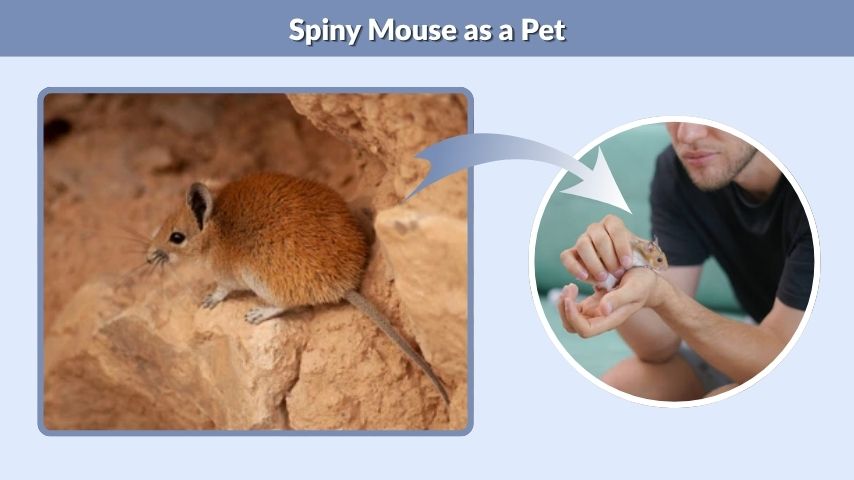
Some people keep spiny mice as exotic pets, but they are not ideal for everyone. They are fast, delicate, and can be easily stressed by rough handling. Their skin and tail require extra care, and they should not be picked up by the tail.
Before keeping a spiny mouse, it is important to check local laws, ethical sourcing, and availability of veterinary care. Exotic pet ownership should never support illegal wildlife trade.
Basic Care Needs
Spiny mice need a secure enclosure with warmth, ventilation, dry bedding, hiding spaces, and climbing opportunities. They are social animals in many situations, but introductions should be managed carefully to prevent fighting.
Basic care needs include:
- Escape-proof enclosure
- Warm, dry environment
- Hiding boxes and tunnels
- Safe climbing branches or platforms
- Dust-free bedding
- Balanced rodent diet
- Constant fresh water
- Gentle, minimal handling
- Exotic animal veterinary support
They should be handled carefully and calmly. Sudden grabbing can cause stress or injury.
Lifespan and Health
A spiny mouse lifespan can vary by species, genetics, diet, care, and environment. In captivity, they may live several years when properly cared for. Poor housing, stress, bad diet, and unsafe handling can shorten lifespan.
Common health concerns may include skin injuries, overgrown teeth, respiratory problems, parasites, obesity, and stress-related behavior. Because they are less common than standard pet mice, finding an experienced veterinarian is important.
Types of Spiny Mice
There are many spiny mouse species, and common names can be confusing. Some names refer to Acomys species, while others may refer to different rodent groups.
Well-Known Acomys Species
Commonly searched spiny mice include the African spiny mouse, Cairo spiny mouse, Egyptian spiny mouse, golden spiny mouse, Arabian spiny mouse, Cretan spiny mouse, Cyprus spiny mouse, and Turkish or Asia Minor spiny mouse.
These animals may differ in size, color, range, behavior, and habitat. For example, the golden spiny mouse is often associated with rocky desert areas and has a warmer golden-brown coat.
Spiny Pocket Mouse Is Different
The spiny pocket mouse is not the same as an Acomys spiny mouse. Spiny pocket mice belong to a different rodent group and are found in the Americas. They share a similar common-name feature because of their coarse hairs, but they are not the same animal as the African or Egyptian spiny mouse.
This distinction matters for care, biology, habitat, and research. Someone searching for “spiny pocket mouse” may be looking for a different species entirely.
FAQs
What is a spiny mouse?
A spiny mouse is a small rodent from the genus Acomys. It is known for coarse, bristle-like fur on its back, quick movement, desert adaptations, and unusual healing ability. Some species are also important in regeneration and reproductive biology research.
Where does the African spiny mouse live?
African spiny mice live in parts of Africa and nearby regions, depending on the species. They are often found in warm, dry habitats such as rocky deserts, scrublands, grasslands, and areas near human settlements where shelter and food are available.
Why is the spiny mouse important in research?
The spiny mouse is important because some Acomys species can heal skin and ear injuries with less scarring than typical mammals. Researchers study them to understand regeneration, wound repair, fibrosis, skin healing, and reproductive biology.
Can a spiny mouse be kept as a pet?
Yes, some spiny mice are kept as exotic pets, but they need careful handling, secure housing, a warm dry environment, and proper diet. They are delicate animals, and owners should check local rules and find an exotic animal veterinarian before keeping them.
Is a spiny pocket mouse the same as a spiny mouse?
No. A spiny pocket mouse is different from an Acomys spiny mouse. The name sounds similar because both may have coarse hairs, but they belong to different rodent groups and have different habitats, behavior, and care needs.