

A house mouse may look small, but one mouse in the house can quickly turn into a bigger problem. These rodents search for food, warmth, and shelter, especially around kitchens, basements, garages, attics, and wall voids. Knowing the signs of a house mouse infestation helps you act early, protect your home, and prevent mice from returning after removal.
What Is a House Mouse?
A house mouse is a small rodent that commonly lives near people. It can enter homes through tiny openings and survive on crumbs, stored food, pet food, seeds, and household scraps. Because house mice are active mostly at night, homeowners often notice the evidence before seeing the mouse itself.
House mice are adaptable. They can nest behind appliances, inside cabinets, under furniture, in insulation, or inside cluttered storage areas. Once they find a steady food source and a quiet nesting spot, they may stay and reproduce.
What Does a House Mouse Look Like?
A typical house mouse has a small body, large ears, a pointed nose, and a long thin tail. Its fur is usually grayish-brown, though color can vary. House mice are smaller than rats and often move quickly along walls, baseboards, and hidden edges.
Common features include:
- Small body with a slender shape
- Gray, brown, or dusty-colored fur
- Large ears compared with body size
- Pointed nose
- Long tail
- Quick movements, especially at night
If you see a mouse during the day, it may suggest that hiding spaces are crowded or food competition is high.
Signs of a Mouse in the House

A mouse in the house often leaves behind several warning signs. Since mice avoid open areas, you may not see them directly at first. Instead, look for droppings, scratching noises, gnaw marks, nesting material, and strange smells.
Common House Mouse Infestation Signs
The most common signs include:
- Small dark droppings near food, cabinets, drawers, or baseboards
- Scratching or squeaking sounds inside walls or ceilings
- Chewed food packaging
- Gnaw marks on wood, plastic, cardboard, or wires
- Shredded paper, fabric, or insulation used for nests
- Greasy rub marks along walls or entry paths
- Musky odor in enclosed areas
- Pet behavior focused on cabinets, walls, or appliances
Fresh activity usually appears near kitchens, pantries, garages, and utility rooms. Check hidden places carefully because mice prefer protected routes.
House Mouse Feces and Droppings
House mouse feces are one of the clearest signs of mouse activity. Droppings are usually small, dark, and pellet-shaped. They are often found where mice travel or feed, including kitchen drawers, pantry shelves, under sinks, behind stoves, and along wall edges.
What Do House Mouse Droppings Look Like?
House mouse droppings are usually smaller than rat droppings and may look like tiny dark grains. Fresh droppings can appear darker and slightly shiny, while older droppings may look dry, dusty, or grayish.
| Sign | What It May Mean | Where to Check |
| Small dark droppings | Active mouse movement | Cabinets, drawers, pantries |
| Chewed food bags | Feeding activity | Food storage areas |
| Scratching sounds | Mice inside walls or ceilings | Nighttime listening areas |
| Shredded material | Nest building | Attics, closets, garages |
| Gnaw marks | Tooth wear and entry attempts | Wood, wires, boxes, trim |
Avoid sweeping or vacuuming mouse droppings without caution. Disturbing dry droppings can spread dust and contaminants. Wear gloves, ventilate the area, and clean with disinfectant.
Why House Mice Come Inside

House mice enter homes because they need food, water, warmth, and shelter. Even a clean home can attract mice if there are entry points or accessible food sources. Cold weather, nearby construction, overgrown vegetation, or outdoor food sources can also push mice indoors.
Common Things That Attract Mice
Mice may be drawn to:
- Open food containers
- Crumbs under appliances
- Pet food left out overnight
- Birdseed stored in garages
- Trash without tight lids
- Cluttered storage areas
- Gaps around doors, pipes, and vents
- Warm nesting spots in insulation or boxes
A mouse does not need a large hole to get inside. Small gaps around utility lines, foundation cracks, garage doors, and exterior vents can be enough.
How to Get Rid of a Mouse in Your House
Getting rid of a mouse in your house requires more than setting one trap. The best approach is to remove food sources, find entry points, place traps correctly, and clean up activity areas. If there are many mice, professional help may be needed.
Step 1: Inspect the Home
Start by finding where mice are active. Look for droppings, gnaw marks, rub marks, and nesting material. Focus on kitchens, pantries, basements, garages, attics, laundry rooms, and areas behind appliances.
Pay attention to walls and corners. Mice usually travel along edges instead of crossing open rooms.
Step 2: Remove Food Sources
Food control is one of the most important steps. If mice can keep eating, they are more likely to stay.
Helpful steps include:
- Store dry food in sealed containers.
- Clean crumbs under stoves and refrigerators.
- Put pet food away at night.
- Use trash cans with tight lids.
- Avoid leaving fruit or snacks uncovered.
- Store birdseed and grass seed in hard containers.
Good sanitation does not remove mice instantly, but it makes trapping and prevention more effective.
Step 3: Use Traps Correctly
Mouse traps work best when placed along walls, behind appliances, near droppings, and close to suspected travel routes. Since mice often run along edges, trap placement matters more than the number of traps.
Use several traps instead of one. Place them where activity is strongest, and check them daily. Always follow product instructions and keep traps away from children and pets.
Step 4: Seal Entry Points
After reducing indoor activity, seal the openings mice use to get inside. If you seal too early without trapping, mice may remain trapped inside walls or living spaces.
Focus on:
- Gaps around pipes
- Cracks in the foundation
- Holes near vents
- Spaces under doors
- Garage door gaps
- Openings around utility lines
- Damaged screens or exterior trim
Use durable materials such as metal mesh, steel wool with sealant, hardware cloth, and exterior-grade caulk where appropriate. Mice can chew through weak materials like foam alone.
House Mouse vs Deer Mouse

Many homeowners search for house mouse vs deer mouse because both can enter buildings. While they may look similar at a glance, there are differences in appearance, behavior, and where they are commonly found.
Key Differences
A house mouse is usually grayish-brown and strongly associated with human buildings. A deer mouse often has a more two-toned body, with a darker back and lighter underside. Deer mice are more common in rural, wooded, or outdoor areas, though they may enter cabins, sheds, garages, and homes.
House mice usually nest close to food sources inside homes. Deer mice are more often linked with outdoor nesting but may move indoors for warmth and shelter.
If you are unsure which mouse is present, focus on safe cleanup and proper exclusion. Identification can help, but the main steps are still inspection, sanitation, trapping, and sealing.
Mouse Nest in House
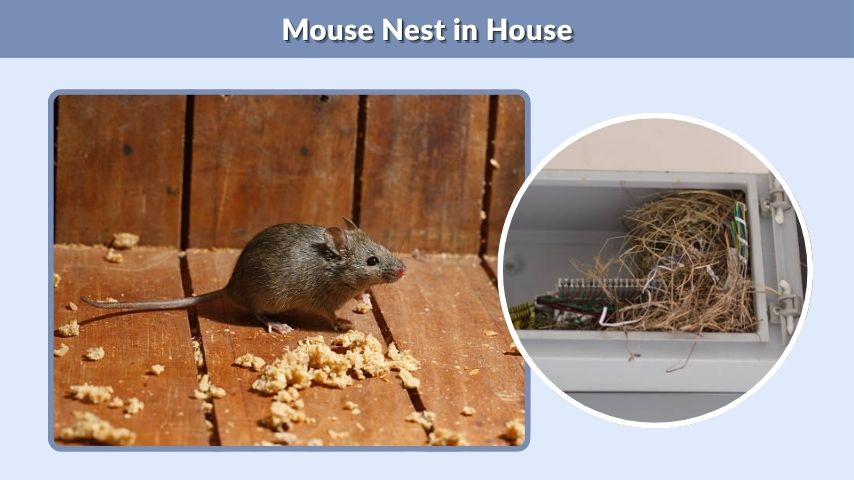
A mouse nest in the house is usually made from soft, shredded materials. Mice may use paper, fabric, insulation, cardboard, string, or stuffing. Nests are often hidden in quiet places where people rarely disturb them.
Common Nesting Areas
Check these areas if you suspect nesting:
- Behind kitchen appliances
- Inside cabinets
- Under furniture
- In attic insulation
- Behind stored boxes
- Inside garage clutter
- In wall voids
- Near water heaters or utility areas
Finding a nest usually means the problem has been present for some time. Clean the area carefully, remove contaminated materials when safe, and address the entry points that allowed mice inside.
Are House Mice Dangerous?
House mice can create health and safety concerns. They may contaminate food, surfaces, drawers, and storage areas with droppings and urine. They can also damage property by chewing packaging, insulation, wood, and wiring.
Risks Linked to House Mice
Possible risks include:
- Food contamination
- Allergens from urine and droppings
- Damage to stored items
- Chewed electrical wiring
- Odors from nesting areas
- Rapid population growth
- Stress and discomfort for homeowners
Not every mouse sighting means a severe infestation, but it should be taken seriously. A small problem is much easier to solve than a large one.
How to Keep a Mouse Out of Your House
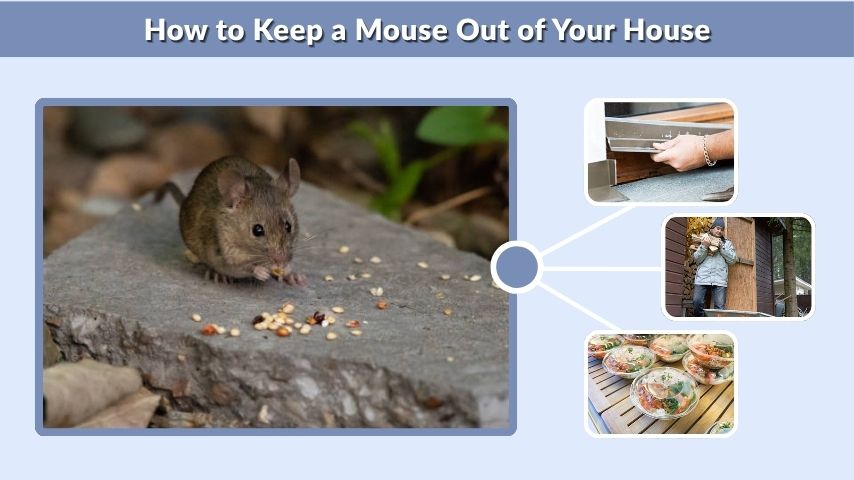
Mouse prevention is the most reliable long-term solution. Once mice are removed, your goal is to make the home harder to enter and less attractive.
Prevention Tips That Work
To keep mice out:
- Seal gaps larger than a small crack.
- Install door sweeps on exterior doors.
- Repair damaged vents and screens.
- Keep grass and vegetation trimmed near the foundation.
- Move firewood away from the house.
- Store food in sealed containers.
- Clean kitchen floors and counters regularly.
- Keep garages and storage rooms organized.
- Remove standing clutter where mice can hide.
Outdoor maintenance matters because mice often start near the foundation before entering through gaps.
When to Call a Professional
A single mouse may be handled with careful trapping and exclusion, but some situations require professional pest control. If you hear frequent scratching, see many droppings, smell strong odors, or continue catching mice after several days, the infestation may be larger than expected.
You should also consider professional help if mice are entering through hard-to-find gaps, nesting in walls, or returning after repeated DIY attempts. A pest control expert can inspect the structure, identify entry points, and build a more complete removal and prevention plan.
FAQs
How do I know if I have a house mouse?
You may have a house mouse if you see small dark droppings, chewed food packaging, scratching sounds at night, nesting material, or greasy marks along walls. Mice often hide during the day, so signs are usually noticed before the actual mouse appears.
How do I get rid of a mouse in the house fast?
Start by removing food sources, cleaning crumbs, placing traps along walls where activity is visible, and checking traps daily. Then seal entry points after activity is reduced. For heavy activity, repeated sightings, or nests, professional pest control may be the fastest and safest option.
What do house mouse droppings look like?
House mouse droppings are small, dark, and pellet-shaped. They are often found in cabinets, drawers, pantries, behind appliances, and along baseboards. Fresh droppings may look darker, while older droppings can appear dry or dusty. Always clean droppings carefully with gloves and disinfectant.
What is the difference between a house mouse and a deer mouse?
A house mouse is usually grayish-brown and commonly lives close to people inside buildings. A deer mouse often has a darker back, lighter belly, and is more common around rural or wooded areas. Both can enter homes and should be handled with safe cleanup and exclusion methods.
Will one mouse leave on its own?
One mouse may not leave if it has food, shelter, and access to nesting areas. Even a single mouse can indicate entry points or hidden activity. It is better to inspect, trap, clean, and seal gaps early instead of waiting for the problem to grow.