
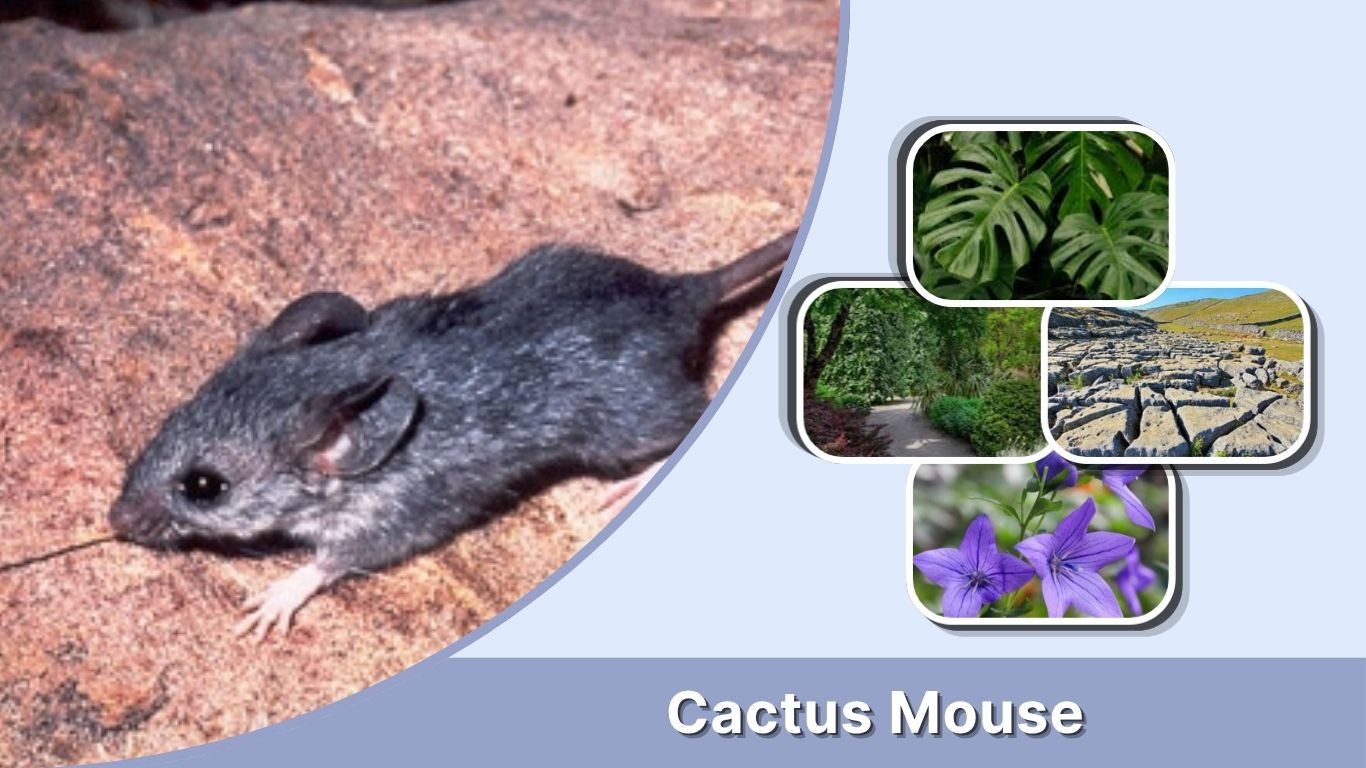
The cactus mouse is a small desert rodent found across the southwestern United States and northern Mexico. Despite its name, it does not live inside cacti, nor does it depend exclusively on cactus plants for food. It inhabits rocky deserts, dry scrublands, foothills, and areas containing cacti and thorny vegetation. Large ears, pale fur, nocturnal behavior, and an unusually long tail help distinguish it from other desert mice. Its ability to lower its metabolism, conserve water, and enter torpor allows it to survive intense heat and long dry periods.
What Is a Cactus Mouse?
The cactus mouse, scientifically named Peromyscus eremicus, is a member of the Cricetidae family. It is also called the cactus deermouse, desert deer mouse, or cactus deer mouse.
It belongs to the same genus as deer mice and white-footed mice but is specially adapted to hot, dry landscapes. The name comes from its frequent association with deserts containing cactus plants rather than from a specialized dependence on one cactus species.
Scientific Classification
| Category | Classification |
| Kingdom | Animalia |
| Class | Mammalia |
| Order | Rodentia |
| Family | Cricetidae |
| Genus | Peromyscus |
| Species | Peromyscus eremicus |
What Does a Cactus Mouse Look Like?
The cactus mouse resembles a small deer mouse with a slender body, pointed nose, large dark eyes, and prominent ears. Its coloring usually blends with desert rocks, sand, dry vegetation, and soil.
Identification
- Pale gray, tan, buff, or yellowish-brown upper fur
- White or nearly white belly
- Large, dark eyes
- Thin, pointed snout
- Large, lightly furred ears
- Long whiskers
- White feet
- Very long, lightly furred tail
- Naked soles on the hind feet
- Slender body adapted for quick movement
Fur color varies geographically. Some populations are very pale, while others may appear dark gray or nearly blackish. The naked hind-foot soles and exceptionally long tail help separate cactus mice from similar southwestern Peromyscus species.
Cactus Mouse Size
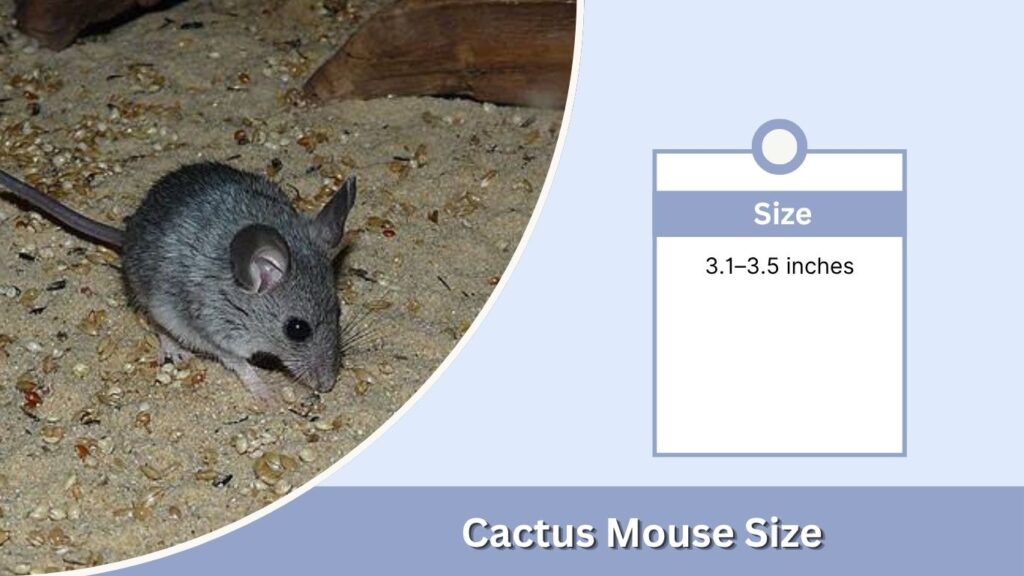
The cactus mouse is a small, lightweight rodent. Its head-and-body length is generally around 3.1–3.5 inches, while its tail may measure approximately 3.9–5.5 inches. The tail can therefore be longer than the mouse’s body.
Adults average approximately 25 grams, or slightly less than one ounce, although body weight varies with age, sex, season, and available food.
Why Is Its Tail So Long?
The long tail may help the animal balance while moving across rocks, shrubs, and uneven desert terrain. It may also contribute to body-temperature regulation by releasing heat.
Cactus mice are capable climbers, and some populations spend time above the ground in shrubs. Their tail provides additional stability as they move along narrow branches.
Cactus Mouse Habitat
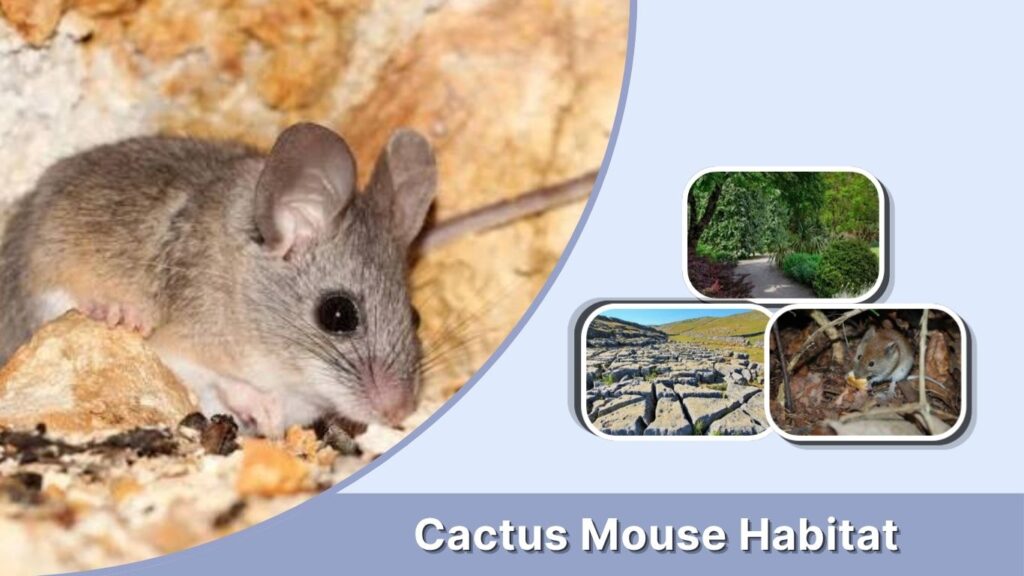
Cactus mice occupy deserts, semiarid scrublands, chaparral, rocky foothills, and dry mountain slopes. They generally favor locations offering rocks, shrubs, brush, and other cover rather than completely exposed ground.
Their geographic range includes portions of:
- California
- Arizona
- Nevada
- Utah
- New Mexico
- Texas
- Northern Mexico
- Baja California
- Islands near the Baja California Peninsula
They may shelter inside self-dug tunnels, abandoned rodent burrows, rock piles, brush piles, natural cavities, and occasionally gaps in brickwork or other structures.
Why Do They Live Near Cacti?
Cacti and surrounding desert vegetation create shade, cover, food, and protection from predators. Cactus fruits, flowers, seeds, and nearby insects may provide seasonal feeding opportunities.
Spiny vegetation also creates protected spaces where larger predators may have difficulty reaching a small mouse. However, cactus mice can also live in rocky or shrubby deserts where cacti are not especially dense.
What Do Cactus Mice Eat?
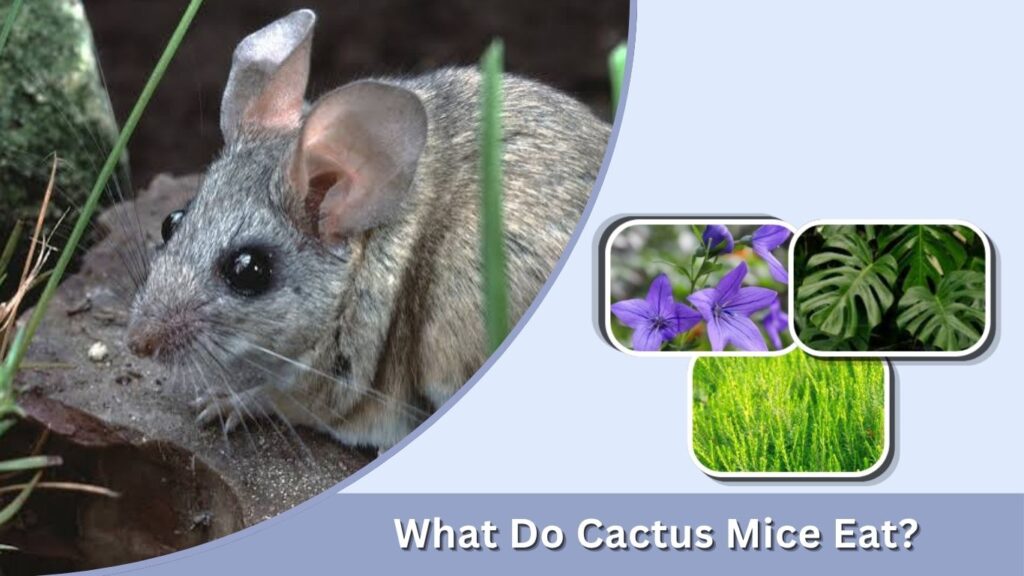
Cactus mice are opportunistic omnivores. Their diet changes according to season, rainfall, habitat, and the foods available in the surrounding desert.
They eat fruits, flowers, seeds, green vegetation, leaves, and insects. Important foods may include mesquite seeds, hackberries, pine seeds, juniper seeds, and the fruits or blossoms of desert shrubs.
Do Cactus Mice Eat Cactus?
Cactus mice may eat accessible cactus fruits, seeds, flowers, or moist plant material, but cacti are only part of a much broader diet. They do not normally chew through large amounts of thick, heavily spined cactus tissue.
They may also be attracted to insects, fallen seeds, or fruit located around the base of a cactus. A mouse seen beside a cactus is therefore not necessarily eating the cactus itself.
How Do They Get Water?
Cactus mice receive much of their moisture from fruits, seeds, insects, and green vegetation. Their bodies can also produce metabolic water while digesting food.
Recent research shows that diet quality affects their water balance. Foods with different fat and nutrient levels can change metabolism and total water loss, suggesting that access to suitable foods remains important even for a highly desert-adapted species.
Cactus Mouse Desert Adaptations
Cactus mice survive in places where daytime heat and limited surface water create serious challenges for small mammals. Their adaptations combine behavior, physiology, coloring, and food selection.
Nocturnal Activity
Cactus mice are primarily nocturnal. They rest in sheltered locations during the day and become active after sunset when temperatures are lower and humidity may be higher.
Nighttime activity reduces overheating and water loss. It also allows the mouse to forage while many daytime predators are inactive.
Reduced Metabolism and Torpor
A cactus mouse can lower its metabolic activity when food or water becomes scarce. It may enter daily torpor, a temporary state in which body temperature and energy use decline.
During exceptionally hot or dry periods, reduced activity helps conserve both energy and moisture. Research has identified low metabolic rate, heat tolerance, and an ability to maintain internal balance during dehydration as important desert adaptations.
Pale Fur
Pale gray or sandy fur provides camouflage against desert soil, dry plants, and rock. It may also absorb less solar heat than a very dark coat.
Color varies among populations, suggesting that local soil, vegetation, climate, and ancestry influence the appearance of each group.
Cactus Mouse Behavior and Communication
Cactus mice are generally solitary, secretive, and quick-moving. They usually remain hidden during daylight and forage alone at night.
They communicate through scent, touch, body movements, squeaks, and other sounds. Like related mice, they may thump their front feet against the ground when alarmed or excited. Their large eyes and ears provide strong night vision and sensitive hearing.
Are Cactus Mice Fast?
Cactus mice can run rapidly across open desert ground, which helps them escape predators. One small study recorded an average running speed of approximately 13.1 kilometers per hour among the animals tested.
They also use rocks, bushes, tunnels, and vegetation as escape cover rather than relying entirely on speed.
Reproduction and Lifecycle
Cactus mice may reproduce during different parts of the year when food and environmental conditions are favorable. Females have a gestation period of approximately 20–25 days and usually produce one to four young, with around two or three being typical.
Newborn mice are small, helpless, and born with closed eyes and ears. Their eyes usually open after approximately 11–15 days. Females nurse and protect the young until they can leave the nest and feed independently.
Cactus Mouse Lifespan
Most wild cactus mice probably live for around one year. Predation, drought, food scarcity, disease, and temperature extremes prevent many from surviving much longer.
Captive individuals can live considerably longer when protected from predators and supplied with reliable food, water, and veterinary care.
Predators and Food-Web Role
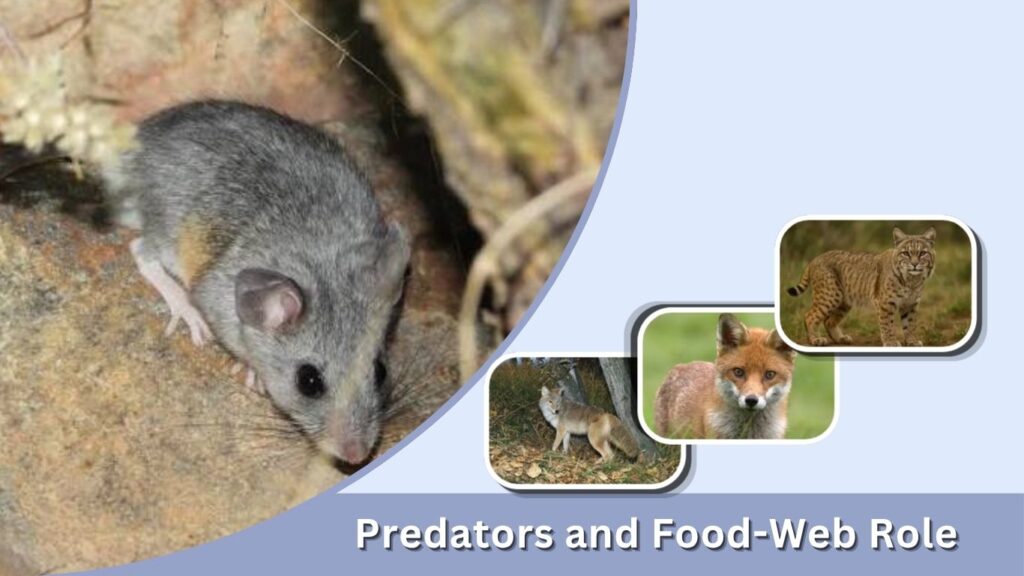
Cactus mice provide food for numerous desert predators, including:
- Owls
- Rattlesnakes
- Foxes
- Coyotes
- Bobcats
- Hawks
- Other snakes
- Carnivorous mammals
Their nocturnal habits, camouflage, speed, and use of sheltered spaces reduce the risk of capture. Nevertheless, they remain an important link between desert plants, insects, and larger predators.
Cactus mice also influence plant communities by eating and moving seeds. Some seeds are destroyed, while others may be carried away and left uneaten, potentially helping plants spread.
Interaction With Humans
Cactus mice generally avoid people and are not aggressive. They may occasionally enter garages, sheds, desert cabins, storage buildings, or homes while searching for food and shelter.
They can gnaw packaging, contaminate stored food, and leave droppings or nesting material. Openings around foundations, doors, roofs, vents, and utility pipes should be sealed to prevent entry.
Avoid handling any wild mouse directly. Wear gloves when cleaning contaminated areas, wet droppings with disinfectant before removal, and avoid sweeping or vacuuming dry rodent waste because this can release particles into the air.
Cactus Mouse vs. Deer Mouse
Cactus mice and deer mice have similar white bellies, large eyes, and brownish upper fur. However, cactus mice usually have larger ears, paler desert coloring, naked hind-foot soles, and a particularly long, lightly furred tail.
Deer mice occupy a much wider variety of environments, including forests, fields, grasslands, and mountains. Confirming the species may require geographic information and examination by someone familiar with local rodents.
FAQs
Is a cactus mouse a cactus plant?
No. The cactus mouse is a desert rodent. It should not be confused with mouse-tail cactus or Mickey Mouse cactus, which are names used for plants.
Is the cactus mouse nocturnal?
Yes. It is mainly active at night, when desert temperatures are lower. It shelters in burrows, rocks, brush, or other protected places during the hottest daylight hours.
Can cactus mice survive without drinking water?
They can obtain substantial moisture from food and conserve water efficiently, but they are not completely independent of water. Their survival depends on food quality, temperature, humidity, and the length of the dry period.
Are cactus mice dangerous?
Cactus mice normally avoid humans and seldom act aggressively. As with any wild rodent, direct contact and exposure to urine or droppings should be avoided.
Can you keep a cactus mouse as a pet?
Cactus mice are wild animals rather than domesticated pet mice. Wildlife possession laws may apply, and their specialized behavior and care requirements make them unsuitable for most households.