
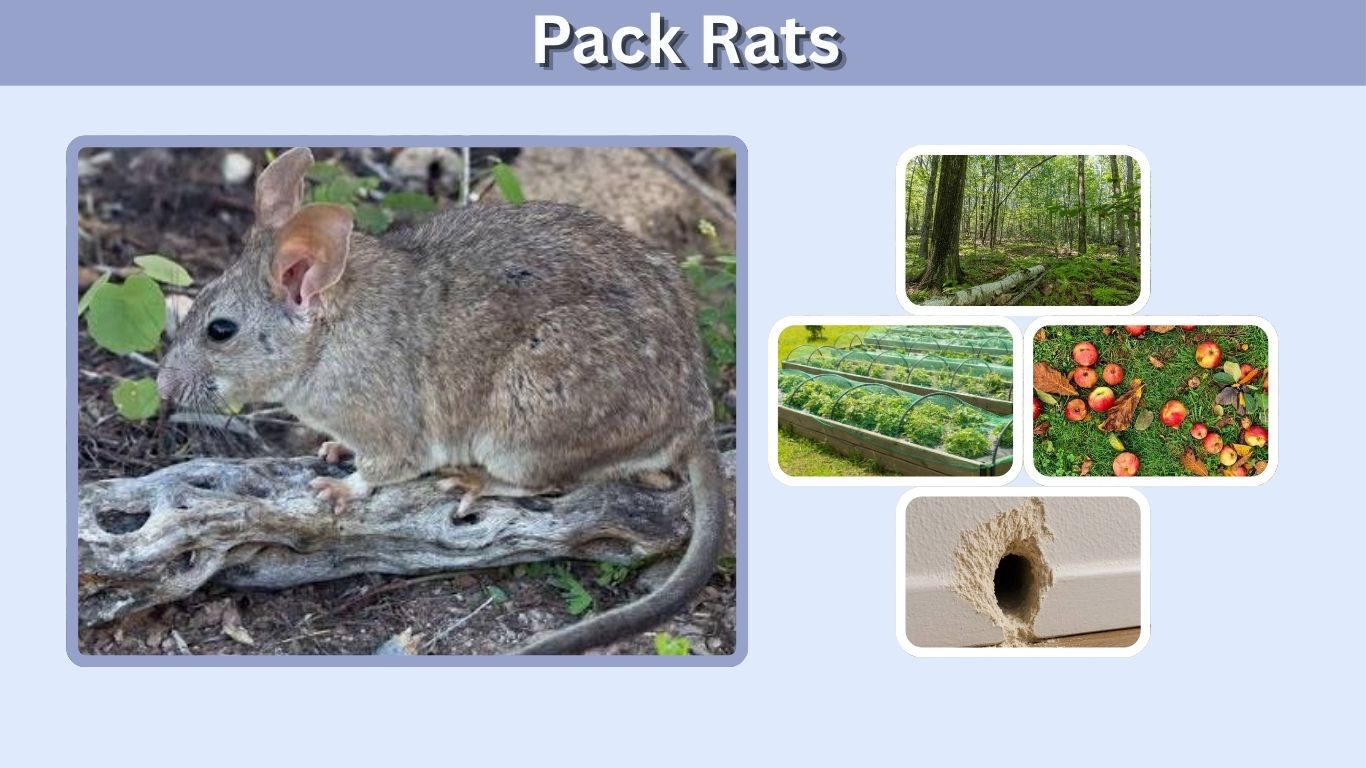
Pack rats are fascinating native rodents, but they can become troublesome when they build nests around homes, garages, gardens, sheds, or vehicles. Also called woodrats, these animals are famous for collecting sticks, plant material, and sometimes unusual objects for their nests. A pack rat infestation can also lead to contaminated areas, damaged plants, and chewed materials. Understanding what pack rats look like, where they live, what they eat, and how to get rid of pack rats can make controlling them considerably easier.
What Are Pack Rats?
Pack rats are woodrats belonging to the genus Neotoma. Despite their name, they are different from the Norway rats and roof rats commonly associated with cities. Several woodrat species occur across North America, particularly in dry, rocky, wooded, and desert environments.
Their nickname comes from their habit of collecting material and carrying it back to their shelters. Pack rats may gather sticks, cactus pieces, leaves, animal material, and occasionally human objects.
They are generally most active at night and commonly spend daylight hours protected inside their nests. Many pack rats are also largely solitary rather than living together in large colonies.
What Do Pack Rats Look Like?
Pack rats can resemble ordinary rats at first glance, but several features can help distinguish them.
They typically have relatively large ears, prominent dark eyes, grayish or brownish fur, and a furry tail. UC Integrated Pest Management notes that the furry tail is an especially useful distinction because Norway and roof rats have mostly hairless, scaly tails.
Appearance varies among species. For example, the white-throated woodrat has distinctive white fur on its throat and can weigh up to about one pound.
If you find a rodent near a large mound of sticks and plant debris, the nest itself may provide another clue that you’re dealing with a pack rat.
Where Do Pack Rats Live?
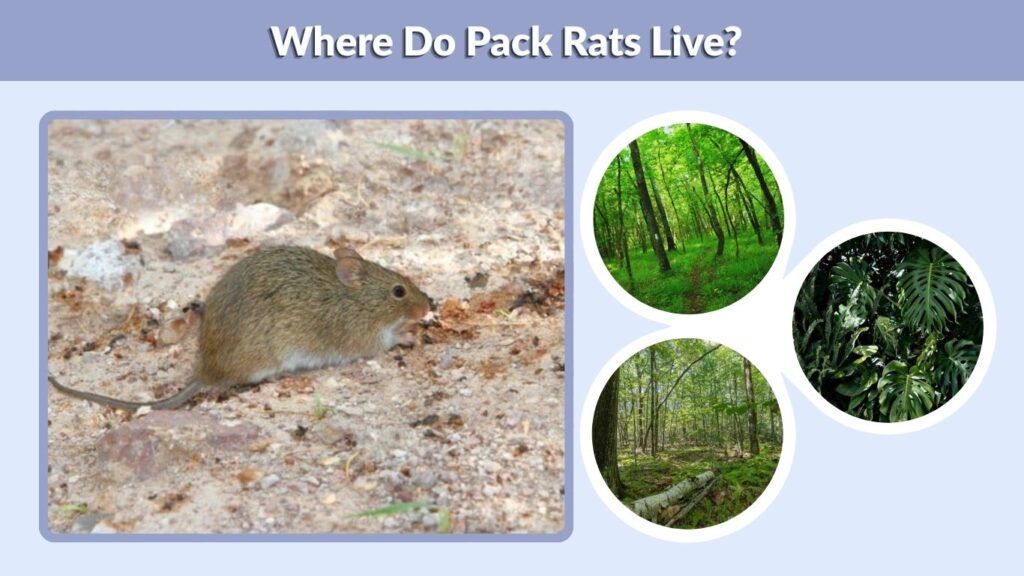
Pack rats occur in many environments across North America. Depending on the species, they can occupy deserts, rocky slopes, brushy areas, forests, and places near human structures.
They are especially well known in areas of the southwestern United States, including Arizona and New Mexico.
A typical pack rat shelter, sometimes called a midden, may contain sticks, cactus pieces, rocks, dung, leaves, and other debris. Some desert woodrat houses can become surprisingly large, providing insulation and protection from predators and extreme temperatures.
Around homes, suitable hiding places can include wood piles, dense vegetation, sheds, garages, crawl spaces, and areas beneath or around structures.
What Do Pack Rats Eat?
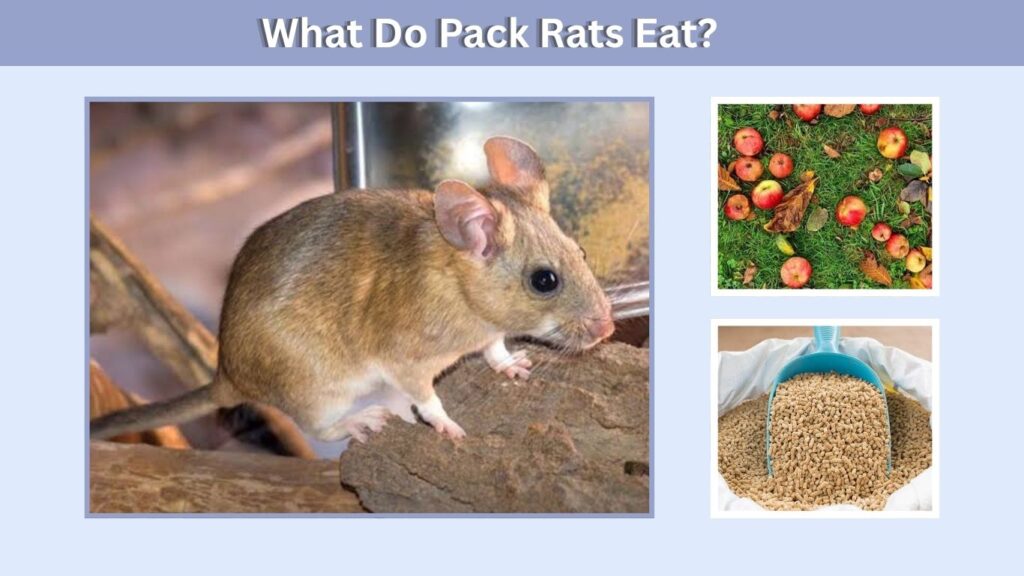
Pack rats have a varied diet that depends heavily on what is locally available. Fruits, nuts, seeds, and green plant material are common foods. Desert species may also feed on cactus and other moisture-rich vegetation.
Around residential properties, gardens and accessible food sources can make an area more attractive.
Reducing unnecessary food availability is therefore an important part of long-term control. Fallen fruit, accessible animal feed, and other attractants should not be left where rodents can repeatedly reach them.
Are Pack Rats Dangerous?
Pack rats normally try to avoid people, so direct confrontation is not usually the primary concern. The bigger problems are property damage, contamination, parasites, and possible exposure to rodent-associated diseases.
Like other rodents, they must gnaw regularly. Rodents around structures can damage stored materials, insulation, wood, plastic components, and wiring. Rodent damage to vehicle wiring can also result in costly mechanical problems.
Their droppings, urine, saliva, and nesting material should also be handled carefully.
Do Pack Rats Carry Hantavirus?
Some woodrat species have been associated with hantaviruses, although the deer mouse is the primary reservoir of Sin Nombre virus responsible for most HPS cases in the United States. CDC research has documented hantavirus associations involving species within the Neotoma group.
The CDC recommends avoiding direct contact with rodent urine, droppings, saliva, and nesting materials and using appropriate procedures when cleaning rodent-infested areas.
Never sweep or vacuum dry rodent droppings in a way that can send contaminated particles into the air.
Signs of Pack Rats Around Your Home
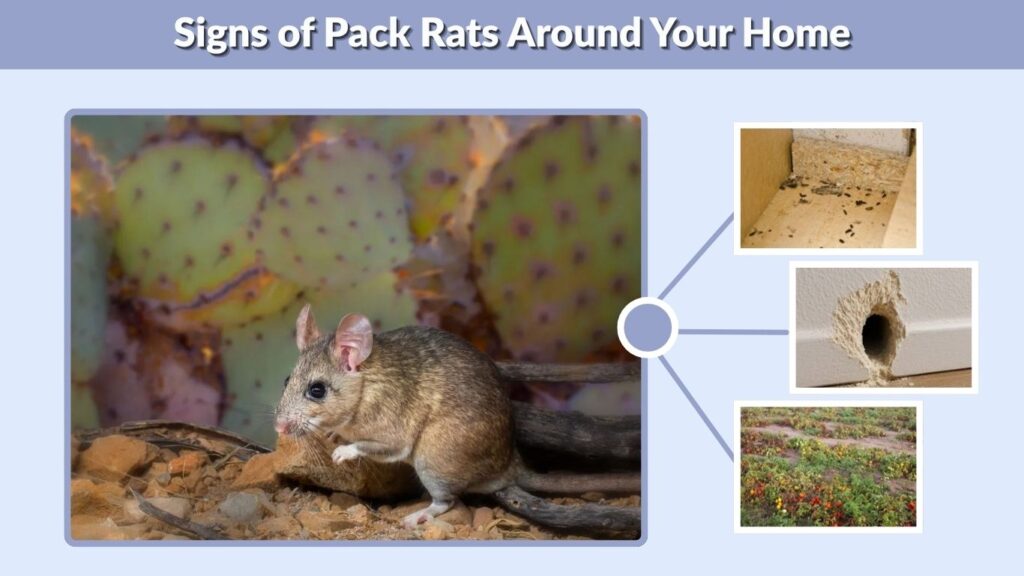
One of the clearest signs is a bulky collection of sticks and miscellaneous debris around a protected location. You may also notice nighttime noises, droppings, gnaw marks, damaged vegetation, disturbed stored materials, or evidence of nesting.
Vehicle problems can be another warning sign. Rodents sometimes enter engine compartments because they provide sheltered spaces, and chewing can damage wiring or insulation.
Finding the source of the activity is important because trapping a single animal will not permanently solve the problem if food, shelter, and easy access remain.
How to Get Rid of Pack Rats
The best way to get rid of pack rats usually combines habitat modification, exclusion, and trapping rather than relying on only one method.
1. Remove Food and Shelter
Clear unnecessary piles of wood, debris, dense vegetation, and other protected hiding places close to structures. Secure food and remove accessible attractants whenever possible.
2. Block Access
Inspect garages, sheds, crawl spaces, and other vulnerable areas for entry points. Physical barriers can also help protect valuable garden plants. University of Arizona Extension notes that smooth sheet-metal barriers can be effective in certain situations.
3. Use Appropriate Traps
Rat-sized traps can be effective when placed along established travel routes or near active areas. Pack rats may be cautious around unfamiliar objects, so successful trapping sometimes takes patience.
University of Arizona Extension lists foods such as nuts, peanut butter, oatmeal, raisins, and dried fruit among possible trap baits.
4. Address the Nest and Attractants
Trapping alone is rarely a permanent solution. Once the rodents are controlled, address nesting locations and environmental conditions that encouraged them to stay.
Use particular care around old nests because rodent waste and other animals may be present.
How to Keep Pack Rats Away
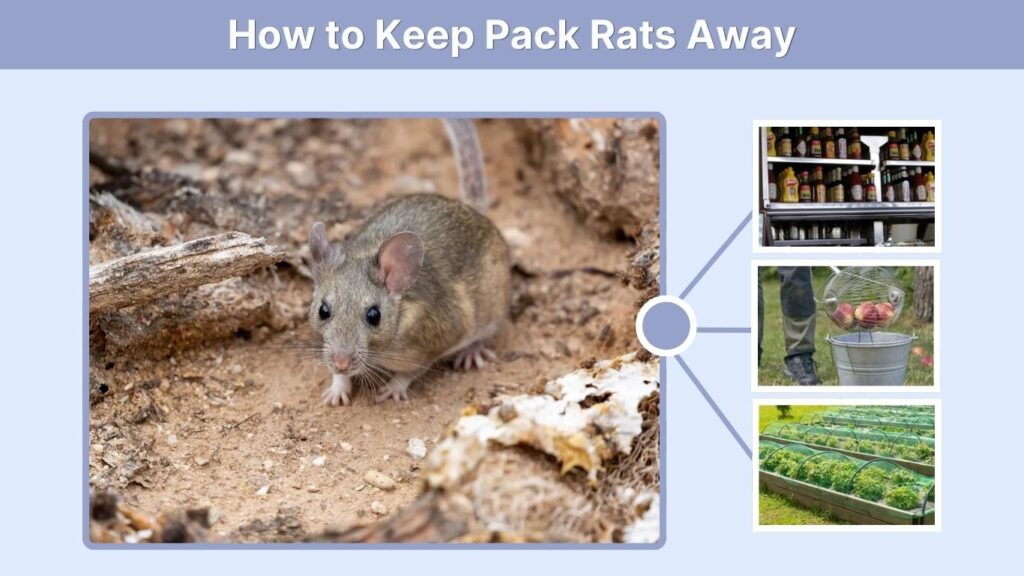
Long-term prevention focuses on making your property less attractive.
Keep vegetation maintained around buildings, reduce clutter, store food securely, remove fallen fruit, protect garden plants when needed, inspect structures for openings, and check rarely used vehicles for signs of rodent activity.
Natural repellents may provide temporary deterrence in some situations, but they should not replace exclusion and habitat management. University of Arizona Extension emphasizes removing attractants as an important part of long-term pack rat management.
FAQs
Are pack rats nocturnal?
Yes. Woodrats are primarily nocturnal, so they usually forage and move around after dark while spending much of the daytime sheltered in their nests.
Do pack rats live in groups?
Pack rats are generally solitary. A nest typically houses one adult, although a mother may share it with her young.
How big are pack rats?
Size varies by species. The white-throated woodrat, for example, may weigh up to approximately one pound, while other species can be smaller.
What attracts pack rats to a house?
Available food, protected nesting areas, dense vegetation, piles of debris, and easy access to garages or other structures can make residential properties attractive.
What is the best way to get rid of pack rats?
A combination of removing attractants, eliminating shelter, sealing access points, and properly placed traps generally provides better long-term control than relying on repellents or trapping alone.