
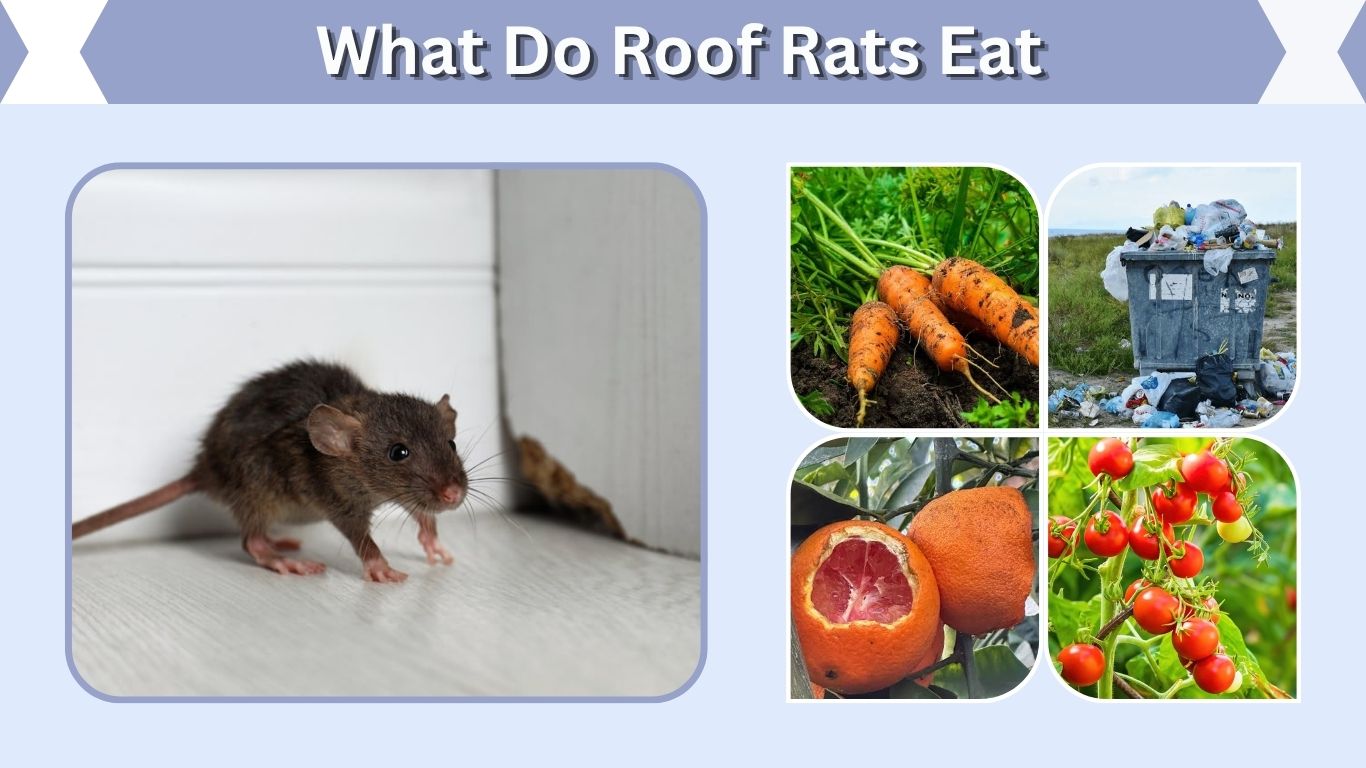
What do roof rats eat? Roof rats (Rattus rattus) are omnivorous and opportunistic feeders, but they have a strong preference for fruits, nuts, seeds, and other plant foods. Citrus trees, avocados, berries, birdseed, pet food, vegetables, and food scraps can all attract them to yards and homes. They may also eat insects, snails, slugs, eggs, and small animals when available. Understanding the roof rat diet is especially important for homeowners with fruit trees because removing accessible food is one of the best ways to discourage these agile rodents.
What Do Roof Rats Like to Eat?
Roof rats can survive on many foods, but they do not choose everything equally. Compared with the heavier Norway rat, roof rats are particularly associated with fruits, nuts, seeds, and vegetation. Their climbing ability allows them to feed directly in trees, making orchards and landscaped yards especially attractive. UC IPM lists fruits, tree nuts, berries, slugs, snails, young birds, and bird eggs among their preferred foods.
Common Foods Roof Rats Eat
Roof rats commonly eat:
- Citrus fruits
- Avocados
- Berries
- Tree nuts
- Seeds
- Birdseed
- Vegetables
- Pet food
- Livestock feed
- Food scraps
- Slugs and snails
- Insects and other small invertebrates
- Bird eggs
- Young birds
- Animal feces when accessible
Their broad diet helps them live successfully in residential neighborhoods, farms, orchards, and cities.
Do Roof Rats Eat Meat?
Yes. Roof rats are omnivores rather than strict herbivores.
Although they usually favor plant foods when these are plentiful, they can consume animal material, including insects, snails, slugs, eggs, and occasionally young birds. They may also eat discarded meat or other food waste around garbage.
This flexibility is one reason roof rats adapt so successfully to human environments. They do not need one particular food source to survive if other edible material is readily available.
Do Roof Rats Eat Birds and Frogs?
Roof rats can eat young birds and bird eggs, and these foods are specifically included in documented roof-rat diets.
They are opportunistic enough that other small animals could potentially be eaten when encountered, but fruits, seeds, nuts, and easily available animal foods generally represent more typical resources around homes.
Bird feeders can indirectly encourage roof rats as well. Even if the rats never attack birds, spilled seed beneath feeders can provide a dependable nightly food supply.
Do Roof Rats Eat Lemons and Other Citrus?
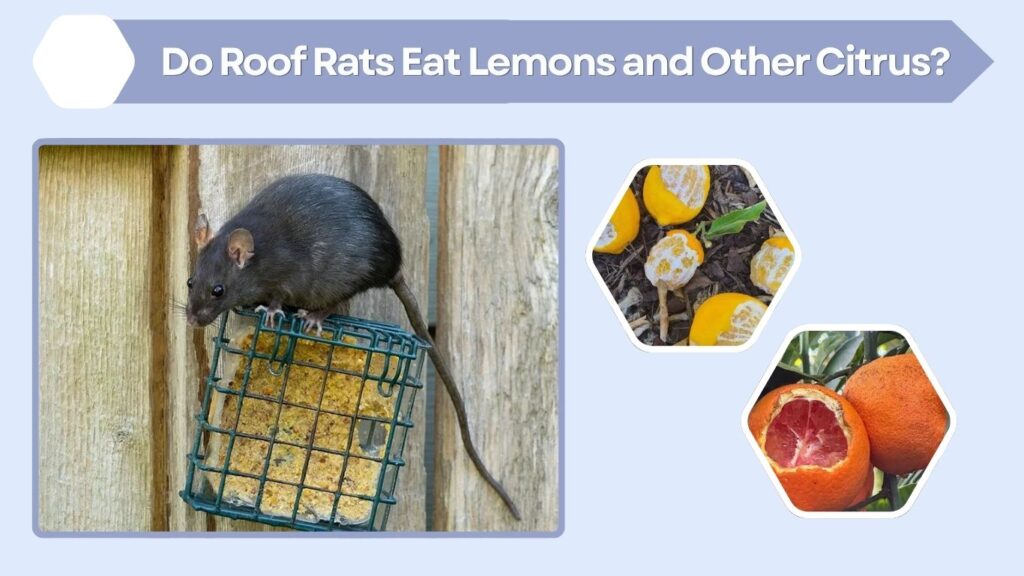
Yes. Citrus is particularly attractive to roof rats, and damage to lemons and oranges is a well-documented problem in areas where these rodents occur. Their climbing ability allows them to reach fruit that is still attached to trees, so finding damaged fruit above ground can be an important clue that roof rats are present.
Do Roof Rats Eat Lemons?
Yes, but their feeding pattern on lemons can be unusual. UC IPM reports that roof rats often eat the rind of lemons while leaving much of the flesh behind.
Signs may include rough gnawing around the exterior, missing patches of peel, or partly stripped fruit still hanging from the tree.
If lemons are repeatedly damaged overnight, inspect nearby fences, branches, utility lines, walls, and dense vegetation for additional signs of roof rats.
Do Roof Rats Eat Oranges?
Yes. Oranges are another favorite citrus food.
Roof rats often make a relatively small opening in a mature orange and consume the pulp from inside. This can leave an almost hollow orange rind still attached to the tree, a particularly characteristic form of roof-rat damage.
However, squirrels, raccoons, opossums, and other animals can also damage fruit, so gnawing alone does not prove roof rats are responsible.
Do Roof Rats Eat Grapefruit and Other Fruits?
Roof rats can feed on grapefruit and other citrus fruits as well as avocados and many other tree fruits. UC IPM specifically documents roof-rat feeding on oranges, avocados, citrus generally, and other orchard fruits.
Depending on what grows locally, they may also take berries and other ripe fruits.
For a roof rat, a fruit tree provides both food and an elevated environment where its climbing abilities give it an advantage.
Do Roof Rats Eat Vegetables, Nuts and Seeds?
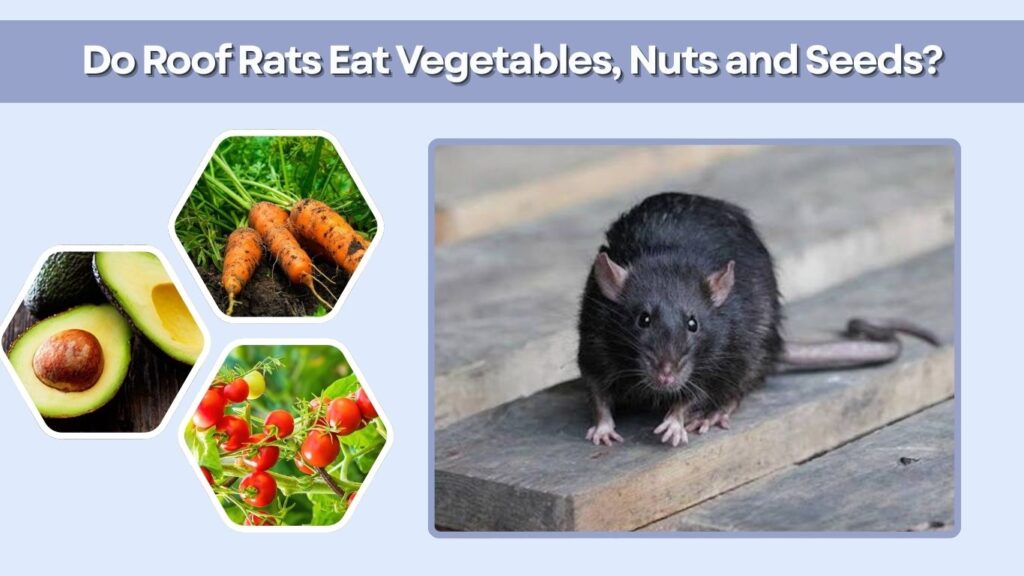
Plant foods make up an important part of the roof rat diet. Gardens can therefore become feeding sites even when no citrus trees are present. Fallen nuts, ripe vegetables, birdseed, and edible garden produce can sustain rodents, especially when these resources remain available overnight.
Vegetables and Garden Produce
Roof rats may eat:
- Tomatoes
- Other ripe garden vegetables
- Avocados
- Soft fruits
- Seeds
- Nuts
- Fallen produce
Damage may appear as irregular gnawing, missing sections, or entire small fruits disappearing.
Because several wildlife species produce similar damage, look for additional evidence such as droppings, nighttime noises, tracks, or repeated travel routes before assuming rats are responsible.
Acorns, Nuts and Seeds
Tree nuts and seeds are among the foods roof rats favor.
Acorns, nuts from backyard trees, birdseed, and spilled animal feed can all become attractive food sources. Nuts are especially useful to rodents because they are energy-rich and can sometimes be carried away.
Roof rats commonly move food from the place where they discover it and eat elsewhere, rather than always feeding at the original location.
Bread, Peanut Butter and Pet Food
Roof rats can eat bread, cereals, pet food, and many other human-associated foods if accessible.
Peanut butter is attractive to rats because of its strong smell and high energy content, which is why it is sometimes used with traps.
Outdoor pet feeding can be a significant attraction. UC IPM recommends giving pets only what they will eat at one feeding and keeping stored pet food in rodent-resistant containers.
What Do Roof Rats Eat in an Attic?
A roof rat living in an attic does not necessarily obtain most of its food there. These rodents are skilled climbers and may leave the building at night to feed outdoors before returning to an attic, roof void, tree, or other protected nesting site.
UC IPM reports that roof rats can routinely travel 300 feet or more in search of food.
Food Sources Around Homes
Common attractions include:
- Fruit trees
- Bird feeders
- Pet-food bowls
- Garbage
- Compost
- Outdoor animal feed
- Fallen nuts and fruit
- Vegetable gardens
This explains why removing food outside can be an important part of solving what appears to be an indoor attic infestation.
Do Roof Rats Eat Wood?
Roof rats gnaw wood, but this should not be confused with using wood as a normal food source.
Like other rodents, rats have continuously growing incisors and gnaw materials to wear them down and gain access to places. They may damage wood, plastic, and electrical wiring even though these objects provide little or no nutritional value. Roof-rat damage to wooden structures and electrical wires is well documented.
Roof Rat Eating Habits
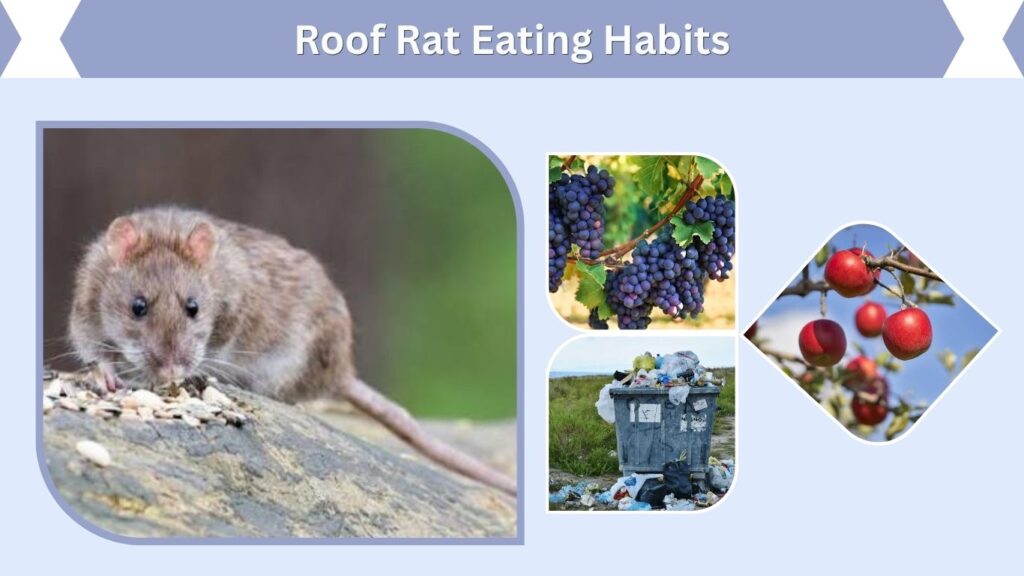
Roof rats are predominantly nocturnal, so much of their feeding takes place after dark. They are agile enough to travel along fences, branches, roofs, and utility lines while searching for food. Their ability to forage both on the ground and in trees distinguishes them from rodents that rely more heavily on ground-level resources.
How Often Do Roof Rats Eat?
Roof rats normally forage repeatedly while active at night rather than relying on one large meal.
They may visit multiple food sources during the same night and carry food back toward sheltered locations. Reliable access to fruit trees, feeders, garbage, or pet food can encourage them to repeatedly use the same property.
Removing only one food source may therefore not solve a problem when several alternatives remain nearby.
Do Roof Rats Eat Each Other?
Cannibalism is not considered a normal or preferred part of the roof rat diet. Roof rats primarily seek fruits, seeds, nuts, plant material, and accessible animal foods.
Like many opportunistic rodents, unusual feeding behavior may occur under extreme circumstances, but finding rats on a property should not be interpreted as evidence that they normally prey upon one another.
How to Stop Roof Rats Eating Fruit
Protecting fruit trees involves making both food and access less convenient. Because roof rats are excellent climbers, simply protecting the base of a tree may not be enough if nearby branches, fences, roofs, or utility structures provide alternative routes.
Reduce Food and Access
- Harvest ripe fruit promptly.
- Remove fallen fruit and nuts.
- Clean spilled birdseed.
- Bring pet food indoors at night.
- Use secure garbage containers.
- Thin dense vegetation.
- Remove unnecessary debris and woodpiles.
- Keep stored feed in rodent-resistant containers.
- Prune accessible tree routes where appropriate.
UC IPM specifically recommends removing fallen fruit and nuts, reducing dense vegetation, and cutting back overhanging limbs that give rats access to roofs.
FAQs
Roof rats are flexible feeders, but fruits, nuts, seeds, and other plant foods are particularly attractive to them. Their tendency to climb means that food growing above ground is not protected simply because other rodents cannot easily reach it.
Do roof rats eat lemons?
Yes. Roof rats eat lemons and are known particularly for chewing the rind, sometimes leaving the fruit flesh behind.
Do roof rats eat oranges?
Yes. They may chew a small opening and remove much of an orange’s interior, leaving a hollow rind hanging from the tree.
What food do roof rats love most?
Their preferred foods include fruits, tree nuts, berries, and seeds, although they also consume slugs, snails, eggs, young birds, pet food, and other available foods.
Do roof rats eat dog poop?
They can. UC IPM specifically recommends cleaning up dog, cat, and other animal feces because rats may consume them.
How can I stop roof rats from eating my citrus?
Remove ripe and fallen fruit promptly, eliminate other food sources, thin dense vegetation, limit climbing access where practical, and address established rats with appropriate trapping or professional rodent control. UC IPM emphasizes combining food and shelter reduction with trapping and exclusion for effective management.