
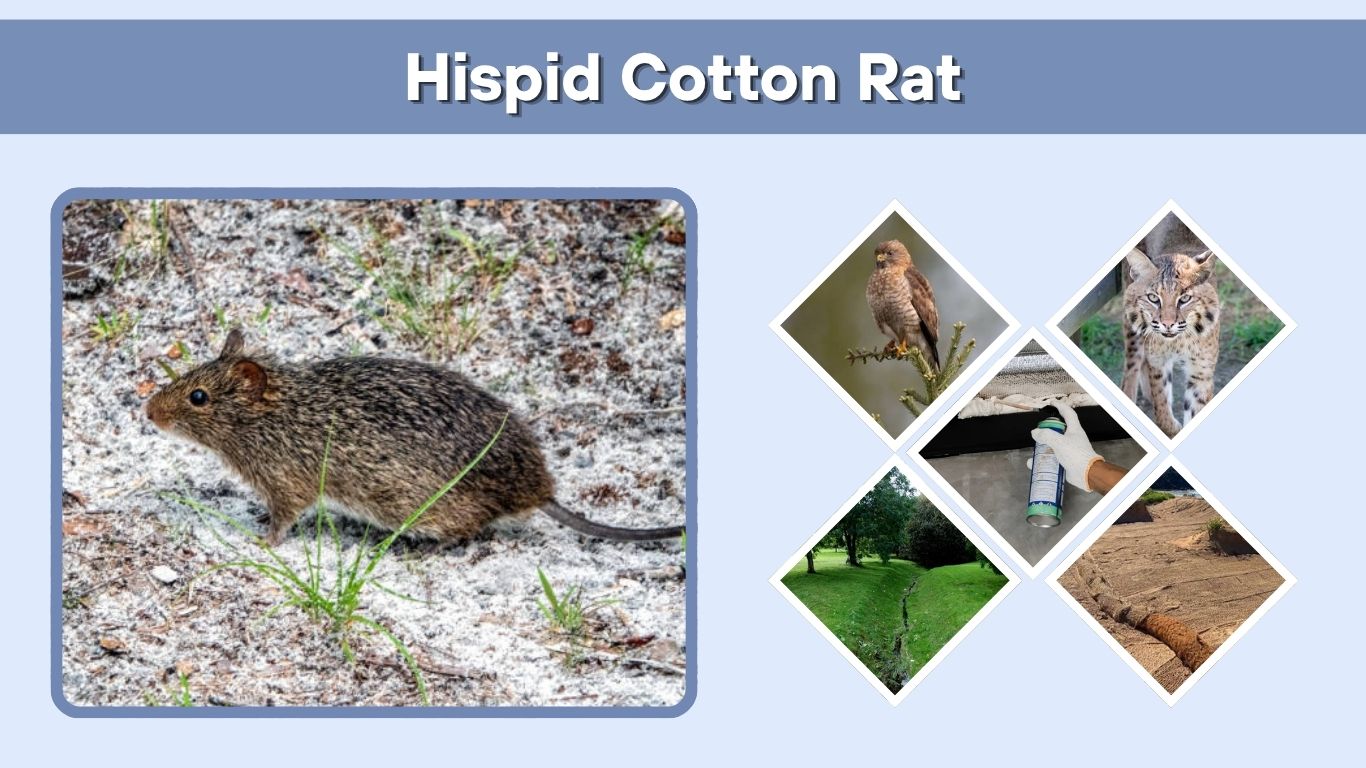
The hispid cotton rat is a common wild rodent found in grassy fields, wetlands, roadsides, farms, and open habitats across much of the southern United States. Although its name includes “rat,” it is not the same as a common house rat or Norway rat. This native rodent plays an important role in grassland ecosystems as a plant eater, seed consumer, prey animal, and research species.
What Is a Hispid Cotton Rat?
The hispid cotton rat is a medium-sized native rodent known for its rough fur, short ears, blunt nose, and strong connection to dense grass. It is often seen in overgrown fields, weedy edges, marsh borders, and grassy roadsides. Unlike urban pest rats, it usually avoids buildings and prefers outdoor vegetation.
The word “hispid” means rough or bristly, which describes the animal’s coarse fur. Cotton rats are named for their association with fields, grassy areas, and old agricultural landscapes, including cotton-growing regions in the southern United States.
Scientific Name and Classification
The scientific name of the hispid cotton rat is Sigmodon hispidus. It belongs to the rodent order and is part of the family Cricetidae, which includes many New World rats, mice, voles, and related species.
Its classification is:
- Common name: Hispid cotton rat
- Scientific name: Sigmodon hispidus
- Class: Mammalia
- Order: Rodentia
- Family: Cricetidae
- Genus: Sigmodon
- Species: S. hispidus
This species has been widely studied because it is abundant in many areas and is also used in laboratory research, especially in studies related to infectious diseases and respiratory viruses.
Hispid Cotton Rat Identification
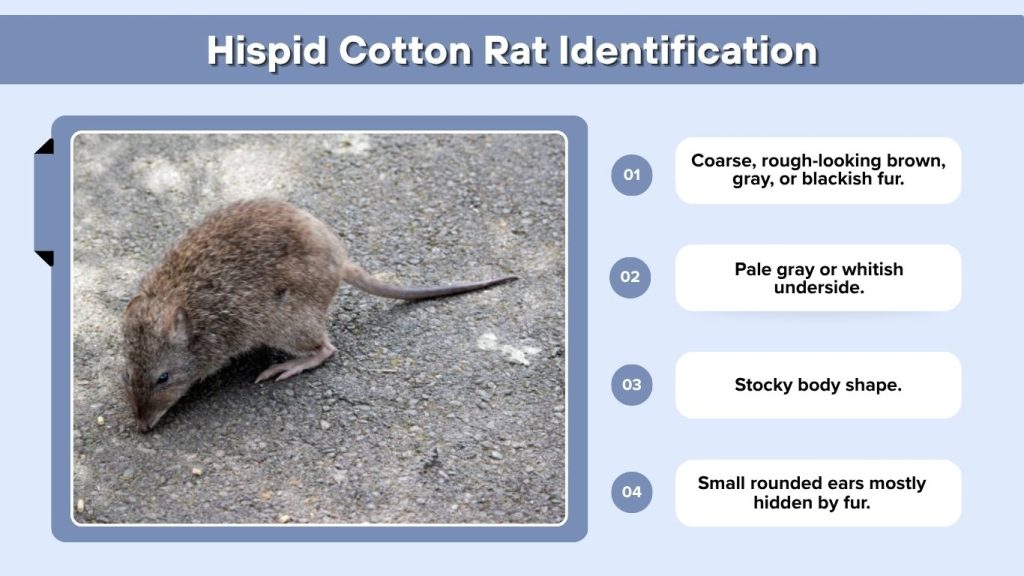
The hispid cotton rat has a stocky body, coarse brownish-gray fur, small rounded ears, and a tail that is shorter than the head and body combined. It does not have the sleek look of a house mouse or the long scaly tail of a Norway rat. Its rough fur and grassy habitat are useful identification clues.
Main Identification Features
- Coarse, rough-looking brown, gray, or blackish fur
- Pale gray or whitish underside
- Stocky body shape
- Small rounded ears mostly hidden by fur
- Blunt face and short muzzle
- Tail shorter than the body length
- Strong legs for moving through dense grass
- Often found in fields, marshes, roadsides, and grassy cover
A hispid cotton rat may look like a small wild rat, but it is usually more compact and less associated with human buildings. Its tail is not as long as a Norway rat’s tail, and its natural home is thick vegetation rather than sewers, basements, or urban alleys.
Hispid Cotton Rat Size
Hispid cotton rats are medium-sized rodents. They are larger than many native mice but usually smaller and less heavy than adult Norway rats. Their size can vary by region, sex, age, and food availability.
| Feature | Hispid Cotton Rat |
| Scientific name | Sigmodon hispidus |
| Body type | Stocky, medium-sized rodent |
| Fur | Coarse, rough, brownish-gray |
| Tail | Shorter than head and body |
| Main habitat | Dense grass, fields, marsh edges, roadsides |
| Diet | Mostly grasses, seeds, stems, roots, and crops |
| Activity | Active day or night, often hidden in cover |
| Human concern | Can carry parasites or pathogens, but avoids people |
The tail is an important feature. In many common rats, the tail may be long, thick, and very noticeable. In the hispid cotton rat, the tail is shorter and less dominant in appearance.
Hispid Cotton Rat Habitat
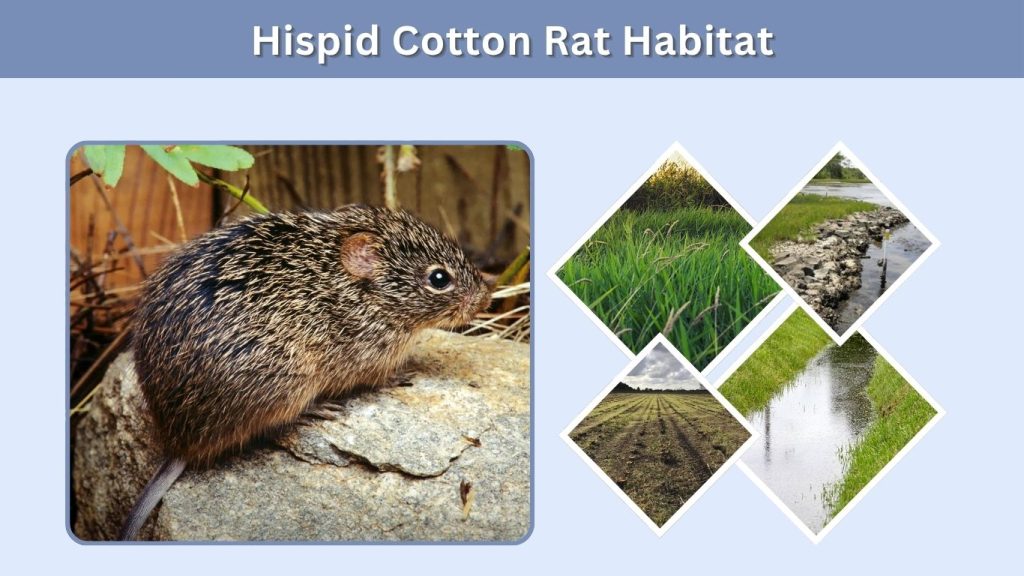
The hispid cotton rat is strongly linked to dense grass and low vegetation. It prefers places where plants provide both food and cover. Thick grassy habitat protects it from predators and gives it material for runways, nests, and feeding areas.
This rodent is common in open or semi-open landscapes. It can live in wild grasslands, old fields, wetland edges, agricultural areas, ditch banks, and overgrown roadsides. It may also use disturbed land if enough vegetation is present.
Common Habitat Types
- Tall grass fields
- Old agricultural fields
- Marsh edges and wetland borders
- Roadside ditches
- Weedy fence rows
- Overgrown canal banks
- Pine flatwoods with grassy ground cover
- Prairie patches
- Pastures with dense vegetation
- Crop edges and abandoned farmland
Good habitat usually has thick cover close to the ground. Short, heavily grazed, or bare areas are less suitable because cotton rats become more visible to predators and have fewer food sources.
Hispid Cotton Rat Range
The hispid cotton rat is found across much of the southern, southeastern, and south-central United States. Its range includes many warm regions where grassland, wetland edge, farmland, and open vegetation are common.
It occurs in states such as Florida, Texas, Alabama, Georgia, South Carolina, North Carolina, Tennessee, Louisiana, Mississippi, Arkansas, Oklahoma, Kansas, Missouri, and parts of nearby regions. It has also expanded northward in some areas where climate and habitat conditions allow it to survive.
Hispid Cotton Rat in Florida
In Florida, the hispid cotton rat is common in many open habitats. It may live in pine flatwoods, marsh edges, grassy fields, roadsides, coastal grasslands, and disturbed areas with thick ground cover. Florida’s warm climate and long growing season provide suitable food and shelter throughout much of the year.
The species may also occur near gopher tortoise habitats when grassy vegetation and sandy open areas are present. However, it is not dependent on gopher tortoises. It simply uses similar open landscapes when dense plant cover is available.
Hispid Cotton Rat in Texas
Texas has many suitable habitats for the hispid cotton rat, from grasslands and old fields to brushy edges and agricultural zones. In parts of Texas, the species may be abundant where grass cover is thick and food plants are available.
Because Texas has large areas of rangeland, cropland, wetlands, and disturbed grassy habitat, the hispid cotton rat can thrive in many local environments. Its numbers may rise quickly when rainfall increases plant growth and food supply.
Hispid Cotton Rat in South Carolina and Alabama
In South Carolina and Alabama, hispid cotton rats are associated with fields, grassy roadsides, wetland edges, pine habitats, and abandoned agricultural land. They may be especially common where fire, mowing, or disturbance keeps the habitat open while still allowing grasses and weeds to grow thickly.
They are part of the natural prey base for many snakes, raptors, and mammalian predators in these southeastern ecosystems.
What Do Hispid Cotton Rats Eat?
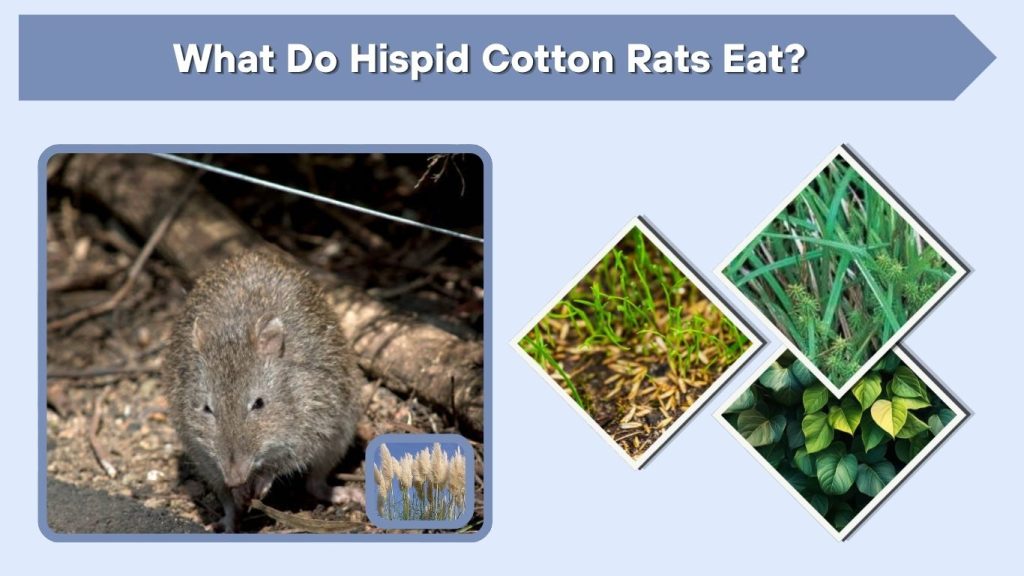
Hispid cotton rats are mostly herbivores. They feed heavily on grasses, sedges, stems, leaves, seeds, roots, and other plant materials. In agricultural areas, they may also eat crops or crop-related vegetation.
Although their diet is mainly plant-based, they may occasionally consume small amounts of other material depending on availability. Still, they are best described as grass-eating rodents.
Common Food Sources
- Grasses
- Grass seeds
- Sedges
- Plant stems
- Leaves
- Roots
- Tubers
- Agricultural crops
- Grain
- Fruits and berries
- Green shoots
- Weedy plants
Because they eat many grasses and plant parts, hispid cotton rats can affect vegetation structure in fields and grasslands. In high numbers, they may damage crops or young plants, especially near field edges.
Are Hispid Cotton Rats Herbivores?
Yes, hispid cotton rats are mainly herbivores. Their diet is centered on plant material, especially grasses and herbaceous vegetation. They clip stems, eat seeds, chew roots, and use dense vegetation for both food and cover.
Their strong preference for plant material explains why they are most common in areas with thick grass growth. A field with tall grass, seed heads, and weedy plants can provide nearly everything they need: food, nesting material, and protection from predators.
Hispid Cotton Rat Behavior
The hispid cotton rat spends much of its life moving through hidden runways in dense vegetation. These runways are small paths pressed through grass and weeds. They help the animal travel safely while staying hidden from hawks, owls, snakes, foxes, and other predators.
Cotton rats may be active during the day or night, but they are often difficult to see because they stay inside thick plant cover. When disturbed, they usually dash quickly into grass rather than entering buildings.
Daily Behavior
Hispid cotton rats are active feeders and breeders when conditions are favorable. They may build small nests made of grass and plant fibers, usually hidden at ground level or slightly above the ground in dense cover.
Their populations can rise and fall quickly. When food and cover are abundant, numbers may increase rapidly. During drought, cold weather, flooding, heavy predation, or habitat clearing, populations may drop.
Hispid Cotton Rat Nest
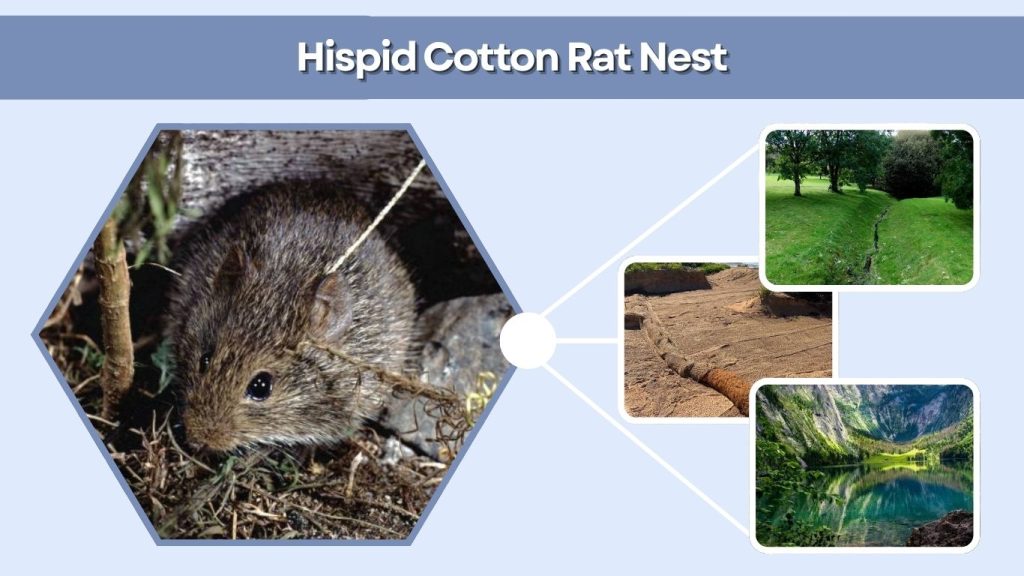
The nest of a hispid cotton rat is usually made from grass, leaves, and other plant fibers. It may be placed in a clump of grass, under matted vegetation, inside a shallow depression, or in another hidden spot near the ground.
The nest helps protect young cotton rats from weather and predators. Because the species lives in open grassy areas, nest placement depends heavily on cover. A field with dense ground vegetation gives the nest better concealment than a bare or overgrazed field.
Hispid Cotton Rat Reproduction and Breeding
Hispid cotton rats are known for fast reproduction. In warm climates, they may breed through much of the year if food and cover are available. Females can produce several litters in favorable conditions, which allows populations to increase quickly.
Young cotton rats grow fast and may become independent at an early age. This rapid life cycle helps the species recover from predation and seasonal population losses. However, it also means that local numbers can become high in productive grassy areas.
Breeding Traits
- Breeding may occur for much of the year in warm regions
- Females can produce multiple litters
- Litters are usually born in hidden grass nests
- Young develop quickly
- Population numbers can increase after rainy or productive seasons
- Numbers may drop after drought, flooding, or habitat removal
Fast breeding is one reason cotton rats are important prey animals. Many predators depend on them as a food source, especially in grassland and wetland-edge ecosystems.
Hispid Cotton Rat Lifespan
In the wild, hispid cotton rats often have short lives because they face heavy predation, weather stress, disease, and habitat disturbance. Many individuals may live only a few months, although some can live longer under safer conditions.
Their short lifespan is balanced by rapid reproduction. This strategy is common among small rodents that live in open habitats. Instead of depending on long life, the species survives by breeding quickly when conditions are favorable.
Hispid Cotton Rat Adaptations
The hispid cotton rat has several adaptations that help it live in dense grass and open landscapes. Its body shape, diet, and behavior all support survival in places where cover is low but thick.
Useful Adaptations
- Coarse fur helps protect the body in rough vegetation
- Stocky body helps it move through grass tunnels
- Shorter tail reduces drag in dense cover
- Strong plant-based diet allows use of common grasses
- Fast reproduction helps populations recover quickly
- Hidden runways reduce exposure to predators
- Ground-level nests blend into grassy habitat
These adaptations make the hispid cotton rat successful in fields, marsh edges, roadsides, and other grassy environments. However, they also make the animal dependent on vegetation cover.
Hispid Cotton Rat Predators
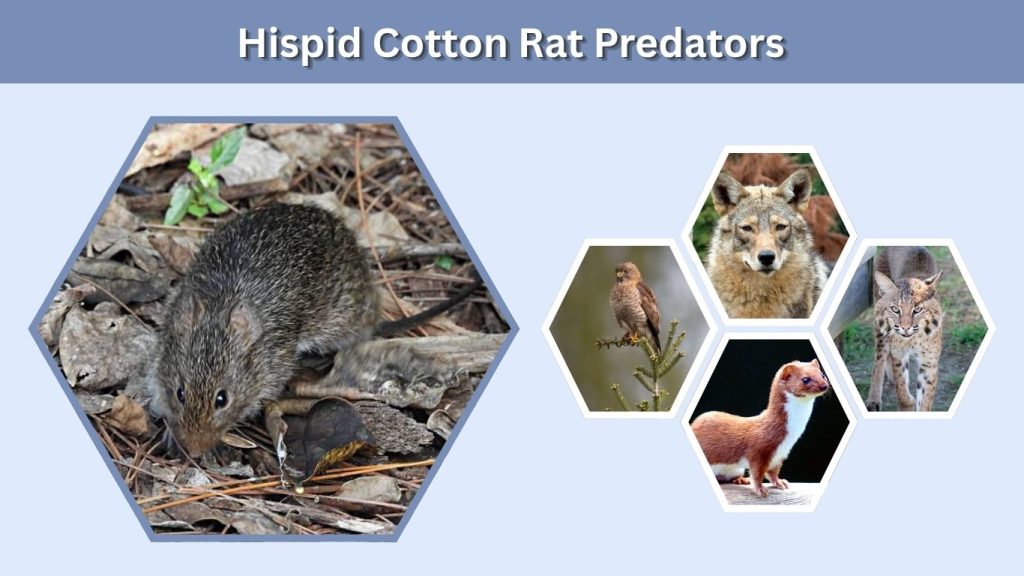
Hispid cotton rats are an important food source for many predators. Because they are common in open habitats and reproduce quickly, they support a wide range of wildlife.
Common predators include snakes, owls, hawks, foxes, coyotes, bobcats, raccoons, weasels, and domestic cats. In wetland edges and southern grasslands, snakes may be especially important predators.
The cotton rat’s main defense is cover. It depends on dense grass, quick movement, and hidden runways rather than fighting. When the grass is cut short or removed, cotton rats become much easier for predators to catch.
Hispid Cotton Rat Ecological Role
The hispid cotton rat plays an important role in grassland and wetland-edge ecosystems. It eats plants, spreads some seeds, creates small runways, and provides food for predators. Its population changes can affect predator activity and vegetation patterns.
In many southern habitats, it is one of the most important small mammals in the food web. When cotton rat numbers rise, predators may have more food. When numbers fall, predators may shift to other small mammals, birds, reptiles, or insects.
Hispid Cotton Rat vs Rat
The hispid cotton rat is often compared with common rats, especially the Norway rat. However, these animals differ in habitat, appearance, behavior, and relationship with people.
The Norway rat is an introduced pest species that commonly lives around humans, garbage, barns, sewers, and buildings. The hispid cotton rat is a native wild rodent that usually lives in grassy outdoor habitats.
Key Differences
- Hispid cotton rat is native; Norway rat is introduced
- Hispid cotton rat prefers grass; Norway rat prefers human-made shelter
- Hispid cotton rat has coarse fur and a shorter tail
- Norway rat has a longer, scaly tail
- Hispid cotton rat usually avoids homes
- Norway rat often enters buildings and storage areas
- Hispid cotton rat eats mostly plants
- Norway rat eats a wide variety of human food waste
This difference is important for identification and control. Seeing a cotton rat in a field does not mean there is a house rat problem.
Marsh Rice Rat vs Hispid Cotton Rat
The marsh rice rat and hispid cotton rat can live in some of the same wetland-edge habitats, especially in the southeastern United States. Both are native rodents, but they have different preferences and appearances.
Marsh rice rats are more strongly associated with wet marshes, aquatic edges, and wetland vegetation. Hispid cotton rats are more connected to grasses, fields, and drier open cover, although they also occur near marshes.
A marsh rice rat is usually slimmer and more wetland-adapted, while a hispid cotton rat looks stockier and more grassland-adapted.
Are Hispid Cotton Rats Dangerous?
Hispid cotton rats are not aggressive and do not normally attack people. They usually run away and hide when disturbed. However, like many wild rodents, they should not be handled because they may carry fleas, ticks, mites, bacteria, or viruses.
Some cotton rats have been linked to infectious disease research, and related studies have found hantaviruses in cotton rat populations. This does not mean every cotton rat is dangerous, but it does mean people should use caution around wild rodent droppings, nests, or carcasses.
If cotton rats are found near a home, barn, or shed, avoid direct contact. Wear gloves, reduce thick vegetation near buildings, seal entry points, and clean rodent-contaminated areas carefully.
Hispid Cotton Rat Control
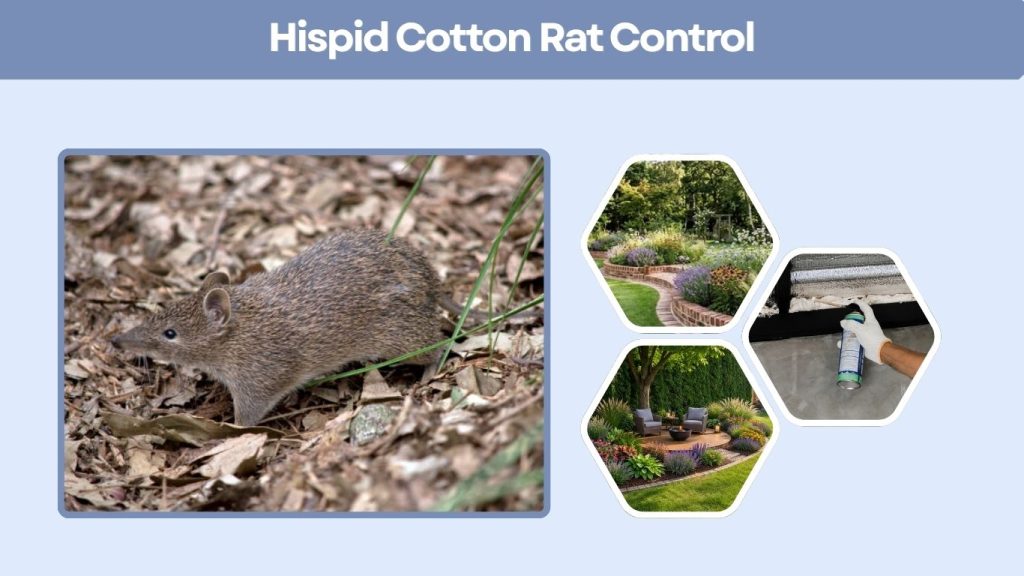
In most wild settings, hispid cotton rats do not need control. They are native animals and part of the ecosystem. Control may only become necessary when they damage crops, invade landscaped areas, or appear too close to homes and outbuildings.
The best approach is habitat management. Removing tall grass, weeds, brush piles, and dense cover near buildings can make the area less attractive. Sealing gaps around structures also helps prevent rodents from entering.
Poison should be avoided unless recommended by a professional because it can harm predators, pets, and other wildlife. In many cases, mowing, sanitation, exclusion, and habitat cleanup are better first steps.
Can Hispid Cotton Rats Be Pets?
Hispid cotton rats are not suitable pets. They are wild rodents with natural behaviors that do not match household care. They may bite when stressed, carry parasites, and require specialized handling. In some areas, keeping native wildlife may also be illegal without permits.
Although cotton rats are used in laboratory settings, that is very different from keeping one as a pet. Laboratory animals are managed under controlled conditions by trained professionals. Wild cotton rats should be left in their natural habitat.
FAQs
What is the scientific name of the hispid cotton rat?
The scientific name of the hispid cotton rat is Sigmodon hispidus. It is a native rodent species found mainly in grassy habitats across much of the southern and south-central United States. It belongs to the family Cricetidae, which includes many New World rats and mice.
What do hispid cotton rats eat?
Hispid cotton rats eat mostly plant material. Their diet includes grasses, seeds, stems, leaves, roots, sedges, green shoots, and some agricultural crops. They are mainly herbivores and are strongly connected to habitats with thick grass and abundant low vegetation.
Where do hispid cotton rats live?
Hispid cotton rats live in dense grassy habitats such as old fields, marsh edges, roadsides, pastures, pine flatwoods, crop borders, and overgrown ditches. They are common in many southern states, including Florida, Texas, Alabama, Georgia, South Carolina, and nearby regions.
Are hispid cotton rats dangerous to humans?
Hispid cotton rats are not aggressive and usually avoid people. However, they are wild rodents and should not be handled. Like other rodents, they may carry parasites or pathogens. People should avoid contact with droppings, nests, urine, or dead rodents and use safe cleanup methods.
How is a hispid cotton rat different from a Norway rat?
A hispid cotton rat is a native wild rodent that lives mostly in grassy outdoor habitats. A Norway rat is an introduced pest species often found near buildings, garbage, and sewers. Cotton rats have coarse fur, shorter tails, and a stronger connection to fields and vegetation.