
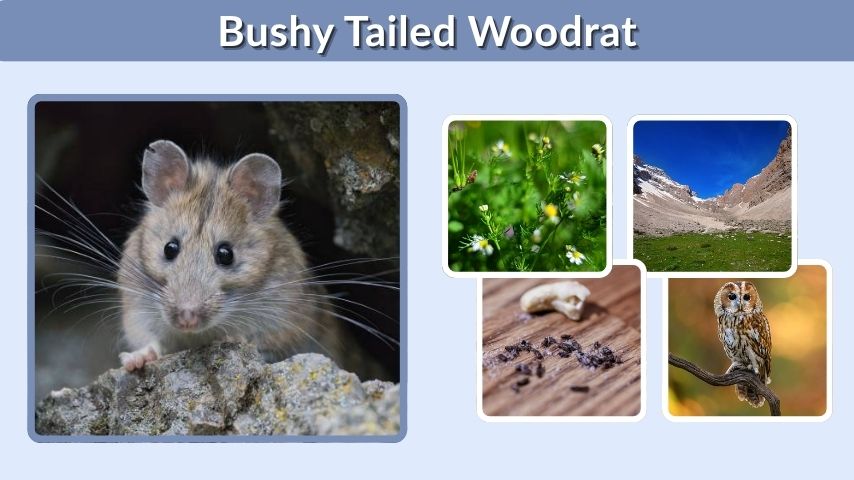
The bushy tailed woodrat is one of North America’s most recognizable packrats. Known for its large ears, soft gray-brown coat, and furry tail, this rodent often lives around rocky slopes, forests, caves, and sometimes buildings near wild areas. Although it may look like an ordinary rat at first glance, the bushy-tailed woodrat has unique habits, nesting behavior, and ecological value.
What Is a Bushy Tailed Woodrat?
The bushy tailed woodrat, also written as bushy-tailed woodrat, is a medium-sized rodent with the scientific name Neotoma cinerea. It belongs to the woodrat group, a collection of rodents commonly called packrats because of their habit of collecting objects and storing them in nests.
Unlike city rats, bushy-tailed woodrats are mostly wild animals. They prefer rocky places, cliffs, caves, forests, and mountain habitats. However, they may enter cabins, sheds, barns, garages, or homes when these structures provide food, shelter, warmth, or nesting materials.
Why Is It Called a Packrat?
The bushy tailed woodrat is often called a packrat because it gathers sticks, leaves, bones, plant material, and sometimes human-made items. Shiny or unusual objects may end up in its nest. This collecting habit is not random clutter. The materials help create shelter, insulation, storage areas, and protection from predators.
The nickname “trade rat” also comes from its behavior of dropping one object and picking up another. This makes the animal seem as if it is trading items, although the behavior is mostly driven by curiosity and nesting instincts.
Bushy Tailed Woodrat Identification
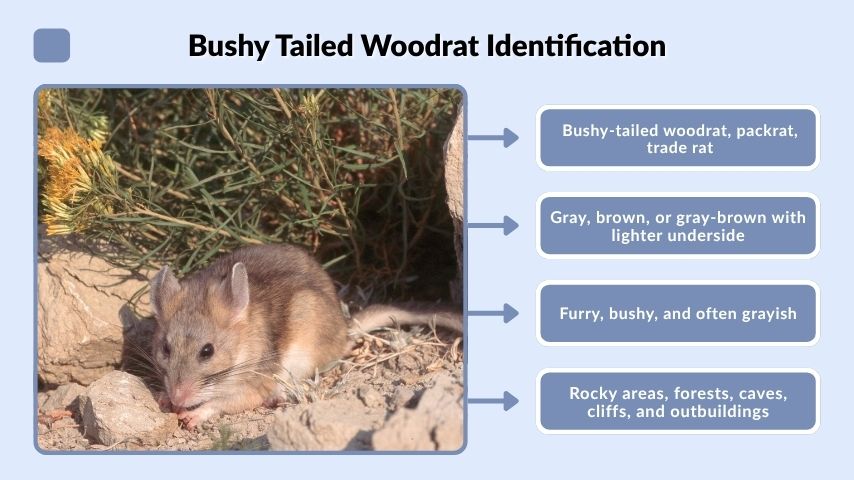
A bushy tailed woodrat can be identified by its large body, rounded ears, long whiskers, soft fur, and bushy tail. Its coat is usually gray, brown, or grayish-brown, often with lighter fur on the belly and feet. The tail is one of its most important features because it is furry instead of scaly like the tail of many common rats.
| Feature | Bushy Tailed Woodrat Description |
| Scientific name | Neotoma cinerea |
| Common names | Bushy-tailed woodrat, packrat, trade rat |
| Body color | Gray, brown, or gray-brown with lighter underside |
| Tail | Furry, bushy, and often grayish |
| Main habitat | Rocky areas, forests, caves, cliffs, and outbuildings |
| Activity pattern | Mostly nocturnal |
| Diet type | Omnivorous, mostly plant-based |
Bushy Tailed Woodrat Size
Bushy tailed woodrats are larger than many people expect. Adults are usually medium to large for a native rodent. Their total length can be roughly 13 to 17 inches from nose to tail tip, and their weight can vary depending on sex, age, food supply, and region.
They are not as heavy as some large city rats, but their fluffy tail, big ears, and rounded body can make them look larger. When seen quickly at night, people may mistake them for squirrels, rats, or other small mammals.
Where Do Bushy Tailed Woodrats Live?
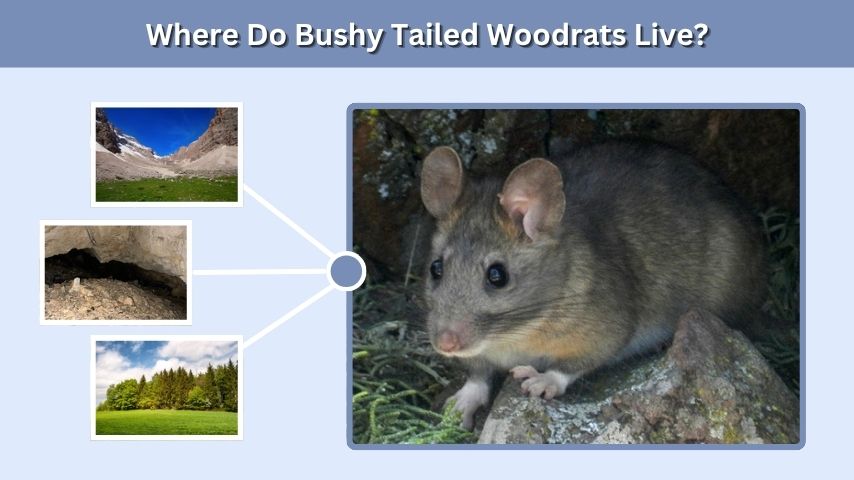
Bushy tailed woodrats are found across much of western North America. Their range includes parts of Canada and the United States, especially mountainous and rocky regions. They are often associated with states and provinces such as Colorado, Utah, Oregon, Washington, Montana, Wyoming, Alberta, British Columbia, and nearby areas.
Their preferred habitats include:
- Rocky cliffs, slopes, ledges, and talus fields
- Caves, crevices, and mine openings
- Forest edges and wooded mountain areas
- Dry shrublands and grasslands with shelter nearby
- Cabins, barns, sheds, or outbuildings near natural habitat
Bushy Tailed Woodrat Habitat
The ideal bushy tailed woodrat habitat includes cover, nesting space, and nearby food. Rocks and crevices are especially important because they provide protection from predators and weather. In colder regions, the animal may use sheltered spaces that help maintain warmth during winter.
Bushy-tailed woodrats are skilled climbers and can move through rocky terrain with ease. They may build nests deep inside cracks, under boulders, in cave entrances, or inside protected corners of buildings.
What Do Bushy Tailed Woodrats Eat?
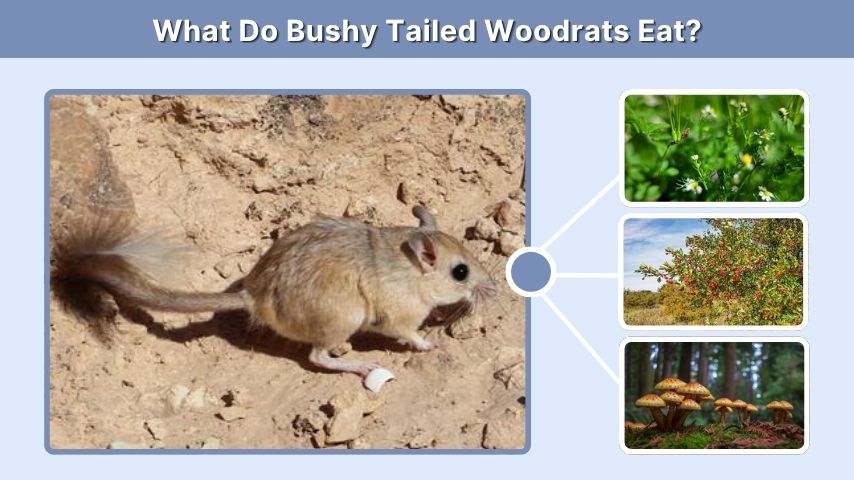
The bushy tailed woodrat diet is mostly plant-based, but it can vary by season and habitat. These rodents feed on leaves, seeds, fruits, bark, twigs, grasses, and other plant parts. In some areas, they may also eat fungi, stored foods, or small amounts of animal matter when available.
Common foods may include:
- Leaves, stems, grasses, and herbs
- Seeds, nuts, berries, and fruits
- Bark, twigs, and woody plant material
- Fungi, mosses, or lichens in some habitats
- Stored human foods if they enter buildings
Feeding Behavior
Bushy-tailed woodrats often collect and store food near their nests. This helps them survive periods when fresh food is limited. In colder or drier habitats, storing food can be especially useful.
They are mostly active at night, so feeding signs may appear before the animal is seen. Chewed plant material, droppings, shredded nesting material, or small piles of collected items can indicate woodrat activity.
Bushy Tailed Woodrat Nest and Midden
A bushy tailed woodrat nest is usually part of a larger structure called a midden. A midden is a pile or collection of sticks, plant material, bones, droppings, and other objects gathered by the animal. Some middens can last for years if the location remains safe and dry.
Middens are important for the animal, but they are also useful to scientists. Old packrat middens can preserve plant remains and other materials, helping researchers understand past environments.
What Is Inside a Woodrat Nest?
A nest may include shredded grasses, leaves, bark, fur, feathers, or soft plant fibers. The outer structure may contain sticks, stones, bones, and other protective material. In buildings, a woodrat may add insulation, fabric, paper, plastic, or small objects it finds nearby.
Signs of a nest may include:
- Piles of sticks, leaves, and debris
- Droppings around sheltered corners
- Chewed wires, wood, boxes, or stored items
- Strong odor from urine or nesting areas
- Noises at night in walls, attics, garages, or crawl spaces
Are Bushy Tailed Woodrats Dangerous?
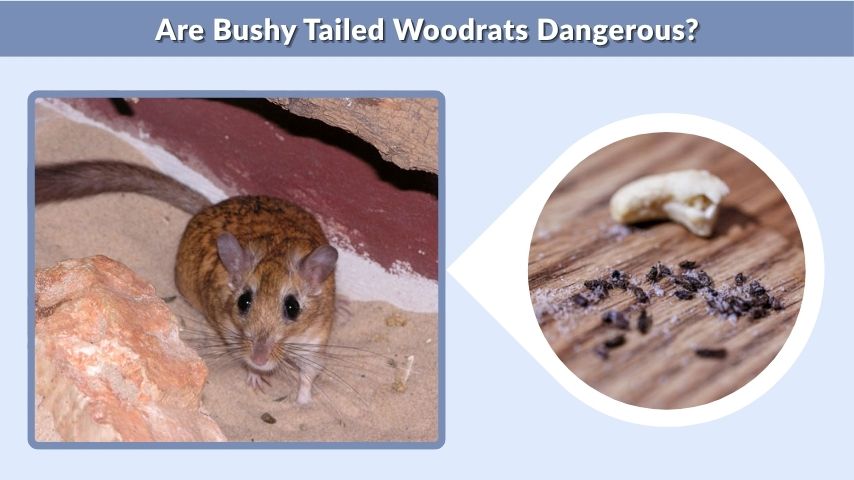
Bushy tailed woodrats are not aggressive toward people, and they usually avoid direct contact. However, they can still create problems when they live too close to homes. Like other wild rodents, they may carry fleas, ticks, parasites, or germs. Their droppings and urine can contaminate surfaces, stored goods, and insulation.
The main risks are not attacks, but sanitation, property damage, and possible disease exposure. Avoid handling a live or dead woodrat with bare hands. Also avoid sweeping dry droppings, because dust from rodent waste can be unsafe to breathe.
Safety Tips Around Woodrats
If you find signs of a bushy tailed woodrat in your house, garage, shed, or cabin, take the situation seriously but calmly.
- Wear gloves and a mask when cleaning affected areas
- Ventilate enclosed spaces before cleanup
- Use disinfectant on droppings and contaminated surfaces
- Seal food, pet food, birdseed, and trash in rodent-proof containers
- Contact a pest or wildlife professional for heavy infestations
Bushy Tailed Woodrat in House
A bushy tailed woodrat may enter a house or outbuilding when it finds easy access, warmth, food, or nesting space. This is more common in rural, mountain, desert-edge, or forest-edge properties.
They may enter through gaps under doors, broken vents, crawl spaces, roof openings, foundation cracks, or holes near utility lines. Once inside, they may chew wiring, insulation, stored boxes, and wood. They may also build nests in attics, wall voids, sheds, garages, or vehicles.
How to Get Rid of a Bushy Tailed Woodrat
The best way to get rid of a bushy tailed woodrat is to combine exclusion, sanitation, trapping, and habitat management. Removing only one animal may not solve the problem if entry points and attractants remain.
Start with these steps:
- Remove food sources such as pet food, birdseed, fallen fruit, and open trash
- Clear debris, woodpiles, brush, and clutter near the building
- Seal holes, cracks, vents, and gaps larger than a small rodent can enter
- Store items in sealed plastic or metal containers instead of cardboard
- Use properly placed traps where activity is confirmed
Live traps and snap traps may be used where legal and appropriate, but placement matters. Traps should be kept away from children, pets, and non-target wildlife. In many cases, hiring a professional is safer, especially when the animal is inside walls, attics, or crawl spaces.
Bushy Tailed Woodrat Control and Prevention
Long-term control depends on making the area less attractive. Woodrats are drawn to shelter and clutter. If a property has brush piles, stacked lumber, abandoned equipment, open sheds, or food sources, it becomes easier for them to settle in.
Prevention Checklist
Use this checklist to reduce the chance of future woodrat problems:
- Seal gaps around foundations, vents, doors, and rooflines
- Install metal mesh over vents and crawl-space openings
- Keep firewood, lumber, and brush away from building walls
- Store animal feed, seed, and dry goods in sealed containers
- Trim vegetation that touches roofs, decks, or walls
- Inspect cabins, sheds, and garages regularly for droppings or nests
Poison baits should be used with caution, if at all, because they can harm pets, children, and wildlife if misused. Some products may also be restricted by location or species. Always follow local rules and product labels, or use a licensed pest control expert.
Bushy Tailed Woodrat Predators
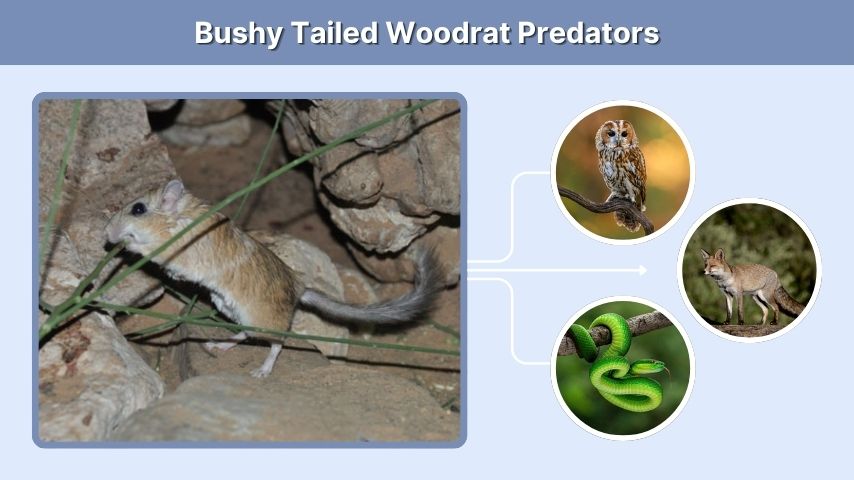
Bushy tailed woodrats are part of the food web. Their predators include owls, hawks, foxes, coyotes, bobcats, snakes, weasels, and other carnivores. Their nocturnal habits and rocky nests help protect them, but they remain an important food source for many animals.
Their nests and middens can also support other small organisms. In natural habitats, they help move seeds, recycle plant material, and create shelter used by insects or other small animals.
Bushy Tailed Woodrat Lifespan and Reproduction
The bushy tailed woodrat lifespan can vary in the wild. Many do not survive long because of predators, weather, disease, and food shortages. In safer conditions, some may live several years.
Breeding often occurs during warmer months, though timing depends on climate and region. Females build protected nests for their young, usually in rocky shelters or secure cavities. Young woodrats grow quickly and eventually leave to find their own shelter.
Can You Keep a Bushy Tailed Woodrat as a Pet?
A bushy tailed woodrat is a wild animal, not a good pet. It may carry parasites, chew objects, mark areas with urine, and become stressed in captivity. In many places, keeping native wildlife without permits is illegal.
Anyone interested in rodents as pets should choose domesticated species from responsible breeders or rescues, such as domestic rats, mice, hamsters, or gerbils. Wild woodrats should be left in their natural habitat unless removal is necessary for health or property reasons.
FAQs
What does a bushy tailed woodrat look like?
A bushy tailed woodrat has gray-brown fur, large rounded ears, long whiskers, dark eyes, and a furry tail. Its tail is one of the easiest ways to tell it apart from common city rats, which usually have thinner, scaly-looking tails. It often looks softer and more squirrel-like than a typical rat.
Is a bushy tailed woodrat the same as a packrat?
Yes, the bushy tailed woodrat is commonly called a packrat. The name comes from its habit of collecting sticks, plant material, bones, and small objects for its nest or midden. It is one of the best-known packrat species and is strongly associated with this collecting behavior.
What attracts bushy tailed woodrats to houses?
Bushy tailed woodrats are attracted to shelter, warmth, food, and nesting materials. Open trash, pet food, birdseed, clutter, brush piles, wood stacks, and unsealed building gaps can make a property appealing. Cabins, sheds, garages, and rural homes near rocky or wooded areas are more likely to have problems.
Are bushy tailed woodrats harmful?
They are not usually aggressive, but they can cause damage and sanitation issues. They may chew wires, insulation, boxes, stored goods, and wood. Their droppings, urine, fleas, or parasites can also create health concerns. Avoid direct contact and clean contaminated areas carefully with protective gear.
How do you remove a bushy tailed woodrat nest?
Wear gloves and a mask, ventilate the space, and avoid stirring up dust. Spray droppings and nest material with disinfectant before removal. Place contaminated material in sealed bags and clean the area thoroughly. If the nest is large, hidden, or inside a wall or attic, call a professional.