
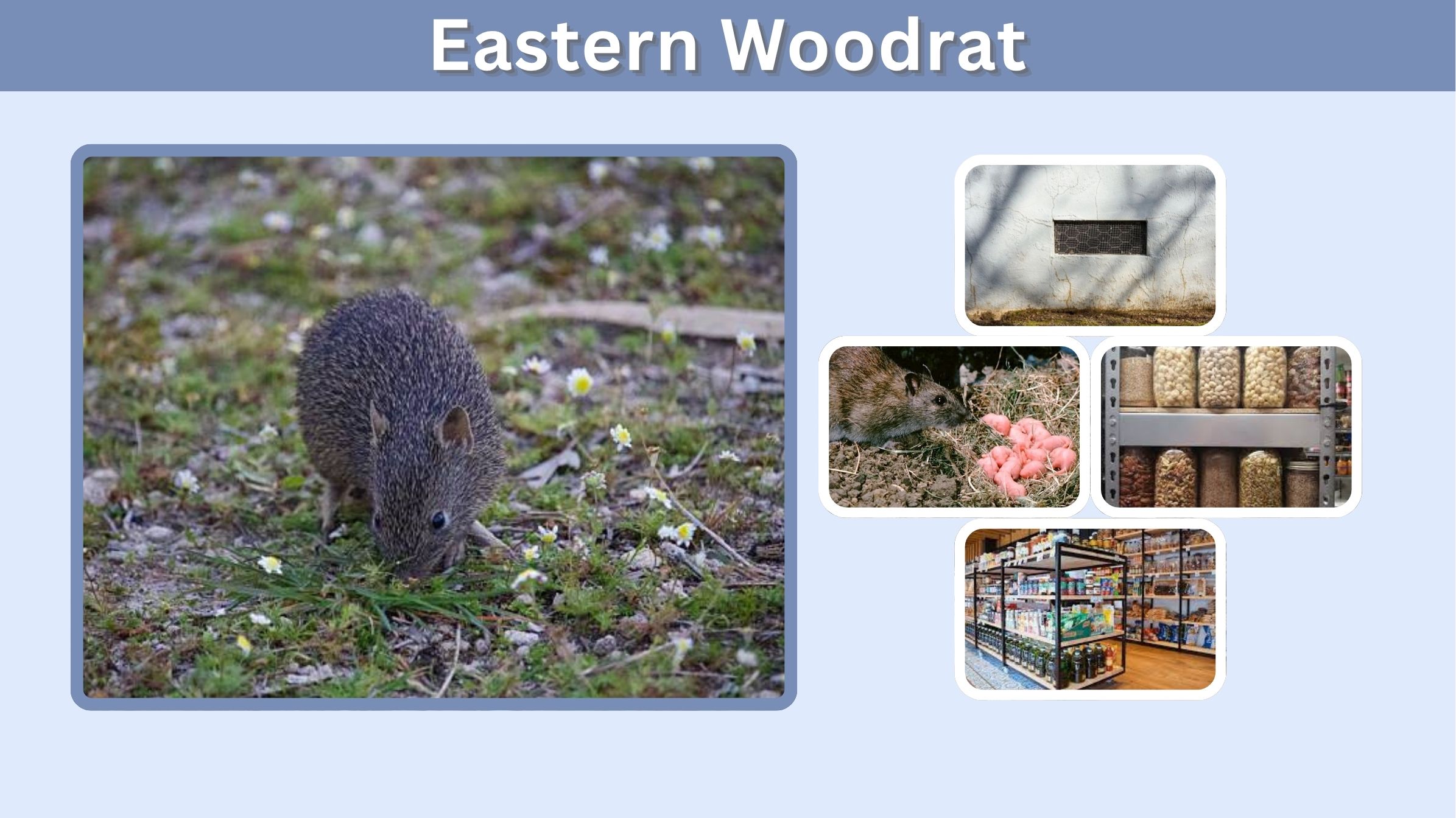
The eastern woodrat is a native North American rodent often called a packrat because of its habit of collecting sticks, leaves, bones, shells, and other objects around its den. Unlike city rats, it is mainly a woodland species that depends on cover, rocky shelters, and dense vegetation. Understanding its range, diet, behavior, and conservation status helps explain why this shy animal matters in eastern ecosystems.
What Is an Eastern Woodrat?
The eastern woodrat is a medium-sized rodent with the scientific name Neotoma floridana. It belongs to the family Cricetidae, the same broad family that includes many New World mice, rats, voles, and hamsters. Although the word “rat” appears in its name, the eastern woodrat is not the same as the Norway rat commonly found in cities, sewers, barns, and alleys.
Eastern woodrats are also known as packrats, Florida woodrats, or bush rats in some areas. Their most famous behavior is building large stick houses, sometimes called dens, lodges, or middens. These structures may be used for shelter, food storage, nesting, and protection from predators.
Eastern Woodrat Scientific Classification
| Category | Details |
| Common name | Eastern woodrat |
| Scientific name | Neotoma floridana |
| Order | Rodentia |
| Family | Cricetidae |
| Genus | Neotoma |
| General group | Woodrats or packrats |
| Native range | Central, eastern, and southeastern United States |
Eastern Woodrat Identification
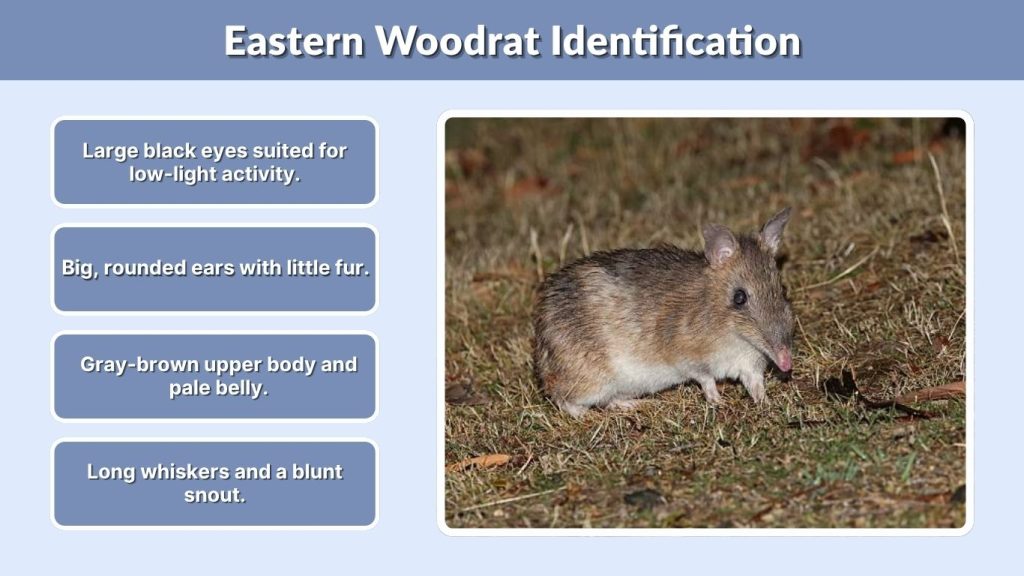
Eastern woodrats are larger and more robust than many native mice, but they usually look softer and less aggressive than urban rats. Their appearance can vary slightly by region and season, but several features help with identification.
Physical Description
An adult eastern woodrat typically has grayish-brown to brownish fur, a pale or white underside, large dark eyes, rounded ears, long whiskers, and a furry tail. In some seasons, the upper body may appear warmer brown or cinnamon-toned. The feet are often pale, and the tail may look darker on top and lighter underneath.
Common identifying features include:
- Large black eyes suited for low-light activity
- Big, rounded ears with little fur
- Gray-brown upper body and pale belly
- Long whiskers and a blunt snout
- A tail that is furred rather than naked-looking
- A sturdy body compared with smaller mice
Eastern Woodrat Size and Weight
Eastern woodrats are usually medium-sized rodents. Adults may measure around 13 to 17 inches in total length, including the tail. Their weight is often around 7 to 12 ounces, though exact size can vary by age, sex, food supply, and local population.
Baby and juvenile eastern woodrats are much smaller, with softer features and less developed body proportions. Like many young mammals, they depend on the mother early in life and gradually begin exploring outside the nest as they grow.
Eastern Woodrat Range and Distribution
The eastern woodrat lives across parts of the central, eastern, and southeastern United States. Its range extends through many wooded and rocky regions, including areas of the Southeast, the Appalachian region, and parts of the Midwest and south-central United States.
Eastern Woodrat Range Map Overview
A range map for the eastern woodrat generally shows the species across much of the eastern half of the United States, but its presence is not evenly spread. Even within its broad range, the animal depends on suitable shelter, cover, and food. This means it may be common in one forested area and rare or absent in nearby open farmland or heavily developed land.
Eastern woodrats are associated with states such as Alabama, Georgia, Florida, Oklahoma, Texas, Illinois, North Carolina, South Carolina, and parts of the Appalachian region. In some northern or edge-of-range areas, populations may be scattered, isolated, or locally declining.
Where Do Eastern Woodrats Live?
Eastern woodrats live in places where they can hide, forage, and build protected dens. They are most often connected with forests, brushy areas, rocky slopes, caves, bluffs, ravines, thickets, and old fields with dense cover.
Good habitat often includes:
- Hardwood forests with leaf litter and fallen branches
- Rocky outcrops, cliffs, caves, or crevices
- Brush piles and tangled vegetation
- Hollow logs, tree roots, and abandoned structures
- Areas with acorns, fruits, seeds, and green plants
In some rural settings, eastern woodrats may enter barns, sheds, cabins, or outbuildings, especially if food and shelter are available. However, they are still very different from Norway rats, which are more strongly tied to human garbage, sewers, and urban environments.
Eastern Woodrat Habitat and Den
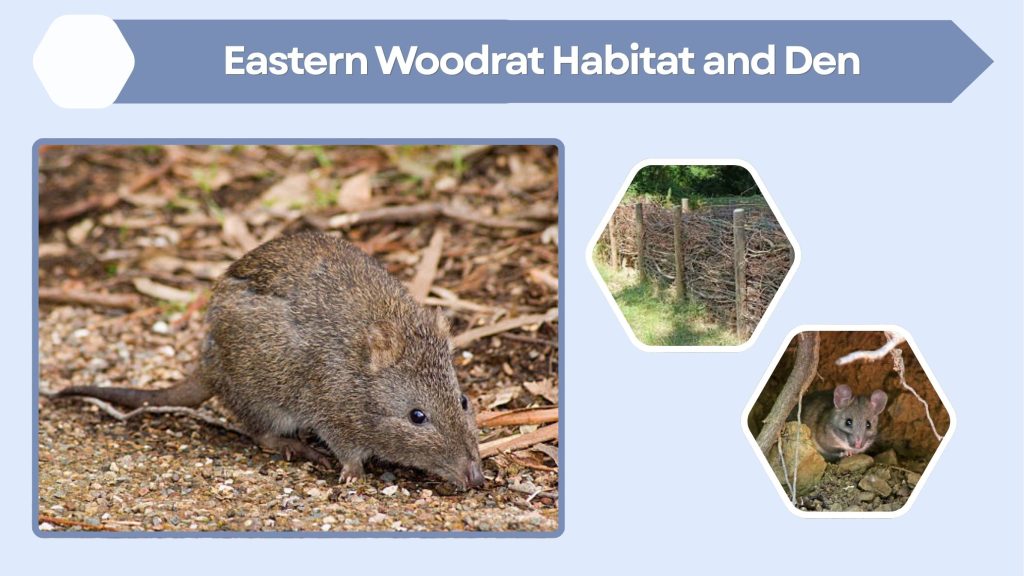
The eastern woodrat is famous for its den-building behavior. A den may look like a messy pile of sticks, leaves, bark, bones, stones, and other objects. To the animal, this structure is a carefully used shelter system.
Eastern Woodrat Nest
An eastern woodrat nest is usually hidden inside the larger den or placed in a protected cavity. The nest may be lined with softer materials such as shredded bark, grasses, leaves, or other plant fibers. Females use nests to raise young, while adults also use protected areas for resting during the day.
A large woodrat den may include:
- Outer layers of sticks and debris
- Inner nesting chambers
- Food storage areas
- Runways or entrance tunnels
- Defensive cover against snakes, owls, foxes, and other predators
Why Woodrat Dens Matter
Woodrat dens can last for long periods if conditions remain stable. In some areas, dens may be used by several generations. These structures can also provide shelter for insects, reptiles, amphibians, and other small animals. Because woodrats collect plant materials and food items, their dens can influence seed movement and small-scale habitat structure.
Eastern Woodrat Diet
The eastern woodrat is mainly herbivorous, meaning much of its diet comes from plant material. However, its food choices change with season, location, and availability.
What Do Eastern Woodrats Eat?
Eastern woodrats eat a wide range of foods, including leaves, stems, seeds, nuts, berries, fruits, fungi, bark, and twigs. Acorns and other mast foods can be important where oak forests are present. In winter, stored food may help them survive when fresh vegetation is limited.
Typical foods include:
- Acorns and nuts
- Berries and fruits
- Seeds and grasses
- Leaves and green plants
- Bark, twigs, and roots
- Fungi and other seasonal plant matter
Food Storage Behavior
Eastern woodrats are known for caching food. They may gather and store plant material near or inside their dens. This habit is one reason they are called packrats. The same collecting behavior may also lead them to carry unusual objects back to their den, including bones, shells, feathers, paper, or small human-made items.
Eastern Woodrat Behavior
Eastern woodrats are generally shy, secretive, and most active at night. Their large eyes and whiskers help them move through dark, cluttered habitats. During the day, they usually remain inside dens, rock crevices, hollow logs, or other shelters.
Daily Activity
Eastern woodrats are mostly nocturnal, although they may occasionally be seen during the day. A daytime sighting does not always mean the animal is sick. It may be moving between shelters, disturbed from its den, searching for food, or responding to seasonal pressure. Still, a woodrat acting weak, disoriented, or unusually approachable should not be handled.
Homing and Movement
Woodrats tend to know their home area well. They use familiar routes, runways, scent cues, and sheltered travel paths. They are usually not long-distance wanderers compared with some other mammals, but young animals may disperse to find their own territories.
Social Behavior
Eastern woodrats are often solitary outside the breeding season. Adults may defend den areas, especially where shelter is limited. Males and females come together for reproduction, but they do not usually live in large social colonies like some urban pest rodents.
Eastern Woodrat Life Cycle
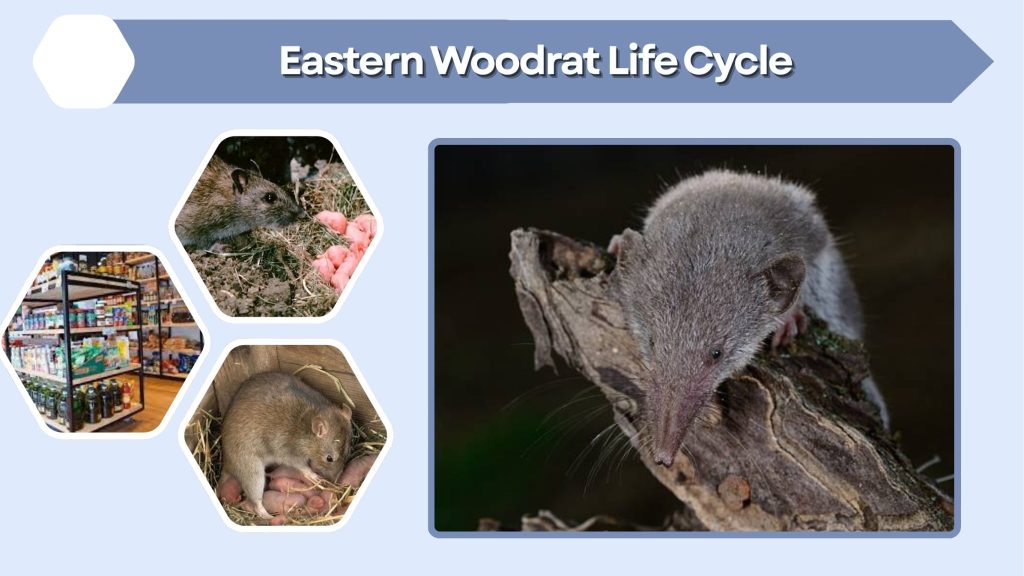
Eastern woodrats reproduce during warmer parts of the year in many regions, though timing can vary by climate and food availability. Females give birth in protected nests, where young remain hidden during early development.
Baby Eastern Woodrat Growth
Baby eastern woodrats are born small and helpless. They rely on the mother for warmth, milk, grooming, and protection. As they grow, their fur develops, their eyes open, and they begin moving around the nest. Juveniles gradually start eating solid food and exploring the area around the den.
Important life stages include:
- Newborn stage inside the nest
- Early growth while nursing
- Juvenile exploration near the den
- Dispersal or territory establishment
- Adult breeding stage
Eastern Woodrat Lifespan
In the wild, many eastern woodrats do not live very long because of predation, weather, disease, parasites, and habitat risks. Some individuals may live longer in protected conditions, but wild survival depends heavily on shelter quality, food supply, and predator pressure.
Eastern Woodrat Predators and Natural Enemies
Eastern woodrats are prey for many animals. Their dens help protect them, but they are still part of the food web. Their role as prey makes them important for forest and woodland predators.
Common Predators
Natural predators may include:
- Owls and hawks
- Snakes
- Foxes
- Coyotes
- Bobcats
- Raccoons
- Weasels and other small carnivores
- Domestic cats in some areas
Young woodrats are especially vulnerable. Adults rely on cover, nighttime activity, quick movement, and complex dens to reduce risk.
Parasites and Disease Pressure
Like many wild mammals, eastern woodrats can carry fleas, ticks, mites, internal parasites, and other organisms. In some woodrat species and regions, parasite pressure has been linked to population stress. People should avoid handling wild woodrats, nests, or droppings without proper precautions.
Eastern Woodrat Scat, Tracks, and Signs
Many people notice signs of eastern woodrats before seeing the animal. Because they are secretive, identifying dens, droppings, tracks, and chew marks can help confirm their presence.
Eastern Woodrat Scat
Woodrat scat is usually small, dark, and pellet-like. It may be found around dens, feeding areas, or sheltered travel paths. However, rodent droppings can be difficult to identify accurately without context. If droppings are found in a building, avoid sweeping or vacuuming them dry because dust from rodent waste can be unsafe.
Tracks and Field Signs
Eastern woodrat tracks may show small front and hind feet, sometimes with tail drag marks in soft soil, dust, sand, or snow. Other signs include stick piles, food caches, gnawed plant material, and collected objects near a den.
Look for:
- Large stick nests or debris piles
- Chewed nuts, seeds, bark, or twigs
- Small pellet-like droppings
- Runways through grass or leaves
- Stored plant material
- Unusual objects gathered in one place
Eastern Woodrat vs Norway Rat
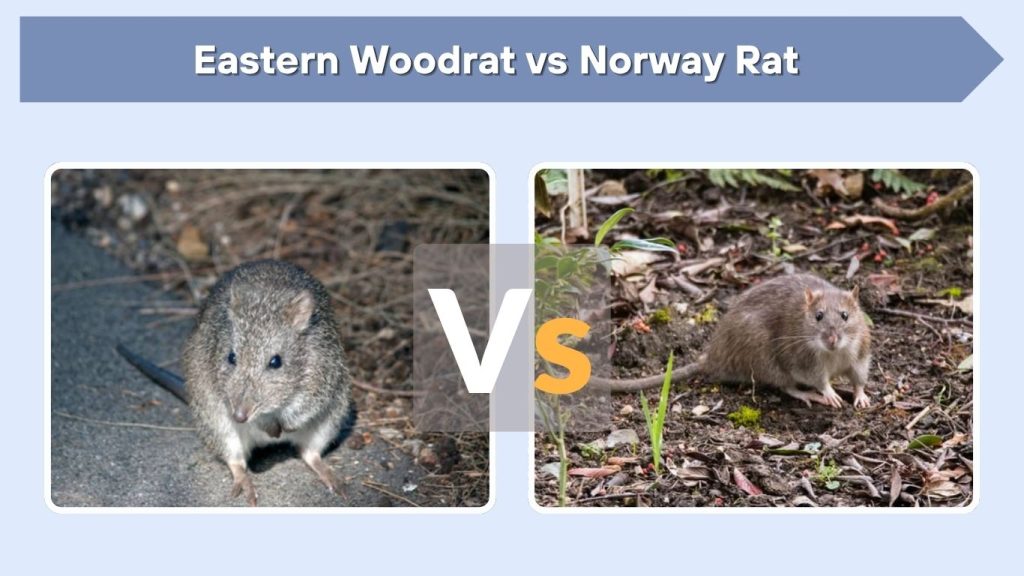
Many people compare the eastern woodrat with the Norway rat because both are called rats. However, they differ in habitat, behavior, appearance, and ecological role.
The Norway rat is a non-native species strongly associated with human settlements, garbage, sewers, farms, and buildings. The eastern woodrat is a native woodland rodent that usually depends on natural cover and plant-based food.
Main Differences
Eastern woodrats usually have larger ears, softer-looking fur, large dark eyes, and a furred tail. Norway rats often have heavier bodies, smaller ears relative to head size, and a more naked-looking scaly tail. Norway rats are also more likely to live in groups around human food waste, while eastern woodrats are more solitary and tied to brushy or rocky habitat.
In pest-control situations, correct identification matters. Removing a native woodrat from a rural shed is different from dealing with a Norway rat infestation in an urban building.
Are Eastern Woodrats Endangered?
Across its full range, the eastern woodrat is not considered equally threatened everywhere. In many areas, the species remains secure or locally present. However, some populations and subspecies have declined, especially where habitat has been lost, fragmented, or degraded.
Why Some Populations Decline
Eastern woodrats need shelter and cover. When forests are cleared, rocky habitats are disturbed, or old-growth features disappear, local populations can become isolated. Small isolated populations may be more vulnerable to predators, parasites, harsh weather, and reduced genetic diversity.
Threats can include:
- Habitat loss and fragmentation
- Removal of brush piles and rocky shelter
- Development near forest edges
- Declines in important food sources
- Predation pressure from outdoor cats
- Road mortality
- Parasites and disease
- Small isolated populations
Conservation Efforts
Conservation work may include habitat protection, forest management, population monitoring, reintroduction, research, and protection of rocky outcrops or den sites. In some states, wildlife agencies and researchers have monitored declining populations and worked to restore suitable habitat.
People can help by protecting native woodland, leaving natural cover where appropriate, controlling invasive plants, keeping cats indoors, and avoiding disturbance of active dens.
Eastern Woodrat Control Around Homes
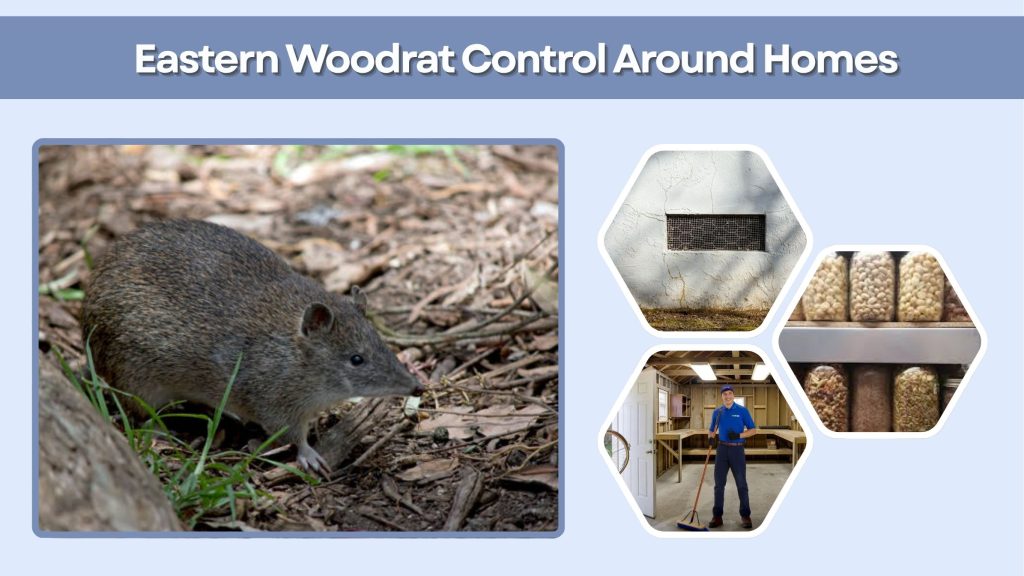
Eastern woodrats are native wildlife, but they can become a problem if they enter sheds, cabins, attics, barns, or stored equipment. They may chew materials, build nests in unwanted places, or collect objects.
Best Way to Drive Away Eastern Woodrats
The best approach is prevention and exclusion rather than harm. Seal entry points, remove easy food sources, and reduce clutter near buildings. If local laws protect woodrats in your area, contact a wildlife professional before trapping or relocating them.
Useful steps include:
- Seal holes, vents, gaps, and crawlspace openings
- Store pet food, seeds, and grain in sealed containers
- Remove clutter from sheds and garages
- Trim vegetation touching buildings
- Keep firewood and brush piles away from walls
- Use gloves and a mask when cleaning old nesting material
- Contact local wildlife officials if the animal may be protected
Best Bait and Trapping Notes
People sometimes search for the best bait for eastern woodrats, but trapping rules vary by state. Peanut butter, nuts, fruit, or grains may attract many rodents, not only woodrats. Because native species may be regulated, trapping should be done carefully and legally. Relocation can also fail if the animal is moved into poor habitat or another animal’s territory.
Eastern Woodrat Facts
The eastern woodrat is more than a nuisance animal. It plays a meaningful role in woodland ecosystems and has several unusual traits.
Interesting facts include:
- It is a native rodent, not an introduced city rat.
- It builds large stick dens that may last for years.
- It stores food for later use.
- It is often called a packrat because it collects objects.
- It helps move seeds and plant material.
- It serves as prey for owls, snakes, foxes, and other predators.
- It prefers cover, rocks, forests, thickets, and sheltered spaces.
- Some local populations have declined even though the species remains widespread overall.
FAQs
What is the eastern woodrat?
The eastern woodrat is a native North American rodent with the scientific name Neotoma floridana. It is also called a packrat because it collects sticks, food, and other objects around its den. It usually lives in forests, rocky areas, thickets, and brushy habitats rather than dense urban settings.
Where do eastern woodrats live?
Eastern woodrats live across parts of the central, eastern, and southeastern United States. They prefer forests, rocky slopes, caves, ravines, brush piles, hollow logs, and dense vegetation. Their range is broad, but local populations depend on suitable shelter, food, and protected den sites.
What do eastern woodrats eat?
Eastern woodrats mainly eat plant material, including leaves, stems, fruits, seeds, nuts, acorns, bark, twigs, berries, and fungi. Their diet changes by season and location. They may also store food near or inside their dens, especially when winter or dry conditions reduce fresh food.
Is an eastern woodrat dangerous?
An eastern woodrat is not usually aggressive toward people and normally avoids contact. However, like other wild rodents, it should not be handled because it may carry parasites or pathogens. Droppings, nests, and urine should be cleaned carefully using protective methods rather than dry sweeping.
Are eastern woodrats endangered?
The eastern woodrat is not endangered everywhere, but some local populations and subspecies have declined. Habitat loss, fragmentation, parasites, predators, and isolation can affect survival. In some states or regions, conservation work focuses on monitoring populations, protecting habitat, and restoring suitable den sites.