
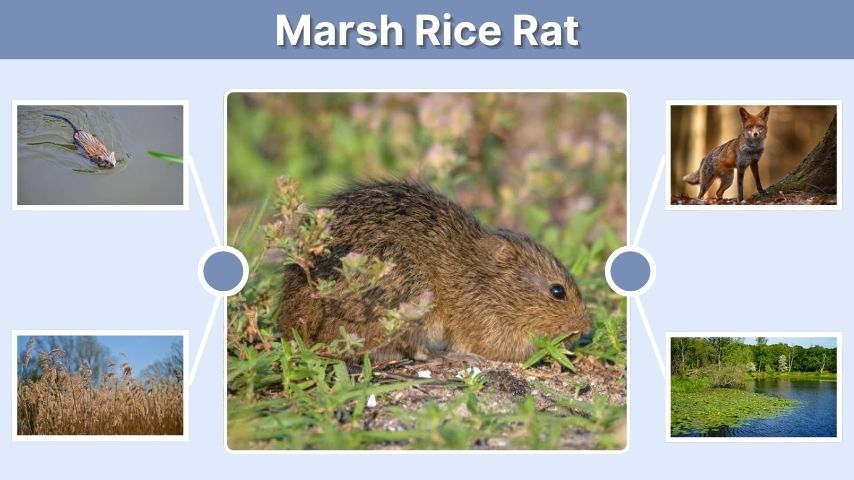
The marsh rice rat is a small, semiaquatic rodent that lives in wetlands, marshes, swamps, and coastal habitats. Although it may look like an ordinary rat at first glance, this species has several special traits that help it survive in watery environments. From its swimming ability to its flexible diet, the marsh rice rat plays an important role in wetland food webs across the eastern and southern United States.
What Is a Marsh Rice Rat?
The marsh rice rat, known scientifically as Oryzomys palustris, is a native North American rodent in the family Cricetidae. It is not the same as the common Norway rat or roof rat often found around cities and buildings. Instead, it is a wild wetland mammal that usually lives close to water, dense vegetation, and muddy ground.
This animal is called a “rice rat” partly because members of its group have been associated with wet fields and rice-growing areas. The word “marsh” points to its preferred environment: marshes, swamps, wet meadows, and coastal wetlands. It is especially well adapted for places where land and water meet.
Marsh rice rats are mostly active at night. Because of this nocturnal behavior, people rarely see them even in areas where they are common. They often move through thick grasses, sedges, reeds, and marsh plants, which help hide them from predators.
Marsh Rice Rat Characteristics
The marsh rice rat is medium-sized compared with many native mice and rats. It has a long body, a long tail, and dense fur that helps it stay active in damp habitats. Its upper body is usually grayish brown to dark brown, while the underside is lighter. Some populations, especially in parts of Florida, may show warmer or reddish-brown tones.
Its body shape is useful for moving through wetland vegetation. The tail is long and scaly, helping with balance as the animal climbs through low plants, runs over marsh debris, or swims. The feet are another important feature. Marsh rice rats have long toes and partially webbed hind feet, which support swimming and movement over soft mud.
A quick identification guide:
| Feature | Description |
| Scientific name | Oryzomys palustris |
| Common name | Marsh rice rat |
| Animal type | Semiaquatic rodent |
| Typical habitat | Marshes, swamps, wet meadows, mangroves, and coastal wetlands |
| Activity pattern | Mostly nocturnal |
| Diet | Omnivorous |
| Key adaptation | Strong swimming ability and wetland-specialized feet |
Marsh Rice Rat Range
The marsh rice rat range includes much of the eastern and southern United States. It is most closely linked with coastal plains, river wetlands, freshwater marshes, salt marshes, and swampy lowlands. It occurs from parts of the Mid-Atlantic and Southeast through Florida and westward along the Gulf Coast.
Searches for “marsh rice rat Florida,” “marsh rice rat Texas,” “marsh rice rat North Carolina,” “marsh rice rat South Carolina mammals,” and “marsh rice rat Maryland mammals” all connect to the same broad idea: this species is strongly associated with wet areas in the eastern and southern regions of North America.
Its range can vary locally depending on water levels, vegetation, habitat quality, and human land use. In some areas, marsh rice rats may be common but hard to observe because they stay hidden in dense cover. In other places, especially isolated islands or heavily developed wetlands, populations may be more vulnerable.
Marsh Rice Rat Habitat
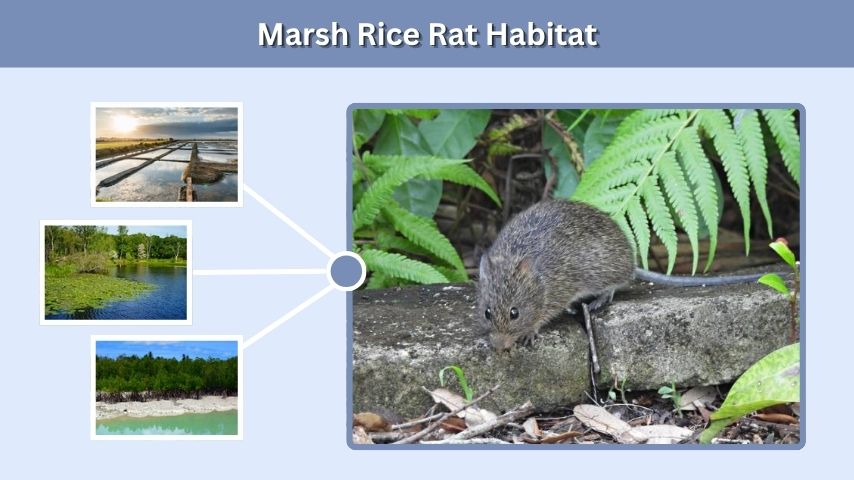
Marsh rice rat habitat is usually wet, grassy, and close to standing or slow-moving water. The species can live in both freshwater and saltwater-influenced environments. It is often found in:
- Salt marshes
- Freshwater marshes
- Swamps
- Wet prairies
- Hydric hammocks
- Mangrove edges
- Wet meadows
- River margins
- Marshy agricultural areas
The animal needs dense vegetation for cover, nesting, and movement. Grasses, sedges, reeds, and rushes provide protection from predators and help the rat travel without being exposed. In coastal areas, mangroves and transitional wetland zones may also provide suitable shelter.
Wetland structure is very important. If marshes are drained, filled, fragmented, or converted into developed land, marsh rice rats can lose nesting areas, food sources, and safe travel routes. This is one reason some local populations are more at risk than the mainland species as a whole.
Marsh Rice Rat Adaptations
The marsh rice rat has several adaptations that make it successful in wetland environments. These adaptations help it move, feed, escape danger, and reproduce in places where many other small mammals would struggle.
One of its most important adaptations is swimming. Marsh rice rats can swim through marsh channels, flooded vegetation, and shallow water. When threatened, they may escape into water rather than relying only on running through vegetation.
Its feet also support its semiaquatic lifestyle. Long toes and partial webbing improve movement in mud and water. Dense fur may help protect the body in damp conditions, while regular grooming can help maintain the coat.
Important adaptations include:
- Strong swimming ability
- Long toes for moving through mud and wet plants
- Partially webbed hind feet
- Dense fur suited to damp habitats
- Nocturnal behavior to avoid predators
- Flexible omnivorous diet
- Ability to use thick vegetation for cover
These traits allow the marsh rice rat to survive in habitats that change with tides, floods, storms, droughts, and seasonal plant growth.
What Do Marsh Rice Rats Eat?
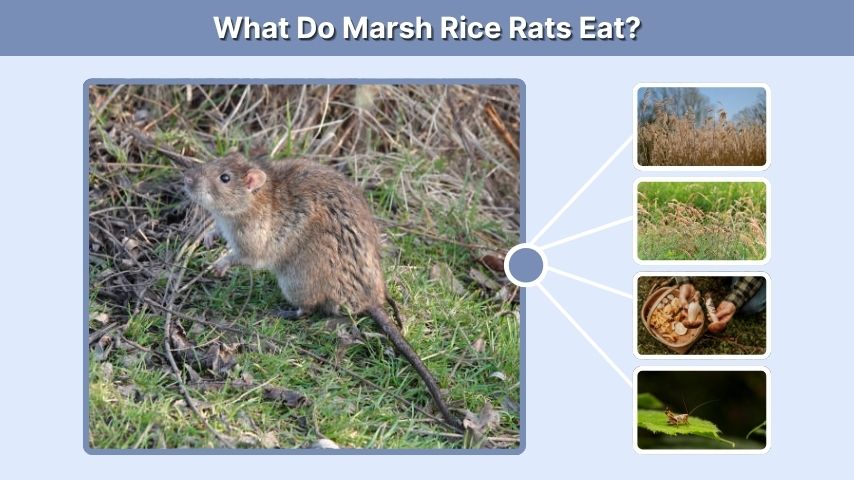
Marsh rice rats are omnivores, meaning they eat both plant and animal matter. Their diet changes depending on habitat, season, and food availability. This flexible feeding behavior is one reason the species can live in many types of wetlands.
Marsh rice rat food may include seeds, grasses, plant stems, fungi, insects, snails, small crabs, clams, fish, and other small animals. In some populations, animal matter can make up a large part of the diet.
Common foods include:
- Seeds and wetland plants
- Grasses and sedges
- Fungi
- Insects
- Snails and mollusks
- Small crustaceans
- Small fish
- Bird eggs or small vertebrates when available
Because marsh rice rats eat a wide range of foods, they help connect different parts of the wetland food web. They consume plants, invertebrates, and small animals, while also becoming prey for many larger species.
Marsh Rice Rat Predators
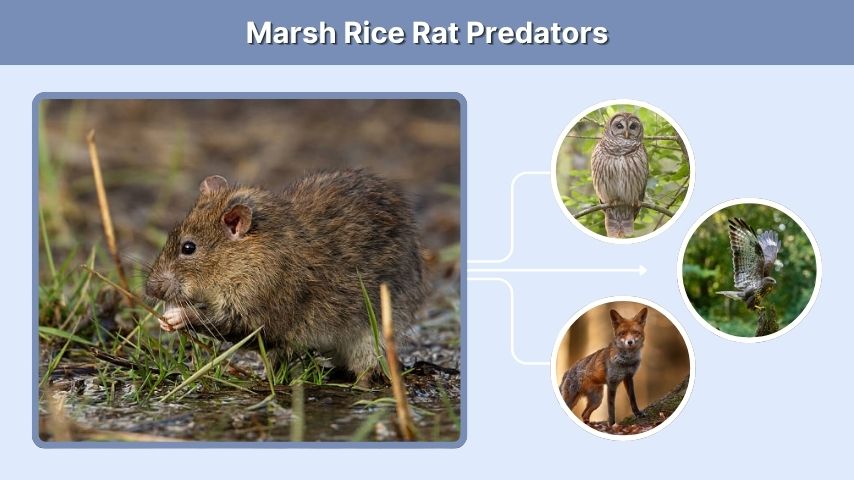
Marsh rice rats are prey for many wetland and woodland predators. Their small size makes them an important food source for birds, reptiles, mammals, and sometimes larger aquatic animals. Predation pressure is one reason they rely heavily on dense cover and nighttime activity.
Common marsh rice rat predators include owls, hawks, snakes, foxes, raccoons, weasels, mink, skunks, and alligators in some southern habitats. Domestic and feral cats may also threaten vulnerable island populations.
Predators may include:
- Barn owls
- Barred owls
- Hawks
- Snakes, including cottonmouths
- Raccoons
- Foxes
- Mink and weasels
- Skunks
- Alligators
- Free-ranging cats in some areas
Some users search “do red wolves eat marsh rice rats.” Red wolves are carnivores that can eat small mammals, but marsh rice rats would likely be only a minor or occasional prey item if their ranges and habitats overlap. More commonly documented predators include owls, snakes, raccoons, foxes, and other wetland predators.
Marsh Rice Rat Lifespan and Reproduction
The marsh rice rat usually has a short lifespan in the wild. Many individuals live less than one year because of predation, weather, disease, and the natural risks of wetland habitats. However, the species can reproduce quickly, which helps maintain populations where habitat remains healthy.
Females can have several litters, and young marsh rice rats develop quickly. Baby marsh rice rats are born helpless, blind, and dependent on the mother. After a short period, they grow fur, open their eyes, begin eating solid food, and become more independent.
This fast life cycle is common among small rodents. It allows populations to recover after seasonal declines, storms, flooding events, or increased predation, as long as enough habitat remains available.
Baby Marsh Rice Rat
A baby marsh rice rat is small, vulnerable, and hidden in a nest made from grasses, sedges, or other plant material. Nests may be built in dense vegetation, under debris, in short burrows, or above wet ground in marsh plants.
Baby rice rats are rarely seen by people because nests are hidden and adults are secretive. Young rats grow quickly, and females may become capable of reproduction at a young age. This rapid development supports population growth in productive wetland environments.
People should avoid handling baby marsh rice rats or disturbing nests. Wild rodents can be stressed by human contact, and wetland wildlife should be left in place unless a licensed wildlife professional or rehabilitator gives specific guidance.
Marsh Rice Rat vs Hispid Cotton Rat
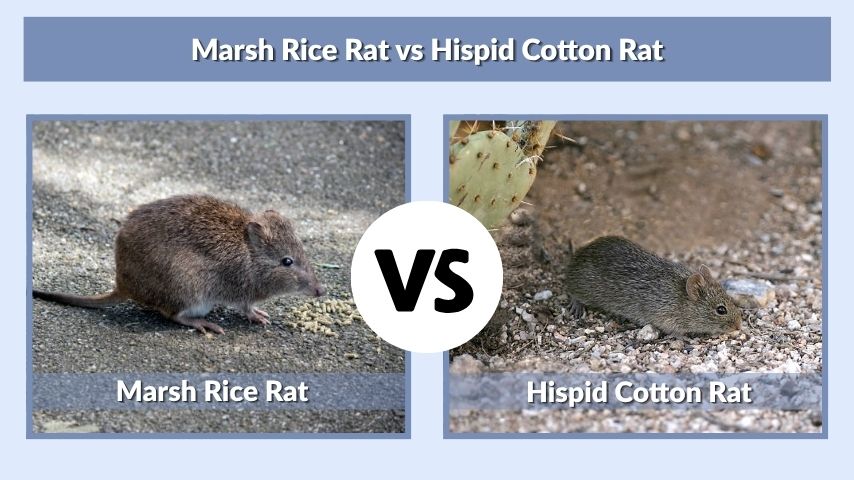
The marsh rice rat and hispid cotton rat can occur in some of the same regions, especially in the southeastern United States. However, they are different species with different habitat preferences and behaviors.
The marsh rice rat is more strongly linked to wetlands and water. It is a capable swimmer and often lives in marshes, swamps, and flooded vegetation. The hispid cotton rat is usually more associated with grassy fields, weedy areas, and drier upland edges, although it can occur near wetlands too.
A simple comparison:
- Marsh rice rat: semiaquatic, wetland-focused, strong swimmer, often nocturnal.
- Hispid cotton rat: grassland and field-focused, stockier body, often found in dense grassy cover.
- Deer mouse: usually smaller, with a more mouse-like appearance and large eyes and ears.
Searches such as “deer mouse cotton rat marsh rice rat” usually come from people trying to identify a small rodent. Habitat is often the best clue. If the animal is in a salt marsh, swamp, or wet meadow, the marsh rice rat becomes a stronger possibility.
Marsh Rice Rat and Hantavirus
Some searches ask about “marsh rice rat hantavirus.” Wild rodents can carry pathogens, and the marsh rice rat has been associated with certain hantaviruses in scientific research. This does not mean every individual is infected, but it does mean people should avoid direct contact with wild rodents, droppings, urine, or nesting material.
Basic safety steps include:
- Do not handle wild marsh rice rats.
- Avoid sweeping or vacuuming dry rodent droppings.
- Wear gloves when cleaning areas with rodent signs.
- Ventilate enclosed spaces before cleanup.
- Contact local health or wildlife authorities if there is heavy rodent activity.
For homeowners, prevention is usually better than removal. Seal gaps, reduce clutter, store food securely, and avoid creating shelter near buildings. If rodents are inside a home, a licensed pest or wildlife professional can help identify the species and recommend safe control methods.
Is the Marsh Rice Rat Endangered?
Across its broad mainland range, the marsh rice rat is generally not considered endangered. It is widespread in many wetland regions and is often stable where good habitat remains. However, this broad status does not apply equally to every local population.
Some island or regional forms are more vulnerable. For example, rice rat populations in parts of Florida, including the Sanibel Island rice rat and Lower Keys rice rat, face threats such as habitat loss, habitat fragmentation, sea-level rise, low genetic diversity, competition with nonnative rats, and predation by free-ranging cats.
This is why searches like “marsh rice rat endangered,” “salt marsh rice rat,” and “marsh rice rat Sanibel Island” can produce different answers depending on the population being discussed. The mainland species may be secure overall, while specific island populations may need conservation attention.
Marsh Rice Rat in Florida and Sanibel Island
Florida is one of the most important states for marsh rice rat diversity and conservation interest. The species occurs in many wetland habitats across the state, including freshwater marshes, salt marshes, mangrove edges, wet prairies, and swampy areas.
The Sanibel Island rice rat is a recognized local form associated with Sanibel Island, Florida. It depends on wetland habitats and faces threats from development, habitat fragmentation, habitat degradation, cats, and competition with black rats.
Florida’s coastal wetlands are also vulnerable to sea-level rise and storm impacts. For small mammals that depend on low-lying marshes, long-term habitat changes can be serious. Protecting connected wetland habitat is one of the most important ways to support these local rice rat populations.
Marsh Rice Rat Swimming Behavior
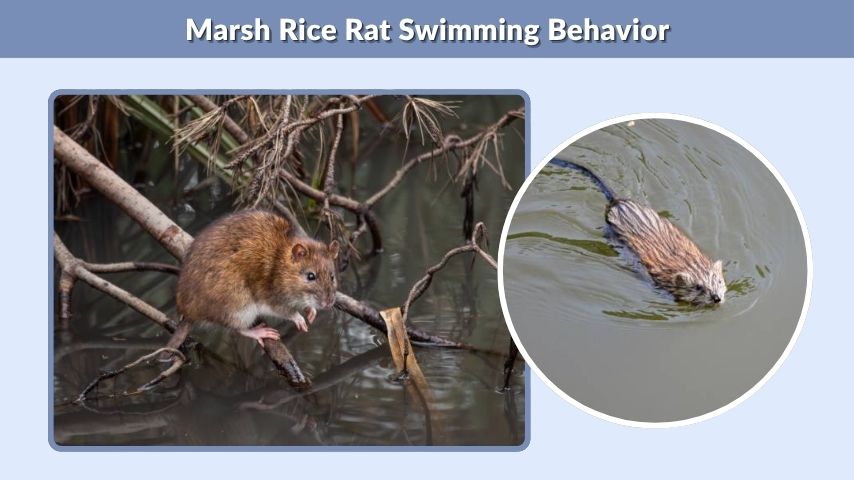
The marsh rice rat is an excellent swimmer. Its swimming ability helps it travel through flooded marshes, escape predators, and reach food sources in waterlogged habitats. Unlike many rodents that avoid water, the marsh rice rat is comfortable in it.
Swimming also helps explain its body structure. Long toes, partially webbed feet, and dense fur all support movement through wet environments. In marshes where water channels break up the land, the ability to swim can make the difference between isolation and survival.
This swimming behavior is one of the easiest ways to understand the species. The marsh rice rat is not simply a rat that happens to live near water. It is a wetland specialist shaped by life in marshes.
Marsh Rice Rat Facts
Here are some useful marsh rice rat facts for quick reference:
- The marsh rice rat’s scientific name is Oryzomys palustris.
- It is native to North America.
- It lives mainly in wetlands of the eastern and southern United States.
- It is semiaquatic and swims well.
- It is mostly active at night.
- It eats both plant and animal foods.
- It is prey for owls, snakes, raccoons, foxes, and other predators.
- It often builds nests from grasses and sedges.
- Most wild individuals have short lifespans.
- Mainland populations are generally secure, but some island populations are threatened.
Why Marsh Rice Rats Matter
The marsh rice rat may not be as famous as larger wetland animals, but it has real ecological importance. As an omnivore, it helps move energy through the food web. It eats seeds, plants, insects, mollusks, crustaceans, and other small animals. At the same time, it provides food for owls, snakes, mammals, and other predators.
Its presence can also reflect the condition of wetland habitats. Healthy marshes with dense vegetation, natural water patterns, and connected habitat patches are more likely to support native wetland mammals. When wetlands are drained, filled, polluted, or fragmented, animals like the marsh rice rat may decline.
Protecting marsh rice rats also means protecting wetlands. These habitats reduce flooding, filter water, store carbon, support birds and fish, and provide shelter for many native species. The marsh rice rat is one small part of a much larger wetland system.
FAQs
What does a marsh rice rat eat?
A marsh rice rat eats both plant and animal foods. Its diet may include seeds, grasses, sedges, fungi, insects, snails, crabs, clams, small fish, and other small animals. The exact food mix depends on the wetland habitat, season, water level, and what prey or plant material is available nearby.
Where does the marsh rice rat live?
The marsh rice rat lives mainly in wetlands across the eastern and southern United States. It is found in freshwater marshes, salt marshes, swamps, wet prairies, mangrove edges, and wet meadows. It prefers dense vegetation close to water, where it can hide, nest, forage, and escape predators.
Is the marsh rice rat endangered?
The marsh rice rat is generally not endangered across its broad mainland range. However, some local island populations, especially in parts of Florida, face serious threats. Habitat loss, fragmentation, sea-level rise, nonnative rats, low genetic diversity, and predation by cats can make certain populations more vulnerable.
Is a marsh rice rat dangerous?
A marsh rice rat is not aggressive toward people and usually avoids human contact. However, like many wild rodents, it should not be handled. Wild rodents can carry parasites or pathogens, and their droppings or nesting material should be cleaned carefully using proper safety steps, especially in enclosed spaces.
How is a marsh rice rat different from a regular rat?
A marsh rice rat is a native wetland rodent, while common urban rats like Norway rats and roof rats are different species often linked with buildings and human food sources. Marsh rice rats are smaller, semiaquatic, strong swimmers, and adapted to marshes, swamps, wet meadows, and coastal wetlands.