
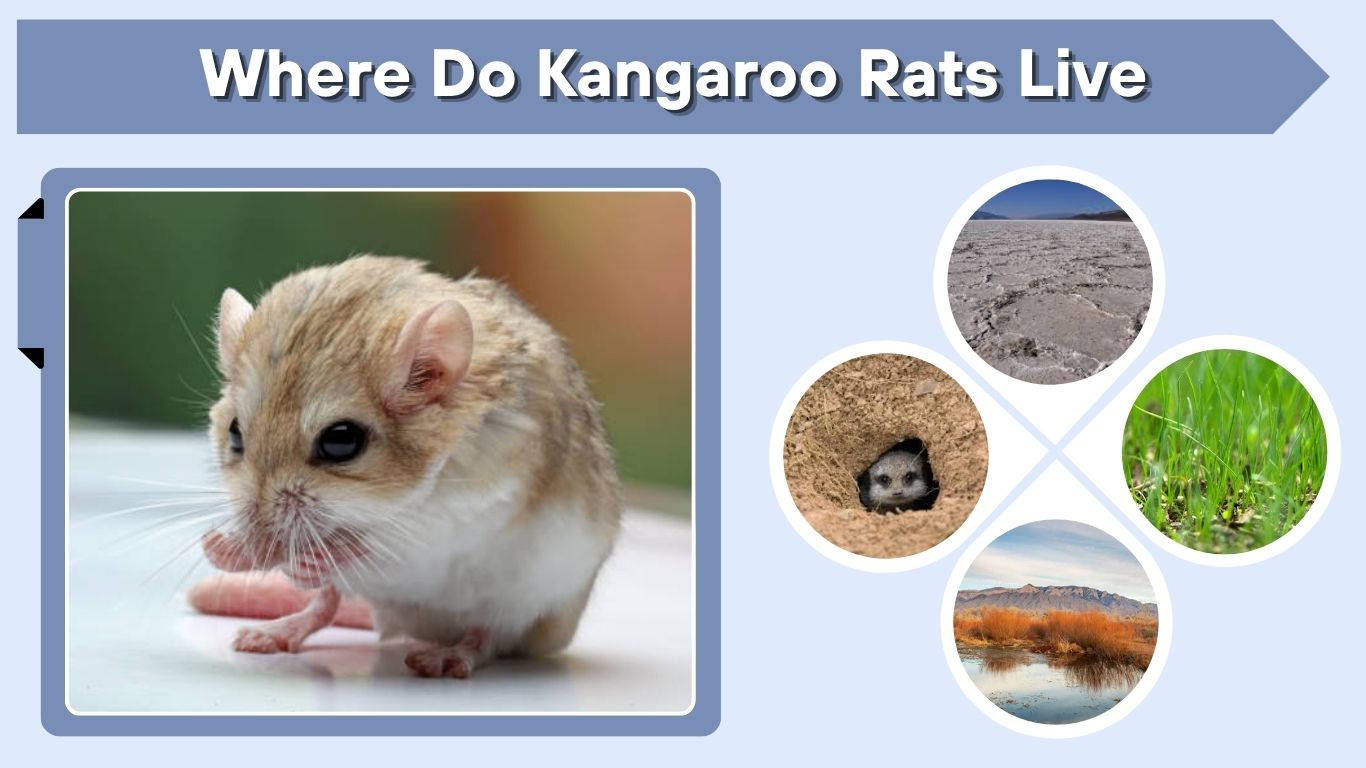
Kangaroo rats live mainly in dry regions of western North America. They are best known as desert rodents, but different species can also live in grasslands, scrublands, sandy flats, and open shrub habitats. These small animals are famous for their long hind legs, hopping movement, large eyes, long tails, and ability to survive in places where water is scarce.
Although their name includes “kangaroo,” kangaroo rats do not live in Australia and are not related to kangaroos. They are native rodents found mostly in the United States and Mexico. Their habitat depends on the species, but most live in dry, open places where they can dig burrows, collect seeds, and avoid predators at night.
What Is a Kangaroo Rat?
A kangaroo rat is a small rodent in the genus Dipodomys. It gets its name from its powerful back legs and jumping movement, which can look like a tiny kangaroo hop. It also has a long tail that helps with balance while moving quickly across open ground.
Kangaroo rats are not the same as house rats. They belong to the family Heteromyidae, which also includes pocket mice and kangaroo mice. Their cheek pouches are on the outside of the mouth and are used for carrying seeds, not babies. The U.S. Fish and Wildlife Service notes that giant kangaroo rats are in this family and are not like common nonnative household rats.
Why Their Habitat Matters
Kangaroo rats are strongly adapted to the places where they live. Their burrows protect them from daytime heat, cold nights, predators, and dry conditions. Their seed-based diet and water-saving body systems help them survive in desert and semi-desert habitats.
Because some species have very specific habitat needs, changes to grasslands, shrublands, and desert valleys can affect their populations.
Where Do Kangaroo Rats Live?
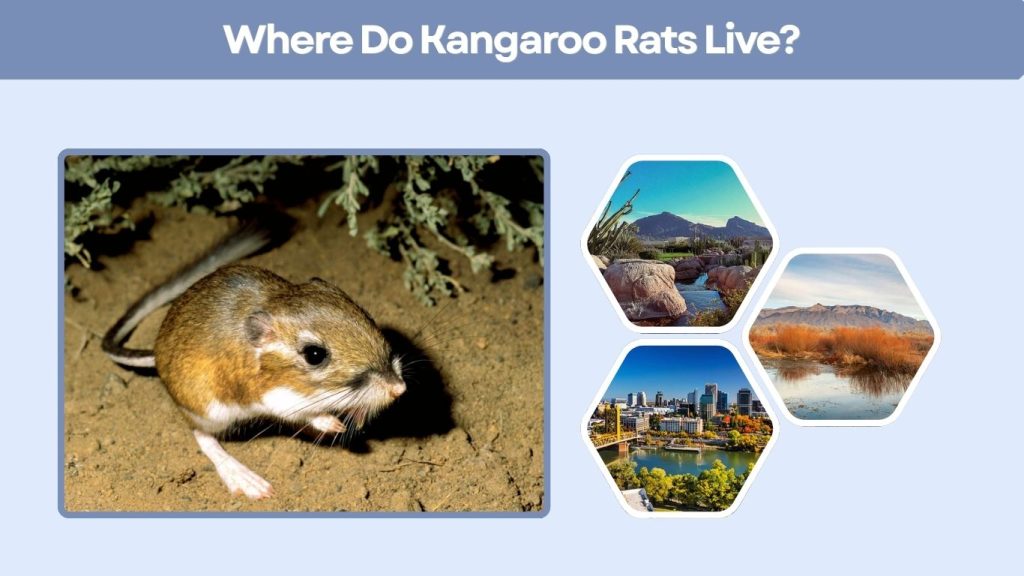
Kangaroo rats live in western North America, especially in the United States and Mexico. They are most common in dry habitats such as deserts, sandy areas, shrublands, and open grasslands.
They can be found in states such as:
- Arizona
- California
- Nevada
- Utah
- New Mexico
- Texas
- Oregon
- Idaho
- Parts of surrounding western regions
Their exact range depends on the species. For example, desert kangaroo rats are associated with very arid sandy habitats, while Texas kangaroo rats live in north-central Texas rangelands. Giant kangaroo rats are linked with California grassland and shrubland habitats.
Do Kangaroo Rats Live in the Desert?
Yes, many kangaroo rats live in the desert. Desert habitats are one of the best-known homes for kangaroo rats because these rodents have special adaptations for dry conditions.
They often live in:
- Sandy desert flats
- Dunes
- Desert scrub
- Creosote bush areas
- Open grasslands
- Dry valleys
- Sparse shrublands
- Arid washes
- Clay or sandy soils
However, not every kangaroo rat species lives in the same type of desert. Some prefer loose sand, while others need firmer soil or open grassland.
What Biome Does a Kangaroo Rat Live In?
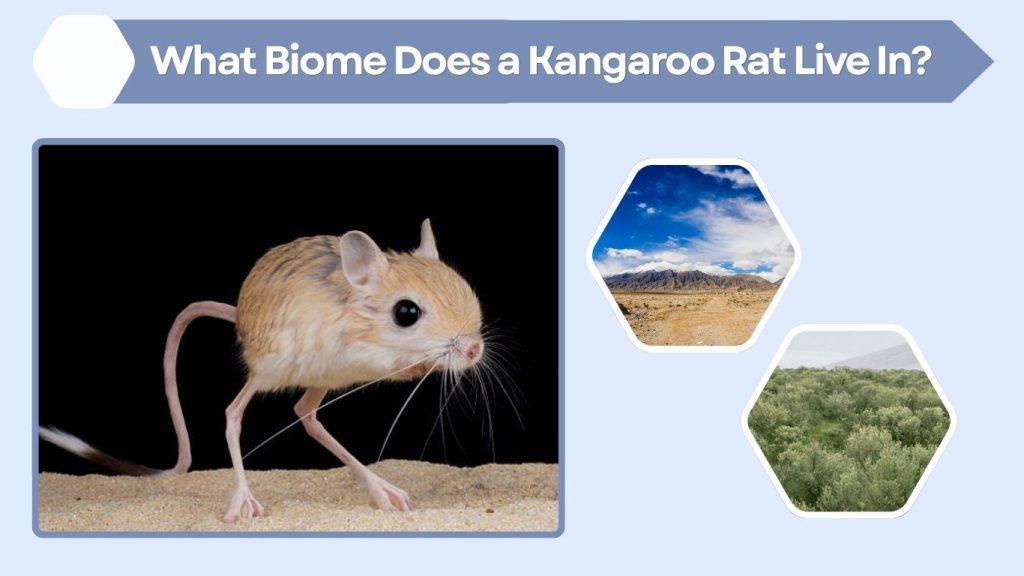
Kangaroo rats usually live in desert, semi-desert, shrubland, and grassland biomes. The most common answer is the desert biome, but the full answer is broader because species vary.
A kangaroo rat’s biome may include hot desert, cold desert, temperate grassland, chaparral edge, or arid shrubland. In each case, the animal needs open ground, seed-producing plants, and soil suitable for burrowing.
Desert Biome
In desert biomes, kangaroo rats avoid heat by staying underground during the day. They come out mostly at night to gather seeds. Their burrows are cooler and more humid than the surface, helping them conserve water.
Grassland Biome
Some kangaroo rats live in dry grasslands. These habitats provide seeds, open movement space, and soil for burrows. The giant kangaroo rat, for example, is linked with California grassland and shrubland regions and has lost much of its original range because of habitat change.
Shrubland Biome
Shrublands provide cover, seeds, and open patches of ground. Kangaroo rats may forage between shrubs and use bare soil areas for quick movement and predator detection.
Do Kangaroo Rats Live in Arizona?
Yes, kangaroo rats live in Arizona. The Sonoran Desert is home to several kangaroo rat species. At Organ Pipe Cactus National Monument, the National Park Service describes Merriam’s kangaroo rat as one of the commonly encountered kangaroo rats in that desert environment.
Arizona habitats that may support kangaroo rats include desert flats, sandy washes, creosote bush desert, cactus-dominated areas, and open scrub.
Do Kangaroo Rats Live in California?
Yes, kangaroo rats live in California. Several species occur in the state, including desert kangaroo rats, giant kangaroo rats, Stephens’ kangaroo rats, and others. Some California species are conservation concerns because their habitats have been reduced by development, agriculture, and land-use changes.
The desert kangaroo rat is associated with arid sandy regions, including areas around Death Valley. The giant kangaroo rat is especially important in California conservation because it now occupies only a small part of its historical range.
Do Kangaroo Rats Live in Nevada and Utah?
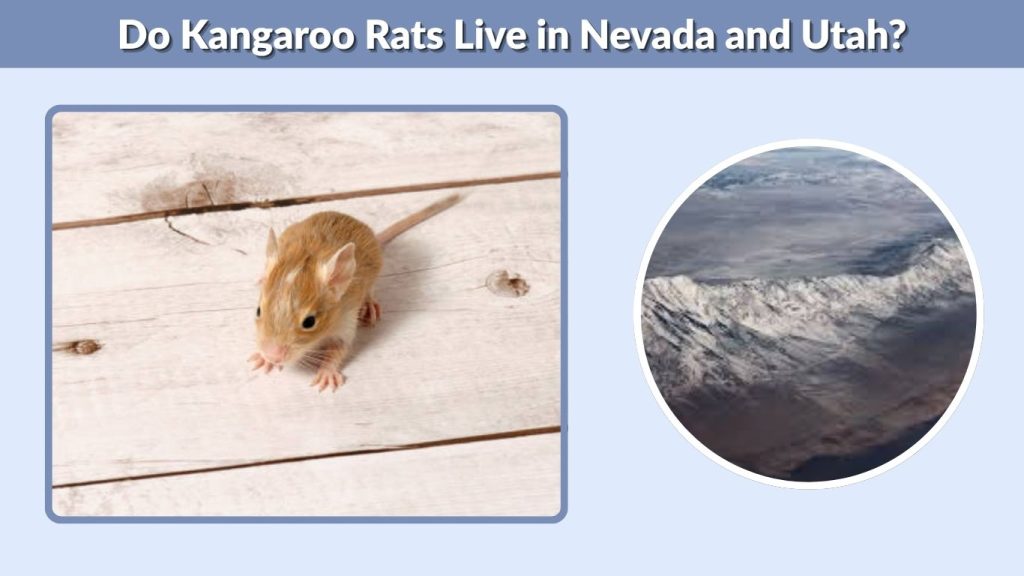
Yes, kangaroo rats live in Nevada and Utah. These states include dry valleys, desert basins, sandy soils, and shrubland habitats that can support different kangaroo rat species.
In Nevada, arid regions such as desert dunes and valleys can provide suitable habitat for species like the desert kangaroo rat. In Utah, kangaroo rats may occur in dry shrublands, desert flats, and open sandy areas, depending on the species and local conditions.
Do Kangaroo Rats Live in Texas?
Yes, kangaroo rats live in Texas. The Texas kangaroo rat is a native species found in north-central Texas. It lives in open rangeland habitats with suitable soils and short or sparse vegetation.
Texas also has other dry-country rodents, so not every kangaroo-rat-like animal in the state is the Texas kangaroo rat. The Texas kangaroo rat is a species of conservation concern because of its limited range and habitat needs.
Do Kangaroo Rats Live in Australia?
No, kangaroo rats do not live in Australia. This is a common misunderstanding because the word “kangaroo” makes people think of Australian marsupials. Kangaroo rats are North American rodents.
Australia has animals with somewhat similar names, such as rat-kangaroos and musky rat-kangaroos, but those are marsupials, not kangaroo rats. Kangaroo rats are rodents in the family Heteromyidae, while rat-kangaroos are Australian marsupials.
Where Do Giant Kangaroo Rats Live?
Giant kangaroo rats live in California, mainly in the San Joaquin Valley region and nearby areas where suitable habitat remains. They prefer open grassland and shrubland with friable soils that allow burrow construction.
The giant kangaroo rat is the largest species in the genus Dipodomys. Its habitat has been heavily reduced, and it is a federally protected species. The U.S. Fish and Wildlife Service identifies the giant kangaroo rat as the largest of more than 20 Dipodomys species.
What Biome Does the Giant Kangaroo Rat Live In?
The giant kangaroo rat mainly lives in arid and semi-arid grassland and shrubland biomes. It is not a forest animal and does not live in wet tropical habitats. It needs open ground, seed-producing plants, and soils suitable for burrows.
Where Does the Ord’s Kangaroo Rat Live?
Ord’s kangaroo rat is one of the most widespread kangaroo rat species. It occurs across parts of western North America, including grasslands, sandy areas, and open dry habitats. It can live in places that are less extremely desert-like than some other kangaroo rat species.
Ord’s kangaroo rats are often associated with sandy soils and open vegetation. Their wide range makes them one of the species people may encounter in dry western landscapes.
Where Does the Stephens’ Kangaroo Rat Live?
Stephens’ kangaroo rat lives in southern California, especially in grassland and open coastal sage scrub habitats. It is a conservation concern because much of its habitat has been affected by urban growth, agriculture, and land development.
Like other kangaroo rats, it depends on open ground, burrows, and seed-producing plants. Dense vegetation can make habitat less suitable.
Do Kangaroo Rats Live in Groups?
Kangaroo rats usually do not live in large social colonies like prairie dogs. Most species are solitary and use individual burrow systems. They may live near other kangaroo rats when habitat is good, but each animal often maintains its own space.
Some species are territorial. They may use foot-drumming and scent to communicate with nearby individuals. Burrow entrances may be spaced across a suitable habitat area rather than clustered into a true colony.
What Habitat Does a Kangaroo Rat Need?
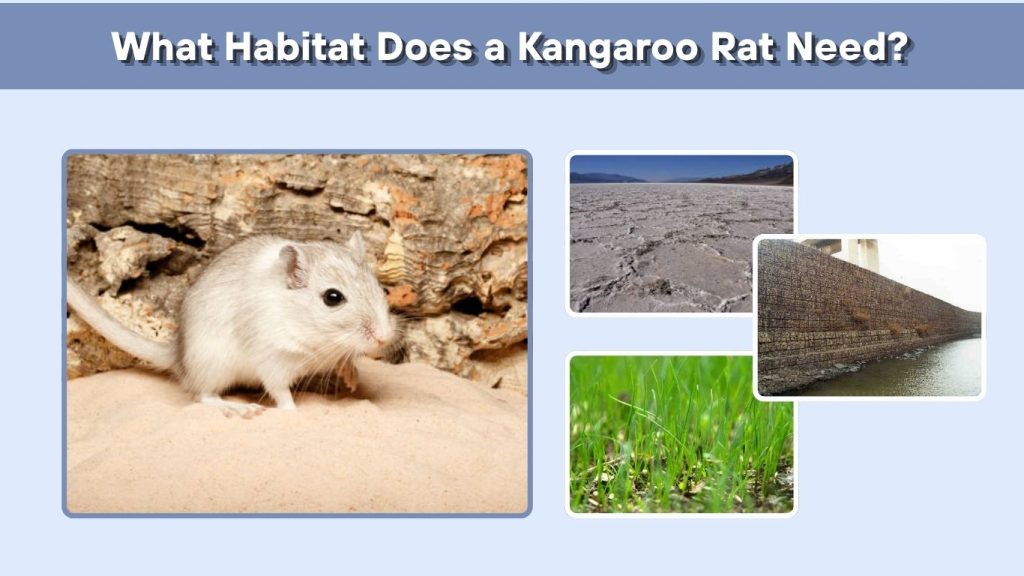
A kangaroo rat needs habitat that provides food, shelter, and safe movement. The exact details vary by species, but many need open ground, seed-producing plants, and soil that can hold burrows.
Important habitat features include:
- Dry or semi-dry climate
- Sandy, loamy, or workable soil
- Open ground for hopping
- Seeds from grasses and shrubs
- Sparse to moderate vegetation
- Burrow sites
- Low surface moisture
- Protection from flooding
Burrows are essential. Kangaroo rats spend much of their time underground, especially during the day.
Why Do Kangaroo Rats Live in the Desert?
Kangaroo rats live in deserts because they are extremely well adapted to dry conditions. Their bodies and behaviors help them survive where many animals would struggle.
They avoid heat by staying in burrows during the day. They come out at night when temperatures are cooler. They eat dry seeds and can produce metabolic water from food. They also reduce water loss by avoiding sweating and panting. The Arizona-Sonora Desert Museum notes that kangaroo rats do not sweat or pant like many animals because that would cause water loss.
Can Kangaroo Rats Live Without Water?
Kangaroo rats can live without drinking free-standing water for long periods, and some species can get the water they need from seeds and metabolic processes. This does not mean they need no water at all. It means they are able to obtain and conserve water without drinking from ponds, streams, or puddles.
Their dry seed diet, efficient kidneys, burrow humidity, and nocturnal activity all help them conserve moisture.
How Do Kangaroo Rats Survive in Hot, Dry Conditions?
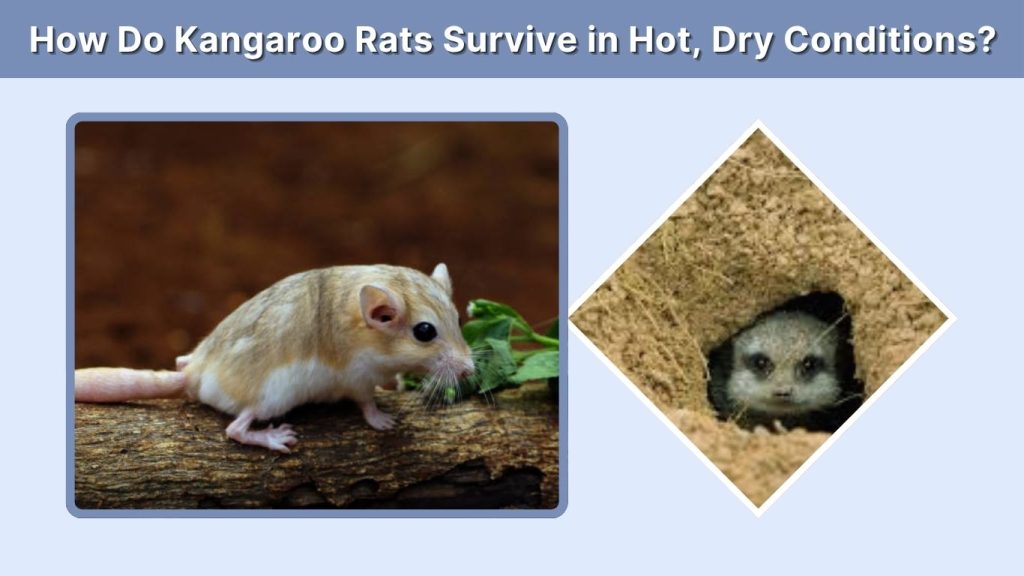
Kangaroo rats survive hot, dry conditions through a combination of physical and behavioral adaptations.
Key survival adaptations include:
- Living in burrows during the day
- Foraging at night
- Eating mostly seeds
- Carrying seeds in cheek pouches
- Producing metabolic water from food
- Conserving water through efficient kidneys
- Avoiding sweating and panting
- Storing seeds underground
- Moving quickly to escape predators
The National Park Service also notes that extra seeds stored in burrows can absorb additional moisture, giving kangaroo rats another advantage in dry environments.
How Long Do Kangaroo Rats Live?
Kangaroo rat lifespan varies by species and conditions. In the wild, many kangaroo rats live only a few years because of predation, drought, disease, and habitat challenges. The Arizona-Sonora Desert Museum gives a general wild lifespan of about 2 to 5 years.
Some individuals may live longer in protected conditions, but wild kangaroo rats face many risks from owls, snakes, foxes, coyotes, bobcats, and habitat disturbance.
What Lives With Kangaroo Rats?
Kangaroo rats share their habitat with many other desert and grassland animals. Their neighbors may include insects, lizards, snakes, owls, foxes, coyotes, pocket mice, ground squirrels, jackrabbits, and other small mammals.
They are also part of the food web. They eat seeds and may influence plant communities through seed caching, while predators depend on them as prey.
FAQs
Where do kangaroo rats live?
Kangaroo rats live mainly in western North America, especially in dry regions of the United States and Mexico. They are found in deserts, grasslands, shrublands, sandy flats, and open rangelands. Their exact habitat depends on the species and local soil, vegetation, and climate conditions.
Do kangaroo rats live in the desert?
Yes, many kangaroo rats live in deserts. They are well adapted to dry habitats because they stay in burrows during the day, forage at night, eat seeds, and conserve water efficiently. Some species live in sandy dunes, desert scrub, dry valleys, and arid grasslands.
What biome does a kangaroo rat live in?
Kangaroo rats most commonly live in desert, semi-desert, shrubland, and grassland biomes. The desert biome is the best-known habitat, but some species also live in temperate grasslands and open rangelands. They need open ground, seeds, and soil suitable for burrows.
Do kangaroo rats live in Australia?
No, kangaroo rats do not live in Australia. They are North American rodents found mainly in the western United States and Mexico. Australia has rat-kangaroos, such as the musky rat-kangaroo, but those are marsupials and are different animals.
How long do kangaroo rats live?
Kangaroo rats usually live only a few years in the wild. A common estimate is about 2 to 5 years, depending on species, predators, weather, food supply, and habitat quality. Many do not survive to old age because they are prey for owls, snakes, foxes, and other predators.