
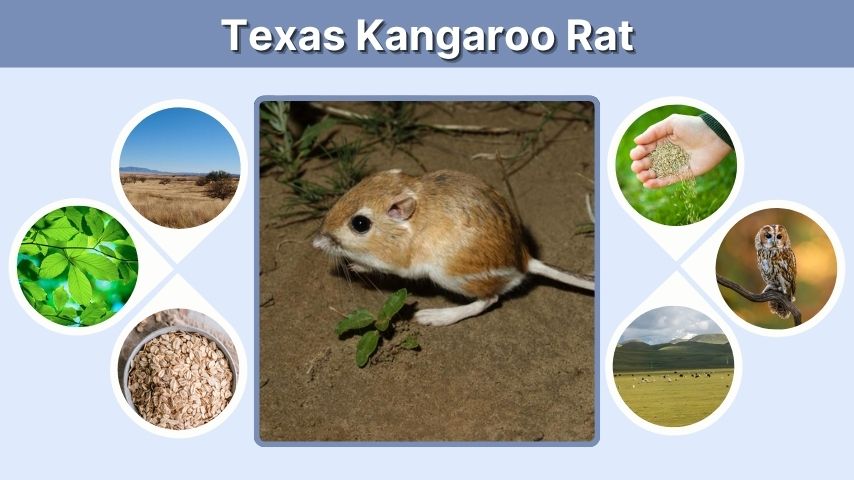
The Texas kangaroo rat is a rare nocturnal rodent found in north-central Texas. Despite its name, it is not a kangaroo and not a typical house rat. It is a small native rodent with large hind feet, a long tail, external cheek pouches, and a hopping style of movement that gives it the “kangaroo rat” name. Its scientific name is Dipodomys elator.
This species is important because it lives in a limited range and depends on specific grassland and rangeland conditions. Many people search for the Texas kangaroo rat because they want to know where it lives, what it eats, why it is threatened, and whether it is endangered. It is also a useful species for learning about Texas wildlife, rodent adaptations, and grassland conservation.
What Is the Texas Kangaroo Rat?
The Texas kangaroo rat is a small mammal in the kangaroo rat and pocket mouse family. Kangaroo rats are known for their strong hind legs, seed-eating habits, burrows, and ability to survive in dry environments. The Texas kangaroo rat is one of the rarer members of this group.
It was first discovered in Clay County, Texas, in the late nineteenth century. Today, it is strongly associated with north-central Texas and is considered a species of conservation concern. It is usually active at night and spends the day in underground burrows.
Why Is It Called a Kangaroo Rat?
The name comes from its powerful hind legs and jumping movement. Like a tiny kangaroo, it can move by hopping on its back feet. Its long tail helps with balance, while its front feet are much smaller.
The “rat” part of the name refers to its rodent identity and general body shape. However, it is not the same as a common house rat or Norway rat. It is a native wild rodent with a specialized lifestyle.
Texas Kangaroo Rat Appearance
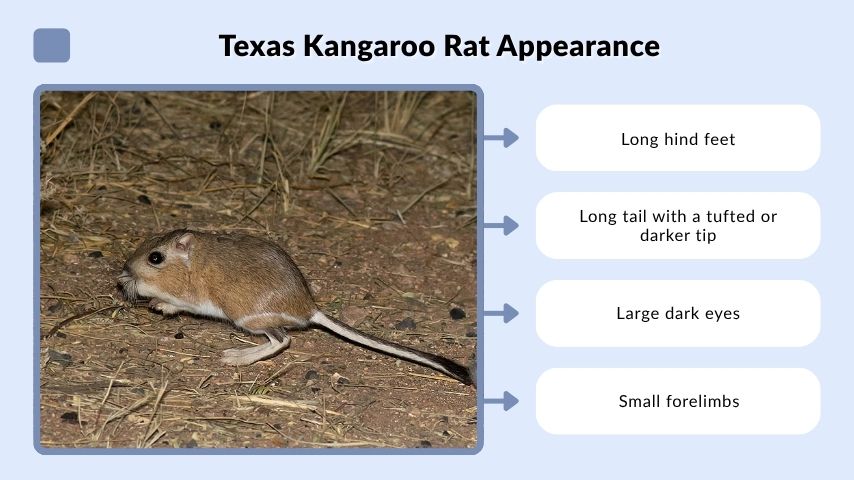
The Texas kangaroo rat has a compact body, large hind feet, large dark eyes, small ears, and a long tail. Its fur is usually brownish, buff, or pale tan above, with lighter fur underneath. This coloration helps it blend into dry soils, grasslands, and open rangeland habitats.
Its eyes are large because it is nocturnal. Large eyes help it see in low light while it searches for seeds and avoids predators. Its cheek pouches are another key feature. These external fur-lined pouches allow it to carry seeds back to its burrow for storage.
Main Physical Features
The Texas kangaroo rat can be recognized by:
- Long hind feet
- Long tail with a tufted or darker tip
- Large dark eyes
- Small forelimbs
- External cheek pouches
- Pale brown or buff fur
- White or light underside
- Hopping movement
These features make it very different from common rats that may live around homes or buildings.
Texas Kangaroo Rat Size
The Texas kangaroo rat is small, but it is relatively large compared with some other kangaroo rat species in its region. Its body is only a few inches long, but the tail adds extra length. The tail is important for balance during quick movement.
Its light body and strong hind feet help it escape predators and move efficiently across open ground. Because it is small and nocturnal, most people never see one unless they are doing wildlife surveys or observing suitable habitat at night.
Why Size Matters
Small size helps the Texas kangaroo rat use burrows, hide among vegetation, and reduce water needs. Its compact body also allows it to forage quickly, carry seeds, and return to safety.
However, small size also makes it vulnerable to predators such as snakes, owls, foxes, coyotes, and domestic cats.
Where Does the Texas Kangaroo Rat Live?
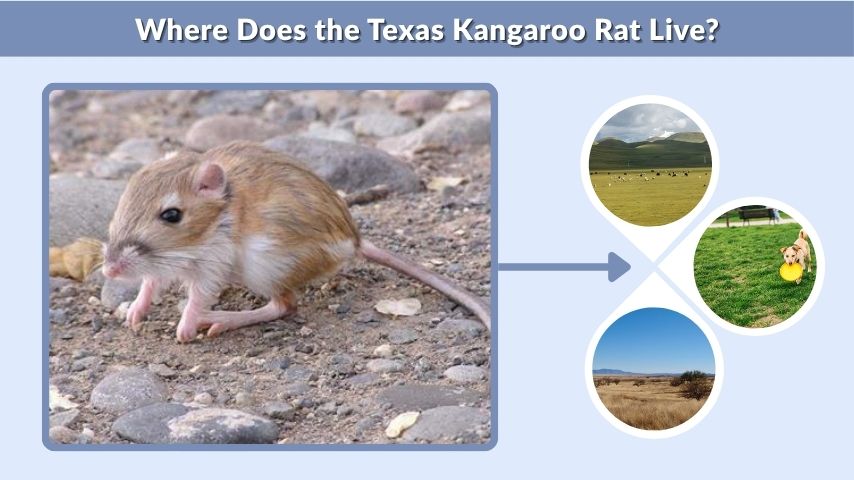
The Texas kangaroo rat lives in north-central Texas. Historically, it was recorded from more counties than it occupies today. Its current range is much more limited and is often described as restricted to parts of northern Texas.
It is linked with open rangeland, short vegetation, bare ground, clay-loam soils, and areas where it can dig burrows. It may occur near mesquite, lotebush, prickly pear, grasses, forbs, and disturbed open areas.
Texas Kangaroo Rat Habitat
The species needs habitat with the right soil, vegetation structure, and open space. It often uses firm clay-loam soils and places where vegetation is not too dense. Open ground is important because the animal needs visibility and space to move.
Suitable habitat may include:
- Native rangeland
- Shortgrass areas
- Open mesquite grassland
- Clay-loam soils
- Bare or sparsely vegetated ground
- Areas near unpaved roads
- Grazed rangeland
- Burrow-friendly soil
Dense grass can be a problem because it reduces open movement and may make habitat less suitable.
What Counties Have Texas Kangaroo Rats?
The Texas kangaroo rat has historically been recorded in several north-central Texas counties. Recent and historical records include counties such as Archer, Baylor, Clay, Wichita, Wilbarger, Hardeman, Foard, Cottle, Motley, Montague, and nearby areas.
However, not all historical counties still support stable populations. Some records are old, and the species has disappeared from parts of its former range. This is why survey work is important for understanding where the animal still occurs.
Does the Texas Kangaroo Rat Live in Big Bend?
The Texas kangaroo rat is not mainly a Big Bend species. Big Bend has other desert rodents and kangaroo rats, but the Texas kangaroo rat is associated with north-central Texas rather than far west Texas desert landscapes. Searches for “kangaroo rat Big Bend Texas” may refer to other kangaroo rat species.
Texas Kangaroo Rat Diet
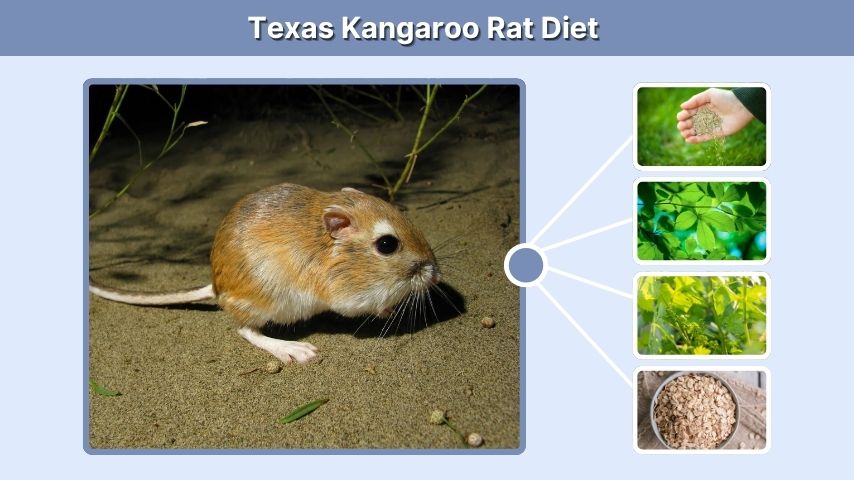
The Texas kangaroo rat is mainly a seed eater. Animals that feed mostly on seeds are called granivores. It eats seeds, stems, leaves, grasses, forbs, and some crop or introduced grass material when available.
It uses cheek pouches to collect and carry food. Seeds may be stored in burrows or underground caches to help the animal survive when food is less available.
What Does the Texas Kangaroo Rat Eat?
Its diet may include:
- Grass seeds
- Forb seeds
- Leaves
- Stems
- Oats
- Johnson grass
- Other available plant material
- Native and introduced grasses
Food storage is one of its most important survival behaviors. In dry or seasonal environments, stored seeds help it get through periods when fresh food is limited.
Texas Kangaroo Rat Adaptations
The Texas kangaroo rat has several adaptations that help it survive in dry grassland and rangeland habitats. These adaptations involve movement, feeding, water conservation, and predator avoidance.
Its long hind feet allow it to jump quickly. Its long tail helps it balance during sudden turns. Its large eyes help with night activity. Its cheek pouches help it collect seeds efficiently. Its burrow provides protection from heat, cold, and predators.
Behavioral Adaptations
Important behavioral adaptations include:
- Nocturnal activity to avoid daytime heat
- Burrow use for shelter
- Seed caching for food security
- Quick hopping to escape predators
- Use of open ground for visibility
- Trail-making near burrow entrances
These behaviors help the species survive in a landscape where food, cover, and safety can change quickly.
Texas Kangaroo Rat Burrows and Behavior
The Texas kangaroo rat spends daylight hours underground. Its burrow protects it from predators and temperature extremes. At night, it emerges to forage for seeds and plant material.
Burrow systems may have visible openings and trails leading away from them. These trails are useful signs for researchers looking for the species. Because the animal is nocturnal, field surveys often rely on tracks, burrows, trail cameras, trapping, or nighttime observation.
Is It Social?
Texas kangaroo rats are generally not highly social like prairie dogs. They are more solitary, with individuals using burrows and foraging areas. However, suitable habitat may support multiple individuals in an area if food and burrow sites are available.
Texas Kangaroo Rat Reproduction
The Texas kangaroo rat appears able to breed during much of the year, with some seasonal peaks. Breeding may be influenced by food availability, rainfall, and habitat conditions.
Females give birth to small litters, and the young develop in the burrow. Like other rodents, young kangaroo rats grow quickly compared with many larger mammals.
Life Cycle
The life cycle includes:
- Mating between adults
- Pregnancy
- Birth of young in the burrow
- Nursing and development
- Young leaving the burrow
- Adult foraging, caching, and breeding
Because the species is rare and difficult to observe, many details are studied through field research rather than casual sightings.
Texas Kangaroo Rat Predators
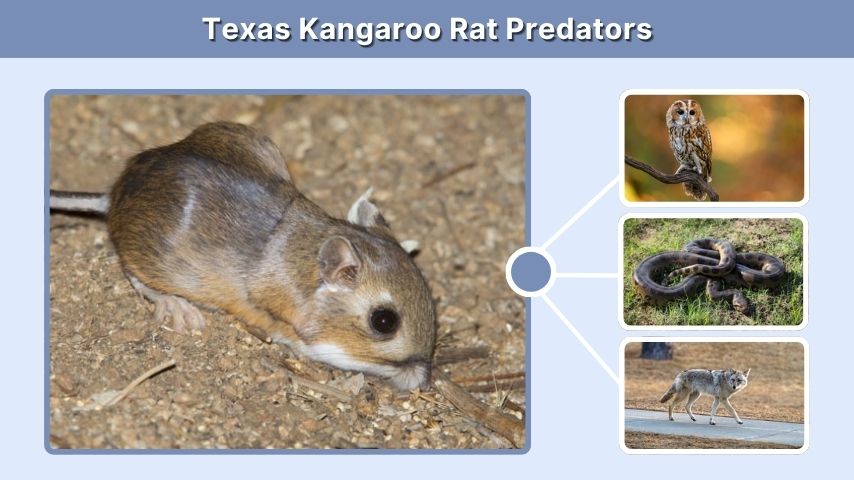
The Texas kangaroo rat is prey for several animals. Its small size makes it vulnerable, especially when it leaves the burrow at night.
Possible predators include:
- Owls
- Hawks
- Snakes
- Foxes
- Coyotes
- Bobcats
- Domestic cats
- Skunks
- Raccoons
Its main defenses are speed, jumping, burrows, nocturnal activity, and alert senses. The long hind feet help it make quick escapes, while the burrow gives it a safe retreat.
Is the Texas Kangaroo Rat Endangered?
The Texas kangaroo rat is a species of serious conservation concern. It is listed as threatened by the Texas Parks and Wildlife Department, and federal agencies have proposed listing it as endangered under the Endangered Species Act.
This means the answer depends on which conservation system is being discussed. At the state level in Texas, it is considered threatened. At the federal level, it has been proposed for endangered status, reflecting concern about its limited range, habitat loss, and population decline.
Why Is the Texas Kangaroo Rat Endangered or Threatened?
The Texas kangaroo rat is at risk because its habitat has declined and changed. The species needs open rangeland conditions with suitable soil and vegetation structure. When land is converted to cropland, development, or dense grassland, habitat quality can decline.
Major concerns include:
- Habitat loss
- Habitat fragmentation
- Conversion to agriculture
- Dense vegetation from changed land management
- Invasion by non-native grasses
- Loss of prairie dog disturbance in some areas
- Small and isolated populations
- Limited geographic range
Because it occurs in a small region, local habitat changes can have a large effect on the species.
Is the Texas Kangaroo Rat a Keystone Species?
The Texas kangaroo rat is not usually described as a classic keystone species in the same way as prairie dogs or beavers. However, it can still play an important ecological role.
As a seed-eating rodent, it may influence plant communities through seed collection, seed caching, and foraging. Its burrows can also affect soil movement and provide small-scale disturbance. These roles make it part of the grassland ecosystem, even if it is not always labeled as a keystone species.
Texas Kangaroo Rat and the Ecosystem
The Texas kangaroo rat contributes to the ecosystem as both a consumer and prey species. It eats seeds and plant parts, stores food underground, and becomes food for predators.
Its burrowing can help mix soil and create small patches of disturbed ground. These patches may affect seed germination and soil structure. In this way, even a small animal can influence its habitat.
What Happens If It Disappears?
The loss of the Texas kangaroo rat would reduce native biodiversity in north-central Texas. It could also mean the loss of a specialized seed-eating rodent that helps shape small-scale soil and plant interactions.
Its decline may also signal broader problems in grassland and rangeland health.
Can You Buy a Texas Kangaroo Rat?
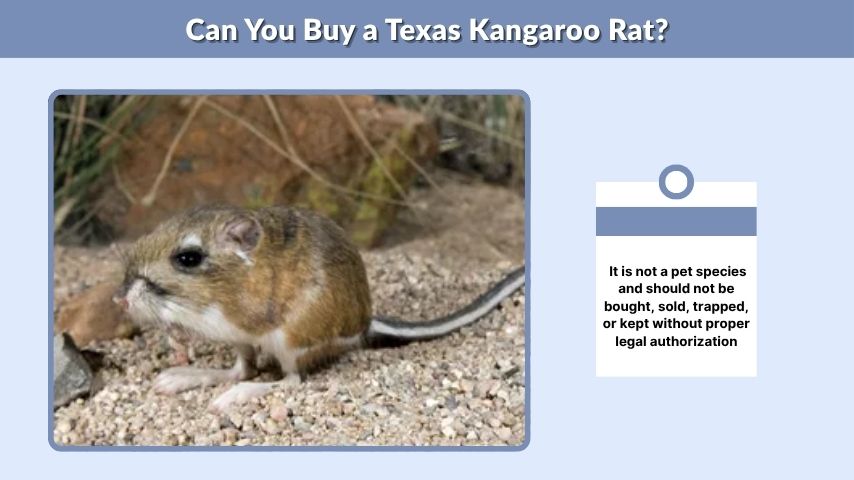
The Texas kangaroo rat is a wild native species and a conservation concern. It is not a pet species and should not be bought, sold, trapped, or kept without proper legal authorization. Searches like “kangaroo rat for sale Texas” may lead to confusion with other rodents, but native wildlife is protected by laws and regulations.
Anyone who finds a possible Texas kangaroo rat should observe from a distance and avoid disturbing burrows or habitat.
Texas Kangaroo Rat Facts
Here are some quick facts about the Texas kangaroo rat:
- Scientific name: Dipodomys elator
- Animal type: Rodent
- Family: Heteromyidae
- Native range: North-central Texas
- Activity: Nocturnal
- Diet: Mostly seeds and plant material
- Movement: Hopping with long hind feet
- Shelter: Underground burrows
- State status: Threatened in Texas
- Federal status: Proposed for endangered listing
- Main threats: Habitat loss, fragmentation, and vegetation change
These facts make the Texas kangaroo rat an important animal for students, wildlife enthusiasts, landowners, and conservation planners.
FAQs
Do kangaroo rats live in Texas?
Yes, kangaroo rats live in Texas, and the Texas kangaroo rat is one native species found in north-central Texas. Other kangaroo rat species may occur in other parts of the state. The Texas kangaroo rat is rare and strongly linked to open rangeland habitat.
What does the Texas kangaroo rat eat?
The Texas kangaroo rat mainly eats seeds, stems, leaves, grasses, forbs, and some crop or introduced grass material. It uses external cheek pouches to carry food and may store seeds in burrows. This food caching helps it survive when fresh food is limited.
Where does the Texas kangaroo rat live?
The Texas kangaroo rat lives in north-central Texas, especially in open rangeland with suitable clay-loam soils and short or sparse vegetation. It has historically been recorded in several counties, but its current range is smaller than its former range.
Why is the Texas kangaroo rat endangered?
The Texas kangaroo rat is at risk because of habitat loss, habitat fragmentation, conversion of land to agriculture, dense grass growth, non-native grasses, and its limited range. It needs open rangeland conditions, so changes in land management can reduce suitable habitat.
How many Texas kangaroo rats are left?
The exact number of Texas kangaroo rats left is difficult to know because they are nocturnal, rare, and hard to survey. Researchers track occurrences, habitat condition, and population trends rather than relying on a simple count. Current evidence shows the species has declined from its historical range.