
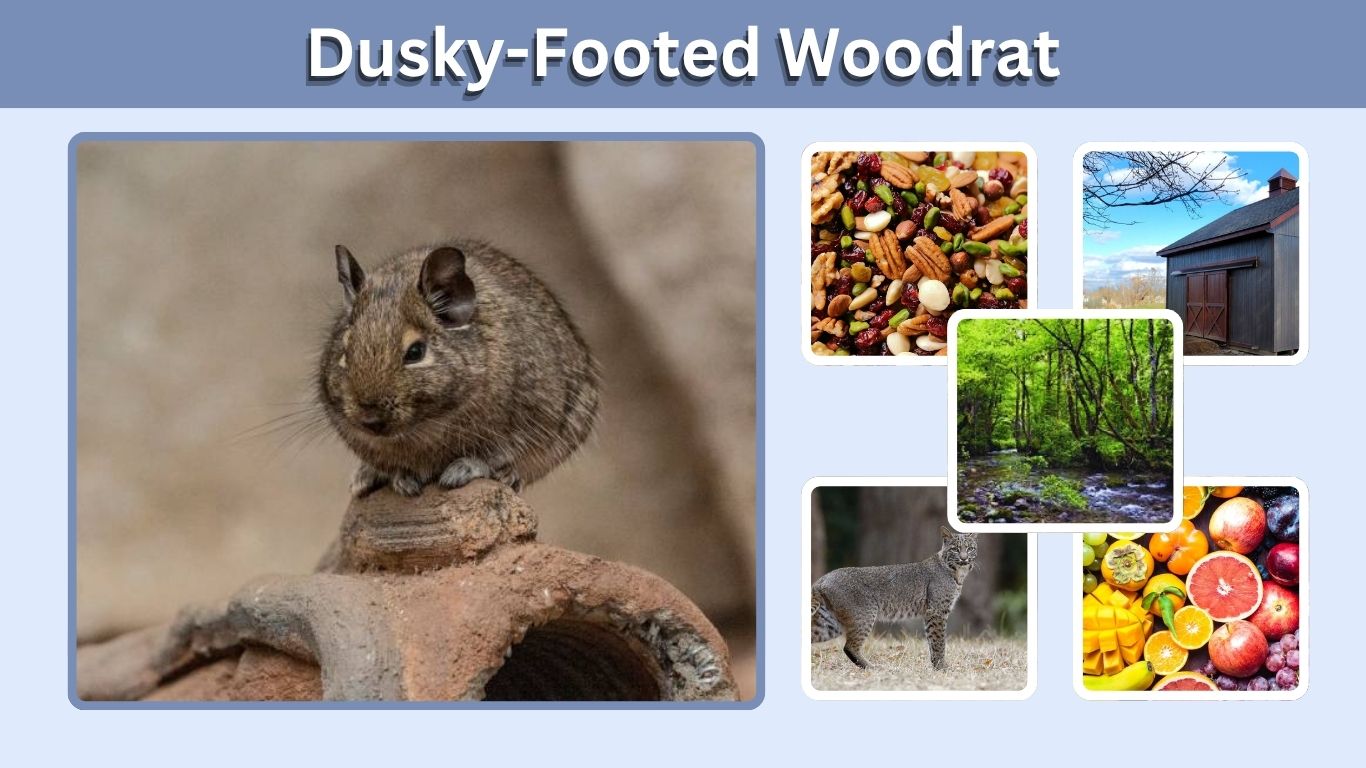
The dusky-footed woodrat is a native North American rodent best known for its large stick nests, dark feet, rounded ears, and important role in California woodland habitats. Although people sometimes mistake it for a common rat, this animal is very different from non-native house rats. It is a wild packrat species that helps support predators, recycle plant material, and shape small woodland ecosystems.
What Is a Dusky-Footed Woodrat?
The dusky-footed woodrat is a medium-sized rodent with the scientific name Neotoma fuscipes. It belongs to the woodrat group, which includes animals often called packrats. The name “packrat” comes from their habit of collecting sticks, leaves, bark, bones, and other materials to build complex nests.
This woodrat is native to western North America, especially California and parts of Oregon. It is most strongly associated with oak woodlands, chaparral, riparian corridors, coastal scrub, and dense shrubby habitats. Unlike Norway rats or black rats, the dusky-footed woodrat is not an introduced city pest. It is a native species with a natural role in wild landscapes.
Common Names and Scientific Identity
The dusky-footed woodrat may be written in several ways, including “dusky footed woodrat” without a hyphen. Both forms usually refer to the same animal. It is also sometimes called a packrat or woodrat.
Its scientific name is Neotoma fuscipes. Taxonomy can be confusing because some woodrats once grouped with this species have been separated into related species, including the big-eared woodrat. This matters most in California, where identification and conservation status can depend on exact species, subspecies, and location.
Dusky-Footed Woodrat Identification
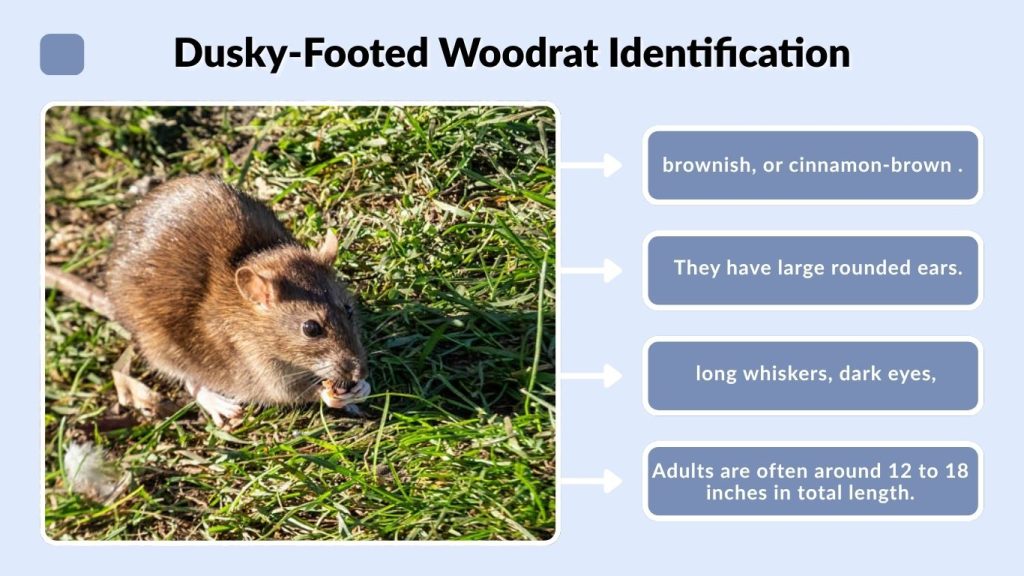
Dusky-footed woodrats are usually grayish, brownish, or cinnamon-brown on the back, with paler fur on the underside. They have large rounded ears, long whiskers, dark eyes, and a furry tail. Their feet often appear darker than the rest of the body, which helps explain the name “dusky-footed.”
They are mostly nocturnal, so many people notice the nest before they ever see the animal. In the wild, they are shy and usually avoid humans. When startled, they may retreat quickly into brush piles, logs, or their stick houses.
| Feature | Dusky-Footed Woodrat Details |
| Scientific name | Neotoma fuscipes |
| Common names | Dusky-footed woodrat, packrat, woodrat |
| Main range | California and parts of Oregon |
| Preferred habitat | Oak woodland, chaparral, riparian areas, coastal scrub |
| Key sign | Large stick nest or midden |
| Activity pattern | Mostly nocturnal |
| Diet | Mostly plant material, including leaves, bark, seeds, fruit, and fungi |
Dusky-Footed Woodrat Size
The dusky-footed woodrat is larger than many mice but usually less bulky than large urban rats. Adults are often around 12 to 18 inches in total length, including the tail. Body size varies by age, sex, region, and food availability.
Its tail is long and furred, not naked and scaly like the tail of many non-native rats. The animal’s big ears, dark eyes, and long whiskers also give it a softer, more woodland-adapted appearance.
Dusky-Footed Woodrat Habitat
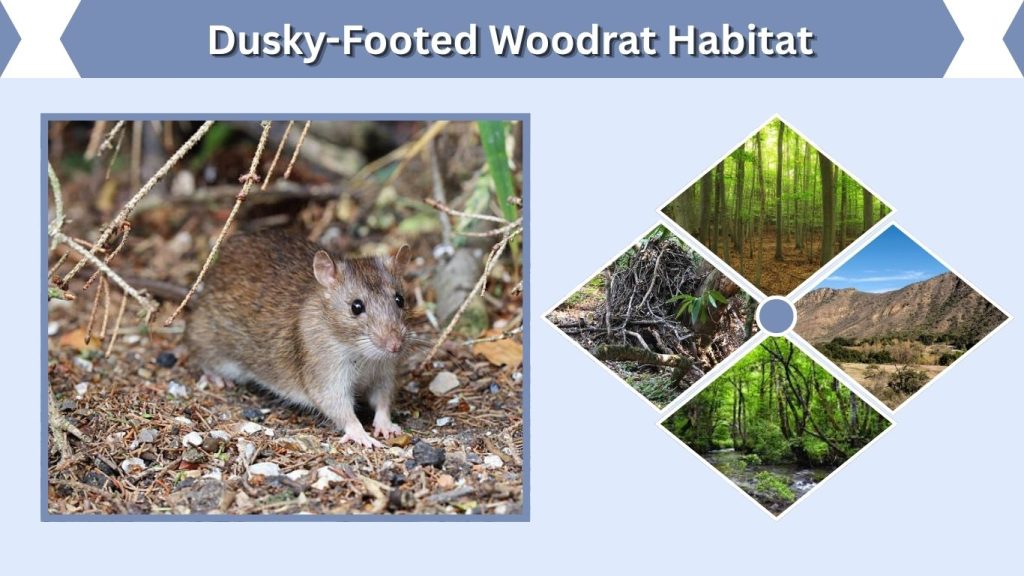
The dusky-footed woodrat prefers areas with dense cover. It is commonly found in oak woodlands, chaparral, riparian forests, mixed shrubs, and coastal scrub. It often chooses places where sticks, leaves, vines, logs, and low branches are available for building nests.
Oak trees are especially important in many parts of its range. Oak woodland provides food, shade, and nesting material. Dense shrubs also help protect woodrats from predators such as owls, hawks, bobcats, coyotes, foxes, and snakes.
Where It Lives in California and Oregon
The dusky-footed woodrat is closely associated with California. It occurs in many parts of the state, especially in coastal ranges, oak woodlands, riparian corridors, and foothill habitats. It is also found in parts of Oregon.
Searches such as “dusky footed woodrat California,” “dusky footed woodrat range,” and “dusky-footed woodrat Oregon” usually come from people trying to understand whether the animal lives in their area. In general, this woodrat is most expected in western woodland and shrubland habitats, not open urban spaces with little cover.
Dusky-Footed Woodrat Nest
The dusky-footed woodrat nest is one of the animal’s most impressive features. These nests are large structures made from sticks, twigs, leaves, bark, and other plant material. They may be built on the ground, around logs, near tree bases, inside dense shrubs, or sometimes above ground in branches.
A nest may look like a messy brush pile, but it is carefully arranged. Inside, it can include chambers for resting, food storage, nesting, and escape routes. Some nests may be used for a long time if the location remains safe and resources are available.
What Is a Midden?
The word “midden” is often used for woodrat nests and debris piles. A dusky-footed woodrat midden can include plant cuttings, sticks, droppings, bones, and stored materials. These middens are important not only for the woodrat but also for other animals.
Old or abandoned woodrat houses can provide shelter for insects, reptiles, amphibians, and small mammals. In this way, the dusky-footed woodrat acts like a small ecosystem engineer.
What Do Dusky-Footed Woodrats Eat?
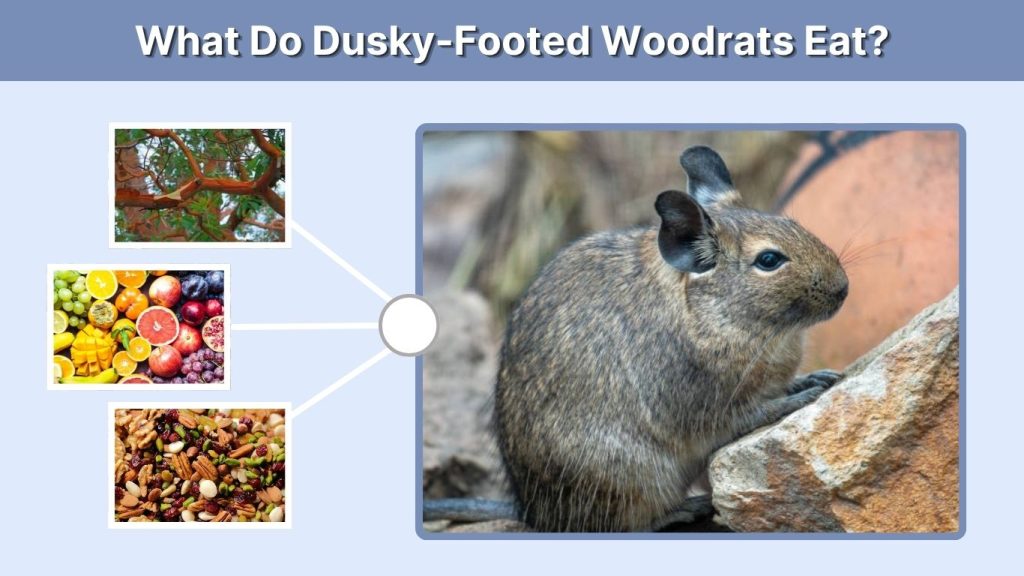
Dusky-footed woodrats are mostly herbivores. Their diet includes leaves, bark, twigs, seeds, fruits, nuts, flowers, and fungi. In oak woodland, they may use oak leaves, acorns, and other nearby plant material. In riparian zones, they may feed on plants growing near streams and dense vegetation.
They often cut and carry plant pieces back to their nest. Some food is eaten fresh, while other material may be stored. This behavior helps them survive when food becomes less available.
Bay Laurel and Nest Hygiene
One fascinating behavior linked to dusky-footed woodrats is their use of aromatic plant material. In some areas, they line nests with chewed or cut leaves from California bay laurel. These leaves may help reduce parasites such as ticks or mites inside the nest.
This shows how complex woodrat nesting behavior can be. Their houses are not simply piles of sticks; they are functional shelters shaped by food, safety, temperature, and hygiene needs.
Dusky-Footed Woodrat Behavior
Dusky-footed woodrats are mostly active at night. During the day, they usually stay hidden inside nests or dense vegetation. At night, they leave to gather food, collect materials, repair nests, and move through their home range.
They are often solitary, with one adult commonly associated with a nest. However, several nests may occur close together in good habitat, creating what looks like a loose colony. These groups are not the same as social colonies of some other animals, but they can make woodrat activity easier to notice.
Do Dusky-Footed Woodrats Burrow?
Dusky-footed woodrats are better known for building stick houses than for digging deep burrows. They may use natural holes, spaces under logs, root systems, or hidden cavities, but their signature shelter is the above-ground or partly sheltered stick nest.
In areas with heavy vegetation, the nest may be difficult to see. On trails, hikers may notice large piles of sticks tucked under shrubs, around tree trunks, or beside logs. These may be active or abandoned woodrat nests.
Dusky-Footed Woodrat Predators
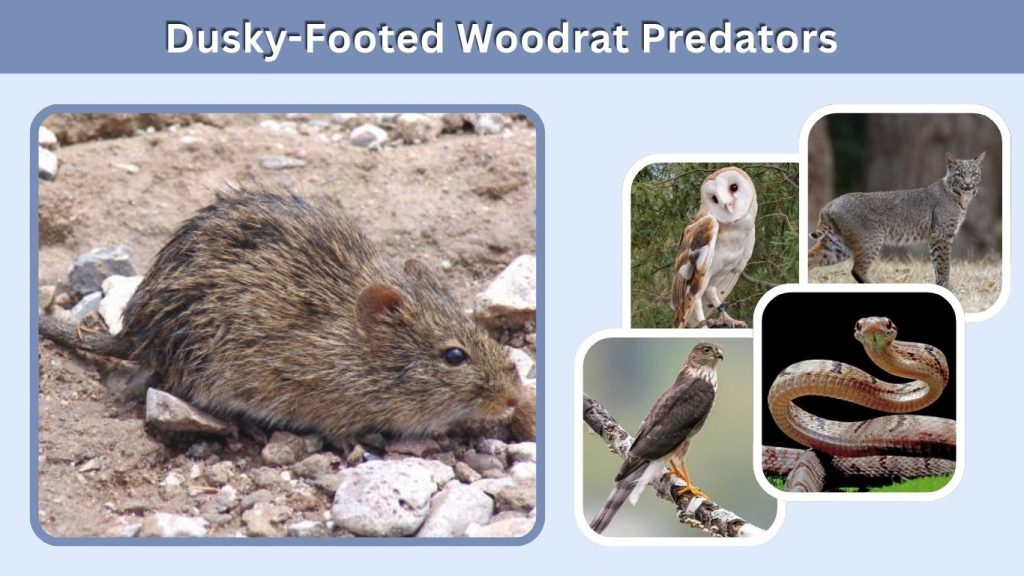
The dusky-footed woodrat is an important prey species. Owls, hawks, bobcats, coyotes, foxes, snakes, and other predators may feed on it. Because woodrats are active at night, owls are especially important predators in many habitats.
Their nests help reduce predation risk. The thick outer layers of sticks create a barrier, while hidden entrances and chambers provide escape routes. Dense shrubs and oak woodland cover also help them avoid detection.
Is the Dusky-Footed Woodrat Endangered?
The dusky-footed woodrat as a broad species is not generally treated as federally endangered. However, conservation status can become more complicated at the subspecies level. Some related or regional woodrat forms, such as the riparian woodrat, have special conservation concerns or legal protection.
The San Francisco dusky-footed woodrat is often searched because regional subspecies and local populations can be important in environmental reviews, habitat planning, and conservation work. In California, woodrat nests may also be considered during land management, construction, or habitat restoration, especially where sensitive species could be present.
Why Conservation Status Can Be Confusing
People searching “dusky footed woodrat endangered” may find mixed information because names, subspecies, and related species overlap in public sources. Some older references may use names that have changed after taxonomic revisions.
The safest approach is to check local wildlife agency guidance when a project could affect woodrat habitat. This is especially important in California, where regional woodrat populations may be part of broader habitat and species management rules.
Dusky-Footed Woodrat vs Big-Eared Woodrat
The dusky-footed woodrat and big-eared woodrat are closely related and can be hard to tell apart without location, measurements, and expert knowledge. Both are native woodrats, both build stick nests, and both live in parts of California.
The big-eared woodrat was once treated as part of the dusky-footed woodrat group in some older classifications. Because of this, older articles, maps, or field notes may use names differently than modern sources.
How to Think About the Difference
For a general reader, the main point is that both animals are native woodrats, not ordinary house rats. Identification by appearance alone can be difficult. Location, habitat, skull traits, measurements, and current taxonomy may all matter.
If identification is needed for a biological survey, land project, or legal report, it should be handled by a qualified wildlife biologist rather than guessed from a photo.
Dusky-Footed Woodrat Around Homes
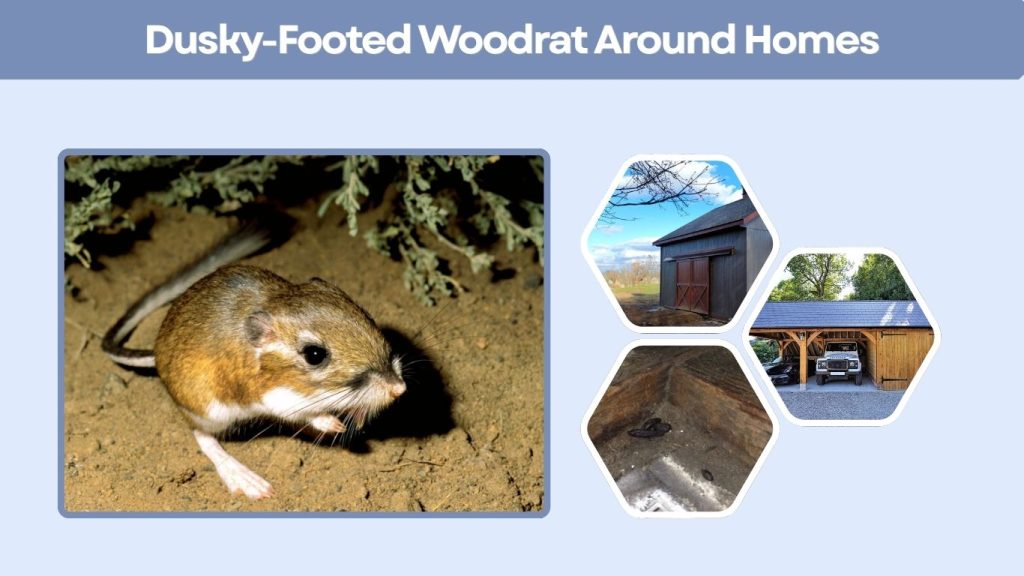
A dusky-footed woodrat may occasionally live near homes, sheds, barns, or outbuildings, especially if the property borders woodland or dense brush. It may collect sticks, insulation, paper, fabric, or other materials if available.
This does not mean the animal is trying to live like a city rat. It is usually responding to shelter and nearby food sources. Still, woodrat activity around structures can create issues, including chewing, nesting debris, droppings, and odor.
Humane Control and Prevention
If a dusky-footed woodrat is near a house, prevention should focus on habitat management and exclusion. Remove brush piles, seal gaps, store food securely, and keep firewood or lumber away from walls. Avoid leaving pet food, birdseed, or fallen fruit accessible overnight.
Trapping rules can vary by location, and protected species concerns may apply in some areas. Because of this, homeowners in California should consider contacting a licensed wildlife control professional or local agency before trapping or removing nests.
Dusky-Footed Woodrat Trail Searches
Some keyword searches mention “dusky footed woodrat trail,” “Cordilleras Trail,” “Edgewood,” and “Redwood City.” These searches likely come from hikers who saw woodrat nests along Bay Area trails. In oak woodland or chaparral parks, large stick houses near trails may belong to woodrats.
When hiking, it is best to observe nests from a distance. Do not poke, dismantle, or remove sticks from them. Even if the animal is hidden, the nest may be active and important to the local habitat.
Ecological Importance of Dusky-Footed Woodrats
The dusky-footed woodrat is more than a small woodland rodent. It helps shape habitat through nest building, plant collecting, and food storage. Its stick houses can become shelter for many other organisms. It also provides food for predators, making it part of a larger ecological network.
In oak woodland, chaparral, and riparian areas, this species is a sign of habitat complexity. Dense cover, native plants, fallen branches, and natural debris all support woodrat survival. Removing too much understory or brush can reduce the shelter these animals need.
FAQs
What does a dusky-footed woodrat look like?
A dusky-footed woodrat usually has gray-brown or cinnamon-brown fur, a lighter underside, rounded ears, dark eyes, long whiskers, and a furry tail. Its feet often look darker than the body. It may resemble a rat at first, but it is a native woodrat with different habits and habitat needs.
Where do dusky-footed woodrats live?
Dusky-footed woodrats live mainly in California and parts of Oregon. They prefer oak woodland, chaparral, riparian corridors, coastal scrub, and dense shrubby areas. They need protective cover and nesting material, so they are most common where shrubs, trees, logs, and sticks are available.
Are dusky-footed woodrats dangerous?
Dusky-footed woodrats are not aggressive and usually avoid people. However, like other wild rodents, they can create sanitation concerns if they nest near homes or buildings. Droppings, urine, fleas, or nesting debris should be handled carefully. Avoid direct contact and use protective cleaning methods.
What do dusky-footed woodrats eat?
Dusky-footed woodrats mostly eat plant material, including leaves, bark, twigs, fruits, nuts, seeds, flowers, and fungi. In oak woodland, they may use oak leaves and acorns. They often carry plant cuttings back to the nest and may store food for later use.
Is the dusky-footed woodrat endangered?
The species as a whole is not generally listed as federally endangered, but some regional woodrat forms or related subspecies may have special conservation status. This is why searches about endangered status can be confusing. For projects in California, local wildlife guidance should be checked before disturbing nests or habitat.