
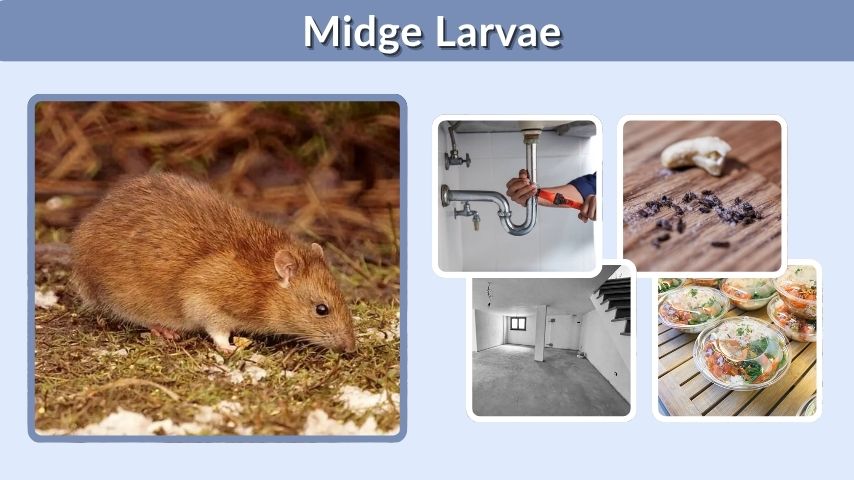
The brown rat is one of the most common rodents found around homes, farms, restaurants, warehouses, and city drains. Also called the Norway rat, this pest is known for its strong body, sharp teeth, fast breeding, and ability to survive in many environments. Understanding its size, habitat, lifespan, and differences from similar animals can help with quick identification and better control.
What Is a Brown Rat?
A brown rat is a medium-sized rodent that lives close to humans and feeds on many types of food. It is highly adaptable, which is why it is found in cities, villages, ports, farms, and commercial buildings.
Brown Rat Scientific Name
The scientific name of the brown rat is Rattus norvegicus. Although it is often called the Norway rat, this name does not mean it came from Norway. The species likely spread through trade routes and ships, becoming one of the most successful rodents in the world.
Common names include:
- Brown rat
- Norway rat
- Sewer rat
- Common rat
- Street rat
Brown Rat Appearance
Brown rats have thick bodies, blunt noses, small ears, and long tails. Their fur is usually brown or grayish-brown on the back and lighter on the belly. Compared with some other rats, their body looks heavier and less slender.
They are strong diggers and often create burrows near foundations, gardens, garbage areas, and drainage systems.
Brown Rat Size and Physical Features
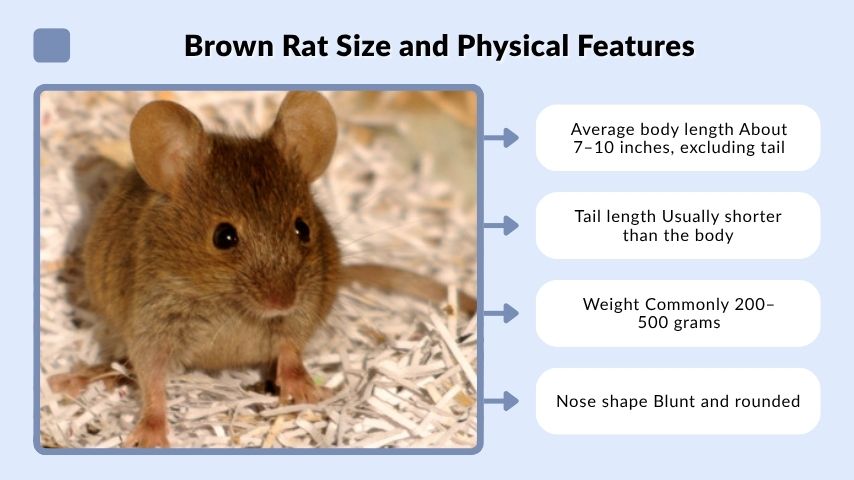
Brown rats are larger than house mice and usually heavier than black rats. Their size makes them easier to identify when seen clearly, especially near garbage bins, drains, or food storage areas.
| Feature | Brown Rat Description |
|---|---|
| Scientific name | Rattus norvegicus |
| Average body length | About 7–10 inches, excluding tail |
| Tail length | Usually shorter than the body |
| Weight | Commonly 200–500 grams |
| Nose shape | Blunt and rounded |
| Ears | Small compared with body size |
| Habitat | Burrows, sewers, basements, farms, warehouses |
| Lifespan | Usually 1 year in the wild, longer in safe conditions |
Tail and Body Shape
One easy way to recognize a brown rat is by looking at its tail. The brown rat’s tail is usually shorter than its body. The tail is thick, scaly, and nearly hairless.
Its body is solid and muscular. This helps the rat dig, squeeze through openings, climb when needed, and push through tight spaces.
Brown Rat Teeth
Like other rodents, brown rats have front teeth that never stop growing. They gnaw on wood, plastic, wires, pipes, food packaging, and building materials to keep their teeth worn down.
This gnawing can cause:
- Electrical wire damage
- Food contamination
- Holes in walls and doors
- Damaged insulation
- Structural and storage problems
Brown Rat Habitat
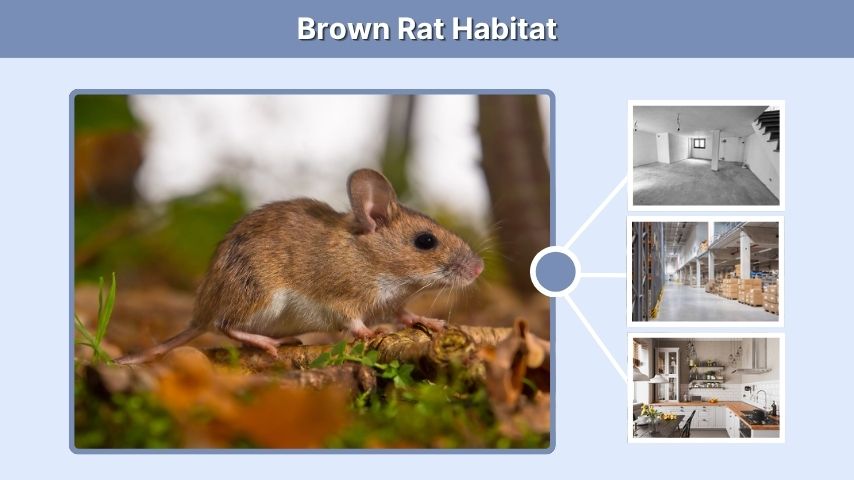
Brown rats prefer places where they can find food, water, and shelter. They are usually found close to the ground and are less likely to live high in trees or roofs compared with black rats.
Common Outdoor Habitats
Outside, brown rats often live in burrows. These burrows may be located near buildings, gardens, farms, compost piles, drains, or rubbish areas.
Typical outdoor hiding places include:
- Under sheds and decks
- Around garbage bins
- Near sewers and drains
- Along walls and fences
- In farms, fields, and animal feed areas
- Beneath thick vegetation or wood piles
Common Indoor Habitats
When brown rats enter buildings, they usually stay in hidden, low-level areas. They prefer dark, quiet places where they can move without being disturbed.
Inside buildings, they may hide in:
- Basements
- Crawl spaces
- Storage rooms
- Wall voids
- Kitchens
- Warehouses
- Food storage areas
- Utility rooms
Brown rats enter through small gaps, broken vents, open drains, damaged doors, and cracks near foundations.
Brown Rat Lifespan and Breeding
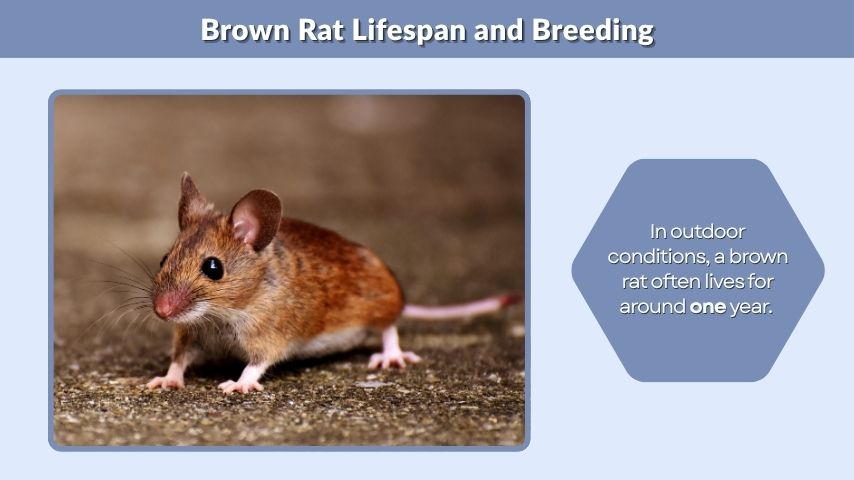
Brown rats do not usually live very long in the wild, but they breed quickly. This is one reason infestations can grow fast if not controlled early.
Brown Rat Lifespan
In outdoor conditions, a brown rat often lives around one year. Many die because of predators, disease, traps, weather, or lack of food. In protected environments with steady food and shelter, they may live longer.
Breeding Habits
Brown rats reproduce quickly. A female can produce several litters in a year, and each litter can contain multiple pups. Young rats mature fast, which allows populations to increase within a short time.
A small rat problem can become serious when:
- Food is easily available
- Garbage is not sealed
- Entry points are not closed
- Burrows are ignored
- Water sources are nearby
Brown Rat vs Black Rat
Brown rats and black rats are often confused, but they have different body shapes, habits, and preferred nesting areas. Knowing the difference helps in choosing the right control method.
Main Differences
Brown rats are usually heavier, stronger, and more ground-based. Black rats are slimmer, better climbers, and more likely to nest in roofs, trees, and upper parts of buildings.
Key differences include:
- Brown rat: Large body, blunt nose, small ears, shorter tail
- Black rat: Slim body, pointed nose, large ears, longer tail
- Brown rat: Often lives in burrows, drains, and basements
- Black rat: Often lives in roofs, attics, trees, and high spaces
Which Rat Is More Common?
The answer depends on location, climate, food sources, and building structure. In many urban areas, brown rats are very common because they thrive in sewers, streets, markets, farms, and waste areas.
Brown Rat Snake and Brown Rat Confusion
Many people search for “brown rat snake” when looking up brown rats. However, a brown rat and a brown rat snake are completely different animals.
Brown Rat Snake
A brown rat snake is a type of snake that may feed on rodents, birds, eggs, and small animals. It is not the same as a brown rat. The word “rat” in rat snake refers to the snake’s habit of eating rats and other rodents.
Brown Rat Snake vs Cobra
A brown rat snake and a cobra are also different. Cobras are known for venom and hood displays, while rat snakes are generally known as rodent hunters. People should avoid handling any unknown snake because identification mistakes can be dangerous.
Brown Rat Snake Venomous or Not?
Many rat snakes are non-venomous, but snake identification depends on the exact species and region. If a snake is found near a home, it is safer to contact a local wildlife or pest professional instead of trying to catch or kill it.
Signs of a Brown Rat Infestation
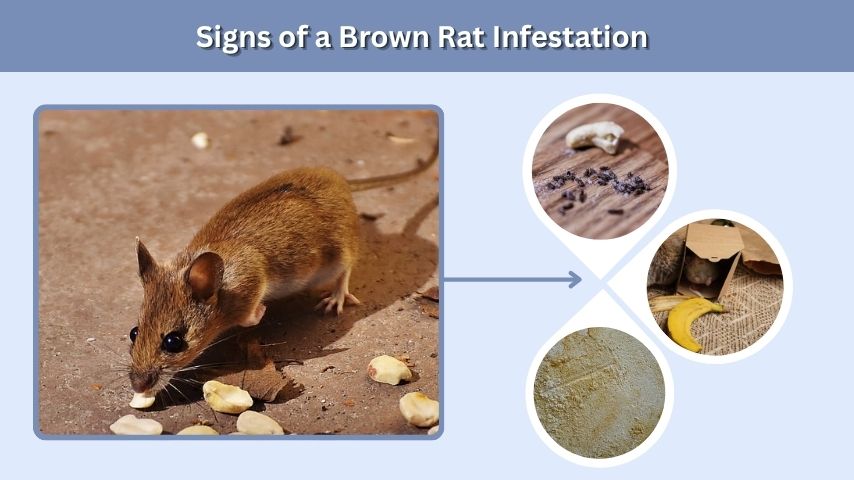
Brown rats are mostly active at night, so people may not always see them directly. Instead, infestations are often noticed through signs they leave behind.
Common Signs
Look for these warning signs around your property:
- Droppings near food, walls, or storage areas
- Scratching noises at night
- Greasy rub marks along walls
- Gnaw marks on wood, wires, or packaging
- Burrow holes near foundations
- Damaged food bags
- Strong musky odor
- Rat tracks in dusty areas
Where to Check First
Start checking areas where food, water, and shelter are available. Brown rats often follow the same routes, so signs may appear along walls, behind appliances, near drains, or close to bins.
Important inspection areas include kitchens, basements, gardens, storage rooms, animal feed areas, and outdoor waste points.
Why Brown Rats Are a Problem
Brown rats are more than just a nuisance. They can damage property, contaminate food, and create health concerns. Their constant gnawing and movement through dirty areas make them risky in homes and businesses.
Property Damage
Brown rats chew almost anything they can handle. Their teeth can damage wood, plastic, rubber, cardboard, insulation, and even soft metals.
This damage can affect:
- Electrical wiring
- Plumbing materials
- Stored goods
- Food packaging
- Wall insulation
- Doors and floor edges
Food Contamination
Brown rats move through drains, garbage, soil, and dirty spaces. When they enter kitchens or storage areas, they can contaminate food and surfaces with urine, droppings, hair, and dirt.
Food businesses, restaurants, and warehouses must take brown rat problems seriously because contamination can affect safety, reputation, and inspections.
How to Prevent Brown Rats
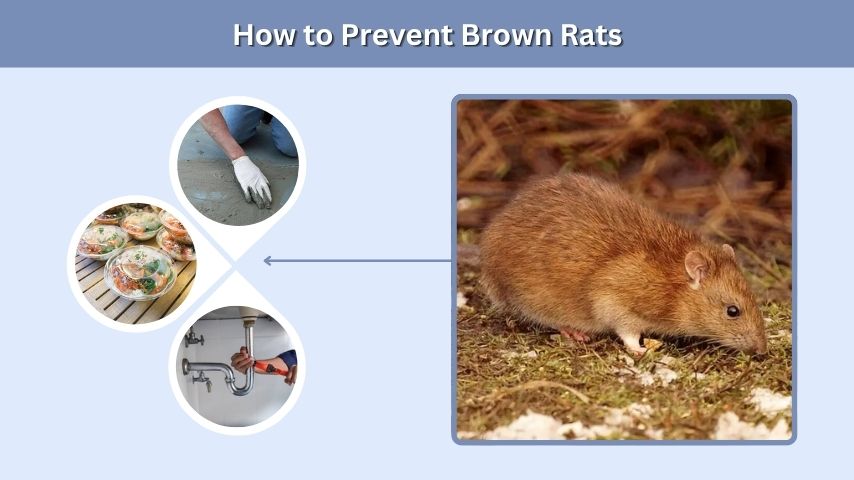
Prevention is the best way to reduce brown rat problems. A property that gives rats easy food, water, and shelter is more likely to attract them.
Simple Prevention Steps
Use these steps to make your home or business less attractive to brown rats:
- Seal cracks and holes around foundations
- Keep garbage bins closed tightly
- Remove outdoor clutter and wood piles
- Store food in sealed containers
- Clean spills and crumbs quickly
- Fix leaking pipes and taps
- Trim thick vegetation near buildings
- Avoid leaving pet food outside overnight
Entry Point Control
Brown rats can squeeze through surprisingly small openings. Check gaps around doors, vents, pipes, drains, and foundation cracks. Use strong materials like metal mesh, concrete, or rodent-proof sealant for repairs.
Weak materials such as foam alone may not work because rats can chew through them.
Brown Rat Control Methods
Getting rid of brown rats usually requires a combination of inspection, sanitation, exclusion, and trapping or baiting. The right method depends on the size of the infestation and the location.
Traps
Traps can be useful for smaller infestations or indoor control. They should be placed along walls, near droppings, and close to active pathways. Proper placement is more important than using many traps randomly.
Baits
Rodent baits may be used in some situations, but they must be handled carefully. They should be placed in secure bait stations, away from children, pets, and non-target animals.
Professional Pest Control
A professional may be needed when rats are nesting in walls, drains, commercial areas, or large outdoor spaces. Professionals can identify entry points, nesting areas, and safe treatment options.
FAQs
What is the scientific name of the brown rat?
The scientific name of the brown rat is Rattus norvegicus. It is also commonly called the Norway rat, sewer rat, or common rat. This species is one of the most widespread rodents living near humans.
How big is a brown rat?
A brown rat usually has a body length of about 7 to 10 inches, not including the tail. Its tail is often shorter than its body. Adult brown rats are heavier and thicker than black rats or house mice.
Where do brown rats live?
Brown rats live in burrows, sewers, basements, farms, gardens, warehouses, and food storage areas. They prefer ground-level spaces with easy access to food, water, and shelter.
What is the difference between a brown rat and a black rat?
Brown rats are larger, heavier, and usually live near the ground. Black rats are slimmer, have longer tails, and are better climbers. Black rats are more likely to nest in roofs, trees, and upper building areas.
Is a brown rat snake venomous?
A brown rat snake is not the same as a brown rat. Many rat snakes are non-venomous, but exact identification depends on the species and location. It is best not to handle any unknown snake without expert help.