

Black rats and brown rats are two of the most common rat species found around homes, farms, restaurants, warehouses, and cities. Although they may look similar at first, they differ in size, body shape, behavior, nesting habits, and preferred habitats. Knowing the difference between a black rat and a brown rat can help you identify an infestation faster and choose the right control method.
Black Rat vs Brown Rat at a Glance
Both black rats and brown rats are adaptable rodents that live close to humans. They search for food, water, warmth, and shelter, especially in areas with poor sanitation or easy access to buildings. However, they do not behave in exactly the same way.
Black rats are usually better climbers and are more likely to live in high places such as attics, roofs, trees, and wall voids. Brown rats are heavier, stronger, and more likely to burrow near the ground. They are commonly found in basements, sewers, drains, gardens, and around building foundations.
| Feature | Black Rat | Brown Rat |
|---|---|---|
| Scientific name | Rattus rattus | Rattus norvegicus |
| Other names | Roof rat, ship rat | Norway rat, sewer rat |
| Body shape | Slim and agile | Thick and heavy |
| Nose shape | Pointed | Blunt |
| Ears | Large | Smaller |
| Tail | Longer than body | Shorter than body |
| Main habitat | Roofs, attics, trees | Burrows, drains, basements |
| Climbing ability | Excellent | Moderate |
| Burrowing habit | Less common | Very common |
What Is a Black Rat?
The black rat, scientifically known as Rattus rattus, is also called the roof rat or ship rat. Despite the name, black rats are not always completely black. Their fur can be black, dark brown, grayish, or a mixture of colors. They usually have lighter fur on the belly.
Appearance of Black Rats
Black rats have slim bodies, pointed noses, large ears, and long tails. Their tail is usually longer than the combined length of the head and body. This long tail helps with balance, especially when climbing along pipes, wires, fences, trees, and rooflines.
Their lightweight body makes them quick and agile. Because of this, black rats are often found in upper areas of buildings rather than only near the ground.
Common Black Rat Habitats
Black rats prefer warm, dry, and elevated nesting spaces. They may enter homes and commercial buildings through roof gaps, tree branches touching the building, broken vents, or openings around utility lines.
Common nesting areas include:
- Attics and roof spaces
- Wall cavities
- Trees and thick vines
- Upper storage rooms
- Ceiling voids
- Warehouses
- Ships and ports
- Fruit trees and gardens
Black rats often feed on fruits, seeds, grains, nuts, vegetables, and stored food. They may also eat insects, pet food, and scraps when available.
What Is a Brown Rat?
The brown rat, scientifically known as Rattus norvegicus, is commonly called the Norway rat, sewer rat, or common rat. It is one of the most widespread rats in the world and is often associated with cities, drains, farms, garbage areas, and underground spaces.
Appearance of Brown Rats
Brown rats are usually larger and heavier than black rats. They have thick bodies, blunt noses, small ears, and tails that are shorter than their bodies. Their fur is usually brown or grayish-brown, with a lighter underside.
Brown rats are strong diggers. Their body shape makes them well-suited for burrowing, squeezing under structures, and moving through sewers or ground-level spaces.
Common Brown Rat Habitats
Brown rats are usually found close to the ground. They prefer damp, hidden, and protected areas where food and water are nearby.
Common brown rat habitats include:
- Sewers and drains
- Basements and crawl spaces
- Burrows near foundations
- Gardens and compost piles
- Farms and animal feed areas
- Garbage storage zones
- Warehouses and food storage rooms
- Riverbanks and ditches
Brown rats are less likely than black rats to live in high roof spaces, although they can climb when necessary.
Main Difference Between Black Rat and Brown Rat
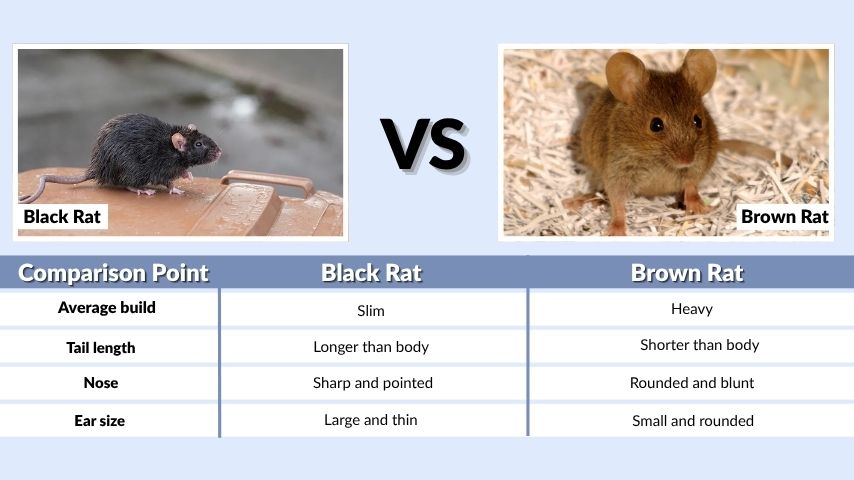
The biggest difference between black rats and brown rats is their body type and preferred nesting location. Black rats are slimmer, better climbers, and often live above ground. Brown rats are larger, stronger, and usually live at ground level or underground.
Size and Body Shape
Brown rats are usually bigger and heavier than black rats. A brown rat often looks bulky, with a thick body and a shorter tail. A black rat looks more slender, with a longer tail and larger ears.
| Comparison Point | Black Rat | Brown Rat |
|---|---|---|
| Average build | Slim | Heavy |
| Tail length | Longer than body | Shorter than body |
| Nose | Sharp and pointed | Rounded and blunt |
| Ear size | Large and thin | Small and rounded |
| Movement | Fast climber | Strong ground mover |
| Typical impression | Agile and light | Robust and powerful |
Nesting Behavior
Black rats are often found above ground. They may nest in roofs, trees, attics, and upper wall spaces. Brown rats are more likely to dig burrows outdoors or live in basements, drains, and sewers.
This difference is important for pest control. If scratching sounds come from the ceiling at night, black rats may be more likely. If burrow holes appear near the foundation or garden, brown rats may be the problem.
Feeding Habits
Both species are opportunistic feeders, meaning they eat many types of food. However, black rats often prefer plant-based foods such as fruits, grains, nuts, and seeds. Brown rats eat grains, meat scraps, garbage, pet food, vegetables, and almost anything available.
In homes and businesses, both species can contaminate food and surfaces with droppings, urine, hair, and bacteria.
Black Rats vs Brown Rats: Which Is Worse?
It is difficult to say that one species is always worse than the other. Both black rats and brown rats can damage property, contaminate food, and spread disease risks. The seriousness depends on where they are nesting, how large the infestation is, and how quickly control steps are taken.
When Black Rats Are a Bigger Problem
Black rats can be especially troublesome when they enter roofs, attics, and upper building spaces. Because they are excellent climbers, they can move through areas people rarely inspect.
They may damage:
- Ceiling insulation
- Stored items in attics
- Electrical wiring
- Fruit trees and garden crops
- Roof vents and upper wall areas
Black rats can be harder to notice early because they may stay hidden in high spaces for a long time.
When Brown Rats Are a Bigger Problem
Brown rats can be more destructive around foundations, drains, basements, and outdoor areas. Their burrowing can damage soil structure, garden beds, and spaces near buildings.
They may damage:
- Foundations and soil edges
- Drainage areas
- Food storage rooms
- Garbage zones
- Animal feed supplies
- Wiring, plastic, and wood
Brown rats are often seen around restaurants, farms, markets, alleys, and sewer-connected areas because they thrive where waste and water are available.
Brown Rat vs Black Rat Plague History
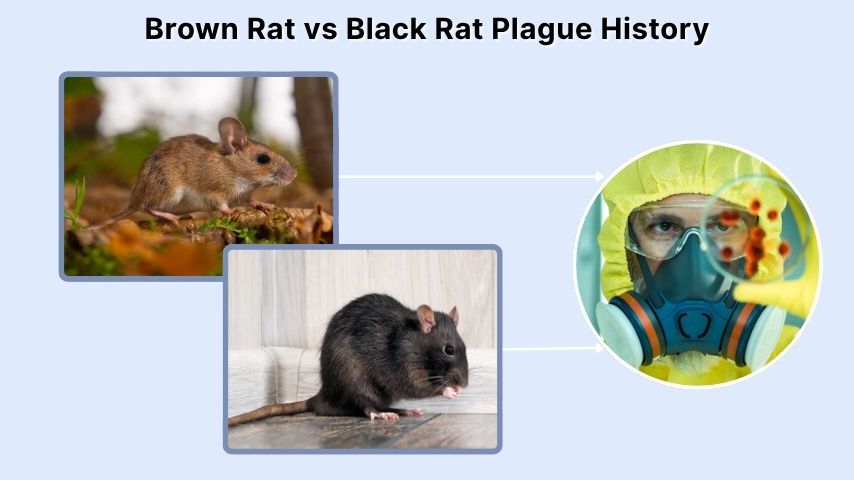
Many people search for black rat vs brown rat plague because rats are often linked with historic disease outbreaks. The black rat has often been associated with historic plague transmission because fleas carried by rats played a role in spreading disease in past outbreaks.
However, modern pest control should not focus only on plague. Both black rats and brown rats can create health concerns by contaminating surfaces, food, and storage areas. The main concern in homes and businesses is reducing contact with rat droppings, urine, nesting material, and contaminated food.
Can Black and Brown Rats Breed?
Black rats and brown rats are different species. Black rats are Rattus rattus, while brown rats are Rattus norvegicus. Because they are separate species, they do not commonly interbreed or produce normal hybrid populations in typical conditions.
They may live in the same wider environment, especially in cities or farms, but they usually choose different nesting zones. Brown rats tend to dominate ground-level areas, while black rats are more common in elevated spaces where they can climb and nest safely.
Signs of Black and Brown Rat Infestations
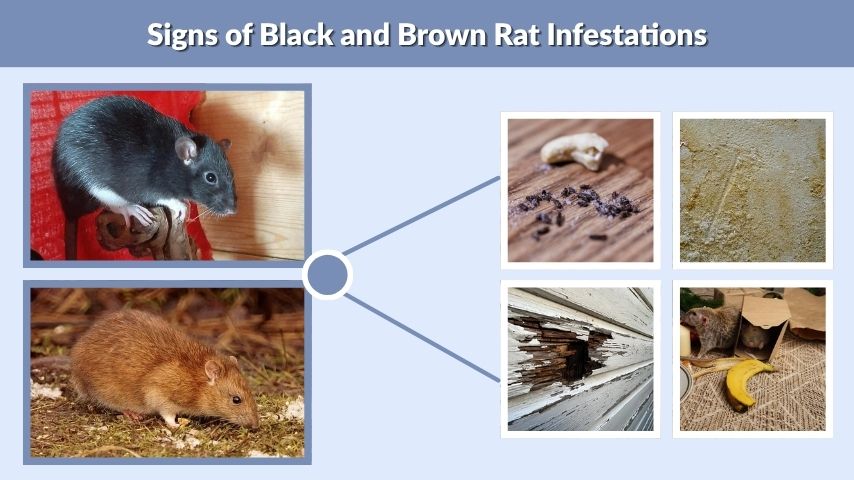
The signs of black rats and brown rats can look similar, but their location often gives clues. Finding droppings in an attic may point toward black rats, while burrows near a foundation may suggest brown rats.
| Sign | More Common With Black Rats | More Common With Brown Rats |
|---|---|---|
| Droppings in attic | Yes | Possible |
| Burrows outside | Less common | Very common |
| Scratching in ceiling | Common | Less common |
| Damage near drains | Possible | Common |
| Fruit tree damage | Common | Possible |
| Basement activity | Possible | Common |
| Roofline movement | Common | Less common |
Common Infestation Signs
Look for:
- Rat droppings
- Gnaw marks
- Greasy rub marks on walls
- Scratching sounds at night
- Damaged food packaging
- Burrow holes
- Musky odor
- Tracks in dusty areas
- Nesting material such as paper, fabric, or insulation
Rat activity should be handled quickly because populations can grow fast when food and shelter are available.
How to Identify Which Rat You Have
To identify whether you have black rats or brown rats, look at the location, body shape, tail length, and nesting behavior.
Identification Tips
Use these clues:
- Long tail and slim body: likely black rat
- Shorter tail and thick body: likely brown rat
- Activity in attic or roof: often black rat
- Burrows near ground: often brown rat
- Large ears and pointed nose: black rat
- Small ears and blunt nose: brown rat
If you cannot see the rat clearly, check where the signs are found. Location is often one of the best clues.
How to Prevent Black and Brown Rats
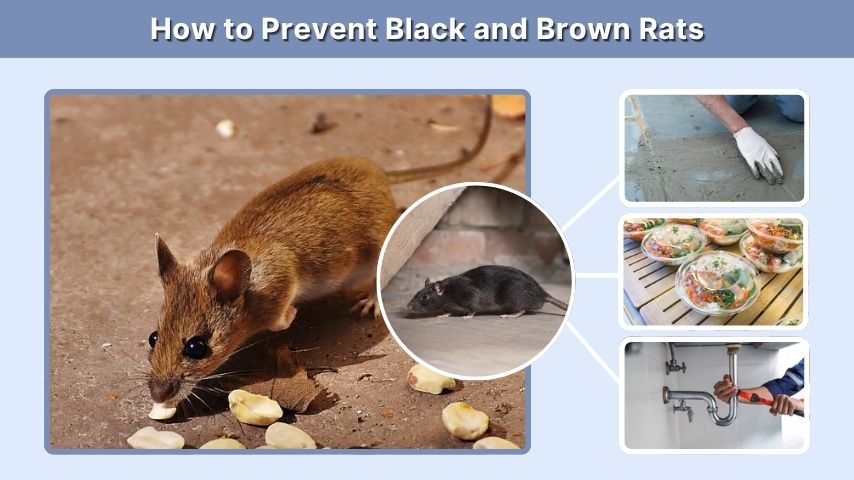
Prevention is similar for both species, but the focus areas are slightly different. For black rats, pay more attention to rooflines, trees, vents, and high entry points. For brown rats, focus on ground-level gaps, drains, doors, and foundations.
Prevention Steps
To reduce rat problems:
- Seal cracks, holes, and gaps around the building
- Trim tree branches away from the roof
- Store food in sealed containers
- Keep garbage bins tightly closed
- Remove clutter from yards and storage areas
- Clean up fallen fruit and pet food
- Repair broken vents and drains
- Keep basements, attics, and sheds organized
- Fix water leaks and remove standing water
Control Methods
Rat control often requires several steps. Traps may help with smaller indoor problems, while bait stations may be used in outdoor or commercial settings. Exclusion work is also important because killing rats without sealing entry points can lead to repeat infestations.
For serious infestations, professional pest control is often the safest option. A professional can identify the species, locate nests, find entry points, and recommend a control plan based on the building and infestation level.
FAQs
What is the main difference between black rats and brown rats?
The main difference is body shape and habitat. Black rats are slimmer, have longer tails, and are excellent climbers. Brown rats are larger, heavier, have shorter tails, and usually live near the ground, in burrows, drains, basements, or sewers.
Are black rats worse than brown rats?
Both can be serious pests. Black rats are troublesome in roofs, attics, and trees, while brown rats cause problems in basements, drains, burrows, and food storage areas. The worse species depends on where the infestation is and how much damage they are causing.
Are rats black or brown?
Rats can be black, brown, gray, or mixed in color. The name does not always describe the exact fur color. Black rats may look dark brown or gray, while brown rats may appear grayish-brown. Body shape, tail length, and habitat are better identification clues.
Can black rats and brown rats live together?
They can live in the same general area, but they usually prefer different nesting locations. Black rats often stay in higher spaces such as roofs and trees, while brown rats usually live at ground level or underground. Brown rats may dominate lower areas where food is abundant.
How do I know if I have a black rat or brown rat?
Check the signs and location. Rats in attics, roofs, trees, or upper walls are often black rats. Rats in burrows, drains, basements, or around foundations are often brown rats. A long tail suggests a black rat, while a thicker body and shorter tail suggest a brown rat.