
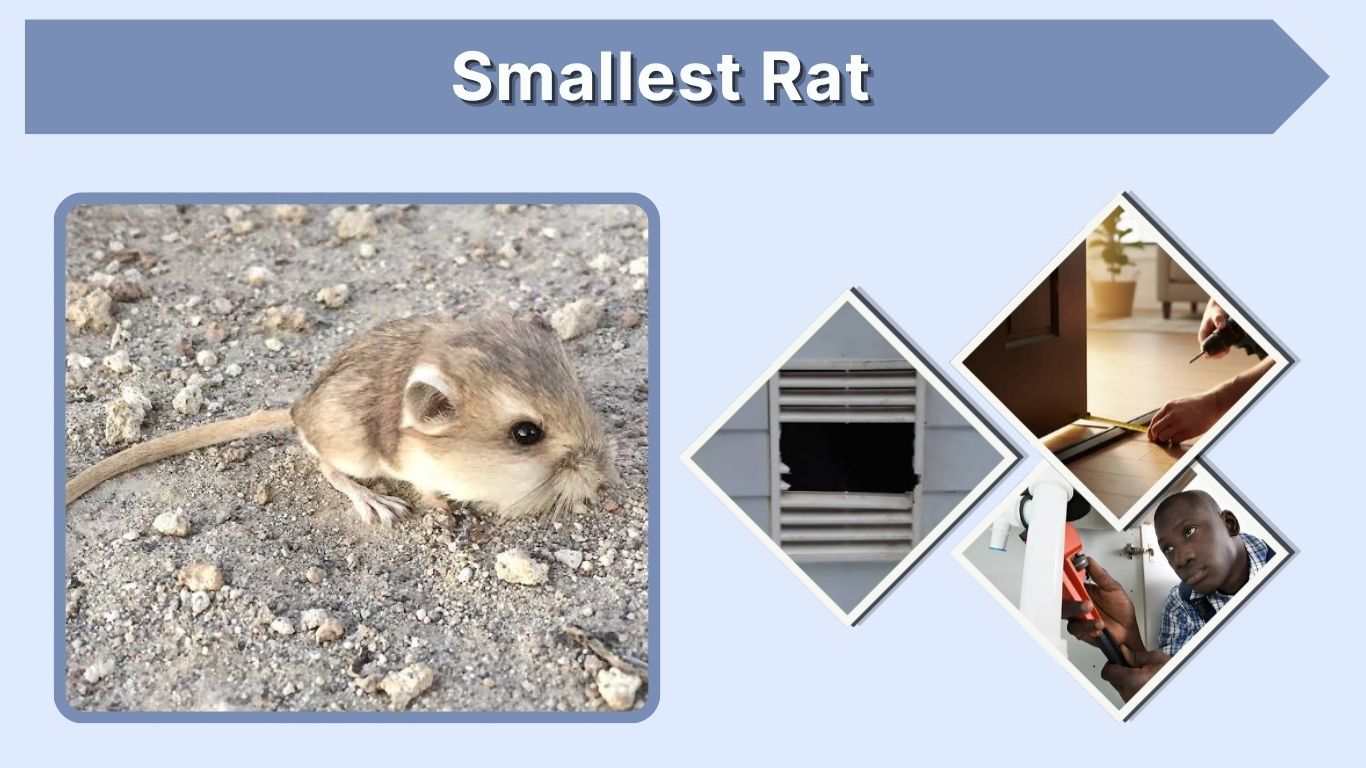
Rats are usually imagined as relatively large rodents, but some species are surprisingly small. So, what is the smallest rat in the world? Among true rats in the genus Rattus, the Polynesian rat is widely recognized as one of the smallest and has been described scientifically as the smallest member of the genus. Small body size also gives rats another remarkable ability: squeezing through narrow openings. This guide covers the smallest rat species, its size and habitat, small pet rats, and the smallest holes or gaps rats can enter.
What Is the Smallest Rat in the World?
The Polynesian rat (Rattus exulans), also called the Pacific rat or little rat, is generally considered the smallest species within the genus Rattus. A scientific review of Rattus exulans described it as the smallest of the recognized Rattus species considered in that work.
It is substantially smaller than the familiar Norway rat and black rat that commonly live around human settlements.
Polynesian Rat Size
Adult Polynesian rats generally have a head-and-body length of approximately 11.5–15 cm (4.5–6 inches) and commonly weigh around 40–80 grams. Their tail is roughly similar to the length of the body, so their complete nose-to-tail measurement is considerably longer.
Typical characteristics include:
- Head-body length of roughly 4.5–6 inches
- Lightweight, slender body
- Pointed snout
- Relatively large ears
- Small, delicate feet
- Brownish or reddish-brown upper fur
- Paler underside
- Long, relatively thin tail
Its small size explains why it is sometimes called the little rat.
Where Does the World’s Smallest Rat Live?
The Polynesian rat originated in Asia and became widely distributed across Pacific islands through its close association with people and human travel. Today, populations occur throughout numerous parts of the Pacific region.
These rats can occupy forests, grasslands, agricultural areas, villages, and other habitats where suitable food and shelter are available.
Their ability to travel with people contributed greatly to their widespread distribution.
What Does the Polynesian Rat Eat?
Like many rats, Polynesian rats have a flexible diet. They can consume plant material and other available foods, allowing them to survive in many different environments.
Their small size does not necessarily make them harmless to ecosystems. Introduced rat populations can consume native plants and animals, particularly on islands where wildlife evolved without mammalian predators.
Is Osgood’s Rat the Smallest Rat Species?
Osgood’s Vietnamese rat, Rattus osgoodi, is another extremely small rat. It is often included in discussions about the smallest rat species.
Osgood’s rat reportedly reaches roughly 12–17 cm in head-and-body length, placing it among the smallest true rats. However, the Polynesian rat can have an even shorter minimum adult body length and has specifically been described in scientific literature as the smallest species in the genus Rattus.
Polynesian Rat vs. Osgood’s Rat
Both species demonstrate that true rats are not always large animals.
The Polynesian rat generally measures around 11.5–15 cm in head-body length, while reported measurements for Osgood’s rat are around 12–17 cm.
This makes the Polynesian rat a strong answer when someone asks, “What is the smallest rat?”
How Small Is the Smallest Rat Compared With a Norway Rat?
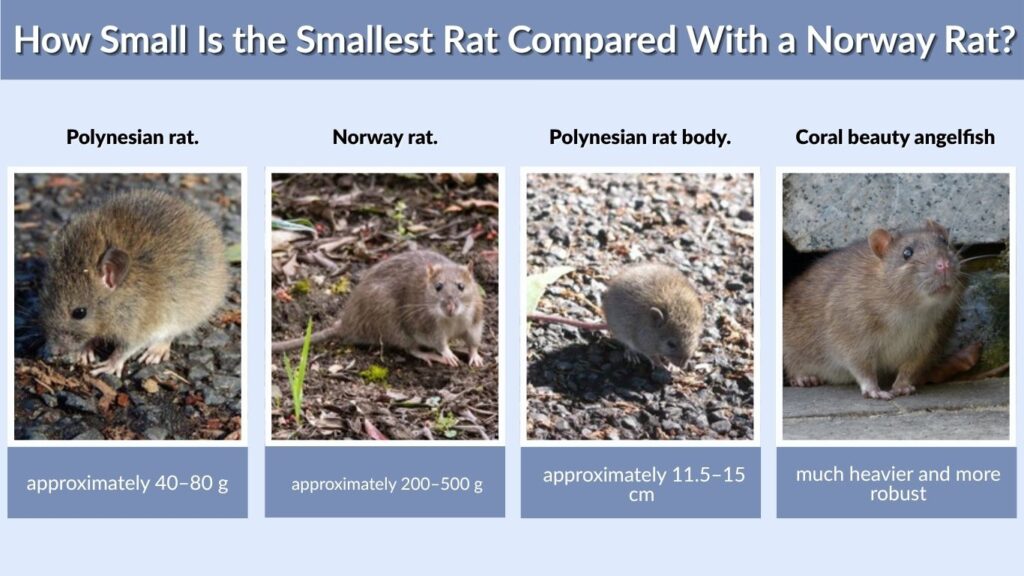
The difference becomes obvious when the Polynesian rat is compared with the common Norway rat, Rattus norvegicus.
Norway rats average around 40 cm (16 inches) in total length including the tail and commonly weigh approximately 200–500 grams.
A Polynesian rat may weigh only around 40–80 grams.
Size Comparison
- Polynesian rat: approximately 40–80 g
- Norway rat: approximately 200–500 g
- Polynesian rat body: approximately 11.5–15 cm
- Norway rat: much heavier and more robust
Even relatively small adult Norway rats therefore have a much heavier build than the world’s smallest true rats.
What Is the Smallest Pet Rat Breed?
People searching for the smallest rat breed or smallest pet rat breed are usually asking about domestic fancy rats rather than wild species.
Technically, fancy rats are not divided into breeds in exactly the same way as dogs. Organizations generally recognize different varieties based on features such as coat, ears, markings, body form, and color.
Dwarf Rats
The dwarf rat is the small domestic type most relevant to this question.
The National Fancy Rat Society’s provisional standard describes dwarf rats as being less than half the size of a standard fancy rat, while still having the appearance and proportions of a healthy adult rat rather than simply being an undersized individual.
Dwarf rats can occur with different coat colors, markings, and ear types.
Therefore, if you mean the smallest domestic or pet rat type rather than the smallest wild species, a dwarf fancy rat is the closest answer.
What Is the Smallest Hole a Rat Can Fit Through?
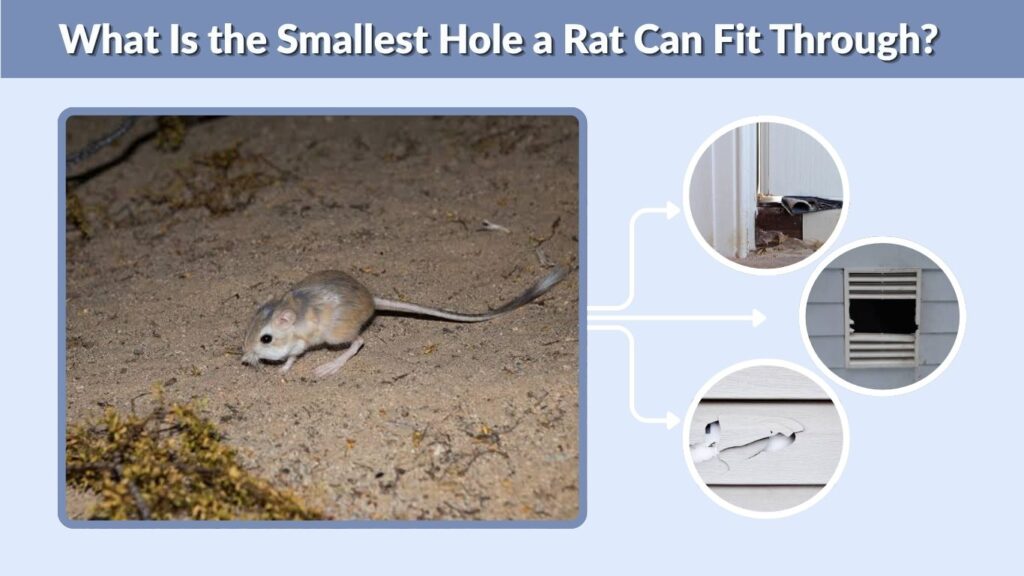
Small size becomes especially important when rats are trying to enter buildings.
Adult rats can compress their bodies surprisingly well. Pest-management guidance reports that many rats can get through openings approximately 1/2 inch (1.3 cm) wide.
Young rats may be especially capable of passing through small gaps.
Smallest Rat Entry Points
Common entry areas include:
- Gaps beneath exterior doors
- Openings around utility pipes
- Broken vents
- Cracks near foundations
- Damaged siding
- Openings around cables
- Gaps around garage doors
- Holes in walls or roofing
Rats can also gnaw around openings made from softer materials, potentially enlarging a hole that was initially too small.
What Is the Smallest Gap a Rat Can Get Through?
A gap of approximately 1/2 inch may be enough for some rats to enter, particularly smaller or younger individuals. Pest-management guidance commonly recommends treating roughly half-inch rat-access points as a serious exclusion concern.
Rats do not need to pass through an opening while maintaining their normal round body shape. Their bodies can compress considerably once the head fits through an opening.
Can a Rat Get Through a 1/2-Inch Hole?
Yes, some rats can pass through openings around 1/2 inch, particularly young or relatively small individuals.
However, there is no universal hole size that every rat can enter. Body size, age, opening shape, and surrounding material all affect whether an individual rat can squeeze through.
An opening may also become accessible later if the rat can gnaw its edges.
Why Can Rats Squeeze Through Such Small Spaces?
Rats have flexible bodies and do not have the broad, rigid body structure that their fur sometimes makes them appear to have.
The critical limitation is often whether the skull and shoulders can negotiate the opening. Once that happens, much of the remaining body can compress and follow.
This ability allows wild rats to use narrow burrows, wall cavities, drains, roof spaces, and other protected locations.
Small Rats Can Be Especially Difficult to Exclude
Young rats are smaller than full-grown adults, so openings that appear incapable of admitting a large Norway rat may still provide access to juveniles.
This is why rodent exclusion involves sealing small holes rather than only obvious openings. EPA guidance also notes that rats may enlarge openings by gnawing when the surrounding material permits it.
How to Stop Rats Entering Through Small Holes
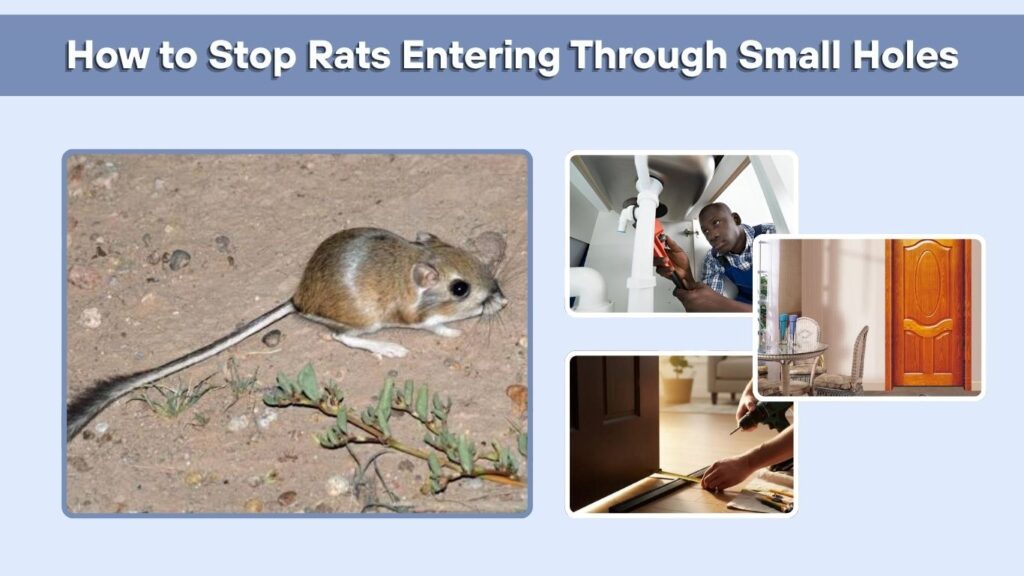
Preventing access is generally more effective than waiting until rats become established inside a structure.
The CDC recommends inspecting buildings for holes and gaps and sealing them using durable materials. Small openings can be packed with steel wool and secured, while larger holes may require metal, hardware cloth, cement, or similar resistant materials.
Areas to Check Around Your Home
Inspect:
- Doors and door frames
- Exterior walls
- Foundations
- Roof edges
- Attics and vents
- Garages
- Pipe penetrations
- Utility cables
- Spaces underneath cabinets
- Openings behind appliances
Do not rely only on foam or other easily damaged materials in areas where persistent rats may gnaw.
FAQs
The term “smallest rat” can mean several things: the smallest wild rat species, the smallest domestic rat variety, or the smallest opening a rat can enter. Understanding these differences helps explain why different answers sometimes appear when comparing rat size.
What Is the Smallest Rat in the World?
Within the genus Rattus, the Polynesian rat (Rattus exulans) is recognized as an exceptionally small species and has been described scientifically as the smallest member of the genus.
How Big Is the World’s Smallest Rat?
Polynesian rats commonly measure approximately 11.5–15 cm in head-and-body length and weigh roughly 40–80 grams.
What Is the Smallest Pet Rat?
Dwarf fancy rats are among the smallest domestic rats. The NFRS standard describes a dwarf as being less than half the size of a standard fancy rat.
What Is the Smallest Hole a Rat Can Get Through?
Some rats can squeeze through openings around 1/2 inch (1.3 cm), particularly younger or smaller individuals.
Can Rats Make Small Holes Bigger?
Yes. Rats are capable of gnawing around openings when the material is suitable, turning a smaller crack or hole into a usable entrance.