
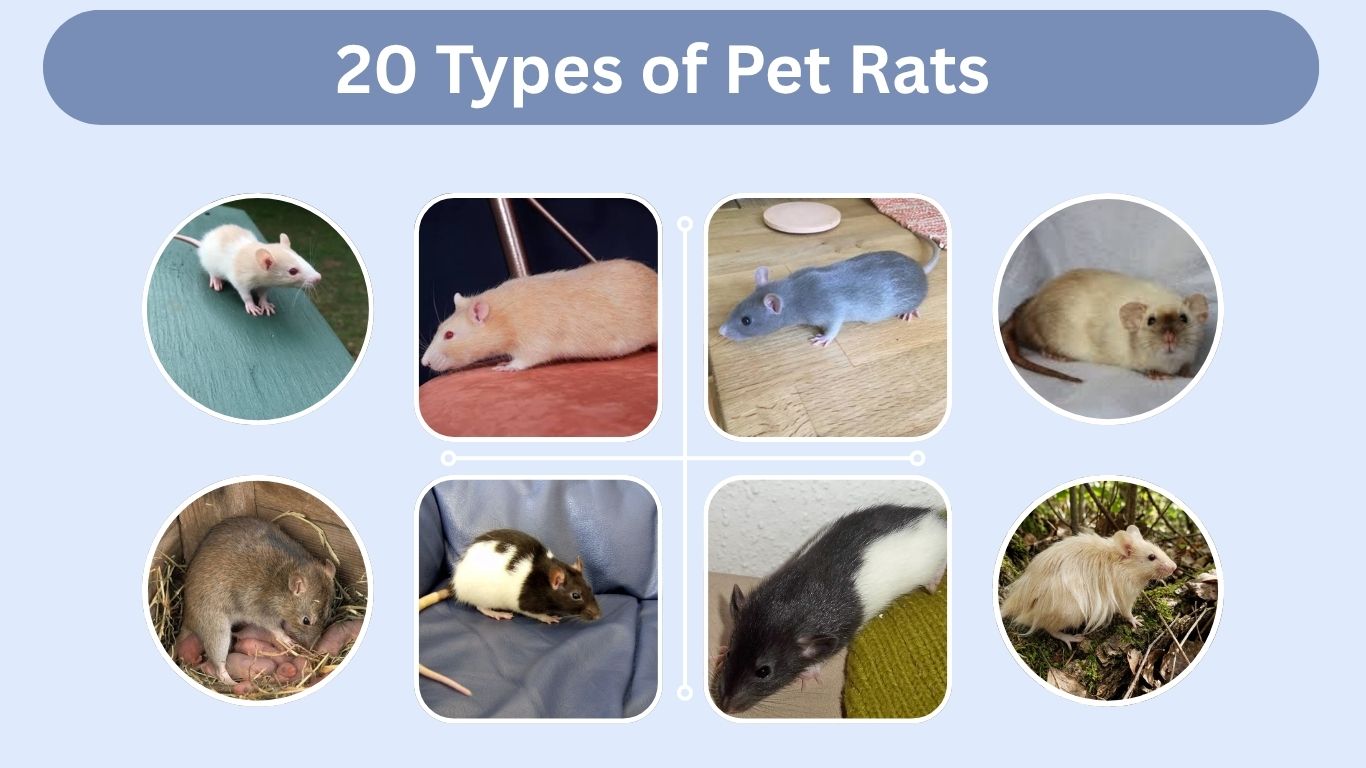
Pet rats come in a surprising variety of coat types, colors, markings, and ear shapes. While most belong to the same domesticated species, varieties such as Dumbo, Rex, Hairless, Hooded, Siamese, and Blue Rats can look dramatically different from one another. Their personalities also vary by individual, but most pet rats are intelligent, social, curious, and capable of forming strong bonds with their owners. Below are 20 popular types of pet rats and the key features that make each one unique.
1. Standard Rat
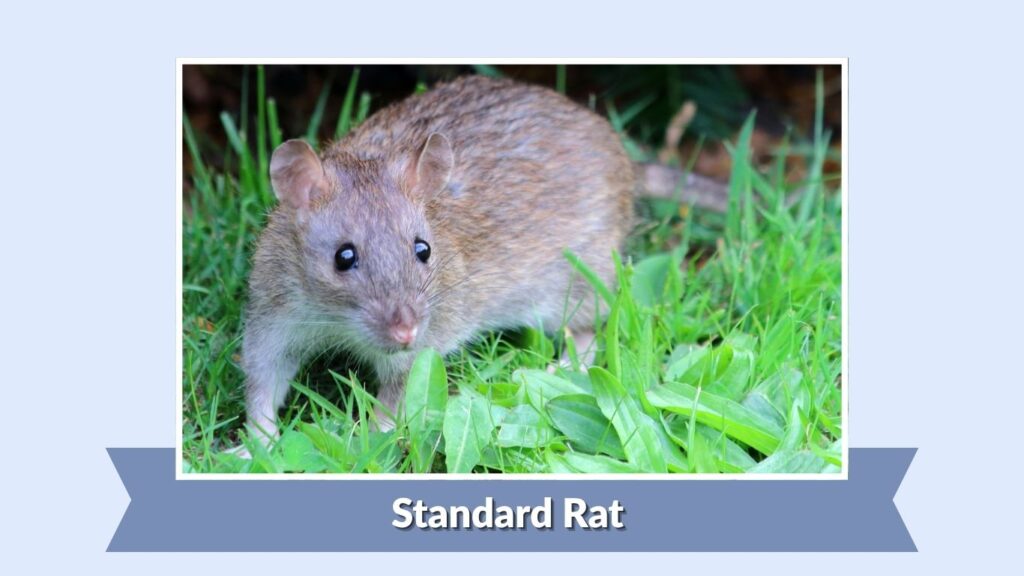
The Standard Rat is one of the most common and recognizable types of pet rats. It has the classic body shape, smooth coat, upright ears, and long tail associated with domesticated fancy rats. Standard Rats are popular because they are intelligent, social, easy to handle, and available in many colors and markings.
Identification
- Smooth, short coat lying close to the body
- Normal-sized ears positioned on top of the head
- Long, mostly hairless tail
- Usually 9–11 inches long excluding the tail
- Available in black, white, brown, blue, gray, and mixed colors
- May have hooded, Berkshire, solid, or other coat patterns
Temperament and Personality
Standard Rats are usually friendly, curious, and highly social when handled regularly. They often form strong bonds with their owners and can learn to recognize voices, routines, and even their names. Many enjoy sitting on shoulders, exploring rooms, and interacting with toys. Because rats are social animals, keeping them with at least one compatible rat is generally better than keeping them alone.
Care and Housing
A Standard Rat needs a spacious, well-ventilated cage with climbing areas, hiding places, bedding, chew toys, and enrichment activities. The cage should be cleaned regularly to control odor and maintain good hygiene. A balanced commercial rat food can form the main diet, supplemented with small portions of suitable vegetables, fruits, and other healthy foods.
Why Standard Rats Make Good Pets
Standard Rats are excellent pets for people who want an interactive small animal. They are typically more trainable and affectionate than many other rodents. Their intelligence allows them to learn simple tricks and enjoy puzzle toys. With proper socialization, nutrition, housing, and veterinary care, a Standard Rat can become a gentle and entertaining companion.
2. Dumbo Rat
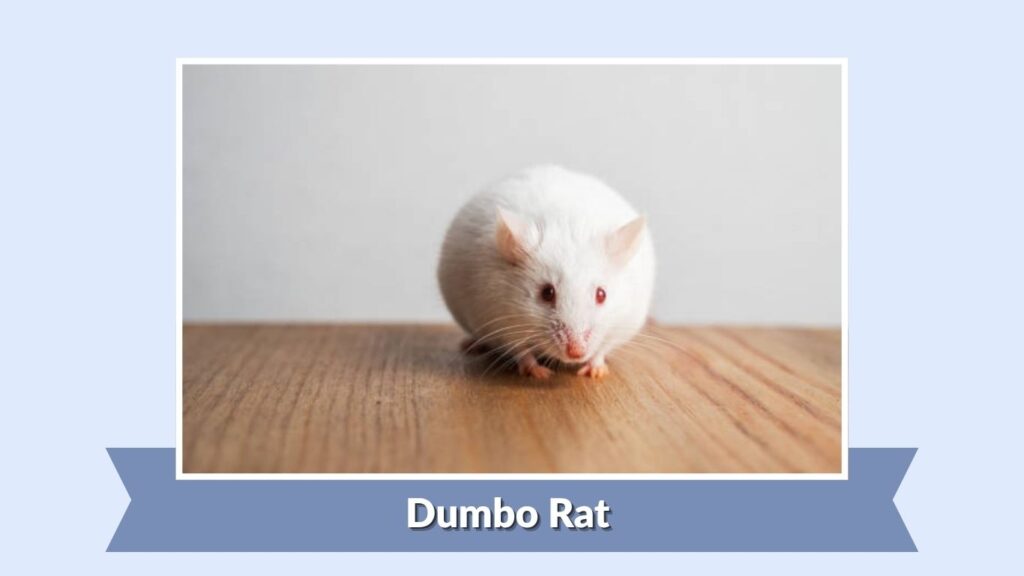
The Dumbo Rat is one of the most distinctive pet rat varieties because of its large, rounded ears positioned lower on the sides of the head. This feature gives the rat a broad, gentle-looking face. Dumbo Rats are popular pets because they are intelligent, social, affectionate, and generally easy to handle with regular interaction.
Identification
- Large, round ears set low on the sides of the head
- Broad, slightly flatter-looking head
- Smooth or textured coat depending on variety
- Long tail and sturdy body
- Available in many colors and markings
- Usually similar in size to other domestic rats
Temperament and Personality
Dumbo Rats are often described as calm and people-oriented, although temperament depends more on genetics and socialization than ear type. A well-socialized Dumbo Rat may enjoy being handled, sitting on a shoulder, and exploring outside its cage. They are intelligent animals that can learn routines and simple tricks.
Care and Housing
Dumbo Rats need a spacious cage with multiple levels, hammocks, hiding areas, chew toys, and opportunities for climbing. They should normally live with compatible rats because they are highly social. A nutritionally balanced rat food, fresh water, and small portions of suitable fresh foods help support overall health.
Why Dumbo Rats Make Good Pets
Their distinctive appearance and interactive nature make Dumbo Rats especially appealing to pet owners. They can become very comfortable around people when handled gently from a young age. Their curiosity also makes enrichment activities, puzzle feeders, tunnels, and supervised playtime particularly enjoyable.
3. Rex Rat
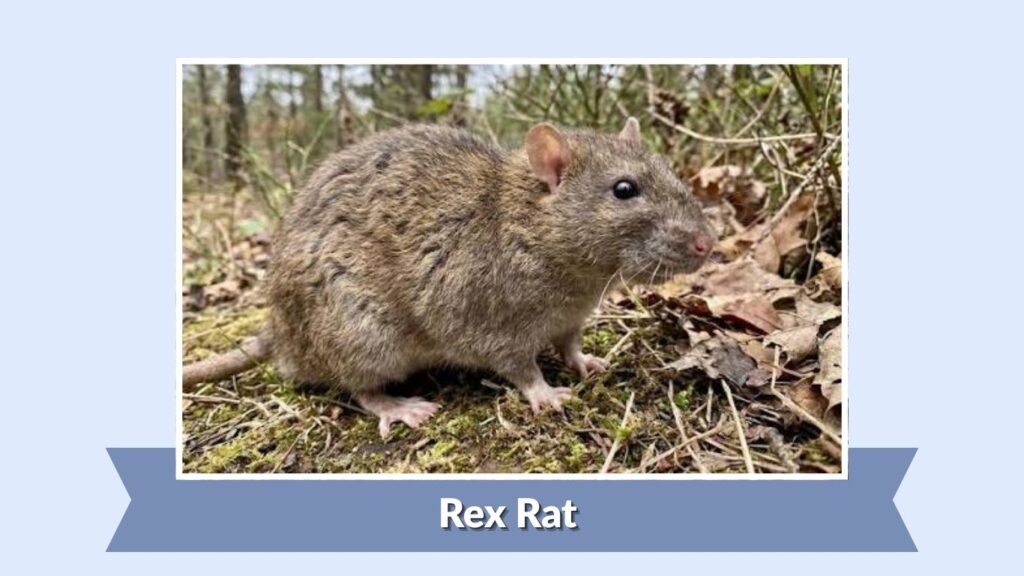
The Rex Rat is known for its unusual curly or wavy coat. Unlike the straight fur of a Standard Rat, Rex fur may look slightly tousled and feel soft or textured. Their whiskers are often curled as well, giving them an especially distinctive appearance. Rex Rats have the same social and intelligent nature found in other domestic rats.
Identification
- Curly, crimped, or wavy coat
- Curled or shortened whiskers
- Coat may appear uneven or fluffy
- Normal or Dumbo-style ears are possible
- Available in many colors and patterns
- Fur texture may change slightly with age
Temperament and Personality
Rex Rats are usually curious and sociable animals that enjoy regular interaction. Their coat type does not determine personality, so individual rats may range from energetic explorers to relaxed lap companions. Frequent gentle handling can help them become confident and comfortable around people.
Care and Housing
Their housing requirements are similar to those of other pet rats. They need a roomy cage, companions, comfortable sleeping areas, and daily enrichment. Because some Rex Rats have thinner patches of fur, owners should provide soft bedding and regularly check the skin for irritation or scratches.
Why Rex Rats Make Good Pets
Rex Rats are attractive to people who want a pet rat with a noticeably different appearance. Their curly coats and whiskers make them easy to recognize, while their intelligence makes them engaging companions. They can learn tricks, explore puzzle toys, and develop strong routines with attentive owners.
4. Double Rex Rat
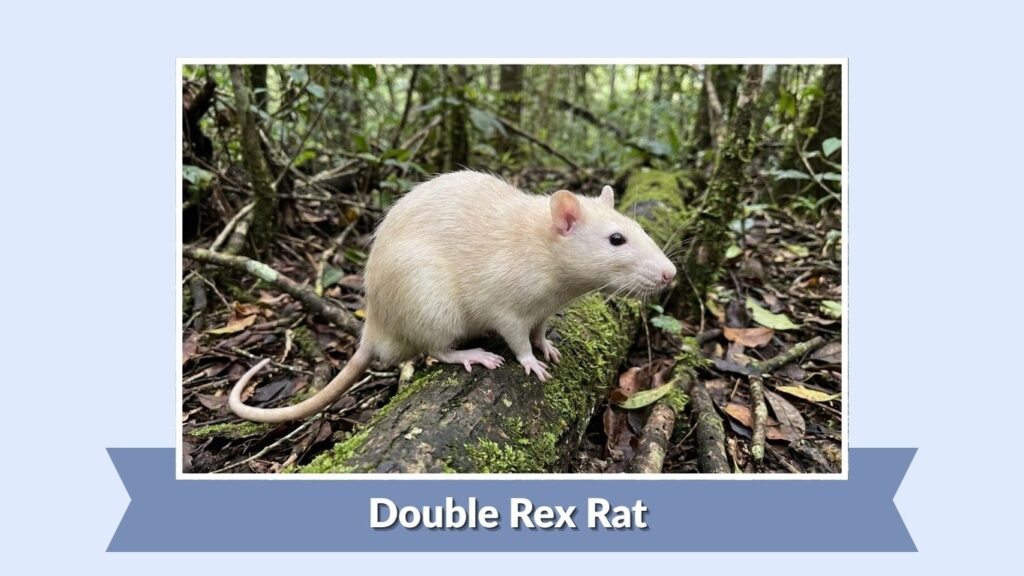
The Double Rex Rat has an especially unusual coat caused by inheriting two Rex-related genes. Its fur is often very thin, patchy, or partially absent and may change throughout its life. Some areas can grow hair while others lose it, creating a constantly changing appearance.
Identification
- Very thin or patchy curly fur
- Some areas of the body may appear hairless
- Curled or irregular whiskers
- Coat may grow and disappear in different places
- Normal or Dumbo ears may occur
- Skin is more visible than on standard-coated rats
Temperament and Personality
Double Rex Rats can be just as friendly, active, and intelligent as other pet rats. Coat type does not control temperament. With regular handling, they may become affectionate companions that enjoy climbing on their owners, exploring new environments, and interacting with cage mates.
Care and Housing
Because their coat provides less protection, Double Rex Rats may be more sensitive to cold temperatures, rough cage surfaces, and minor scratches. Soft bedding and comfortable hammocks are especially helpful. Owners should inspect the skin regularly and keep the cage clean to reduce irritation.
Why Double Rex Rats Make Good Pets
Double Rex Rats appeal to people interested in unusual-looking domestic rats. Their changing coat gives every individual a unique appearance. Although they may require slightly more attention to skin condition and warmth, their playful behavior and social nature can make them rewarding companions.
5. Hairless Rat
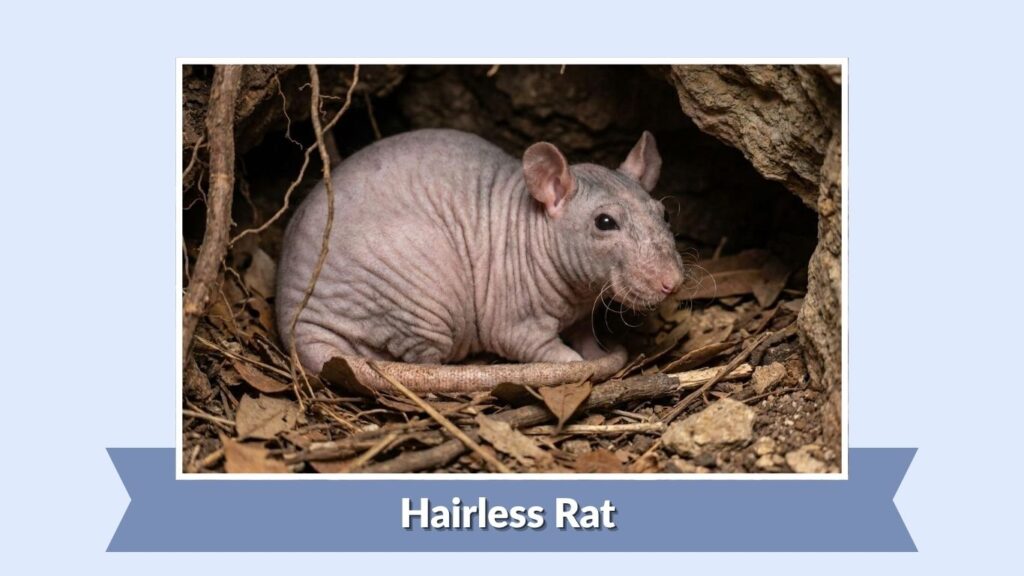
Hairless Rats are domestic rats that have little or no visible fur. Their exposed skin gives them a striking appearance and allows their body shape to be seen clearly. Despite looking very different from furry rats, they share the same intelligence, curiosity, and strong need for social interaction.
Identification
- Little or no body hair
- Visible pink, gray, brown, or patterned skin
- Whiskers may be short, curled, or absent
- Large visible ears
- Long hairless tail
- Skin folds may be noticeable around the neck and shoulders
Temperament and Personality
Hairless Rats are often affectionate and enjoy physical warmth from both cage mates and owners. Many like sleeping in hammocks or cuddling with other rats. They are active, curious, and capable of learning tricks, recognizing routines, and responding to regular interaction.
Care and Housing
Their exposed skin requires additional care. The cage should contain soft bedding and surfaces that will not cause scratches. Hairless Rats may lose body heat more quickly, so their environment should remain comfortably warm without overheating. Their skin should also be checked regularly for dryness, wounds, or irritation.
Why Hairless Rats Make Good Pets
Their unusual appearance attracts many rat enthusiasts, but their personality is often what makes them memorable pets. Hairless Rats can be highly interactive and affectionate. Owners willing to provide extra attention to temperature, bedding, and skin condition may find them entertaining and rewarding companions.
6. Satin Rat
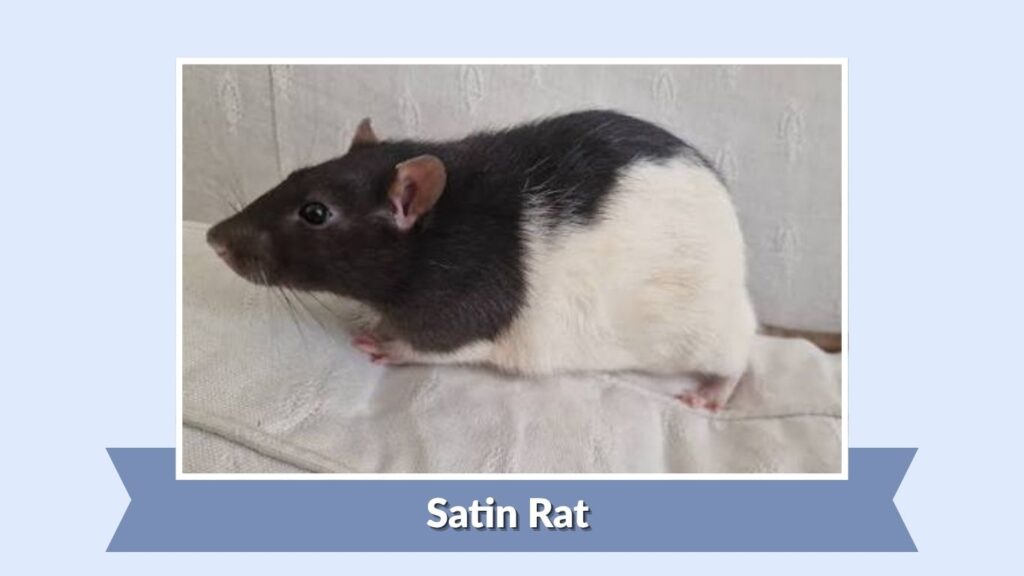
The Satin Rat is recognized by its exceptionally smooth, glossy coat. Light reflects from the fur more noticeably than on a typical Standard Rat, creating a shiny or silky appearance. Satin Rats can occur in several colors and markings, making the sheen especially attractive on certain coat shades.
Identification
- Smooth coat with a noticeable glossy shine
- Fine, silky-looking fur
- Coat reflects light strongly
- Can appear in many colors and patterns
- Standard or Dumbo ears may occur
- Body shape is similar to other domestic rats
Temperament and Personality
Satin Rats generally have the same range of personalities as other fancy rats. They may be energetic, relaxed, adventurous, or affectionate depending on the individual. Regular handling from a young age encourages confidence and helps build a strong relationship with their owner.
Care and Housing
Satin Rats require a spacious cage, compatible companions, enrichment toys, hiding areas, and opportunities for exercise. Their coat generally needs no special grooming because rats naturally keep themselves clean. A balanced diet and proper cage hygiene help maintain healthy skin and a glossy coat.
Why Satin Rats Make Good Pets
Their elegant coat is the main feature that distinguishes Satin Rats from many other varieties. They combine an attractive appearance with the intelligence and social behavior that make domestic rats popular pets. For owners who enjoy visually distinctive rats without extensive coat maintenance, Satin Rats can be an appealing choice.
7. Velveteen Rat
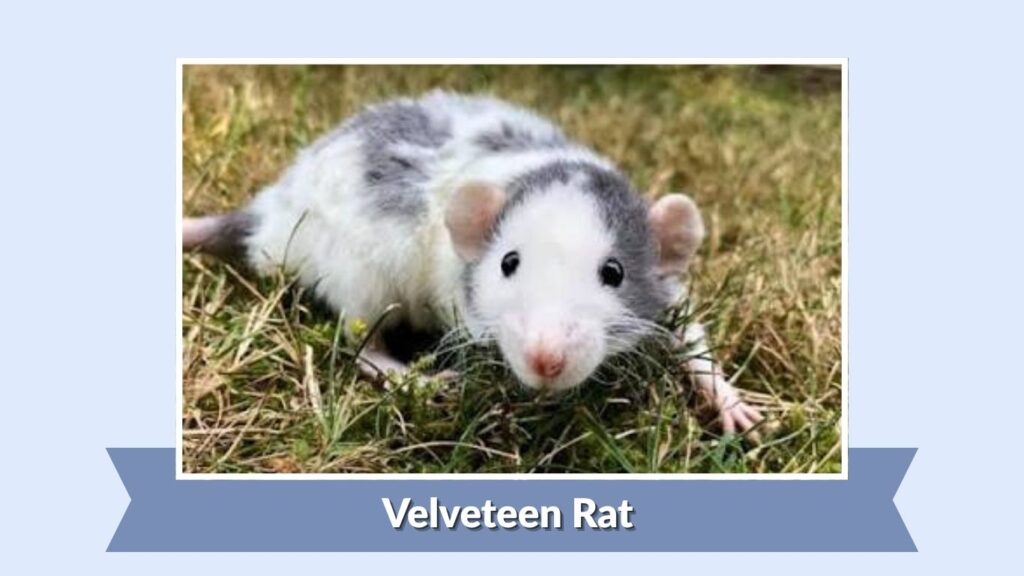
The Velveteen Rat has a soft, gently wavy coat that often feels plush or velvety. Its fur is typically less tightly curled than that of a Rex Rat, creating a relaxed wave across the body. Whiskers may also have a slight curl, adding to its distinctive appearance.
Identification
- Soft, plush, wavy coat
- Waves are usually looser than Rex curls
- Slightly curled or wavy whiskers
- Fur may flatten somewhat as the rat ages
- Available in numerous colors and markings
- Can have Standard or Dumbo ears
Temperament and Personality
Velveteen Rats are intelligent and social animals that usually benefit from frequent interaction. They may enjoy climbing, investigating new objects, and spending time with their cage mates. Individual personalities vary widely, but regular gentle handling can encourage friendly and confident behavior.
Care and Housing
Their general care is similar to that of other domestic rats. A large cage with secure platforms, hammocks, tunnels, chew toys, and nesting areas provides useful enrichment. Their coat usually requires minimal maintenance, although owners should monitor the skin and fur during routine health checks.
Why Velveteen Rats Make Good Pets
Velveteen Rats are popular among enthusiasts who appreciate unusual coat textures. Their soft waves create an attractive appearance without making their everyday care dramatically different from that of Standard Rats. Combined with their curious behavior and ability to bond with humans, they can make engaging companion animals.
8. Harley Rat
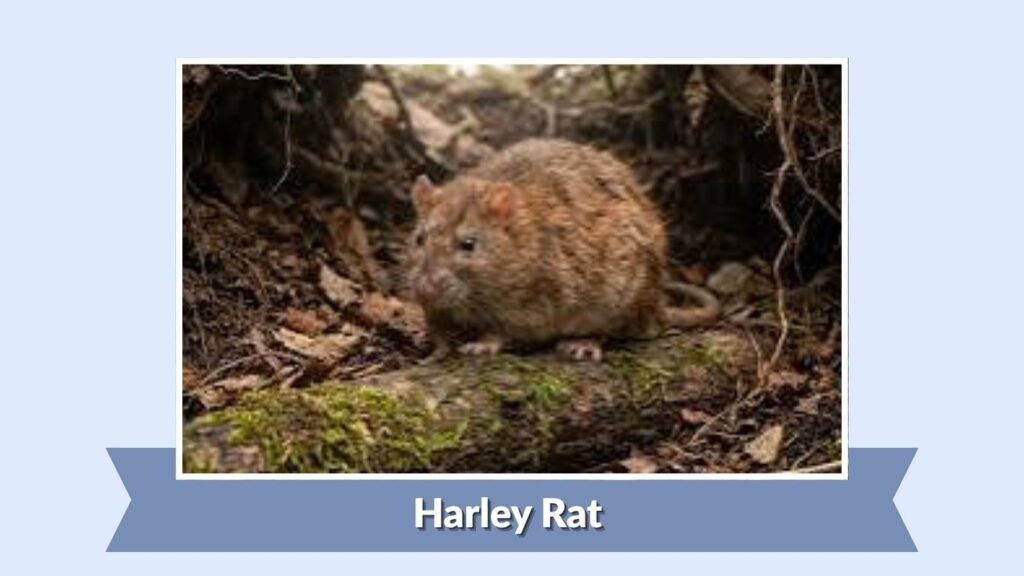
The Harley Rat is a long-haired domestic rat variety known for having noticeably longer, softer fur than most pet rats. The coat can give the animal a fluffy or slightly shaggy appearance, particularly along the sides and rear of the body. Harley Rats remain relatively uncommon compared with Standard or Dumbo varieties.
Identification
- Longer coat than most domestic rats
- Soft, flowing or slightly shaggy fur
- Hair may be especially noticeable along the sides
- Available in different colors and markings
- Standard or Dumbo ears may occur
- Long-haired appearance becomes clearer as the rat matures
Temperament and Personality
Harley Rats can be playful, affectionate, and curious. Like other rats, they usually enjoy companionship and mental stimulation. Their coat does not determine personality, so socialization, handling, breeding, and individual temperament all influence how comfortable they become around people.
Care and Housing
The longer coat may require slightly more attention than a standard coat. Owners should check regularly for debris, skin irritation, or excessive oiliness. Clean bedding is important for keeping the fur comfortable. Harley Rats also need a large cage, social companions, toys, and a nutritionally balanced diet.
Why Harley Rats Make Good Pets
Harley Rats are particularly appealing to enthusiasts who want a domestic rat with a noticeably different coat. Their fluffy appearance can be striking, while their social and trainable nature remains similar to other fancy rats. They are best suited to owners willing to pay additional attention to coat and skin condition.
9. Manx Rat
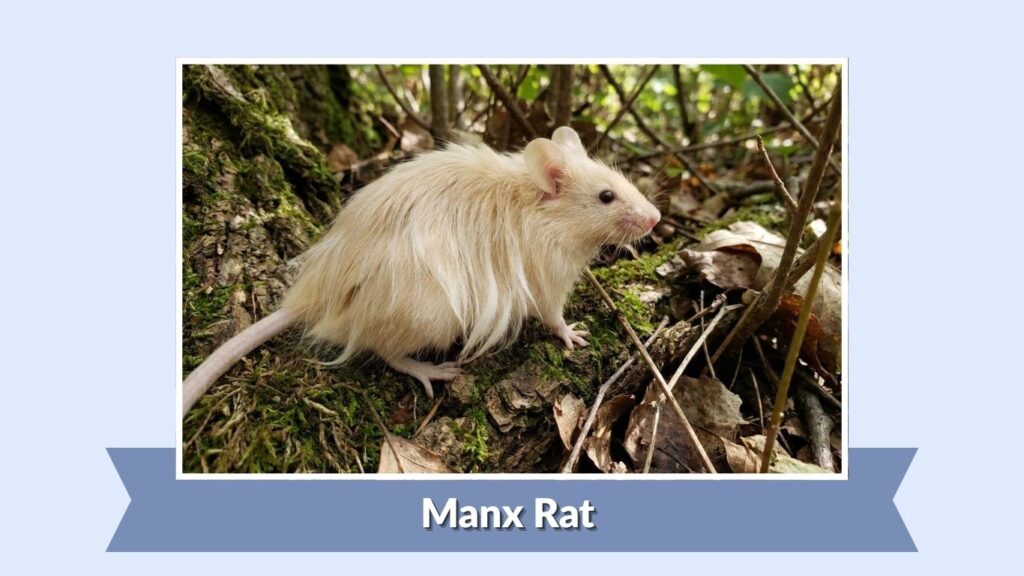
The Manx Rat is an unusual domestic rat variety characterized by a shortened tail or complete absence of a tail. Because rats normally use their tails for balance and temperature regulation, this feature makes the Manx noticeably different from typical pet rats.
Identification
- Tail may be extremely short or completely absent
- Rounded rear appearance
- Standard rat-like body and head
- May occur in numerous colors and coat types
- Standard or Dumbo ears are possible
- Body posture can look different because of the missing tail
Temperament and Personality
Manx Rats can display the same intelligent, social, and curious behavior as other domestic rats. They may learn tricks, recognize familiar people, and enjoy interacting with compatible cage mates. Personality varies by individual rather than being determined by the absence of a tail.
Care and Housing
Owners should pay special attention to mobility and overall health because tail reduction can sometimes be associated with structural or developmental problems. Platforms and climbing areas should be arranged safely so the rat can move comfortably. Regular veterinary evaluation is particularly important if movement, bowel function, or posture appears abnormal.
Why Manx Rats Make Good Pets
Their unusual appearance makes Manx Rats interesting to some enthusiasts, but health should always take priority over appearance. A healthy individual can still be social and engaging. Prospective owners should obtain rats from responsible sources that prioritize good health and avoid breeding animals with significant physical complications.
10. Berkshire Rat
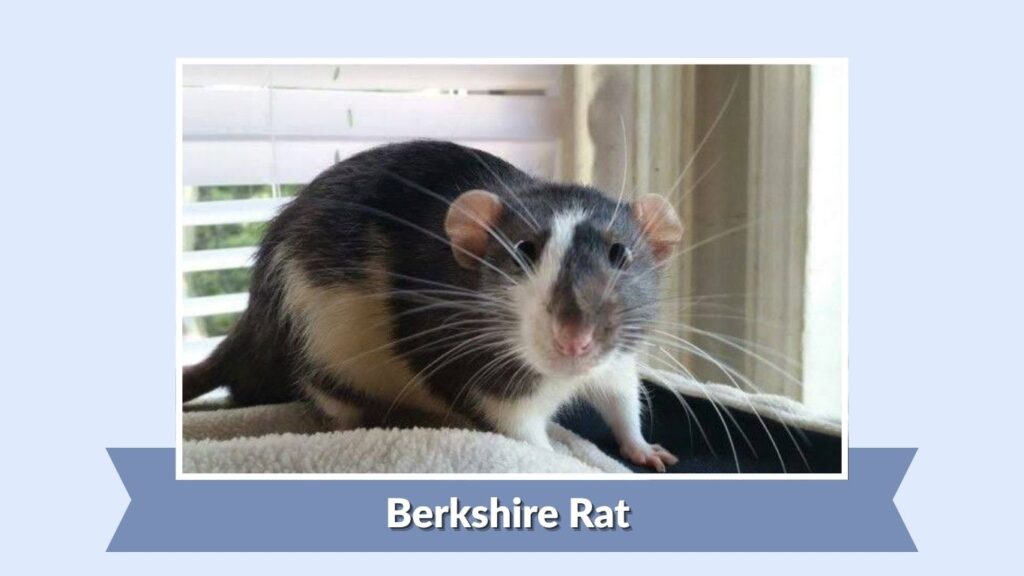
The Berkshire Rat is named for a distinctive color pattern rather than a separate body or coat type. These rats usually have a mostly solid-colored upper body with a contrasting white belly. White markings may also appear on the feet, tail tip, or chest.
Identification
- Mostly solid-colored back and sides
- White belly marking
- White feet are common
- Tail tip may sometimes be white
- Can occur in black, blue, chocolate, and other colors
- Standard, Rex, Dumbo, and other physical varieties may carry the pattern
Temperament and Personality
Because Berkshire describes markings rather than temperament, these rats can have many different personalities. Well-socialized individuals are often playful, intelligent, and interested in human interaction. They may enjoy being handled, exploring supervised spaces, and learning simple behaviors using treats and positive reinforcement.
Care and Housing
Berkshire Rats need the same general care as other fancy rats. They should have compatible rat companions, a roomy cage, safe bedding, nesting areas, chew items, and frequent opportunities for mental and physical stimulation. Their markings require no special grooming.
Why Berkshire Rats Make Good Pets
The sharp contrast between the colored upper body and white underside makes the Berkshire pattern attractive and easy to recognize. Because it can occur alongside different ear shapes and coat types, owners can find Berkshire Rats with a wide variety of appearances. Their manageable care requirements and social behavior make them popular companion rats.
11. Hooded Rat
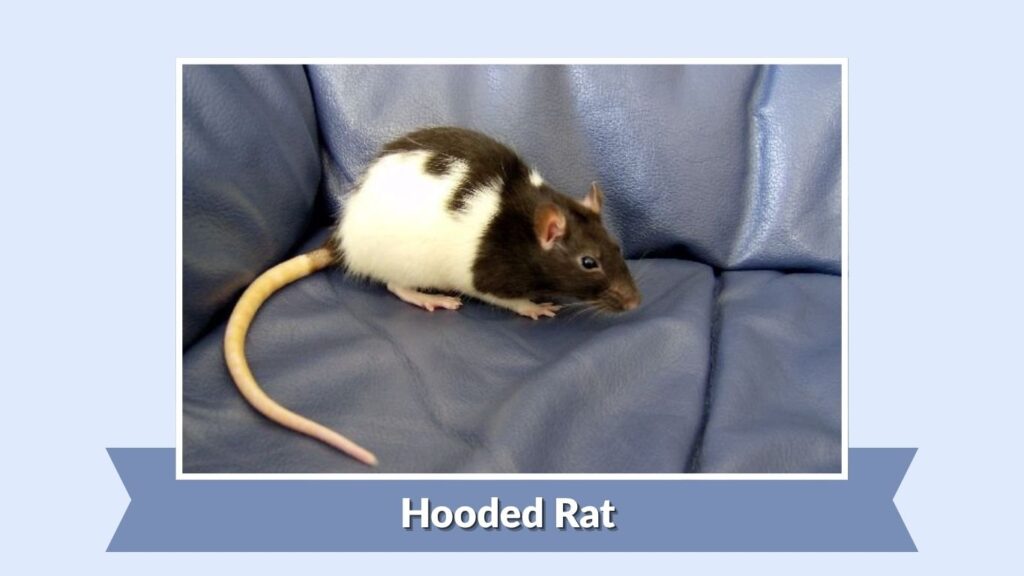
The Hooded Rat is one of the most recognizable pet rat varieties because of its distinctive coat pattern. The head, shoulders, and upper chest are colored, while most of the body is white. A stripe of the same color usually runs along the spine toward the tail. Hooded Rats can appear in many different colors.
Identification
- Colored head and shoulders
- Mostly white body
- Colored stripe running along the back
- Available in black, brown, blue, gray, and other colors
- Standard or Dumbo ears may occur
- Coat may be smooth, Rex, or another recognized type
Temperament and Personality
Hooded Rats can be affectionate, energetic, and highly curious. The hooded marking has no direct effect on temperament, so personality depends largely on genetics, upbringing, and socialization. Many enjoy exploring outside their cage, climbing on their owners, and investigating toys or unfamiliar objects.
Care and Housing
A Hooded Rat should live in a spacious and well-ventilated enclosure with compatible rat companions. Hammocks, tunnels, climbing platforms, chew toys, and nesting materials help provide enrichment. Balanced rat food should form the main diet, with suitable fresh foods offered in moderation.
Why Hooded Rats Make Good Pets
Their bold pattern makes Hooded Rats visually distinctive without creating special grooming requirements. They are widely available and can combine the hooded pattern with different coat textures and ear shapes. Their intelligence and social behavior also make them suitable for owners who want a small pet that enjoys regular interaction.
12. Capped Rat
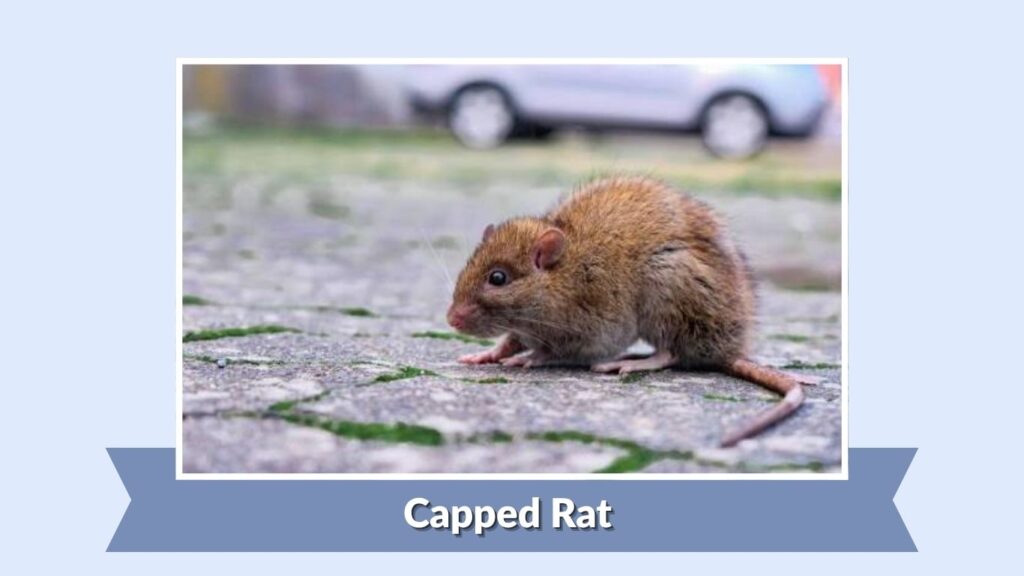
The Capped Rat is named for the colored patch covering the top of its head. Unlike a Hooded Rat, the colored area usually does not extend far down the shoulders or along the back. Most of the remaining body is white, creating a simple and attractive two-tone appearance.
Identification
- Colored patch covering the top of the head
- Most of the body is white
- Color typically ends near or behind the ears
- Back usually lacks a continuous colored stripe
- May occur in numerous colors
- Can have Standard or Dumbo ears
Temperament and Personality
Capped Rats have the same wide range of personalities found in other domestic rats. Some are energetic explorers, while others prefer relaxing with their cage mates or owners. Gentle handling and regular interaction from an early age can help them develop into confident and sociable pets.
Care and Housing
These rats need a large cage with good ventilation, comfortable bedding, hiding areas, climbing opportunities, and toys. They should generally be housed with compatible same-sex companions because rats are naturally social animals. Regular cleaning and a nutritionally complete diet are essential for good health.
Why Capped Rats Make Good Pets
The Capped Rat offers a clean, striking pattern that makes individuals easy to recognize. Since the pattern does not require special maintenance, care is similar to that of other fancy rats. Owners who enjoy distinctive markings combined with an intelligent and interactive personality may find Capped Rats particularly appealing.
13. Masked Rat
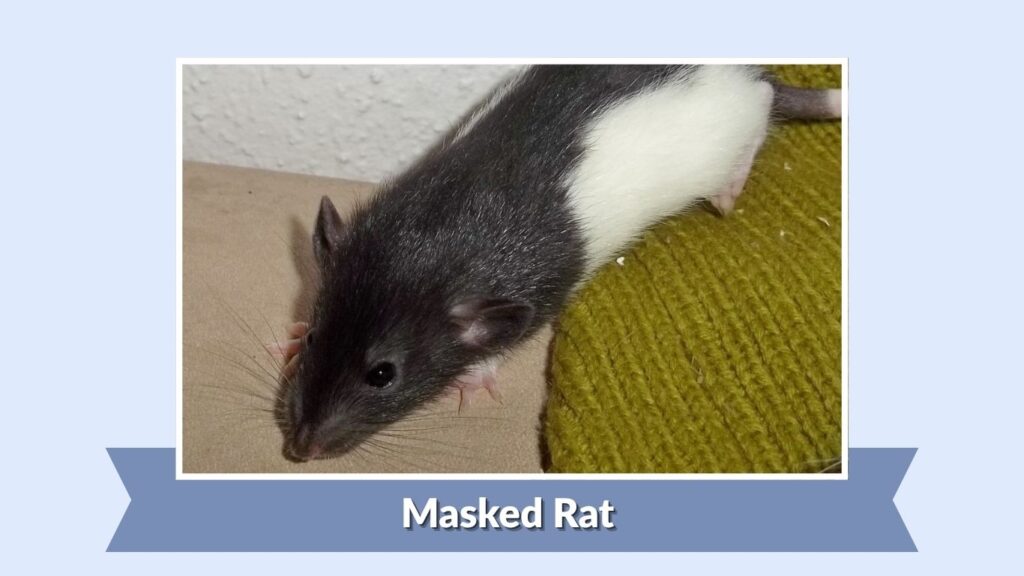
The Masked Rat has a distinctive patch of color around the eyes and face that resembles a small mask. The rest of the body is usually predominantly white. The exact size and symmetry of the facial markings can vary considerably between individual rats, making each one look slightly different.
Identification
- Colored markings around one or both eyes
- Mostly white body
- Facial markings resemble a mask
- Markings may be symmetrical or irregular
- Can occur in several colors
- Coat and ear type can vary
Temperament and Personality
Masked Rats can be playful, inquisitive, and affectionate when properly socialized. Their facial markings do not influence behavior. Like other domestic rats, they often enjoy investigating new surroundings, interacting with their owners, and spending time with compatible cage mates.
Care and Housing
A Masked Rat needs plenty of cage space, enrichment, climbing opportunities, and places to sleep. Rats should have toys that encourage chewing, digging, foraging, and exploration. A balanced diet and constant access to clean drinking water are also necessary.
Why Masked Rats Make Good Pets
The mask-like facial pattern gives these rats a charming and memorable appearance. Because no two markings are exactly alike, individual rats can look especially unique. They retain all the social intelligence of other fancy rats, making them attractive companions for owners interested in distinctive coat patterns.
14. Dalmatian Rat
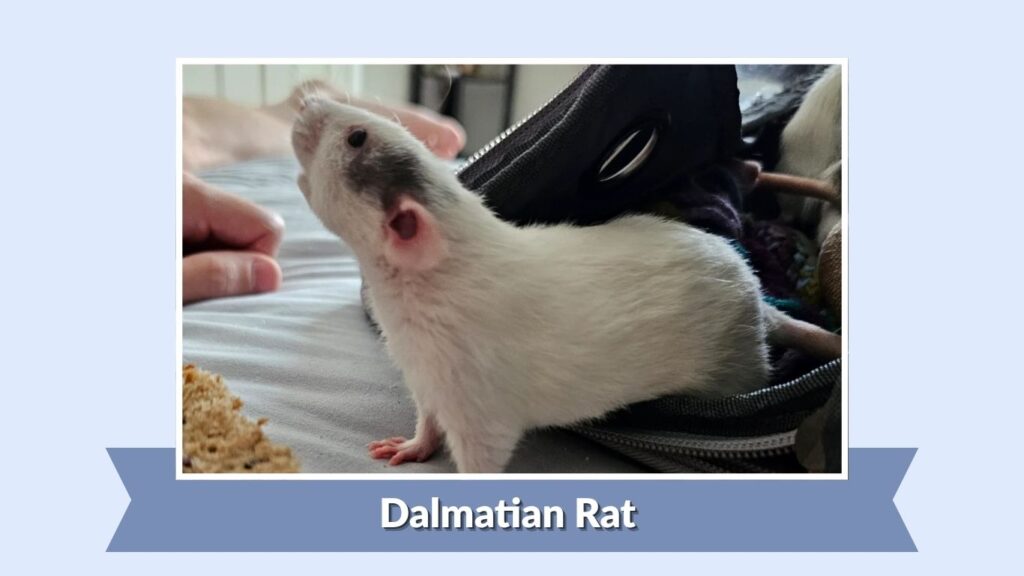
The Dalmatian Rat has a predominantly white coat covered with scattered colored spots, giving it an appearance somewhat similar to a Dalmatian dog. The number, size, and placement of the spots can vary significantly. This unpredictable pattern makes each Dalmatian Rat visually unique.
Identification
- White base coat
- Multiple colored spots scattered across the body
- Spot size and distribution vary
- Head may contain larger patches of color
- Common spot colors include black, gray, and brown
- Different ear and coat types may occur
Temperament and Personality
Dalmatian Rats are generally social and intelligent, although their exact personality varies between individuals. Some may be highly energetic and adventurous, while others are calmer and more interested in cuddling. Regular handling and positive experiences can encourage friendly behavior.
Care and Housing
They require the same general care as other domestic rats, including a large enclosure, social companionship, safe bedding, and plenty of enrichment. Spot patterns do not require any special coat maintenance. Routine health checks and cage cleaning remain important.
Why Dalmatian Rats Make Good Pets
Their scattered markings make Dalmatian Rats especially attractive to people who enjoy unusual coat patterns. Because each animal develops a different distribution of spots, they often have a highly individual appearance. Their playful nature and trainability make them enjoyable pets beyond their striking coloration.
15. Variegated Rat
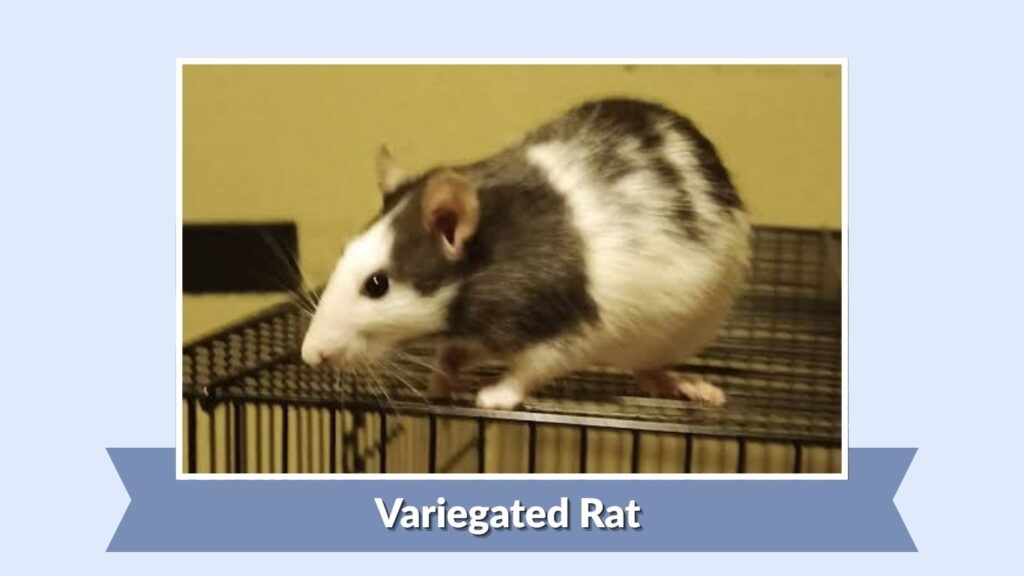
The Variegated Rat has an irregular combination of colored and white areas across the body. Unlike patterns with clearly defined boundaries, variegated markings may appear broken, spotted, or uneven. A colored head combined with scattered markings along the back is commonly seen.
Identification
- Irregular patches or spots of color
- White areas across much of the body
- Colored head is common
- Back markings may appear broken or scattered
- Available in several color combinations
- Pattern differs noticeably between individuals
Temperament and Personality
Variegated Rats can have energetic, calm, affectionate, or independent personalities. Coat markings do not determine behavior. With regular socialization, many become comfortable being handled and enjoy approaching their owners for attention, treats, or playtime.
Care and Housing
A spacious enclosure with climbing areas, tunnels, sleeping spaces, chew toys, and foraging opportunities is important. Variegated Rats should also have compatible companions. Maintaining good ventilation and cage cleanliness helps reduce respiratory and skin problems.
Why Variegated Rats Make Good Pets
The irregular pattern gives each Variegated Rat a one-of-a-kind appearance. Owners who enjoy markings that are less uniform than Hooded or Berkshire patterns may particularly appreciate this variety. They require no special coat care and can become affectionate, entertaining pets with proper handling.
16. Himalayan Rat
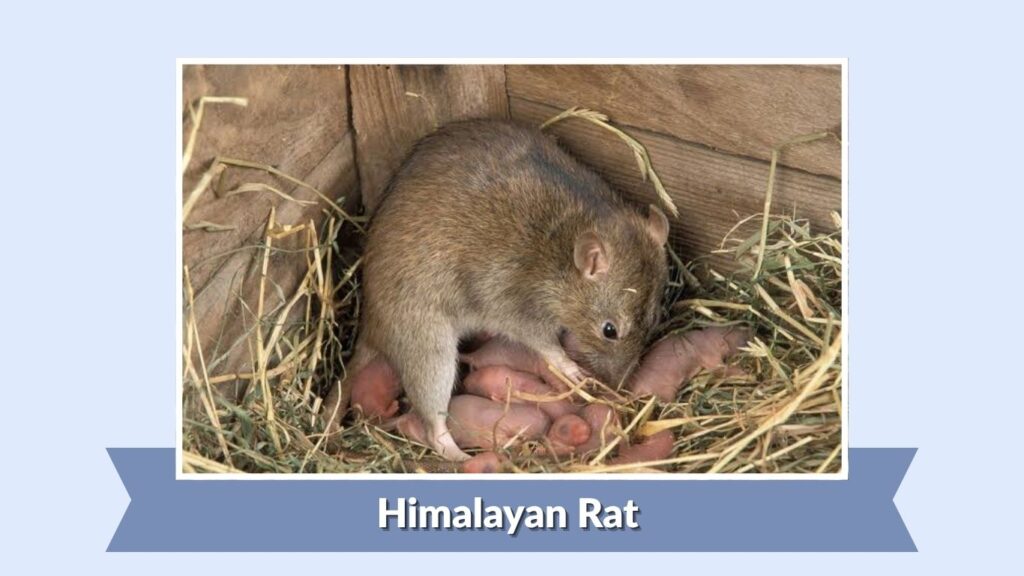
The Himalayan Rat is a pale-colored variety distinguished by darker pigmentation on specific parts of the body. These darker areas, known as points, usually develop around the nose, ears, feet, and tail. The body is typically cream or off-white, creating a strong contrast with the points.
Identification
- Creamy white or pale body
- Darker nose, ears, feet, and tail
- Red or ruby-colored eyes are common
- Points become more noticeable with age
- Sleek body appearance
- Point coloration may vary in intensity
Temperament and Personality
Himalayan Rats are typically intelligent and social like other fancy rats. Some may initially be cautious in unfamiliar surroundings, but patient handling can help build confidence. They often enjoy climbing, investigating toys, and interacting with their cage mates.
Care and Housing
Their housing requirements are standard for domestic rats. They need adequate space, companions, safe bedding, fresh water, and a complete rat diet. Because their pale coat can make dirt more visible, regular cage cleaning helps keep their fur looking clean.
Why Himalayan Rats Make Good Pets
The contrast between the light body and dark points gives Himalayan Rats an elegant appearance. Their coloring resembles that seen in certain cats and rabbits, making them especially appealing to enthusiasts who enjoy pointed animals. Their care remains relatively straightforward, and they can develop strong social bonds with people.
17. Siamese Rat
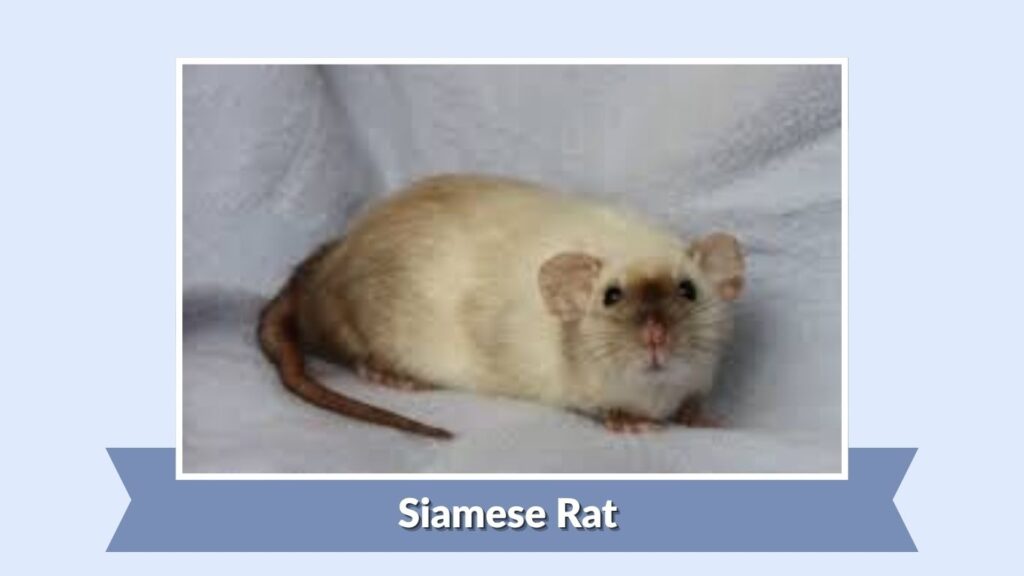
The Siamese Rat is another pointed pet rat variety, but its body color is usually warmer and darker than that of the Himalayan Rat. A beige or creamy body gradually darkens toward the nose, ears, feet, and tail, producing a shaded appearance similar to a Siamese cat.
Identification
- Beige, cream, or light tan body
- Darker facial mask
- Dark ears, feet, and tail
- Shading may extend gradually into the body
- Red or ruby eyes are common
- Point coloration often deepens with maturity
Temperament and Personality
Siamese Rats are social, curious animals that can become very attached to their owners. Like all domestic rats, individual personality varies. Frequent positive handling, playtime, and enrichment help them become confident and interactive companions.
Care and Housing
They should be housed with compatible rats in a large enclosure that provides opportunities to climb, hide, chew, and forage. A high-quality rat diet and clean water should always be available. Regular inspection of the teeth, nails, skin, and respiratory health is also recommended.
Why Siamese Rats Make Good Pets
Their gradual shading and dark facial points create a sophisticated and distinctive appearance. Siamese Rats are especially popular among owners who appreciate unusual coloration. Combined with their intelligence and ability to learn routines, their attractive coat makes them memorable companion animals.
18. Blue Rat
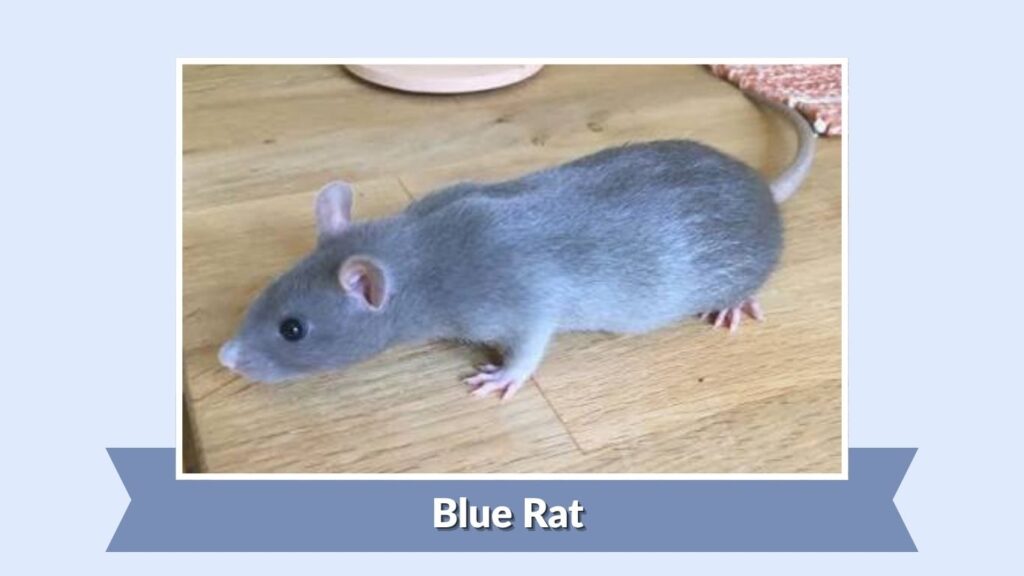
The Blue Rat is named for its cool gray-blue coat rather than an actual bright blue color. The exact shade can range from pale silver-gray to a deeper slate tone. Blue coloration may appear in solid rats or alongside patterns such as Berkshire, Hooded, or Variegated.
Identification
- Gray coat with a bluish or slate tone
- Shade may range from light to dark
- Fur often has a cool-toned appearance
- Can occur with white markings
- Standard or Dumbo ears may be present
- Different coat textures are possible
Temperament and Personality
Blue Rats can be affectionate, curious, and highly trainable. Their color has no predictable influence on personality. When handled gently and frequently, many learn to approach their owners willingly and enjoy exploring supervised areas outside their cage.
Care and Housing
Their care is generally straightforward. A large cage, social companions, enrichment toys, hammocks, tunnels, and climbing platforms should be provided. Owners should feed a complete rat diet and maintain good hygiene to help protect the coat, skin, and respiratory system.
Why Blue Rats Make Good Pets
The cool blue-gray coloration gives these rats a subtle but attractive appearance. Different markings and coat textures can make the color look even more distinctive. Blue Rats are a good choice for owners who want an unusual-looking pet while still enjoying the intelligence and social behavior typical of domestic rats.
19. Champagne Rat
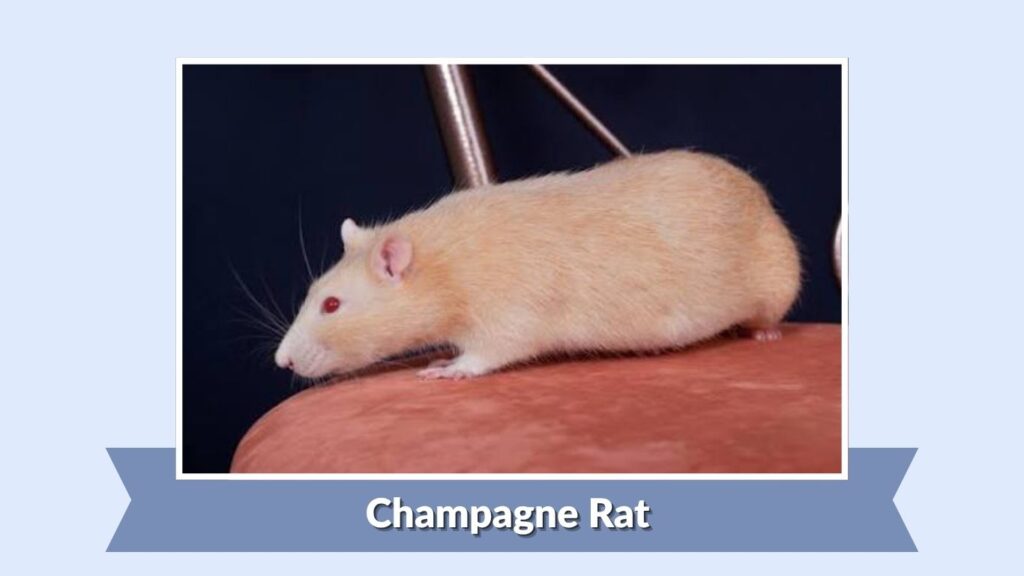
The Champagne Rat has a very pale beige or creamy coat with warm undertones. It is one of the softer and lighter color varieties found among fancy rats. Champagne coloring may appear as a solid shade or in combination with white coat patterns.
Identification
- Pale beige or cream-colored coat
- Warm, delicate coloration
- Often has pink or ruby eyes
- Nose and ears may appear pinkish
- Can occur with white markings
- Coat texture and ear shape may vary
Temperament and Personality
Champagne Rats can be gentle, energetic, playful, or curious depending on the individual. Color does not determine temperament. Rats raised with regular human interaction are usually easier to handle and may become comfortable sitting in hands, sleeves, or on shoulders.
Care and Housing
They need a secure and spacious enclosure with compatible rat companions. Enrichment should include nesting areas, chew materials, tunnels, climbing structures, and opportunities for supervised exploration. Regular cage cleaning is especially helpful because dirt can be more noticeable on pale coats.
Why Champagne Rats Make Good Pets
Their soft coloring gives Champagne Rats a delicate and attractive appearance. They can be combined with several different markings, producing a wide variety of looks. Owners who prefer lighter-colored fancy rats may especially enjoy this variety, while their social intelligence makes them engaging pets.
20. Silver Fawn Rat
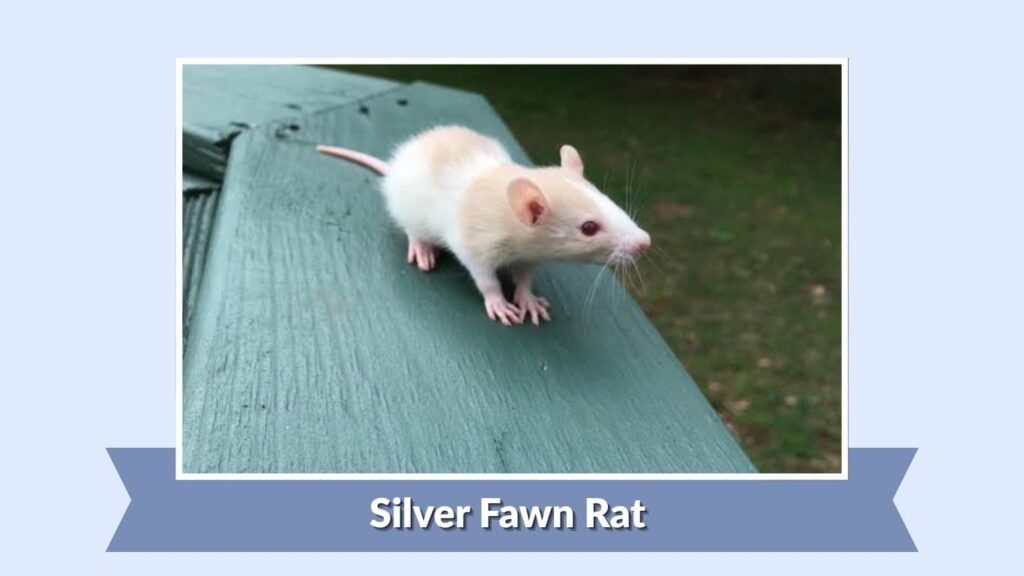
The Silver Fawn Rat is known for its warm orange or golden-fawn coat combined with a subtle silvery appearance. The color can look particularly bright under natural light. This attractive shade is often accompanied by ruby or pinkish eyes.
Identification
- Warm orange, golden, or fawn-colored coat
- Slight silvery or reflective quality to the fur
- Ruby or pink eyes are common
- Color should appear relatively even across the body
- White markings may occur in patterned individuals
- Standard and Dumbo ear types are possible
Temperament and Personality
Silver Fawn Rats can be energetic, affectionate, and highly inquisitive. Their coloration does not affect temperament, so socialization remains the biggest factor in developing a friendly pet. Many enjoy climbing, food puzzles, supervised exploration, and spending time with their owners.
Care and Housing
A Silver Fawn Rat requires the same quality care as other domestic rats. It should have a roomy cage, compatible companions, comfortable sleeping areas, toys, and regular enrichment. A balanced diet and fresh drinking water help maintain good body condition and coat quality.
Why Silver Fawn Rats Make Good Pets
The rich golden-orange coloration makes the Silver Fawn Rat particularly eye-catching. Its warm coat can stand out among more common black, gray, and white varieties. Beyond appearance, these rats offer the same intelligence, trainability, and social behavior that make fancy rats rewarding companion animals.
FAQs
1. What is the best type of pet rat for beginners?
Standard and Dumbo Rats are often good choices for beginners because they are widely available, social, intelligent, and generally easy to care for. Individual temperament and proper socialization are more important than coat color or ear type.
2. Can different types of pet rats live together?
Yes. Different varieties of domestic rats can usually live together as long as they are compatible and properly introduced. Coat type, color, or ear shape does not prevent rats from sharing the same enclosure.
3. How long do pet rats live?
Most pet rats live around 2 to 3 years. Some may live longer with good genetics, proper nutrition, clean housing, regular exercise, and appropriate veterinary care.
4. Should pet rats be kept alone or in pairs?
Pet rats are highly social animals and generally do best with at least one compatible rat companion. Human attention is valuable, but it usually cannot completely replace the social interaction rats receive from other rats.
5. Which pet rat varieties need extra care?
Hairless, Double Rex, Harley, and Manx Rats may require additional attention. Hairless and Double Rex Rats need careful skin and temperature management, Harley Rats may need extra coat monitoring, while Manx Rats should be watched closely for mobility or developmental problems.