

Black and white rats are among the most recognizable and attractive pet rats, with coats ranging from neat black-and-white patches to hooded, capped, and spotted patterns. Most black-and-white rats seen as pets are domesticated fancy rats rather than a separate rat species. Their markings are determined largely by genetics and can appear in standard-eared and Dumbo varieties. Although similar patterns can occasionally occur in wild rats, they are much less common. This guide covers black-and-white rat varieties, coat patterns, behavior, lifespan, care, and identification.
What Are Black and White Rats?
Black-and-white rats are usually domesticated fancy rats, which are selectively bred forms of the brown rat (Rattus norvegicus). Their two-tone appearance results from pigment distribution rather than belonging to a unique species. Black areas contain dark pigment, while white patches occur where little or no pigment develops in the fur.
Black and White Rat Identification
Common characteristics include:
- Black and white fur
- Long, mostly hairless tail
- Rounded ears
- Pointed muzzle
- Dark or occasionally ruby-toned eyes
- Four-toed front feet and five-toed hind feet
- Highly flexible body
- Intelligent and social behavior
The exact arrangement of black and white varies tremendously between individual rats.
Are Black and White Rats a Breed?
No. Black-and-white coloration is better described as a color and marking combination rather than a distinct breed.
Fancy rats can have different:
- Ear types
- Coat textures
- Colors
- Markings
- Body patterns
For example, both standard-eared rats and Dumbo rats can have black-and-white coats.
Common Black and White Rat Patterns
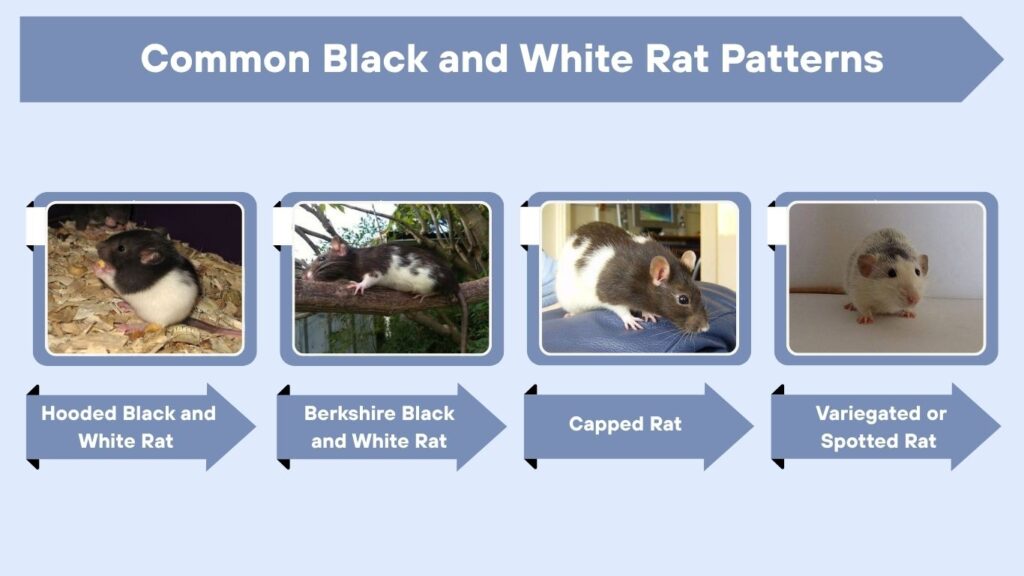
Selective breeding has produced several recognizable coat patterns. Two rats may both be described as black and white yet look completely different depending on where their colored fur appears. Some markings are highly symmetrical, while others produce irregular patches across the body.
1. Hooded Black and White Rat
The hooded pattern is one of the most familiar.
A hooded rat generally has:
- Black head
- Black shoulders
- Mostly white body
- Dark stripe running down the back
The stripe may be narrow and continuous or somewhat broken depending on the individual.
2. Berkshire Black and White Rat
A Berkshire rat generally has a mostly dark upper body with a white belly.
Typical features include:
- Predominantly black back
- White underside
- White feet
- Sometimes white markings on the tail
- Possible white patch on the forehead
The contrast creates a clean black-and-white appearance.
3. Capped Rat
Capped rats have dark coloration concentrated mainly on the head.
Their bodies are primarily white, while the black area resembles a small cap around the ears and top of the head.
A well-defined capped marking usually does not extend far onto the shoulders.
4. Variegated or Spotted Rat
Variegated rats have irregular dark markings rather than one continuous pattern.
They may display:
- Black spots
- Dark patches
- White background
- Mixed markings along the back
- Different patterns on each side
Because the spots vary between individuals, no two variegated rats necessarily look alike.
Black and White Dumbo Rats
Dumbo rats are popular pet rats distinguished by their ears rather than their color. Their ears sit lower on the sides of the head and are usually larger and rounder than those of standard-eared rats. Dumbo rats can occur in black and white as well as many other colors.
What Does a Black and White Dumbo Rat Look Like?
Typical features include:
- Large rounded ears
- Low ear placement
- Broad-looking head
- Black-and-white coat
- Long tail
- Compact but athletic body
Black-and-white Dumbo rats may be hooded, Berkshire, capped, spotted, or have other markings.
Are Dumbo Rats Different in Personality?
Ear type does not determine personality.
A Dumbo rat can be curious, affectionate, shy, energetic, or relaxed depending on genetics, handling, age, and individual temperament.
Like other pet rats, they often become very comfortable interacting with people when handled gently and regularly.
Can Wild Rats Be Black and White?
Wild rats are usually much less variable in color than domesticated fancy rats. Natural selection tends to favor colors that provide camouflage, such as brown, gray, or darker shades. Dramatic white patches can make an animal more visible to predators.
Are Black and White Wild Rats Possible?
Yes, unusual pigmentation can occasionally produce white patches or other color variations in wild populations.
However, strongly patterned black-and-white rats are much more commonly associated with:
- Domesticated rats
- Escaped pets
- Descendants of domestic rats
- Unusual genetic mutations
Finding a tame-looking black-and-white rat outdoors may therefore suggest that it is an escaped or abandoned pet.
Black Rat vs Black and White Pet Rat
The black rat (Rattus rattus) is a different species from the domesticated fancy rat.
Despite its name, a black rat is not necessarily jet black and does not normally display the striking black-and-white patterns commonly bred in pet rats.
Fancy rats are primarily descended from Rattus norvegicus, the brown rat.
Black and White Baby Rats
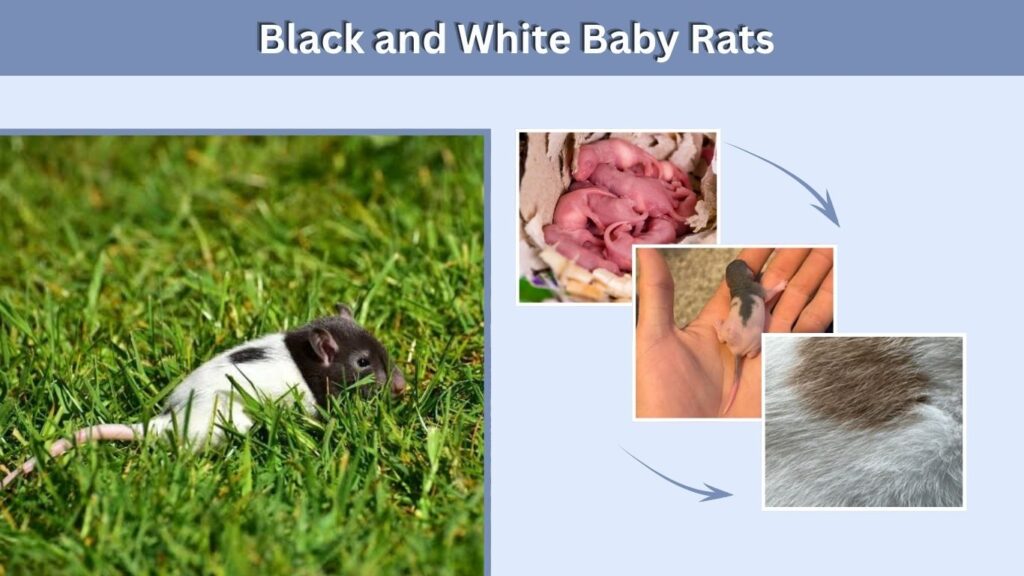
Baby fancy rats begin developing visible coat coloration shortly after birth. Newborns are nearly hairless, but darkly pigmented areas may become visible on the skin before the fur grows.
How Their Colors Develop
As baby rats grow:
- Dark skin markings become visible.
- Fine fur begins developing.
- Black-and-white patterns become clearer.
- The coat thickens.
- Final markings become easy to identify.
The overall pattern is genetically determined, though appearance can change slightly as the coat develops.
What Do Baby Rats Eat?
Very young rats depend entirely on their mother’s milk.
As they become old enough for solid food, they transition to a balanced rat diet. Growing pet rats need appropriate nutrition to support bone development, muscle growth, and general health.
They should not be separated from their mother prematurely.
Black and White Rat Behavior
Pet rats are highly social and intelligent animals. Coat color does not determine behavior, so black-and-white rats generally behave like other domesticated rats. They can recognize routines, investigate new objects, learn simple behaviors, and form strong social bonds with other rats.
Are Black and White Rats Friendly?
Well-socialized pet rats can become very comfortable with people.
Common behaviors include:
- Climbing onto owners
- Exploring rooms
- Grooming cage mates
- Sleeping together
- Learning their names or routines
- Taking treats from the hand
- Playing with toys
- Investigating unfamiliar objects
Regular gentle interaction from an early age often helps create confident pets.
Do Rats Need Companions?
Rats are highly social and generally benefit from living with compatible rats rather than being kept alone.
Two or more same-sex rats can:
- Sleep together
- Groom each other
- Play
- Communicate
- Provide companionship
Human interaction is valuable but does not completely replace communication with another rat.
Black and White Rat Care

Black-and-white rats have the same basic care requirements as other fancy rats. Their coat pattern does not require a special diet or habitat. Good housing, social companionship, nutrition, enrichment, and veterinary attention are far more important than coloration.
Basic Care Requirements
Pet rats need:
- Spacious, well-ventilated enclosure
- Solid resting surfaces
- Safe bedding
- Fresh drinking water
- Balanced rat food
- Hiding places
- Climbing structures
- Chew toys
- Regular cage cleaning
- Daily interaction and enrichment
Avoid placing the enclosure where rats are exposed to extreme heat, cold drafts, or constant direct sunlight.
What Do Black and White Rats Eat?
A balanced commercial rat food should usually provide the foundation of their diet.
Small supplementary foods can include:
- Vegetables
- Small portions of fruit
- Cooked grains
- Certain seeds
- Occasional protein-rich foods
Avoid heavily salty, sugary, greasy, or highly processed human foods.
How Long Do Black and White Rats Live?

Black-and-white pet rats have approximately the same lifespan as other domesticated rats. Color does not significantly determine longevity.
Average Lifespan
Pet rats commonly live around 2 to 3 years, although some individuals live longer with favorable genetics and excellent care.
Factors influencing lifespan include:
- Genetics
- Diet
- Housing
- Body weight
- Disease prevention
- Veterinary care
- Environmental conditions
Regular observation is important because rats can sometimes hide symptoms until an illness has progressed.
Names for Black and White Rats
Their contrasting coloration provides plenty of inspiration when choosing a name. Names based on food, animals, patterns, and monochrome objects are particularly popular.
Popular Black and White Rat Names
- Oreo
- Panda
- Domino
- Pepper
- Cookie
- Tux
- Patches
- Checkers
- Penguin
- Moo
- Marble
- Socks
- Bandit
- Ink
- Dice
For a pair, names such as Salt and Pepper, Yin and Yang, or Cookies and Cream can work particularly well.
FAQs
1. What type of rat is black and white?
Most black-and-white pet rats are fancy rats, domesticated forms of Rattus norvegicus. Their appearance comes from specific coat markings rather than a separate species.
2. Can wild rats be black and white?
Yes, but strong black-and-white patterns are uncommon in wild populations. A black-and-white rat outdoors may sometimes be an escaped domestic rat.
3. How long do black and white rats live?
Pet black-and-white rats generally live around 2 to 3 years, although genetics, nutrition, healthcare, and living conditions influence individual lifespan.
4. Are black and white rats good pets?
Yes. Domesticated rats can be intelligent, social, affectionate pets when provided with appropriate housing, companionship, enrichment, and regular care.
5. What are black and white Dumbo rats?
They are fancy rats that combine black-and-white coloration with the Dumbo ear type, characterized by large, rounded ears positioned lower on the sides of the head.