

The Dumbo rat is a popular pet rat variety known for its large, rounded ears positioned lower on the sides of the head. Despite its distinctive appearance, a Dumbo rat is not a separate species from other fancy rats. These intelligent, social rodents can become affectionate pets when given proper housing, companionship, enrichment, and nutrition. Dumbo rats come in many colors and coat types, including Husky, Rex, Siamese, blue, albino, and hairless varieties. Most live around two to three years with good care.
What Is a Dumbo Rat?
A Dumbo rat is a domesticated brown rat (Rattus norvegicus) with a genetic trait that changes the position and shape of its ears. Standard fancy rats have ears positioned higher on the head, while Dumbo rats have larger, rounder ears set lower and farther apart. Otherwise, their basic care, diet, behavior, and health needs are essentially the same as other pet rats.
Dumbo Rat Identification
Common features include:
- Species: Rattus norvegicus
- Type: Domesticated fancy rat variety
- Ears: Large, rounded, and low-set
- Body: Long and sturdy
- Tail: Long, mostly hairless, and scaly
- Eyes: Black, ruby, pink, or red depending on genetics
- Coat: Smooth, Rex, double Rex, or hairless
- Adult length: Commonly 14–18 inches including the tail
- Weight: Often about 250–650 grams depending on sex and genetics
The ears are the easiest characteristic to use when distinguishing a Dumbo rat from a standard-eared fancy rat.
Dumbo Ear Rat
The name “Dumbo” refers specifically to the ear type rather than coat color.
The ears sit lower on the skull and often appear rounder than standard rat ears. This can make the head look broader and give the rat a distinctive facial appearance.
Dumbo ears do not normally require special cleaning or dramatically different care compared with standard rat ears.
Dumbo Rat Lifespan and Size
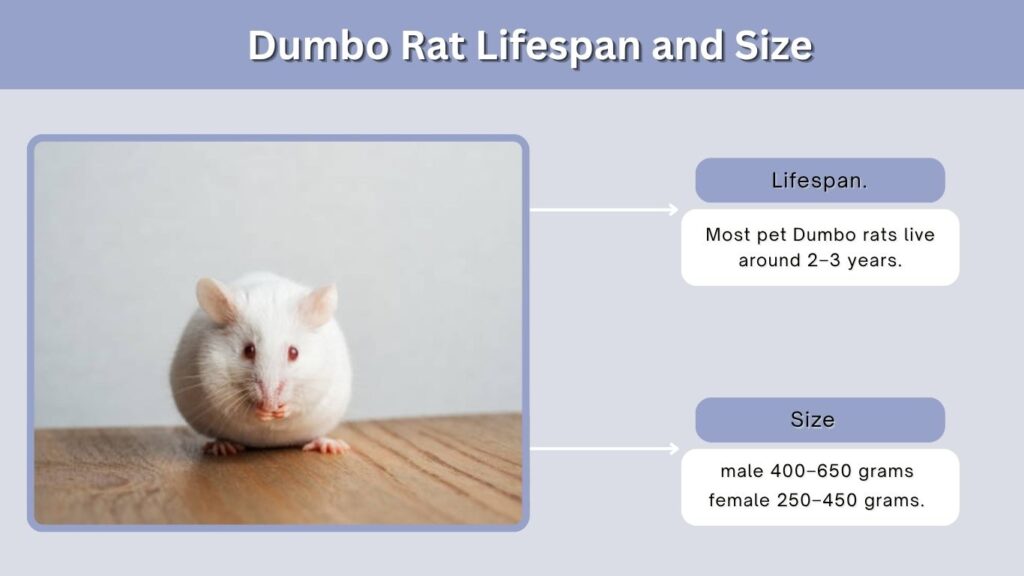
Dumbo rats have approximately the same life expectancy as other domesticated rats. Their relatively short lifespan is an important consideration before adopting them. Genetics, diet, veterinary care, housing, respiratory health, and tumor development can all affect longevity. Males typically become larger and heavier than females, although individual size varies considerably between family lines.
Dumbo Rat Life Expectancy
Most pet Dumbo rats live around 2–3 years.
Some may live longer, while others develop age-related health problems earlier.
Providing balanced food, clean housing, companionship, exercise, and early veterinary care can help support a healthier life.
Older rats may gradually become less active, lose muscle, sleep more, or develop mobility difficulties and should be monitored closely.
Full-Grown Dumbo Rat Size
Adult males are generally larger, broader, and heavier than females.
Males can often reach roughly 400–650 grams or more, while females frequently weigh around 250–450 grams.
Weight alone does not determine whether a rat is healthy. A naturally large male can be perfectly healthy, while a smaller rat can also be in excellent condition.
Body condition is more useful than comparing every rat with one target weight.
Dumbo Rat Cage and Habitat Setup

Dumbo rats are active, intelligent animals that require considerably more space than a small hamster-style cage provides. They climb, wrestle, explore, forage, sleep together, and regularly rearrange nesting materials. A suitable cage should have good ventilation, multiple resting areas, and enough room for several rats to move around comfortably.
Dumbo Rat Cage Essentials
A good setup should include:
- Large, well-ventilated wire cage
- Solid or safely covered floors
- Deep absorbent bedding
- Hammocks
- Nesting boxes
- Tunnels
- Climbing ropes
- Platforms
- Food bowl
- Water bottles
- Chew-safe toys
- Foraging activities
- Litter tray if desired
Avoid continuously housing a rat alone unless a veterinarian or behavioral situation makes separation temporarily necessary.
Do Dumbo Rats Need Companions?
Yes. Rats are highly social animals and normally do best with compatible companions of the same sex or appropriately neutered groups.
Human interaction is valuable, but it does not completely replace another rat’s companionship.
Rats sleep together, groom one another, play, communicate, and establish social relationships throughout the day and night.
Keeping at least a compatible pair generally provides a more natural social environment.
Dumbo Rat Diet and Food

A balanced diet is important because rats are omnivores and can easily gain excessive weight when fed too many high-calorie treats. A quality formulated rat food should provide the nutritional foundation, while vegetables and small quantities of other safe foods can offer variety and enrichment.
What Do Dumbo Rats Eat?
Suitable foods can include:
- Quality laboratory blocks or rat pellets
- Leafy vegetables
- Broccoli
- Peas
- Carrots
- Bell peppers
- Small fruit portions
- Cooked egg occasionally
- Small portions of cooked grains
- Plain cooked pasta
- Seeds or nuts as occasional treats
- Fresh drinking water
Treats should remain a relatively small part of the diet.
Foods to Avoid
Avoid giving large amounts of sugary, salty, fried, or highly processed human food.
Spoiled food should never be offered.
Very sticky foods should also be given cautiously because they can be difficult for rats to swallow safely.
Maintaining an appropriate diet becomes particularly important with a “fat Dumbo rat,” because obesity can reduce mobility and contribute to health problems.
Dumbo Rat Behavior and Personality
Dumbo rats are often described as calm and affectionate, but ear shape does not automatically determine personality. Temperament depends more on genetics, early socialization, environment, handling, age, and the individual rat. Well-socialized pet rats can learn routines, recognize familiar people, accept handling, and participate in surprisingly complex play and training activities.
Are Dumbo Rats Friendly?
Many Dumbo rats become comfortable with gentle human interaction.
They may climb onto their owner, sit inside clothing, groom hands, or fall asleep nearby.
Young rats are often energetic and curious, while mature males may become more relaxed.
Rats should be allowed to approach voluntarily rather than being repeatedly grabbed from above, which can frighten nervous individuals.
Can Dumbo Rats Learn Tricks?
Yes. Rats are intelligent and respond well to reward-based training.
They can learn to come when called, climb onto a hand, spin, retrieve small objects, move through obstacle courses, and enter a carrier on command.
Short training sessions with tiny food rewards can also provide valuable mental enrichment.
Dumbo Rex, Husky, Siamese and Other Varieties
“Dumbo” describes ear placement, so it can occur together with many coat colors, patterns, and fur types. This explains names such as Dumbo Rex or Husky Dumbo rat. These combinations are not different rat species. They are varieties of the same domesticated rat distinguished by several inherited physical traits.
Popular Dumbo Rat Varieties
Common combinations include:
- Husky Dumbo rat: Marked rat whose coat may fade significantly with age
- Dumbo Rex rat: Dumbo ears combined with curly or wavy fur
- Double Rex Dumbo: Often has very sparse or patchy curly hair
- Siamese Dumbo rat: Pale body with darker points
- Russian blue Dumbo rat: Blue-gray coloration
- Albino Dumbo rat: White fur with pink or red eyes
- Hairless Dumbo rat: Little or no normal body fur
- Black Dumbo rat: Predominantly black coat
- Agouti Dumbo rat: Natural-looking brown ticked coloration
- Berkshire Dumbo rat: Colored body with contrasting white underside
Care needs remain broadly similar, although hairless rats may require additional attention to warmth and skin condition.
Dumbo Rat vs Fancy Rat
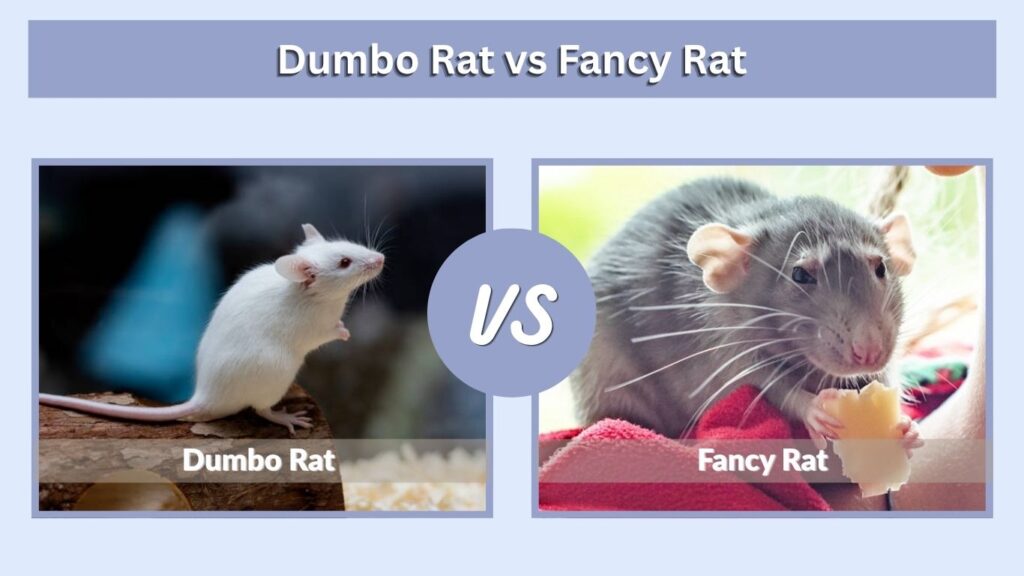
A common misunderstanding is that Dumbo rats and fancy rats are completely different animals. “Fancy rat” is a broad term for domesticated pet rats, while “Dumbo” refers to one recognized ear type. Therefore, a Dumbo rat is itself a fancy rat.
Main Difference
A standard-eared fancy rat has ears positioned relatively high on the top of the head.
A Dumbo fancy rat has larger-looking ears positioned lower on the sides.
Both can have similar coat colors, markings, sizes, personalities, and lifespans.
Neither ear type is automatically more affectionate, intelligent, or suitable as a pet.
Buying or Adopting a Dumbo Rat
Dumbo rats may be available through responsible breeders, rescue organizations, and occasionally pet stores. Appearance should not be the only consideration. Healthy breeding practices and good early socialization can significantly influence the animal’s future health and temperament.
What to Look for Before Getting One
Check for:
- Bright, clear eyes
- Clean nose
- Quiet breathing
- Smooth movement
- Healthy body condition
- Clean coat and skin
- Curious behavior
- No obvious wounds
- Appropriate socialization
- Responsible breeding history when available
Persistent sneezing, noisy breathing, hunched posture, lethargy, or discharge around the nose and eyes can indicate illness.
Prices vary greatly according to location, breeder, age, coat type, and local availability.
Dumbo Rat Health and Care

Respiratory illness is an important health concern in domestic rats. Tumors, dental problems, parasites, obesity, and age-related mobility difficulties can also occur. Rats often hide illness until a problem becomes significant, so noticing subtle changes in normal behavior is valuable.
Signs That May Need Veterinary Attention
Contact a veterinarian experienced with rats if you notice:
- Persistent wheezing or noisy breathing
- Difficulty breathing
- Significant weight loss
- Large or rapidly growing lump
- Constant head tilt
- Loss of balance
- Inability to eat
- Severe lethargy
- Bleeding
- Major skin lesions
- Sudden weakness
Early treatment can be particularly important for respiratory problems.
FAQs
Dumbo rats are popular because of their large ears, expressive appearance, intelligence, and social behavior. New owners commonly have questions about their lifespan, companionship requirements, differences from other fancy rats, cage setup, and whether unusual coat varieties require special care.
How Long Do Dumbo Rats Live?
Most Dumbo rats live around 2–3 years, although individual lifespan varies with genetics, health, environment, and veterinary care.
Are Dumbo Rats Good Pets?
Yes. Properly socialized rats can be intelligent, interactive, and affectionate pets, but they require companionship, daily care, enrichment, and appropriate veterinary treatment.
What Is the Difference Between a Dumbo Rat and a Fancy Rat?
A Dumbo rat is a fancy rat. “Dumbo” simply describes its low-set, rounded ear type.
Should Dumbo Rats Be Kept Alone?
Generally no. Rats are social animals and usually benefit from living with compatible rat companions.
How Big Do Dumbo Rats Get?
Adults commonly reach around 14–18 inches in total length including the tail. Males are usually heavier and larger-bodied than females.