
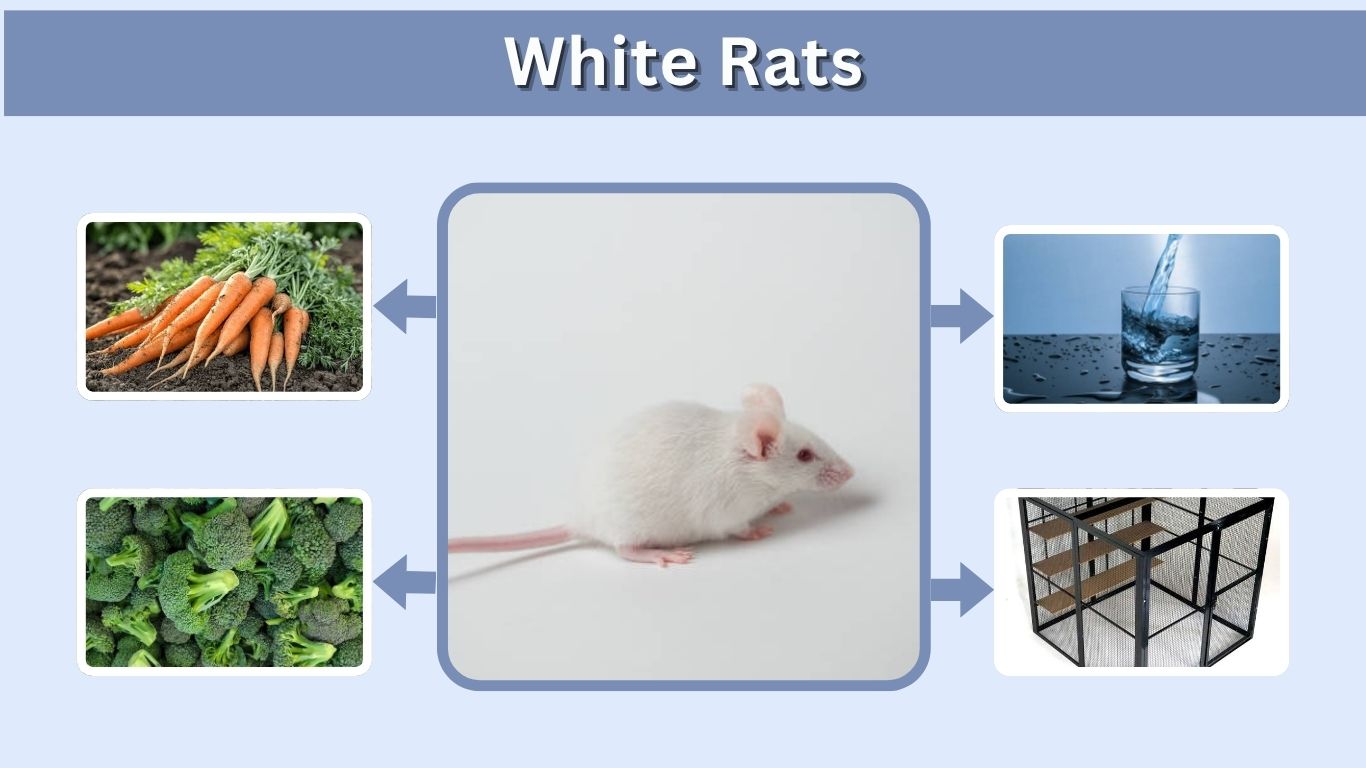
White rats are among the most recognizable domestic rats, especially because they are commonly kept as pets and used in scientific research. Their pale coats may come from albinism or other genetic color combinations, and not every white rat is a true albino. Despite their unusual appearance, white rats share many of the same behaviors and care needs as other domestic rats. They are intelligent, social, curious animals that can form strong bonds with people. This guide covers their types, lifespan, diet, behavior, eyesight, safety, and pet care.
What Are White Rats?
White rats are usually domesticated brown rats that have been selectively bred for pale or completely white coats. Some have red or pink eyes because of albinism, while others may have dark eyes and white fur due to different genetic traits.
White coloration is much more common in domestic rats than in wild populations.
Are White Rats Albino?
Some white rats are albino, but not all of them.
A true albino rat typically has:
- Completely white or cream-colored fur
- Pink or red-looking eyes
- Very little visible pigmentation
- Pale ears, feet, and tail
- Increased sensitivity to bright light
White rats with dark eyes are usually not true albinos. Their appearance may result from other coat-color genes.
What Are White Rats Called?
There is no single breed called a “white rat.” Most pet rats belong to the domestic form of the brown rat, Rattus norvegicus.
A white rat with pink or red eyes is commonly called an albino rat. Other white domestic rats may be described according to their markings, coat type, or ear shape.
For example, Dumbo rats can also have white coats.
White Rats With Red Eyes
The distinctive red or pink-looking eyes of many white rats are caused by a lack of pigment rather than the eyes actually containing red coloration.
Without normal pigment, blood vessels inside the eye become more visible, creating the reddish appearance.
Are White Rats With Red Eyes Blind?
No. Albino white rats are not automatically blind.
However, they generally have poorer eyesight than heavily pigmented rats. Albino rats may have reduced visual sharpness and increased sensitivity to bright light.
Some may sway their heads from side to side. This behavior helps them judge distance and identify objects in their environment.
White rats compensate for weaker vision with excellent senses of smell, hearing, touch, and their highly sensitive whiskers.
Are White Rats Sensitive to Light?
Albino rats can be more sensitive to intense lighting because their eyes lack protective pigment.
Their cage should therefore not be placed under strong direct lights or constant sunlight.
Provide shaded areas and hiding places where the rat can rest comfortably.
How Long Do White Rats Live?

White pet rats usually have a relatively short lifespan compared with many other companion animals. Genetics, diet, environment, veterinary care, and disease all influence how long an individual rat survives.
Color itself does not necessarily determine lifespan.
Average White Rat Lifespan
Most domesticated white rats live approximately:
- 2 to 3 years under typical pet conditions
- Occasionally longer with excellent care
- Shorter lives may occur because of illness, tumors, respiratory disease, or poor husbandry
Laboratory rats may have different lifespans depending on their genetic strain and research conditions.
How to Help a White Rat Live Longer
Provide high-quality food, clean water, companionship, regular exercise, enrichment, and a sanitary enclosure.
It is also important to notice symptoms early. Breathing problems, sudden weight loss, lumps, reduced appetite, or unusual inactivity should be evaluated by a veterinarian familiar with small mammals.
Are White Rats Good Pets?
White rats can make excellent pets. They are intelligent, interactive, and often enjoy human attention when properly socialized.
Like other domestic rats, they are naturally social and generally do best when living with compatible companions of the same sex.
White Pet Rat Personality
Common characteristics include:
- Curious and exploratory behavior
- Ability to recognize familiar people
- Strong interest in food
- Enjoyment of climbing and playing
- Social interaction with other rats
- Ability to learn simple tricks
- Regular grooming behavior
Some rats become comfortable sitting on a person’s shoulder or relaxing in their lap.
Should White Rats Live Alone?
Rats are highly social animals, so keeping a single rat alone is generally not ideal.
Compatible same-sex pairs or small groups provide opportunities for grooming, sleeping together, playing, and communicating naturally.
Human attention is valuable, but it does not fully replace interaction with another rat.
What Do White Rats Eat?

White rats are omnivores. Their main diet should consist of nutritionally balanced rat food rather than random table scraps.
A healthy diet supports proper growth, energy, coat condition, and overall health.
Foods White Rats Can Eat
Suitable foods can include:
- Commercial rat blocks or pellets
- Small amounts of vegetables
- Leafy greens
- Carrots
- Peas
- Broccoli
- Small pieces of fruit
- Cooked grains
- Occasional cooked egg
- Small portions of other safe protein sources
Treats should remain a small part of the overall diet.
Can Rats Eat White Rice?
Yes, rats can generally eat plain cooked white rice in moderation.
Rice should not replace a balanced commercial rat diet because it does not provide all the nutrients rats require.
Can Rats Eat White Bread?
Small amounts of bread can be offered occasionally, but bread is not nutritionally important for rats.
Avoid giving large pieces of dry, sticky foods that may be difficult to eat safely.
Are White Rats Dangerous?
Domestic white rats are generally not dangerous when they are properly handled and socialized.
They are usually far less fearful than wild rats and may become extremely comfortable around people.
Do White Rats Bite?
White rats can bite, but well-socialized pet rats rarely bite without a reason.
Biting may occur if a rat:
- Feels frightened or cornered
- Is experiencing pain
- Is poorly socialized
- Mistakes fingers for food
- Is defending babies
- Is handled roughly
- Becomes stressed
Allow new rats time to become comfortable before forcing physical interaction.
Can White Rats Carry Disease?
Any animal can potentially carry microorganisms or parasites.
Domestic rats obtained from responsible breeders or reputable rescues generally pose a much lower risk than wild rodents.
Wash your hands after handling rats, cleaning cages, or touching bedding and waste.
Are There White Rats in the Wild?
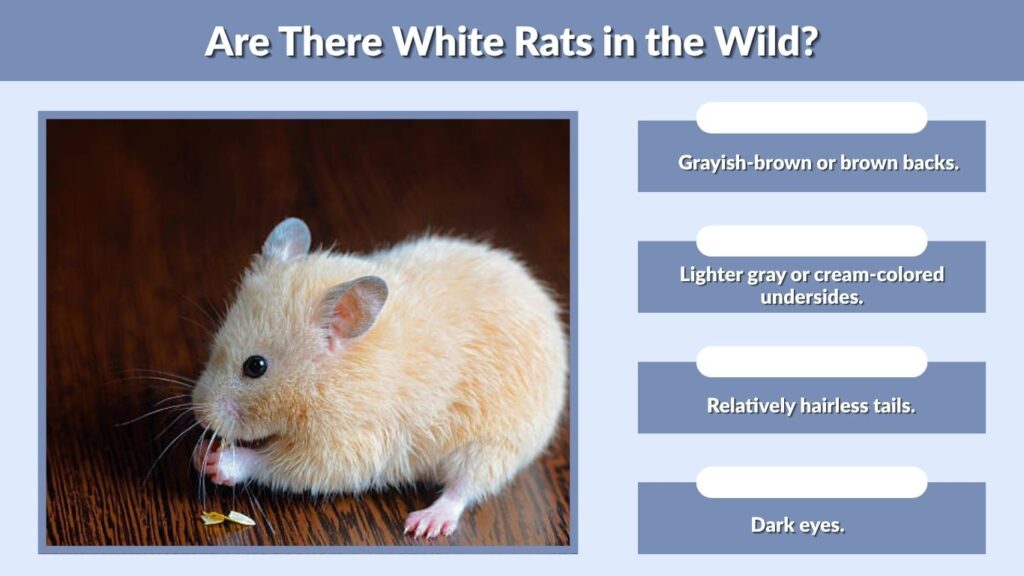
Completely white wild rats are unusual because bright white coloration makes them more visible to predators.
Albino individuals can occasionally occur naturally due to genetic mutations, but they are far less common than normally colored wild rats.
What Color Are Wild Rats?
Wild brown rats usually have:
- Grayish-brown or brown backs
- Lighter gray or cream-colored undersides
- Relatively hairless tails
- Dark eyes
- Darker feet and facial coloration
Some individual wild rats may have unusual markings, but black-and-white or completely white rats are more commonly associated with domestication.
Do Wild Rats Have White Bellies?
Some wild rats have noticeably paler undersides, which may appear white, gray, or cream.
A pale belly does not mean the rat is albino. Albino rats lack normal pigment across most or all of the body.
Why Are Lab Rats White?
White laboratory rats became popular partly because certain domesticated strains were easy to breed, handle, and study consistently.
Their white appearance often comes from albinism.
White Lab Rats in Research
Laboratory rats have been important in studying:
- Genetics
- Nutrition
- Behavior
- Learning and memory
- Physiology
- Disease processes
- Medical treatments
Not all laboratory rats are white, however. Researchers use many strains with different genetic characteristics and coat colors.
Black and White Rats

Black-and-white pet rats are also common and can display many different marking patterns.
Some have white bellies, while others have white faces, feet, tails, or large patches across their bodies.
Are Black and White Rats a Different Species?
No. Coat coloration alone does not make black-and-white domestic rats a separate species.
Their markings are primarily controlled by genetics.
Pet breeders have developed many coat patterns, including:
- Hooded
- Berkshire
- Capped
- Variegated
- Irish
- Masked
- Dalmatian-style spotting
These patterns can appear in many colors.
How to Care for White Pet Rats

White pet rats require the same basic care as other domestic rats. They need companionship, a spacious enclosure, appropriate food, mental stimulation, and good hygiene.
Their enclosure should allow climbing, exploring, hiding, and sleeping.
Basic White Rat Care
Provide:
- A large, secure cage
- Safe bedding
- Fresh drinking water
- Balanced rat food
- Hiding houses
- Hammocks and sleeping areas
- Chew toys
- Climbing opportunities
- Daily social interaction
- Regular cage cleaning
Avoid dusty or strongly scented bedding that could irritate the respiratory system.
Handling White Rats
Begin handling gently and allow the rat to approach voluntarily.
Offer treats from your hand and speak calmly. Over time, most well-socialized rats learn that people are safe.
Never pick a rat up by the tail.
FAQs
Are White Rats Rare?
White domestic rats are not particularly rare. Albino and other white coat variations are common among pet and laboratory rats, although completely white wild rats are uncommon.
How Long Do White Rats Live?
Most white pet rats live around 2 to 3 years. Genetics, nutrition, veterinary care, housing, and disease can influence individual lifespan.
Are White Rats With Red Eyes Blind?
Usually not. Albino rats can see, but their vision tends to be weaker and more sensitive to bright light than that of normally pigmented rats.
Are White Rats Good Pets?
Yes. White rats can be intelligent, affectionate, playful pets when properly socialized and housed with compatible rat companions.
What Do White Rats Eat?
White rats should primarily eat a nutritionally complete rat food supplemented with moderate amounts of safe vegetables, fruits, grains, and occasional protein-rich treats.