
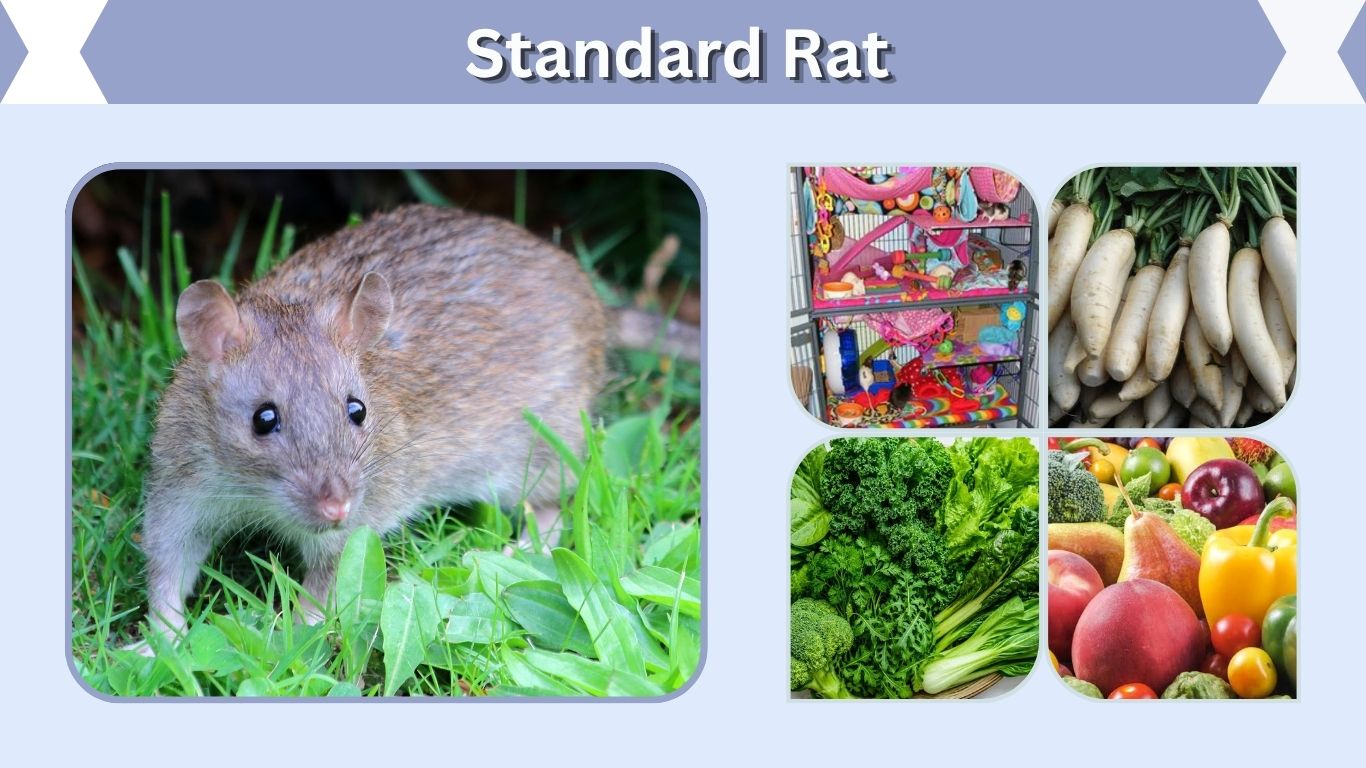
The Standard Rat is one of the most familiar types of domesticated fancy rat. Rather than being a separate species, it is generally a domestic Norway rat (Rattus norvegicus) with the conventional short, smooth coat seen in many pet rats. Standard rats are intelligent, social, curious, and capable of forming strong bonds with their owners. They occur in numerous colors and markings and are popular pets because they are relatively easy to handle and train. Here is everything you should know about Standard Rats, including appearance, temperament, diet, lifespan, housing, and everyday care.
What Is a Standard Rat?
A Standard Rat generally refers to a fancy rat with the traditional short, smooth coat rather than specialized coat varieties such as Rex, Velveteen, or Hairless rats.
Although domestic rats may differ dramatically in color, ear shape, markings, and coat texture, they belong primarily to the same domesticated species. “Standard” therefore describes a physical variety rather than an entirely different species of rat.
Standard Rat Identification
A Standard Rat can usually be recognized by these characteristics:
- Short, smooth coat lying relatively close to the body
- Long, nearly hairless tail
- Rounded body with a pointed muzzle
- Prominent whiskers
- Small front feet and larger hind feet
- Large ears that may be standard-positioned or Dumbo-style
- Coat colors ranging from white and black to brown, gray, cream, and blue
- Numerous possible markings and patterns
Their exact appearance depends heavily on genetics and breeding.
Standard Rat Size
Adult pet rats generally measure around 14–18 inches from nose to tail tip, although individual size varies considerably.
Males are typically larger and heavier than females. A mature male may weigh roughly 450–650 grams or more, while many females fall around 250–450 grams.
Diet, genetics, health, and activity all influence adult size.
Standard Rat Colors and Markings
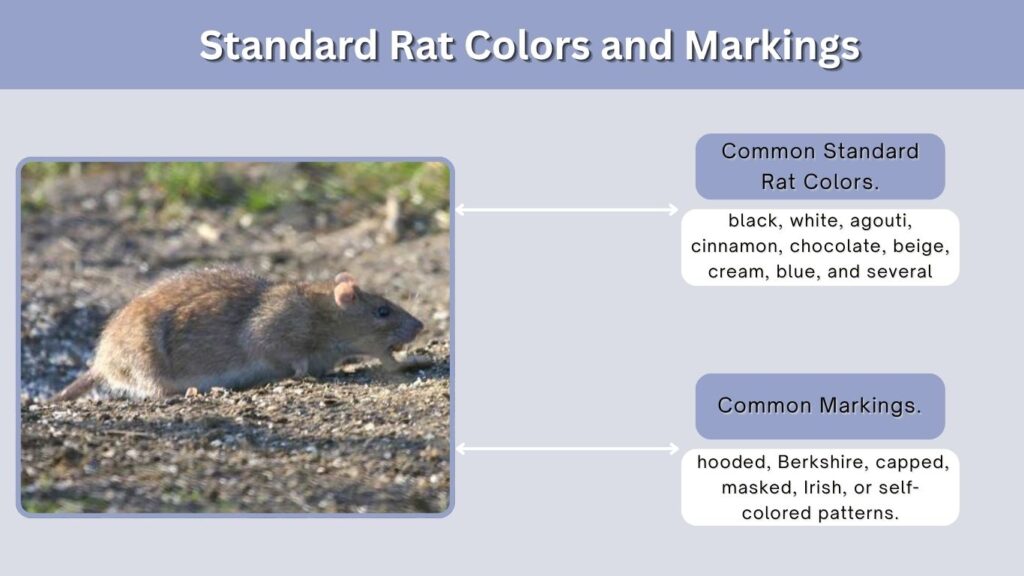
One of the most appealing characteristics of domesticated rats is their enormous variety of colors and patterns.
Standard-coated rats can occur in almost any recognized fancy-rat coloration while maintaining the traditional smooth coat.
Common Standard Rat Colors
Colors may include black, white, agouti, cinnamon, chocolate, beige, cream, blue, and several lighter or darker variations.
Agouti resembles the naturally occurring coloration of wild Norway rats, with individual hairs containing several bands of color that give the coat a brownish, grizzled appearance.
Common Markings
Standard rats can also display markings such as hooded, Berkshire, capped, masked, Irish, or self-colored patterns.
A hooded rat, for example, usually has color covering its head and shoulders with a stripe extending along the back, while a self-colored rat is predominantly one solid color.
Standard Rat Temperament and Behavior
Standard rats are generally intelligent and highly social animals. Individual temperament depends more on genetics, socialization, age, and previous experiences than on coat type.
Are Standard Rats Friendly?
Well-socialized pet rats are often affectionate and comfortable interacting with people.
Many learn to recognize their owners and may approach the cage door when someone familiar appears. Some enjoy sitting on shoulders, exploring clothing, or resting beside their owners.
Regular gentle handling from a young age can help rats become confident around people.
Social Behavior
Rats naturally live socially and generally benefit from companionship with compatible rats.
They may groom each other, sleep together, wrestle, play, and communicate through sounds, scent, and body language.
Because of this social nature, keeping a compatible pair or small group is usually preferable to keeping one rat completely alone.
Standard Rat Lifespan
Pet rats unfortunately have considerably shorter lifespans than many other household pets.
How Long Do Standard Rats Live?
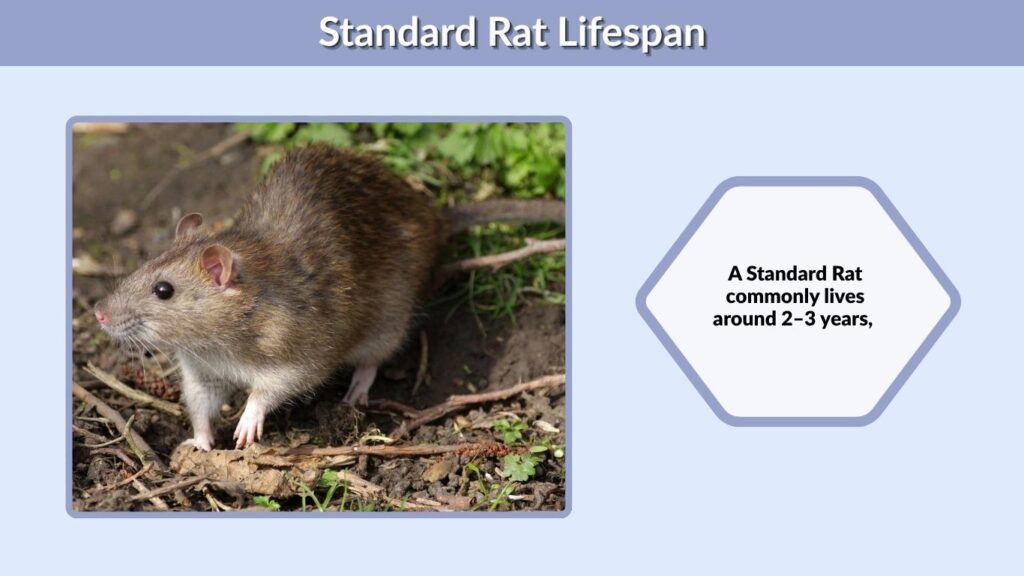
A Standard Rat commonly lives around 2–3 years, although some individuals live longer.
Genetics, nutrition, veterinary care, housing conditions, and disease can all influence lifespan.
Owners can support healthier lives by providing balanced nutrition, regular exercise, clean housing, social interaction, and prompt attention when behavioral or physical changes appear.
What Do Standard Rats Eat?
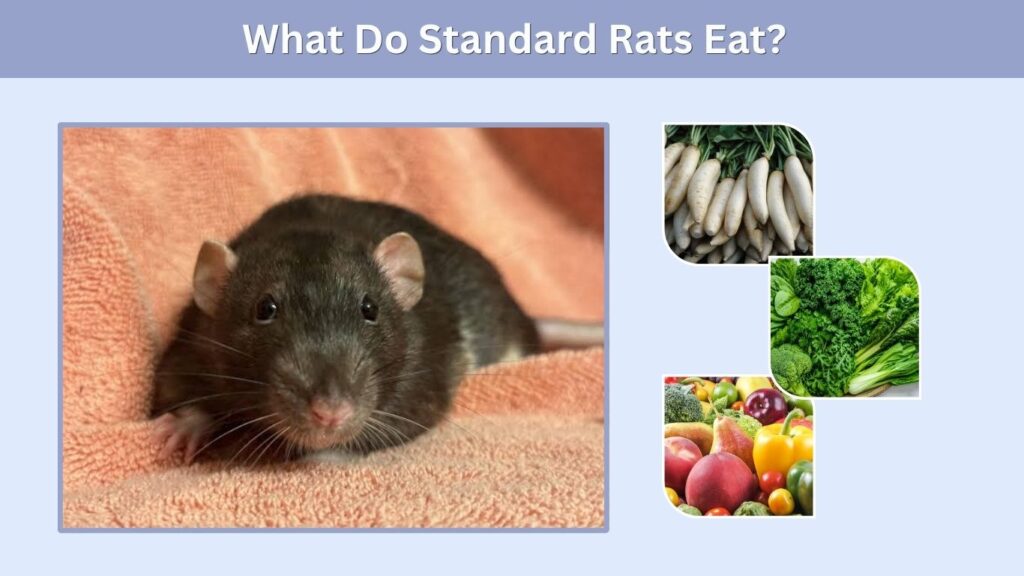
Standard rats are omnivores and naturally eat both plant and animal-based foods. Pet rats need a balanced diet rather than relying only on seeds or human leftovers.
Best Diet for Standard Rats
A nutritionally complete commercial rat food can form the foundation of the diet.
Small portions of suitable fresh foods can provide additional variety, including vegetables, leafy greens, certain fruits, cooked grains, and occasional protein-rich foods.
Fresh drinking water should always be available.
Foods to Limit
Foods extremely high in sugar, fat, or salt should be offered sparingly or avoided.
Sudden dietary changes may also cause digestive problems, so new foods are best introduced gradually.
Portion control matters because captive rats can gain excess weight when given calorie-dense treats too frequently.
Standard Rat Housing and Cage Setup
Standard rats are active animals that need enough room to climb, play, explore, rest, and interact with cage mates.
A small temporary enclosure is not appropriate as permanent housing.
Choosing a Rat Cage
A good rat cage should provide:
- Plenty of usable floor and climbing space
- Secure doors and appropriately spaced bars
- Good ventilation
- Comfortable sleeping areas
- Platforms, ropes, hammocks, or climbing structures
- Safe bedding or litter
- Food and water stations
- Toys and enrichment opportunities
Multi-level cages are particularly useful because rats naturally enjoy climbing and exploring different heights.
Keeping the Cage Clean
Remove heavily soiled bedding and uneaten fresh food regularly.
A more thorough cage cleaning should be performed as needed, but completely removing every familiar scent too frequently may encourage some rats to scent-mark more intensely.
Good ventilation and sensible cleaning help reduce odor and maintain healthier living conditions.
Exercise and Enrichment
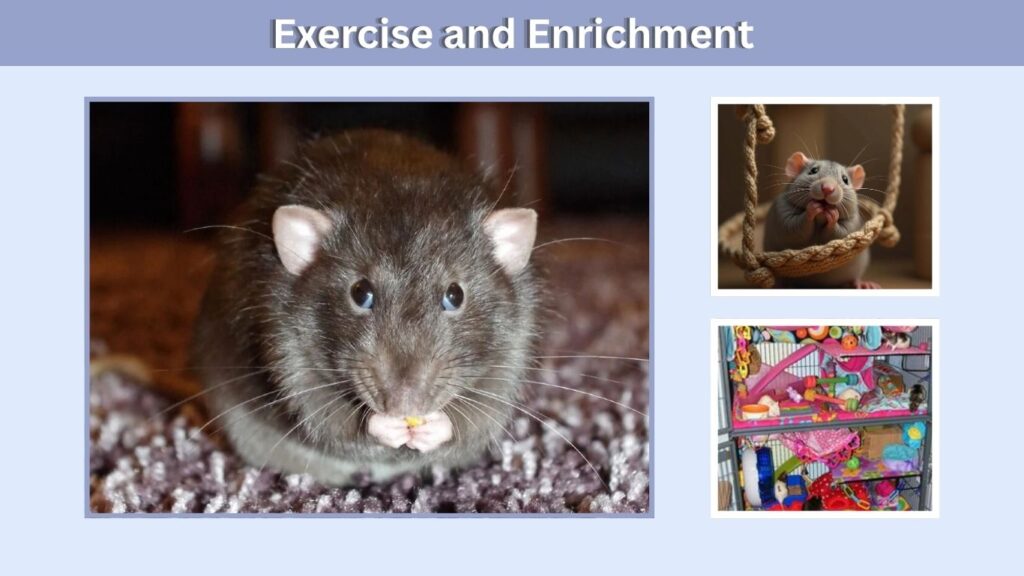
Standard rats are intelligent animals that can become bored without enough physical and mental stimulation.
Toys and Activities
Cardboard boxes, tunnels, climbing ropes, hammocks, chew-safe materials, digging boxes, and food puzzles can keep rats occupied.
Rotating toys periodically can make the environment more interesting.
Supervised time outside the cage in a rat-proofed area also provides valuable exercise and exploration.
Can Standard Rats Learn Tricks?
Yes. Rats are surprisingly trainable.
Using small food rewards and positive reinforcement, they can learn behaviors such as coming when called, standing upright, spinning, retrieving objects, entering a carrier, or navigating simple obstacles.
Short and frequent training sessions tend to work best.
Male vs Female Standard Rats
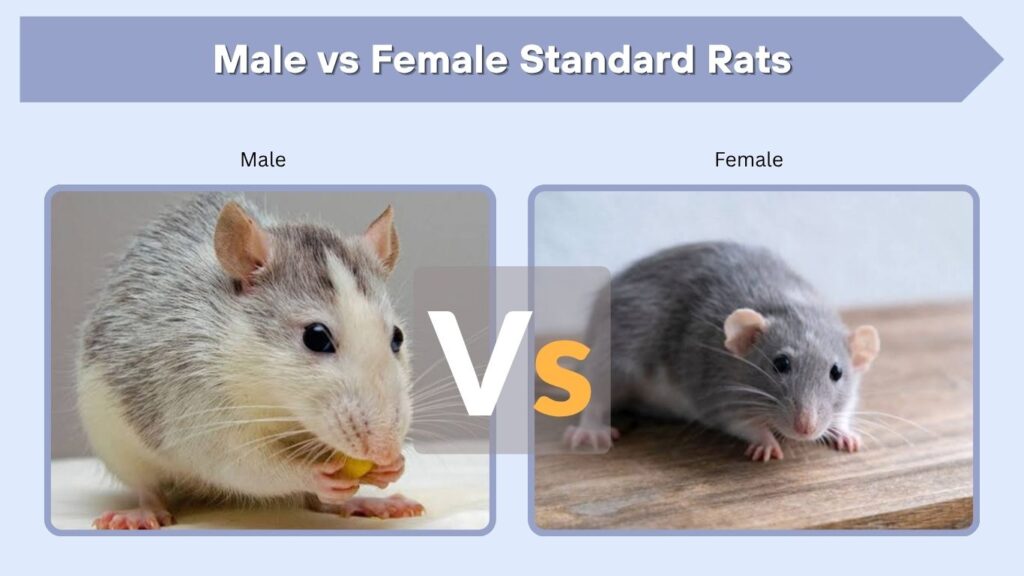
Both male and female Standard Rats can make excellent pets, but behavioral tendencies sometimes differ.
Adult males often become larger and may be more relaxed, especially as they age. Some enjoy sitting quietly with their owners.
Females are frequently smaller and may remain more active and exploratory.
However, these are general tendencies rather than guarantees. Individual personality can differ considerably from one rat to another.
Standard Rat Health and Care
Rats can experience several health problems during their relatively short lives. Observing them daily makes it easier to notice changes quickly.
Signs a Rat May Need Veterinary Attention
Watch for symptoms such as:
- Persistent sneezing or noisy breathing
- Difficulty breathing
- Reduced appetite
- Sudden weight loss
- Unusual lumps or swelling
- Discharge around the eyes or nose
- Severe scratching or skin irritation
- Weakness or difficulty walking
- Major behavioral changes
Rats often hide signs of illness, making early veterinary evaluation particularly valuable when something seems abnormal.
Standard Rat vs Fancy Rat
“Fancy rat” is the broad term generally used for domesticated rats selectively bred as pets or exhibition animals.
A Standard Rat is therefore a type of fancy rat rather than an alternative to one.
Fancy rats may have Standard, Rex, Hairless, Satin-like, or other coat characteristics depending on the breeding organization and variety terminology being used.
Standard Rat vs Dumbo Rat
Standard and Dumbo describe different physical characteristics.
“Standard” commonly describes the coat, while “Dumbo” describes ear placement.
Dumbo rats have larger ears positioned lower on the sides of the head. A rat can therefore technically have both a Standard coat and Dumbo ears.
Neither ear position automatically determines whether a rat will be friendlier or healthier.
Are Standard Rats Good Pets?
Standard rats can make excellent pets for people prepared for their social and environmental needs.
They are interactive, intelligent, trainable, and generally comfortable with regular gentle handling. They also require daily attention, companionship, appropriate housing, enrichment, and access to veterinary care.
Their main disadvantage for many owners is their short lifespan. Becoming attached to a rat can happen quickly, while two or three years can pass surprisingly fast.
FAQs
What breed is a Standard Rat?
A Standard Rat is not usually considered a separate biological breed. It is generally a domesticated Norway rat with the conventional short, smooth coat.
How big does a Standard Rat get?
Adults often reach roughly 14–18 inches including the tail, although males are typically larger than females and individual size varies.
How long does a Standard Rat live?
Most pet rats live approximately 2–3 years, although individual lifespan depends on genetics, health, diet, and care.
Are Standard Rats friendly?
They can be extremely friendly when properly socialized. Many pet rats enjoy interacting with people and can recognize familiar owners.
Can Standard Rats live alone?
Rats are highly social and generally benefit from living with compatible companions. Human interaction is valuable but usually does not fully replace interaction with another rat.