
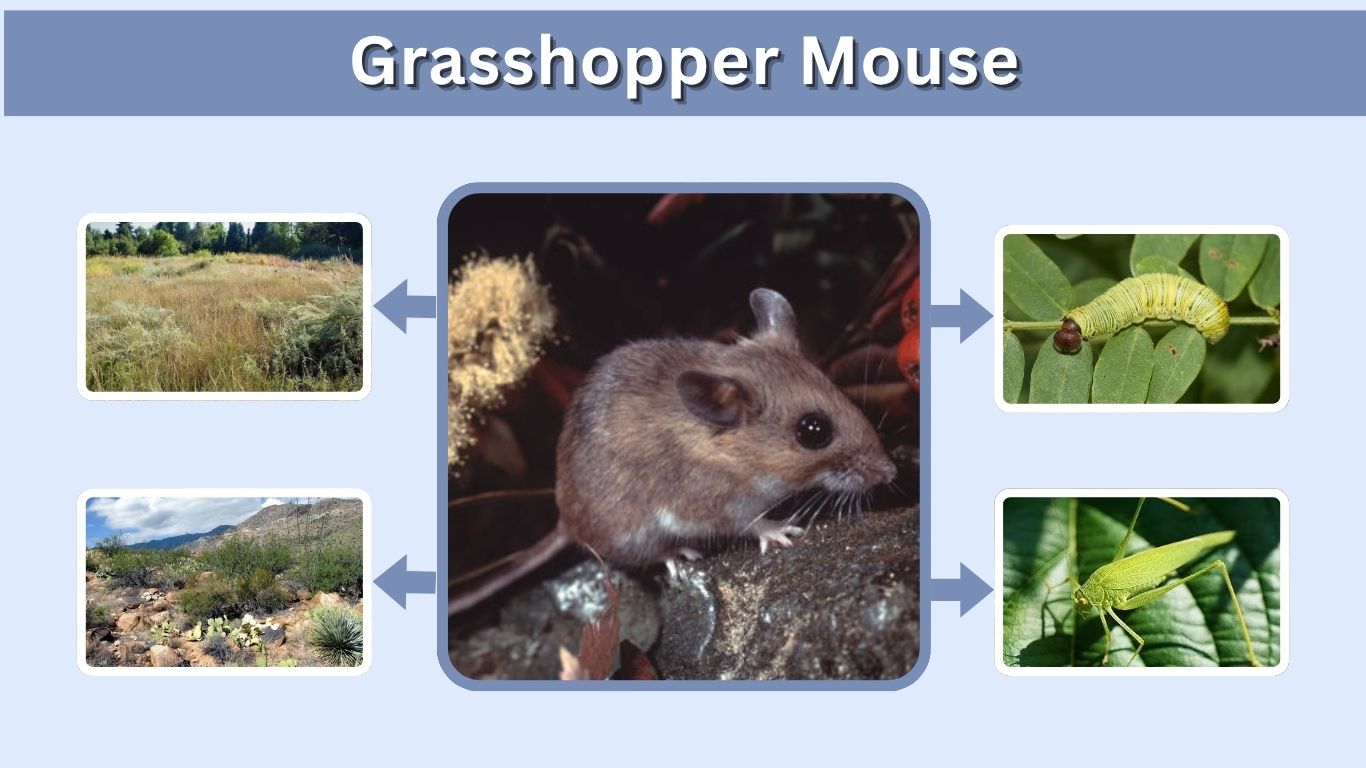
The grasshopper mouse may look like an ordinary small rodent, but its behavior is dramatically different from that of a typical house mouse. These North American mice are skilled nocturnal predators that hunt grasshoppers, beetles, spiders, scorpions, and even other small vertebrates. They are particularly famous for attacking venomous scorpions and producing a long, high-pitched call often compared to a miniature wolf howl. With their carnivorous diet, aggressive hunting style, and unusual resistance to painful venom, grasshopper mice are among the most fascinating rodents in North America.
What Is a Grasshopper Mouse?
A grasshopper mouse is a small predatory rodent belonging to the genus Onychomys. Unlike many familiar mice that rely heavily on seeds and plant material, grasshopper mice obtain much of their food by actively hunting animals. They belong to the family Cricetidae and occur naturally in North America.
Three Species of Grasshopper Mouse
There are three living species commonly recognized within the genus Onychomys:
- Northern grasshopper mouse (Onychomys leucogaster)
- Southern grasshopper mouse (Onychomys torridus)
- Mearns’s or Chihuahuan grasshopper mouse (Onychomys arenicola)
These species occupy somewhat different portions of North America, although their ranges can overlap.
What Does a Grasshopper Mouse Look Like?
Grasshopper mice have compact bodies, relatively short tails, rounded ears, dark eyes, and dense fur. Their upper bodies are generally grayish, brown, cinnamon, or pinkish-brown, while their undersides are usually much lighter or white.
Northern grasshopper mice average about 164 mm in total length and typically weigh roughly 25–40 grams. Southern grasshopper mice have a head-and-body length of approximately 9–13 cm and average around 22 grams.
Where Do Grasshopper Mice Live?

Grasshopper mice are native to North America. Depending on the species, they occur across portions of Canada, the western and central United States, the southwestern United States, and northern Mexico.
They generally prefer relatively dry, open environments where insects and other prey are readily available.
Grasshopper Mouse Habitat
Typical habitats include:
- Shortgrass prairie
- Desert scrub
- Semi-desert environments
- Sagebrush areas
- Sandy plains
- Sand dunes
- Canyon country
- Dry grasslands
Northern grasshopper mice are found in shortgrass prairies, sagebrush desert, sand dunes, and some canyon habitats. Southern grasshopper mice are strongly associated with dry grasslands and desert scrub.
Do Grasshopper Mice Live in Burrows?
Yes. Grasshopper mice use burrows for shelter during the daytime because they are primarily nocturnal.
Northern grasshopper mice may maintain different burrows for nesting, emergency shelter, and food storage. Southern grasshopper mice also occupy small underground burrows and may sometimes use burrows originally created by other rodents.
What Do Grasshopper Mice Eat?
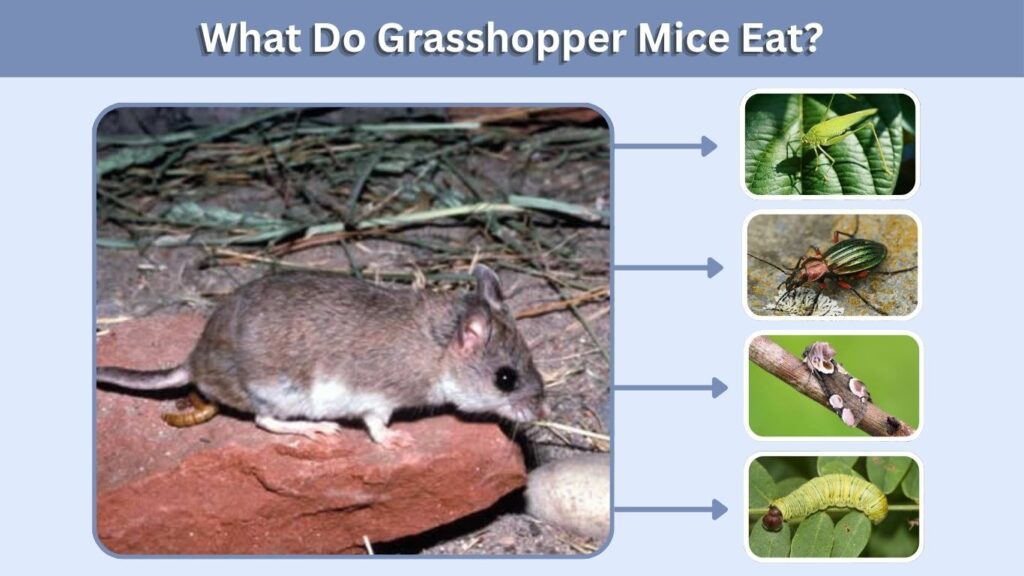
Grasshopper mice are unusually carnivorous compared with many other mice. Northern grasshopper mice can obtain nearly 90% of their diet from animal prey, making them highly specialized hunters among rodents.
Despite their name, they eat considerably more than grasshoppers.
Common Grasshopper Mouse Foods
Their diet can include:
- Grasshoppers
- Scorpions
- Beetles
- Crickets
- Moths
- Spiders
- Centipedes
- Insect larvae
- Small rodents
- Other small vertebrates
- Seeds and plant material occasionally
Southern grasshopper mice also consume some plant material, but animal prey forms the majority of their diet.
How Do Grasshopper Mice Hunt?
Grasshopper mice actively stalk their prey rather than simply searching for stationary food. Northern grasshopper mice have been described as approaching prey in a cat-like manner before attacking. Southern grasshopper mice may rush prey after stalking it and deliver bites to subdue the animal.
This hunting behavior allows such a small mammal to capture insects and other animals that might seem surprisingly dangerous for its size.
Can Grasshopper Mice Eat Scorpions?
Yes. One of the grasshopper mouse’s most famous abilities is hunting and eating scorpions.
Southern grasshopper mice can attack bark scorpions despite being stung during encounters. Researchers studying this predator-prey relationship discovered specialized changes in the mouse’s pain-signaling system that greatly reduce the painful effects of bark scorpion venom.
Are Grasshopper Mice Immune to Scorpion Venom?
Calling them completely “immune” can be misleading. Their remarkable adaptation is better described as resistance to the painful effects of certain scorpion venom.
Research on southern grasshopper mice found that bark scorpion toxins interact with a modified sodium channel called Nav1.8. Instead of simply intensifying pain signaling, this interaction can inhibit electrical activity in pain-sensing neurons, producing an analgesic effect.
Why Is Their Venom Resistance Important?
This adaptation gives grasshopper mice access to prey that many other small mammals would avoid.
It is also scientifically interesting because understanding how their nervous system reduces venom-induced pain may help researchers better understand pain pathways and potentially identify new approaches to pain-control research.
Why Do Grasshopper Mice Howl?
One of the strangest characteristics of grasshopper mice is their long-distance vocalization. The animal may stand upright, point its nose upward, and release a high, sustained call.
Because of its posture and sound, the behavior is often described as howling like a tiny wolf.
What Does the Howl Mean?
The vocalization can play a role in communication and territorial behavior. Grasshopper mice are generally territorial animals, and their calls may help advertise their presence to other mice.
Northern grasshopper mice also produce shrill calls associated with hunting and social communication.
Grasshopper Mouse Behavior
Grasshopper mice are primarily active at night and spend much of the daytime sheltered underground. They are considerably more predatory and territorial than typical seed-eating mice.
Southern grasshopper mice are described as solitary, aggressive hunters that defend relatively large territories. Northern grasshopper mice are also primarily solitary and can show strong aggression toward other members of their species.
Are Grasshopper Mice Aggressive?
Yes, particularly toward prey and competing mice.
Their aggressive reputation comes from behaviors such as hunting other rodents, defending territory, and attacking relatively dangerous prey such as scorpions.
However, this does not mean they routinely seek confrontations with humans. Their predatory adaptations are primarily used for hunting and competition with other small animals.
How Long Do Grasshopper Mice Live?
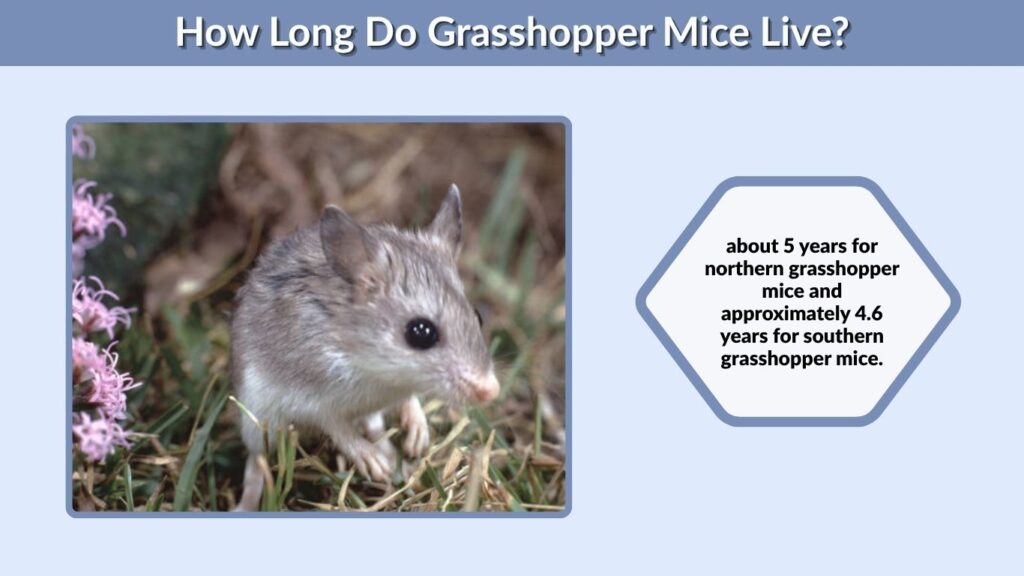
Lifespan differs by species and conditions. Available captive records reported by Animal Diversity Web list an average lifespan of about 5 years for northern grasshopper mice and approximately 4.6 years for southern grasshopper mice. Wild individuals may face much greater risks from predators, environmental conditions, food shortages, and disease.
Grasshopper Mouse Reproduction
Northern grasshopper mice can reproduce during much of the year, with breeding occurring more frequently from spring through fall. Their average litter contains around four young, and gestation averages about 31 days.
Southern grasshopper mice may also breed throughout the year, although reproduction is most active during late spring and summer. Their litters can contain one to six young, with gestation generally lasting about 26–35 days.
Are Grasshopper Mice Dangerous to Humans?
Grasshopper mice are predators, but their small size means they are not normally considered dangerous to people.
Wild rodents should still not be handled with bare hands. Like other wild mammals, a frightened or cornered grasshopper mouse may bite defensively. Observing one from a distance is safer for both the animal and the observer.
Their aggressive behavior is mainly directed toward prey, territorial rivals, and other small animals rather than humans.
FAQs
Why is it called a grasshopper mouse?
The name comes largely from its habit of eating grasshoppers and other insects. However, grasshoppers are only one part of its varied carnivorous diet.
Do grasshopper mice really howl?
Yes. Grasshopper mice produce sustained, high-pitched calls and may raise their heads while vocalizing, creating a posture reminiscent of a howling wolf.
Can a grasshopper mouse kill a scorpion?
Yes. Southern grasshopper mice regularly hunt scorpions and possess specialized adaptations that reduce the painful effects of bark scorpion venom.
Are grasshopper mice carnivores?
They are highly carnivorous compared with most mice. Northern grasshopper mice obtain the great majority of their diet from animal prey, although grasshopper mice can also consume some plant material.
Where are grasshopper mice found?
Grasshopper mice occur in North America, including parts of Canada, the United States, and Mexico. They are especially associated with grasslands, deserts, scrublands, and other relatively dry habitats.