
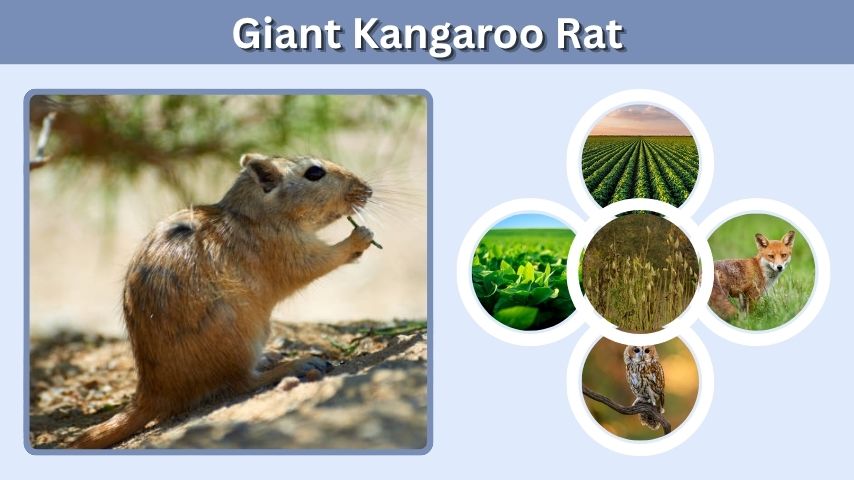
The giant kangaroo rat is one of California’s most unusual endangered mammals. Known for its large hind legs, seed-storing behavior, and powerful jumping ability, this small rodent plays a big role in dry grassland ecosystems. Although it is not a true household rat, it has become a major focus for wildlife conservation because much of its natural habitat has disappeared.
Giant Kangaroo Rat Overview
The giant kangaroo rat is a nocturnal rodent found only in parts of south-central California. Its scientific name is Dipodomys ingens, and it belongs to the family Heteromyidae, which includes kangaroo rats, kangaroo mice, and pocket mice.
Despite its name, the giant kangaroo rat is not related to kangaroos. It gets its name from the way it moves. Like a tiny desert kangaroo, it uses its strong back legs to hop across open ground while its long tail helps with balance.
Quick Facts About the Giant Kangaroo Rat
| Feature | Details |
| Scientific name | Dipodomys ingens |
| Animal type | Nocturnal rodent |
| Native range | South-central California |
| Main habitat | Dry grasslands, shrublands, and sandy plains |
| Diet | Mostly seeds and green plants |
| Conservation status | Endangered |
| Key threats | Habitat loss, agriculture, development, rodenticide, climate stress |
This species is the largest kangaroo rat in its genus. It has a rounded body, large eyes, small front legs, powerful hind legs, and external cheek pouches used to carry seeds. Its sandy-brown coloring helps it blend into dry soil and grassland vegetation.
Giant Kangaroo Rat Habitat
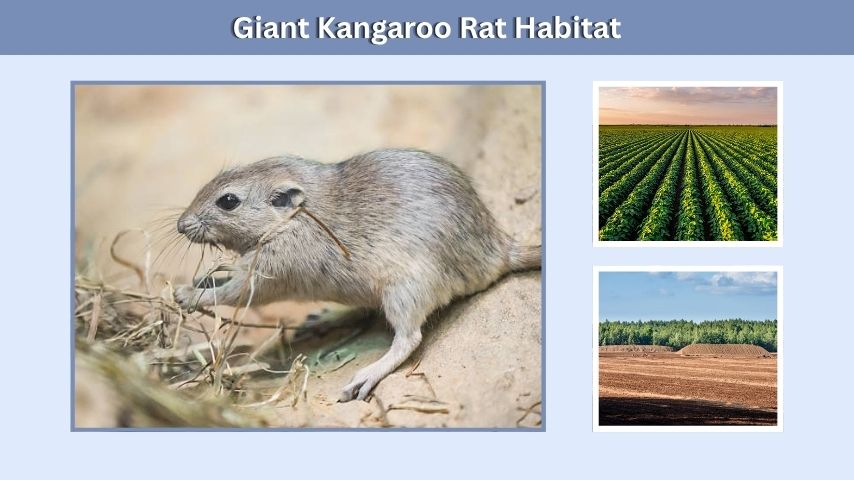
The giant kangaroo rat habitat is mainly made up of dry, open areas with well-drained soil. These animals prefer gentle slopes, level plains, sparse vegetation, and areas where they can dig burrow systems.
They are most closely associated with:
- San Joaquin Valley grasslands
- Carrizo Plain
- Elkhorn Plain
- Cuyama Valley
- Kettleman Hills and nearby dry uplands
Where Does the Giant Kangaroo Rat Live?
The giant kangaroo rat lives only in California. Historically, it occupied a much wider area across the western and southern San Joaquin Valley. Today, its range is much smaller and more fragmented because large areas of native grassland have been converted to farms, roads, oil fields, and other human uses.
Its remaining populations are mostly found in protected or less-developed dryland habitats. The Carrizo Plain is one of the best-known areas where the species still survives.
Does It Live in Mediterranean Woodlands?
The giant kangaroo rat does not typically live in dense Mediterranean woodlands. It is better suited to open grasslands, shrub-steppe areas, and dry plains with low plant cover. It needs soil suitable for burrowing and enough open space to move, forage, and detect predators.
Giant Kangaroo Rat Diet and Food Web
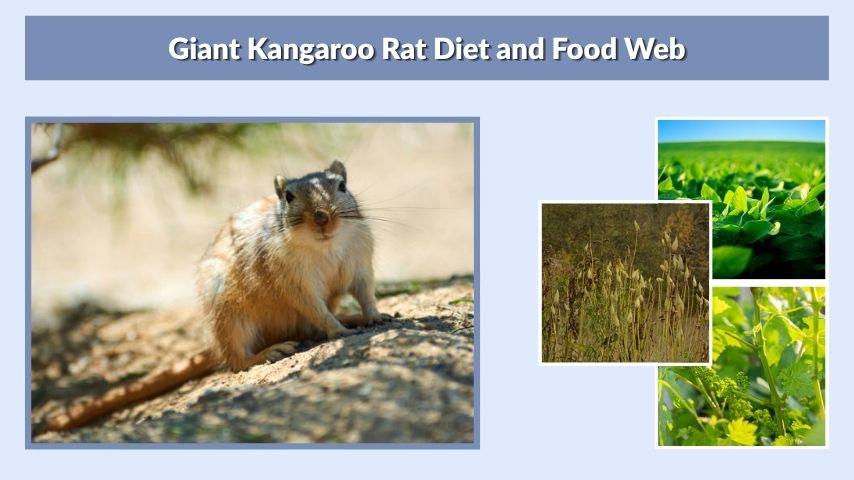
The giant kangaroo rat diet is mostly plant-based. Seeds are its most important food, but it may also eat green vegetation depending on the season and available rainfall.
What Do Giant Kangaroo Rats Eat?
Giant kangaroo rats eat:
- Seeds from grasses and native plants
- Green leaves and stems
- Occasional plant material gathered near burrows
- Stored seeds kept in underground chambers
Like other kangaroo rats, they are adapted to dry environments. They can survive with very little free-standing water because they get moisture from the seeds and plants they eat. Their kidneys are highly efficient, helping them conserve water in arid conditions.
Giant Kangaroo Rat Food Web Role
In the food web, the giant kangaroo rat is both a seed consumer and prey species. It gathers seeds, stores them underground, and sometimes leaves seeds behind, which can help influence plant growth and seed distribution.
It is also an important food source for predators such as:
- Owls
- Hawks
- Foxes
- Coyotes
- Snakes
- Badgers
Because many animals depend on it directly or indirectly, the giant kangaroo rat is often described as an important ecosystem species. Its burrowing also changes soil structure, improves aeration, and creates small patches that affect plant communities.
Why Is the Giant Kangaroo Rat Endangered?
The giant kangaroo rat is endangered mainly because of habitat loss and habitat fragmentation. Much of its original range was converted into agricultural land, especially in California’s Central Valley. As native grasslands disappeared, populations became smaller and more isolated.
Main Causes of Decline
The biggest threats include:
- Conversion of grassland to agriculture
- Urban and industrial development
- Petroleum and energy development
- Road construction and habitat fragmentation
- Rodenticide use
- Invasive plants changing native habitat
- Drought and climate-related stress
When populations become isolated, it is harder for individuals to move between habitat patches. This can reduce genetic diversity and make local populations more vulnerable to drought, disease, fire, or land-use changes.
Giant Kangaroo Rat Endangered Status
The giant kangaroo rat is listed as endangered under the U.S. Endangered Species Act. It is also recognized as endangered in California. Conservation agencies monitor its population, habitat, and long-term survival outlook through species status assessments and recovery planning.
Giant Kangaroo Rat Population
Many people ask, “How many giant kangaroo rats are left?” The answer is not simple because populations fluctuate with rainfall, drought, vegetation, and survey conditions. Some estimates suggest the total number may be over 100,000 individuals, but the species remains endangered because its habitat is limited, fragmented, and vulnerable.
Why Population Numbers Change
Giant kangaroo rat numbers can rise and fall quickly. In wetter years, more plants grow, more seeds are available, and reproduction may improve. During drought years, food availability drops, and survival can decline.
Population trends are affected by:
- Rainfall patterns
- Seed production
- Predator pressure
- Habitat quality
- Land management
- Disease or environmental stress
- Connectivity between colonies
This is why conservationists focus not only on the number of animals but also on the quality, size, and connection of remaining habitats.
Giant Kangaroo Rat Adaptations
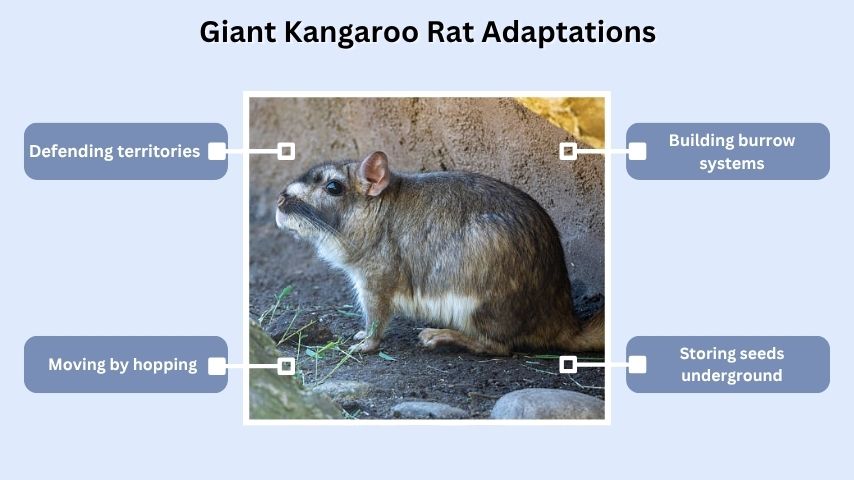
The giant kangaroo rat has several adaptations that help it survive in dry environments. Its body is built for movement, water conservation, and nighttime activity.
Physical Characteristics
The species has large hind feet, strong back legs, a long tail, large eyes, and small front limbs. Its external cheek pouches allow it to carry seeds without getting them wet in the mouth. This is useful when transporting food back to burrows for storage.
Its tail is longer than its body and helps it balance while hopping. Its large eyes support nighttime vision, while its sensitive hearing helps detect predators.
Behavioral Adaptations
Giant kangaroo rats are mostly nocturnal. They come out at night to avoid daytime heat and reduce water loss. During the day, they stay inside burrows where temperatures are more stable.
Their key behaviors include:
- Building burrow systems
- Storing seeds underground
- Defending territories
- Moving by hopping
- Foraging at night
- Using open spaces to detect predators
These behaviors allow them to survive in areas where water is scarce and temperatures can be extreme.
Giant Kangaroo Rat Burrows and Niche
The giant kangaroo rat niche is closely tied to its burrow systems. Burrows provide shelter, food storage, nesting space, and protection from predators and harsh weather.
How Burrows Help the Ecosystem
Burrowing changes the surface of the soil. As the animals dig, they bring deeper soil to the surface and create small mounds. These disturbances can affect where plants grow and how water enters the soil.
Their burrows may also create microhabitats used by insects, reptiles, and other small animals. This makes the giant kangaroo rat more than just a seed-eating rodent; it is part of the physical structure of its ecosystem.
Giant Kangaroo Rat Predators
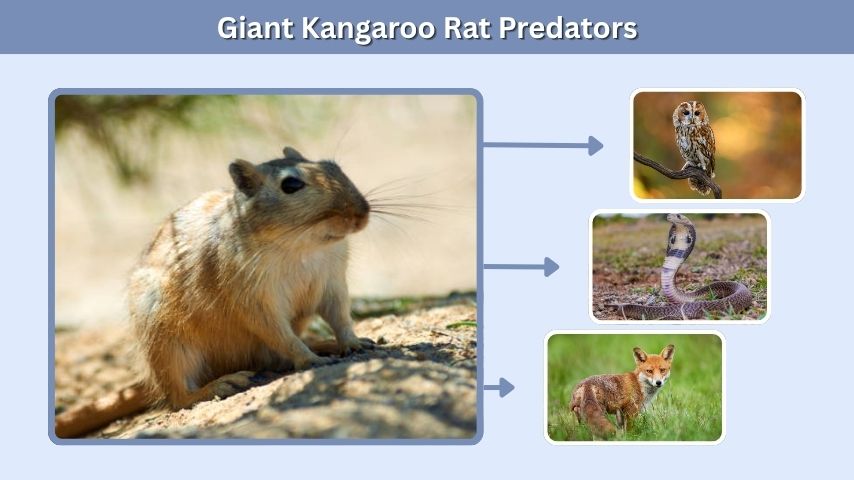
Predation is a natural part of the giant kangaroo rat’s life. Because it is active at night, it must avoid nocturnal hunters as well as daytime predators near burrow entrances.
Common predators include owls, snakes, foxes, coyotes, and badgers. Owls are especially important predators because they hunt at night, when kangaroo rats are most active.
The giant kangaroo rat reduces predation risk by using quick jumps, sharp hearing, open visibility, and nearby burrow entrances. Its hopping motion can help it escape quickly when threatened.
Giant Kangaroo Rat Reproduction and Life Cycle
The giant kangaroo rat reproduction cycle is influenced by season and environmental conditions. Breeding success often depends on rainfall and food supply. When seed availability is high, females are more likely to produce and raise young successfully.
Life Cycle
A typical life cycle includes birth in a protected burrow, growth inside the nest, juvenile exploration near the burrow, and eventual independence. Young kangaroo rats must learn to forage, avoid predators, and establish territories.
Their life expectancy in the wild is usually short compared with larger mammals. Many individuals live only a few years, though survival depends on conditions such as food, predators, and drought.
Are Kangaroos Giant Rats?
No, kangaroos are not giant rats. Kangaroos are marsupials native to Australia, while giant kangaroo rats are rodents native to California. They are completely different animals.
The name “kangaroo rat” comes from the rodent’s jumping movement, not from a close relationship with kangaroos. Kangaroo rats hop on two back legs and use their tails for balance, which makes their movement look somewhat kangaroo-like.
Are Stephens’ Kangaroo Rat and Giant Kangaroo Rat the Same?
No, Stephens’ kangaroo rat and the giant kangaroo rat are not the same species. Both are kangaroo rats, but they have different scientific names, ranges, and conservation histories.
The giant kangaroo rat is Dipodomys ingens and is mainly associated with south-central California grasslands. Stephens’ kangaroo rat is a different species found farther south in parts of Southern California. Both have faced habitat-loss pressures, but they should not be confused.
Giant Kangaroo Rat Conservation
Giant kangaroo rat conservation focuses on protecting habitat, restoring suitable grasslands, monitoring populations, and reducing threats from development and land conversion.
Conservation Efforts
Important conservation actions include:
- Protecting remaining grassland habitat
- Managing land to maintain open vegetation
- Monitoring population trends
- Reducing harmful rodenticide exposure
- Supporting habitat connectivity
- Studying reintroduction or translocation options
- Using range maps and surveys to guide planning
Conservation is especially important because the species is found only in a limited area. If remaining habitat is damaged or fragmented further, recovery becomes much harder.
Recovery Challenges
Recovery is difficult because the giant kangaroo rat needs specific habitat conditions. Not every open field is suitable. It needs dry soils, proper vegetation structure, enough food plants, and space for burrow colonies.
Climate change also adds pressure. Longer droughts may reduce seed production and make survival harder in some areas. Conservation planning must consider both current habitat and future environmental changes.
Giant Kangaroo Rat Pictures and Identification
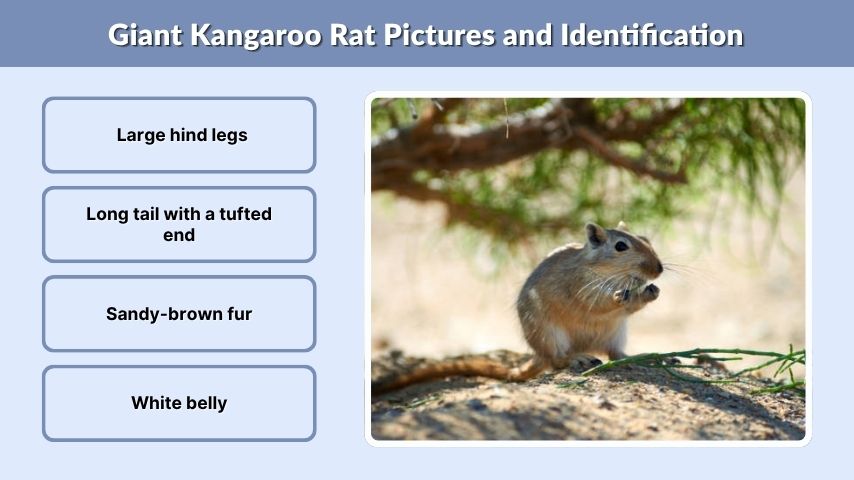
People searching for giant kangaroo rat pictures often notice its large eyes, long tail, compact body, and strong hind legs. These features help separate it from ordinary mice or rats.
How to Identify a Giant Kangaroo Rat
Look for:
- Large hind legs
- Long tail with a tufted end
- Sandy-brown fur
- White belly
- Large dark eyes
- Small front limbs
- Upright hopping posture
- Burrow entrances in dry grassland
Because it is nocturnal and endangered, it should not be disturbed in the wild. Wildlife observation should be done respectfully and from a distance.
Human Changes and the Future of the Giant Kangaroo Rat
Human land use has shaped the future of the giant kangaroo rat more than any other factor. Agriculture, roads, energy projects, and development have reduced and divided its habitat. At the same time, conservation areas and scientific research have helped protect some of its most important remaining populations.
The future of the species depends on whether enough connected, high-quality habitat can be preserved. Protecting the giant kangaroo rat also protects the dry grassland ecosystem it supports.
FAQs
What is the giant kangaroo rat?
The giant kangaroo rat is an endangered nocturnal rodent native to south-central California. Its scientific name is Dipodomys ingens. It is known for its large hind legs, long balancing tail, seed-storing behavior, and ability to survive in dry grassland habitats with very little free water.
Why is the giant kangaroo rat endangered?
The giant kangaroo rat is endangered because much of its native habitat has been lost or fragmented. Agriculture, development, roads, energy projects, rodenticide use, and changing environmental conditions have reduced suitable grassland areas. Smaller, isolated populations are more vulnerable to drought, predators, and long-term genetic problems.
What do giant kangaroo rats eat?
Giant kangaroo rats mostly eat seeds, especially from grasses and other dryland plants. They also eat green vegetation when available. They collect food in external cheek pouches and store seeds in underground burrows, helping them survive periods when food is limited or surface conditions are harsh.
Where does the giant kangaroo rat live?
The giant kangaroo rat lives only in California, mainly in parts of the San Joaquin Valley region, Carrizo Plain, Elkhorn Plain, Cuyama Valley, and nearby dry uplands. It prefers open, dry grasslands and shrublands with well-drained soil suitable for digging burrows.
Are kangaroos giant rats?
No, kangaroos are not giant rats. Kangaroos are marsupials from Australia, while giant kangaroo rats are rodents from California. The name comes from the rodent’s hopping movement, which resembles a kangaroo’s motion, but the two animals are not closely related.