
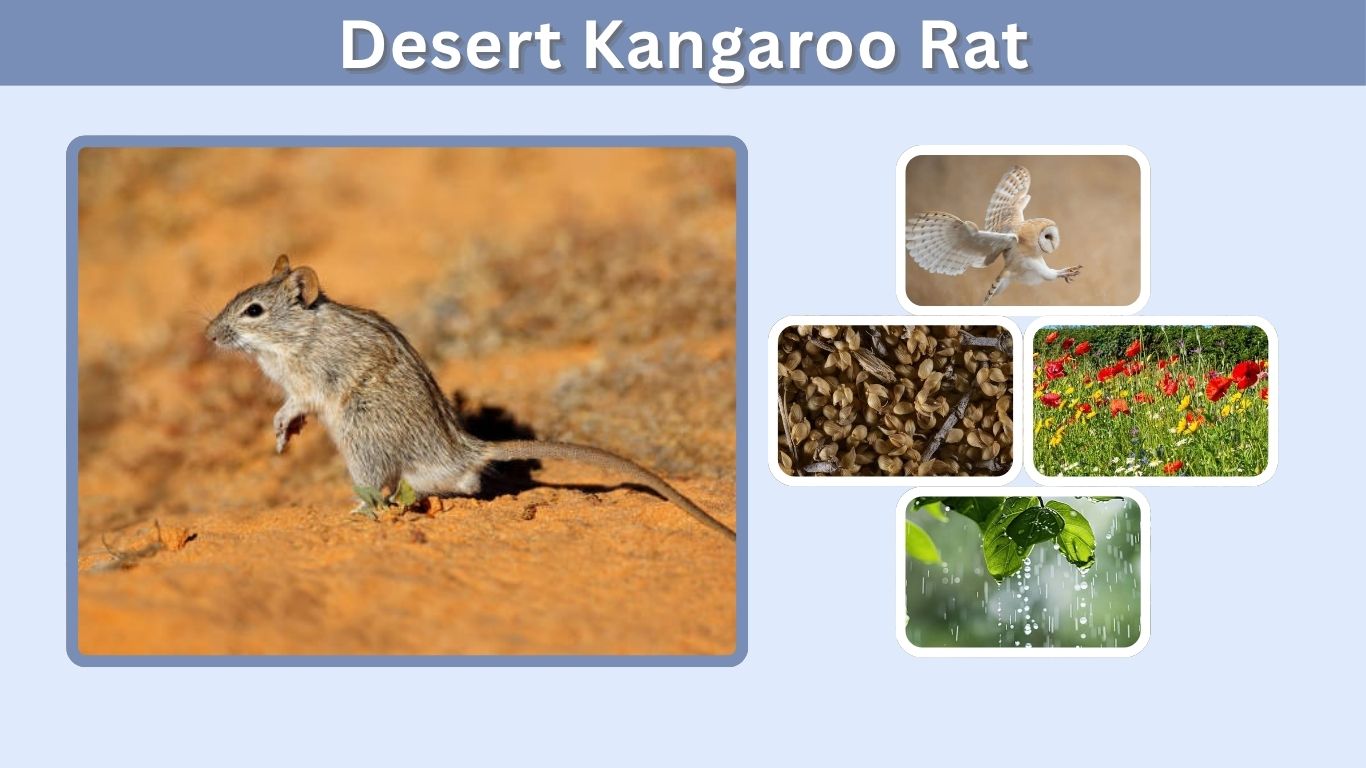
The desert kangaroo rat is one of the best-known desert rodents in North America. It survives in extremely dry places where many animals would struggle to find water, food, or shelter. With strong back legs, a long balancing tail, and clever water-saving adaptations, this small mammal is built for life in sandy deserts. It is also often confused with the extinct Australian desert rat-kangaroo, but they are very different animals.
Desert Kangaroo Rat Overview
The desert kangaroo rat is a small nocturnal rodent that lives in desert regions of southwestern North America. Its scientific name is Dipodomys deserti. It belongs to the family Heteromyidae, a group that includes kangaroo rats, pocket mice, and kangaroo mice.
The name “kangaroo rat” comes from the way the animal moves. It hops on its long hind legs, much like a tiny kangaroo. Its long tail helps it stay balanced while jumping across sand, gravel, and desert scrub.
Quick Facts About the Desert Kangaroo Rat
| Feature | Details |
| Scientific name | Dipodomys deserti |
| Animal type | Nocturnal rodent |
| Main habitat | Sandy deserts, dunes, and arid scrublands |
| Native range | Southwestern North America |
| Diet | Mostly seeds, with some green plant material |
| Main predators | Owls, snakes, foxes, coyotes, and badgers |
| Key adaptation | Survives with little or no free-standing water |
| Common confusion | Not the same as the Australian desert rat-kangaroo |
Desert kangaroo rats are not ordinary rats. They are specialized desert rodents with external cheek pouches, powerful hind legs, and bodies adapted to reduce water loss. These features allow them to live in some of the hottest and driest environments in North America.
Desert Kangaroo Rat Habitat
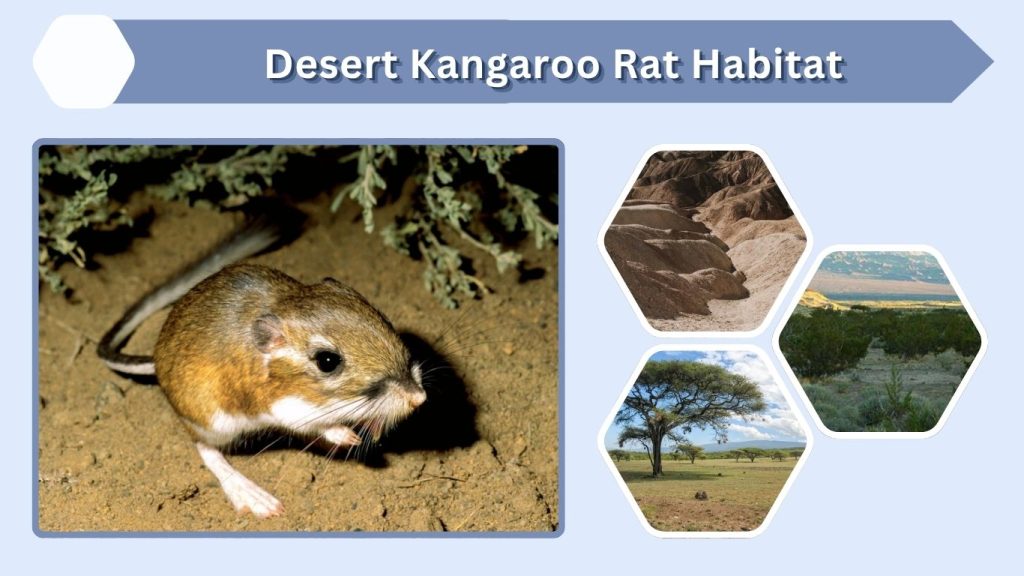
The desert kangaroo rat habitat includes sandy flats, desert dunes, dry washes, creosote bush scrub, and open desert areas with loose soil. Loose sandy ground is important because the animal digs burrows for shelter, nesting, and food storage.
This species is strongly associated with arid regions where rainfall is low and temperatures can be extreme. It is often found in deserts such as the Mojave Desert and Sonoran Desert, along with other dryland areas in the southwestern United States and northern Mexico.
Where Do Desert Kangaroo Rats Live?
Desert kangaroo rats live in parts of:
- California
- Nevada
- Arizona
- Utah
- Baja California
- Northern Mexico
They are especially suited to sandy desert habitats. In places such as Death Valley and other hot desert regions, their survival depends on staying underground during the day and emerging at night when temperatures are cooler.
Do Kangaroo Rats Live in the Desert?
Yes, many kangaroo rats live in desert or semi-desert environments. The desert kangaroo rat is one of the clearest examples because it is specifically adapted to dry sandy habitats. Other kangaroo rat species also live in deserts, grasslands, shrublands, and arid plains.
What Do Desert Kangaroo Rats Eat?
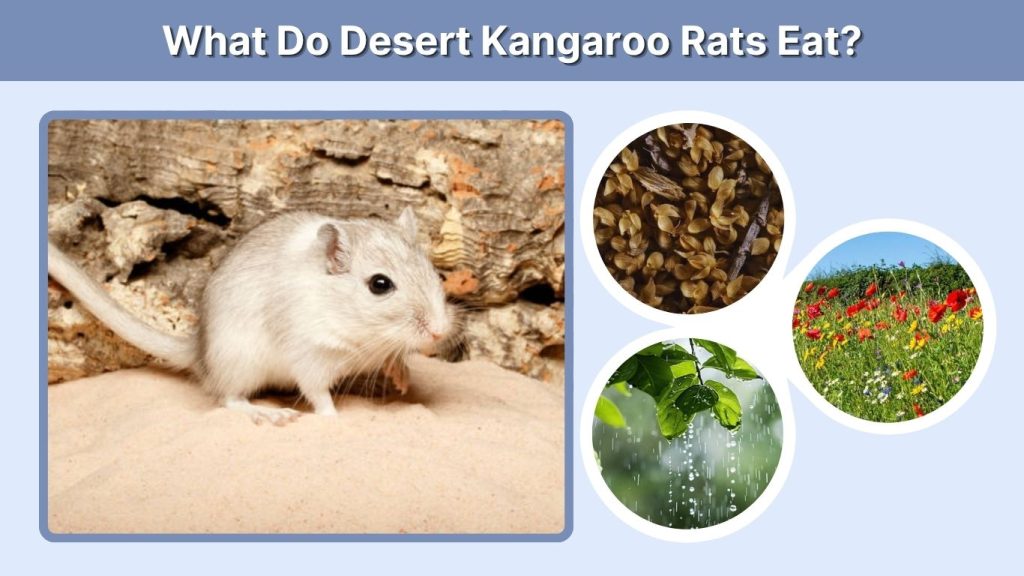
Desert kangaroo rats mostly eat seeds. Their diet may include seeds from grasses, desert shrubs, and other dryland plants. They may also eat green vegetation when it is available, especially after seasonal rainfall.
Seeds are the perfect food for this species because they provide both energy and metabolic water. When the body breaks down nutrients in seeds, it produces a small amount of water. This helps the desert kangaroo rat survive without drinking from ponds, streams, or puddles.
Desert Kangaroo Rat Diet
A typical desert kangaroo rat diet includes:
- Dry seeds from grasses and desert plants
- Seeds from shrubs and annual wildflowers
- Green plant material after rain
- Stored seeds kept inside underground burrows
- Occasional plant parts found near burrow entrances
Desert kangaroo rats use fur-lined cheek pouches to carry food. These pouches open outside the mouth, which helps keep collected seeds dry. The animal can gather seeds above ground and then transport them to underground storage chambers.
What Do Kangaroo Rats Eat in the Desert?
In the desert, kangaroo rats eat what is available around their burrow system. Seeds are usually the main food source, but seasonal changes matter. After rain, desert plants grow quickly and produce fresh leaves, stems, flowers, and seeds. During dry periods, stored seeds become especially important.
This food-storage behavior helps them survive when surface food is scarce. It also affects the local ecosystem because forgotten seeds may later germinate.
How Does a Kangaroo Rat Survive in the Desert?
The desert kangaroo rat survives in the desert through a combination of physical, behavioral, and physiological adaptations. These adaptations help it avoid heat, save water, escape predators, and find food in a harsh environment.
Desert Kangaroo Rat Adaptations
Important adaptations include:
- Long hind legs for fast hopping
- Long tail for balance
- Large eyes for night activity
- Sensitive hearing for detecting predators
- Cheek pouches for carrying seeds
- Burrows for shelter from heat
- Efficient kidneys that reduce water loss
- Nocturnal behavior to avoid daytime temperatures
One of its most famous adaptations is its ability to live with little or no drinking water. Instead of relying on water sources, it gets moisture from food and from metabolic water produced during digestion.
Water-Saving Adaptations
Desert kangaroo rats have highly efficient bodies. Their kidneys produce very concentrated urine, and their digestive system helps reduce water loss. They also avoid the hottest part of the day by staying inside burrows, where temperatures are cooler and humidity is higher than on the desert surface.
These adaptations make the desert kangaroo rat one of the best examples of survival in extreme desert environments.
Desert Kangaroo Rat Burrows
Burrows are essential to the desert kangaroo rat’s life. A burrow is more than a sleeping place. It is a shelter, food storage area, nesting site, and protection zone.
Desert kangaroo rats dig burrows in sandy or loose soil. Burrow entrances are often found near shrubs, dunes, or open desert patches. During the day, the animal stays underground to avoid heat and predators. At night, it comes out to search for food.
Why Burrows Matter
Burrows help desert kangaroo rats by:
- Reducing exposure to extreme heat
- Protecting them from predators
- Providing a place to raise young
- Creating storage chambers for seeds
- Helping conserve body moisture
- Offering safety during storms or harsh weather
Burrows also influence the desert ecosystem. Digging changes the soil, moves nutrients, and may create small disturbed patches where plants can grow.
Desert Kangaroo Rat Predators
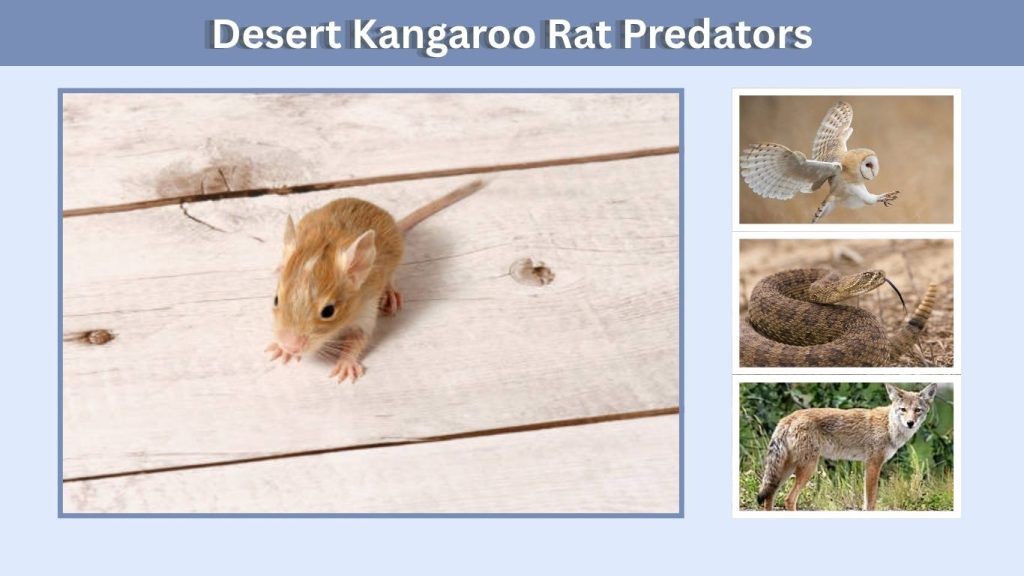
Desert kangaroo rats are prey for many desert animals. Because they are small and active at night, they are especially vulnerable to nocturnal hunters.
Common predators include owls, snakes, foxes, coyotes, badgers, and sometimes bobcats. Owls are especially important predators because they hunt silently at night, when kangaroo rats are active above ground.
What Eats Kangaroo Rats in the Desert?
Animals that eat kangaroo rats in the desert include:
- Barn owls and other owls
- Rattlesnakes and other snakes
- Kit foxes and gray foxes
- Coyotes
- Badgers
- Bobcats
- Hawks near dawn or dusk
The desert kangaroo rat survives predation by being alert, fast, and cautious. Its large ears help it detect movement. Its powerful hind legs allow it to leap away quickly. It also tends to forage near escape routes that lead back to burrow entrances.
Desert Kangaroo Rat Food Web and Niche
The desert kangaroo rat has an important niche in the desert biome. It is both a seed consumer and a prey species. By eating and storing seeds, it influences plant communities. By serving as prey, it supports predators.
Its role in the food web connects plants, rodents, and carnivores. Desert plants produce seeds. Kangaroo rats eat and store those seeds. Predators eat kangaroo rats. In some cases, stored seeds that are not eaten may sprout, helping plants spread.
Desert Kangaroo Rat Niche
The desert kangaroo rat’s niche includes:
- Collecting seeds from desert plants
- Storing food in underground chambers
- Digging burrows in sandy soil
- Providing prey for desert predators
- Moving seeds across the landscape
- Affecting soil structure through digging
This makes the species more than just a small desert rodent. It plays a meaningful role in maintaining the balance of desert ecosystems.
Desert Kangaroo Rat Appearance
The desert kangaroo rat has a compact body, large head, big eyes, long hind legs, and a long tufted tail. Its fur is usually pale brown, sandy, or grayish, helping it blend into desert soil. Its underside is lighter, often white or cream-colored.
Its front legs are short, while its back legs are long and powerful. This body shape allows it to move by hopping instead of running on all four legs. The tail acts like a counterbalance, especially during sharp turns and quick jumps.
Desert Kangaroo Rat Characteristics
The main characteristics include:
- Sandy-brown or grayish fur
- White or pale belly
- Large dark eyes
- Long hind feet
- Small front limbs
- Long tail with a darker tuft
- External cheek pouches
- Nocturnal activity pattern
These features help identify it as a kangaroo rat rather than a common mouse or rat.
Desert Kangaroo Rat vs Desert Rat-Kangaroo
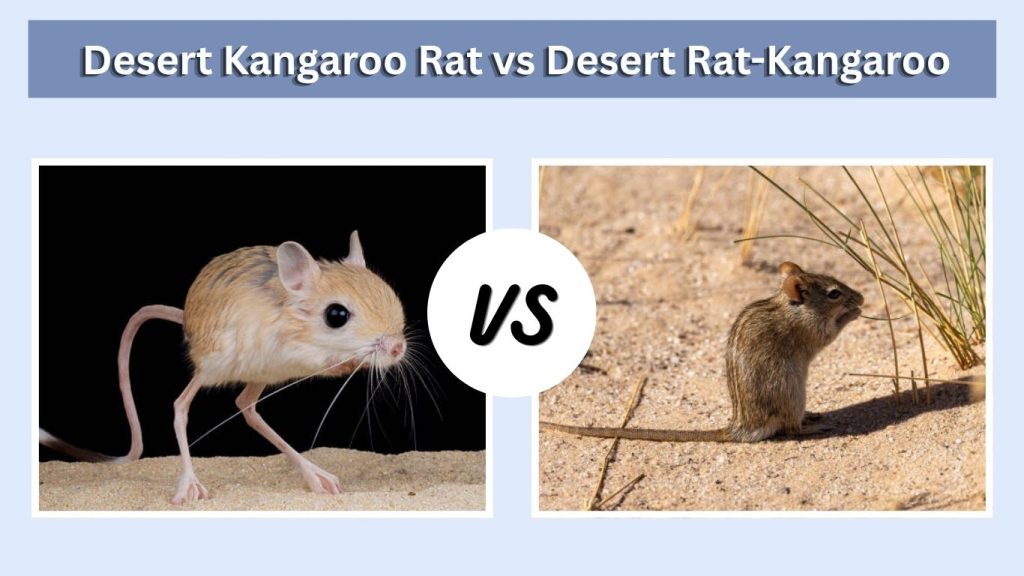
The terms “desert kangaroo rat” and “desert rat-kangaroo” can be confusing because they sound almost the same. However, they refer to different animals from different continents.
The desert kangaroo rat is a living North American rodent. Its scientific name is Dipodomys deserti. It lives in deserts of the southwestern United States and northern Mexico.
The desert rat-kangaroo, also written as desert rat kangaroo, was an Australian marsupial. Its scientific name was Caloprymnus campestris. It lived in arid parts of central Australia and is widely considered extinct.
Is the Desert Rat-Kangaroo Extinct?
Yes, the Australian desert rat-kangaroo is considered extinct. It was first recorded in the 1840s, disappeared from scientific records for many decades, was rediscovered in the 1930s, and then vanished again. The last confirmed records came from the 1930s.
Its decline is linked to introduced predators such as foxes and feral cats, along with habitat changes. This animal should not be confused with the desert kangaroo rat, which is a separate living rodent species in North America.
Desert Kangaroo Rat in the Mojave and Sonoran Deserts
The desert kangaroo rat is associated with hot desert regions, including areas connected to the Mojave Desert and Sonoran Desert. These environments have sandy soils, sparse vegetation, and very limited rainfall.
In the Mojave Desert, kangaroo rats may live among creosote bush, dunes, and desert scrub. In the Sonoran Desert, related kangaroo rat species occupy dry sandy and gravelly habitats. These regions provide seeds, shrubs, and open ground needed for survival.
Why Sandy Habitat Is Important
Sandy habitat helps desert kangaroo rats dig burrows and move efficiently. Loose soil makes it easier to create underground tunnels. Open ground also allows them to detect predators before it is too late.
Dense vegetation is less suitable because it can limit movement and reduce visibility. The desert kangaroo rat is best adapted to open, dry habitats with scattered plants.
Desert Kangaroo Rat Reproduction and Lifespan
Desert kangaroo rats reproduce in burrows, where young are protected from heat and predators. Breeding can depend on environmental conditions, especially food availability. In better seasons, when seeds and green plants are more abundant, reproduction may increase.
Young kangaroo rats are born helpless and remain in the burrow until they are developed enough to move and forage. Once independent, they must establish their own space, find food, and avoid predators.
Lifespan in the Wild
Like many small rodents, desert kangaroo rats often have short lives in the wild. Predation, drought, disease, and food shortages can reduce survival. However, their reproductive strategy helps populations continue when conditions are favorable.
Can Desert Kangaroo Rats Be Pets?
Desert kangaroo rats are wild animals and should not be kept as pets. They have specialized needs, including desert-like conditions, specific food storage behaviors, burrowing space, and nocturnal activity patterns. In some areas, native wildlife may also be protected by law.
People interested in this species should learn about it through wildlife organizations, desert parks, educational videos, and responsible observation rather than trying to buy or capture one.
FAQs
What is a desert kangaroo rat?
A desert kangaroo rat is a nocturnal rodent native to dry regions of southwestern North America. Its scientific name is Dipodomys deserti. It is known for hopping on long hind legs, carrying seeds in cheek pouches, digging burrows, and surviving with little or no drinking water.
What do desert kangaroo rats eat?
Desert kangaroo rats mostly eat seeds from grasses, shrubs, and desert plants. They may also eat green vegetation after rain. Seeds provide energy and help produce metabolic water during digestion, allowing the animal to survive in dry habitats without relying on open water sources.
How does a kangaroo rat survive in the desert?
A kangaroo rat survives in the desert by staying underground during the hot day, coming out at night, conserving water, and eating dry seeds. Its kidneys produce concentrated urine, its body loses little moisture, and its burrows provide cooler shelter from extreme temperatures.
What eats kangaroo rats in the desert?
Desert kangaroo rats are eaten by owls, snakes, foxes, coyotes, badgers, bobcats, and hawks. Owls are major nighttime predators because kangaroo rats are active after dark. The kangaroo rat escapes predators with quick jumps, sharp hearing, and fast retreats to burrows.
Is the desert rat-kangaroo the same animal?
No, the desert rat-kangaroo is not the same as the desert kangaroo rat. The desert kangaroo rat is a living North American rodent. The desert rat-kangaroo was an Australian marsupial, scientifically known as Caloprymnus campestris, and is considered extinct.