
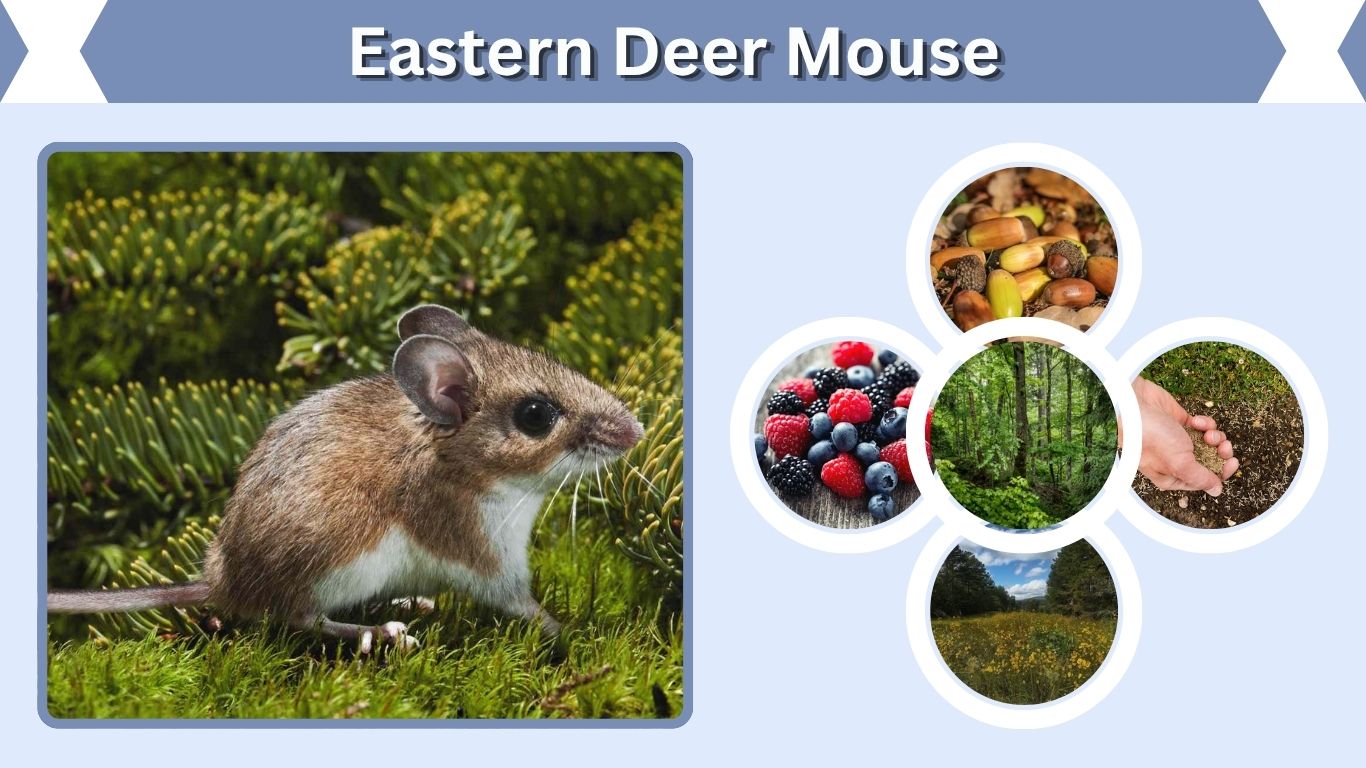
The eastern deer mouse is a small, nocturnal rodent recognized by its large dark eyes, rounded ears, white feet, and sharply two-toned tail. Although it resembles the white-footed mouse, several physical and geographic clues can help distinguish the two. Eastern deer mice are important parts of woodland and grassland ecosystems, but they may become household pests when they enter cabins, sheds, garages, or homes seeking food and shelter.
What Is an Eastern Deer Mouse?
The eastern deer mouse (Peromyscus maniculatus) belongs to the family Cricetidae, which includes New World mice, voles, and hamsters. It is native to eastern and central parts of North America.
Older references often use P. maniculatus for deer mice across most of North America. Current mammal taxonomy generally separates the eastern deer mouse from the western deer mouse, Peromyscus sonoriensis. However, specialists note that parts of this classification remain tentative and may change as additional genetic research becomes available.
Eastern Deer Mouse Identification
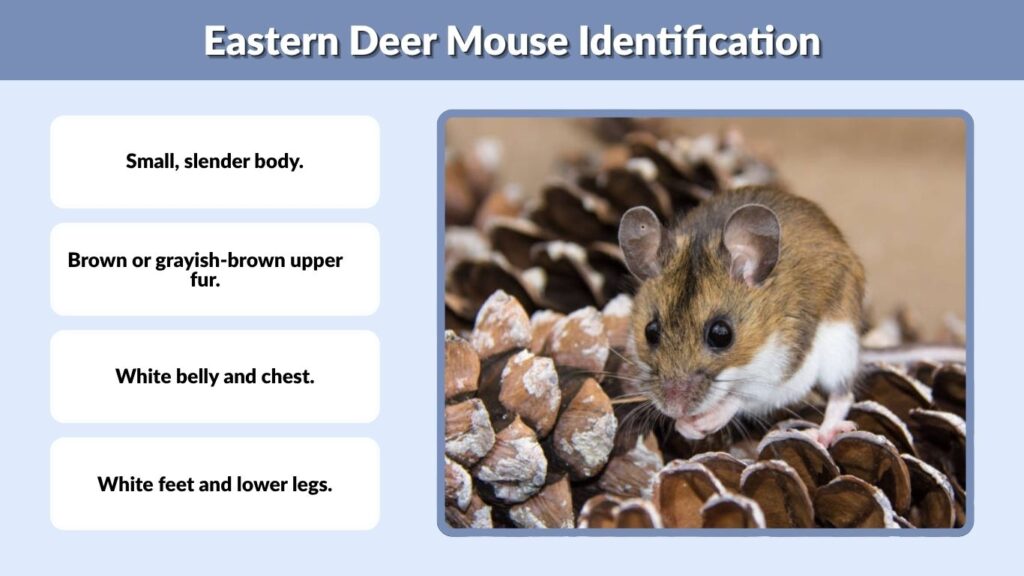
An eastern deer mouse has a neat, two-colored appearance that may resemble a tiny deer. Its upper body is usually brown, reddish brown, or grayish brown, while its feet and underside are white.
Key Identification Features
- Small, slender body
- Brown or grayish-brown upper fur
- White belly and chest
- White feet and lower legs
- Large, rounded ears
- Large, glossy black eyes
- Pointed muzzle with long whiskers
- Long, lightly furred tail
- Tail dark above and white underneath
- Clear dividing line between upper and lower body colors
The strongly bicolored tail is one of the most useful identification clues. However, coloration and proportions vary between populations, making some deer mice difficult to identify from appearance alone.
Eastern Deer Mouse Size
Eastern deer mice are generally similar in size to house mice, although their tails, feet, and ears may appear more prominent.
| Measurement | Approximate range |
| Total length | 4.7–8.7 inches |
| Body weight | 0.35–0.85 ounces |
| Tail length | 1.8–4.1 inches |
| Typical body shape | Small and slender |
Measurements vary by habitat and population. Woodland forms commonly have longer tails and larger feet than mice living in open grasslands. Some government sources describe adult deer mice as approximately 6–8 inches long when the tail is included.
Where Do Eastern Deer Mice Live?
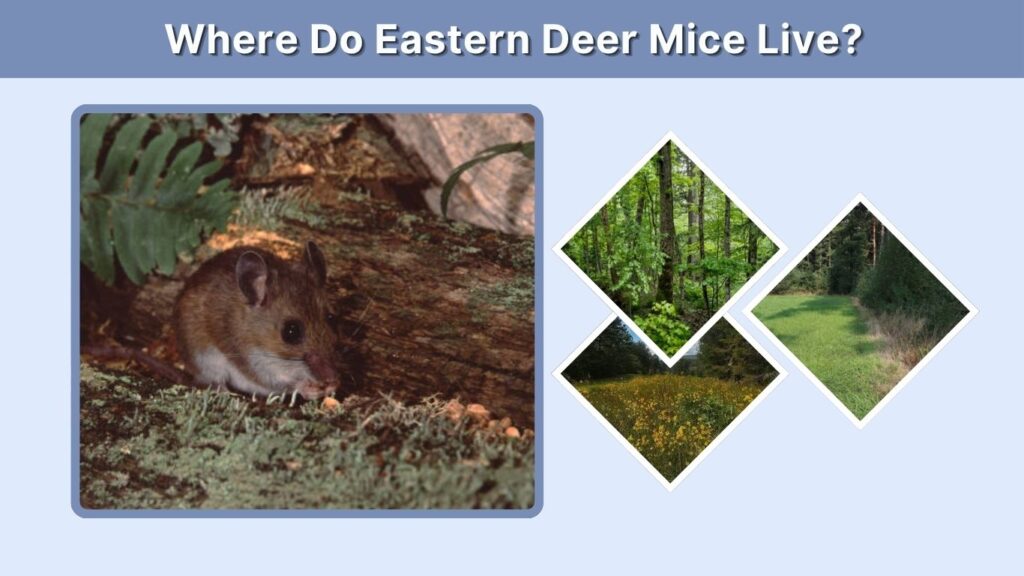
The currently recognized eastern deer mouse occurs from parts of central and eastern Canada southward through much of the eastern United States. Its range extends west toward the Mississippi River and south into portions of Tennessee and North Carolina, although records may vary because of ongoing taxonomic changes.
Natural Habitat
Eastern deer mice can occupy several environments, including:
- Deciduous and mixed forests
- Woodland edges
- Brushy fields
- Prairies and grasslands
- Agricultural land
- Rocky areas
- Lake shores
- Clearings and recently disturbed land
They usually build nests in protected places such as hollow logs, tree cavities, stumps, brush piles, abandoned burrows, rock crevices, or beneath dense vegetation.
Eastern Deer Mice in Buildings
When temperatures fall, deer mice may enter cabins, barns, sheds, garages, storage rooms, and occasionally occupied homes. They build round nests from grass, leaves, shredded paper, insulation, cloth, or other soft materials.
Because they climb well, they may occupy wall voids, drawers, stored boxes, rafters, and other locations above ground level. Their presence is often revealed by droppings, gnawed food packaging, scattered seeds, scratching noises, or damaged insulation.
What Do Eastern Deer Mice Eat?

Eastern deer mice are omnivores that adjust their diet according to season and food availability. Seeds usually form a major part of their diet, but they also consume both plant and animal material.
Common foods include:
- Grass and weed seeds
- Nuts and acorns
- Berries and other fruits
- Grains
- Flowers and plant material
- Beetles and other insects
- Spiders and small invertebrates
- Fungi
During autumn, deer mice may collect seeds and store them in hidden caches for winter. This behavior helps them survive when fresh food becomes difficult to find. Inside buildings, they may feed on cereal, birdseed, pet food, stored grain, crumbs, and other accessible foods.
Behavior and Activity
Eastern deer mice are primarily nocturnal. They normally rest during daylight and become active around dusk, spending the night searching for food and inspecting their territory.
Despite living mainly on the ground, they are capable climbers and jumpers. Their large eyes and ears help them move through dark environments, while their whiskers help them detect nearby objects.
During cold weather, several mice may share one nest to conserve body heat. They can also lower their metabolism and enter short periods of torpor when conditions are particularly cold or food is limited.
Reproduction and Lifespan
Eastern deer mice reproduce quickly when food and weather conditions are favorable. Breeding is most active during warmer months, although reproduction may continue during winter in protected environments.
The gestation period generally lasts about 22–31 days. A litter commonly contains four to six young, although litter sizes ranging from one to eleven have been reported. Newborn mice are pink, hairless, blind, and completely dependent on their mother. Their eyes usually open after approximately two weeks, and they are generally weaned within 25–35 days.
Most wild deer mice live for less than one year because of predation, harsh weather, disease, and food shortages. Individuals protected in captivity may survive for several years.
Eastern Deer Mouse vs. White-Footed Mouse
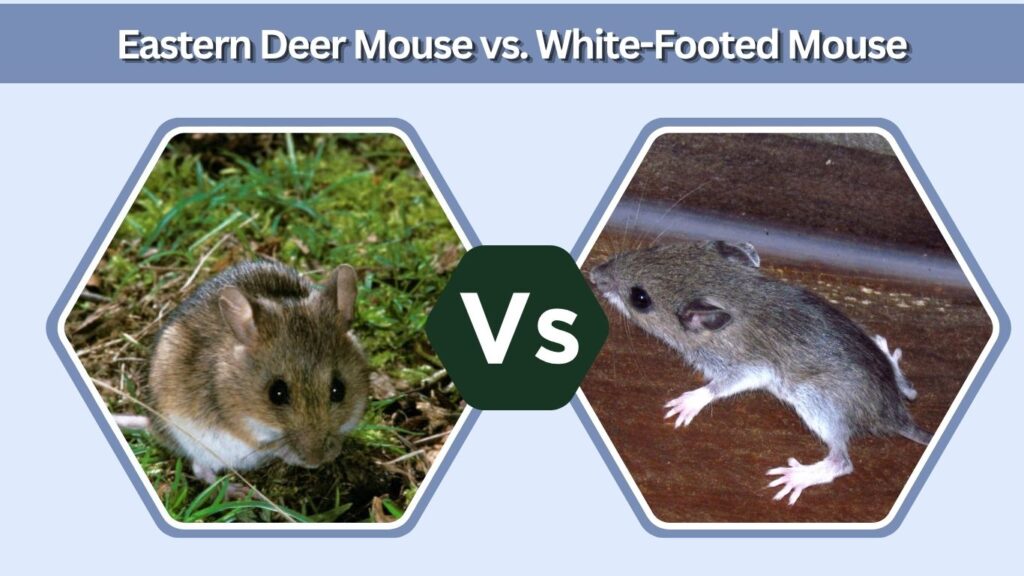
The eastern deer mouse and white-footed mouse can be extremely difficult to distinguish because their ranges overlap and both have brown upper fur with white undersides.
| Feature | Eastern deer mouse | White-footed mouse |
| Tail | Usually sharply two-toned | Color division often less distinct |
| Tail length | Often relatively long | Frequently shorter relative to body |
| Hind feet | Commonly smaller | Often slightly larger |
| Habitat | Forests and open areas | Commonly wooded and brushy habitats |
| Identification | Difficult in overlap zones | Difficult in overlap zones |
Body measurements and color should not be used as absolute identification rules. In some locations, genetic testing or detailed skull and dental examination may be needed for reliable separation.
Are Eastern Deer Mice Dangerous?
Eastern deer mice are not aggressive and normally flee from people. However, wild rodents can contaminate food and surfaces with urine, saliva, nesting material, and droppings. Deer mice and related Peromyscus species are also associated with rodent-borne diseases, so unidentified wild mice should always be handled cautiously.
Finding one mouse does not mean it carries a disease. The main risk occurs when people touch contaminated material or disturb dried waste in a way that sends particles into the air.
Safely Cleaning Mouse Droppings
Do not immediately sweep or vacuum dry droppings. The CDC recommends wearing rubber or plastic gloves, thoroughly soaking waste with disinfectant, leaving it wet for at least five minutes or following the product label, and wiping it up with paper towels.
Clean surrounding hard surfaces afterward and wash your hands when finished. Heavily contaminated buildings, ventilation systems, or enclosed spaces may require professional assistance.
How to Keep Eastern Deer Mice Out
Preventing entry is usually more effective than repeatedly trapping mice. Seal gaps around doors, foundations, pipes, utility lines, vents, siding, and roof edges. Replace damaged screens and install door sweeps where necessary.
Keep birdseed, grain, and pet food inside tightly sealed containers. Remove clutter, brush piles, and stored materials from exterior walls. Indoors, reduce cardboard storage and repair plumbing leaks that provide water.
Snap traps placed along walls may help control a small indoor problem. Avoid handling trapped mice with bare hands, and follow local guidance for humane rodent control and disposal.
Ecological Importance
Eastern deer mice are valuable members of natural ecosystems. They consume insects, spread seeds, and may distribute fungal spores through woodland environments.
They are also an important source of food for owls, snakes, foxes, weasels, coyotes, bobcats, and other predators. Their abundance helps support many animals higher in the food chain.
FAQs
Is an Eastern Deer Mouse the Same as a House Mouse?
No. The eastern deer mouse has white feet, a white belly, large eyes, and a distinctly two-colored tail. A house mouse generally has dull gray or brown fur, a nearly hairless tail, and less contrast between its back and underside.
Do Eastern Deer Mice Enter Homes?
Yes. They sometimes enter homes, cabins, sheds, barns, and garages, especially during cold weather. They seek protected nesting sites and reliable food. Sealing openings and storing food in rodent-resistant containers can reduce the chance of an infestation.
What Does an Eastern Deer Mouse Eat?
Its diet includes seeds, nuts, fruits, grains, insects, spiders, fungi, and other available foods. It may store seeds during autumn. Indoors, it can eat birdseed, cereal, pet food, crumbs, and poorly protected stored products.
Are Eastern Deer Mice Active During the Day?
They are mainly nocturnal and are most active from dusk through the night. A mouse seen during daylight may have been disturbed, may be searching for food, or could be living in an area with a large rodent population.
Can Eastern Deer Mice Carry Hantavirus?
Deer mice and related wild rodents can carry hantaviruses, although most individual mice are not necessarily infected. Avoid touching wild mice or their waste. Never sweep or vacuum dry droppings before thoroughly wetting them with an appropriate disinfectant.