
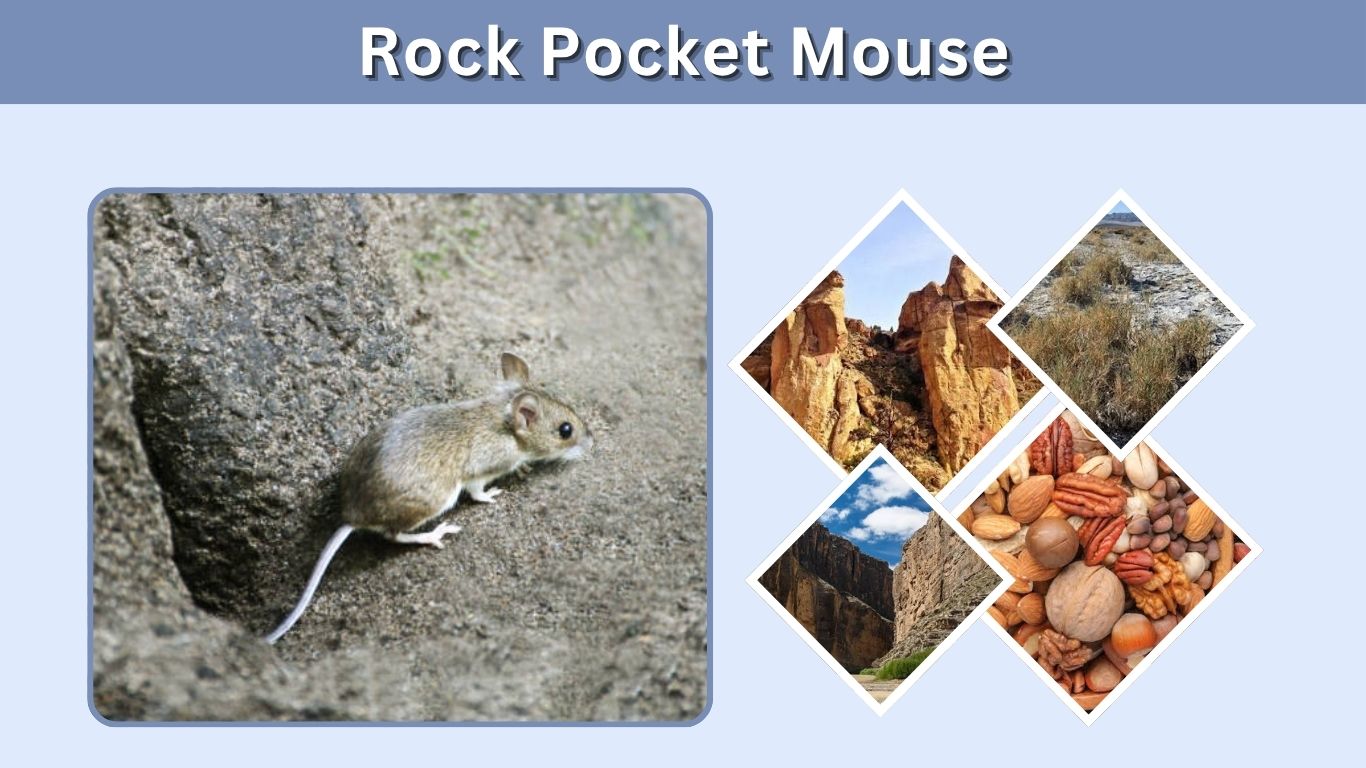
The rock pocket mouse is a small desert rodent famous for demonstrating evolution by natural selection. Populations living on pale desert rocks usually have light fur, while many mice living on dark volcanic lava have dark coats. This color variation helps the animals blend into their surroundings and avoid predators. Research on these mice has connected habitat, inherited mutations, allele frequencies, camouflage, survival, and reproduction in one of biology’s clearest real-world examples of adaptation.
Rock Pocket Mouse Overview
The rock pocket mouse, Chaetodipus intermedius, belongs to the family Heteromyidae, which includes pocket mice and kangaroo rats. It lives mainly in rocky desert regions of the southwestern United States and northern Mexico. The species is strongly associated with cliffs, canyons, rocky slopes, boulder fields, and old lava flows.
| Characteristic | Information |
| Scientific name | Chaetodipus intermedius |
| Family | Heteromyidae |
| Average total length | Around 7 inches or 18 centimeters |
| Typical weight | Approximately 12–18 grams |
| Activity | Nocturnal |
| Primary food | Seeds |
| Main habitat | Rocky deserts and lava flows |
| Common coat colors | Light tan, brown, gray, or nearly black |
| Major predators | Owls and other visual predators |
Average specimens measure approximately 180 millimeters from nose to tail and weigh about 12–18 grams. Their tails are generally longer than the head-and-body portion, helping them move across uneven rocks.
What Does a Rock Pocket Mouse Look Like?
Rock pocket mice have relatively large eyes, rounded ears, long tails, and coarse fur. Their bodies are small enough to enter narrow spaces between rocks, where they hide from predators and harsh daytime conditions.
Identification
A rock pocket mouse can be recognized by:
- A small, slender body
- A long, lightly haired tail
- Large dark eyes suited to nighttime activity
- Rounded ears
- Coarse or slightly spiny fur
- Pale underparts
- External fur-lined cheek pouches
- Light tan, gray, brown, or black upper fur
- Strong hind legs for moving across rocky ground
The “pocket” in its name refers to external cheek pouches rather than a skin pocket on its body. These pouches allow the mouse to carry seeds back to a protected burrow or storage location.
Light and Dark Rock Pocket Mice
Most rock pocket mice have light-colored fur that matches pale granite, sand, and desert rocks. However, dark or melanic mice occur on several black lava flows in Arizona and New Mexico. Their fur contains more dark pigment, making them much less visible against basalt.
Light and dark mice belong to the same species. Their color difference is an inherited phenotype rather than evidence that they are separate species.
Rock Pocket Mouse Habitat
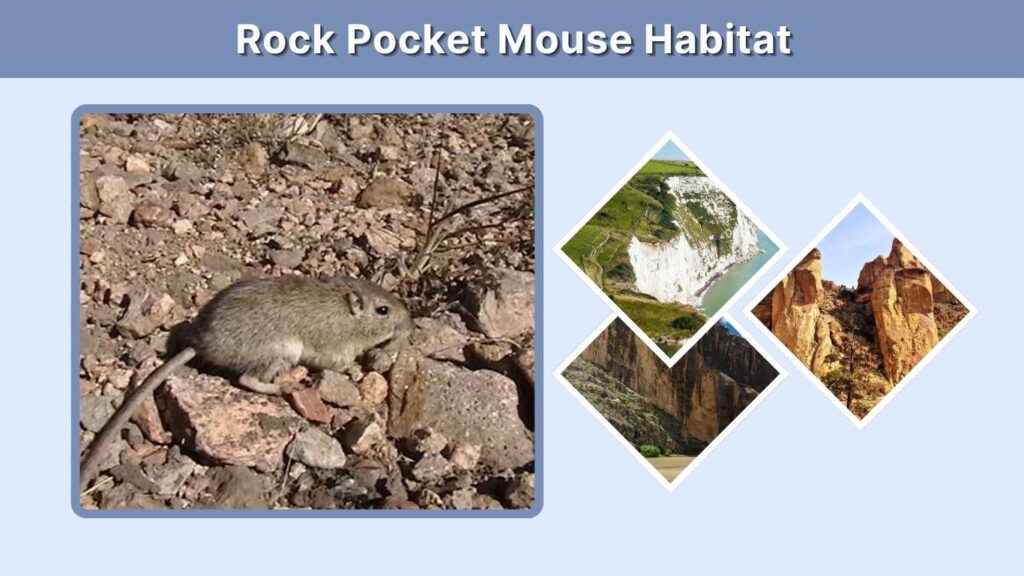
Rock pocket mice inhabit dry environments containing exposed rocks, cliffs, rocky gullies, canyon walls, talus slopes, and volcanic formations. They commonly shelter in crevices or construct small burrows beneath rocks.
Life on Lava Flows
Volcanic eruptions created patches of dark basalt surrounded by much lighter desert terrain. These contrasting surfaces produced different camouflage conditions.
A light mouse is difficult to see on pale ground but conspicuous on black lava. A dark mouse receives the opposite advantage: it is well concealed on basalt but easier to detect on light-colored rocks. This relationship between coat color and substrate is central to the mouse’s evolutionary history.
Nocturnal Behavior
Rock pocket mice are mainly active at night. They emerge to collect food and move between rocks while avoiding extreme daytime temperatures. Darkness provides some protection, but moonlight and open ground can still expose poorly camouflaged mice to predators.
What Do Rock Pocket Mice Eat?
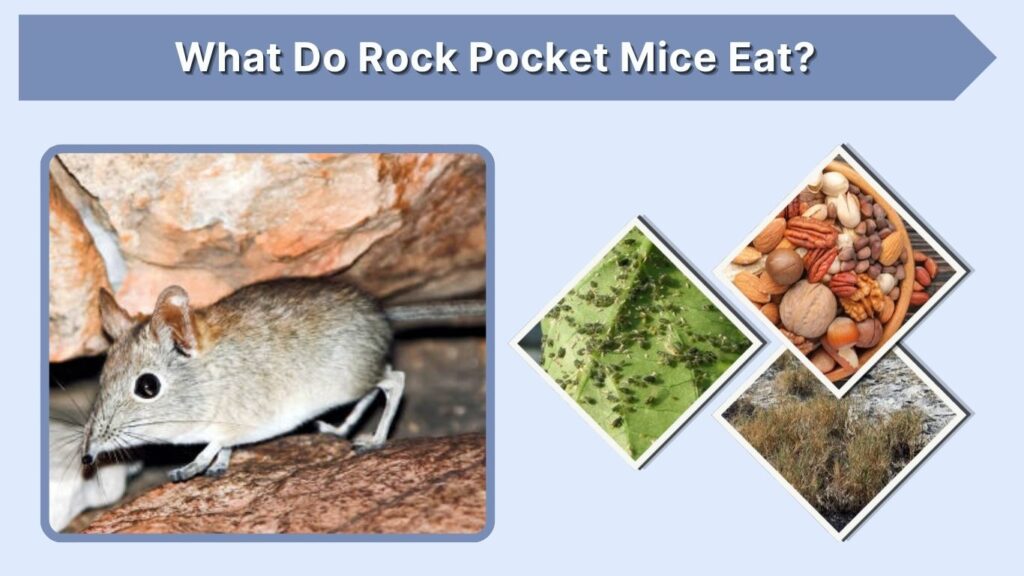
Rock pocket mice primarily eat seeds from desert grasses, shrubs, and annual plants. They gather food with their front feet and carry it in their external cheek pouches.
Seeds may be eaten immediately or transported to a sheltered site. This behavior allows the mice to forage efficiently while limiting the amount of time spent in exposed areas. Other plant material and small insects may supplement their seed-based diet.
Rock Pocket Mouse Predators
Owls are important predators of rock pocket mice, although snakes, mammals, and other birds may also capture them. Visual predators are more likely to detect a mouse whose coat contrasts sharply with the ground. Experimental and field-based work has therefore focused heavily on predation as the selective pressure favoring camouflage.
Color does not make a mouse stronger or faster. Its advantage comes from reducing the probability that a predator will notice and attack it.
Rock Pocket Mouse Natural Selection
Rock pocket mice demonstrate how heritable variation can produce evolutionary change when individuals experience different survival and reproductive success.
Variation Exists Within Populations
A population does not suddenly change because mice decide to match their environment. Genetic mutations first create inherited differences in coat color. Some individuals are lighter, while others are darker.
Mutations arise without considering what the animal needs. Natural selection then acts on the resulting variation. A mutation that improves camouflage may become more common because its carriers are more likely to survive and reproduce.
The Environment Selects Phenotypes
On pale rocks, light mice are generally better concealed. Predators remove a higher proportion of conspicuous dark individuals, so light-colored mice tend to leave more offspring.
On black lava, dark fur provides better concealment. Over multiple generations, dark mice may survive and reproduce at higher rates, causing dark-color alleles to increase in the population. HHMI simulations show that even a modest inherited advantage can substantially change a population within relatively few generations.
Populations Evolve, Not Individual Mice
An individual mouse does not change its inherited coat color to survive. Evolution occurs when the frequencies of inherited variants change across generations.
A population that was initially composed mostly of light mice can become predominantly dark if dark individuals repeatedly produce more surviving offspring. This change in the population’s genetic composition is evolution.
Genes and Mutations Behind Dark Fur
Researchers examined pigmentation genes to determine how dark coats evolved. One important gene is Mc1r, which affects the pathway controlling pigment production.
The Mc1r Gene
In one Arizona population, researchers found a strong association between changes in the Mc1r gene and dark fur. The altered gene affects the MC1R protein and increases the production of dark pigment in the hairs.
However, Mc1r does not explain every dark population. Research on mice from New Mexico found that dark coloration had evolved independently and could involve different genetic changes. Similar dark phenotypes can therefore arise through mutations in different genes.
Mutation Does Not Occur Because of Lava
The arrival of dark lava did not intentionally cause mice to produce useful mutations. Coat-color mutations could occur before or after lava formed. Once a dark mutation was present, the new environment determined whether it was beneficial, harmful, or nearly neutral.
This distinction is essential: mutation produces variation, while natural selection changes how common that variation becomes.
Allele and Phenotype Frequencies
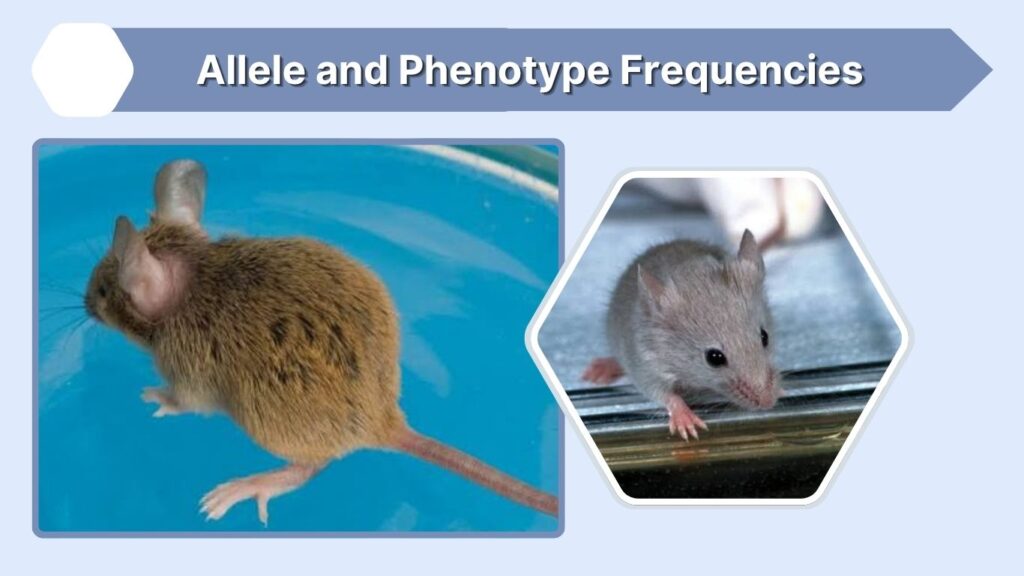
An allele is a version of a gene, while a phenotype is an observable trait, such as light or dark fur.
A population may contain:
- Alleles associated with light pigmentation
- Alleles associated with dark pigmentation
- Light-coated phenotypes
- Dark-coated phenotypes
When dark mice have greater fitness on lava, dark-associated alleles are passed to more offspring. Their frequency rises over time. On pale ground, the same dark phenotype may reduce fitness and remain rare.
Reading Rock Pocket Mouse Graphs
Graphs used in rock pocket mouse activities usually compare the proportion or number of light and dark mice across locations or generations.
A rising dark bar on black lava indicates that the dark phenotype is becoming more frequent. It does not show that individual mice are changing color. Instead, it represents differences in survival and reproduction across generations. HHMI activities use these patterns to connect field observations with allele-frequency changes.
Why the HHMI Rock Pocket Mouse Study Matters
HHMI BioInteractive uses the rock pocket mouse to show the complete chain of evidence behind adaptation:
- Mice vary in coat color.
- Coat color is heritable.
- Different habitats favor different colors.
- Predators create a survival difference.
- Surviving mice produce offspring.
- Beneficial alleles become more frequent.
- Population appearance changes over generations.
The case is valuable because scientists can connect a visible characteristic to habitat, predation, DNA mutations, protein function, inheritance, and changing population frequencies.
FAQs
Why does a rock pocket mouse’s color influence its fitness?
Coat color affects how easily predators can detect the mouse. A mouse whose fur closely matches its surroundings is more likely to avoid capture, survive, and produce offspring. Fitness therefore depends on the relationship between the inherited phenotype and the habitat.
Did lava turn light rock pocket mice black?
No. Lava did not directly change individual mice from light to dark. Random inherited mutations produced color variation. On dark lava, natural selection favored mice with better camouflage, causing dark-associated genetic variants to become more common over generations.
Are dark rock pocket mice a different species?
Light and dark rock pocket mice are color forms of Chaetodipus intermedius. They can belong to neighboring populations of the same species. Their contrasting appearance results from inherited pigmentation differences and selection in habitats with differently colored surfaces.
What is the main adaptation of the rock pocket mouse?
Its best-known adaptation is concealing coat coloration. Light fur provides camouflage on pale desert rocks, while dark fur provides camouflage on black volcanic basalt. The advantageous color depends on the environment rather than one color being universally superior.
What does the rock pocket mouse prove about evolution?
The species provides strong evidence that mutation, inheritance, predation, and differential reproduction can change populations. Scientists have connected coat-color phenotypes with particular genetic changes and shown how local environments favor different inherited variants through natural selection.