
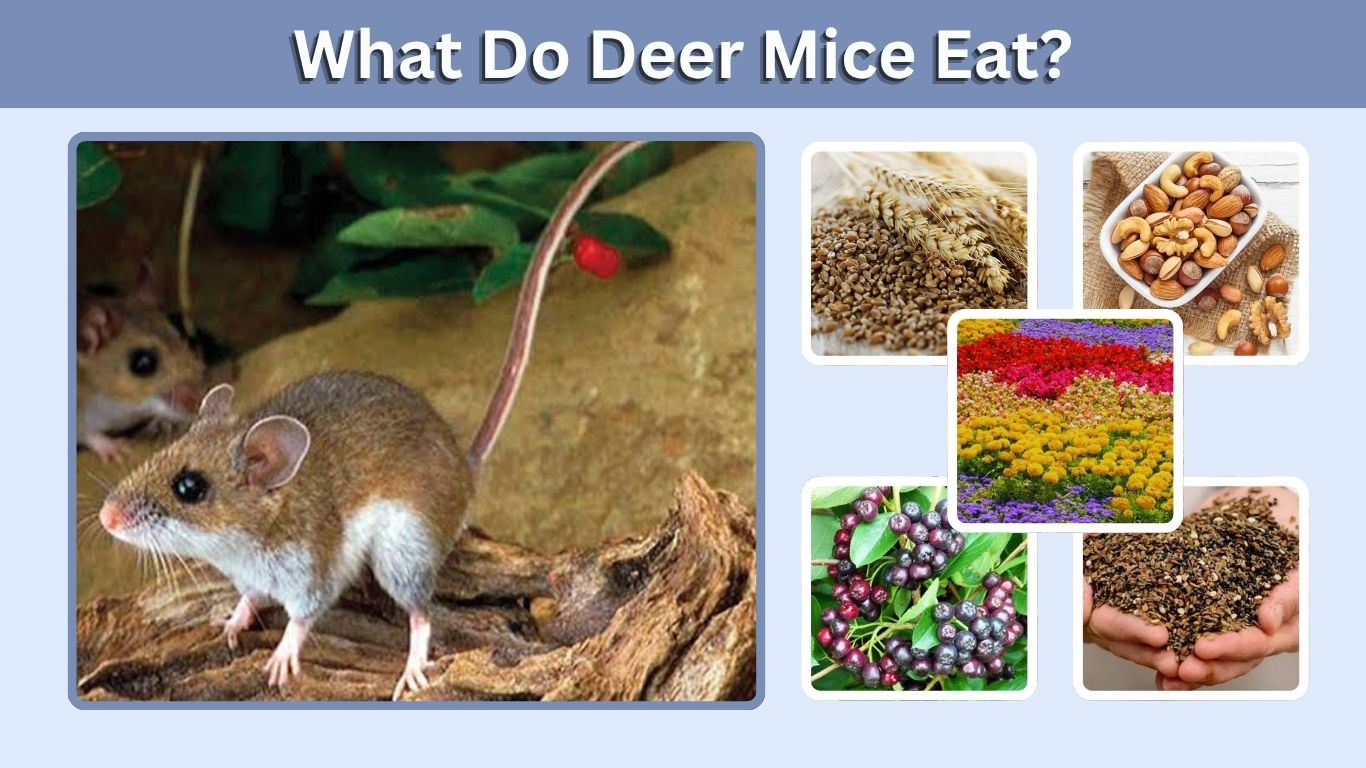
Deer mice are adaptable omnivores that eat both plant and animal matter. Seeds, nuts, fruits and insects form much of their natural diet, but the exact menu changes with habitat, season and food availability. These small North American rodents forage mainly at night and often carry extra food back to hidden storage sites. Their flexible feeding habits help them survive in forests, grasslands, farms, deserts and areas near human buildings.
Deer Mouse Diet at a Glance
| Diet feature | Details |
| Diet type | Omnivore |
| Main foods | Seeds, nuts, fruit and insects |
| Feeding time | Mostly at night |
| Foraging area | Ground, shrubs and low branches |
| Seasonal behavior | Stores food during autumn |
| Scientific name | Peromyscus maniculatus |
10 Foods Deer Mice Eat
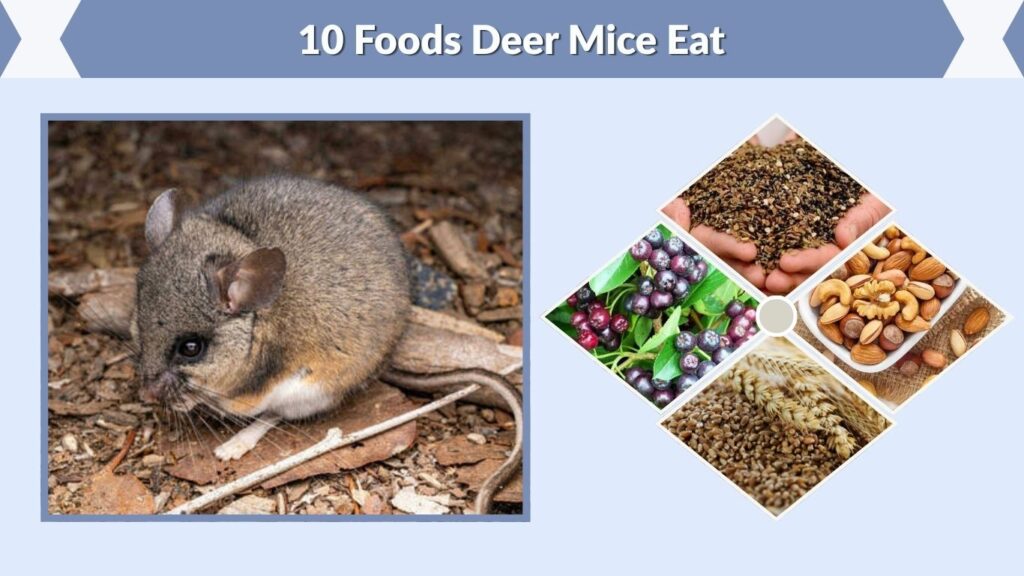
Deer mice take advantage of whatever nutritious foods are locally available. Plant foods supply carbohydrates and fats, while insects and other invertebrates provide protein. Their diet may change significantly between warm and cold seasons.
1. Seeds
Seeds are among the most important deer mouse foods. They collect seeds from grasses, weeds, wildflowers, shrubs and trees. Small seeds are easy to transport, hide and store for later use.
Deer mice may carry seeds in their mouths to protected feeding areas. Some are eaten immediately, while others are placed in caches beneath logs, inside burrows or in other concealed locations.
2. Nuts
Deer mice eat several kinds of nuts when they can find them. Acorns and other tree nuts provide concentrated fat and energy, making them especially valuable during autumn and winter.
A mouse may gnaw through the shell before eating the softer material inside. It may also move small nuts or pieces of larger nuts into a nest or food-storage site. Nuts help deer mice prepare for periods when insects and fresh vegetation become scarce.
3. Grains
Wild and cultivated grains can become an important part of the diet, particularly around farms, barns and grain-storage buildings. Deer mice may eat corn, oats, wheat and other cereal grains.
Their attraction to stored grain sometimes brings them into contact with people. They can enter buildings through very small openings and contaminate food with droppings or urine, so grain should be kept in secure, rodent-resistant containers.
4. Berries
Deer mice eat wild berries growing near the ground or within climbing distance. Depending on their location, they may find blackberries, raspberries, blueberries, elderberries and other soft fruits.
Berries provide water, natural sugars and plant nutrients. They become especially useful during summer and early autumn when many fruiting plants are productive. Deer mice may eat the flesh while also consuming or carrying away the seeds.
5. Other Fruits
In addition to berries, deer mice consume other available fruits. Wild cherries, apples and fallen orchard fruit may attract them.
They usually take small bites rather than consuming a large fruit at once. Fallen fruit is particularly accessible because deer mice spend much of their time foraging on or close to the ground. Fruit availability varies by habitat and season, so it may be a major food temporarily rather than throughout the year.
6. Insects
Deer mice regularly eat insects, making their diet different from that of a strict seed eater. Beetles, grasshoppers, moths, crickets and other small insects may be captured when encountered.
Insects provide protein needed for growth, reproduction and maintaining body condition. They may become especially important during warmer months when active insects are abundant. Research on deer mouse diets commonly describes them as mixed feeders that use both seeds and insect prey.
7. Insect Larvae
Caterpillars, beetle larvae and other immature insects are soft-bodied prey that deer mice can capture and eat. Larvae may be found beneath leaves, inside decaying wood, under bark or near plant roots.
These foods are rich in protein and are generally easier to handle than some adult insects. A deer mouse uses its sensitive nose, hearing and whiskers to investigate litter and other potential feeding sites.
8. Spiders and Other Invertebrates
Deer mice also consume non-insect invertebrates, including spiders and other small arthropods. The exact prey available depends on whether the mouse lives in a forest, grassland, desert or agricultural environment.
Animal prey usually complements rather than replaces seeds and other plant foods. This ability to switch between food sources helps deer mice survive when one part of their diet becomes temporarily unavailable.
9. Flowers and Green Vegetation
Flowers, leaves, shoots and other soft plant materials may be eaten when available. Fresh vegetation can supply moisture and nutrients, especially during spring and early summer.
However, deer mice are not grazing animals. Green plants generally form only part of a varied diet that also includes seeds, fruits and invertebrates. Utah State University lists vegetation among their regular food categories.
10. Fungi
Deer mice may consume mushrooms and other fungi found on or beneath the forest floor. While foraging, they can transport fungal spores to new locations.
This behavior gives deer mice an ecological role beyond simply eating. They help disperse the spores of mycorrhizal fungi, which form important relationships with plant roots and contribute to forest health. Deer mice also disperse some plant seeds through their feeding and caching activities.
How Does Their Diet Change by Season?
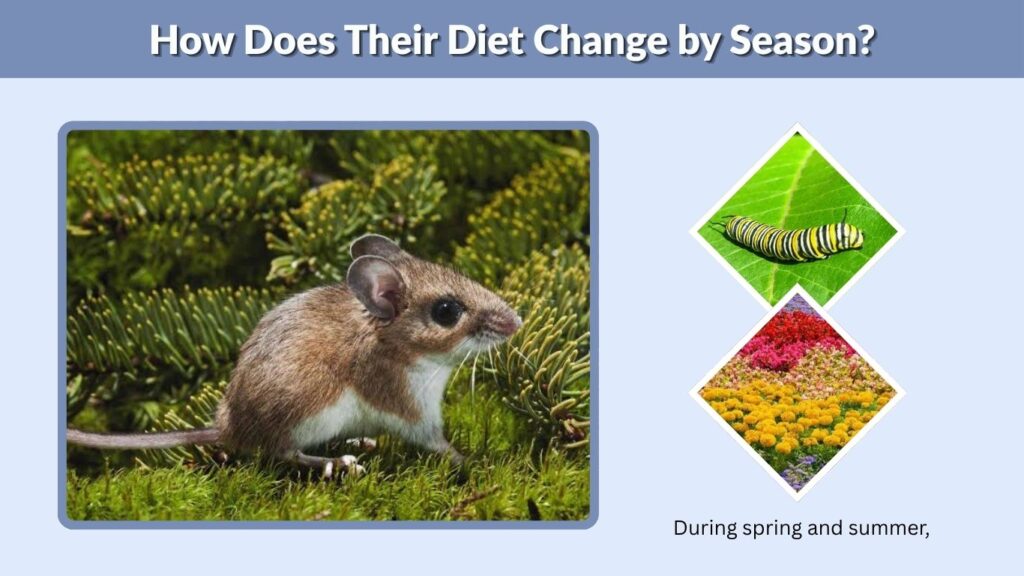
During spring and summer, deer mice have greater access to insects, flowers, fresh vegetation, berries and other fruits. These foods support breeding and the rapid development of young mice.
In autumn, seeds, grains and nuts become particularly important. Deer mice often gather more food than they can immediately consume and store it in protected caches. This behavior helps them survive winter, when fresh food and active insects become harder to find.
Food availability can even influence deer mouse populations. National Park Service monitoring found that rainfall affects plant growth and therefore the resources available to mice; drought can reduce vegetation and limit mouse productivity.
How Much Does a Deer Mouse Eat?
The exact amount varies according to the mouse’s size, age, reproductive condition, temperature and type of food. Deer mice weigh only about 10–24 grams, but they need regular access to energy-rich foods because of their small size and active nighttime lifestyle.
They do not necessarily eat every food item immediately. Much of their foraging activity involves moving and storing seeds or nuts for future use.
What Animals Eat Deer Mice?
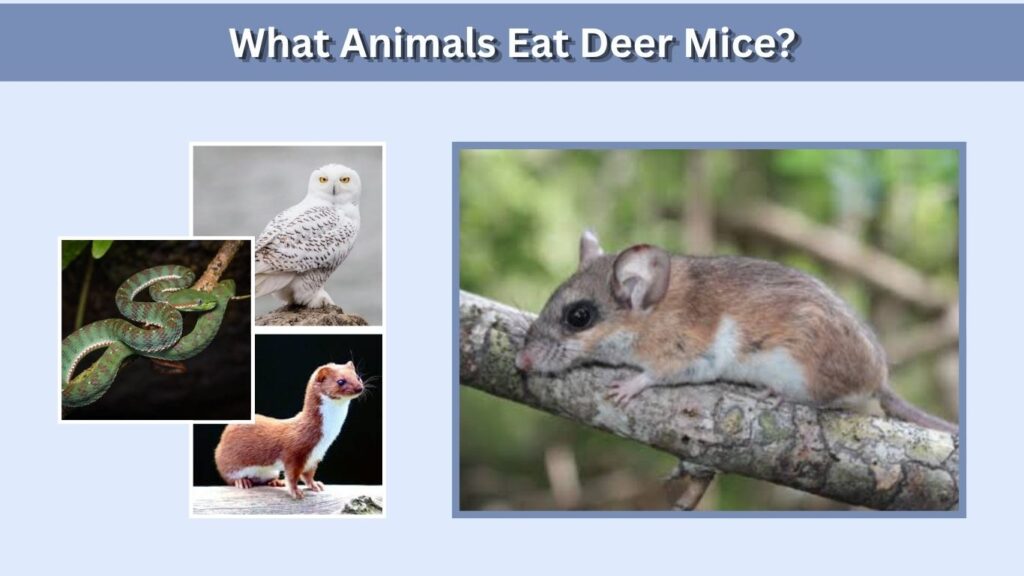
Deer mice are important prey in North American food webs. Common predators include:
- Owls
- Snakes
- Weasels
- Foxes
- Coyotes
- Bobcats
Because deer mice are most active at night, nocturnal hunters such as owls, snakes and carnivorous mammals pose particularly significant threats. Their brown or gray upper fur helps them blend into soil, grass and leaf litter.
Deer Mouse vs. Mouse-Deer
A deer mouse is a small North American rodent in the genus Peromyscus. A mouse-deer, also called a chevrotain, is a tiny hoofed mammal found in parts of Asia and Africa.
Mouse-deer mainly browse on plant matter such as leaves, shoots and fallen fruit. Therefore, searches about what a mouse-deer eats refer to an entirely different animal.
Do Deer Eat Mice?
Deer primarily eat plants, and mice are not a normal or important part of their diet. However, scientific observations show that white-tailed deer sometimes consume animal matter, including vulnerable bird nestlings. This suggests that rare, opportunistic consumption of a small animal is possible, but it should not be described as routine deer feeding behavior.
FAQs
Do deer mice eat insects?
Yes. Deer mice consume insects and other small invertebrates as protein sources. Beetles, caterpillars, crickets and similar prey may be eaten, especially during warmer months when insects are plentiful.
Do deer mice eat meat?
They eat animal matter in the form of insects, spiders and other small invertebrates. Deer mice are omnivores rather than strict herbivores, although seeds, nuts, fruits and other plant foods make up much of their diet.
What do white-footed mice eat?
White-footed mice have a broadly similar omnivorous diet that includes seeds, nuts, fruits and invertebrates. They closely resemble deer mice, and the two can be difficult to distinguish in areas where their ranges overlap.
Do deer mice store food?
Yes. Deer mice frequently collect seeds and nuts and hide them in protected caches. Food storage is particularly important in autumn because it provides supplies during colder periods when fresh food is less available.
What attracts deer mice to a house?
Stored grains, seeds, pet food, crumbs and accessible rubbish can attract deer mice. They may also enter buildings seeking warmth and shelter during cold weather. Keeping food sealed and closing exterior gaps can make a property less attractive to them.