
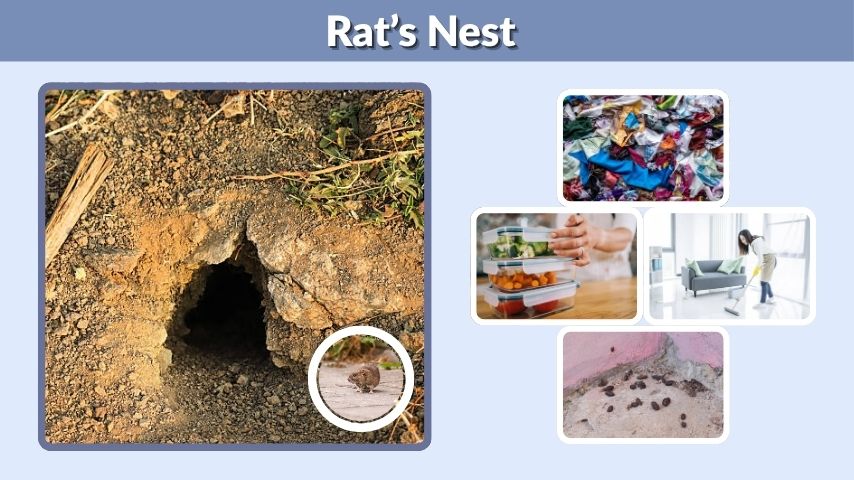
Rats are highly adaptive creatures that often remain hidden until infestations are significant. Their nests serve as safe shelters for resting, breeding, and storing food. Identifying a rat’s nest early can prevent property damage, reduce health risks, and make eradication more effective.
This step-by-step guide explains how to recognize a rat’s nest, the materials rats use, common nesting locations, and signs of activity. By understanding these features, homeowners can take action safely and prevent future infestations.
Understanding Rat Nests
Rat nests are carefully constructed shelters that provide warmth, safety, and breeding space. They are typically hidden in secluded areas and built using available materials. Recognizing their purpose and structure helps homeowners distinguish nests from debris or other small animal shelters and enables prompt action before an infestation worsens.
Purpose of Rat Nests
Rat nests protect rats from predators and extreme weather while providing a place to raise young. A well-maintained nest ensures survival and efficient reproduction.
Types of Rats and Nesting Habits
- Norway Rats: Build burrows close to the ground or indoors near basements.
- Roof Rats: Prefer elevated, dry locations like attics or roof spaces.
- Field Rats: Often nest outdoors using natural materials like leaves or grass.
Typical Nest Locations
Rats seek quiet, undisturbed areas with easy access to food. Indoor nests are often in walls, attics, or behind stored items, while outdoor nests may be under debris, sheds, or dense vegetation.
Materials Used in Rat Nests
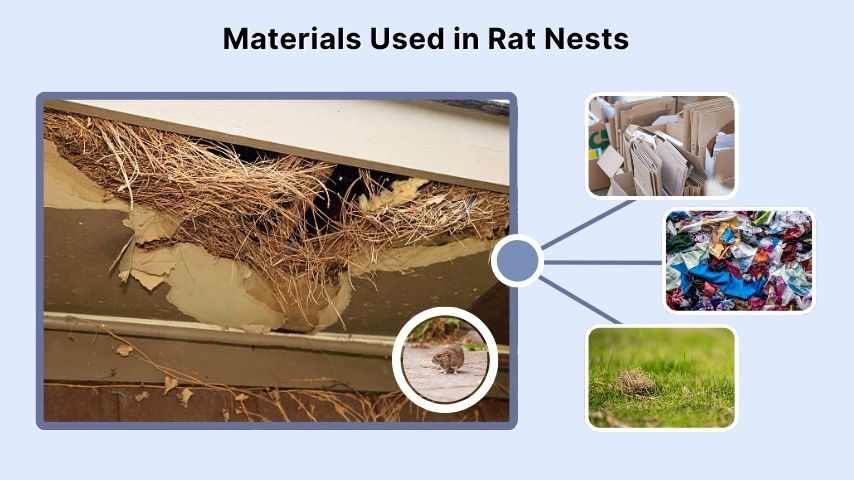
Rats use a variety of materials to build nests, typically soft, fibrous, and insulating. They can incorporate household items along with natural materials. Identifying these materials helps distinguish a rat’s nest from other small animal habitats or clutter.
Common Nesting Materials
- Shredded paper or cardboard
- Fabric scraps or insulation
- Leaves, grass, and twigs
Household Items Used by Rats
Rats often use cloth, string, or packing materials from human storage areas. These provide warmth and structure to the nest.
Natural Materials (Leaves, Grass, Paper)
Outdoor nests may rely heavily on leaves, twigs, and other plant matter. Paper or cardboard may also be brought from nearby human activity for insulation.
Signs of a Rat Nest
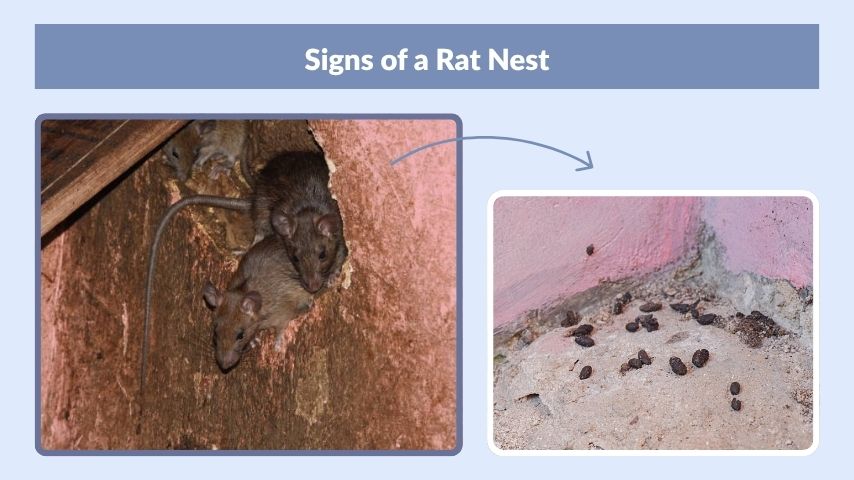
Even hidden nests leave traces that alert homeowners. Identifying these signs early is crucial for timely control measures. Droppings, gnaw marks, and unusual smells are key indicators of a nearby nest.
Droppings Around the Nest
Small, dark, pellet-like droppings often accumulate near the entrance of a nest or along travel paths.
Gnaw Marks and Chewed Materials
Rats constantly gnaw to maintain their teeth. Look for damaged wires, wood, or paper near suspected nest areas.
Footprints or Tail Marks
Dusty or flour-dusted areas may reveal small footprints or tail drag marks, showing regular rat activity near the nest.
Visual Characteristics of a Rat Nest
Rat nests have distinct shapes, sizes, and structural arrangements that differentiate them from bird nests or other small animal shelters. Knowing these characteristics helps in accurate identification, even in concealed locations.
Size and Shape of the Nest
Rat nests are usually round or dome-shaped, roughly 6–12 inches in diameter, though sizes vary depending on the number of rats and materials used.
Interior Structure
Inside, nests often have a soft lining of shredded paper, cloth, or plant fibers forming a central chamber for resting or raising pups.
Common Nesting Patterns
Rats build multiple interconnected nests if space allows. In indoor infestations, nests may be stacked or tucked into wall cavities and behind furniture.
Rat Nests Locations Indoors
Indoor nests are strategically placed in quiet, undisturbed areas. Recognizing these preferred locations can help homeowners safely inspect high-risk zones without disturbing the rats or risking bites or exposure to pathogens.
Attics and Ceilings
Roof rats favor high, dry spaces like attics or ceiling corners. Nests are often tucked into insulation or behind stored boxes.
Wall Cavities and Behind Cabinets
Rats use empty wall spaces or gaps behind furniture for hidden nesting. Small openings near pipes or vents can lead to extensive nest areas.
Basements and Storage Areas
Norway rats prefer ground-level storage areas, basements, or spaces with cardboard boxes and clutter where they can build concealed nests.
Rat Nests Locations Outdoors
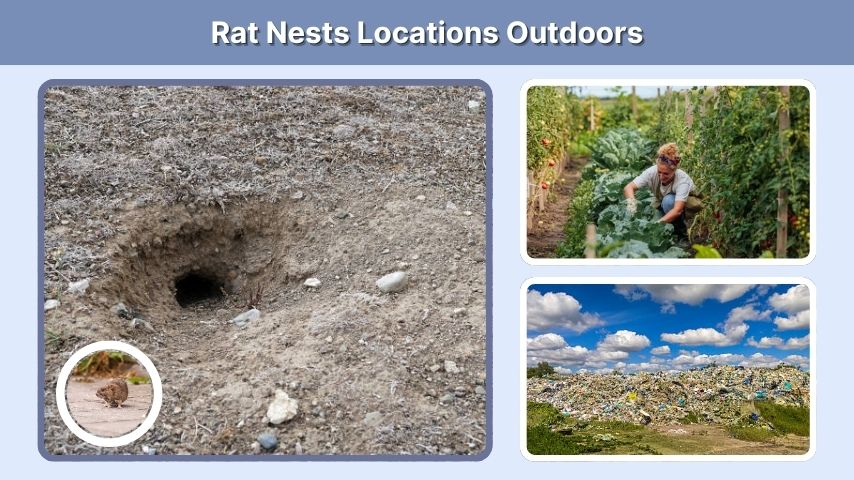
Outdoor nests are usually built close to food sources, shelter, and areas that provide cover from predators. Understanding where rats typically nest outside can help homeowners spot early signs and prevent infestations from spreading indoors.
Gardens and Compost Piles
Rats often nest in dense vegetation or compost heaps where food is plentiful and concealment is easy.
Under Sheds or Debris
Nests may be constructed under garden sheds, woodpiles, or piles of debris. These spaces provide protection from weather and predators.
Burrows and Ground Holes
Some rats dig burrows in the soil, lining them with shredded materials for insulation. These burrows often have multiple entrances and are usually near food sources.
Rat Behavior Around Nests
Rats are nocturnal, territorial, and highly organized around their nests. Observing their habits, such as food transport and maintenance routines, helps in locating nests and understanding infestation patterns.
Food Storage and Hoarding
Rats often store food near their nests for easy access during nighttime activity. Look for chewed packaging or small piles of grains or pet food.
Nocturnal Activity Patterns
Rats are primarily active at night, making sounds like scratching or squeaking near nests while humans are asleep.
Nest Maintenance Behaviors
Rats continuously repair and reinforce nests with new materials, keeping the interior insulated and secure.
Identifying Rat Species by Nest
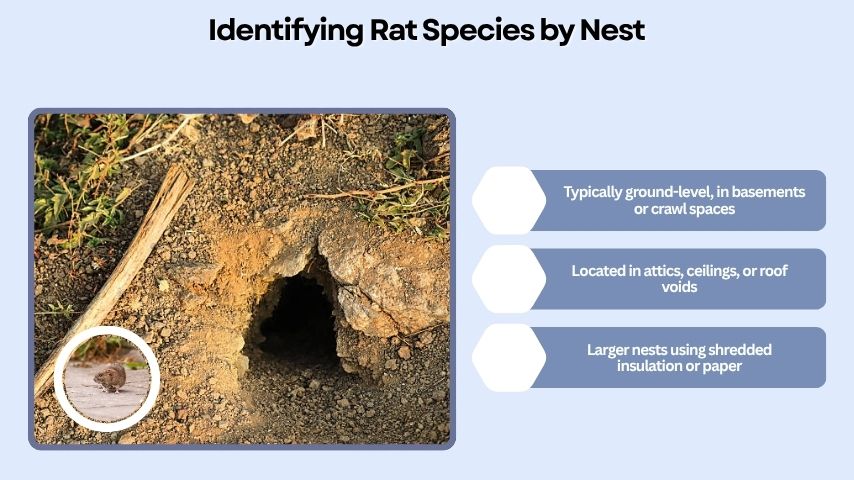
Different rat species build nests in characteristic ways. Knowing species-specific nesting habits helps homeowners target control measures effectively and predict nesting locations.
Norway Rat Nests
- Typically ground-level, in basements or crawl spaces
- Larger nests using shredded insulation or paper
Roof Rat Nests
- Located in attics, ceilings, or roof voids
- Smaller, elevated nests built with plant fibers or cloth
Differences in Material and Location
Species-specific preferences include elevation, type of lining, and proximity to food sources, which helps distinguish roof rats from Norway rats.
Smell and Sound Indicators
Rat nests often emit distinct odors and subtle sounds. Recognizing these sensory cues can confirm the presence of a nest, even when it is hidden behind walls or debris.
Musty or Ammonia-like Smell
Accumulation of urine and droppings produces a strong odor, often detectable near active nests.
Rustling or Movement Sounds
Scratching, squeaking, and rustling noises are common, especially at night when rats are active.
Seasonal Activity Differences
Rats may be more active indoors during colder months, intensifying the smell and sound cues of nesting.
Safety Tips When Inspecting Nests
Inspecting rat nests carries health risks due to droppings and potential pathogens. Protective measures are necessary to prevent exposure to disease while identifying or cleaning nests.
Protective Gear Recommendations
Wear gloves, masks, and long sleeves to minimize contact with urine, feces, and nesting materials.
Safe Inspection Techniques
Avoid reaching into the nest. Use a flashlight to look from a distance and inspect without disturbing rats.
Avoiding Direct Contact
Never touch nests or droppings with bare hands, and wash hands thoroughly after any inspection.
Preventing Rat Nests at Home
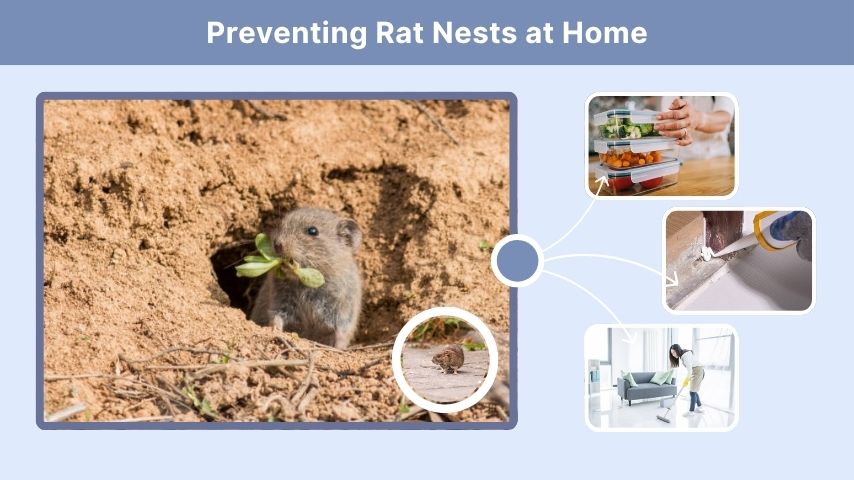
Prevention is easier than dealing with an active infestation. Proper housekeeping, sealing entry points, and controlling food sources reduce the chances of rats building nests in or around homes.
Food Storage Practices
Store food in airtight containers, clean up crumbs, and avoid leaving pet food out overnight.
Sealing Gaps and Holes
Close openings around doors, windows, pipes, and vents to prevent rats from entering the home.
Regular Cleaning and Yard Maintenance
Keep yards tidy, remove debris, and trim vegetation to eliminate hiding spots for rats.
Signs of Infestation Beyond the Nest
Rat activity often produces secondary signs that help detect infestations early, even if the nest is not directly visible.
Chewed Wires and Furniture
Gnawing can damage electrical wiring, furniture, and stored items, indicating nearby rat activity.
Droppings in Multiple Locations
Scattered droppings beyond the nest show rats are actively exploring and feeding.
Unusual Noises at Night
Scratching or squeaking sounds in walls or ceilings signal nocturnal rat movements.
FAQs
What does a rat’s nest look like inside?
Rat nests are usually dome-shaped, 6–12 inches wide, and lined with shredded paper, cloth, or plant fibers. The central chamber is soft and insulated for resting and raising young.
Where are rat nests commonly found indoors?
Indoor nests are often in attics, wall cavities, basements, or behind furniture and stored boxes—any quiet, undisturbed space with access to food.
Can you tell which type of rat built the nest?
Yes. Norway rats prefer ground-level nests with shredded insulation, while roof rats build smaller, elevated nests using plant fibers or cloth. Location and materials help distinguish species.
How can I identify a nest without seeing the rats?
Look for droppings, gnaw marks, urine smell, scratch sounds, and chewed food packaging near suspected nesting areas.
Is it safe to remove a rat’s nest myself?
It can be risky due to pathogens in droppings and nesting materials. Wear gloves, masks, and protective clothing. In heavy infestations, consider professional pest control.