
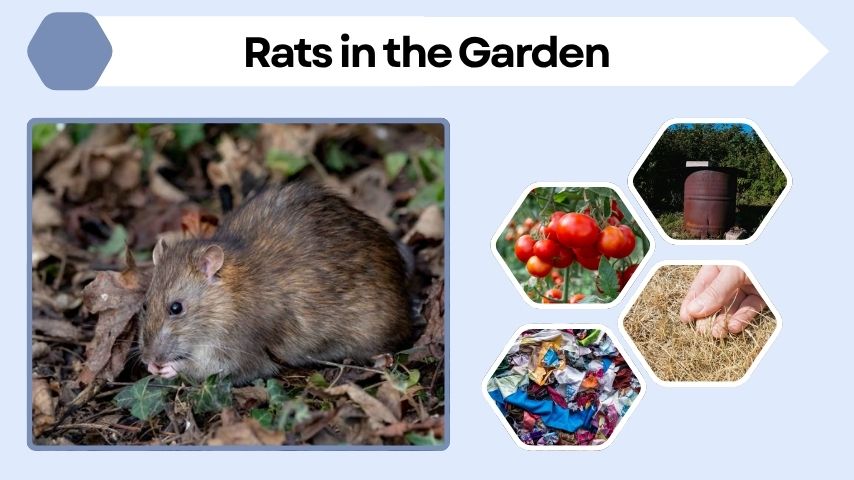
Rats in the garden can quickly become a serious problem for homeowners and gardeners. These rodents are attracted to outdoor spaces that provide food, water, shelter, and safe nesting areas. Once rats settle into a garden, they may damage plants, dig burrows, contaminate soil, and even spread disease.
Identifying rat activity early is important for preventing infestations from growing larger. This guide explains how to identify rats in the garden, recognize rat nests and burrows, understand the damage they cause, and learn effective methods to get rid of them safely and permanently.
Why Rats Are Found in Gardens
Gardens offer ideal living conditions for rats because they contain food sources, hiding places, and moisture. Overgrown vegetation and outdoor storage areas provide safe shelter where rats can hide during the day. Once they find a secure environment, rats often stay nearby and continue breeding rapidly.
Food Sources That Attract Rats
Rats are opportunistic feeders and will eat almost anything available in a garden environment.
Common food sources include:
- Fallen fruits
- Vegetables from garden beds
- Bird seed and feeders
- Compost piles
- Pet food left outdoors
Even small amounts of food can encourage rats to remain in the area.
Shelter and Hiding Places
Dense vegetation and cluttered outdoor spaces provide protection from predators and harsh weather. Rats prefer dark and hidden locations where they can move safely without being noticed by humans or pets.
Common Rat Species Found in Gardens
Several rat species are commonly found around homes and gardens.
These include:
- Norway rats
- Roof rats
- Field rats
Norway rats usually burrow underground, while roof rats are better climbers and often nest in sheds, roofs, or trees.
How to Identify Rats in the Garden
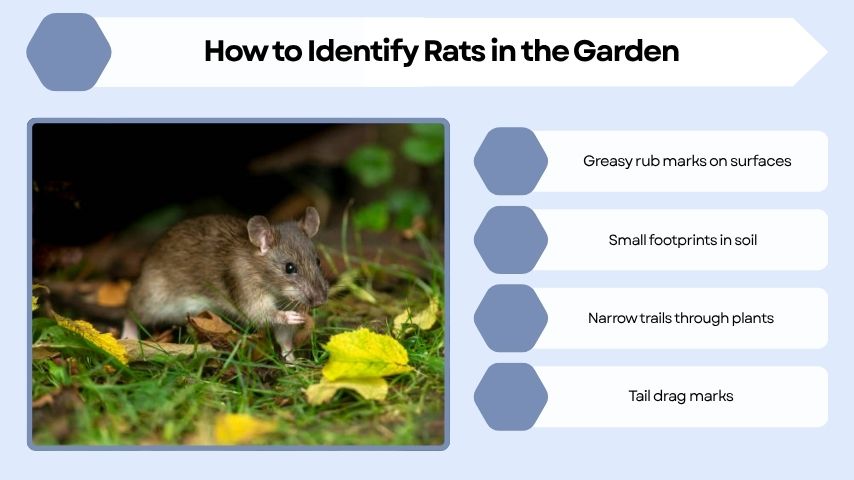
Rats often leave visible evidence behind before they are actually seen. Recognizing these warning signs early can help prevent serious infestations. Droppings, burrows, gnaw marks, and unusual nighttime noises are among the most common indicators of rat activity in outdoor spaces.
Rat Droppings and Smell
Rat droppings are one of the easiest signs to identify. Fresh droppings appear dark and moist, while older droppings become dry and gray. Rats also leave behind a strong musky odor that may become noticeable around sheds, compost piles, or enclosed garden areas.
Rat Tracks and Pathways
Rats often travel along the same routes repeatedly. Their constant movement creates visible pathways through grass and vegetation.
Signs of rat travel routes include:
- Greasy rub marks on surfaces
- Small footprints in soil
- Narrow trails through plants
- Tail drag marks
- Dirt smudges near walls
These pathways usually connect feeding areas to nesting locations.
Signs of Garden Damage
Rats may damage gardens while searching for food and building nests. Vegetable beds and young plants are especially vulnerable to feeding activity and burrowing.
Common damage signs include chewed vegetables, disturbed soil, gnawed irrigation tubing, and holes near fences or structures.
Rat Sounds at Night
Most rats are active after sunset. Homeowners may hear scratching, squeaking, or movement near sheds, walls, compost bins, or underneath decks during nighttime hours.
Rat Nests in the Garden
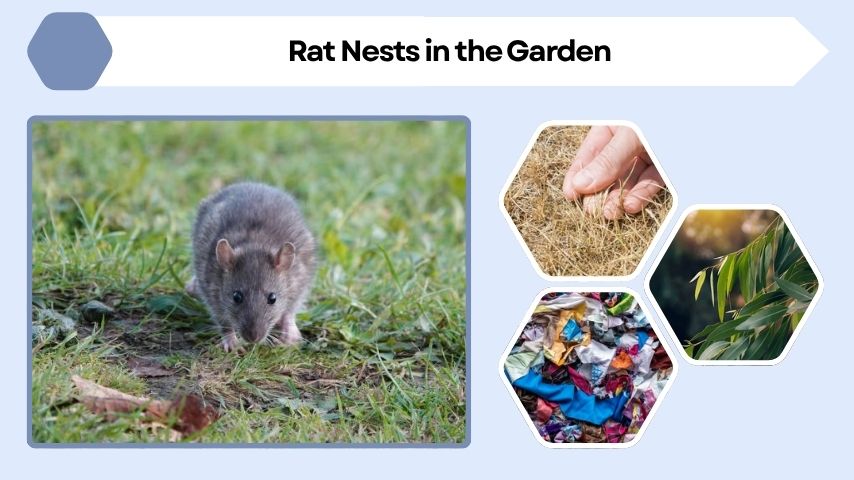
Outdoor rat nests are usually hidden in quiet, protected areas with nearby food and water. Rats build nests using soft materials collected from gardens and garbage. Knowing where rats prefer to nest makes it easier to locate infestations and remove them before the population increases.
What Does a Rat Nest Look Like?
Rat nests are made from shredded materials gathered from nearby surroundings.
Typical nesting materials include:
- Dry grass
- Leaves
- Fabric scraps
- Paper pieces
- Insulation material
Nests are often hidden inside burrows, thick bushes, or under wooden structures.
Common Garden Nest Locations
Rats choose nesting areas that offer darkness, warmth, and protection from predators. Outdoor nests are frequently built in quiet areas that humans rarely disturb.
Popular nesting locations include:
- Under garden sheds
- Beneath decks
- Compost piles
- Dense shrubs
- Wood stacks
Underground burrows are especially common for Norway rats.
Rat Burrows vs Other Animal Holes
| Feature | Rat Burrow | Mole Hole | Rabbit Hole |
| Entrance Size | Small round hole | Soil mound | Larger opening |
| Soil Around Hole | Loose dirt nearby | Raised ridges | Minimal dirt |
| Activity Time | Mostly night | Underground | Dawn and dusk |
| Nearby Signs | Droppings and gnaw marks | Surface tunnels | Fur and tracks |
How Rats Damage Gardens
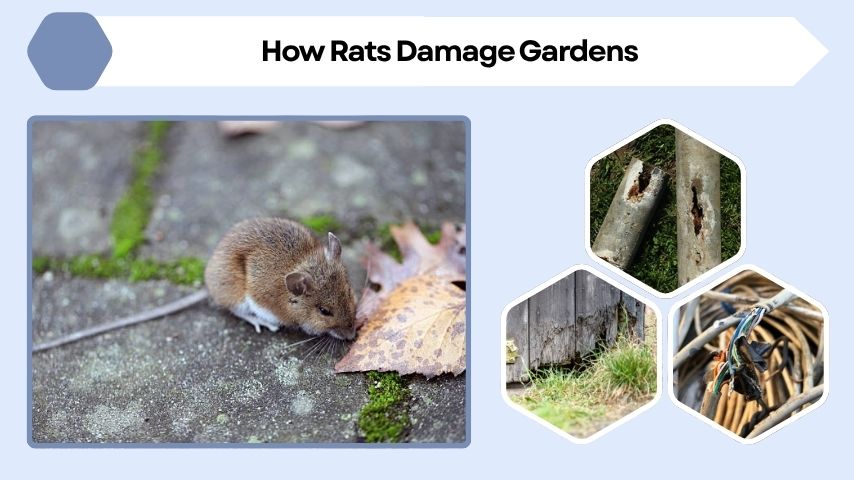
Rats can create serious problems in both decorative and vegetable gardens. Besides eating crops and damaging plants, they may destroy irrigation systems and contaminate outdoor areas with droppings and urine. Large infestations can quickly turn healthy gardens into unsafe and damaged environments.
Damage to Plants and Vegetables
Rats feed on fruits, seeds, roots, and tender plant growth. Vegetable gardens are especially attractive because they provide reliable food sources throughout the growing season.
Structural Damage
Rats do more than damage plants. Their constant gnawing behavior can affect garden structures and outdoor equipment. Because rat teeth continuously grow, they chew on many hard materials to keep them worn down.
Common structural damage includes:
- Chewed irrigation pipes
- Damaged wooden sheds
- Gnawed electrical wiring
- Holes under patios
- Destroyed storage containers
Damaged wiring may also create potential fire hazards around outdoor buildings.
Health Risks From Rats
Rats can spread bacteria, parasites, and diseases through urine, droppings, and contaminated surfaces. Fleas and mites carried by rats may also spread to pets or humans. Garden soil contaminated by rat waste should be handled carefully, especially in vegetable-growing areas.
How to Get Rid of Rats in the Garden
Removing rats from the garden requires a combination of sanitation, habitat removal, and population control. Simply trapping rats without eliminating food and shelter sources may only provide temporary relief. Long-term success depends on making the garden less attractive to rodents.
Remove Food Sources
Reducing available food is one of the most effective ways to discourage rats from staying in the garden.
Helpful steps include:
- Pick up fallen fruits quickly
- Store bird seed in sealed containers
- Avoid leaving pet food outside
- Cover compost bins securely
- Harvest vegetables regularly
Keeping the garden clean limits opportunities for rats to feed at night.
Eliminate Nesting Areas
Rats prefer cluttered spaces where they can hide safely during the day. Removing shelter forces them to relocate and reduces breeding activity.
Important cleanup tasks include trimming dense vegetation, removing junk piles, organizing wood stacks, and sealing openings around sheds or outdoor storage areas.
Use Rat Traps Safely
Traps are commonly used to reduce rat populations in gardens. Snap traps and electronic traps are usually more effective than glue traps because they work quickly and are considered more humane.
Traps should be placed along walls, pathways, or near burrow entrances where rat activity is highest. Homeowners with pets or children should place traps carefully in protected locations.
Natural Rat Deterrents
Some homeowners prefer natural methods to discourage rats without using poison. While these solutions may not eliminate severe infestations, they can help reduce rat activity in smaller gardens.
Popular natural deterrents include:
- Peppermint oil
- Motion-activated lights
- Predator scents
- Clean garden maintenance
- Strong-smelling herbs
Combining several deterrent methods usually produces better results.
Best Ways to Prevent Rats in Gardens
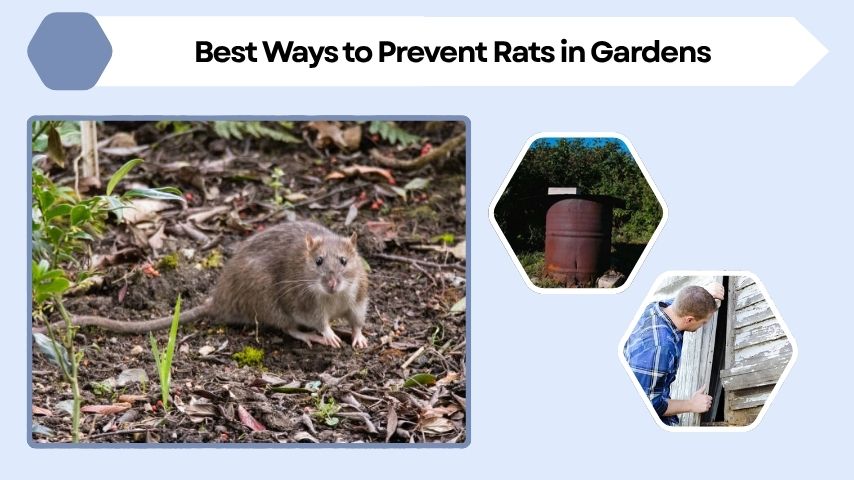
Preventing rats is easier than dealing with a large infestation later. Regular maintenance and careful storage practices can make gardens far less attractive to rodents. Long-term prevention should focus on reducing shelter, food access, and entry points around the property.
Keep the Garden Clean
Clean gardens provide fewer hiding spots and food sources for rats. Regular maintenance is one of the simplest ways to reduce rodent activity naturally.
Protect Compost and Storage Areas
Compost bins and outdoor storage spaces are common nesting locations for rats because they offer warmth and protection.
Helpful prevention strategies include:
- Use sealed compost containers
- Elevate firewood off the ground
- Remove unused clutter
- Inspect sheds regularly
- Keep garbage bins tightly closed
Dry and organized storage areas are less appealing to rodents.
Seal Entry Points Around the Yard
Small gaps and openings around buildings can allow rats to enter sheds, garages, or crawl spaces. Sealing cracks, pipe gaps, and fence openings helps prevent rats from establishing nests near the garden.
Rats in Vegetable Gardens
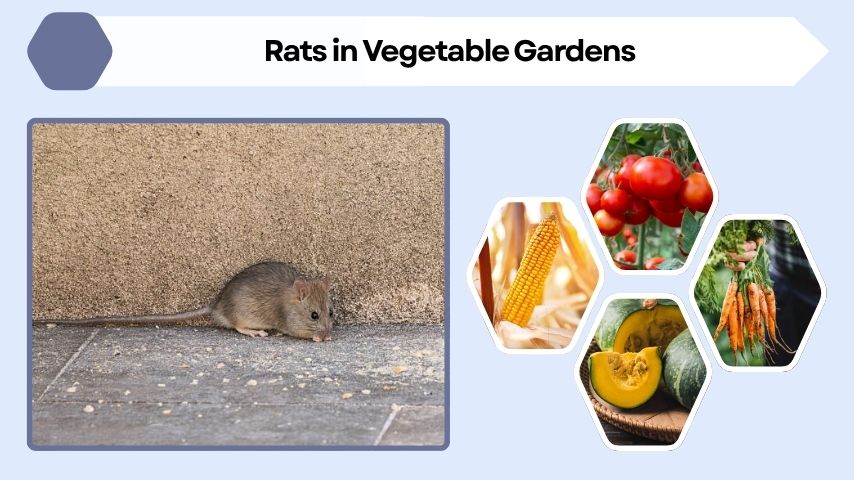
Vegetable gardens are especially vulnerable to rat infestations because they provide food, moisture, and ground cover. Rats often feed at night, leaving gardeners confused when plants suddenly disappear or become damaged overnight.
Vegetables Rats Commonly Eat
Rats will eat many types of vegetables and fruits commonly grown in backyard gardens.
Favorite foods include:
- Tomatoes
- Corn
- Pumpkins
- Potatoes
- Carrots
Sweet fruits and soft vegetables are especially attractive to rodents.
Protecting Raised Beds
Raised beds can help reduce rat access when combined with protective barriers. Wire mesh placed beneath beds helps stop burrowing rats from entering garden soil from below. Fencing and elevated containers also improve protection.
Safe Pest Control Around Food Plants
Gardeners should avoid unsafe chemicals near edible plants. Non-toxic traps, careful sanitation, and natural deterrents are safer options for controlling rats around vegetables and herbs.
FAQs
What attracts rats to gardens?
Rats are attracted to gardens because they provide food, water, and shelter. Fallen fruits, vegetables, bird feeders, compost bins, and dense vegetation create ideal conditions for rats to live and breed safely outdoors.
How can I tell if rats are nesting in my garden?
Common signs include burrow holes, droppings, gnaw marks, narrow pathways through plants, and shredded nesting materials such as leaves or paper hidden under sheds or bushes.
Are rats in the garden dangerous?
Yes, rats can spread diseases, contaminate soil, damage plants, and chew on structures or irrigation systems. They may also carry fleas and parasites that can affect pets and humans.
What smells help keep rats away from gardens?
Strong smells such as peppermint oil, garlic, and certain herbal plants may help discourage rats. However, these methods work best when combined with proper garden cleaning and food removal.
What is the fastest way to get rid of rats in the garden?
The fastest approach combines removing food sources, clearing nesting areas, sealing hiding spots, and placing traps near active burrows or pathways. Severe infestations may require professional pest control assistance.