
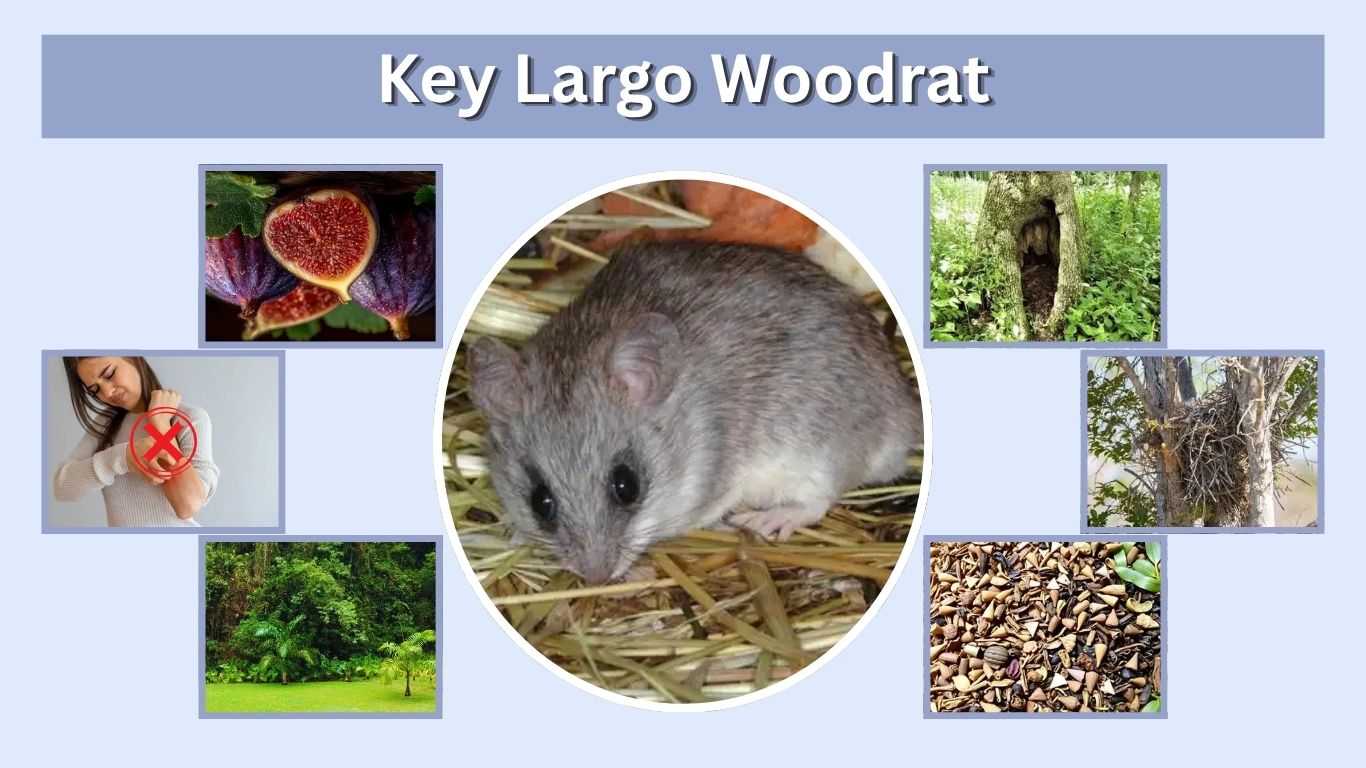
The Key Largo woodrat is one of Florida’s rarest native mammals. This nocturnal rodent is found only in a small area of northern Key Largo, where it inhabits tropical hardwood hammocks and constructs impressive nests from sticks. Although its name includes “rat,” it differs significantly from the invasive black and Norway rats commonly found around buildings. Habitat loss, introduced predators, environmental change, and its extremely limited range have made the Key Largo woodrat a federally endangered subspecies.
What Is a Key Largo Woodrat?
The Key Largo woodrat, scientifically known as Neotoma floridana smalli, is a subspecies of the eastern woodrat. It is endemic to Key Largo, meaning it naturally occurs nowhere else in the world.
The animal is considered a native, critically imperiled subspecies in Florida. It has been federally listed as endangered since the 1980s and remains protected under both federal and state conservation rules.
Key Largo Woodrat Facts
| Feature | Description |
| Scientific name | Neotoma floridana smalli |
| Animal group | Mammal and rodent |
| Average weight | Approximately 7–9 ounces |
| Total length | Commonly 12–16 inches |
| Diet | Primarily leaves, fruit, seeds, buds, and fungi |
| Activity | Nocturnal |
| Habitat | Tropical hardwood hammock |
| Range | Northern Key Largo, Florida |
| Conservation status | Endangered |
| Average lifespan | Around one to three years in the wild |
The Key Largo woodrat was recognized as a distinct subspecies based on physical differences from mainland eastern woodrats. Despite the common name, woodrats are only distantly related to the invasive rats that commonly inhabit cities and buildings.
Key Largo Woodrat Identification
Adult Key Largo woodrats are medium-sized rodents with large ears, dark eyes, long whiskers, and a relatively pointed face. Males are usually larger than females, but both sexes have similar coloring.
What Does a Key Largo Woodrat Look Like?
Important identification characteristics include:
- Gray-brown fur across the head and back
- Cinnamon or reddish-brown coloring along the sides
- White or cream fur on the belly, chest, and throat
- Large, rounded ears
- Prominent dark eyes
- A lightly furred tail
- White or pale feet
- A body measuring approximately 4.7–9.1 inches
- A tail measuring approximately 5.1–7.5 inches
Juveniles generally have duller gray fur that develops warmer brown and cinnamon tones as they mature. Adults can reach a total length of approximately 12–16 inches when the tail is included.
Key Largo Woodrat vs. Black Rat
The native woodrat may be confused with the invasive black rat, also called the roof rat. However, the woodrat usually has softer-looking fur, a lighter underside, larger feet, and a more heavily furred tail.
Black rats commonly live near buildings and human food, while Key Largo woodrats are strongly associated with natural hardwood hammock habitat. Correct identification is essential because the Key Largo woodrat is legally protected.
Where Does the Key Largo Woodrat Live?
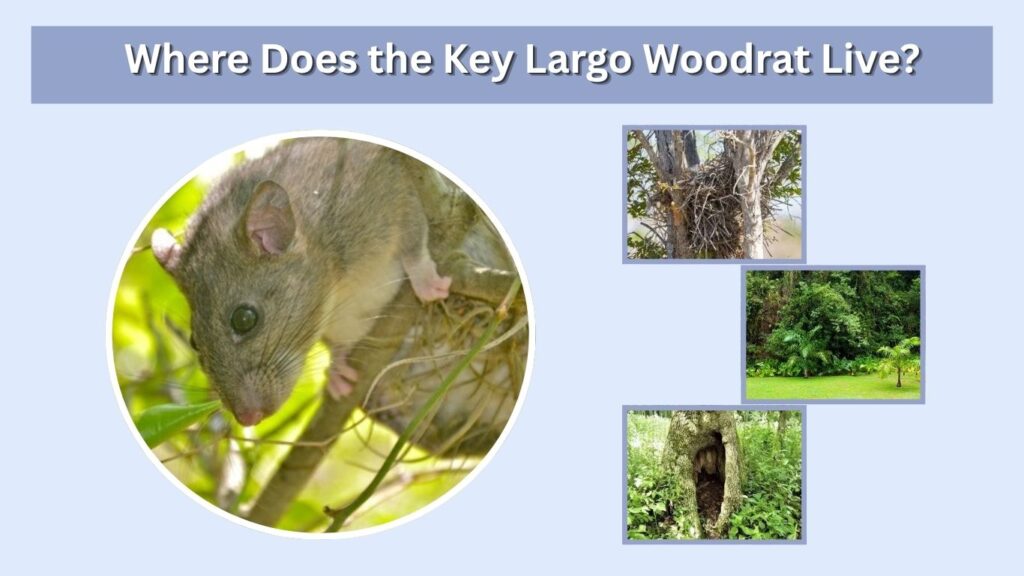
The Key Largo woodrat lives exclusively in tropical hardwood hammocks on the northern portion of Key Largo, Florida. These forests contain dense vegetation, mature trees, limestone formations, leaf litter, fallen branches, and natural cavities that provide food and shelter.
Its modern range is largely contained within Crocodile Lake National Wildlife Refuge and Dagny Johnson Key Largo Hammock Botanical State Park. Current educational material estimates that its remaining habitat covers only about 2,100–2,500 protected acres.
Tropical Hardwood Hammock Habitat
A tropical hardwood hammock is an elevated forest containing trees and shrubs adapted to South Florida’s warm climate. The habitat provides woodrats with:
- Fruits, leaves, seeds, and plant buds
- Sticks and branches for nest construction
- Tree roots and limestone cavities for shelter
- Dense vegetation that offers protection
- Trees that can be climbed while foraging
Woodrats generally remain close to their nests. Many activities occur within approximately 50–60 yards of a primary shelter, although males may travel farther than females.
Key Largo Woodrat Diet
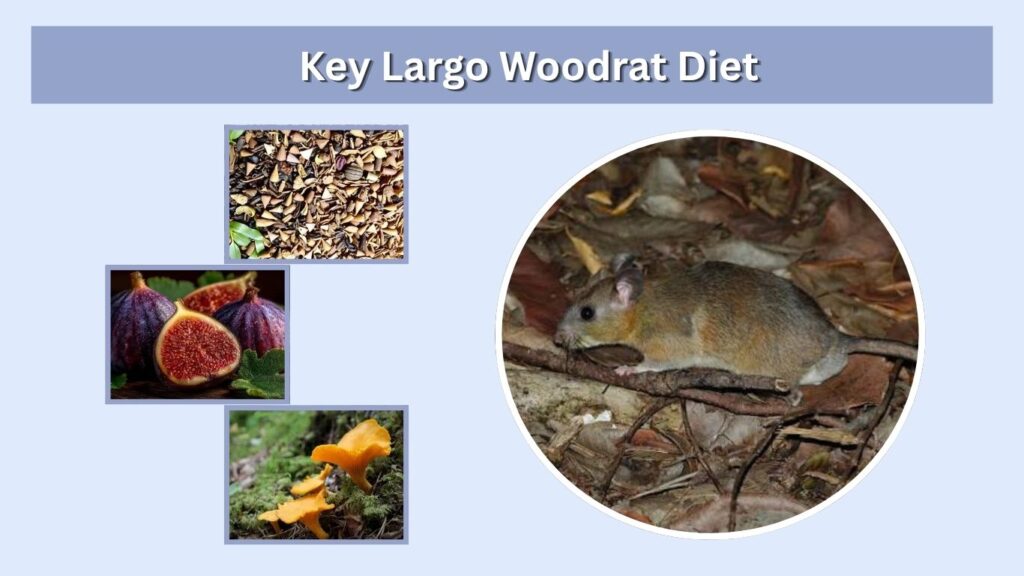
Key Largo woodrats are mainly herbivorous. They leave their shelters at night to forage on the forest floor and sometimes climb into trees to collect food.
Their diet includes:
- Leaves
- Plant buds
- Fruits and berries
- Seeds
- Mushrooms
- Figs
- Wild coffee fruit
- Pigeon plum
- Snowberry
- Blackbead plants
- Occasional insects
Woodrats sometimes carry fruits and seeds back to their nests and store them for later. Their feeding behavior can help move seeds through the forest, potentially contributing to plant dispersal and regeneration.
Key Largo Woodrat Nest-Building Behavior
The species is best known for constructing large, elaborate stick nests. A woodrat usually begins by excavating a shallow area near a tree, stump, rock, root system, or limestone solution hole.
It then piles branches and sticks around the shelter. Continued maintenance can produce a nest several feet across and more than four feet high. Some structures are used and enlarged by multiple generations.
Why Do Woodrats Build Stick Nests?
Stick nests provide several benefits:
- Protection from predators
- A secure daytime resting area
- Space for raising young
- Food-storage chambers
- Insulation from weather
- Concealed entrances and escape routes
The nests also benefit other wildlife. Invertebrates and small vertebrates may use the structures for shelter or feeding, which is why the Key Largo woodrat is sometimes described as an ecosystem engineer.
Woodrats must continuously add sticks because abandoned nests gradually decompose and lose their structure. Researchers can therefore use active stick building as one sign of woodrat presence.
Reproduction and Lifespan
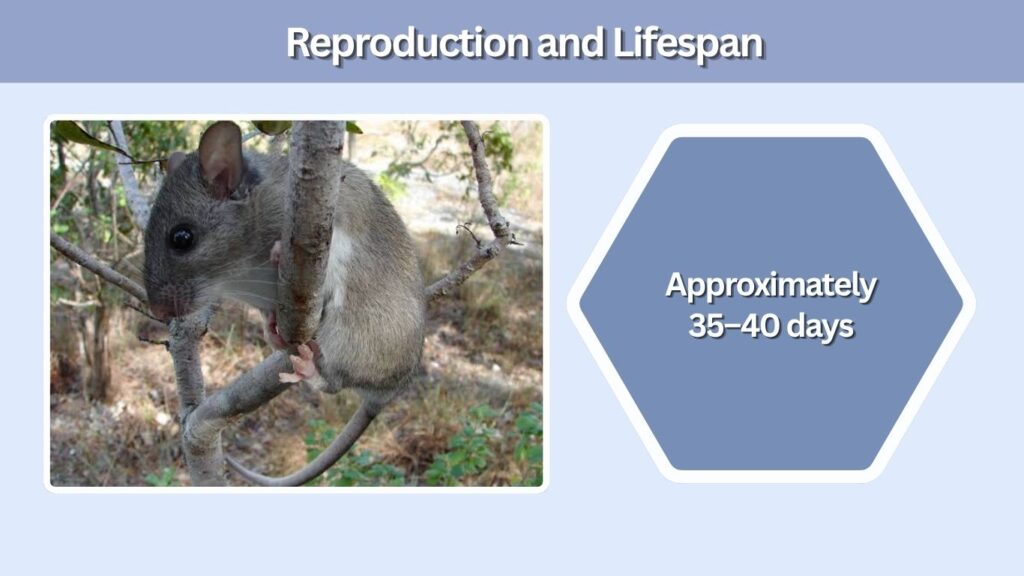
Key Largo woodrats can reproduce throughout the year, although breeding activity may vary seasonally. Females usually produce small litters, commonly averaging about two pups.
Gestation lasts approximately 35–40 days, and young woodrats may reach sexual maturity at four to five months old. A female may produce one or two litters during a year, although older sources report that some may have more under favorable conditions.
Wild Key Largo woodrats generally live for approximately one to three years. Animals maintained in captivity may survive longer.
Why Is the Key Largo Woodrat Endangered?
The woodrat became endangered primarily because much of Key Largo’s tropical hardwood hammock was cleared or fragmented for agriculture, roads, buildings, and other development.
Although most remaining habitat is protected, the population is still confined to an exceptionally small area. This leaves the subspecies vulnerable to hurricanes, fires, flooding, disease, genetic isolation, and changes affecting only a small part of the island.
Major Threats
The most important threats include:
- Historical habitat destruction
- Forest fragmentation caused by roads and infrastructure
- Predation by free-ranging and feral cats
- Predation by invasive Burmese pythons
- Possible competition with invasive black rats
- Rising sea levels and saltwater intrusion
- Changes from hardwood hammock to unsuitable mangrove habitat
- Small population size and limited genetic diversity
Research has linked the removal of invasive predators—particularly free-ranging cats—with increased use of supplemental nests and expansion of woodrat activity. Burmese pythons remain especially difficult to detect and manage.
How Many Key Largo Woodrats Are Left?
A precise current count is not publicly available. Woodrats are nocturnal, secretive, and difficult to survey directly, so wildlife managers monitor nest occupancy, camera detections, trapping results, and stick-building activity rather than relying on a simple head count.
The population was estimated at fewer than 100 animals in 2002, but habitat management, predator removal, and supplemental nests have produced encouraging signs since that severe decline. Historical numbers should not be presented as the current population estimate.
What Is Being Done to Protect the Key Largo Woodrat?
Wildlife agencies and conservation organizations protect and restore hardwood hammock habitat in northern Key Largo. Management also includes removing invasive predators, monitoring wildlife with cameras, and studying competition from black rats.
Artificial starter shelters have become an important recovery tool. More than 1,700 supplemental structures have reportedly been installed across protected areas, while the Crocodile Lake National Wildlife Refuge describes a monitored network of 642 nests equipped with remote cameras. These shelters provide secure nesting sites and allow biologists to track activity.
Captive breeding and release were previously attempted. However, low survival among released captive animals limited the program’s success, and conservation efforts shifted toward improving conditions for wild woodrats.
FAQs
Are Key Largo woodrats dangerous?
Key Largo woodrats are shy, nocturnal animals that normally avoid people. They are not considered aggressive, but any wild rodent may bite when captured or handled. People should never disturb, trap, relocate, or harm one because the subspecies is federally protected.
Are Key Largo woodrats black and white?
Their backs are primarily gray-brown with black hairs and reddish or cinnamon coloring along the sides. The chest, throat, belly, and portions of the feet are white or cream. Their tails are lightly furred rather than completely naked.
What are the Key Largo woodrat’s predators?
Native predators may include owls, snakes, and other carnivores. However, introduced predators present a particularly serious threat. Feral and free-ranging cats are known to kill woodrats, while invasive Burmese pythons have also consumed them.
Do Key Largo woodrats live in houses?
They are primarily associated with tropical hardwood hammocks and natural nest sites. Unlike roof rats, they are not typical household pests. A suspected woodrat near protected habitat should not be trapped without guidance from a qualified wildlife authority.
How can people help protect Key Largo woodrats?
People near northern Key Largo can keep cats indoors, keep dogs leashed, avoid feeding stray cats, report Burmese python sightings, stay out of restricted conservation areas, and avoid disturbing large stick nests. Supporting local habitat restoration also benefits the woodrat.