
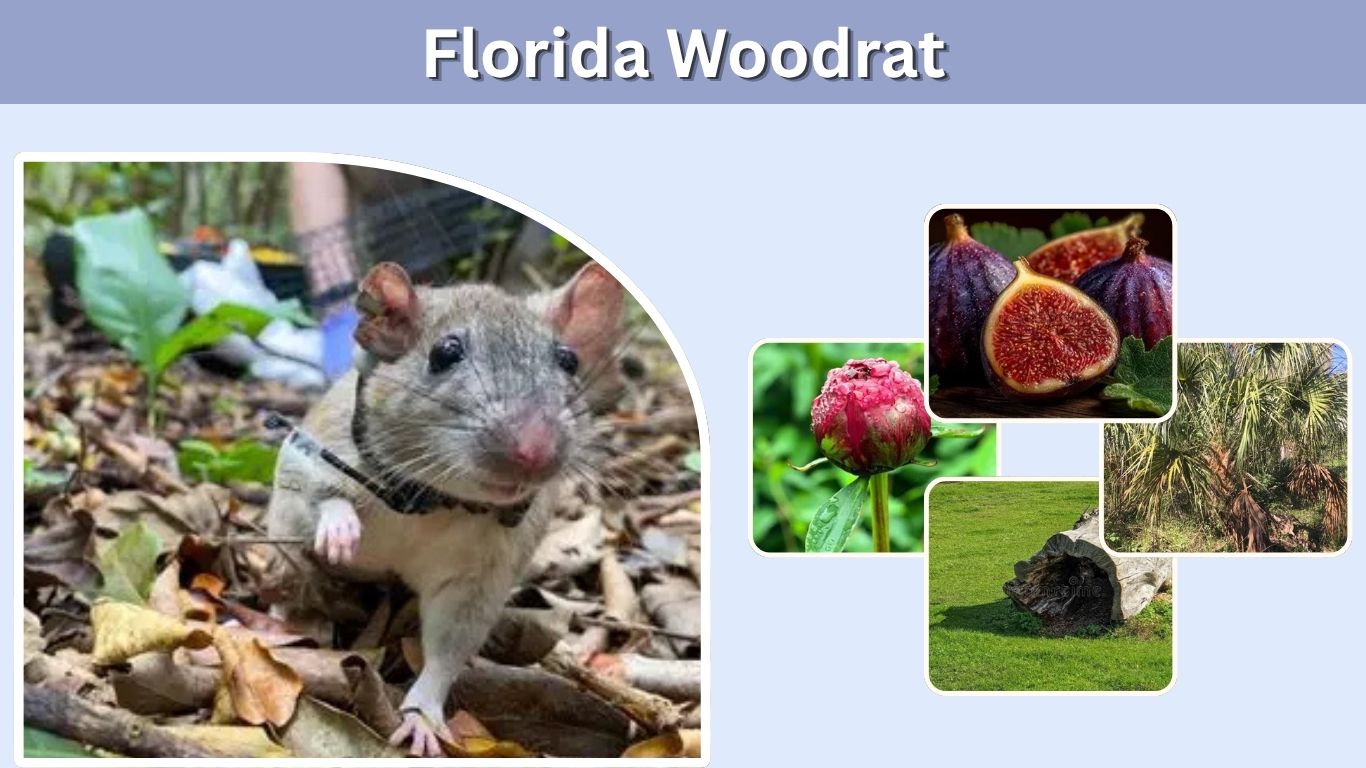
The Florida woodrat is a native, nocturnal rodent known for its large eyes, long tail, and habit of building shelters from sticks and other materials. Florida supports mainland populations of the eastern woodrat as well as the extremely rare Key Largo woodrat. These animals mainly occupy forests, hammocks, wetlands, and other areas with dense vegetation. Although they resemble invasive rats, woodrats differ in appearance, behavior, habitat, and conservation status.
What Is a Florida Woodrat?
“Florida woodrat” commonly refers to Florida populations of the eastern woodrat, scientifically known as Neotoma floridana. The mainland form is often classified as Neotoma floridana floridana. The endangered Key Largo woodrat, Neotoma floridana smalli, is a distinct subspecies restricted to northern Key Largo.
Woodrats are also called pack rats because they gather sticks, food, bones, stones, and occasionally human-made objects around their shelters. Unlike Norway rats and black rats, they are native North American rodents that usually depend on natural habitats.
| Feature | Mainland Florida woodrat | Key Largo woodrat |
| Scientific name | Neotoma floridana floridana | Neotoma floridana smalli |
| General range | Parts of mainland Florida | Northern Key Largo |
| Main habitat | Forests, hammocks, swamps and wetlands | Tropical hardwood hammocks |
| Legal status | Not federally listed as endangered | Federally and state-listed as endangered |
| Typical shelter | Stick midden, tree base or dense vegetation | Large stick nest or limestone solution hole |
The endangered designation applies specifically to the Key Largo subspecies rather than every eastern woodrat living in Florida.
Florida Woodrat Identification
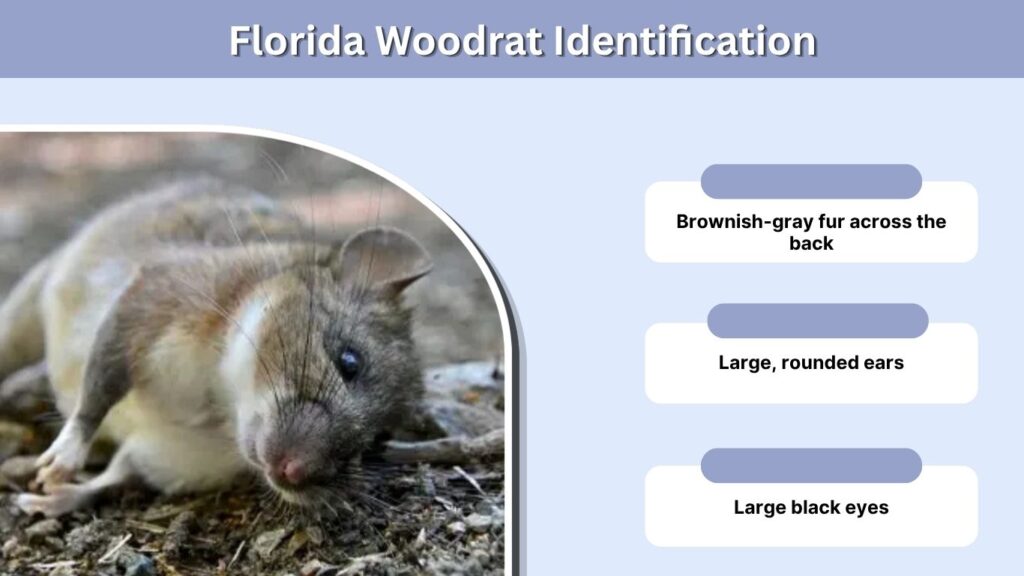
Florida woodrats are medium-sized rodents with soft fur, prominent ears and large, dark eyes. Their bodies are more robust than those of common mice, while their faces appear relatively delicate and pointed.
What Does a Florida Woodrat Look Like?
Important identification characteristics include:
- Brownish-gray fur across the back
- White or cream-colored belly and feet
- Large, rounded ears
- Large black eyes
- Long whiskers and a pointed muzzle
- A long tail with visible fur
- Dark coloring above and lighter coloring below the tail
- A stocky body approximately 13–17 inches long, including the tail
Eastern woodrats generally weigh about 7.6–11.7 ounces. Seasonal changes may make the back appear darker and the sides slightly more yellowish during winter.
Key Largo woodrats have gray-brown backs, cinnamon-toned sides and white undersides. Adults commonly reach 12–16 inches in total length, with males averaging slightly heavier than females.
Florida Woodrat vs. Roof Rat
Florida woodrats can be confused with invasive roof rats, particularly when observed briefly at night. However, a woodrat generally has softer fur, larger feet, a more heavily furred tail and a white underside.
Roof rats are strongly associated with buildings, garbage and human food. Woodrats usually remain near forests, wetlands, brush piles, limestone formations or natural stick nests. Correct identification is especially important in northern Key Largo because the local woodrat is legally protected.
Where Do Woodrats Live in Florida?
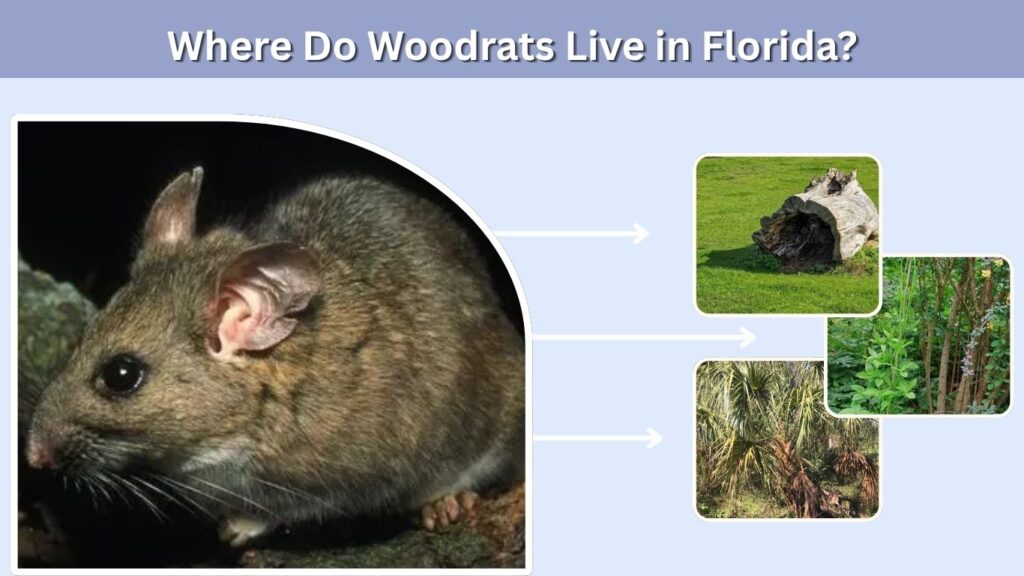
Mainland eastern woodrats occur patchily in central and northern parts of Florida. Across their wider range, eastern woodrats occupy deciduous forests, swamps, coastal marshes, wooded wetlands and occasionally abandoned structures. Florida habitats may include hammocks, flatwoods, riparian areas and places with dense ground cover.
Woodrats need places that provide food, nest materials and protection from predators. Useful features include:
- Fallen trees and hollow logs
- Dense shrubs and vines
- Cabbage palm debris
- Tree roots and stump cavities
- Brush or rock piles
- Wetland edges
- Abandoned sheds or similar structures
Woodrats in the Florida Keys
The only native woodrat population in the Florida Keys is the Key Largo woodrat. It survives within tropical hardwood hammocks on the northern third of Key Largo, primarily inside Crocodile Lake National Wildlife Refuge and Dagny Johnson Key Largo Hammock Botanical State Park. Its occupied habitat is limited to roughly 2,100–2,500 protected acres.
Florida Woodrat Nests
Woodrats construct shelters commonly called dens, middens or stick nests. A typical nest begins near a tree, stump, rocky opening or concealed ground cavity. The animal continually adds sticks, leaves, bark, stones, bones and other available materials.
What Is Inside a Woodrat Nest?
A developed nest may contain:
- A protected sleeping chamber
- Passages and concealed entrances
- Food-storage areas
- A nesting chamber for young
- Piles of leaves or shredded vegetation
- Separate areas containing droppings
Eastern woodrat middens may occur at the bases of large trees, inside brush piles, among rock formations or within abandoned structures. They provide shelter, food storage and protection from predators and weather.
Key Largo woodrats are particularly accomplished builders. Nests maintained across generations may exceed six feet in width and four feet in height. Their structures also provide shelter and feeding opportunities for insects, reptiles and other small animals, making the woodrats important ecosystem engineers.
What Do Florida Woodrats Eat?
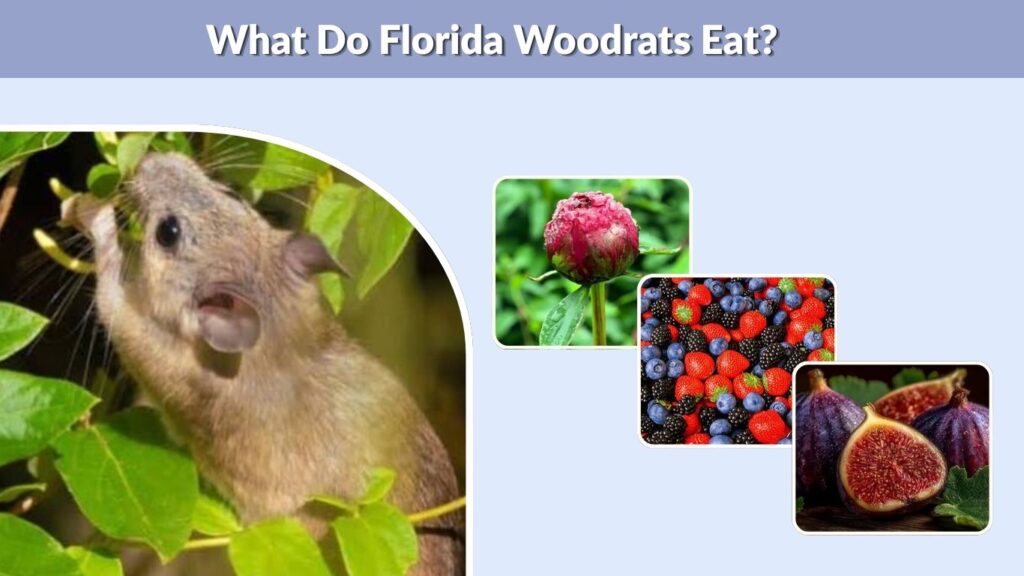
Florida woodrats are primarily herbivorous, although they may occasionally consume insects. Their food changes according to habitat, season and local plant availability.
Typical foods include:
- Fruits and berries
- Seeds and nuts
- Leaves and tender shoots
- Plant buds
- Mushrooms and fungi
- Bark and twigs
- Occasional insects
Key Largo woodrats consume the fruits and leaves of tropical hammock plants such as wild coffee, pigeon plum, snowberry, blackbead and several fig species. They sometimes carry fruit and seeds to their nests and store them for later use.
Are Florida Woodrats Endangered?
The mainland Florida woodrat is not federally listed as endangered. However, the Key Largo woodrat is protected as endangered under the federal Endangered Species Act and Florida’s Endangered and Threatened Species Rule. It is considered critically imperiled within the state.
Why Is the Key Largo Woodrat Endangered?
Its decline resulted primarily from clearing and fragmenting tropical hardwood hammocks for roads, agriculture and development. Although much of its remaining habitat is now protected, the population still faces several threats:
- Extremely restricted geographic range
- Feral and free-ranging cats
- Invasive Burmese pythons
- Possible competition from black rats
- Habitat fragmentation
- Hurricanes, fires and flooding
- Rising seas and saltwater intrusion
- Limited genetic exchange
Burmese pythons are confirmed predators of Key Largo woodrats, while research has demonstrated harmful effects from domestic and feral cats.
Conservation work includes invasive-predator removal, habitat protection, camera monitoring and the installation of supplemental nest structures. More than 1,700 artificial nest sites have been placed across protected habitat, while the wildlife refuge monitors a network of hundreds of nests.
Do Florida Woodrats Carry Diseases?
Wild woodrats should not be handled, but there is no reason to assume that every Florida woodrat carries a disease. The greater household concern is contact with unidentified rodent urine, saliva, nesting material or droppings.
Wear gloves when cleaning rodent-contaminated areas. Do not immediately sweep or vacuum dry droppings because this can release contaminated particles into the air. CDC guidance recommends thoroughly soaking waste with disinfectant, allowing it to remain wet for the directed period and then removing it with paper towels.
A suspected Key Largo woodrat or its nest should not be trapped, relocated or disturbed. Contact the Florida Fish and Wildlife Conservation Commission or the U.S. Fish and Wildlife Service for guidance.
FAQs
Are Florida woodrats the same as pack rats?
Yes. “Pack rat” is a common name for woodrats in the genus Neotoma. The nickname comes from their tendency to gather sticks, food, stones, bones and other objects around their nests.
Are Florida woodrats dangerous?
Florida woodrats are shy and generally avoid people. They may bite when captured or cornered, and their waste should be handled cautiously. Their greatest concerns around buildings are contamination and possible gnawing rather than aggressive behavior.
Do Florida woodrats enter houses?
They occasionally occupy sheds, cabins, barns or abandoned structures, particularly when suitable natural shelter is nearby. They are less closely associated with human buildings than invasive roof rats and Norway rats.
What does Florida woodrat poop look like?
Woodrat droppings are usually dark, elongated pellets, but their appearance can overlap with droppings from other rats. Nest type, tail appearance, tracks, fur and location provide more reliable identification than droppings alone.
Can you remove a woodrat nest in Florida?
A mainland nest near a building may require professional evaluation. Never disturb a nest in northern Key Largo without official guidance because it may belong to the federally endangered Key Largo woodrat.