
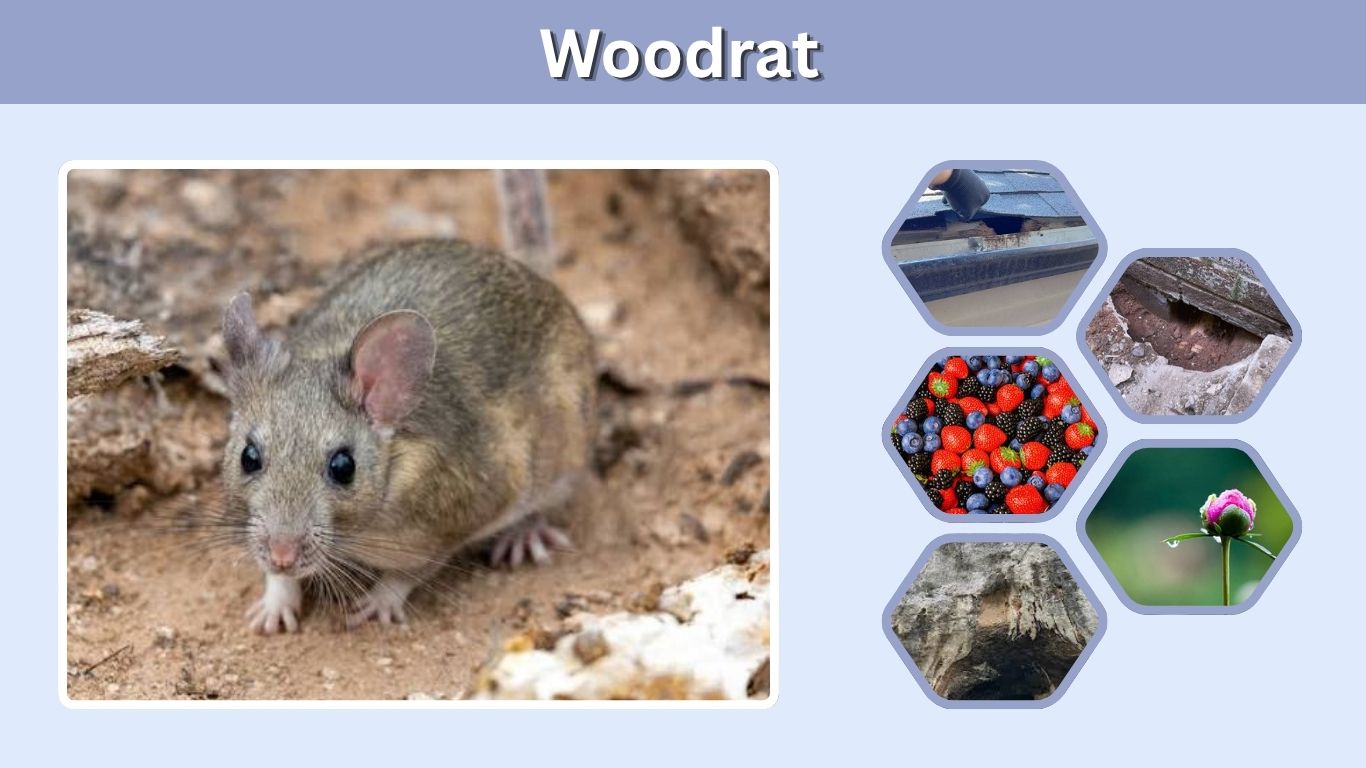
Woodrats are native North American rodents best known for building large stick nests and collecting unusual objects. Often called pack rats, they live in environments ranging from deserts and rocky mountains to forests and coastal wetlands. Although woodrats usually remain outdoors, some may enter cabins, sheds, garages, or attics in search of shelter. Understanding their appearance, diet, nesting behavior, droppings, and habitat makes identifying them easier and helps homeowners manage unwanted woodrats safely.
What Is a Woodrat?
A woodrat is a rodent belonging primarily to the genus Neotoma. Woodrats are also commonly called pack rats, trade rats, or bushy-tailed rats. They are native wildlife rather than the invasive Norway rats and roof rats commonly associated with cities.
Most woodrats are nocturnal and solitary. They spend daylight hours inside stick nests, rocky crevices, caves, hollow trees, abandoned buildings, or underground shelters. At night, they collect food and nesting materials from the surrounding area.
Woodrat Identification
Woodrat appearance varies by species, but most have a mouse-like face, large ears, prominent whiskers, and relatively soft fur. They are generally larger and more heavily built than common house mice.
What Does a Woodrat Look Like?
Typical identification features include:
- Gray, brown, cinnamon, or reddish-brown fur
- A white, cream, or pale gray underside
- Large, rounded ears
- Large, dark eyes adapted to nocturnal activity
- Long whiskers and a pointed muzzle
- A long tail that may be hairy, bushy, or lightly furred
- A body commonly measuring around 6–9 inches, excluding the tail
- Strong feet suited for climbing rocks, shrubs, and trees
The bushy-tailed woodrat is particularly distinctive because its furry tail resembles that of a small squirrel. The Key Largo woodrat has a gray-brown upper body, white underside, and hairy tail.
Signs of Woodrat Activity
Woodrats are secretive, so people often notice their signs before seeing the animal:
- Large piles of sticks, leaves, cactus pieces, bones, or debris
- Stored seeds, nuts, fruits, or vegetation
- Small objects moved from their original locations
- Gnaw marks on wood, containers, insulation, or wiring
- Footpaths leading between a nest and feeding areas
- Dark, elongated droppings near nesting or feeding locations
- Rustling noises in attics, walls, sheds, or garages at night
Droppings alone cannot reliably identify the exact rodent species. Avoid touching woodrat poop with bare hands or sweeping dry droppings, which can stir contaminated particles into the air.
Where Do Woodrats Live?
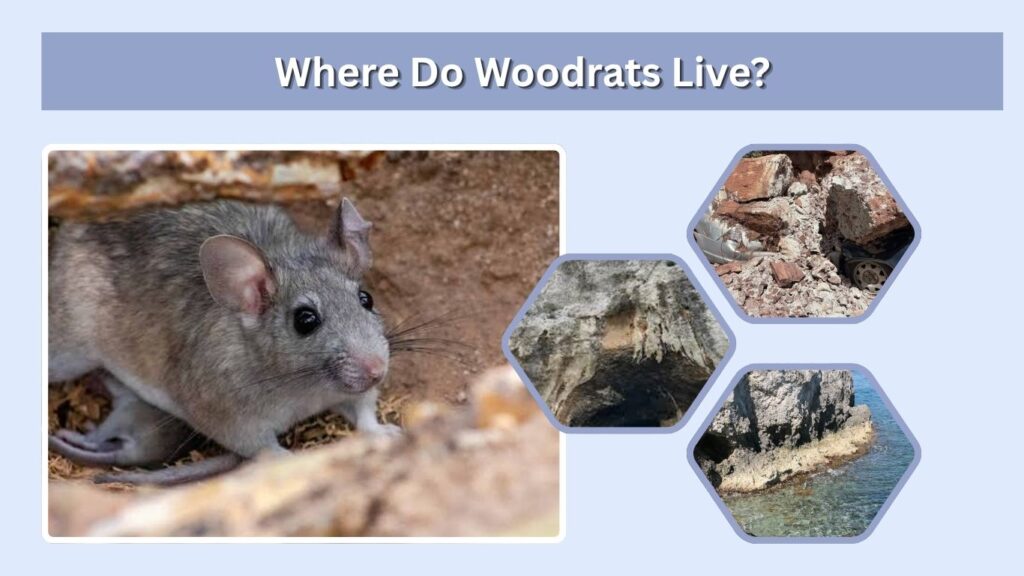
Woodrats occur across much of North America, with different species occupying different regions. Their habitats include deserts, shrublands, hardwood forests, coastal woodlands, rocky slopes, canyons, caves, cliffs, marshes, and mountain environments.
Natural Woodrat Habitat
Woodrats favor places that provide food, protection from predators, and suitable nest-building materials. Bushy-tailed woodrats commonly inhabit caves, rockslides, cliffs, rocky outcrops, and abandoned structures in mountainous areas. Eastern woodrats occupy deciduous forests, rocky mountains, coastal marshes, and occasionally unused buildings.
Desert woodrats often build shelters around boulders, cacti, yucca, or thorny vegetation. The sharp plants provide additional protection against coyotes, snakes, owls, bobcats, and other predators.
Common Types of Woodrats
| Woodrat | Typical range or habitat |
| Bushy-tailed woodrat | Rocky areas of western North America, from northern Canada into the southwestern United States |
| Allegheny woodrat | Rocky forests, cliffs, caves, and talus slopes in the Appalachian region |
| Dusky-footed woodrat | Woodlands, chaparral, and coastal habitats in California and nearby areas |
| Desert woodrat | Deserts and dry shrublands of the western United States and Mexico |
| Eastern woodrat | Forests, swamps, marshes, rocky areas, and abandoned structures in eastern and central regions |
| Key Largo woodrat | Tropical hardwood hammocks in northern Key Largo, Florida |
Allegheny woodrats depend strongly on rocky denning areas and nearby forests that produce nuts and other foods. The Key Largo woodrat has a very restricted distribution and remains federally listed as endangered.
Woodrat Nests and Middens
A woodrat nest is often much more noticeable than the animal. Depending on the species and habitat, it may look like a disorganized mound of sticks, cactus pieces, leaves, grass, bark, bones, stones, shells, and human-made objects.
What Is Inside a Woodrat Nest?
The visible mound usually protects a more organized interior containing:
- A sleeping chamber
- Food-storage areas
- Tunnels and entrances
- A nursery chamber for young
- Areas used for waste
- Escape routes or concealed openings
Nests may be positioned beneath shrubs, inside rock shelters, at the bases of cacti, within hollow trees, or inside human structures. The dense exterior helps insulate the sleeping area and discourage predators.
What Is a Woodrat Midden?
A midden is an accumulation of plant remains, droppings, food scraps, building materials, and other debris around a woodrat den. In dry caves and rock shelters, urine may bind this material together and preserve it for exceptionally long periods.
Researchers study ancient middens because the preserved seeds, leaves, pollen, and plant fragments can reveal what local vegetation and climate were like in the past.
What Do Woodrats Eat?

Most woodrats are primarily herbivorous, although diets differ among species and seasons. They obtain much of their moisture directly from vegetation, allowing desert species to survive where open water is scarce.
Common woodrat foods include:
- Leaves and young shoots
- Bark and twigs
- Seeds, grains, and nuts
- Acorns
- Fruits and berries
- Flowers and buds
- Cactus pads and cactus fruit
- Succulents
- Grasses and other green vegetation
- Occasional insects or other small animal matter
Bushy-tailed woodrats consume woody vegetation and succulents, while white-throated woodrats rely heavily on cacti and desert plants. Desert woodrats eat buds, bark, leaves, fruit, seeds, and young plant shoots, frequently carrying food back to their shelters.
Why Do Woodrats Collect Objects?
Woodrats frequently carry sticks, stones, bones, food, and human-made items back to their nests. Objects may be used to strengthen the nest, block entrances, mark an occupied shelter, or satisfy exploratory collecting behavior.
Despite their “pack rat” reputation, they do not exclusively collect shiny things. They may take bottle caps, keys, foil, fabric, utensils, tools, paper, or almost any lightweight object that can be moved. Some items are stored as food, while others become part of the nest walls.
Are Woodrats Dangerous?
Woodrats generally avoid people and rarely attack unless trapped or handled. However, an animal living inside a building can create sanitation and property problems.
Potential concerns include contaminated food, accumulated urine and droppings, chewed containers, damaged insulation, unpleasant odors, and gnawed electrical wiring. Woodrats may also carry fleas, ticks, mites, botflies, or other parasites.
Never handle a live woodrat, nest, or fresh droppings without protection. Children and pets should be kept away from occupied nests. Protected species may live in some regions, so identification should occur before a large outdoor nest is disturbed.
How to Get Rid of Woodrats
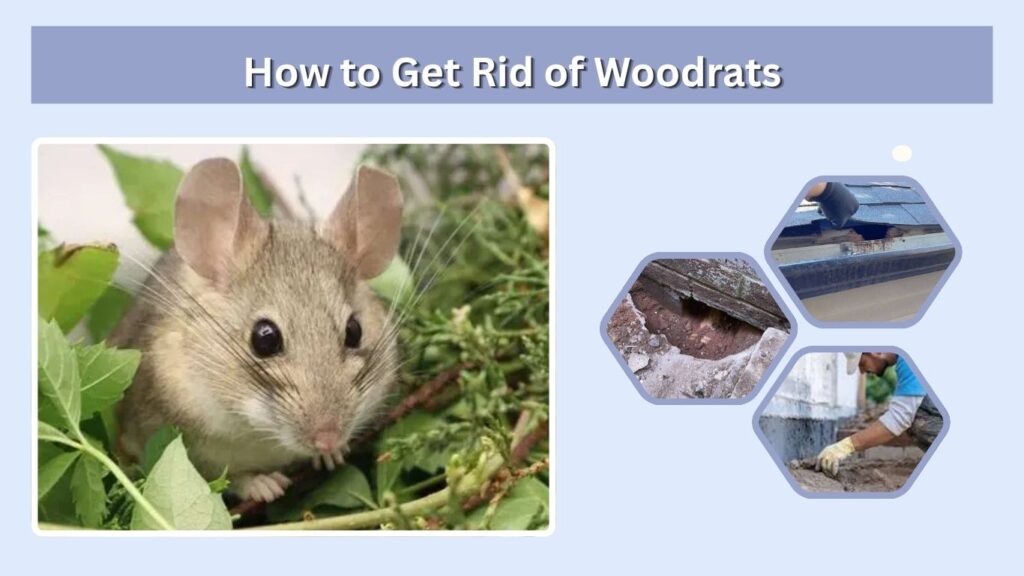
The safest long-term approach combines exclusion, sanitation, habitat modification, and carefully selected traps.
- Find entry points: Inspect foundations, rooflines, vents, pipes, doors, windows, and gaps around utility lines.
- Seal the building: Repair openings with metal flashing, hardware cloth, concrete, or another chew-resistant material.
- Remove food sources: Store birdseed, livestock feed, pet food, grain, and garbage in tightly sealed containers.
- Reduce shelter: Move lumber, boxes, firewood, and unused equipment away from exterior walls. Trim dense vegetation near the building.
- Use traps carefully: Place appropriately sized snap traps along travel routes or near active indoor nests. Keep them inaccessible to pets and children.
- Clean safely: Ventilate enclosed spaces and wet droppings with disinfectant before removal. Do not vacuum or sweep dry waste.
- Contact a professional: Wildlife-control specialists can identify the species, locate entrances, remove animals, and determine whether local protections apply.
Large outdoor stick nests should not automatically be destroyed. They may belong to native or legally protected woodrats and can provide shelter for other wildlife.
Woodrat vs. Norway Rat
| Feature | Woodrat | Norway rat |
| Origin in North America | Native species | Introduced species |
| Face | More pointed and mouse-like | Blunter and heavier |
| Ears | Usually relatively large | Relatively small |
| Tail | Often hairy or bushy | Mostly hairless and scaly |
| Typical nest | Stick mound, rocky shelter, tree cavity | Burrow, sewer, basement, wall void |
| Behavior | Collects objects and vegetation | Strongly associated with human food and waste |
“Pack rat” and “woodrat” usually refer to the same native Neotoma rodents. A Norway rat is a different species and should not be confused with them.
FAQs
Are woodrats and pack rats the same?
Yes. “Pack rat” is a common name applied to several woodrats in the genus Neotoma. The name refers to their habit of gathering food, sticks, bones, and human-made objects around their nests.
Do woodrats enter houses?
Woodrats sometimes enter cabins, garages, sheds, barns, attics, and crawl spaces. Bushy-tailed woodrats are especially likely to use buildings near cliffs, canyons, caves, or rocky mountain habitats.
What does woodrat poop look like?
Woodrat droppings are generally dark, elongated pellets with rounded or slightly pointed ends. Their size varies with the animal. Because several rodents produce similar droppings, nest structure, footprints, gnawing, location, and other evidence should also be considered.
Is a woodrat an herbivore or an omnivore?
Most woodrats are primarily herbivorous and eat leaves, seeds, fruit, bark, buds, cactus, and other vegetation. Some species may occasionally consume insects or other animal material, so they can display limited omnivorous behavior.
Are woodrats endangered?
Woodrats as a group are not all endangered. Conservation status varies by species and location. The Key Largo woodrat is federally endangered, while the Allegheny woodrat has declined in parts of its range and receives protection or conservation attention in several states.