
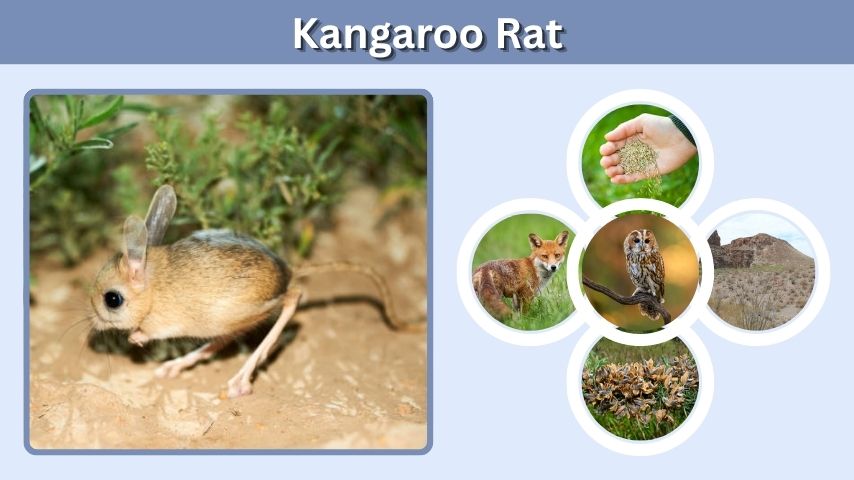
Kangaroo rats are small desert rodents known for their powerful hind legs, long tails, and amazing ability to survive with very little free water. They are not true rats like house rats or Norway rats. Instead, they belong to the pocket mouse family and live mostly in dry grasslands, deserts, sandy flats, and shrublands across western North America.
What Is a Kangaroo Rat?
Kangaroo rats are rodents in the genus Dipodomys. Their name comes from the way they hop on their large back legs, somewhat like a tiny kangaroo. They have big hind feet, short front legs, large eyes, small rounded ears, and a long tail that helps them balance while jumping.
Despite the word “rat” in their name, kangaroo rats are not the same as common pest rats. They belong to the family Heteromyidae, which also includes kangaroo mice and pocket mice. Most species live in dry regions of the western United States and Mexico.
These animals are best known for their desert survival skills. Many kangaroo rats can live without drinking liquid water because they get moisture from seeds and produce metabolic water inside their bodies. Their kidneys are highly efficient, allowing them to conserve water in extremely dry habitats.
Basic Identification
- Body type: Small, compact body with large hind legs
- Tail: Long tail, often with a tuft at the end
- Eyes: Large eyes adapted for night activity
- Ears: Small to medium-sized rounded ears
- Movement: Hops or bounds instead of walking like a regular rat
- Fur color: Usually tan, sandy brown, buff, or grayish above with a pale underside
- Cheek pouches: Fur-lined external cheek pouches used to carry seeds
- Habitat clue: Often found in deserts, sandy soils, grasslands, and dry shrublands
A kangaroo rat’s hopping movement is one of its clearest features. When startled, it can leap quickly away from danger, using its long tail for balance and sudden turns.
Kangaroo Rat Scientific Name and Classification
The term “kangaroo rat” refers to several species in the genus Dipodomys. There are more than 20 species, and each has its own range, habitat preference, and conservation status. Some are widespread, while others are rare and restricted to small areas.
The scientific name depends on the species. For example, the giant kangaroo rat is Dipodomys ingens, Merriam’s kangaroo rat is Dipodomys merriami, and Ord’s kangaroo rat is Dipodomys ordii. The desert kangaroo rat is known as Dipodomys deserti.
| Common Name | Scientific Name | General Range |
| Giant kangaroo rat | Dipodomys ingens | California |
| Desert kangaroo rat | Dipodomys deserti | Southwestern deserts |
| Merriam’s kangaroo rat | Dipodomys merriami | Southwestern U.S. and Mexico |
| Ord’s kangaroo rat | Dipodomys ordii | Western North America |
| Texas kangaroo rat | Dipodomys elator | North-central Texas |
| Stephens’ kangaroo rat | Dipodomys stephensi | Southern California |
Some names can be confusing. A “rat-kangaroo” or “rat kangaroo” may refer to Australian marsupials, not North American kangaroo rats. The musky rat-kangaroo, for example, is a marsupial and not a Dipodomys rodent.
Where Do Kangaroo Rats Live?
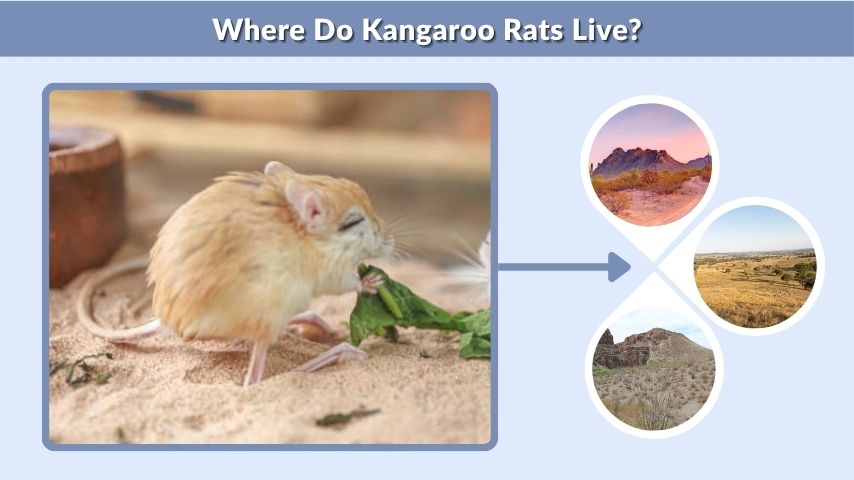
Kangaroo rats live mainly in dry open habitats. They are common in deserts, sandy flats, dry grasslands, sagebrush plains, scrublands, and open areas with loose soil. Many species prefer places where they can dig burrows easily and find enough seeds.
They are especially associated with western North America. Different species occur in California, Arizona, Nevada, Utah, New Mexico, Texas, Oregon, Idaho, and parts of Mexico. Some species are very widespread, while others live only in narrow local ranges.
Common Habitats
- Desert flats and sandy dunes
- Dry grasslands and open plains
- Sagebrush and scrubland
- Creosote bush desert
- Alkali sink habitats
- Semi-arid valleys
- Dry agricultural edges
- Open areas with loose soil for burrows
Kangaroo rats usually avoid dense forests and wet habitats. They need open ground for hopping and loose soil for digging. Their burrows are essential because they provide shelter from heat, cold, predators, and dry desert air.
Kangaroo Rat Burrows and Shelter
A kangaroo rat spends much of its life around its burrow system. Burrows are usually dug into sandy or loose soil and may include sleeping chambers, food-storage areas, and escape tunnels. The entrance may be hidden near shrubs, grasses, rocks, or low vegetation.
Burrows help kangaroo rats survive harsh desert temperatures. During the day, the outside air may become extremely hot, but underground chambers remain cooler and more humid. At night, when temperatures drop, the animal leaves the burrow to forage.
Some species store seeds underground. This seed storage is important because food availability changes with season and rainfall. A good seed cache can help a kangaroo rat survive dry periods when fresh plants are scarce.
What Do Kangaroo Rats Eat?
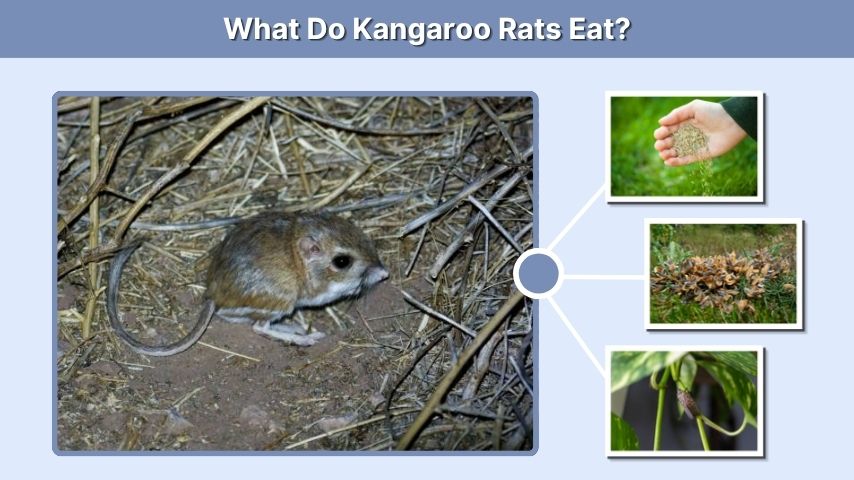
Kangaroo rats are mostly seed eaters. Their diet depends on the plants available in their habitat, but seeds are usually the main food. They may also eat grasses, leaves, stems, green plant parts, and sometimes insects.
Their external cheek pouches are a key feeding adaptation. These pouches are lined with fur and open outside the mouth. Kangaroo rats use them to carry seeds back to their burrows without wetting the food with saliva. Keeping seeds dry helps with storage.
Main Foods
- Grass seeds
- Shrub seeds
- Wildflower seeds
- Mesquite seeds in some regions
- Creosote bush seeds in desert habitats
- Green plant parts during wetter seasons
- Occasional insects
- Stored dry seeds from underground caches
Kangaroo rats often forage at night. They collect seeds from the ground and transport them to storage areas. This behavior also affects plant communities because some forgotten seeds may later germinate.
Do Kangaroo Rats Drink Water?
One of the most famous facts about kangaroo rats is that many can survive without drinking liquid water. They get moisture from the seeds they eat and from metabolic water produced when the body breaks down food.
This does not mean water is unimportant. Instead, kangaroo rats are extremely good at conserving it. Their bodies reduce water loss through efficient kidneys, dry droppings, and behavior that avoids daytime heat. By staying in burrows during hot daylight hours, they lose less moisture through breathing and evaporation.
In desert environments, this adaptation is a major advantage. Animals that depend on open water may struggle in dry regions, but kangaroo rats can live far from streams, ponds, or standing water.
Kangaroo Rat Adaptations
Kangaroo rats are built for desert survival. Their body shape, behavior, and internal systems all help them handle heat, dryness, predators, and limited food. These adaptations make them one of the most remarkable small mammals of arid North America.
Important Survival Adaptations
- Powerful hind legs: Help them leap away from predators
- Long balancing tail: Allows sharp turns while hopping
- Large eyes: Improve night vision
- Efficient kidneys: Conserve water in dry environments
- Dry droppings: Reduce water loss
- External cheek pouches: Carry seeds without moistening them
- Burrow living: Protects them from heat and predators
- Nocturnal habits: Reduce exposure to daytime desert heat
- Seed storage: Helps them survive poor food seasons
Their jumping ability is especially useful against snakes and other predators. Some kangaroo rats can make sudden vertical or sideways leaps to avoid a strike. Their long tail acts like a stabilizer, helping them land and change direction quickly.
Kangaroo Rat Predators
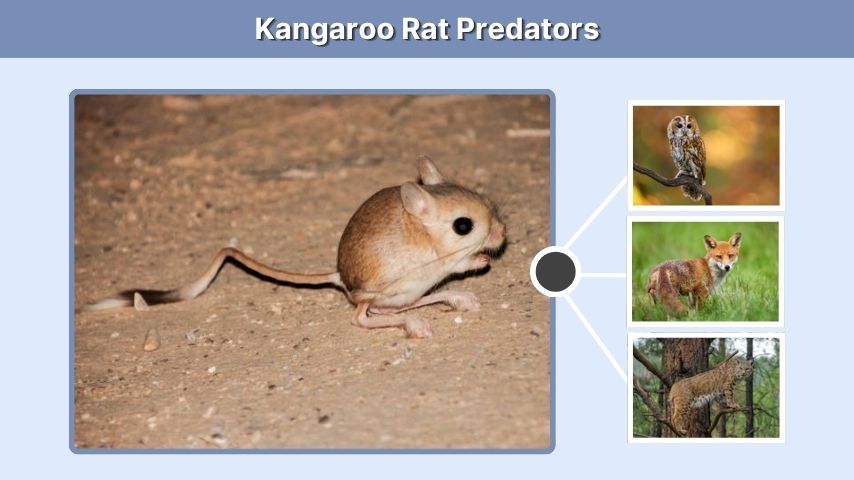
Kangaroo rats are important prey animals in desert and grassland food webs. Many predators depend on them as a food source. Because they are small and active at night, they are hunted by both nocturnal and daytime predators.
Common predators include owls, snakes, foxes, coyotes, bobcats, badgers, weasels, and hawks. Rattlesnakes are especially important predators in many desert habitats. Kangaroo rats use hearing, fast reflexes, and powerful jumps to escape attacks.
Animals That Eat Kangaroo Rats
- Owls
- Hawks
- Snakes
- Foxes
- Coyotes
- Bobcats
- Badgers
- Weasels
- Domestic cats near human areas
Kangaroo rats are not defenseless. Their strong back legs and quick reactions can help them avoid danger, but many still become prey. This predator-prey relationship is a natural part of desert ecosystems.
Kangaroo Rat Behavior
Kangaroo rats are mostly nocturnal. They come out at night to search for seeds and avoid the intense daytime heat. Their large eyes help them see in low light, while their sensitive hearing helps detect predators.
Many species are solitary. They maintain their own burrows and may defend feeding areas from other kangaroo rats. Communication can include foot drumming, scent marking, and body movements. Foot drumming may warn predators, communicate with other kangaroo rats, or signal alertness.
They are cautious animals. When they leave the burrow, they often pause, listen, and scan their surroundings. If they sense danger, they may freeze, jump, or quickly return underground.
Giant Kangaroo Rat
The giant kangaroo rat is the largest species in the genus Dipodomys. It is found in California and is strongly linked to dry grassland and shrubland habitats. This species is known for its powerful hopping, seed storage, and role in shaping the local ecosystem.
Giant kangaroo rats create visible burrow systems and cleared areas around their entrances. Their digging and seed-gathering behavior can influence soil structure and plant growth. Because they are prey for many predators, they also support the wider food web.
This species has conservation concern because much of its habitat has been lost or changed by agriculture, development, and other land-use changes. Protected areas and habitat management are important for its survival.
Desert Kangaroo Rat
The desert kangaroo rat is highly adapted to extremely dry environments. It lives in sandy desert habitats, including dunes and open desert flats. Its pale fur helps it blend with sandy surroundings, and its burrows provide protection from harsh desert conditions.
Like other kangaroo rats, it feeds mainly on seeds and avoids unnecessary water loss. It spends the hottest part of the day underground and becomes active at night. This lifestyle allows it to survive where temperatures are high and rainfall is low.
The desert kangaroo rat is a strong example of how mammals can adapt to arid landscapes without depending on daily access to drinking water.
Merriam’s and Ord’s Kangaroo Rats
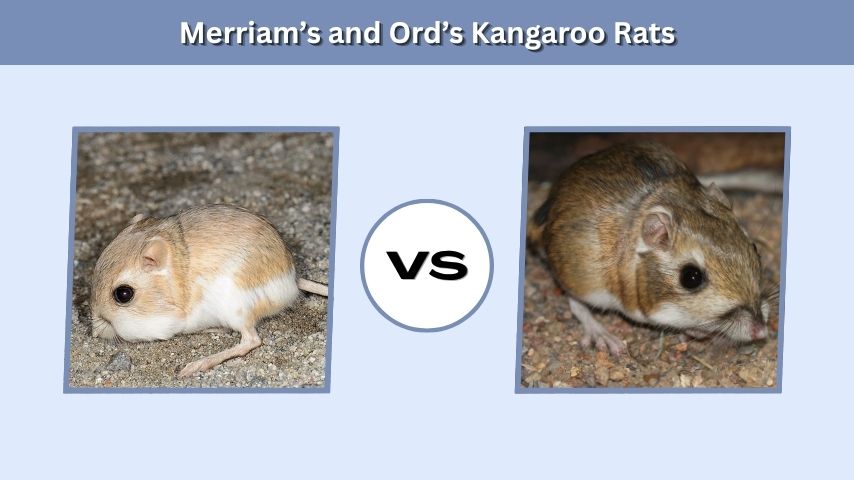
Merriam’s kangaroo rat is one of the better-known species of the southwestern United States and Mexico. It lives in dry desert and shrubland habitats and is well adapted to hot, arid conditions. It feeds mainly on seeds and uses burrows for shelter and storage.
Ord’s kangaroo rat has a wider range than many species. It occurs across parts of western North America, including grasslands, sandy areas, and open plains. It is often associated with loose soils where burrow construction is easy.
Both species show the classic kangaroo rat traits: hopping movement, seed-based diet, cheek pouches, nocturnal behavior, and strong water conservation.
Are Kangaroo Rats Endangered?
Not all kangaroo rats are endangered. Some species are widespread and locally common. However, several species and subspecies are rare, threatened, or endangered because they live in limited habitats that have been reduced or fragmented.
The giant kangaroo rat, Stephens’ kangaroo rat, San Bernardino kangaroo rat, Tipton kangaroo rat, and Morro Bay kangaroo rat are examples often discussed in conservation contexts. Threats can include habitat loss, agriculture, urban development, invasive plants, road construction, and changes in grazing or fire patterns.
Conservation work may include habitat protection, restoration, population monitoring, and careful land management. Because kangaroo rats play important ecological roles, protecting them can also benefit other desert and grassland species.
Can Kangaroo Rats Be Pets?
Kangaroo rats are wild animals and should not be kept as pets. In many places, native wildlife is protected by law, and capturing or keeping them may be illegal without special permits. They also have specialized habitat, diet, and burrow needs that are difficult to provide in a home.
A domestic pet rodent, such as a hamster, gerbil, or fancy mouse, is a better choice for people who want a small animal companion. Kangaroo rats should be appreciated as wild desert animals in their natural ecosystems.
Are Kangaroo Rats Dangerous?
Kangaroo rats are not aggressive toward people. They are shy animals that usually avoid contact. If handled, however, any wild rodent may bite in self-defense. They may also carry parasites or diseases like other wild mammals.
The best approach is to observe them from a distance and avoid touching them. If one enters a building or appears trapped, contact a local wildlife professional or animal-control service for advice. In most cases, kangaroo rats are not household pests like Norway rats or roof rats.
Kangaroo Rat vs Jerboa
Kangaroo rats and jerboas look similar because both have long hind legs and hopping movement. However, they are not the same animal. Kangaroo rats live in North America, while jerboas live in parts of Africa and Asia. They belong to different rodent families.
The similarity comes from convergent evolution. Both animals adapted to open, dry habitats where jumping helps with movement and predator escape. Their body shapes may look alike, but their evolutionary histories are separate.
Kangaroo Rat vs Kangaroo Mouse
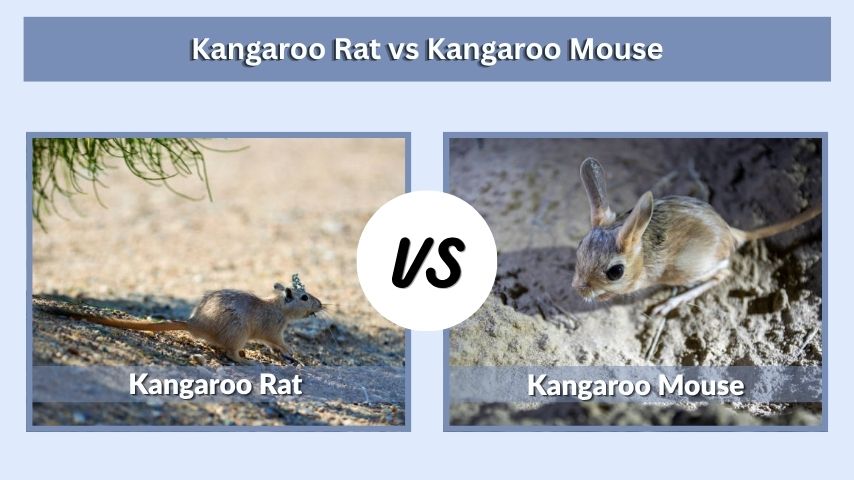
Kangaroo rats and kangaroo mice are close relatives in the same family, but they are different groups. Kangaroo mice are generally smaller and belong to the genus Microdipodops. Kangaroo rats belong to Dipodomys and are usually larger with more noticeable tails and feet.
Both are desert-adapted rodents with seed-based diets and hopping movement. They also use cheek pouches and burrows, making them similar in lifestyle.
Fun Facts About Kangaroo Rats
Kangaroo rats are small animals with extraordinary survival abilities. Their desert lifestyle makes them interesting to scientists, wildlife watchers, and students learning about animal adaptations.
Interesting Facts
- Kangaroo rats can survive in very dry habitats without regularly drinking water.
- They use external cheek pouches to carry seeds.
- Their burrows help protect them from heat and predators.
- They are mostly active at night.
- Their long tails help them balance while jumping.
- Some species can leap quickly to avoid snake strikes.
- They are not true rats like Norway rats or roof rats.
- Several rare species are important conservation priorities.
These facts show why kangaroo rats are often used as examples of desert adaptation.
FAQs
What is a kangaroo rat?
A kangaroo rat is a small desert rodent in the genus Dipodomys. It has large hind legs, a long tail, external cheek pouches, and a hopping style of movement. Although its name includes “rat,” it is not the same as a common house rat or Norway rat.
What do kangaroo rats eat?
Kangaroo rats mainly eat seeds from grasses, shrubs, and desert plants. They may also eat green vegetation and occasional insects. They collect seeds in their cheek pouches and store them in burrows. This seed-based diet helps them survive in dry habitats with limited fresh water.
Where do kangaroo rats live?
Kangaroo rats live mostly in western North America. They are found in deserts, dry grasslands, shrublands, sandy flats, and open plains. Different species occur in places such as California, Arizona, Nevada, Texas, Utah, New Mexico, and parts of Mexico.
Do kangaroo rats drink water?
Many kangaroo rats can survive without drinking liquid water. They get moisture from seeds and from water produced during digestion. Their kidneys conserve water very efficiently, and their nocturnal burrow-based lifestyle helps reduce moisture loss in hot desert environments.
Are kangaroo rats endangered?
Some kangaroo rat species are common, but others are threatened or endangered. Rare species such as the giant kangaroo rat, Stephens’ kangaroo rat, and San Bernardino kangaroo rat face habitat loss and fragmentation. Their conservation depends on protecting dry grassland, desert, and shrubland habitats.