
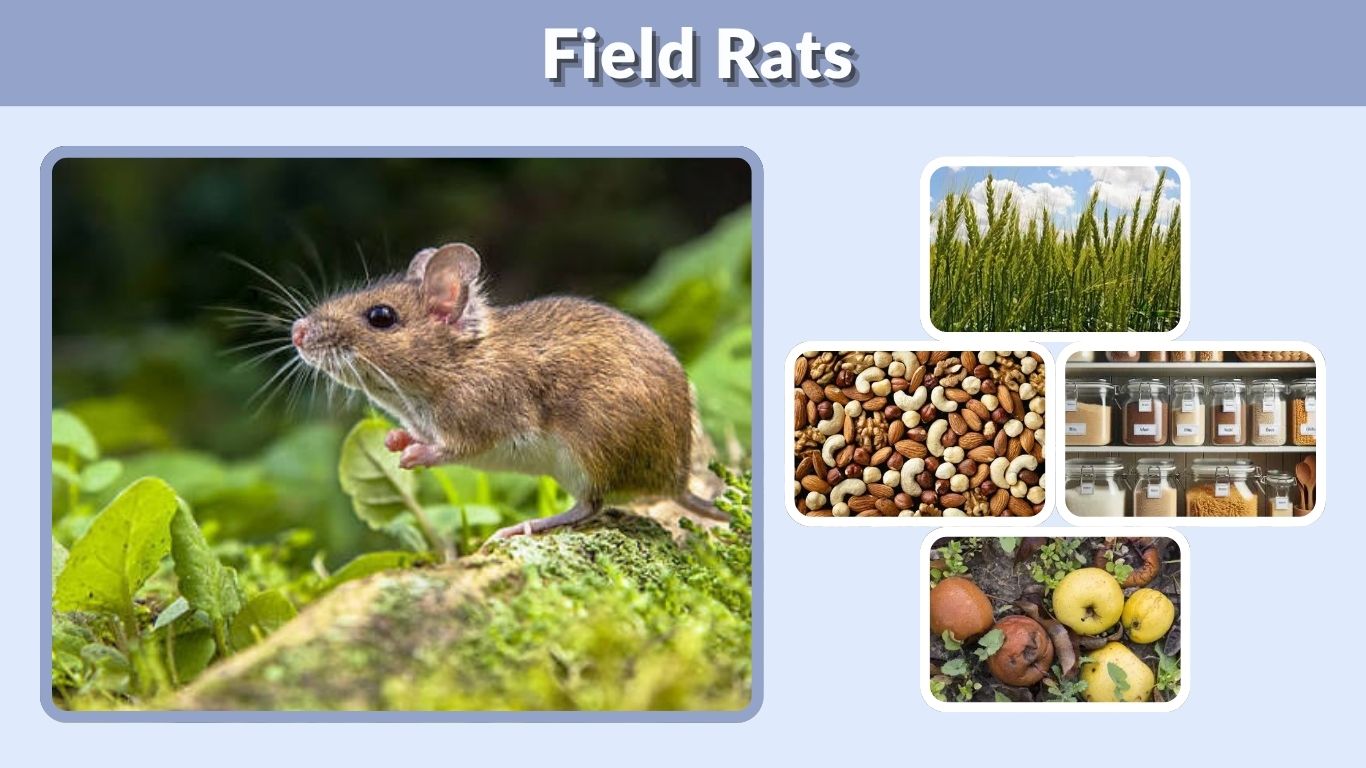
Field rats are rodents commonly found in farms, grasslands, gardens, and areas with dense vegetation. The term does not refer to one single species. It is often used for rats and rat-like rodents that live outdoors and feed on crops, seeds, fruits, insects, and stored grain. Although they usually remain in fields, they may enter barns, sheds, garages, and homes when food becomes scarce or temperatures change. Learning how to identify field rats and recognize their activity can help protect crops, property, and stored food.
What Are Field Rats?
“Field rat” is a general name used for several outdoor-living rodents. Depending on the region, it may describe cotton rats, rice rats, roof rats, Norway rats, or other rodents found around agricultural land.
Field rats usually prefer places with abundant food and thick cover. They may live in tall grass, crop fields, drainage areas, brush piles, and burrows near farmland.
Common Types of Field Rats
Several rodents may be called field rats:
- Cotton rats
- Rice rats
- Roof rats
- Norway rats
- Wood rats
- Cane rats in some regions
- Various native field rodents
Correct identification is important because each species may have different nesting habits and control requirements.
What Do Field Rats Look Like?
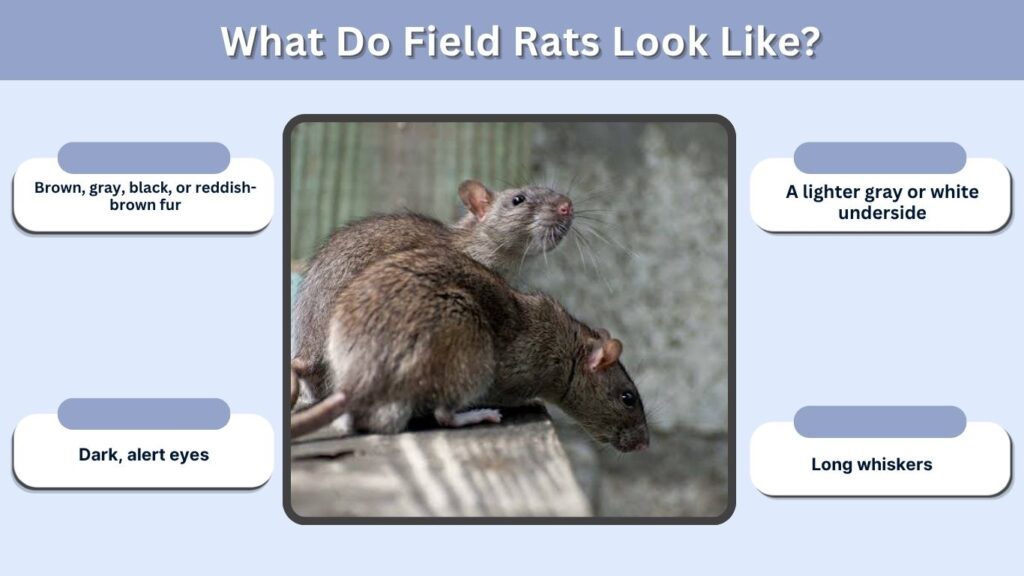
The appearance of a field rat varies by species. Most have compact bodies, noticeable ears, long tails, and coarse fur that provides camouflage in natural environments.
Field Rat Identification
Common features may include:
- Brown, gray, black, or reddish-brown fur
- A lighter gray or white underside
- Rounded or pointed ears
- Dark, alert eyes
- Long whiskers
- A tail that may be shorter than or as long as the body
- Strong front teeth used for gnawing
- Adults measuring approximately 5 to 12 inches, excluding the tail
Cotton rats often have thick, coarse fur and shorter tails. Roof rats are slimmer and have tails longer than their bodies. Norway rats are heavier, with blunt noses and shorter tails.
Field Rat vs House Rat
Field rats generally spend most of their time outdoors, while house rats are more closely associated with buildings. However, the distinction is not always clear because outdoor rats can enter homes.
| Feature | Field rat | House-associated rat |
| Main habitat | Fields, farms, grasslands | Homes, buildings, sewers |
| Nesting site | Burrows or dense vegetation | Walls, attics, basements |
| Main food | Seeds, crops, insects | Garbage, stored food |
| Activity | Mostly outdoors | Indoors and outdoors |
| Body type | Varies by species | Usually roof or Norway rat |
Where Do Field Rats Live?

Field rats occupy places where food, water, and protection are available. They are especially common around agricultural areas.
Common Field Rat Habitats
Field rats may live in:
- Cornfields
- Rice fields
- Sugarcane fields
- Cotton fields
- Wheat fields
- Vegetable gardens
- Orchards
- Pastures
- Tall grass
- Marshes
- Ditches
- Brush piles
- Barns and sheds
Some species dig underground burrows, while others build nests from grass, leaves, and plant fibers.
Do Field Rats Live Underground?
Many field rats create burrows beneath the soil. Burrows protect them from predators, harsh weather, and human activity.
A burrow may include several entrances, nesting chambers, food-storage spaces, and escape tunnels. Entrances are often found near fences, crop rows, ditches, foundations, or thick vegetation.
Other field rats nest above ground in dense grass, shrubs, hollow logs, or abandoned structures.
What Do Field Rats Eat?

Field rats are usually omnivores, meaning they eat both plant and animal material. Their diet changes depending on the season and available food.
Common Foods
Field rats may eat:
- Seeds
- Grains
- Corn
- Rice
- Wheat
- Oats
- Fruits
- Vegetables
- Roots
- Nuts
- Plant stems
- Insects
- Snails
- Small eggs
- Animal feed
- Stored grain
They may also feed on food scraps, garbage, pet food, and livestock feed when they move close to buildings.
Do Field Rats Damage Crops?
Yes. Field rats may eat newly planted seeds, young shoots, mature crops, and stored harvests. They can also damage plants by cutting stems or digging around roots.
A large population can cause serious losses in grain fields, orchards, vegetable farms, and food-storage areas.
How Do Field Rats Behave?
Most field rats are active at night, although they may appear during the day when populations are high or food is limited.
They usually travel along established paths through grass, crop rows, fences, and building edges. These paths may become visible as narrow runways in vegetation.
Are Field Rats Social?
Some field rats live in loose groups, while others are more territorial. They communicate through scent markings, sounds, and body movements.
Females often build protected nests for their young. Under favorable conditions, field rat populations can increase quickly because many species reproduce several times a year.
Can Field Rats Climb?
Some species are strong climbers. Roof rats and certain wood rats can climb trees, fences, vines, rafters, and walls.
Heavier field rats are more likely to stay close to the ground, but they may still climb rough surfaces when searching for food or shelter.
Signs of a Field Rat Problem
Field rats are secretive, so signs of activity may appear before the animals are seen.
Common Signs
- Small burrow openings in soil
- Narrow trails through grass
- Droppings around feeding areas
- Gnawed crops or fruit
- Chewed feed bags
- Missing seeds or grain
- Greasy marks along walls
- Scratching sounds in sheds or barns
- Shredded nesting material
- Tracks in mud or dust
- Strong musky odors
Fresh droppings are usually dark and moist. Older droppings become lighter and dry.
Are Field Rats Dangerous?
Field rats can create health, agricultural, and property concerns. They may contaminate food and surfaces with droppings, urine, and saliva.
Health Risks
Rodents can carry bacteria, parasites, fleas, and ticks. Diseases may spread through contaminated food, direct contact, bites, or airborne particles from dried waste.
The actual health risk varies by species and location. Avoid handling wild rats or their nests with bare hands.
Property Damage
Field rats have continuously growing teeth and must gnaw regularly. They may damage:
- Irrigation pipes
- Electrical wiring
- Feed containers
- Wooden structures
- Plastic materials
- Crop stems
- Storage boxes
- Vehicle wiring
- Insulation
Gnawed wiring can create electrical failures or fire hazards.
Do Field Rats Enter Houses?
Yes. Field rats may enter houses, barns, garages, or sheds when outdoor food is limited or weather conditions become unfavorable.
They can squeeze through small openings around doors, vents, pipes, foundations, and roofs.
Why Field Rats Move Indoors
Common reasons include:
- Cold weather
- Flooding
- Harvesting activity
- Lack of outdoor food
- Predator pressure
- Easy access to pet food
- Available nesting space
- Open garbage containers
Once inside, they may remain if food and shelter are easy to find.
How to Get Rid of Field Rats
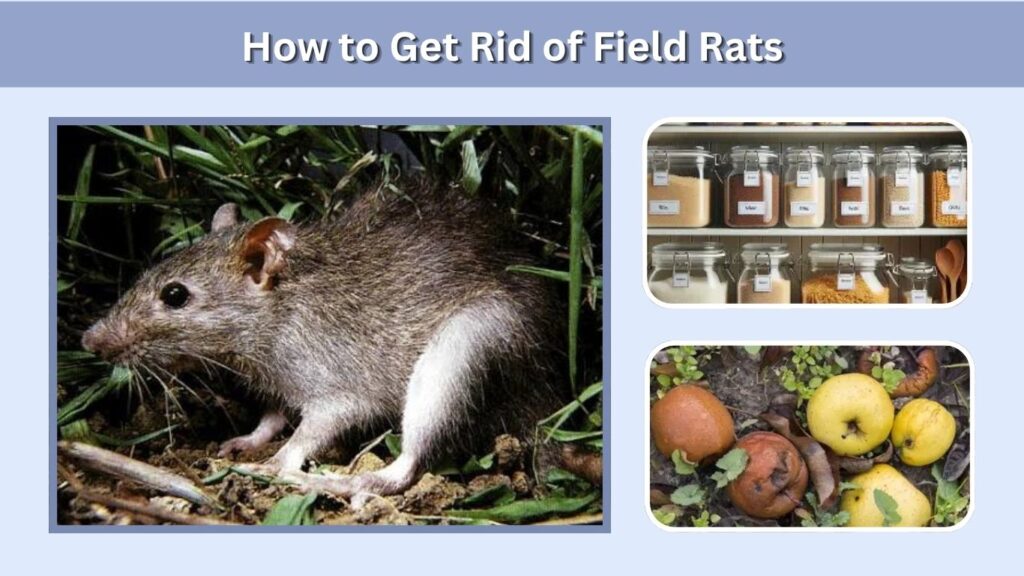
Field rat control works best when several methods are used together. Removing only a few animals may not solve the problem if food and shelter remain available.
Remove Food Sources
Store grain, animal feed, birdseed, and pet food in sealed, rodent-resistant containers. Clean spilled feed promptly.
Harvest crops and garden produce when ripe. Remove fallen fruit, nuts, and vegetables from the ground.
Reduce Hiding Places
Cut tall grass and remove weeds around buildings. Clear brush piles, unused equipment, lumber, and debris.
Keep firewood elevated and away from walls. Maintain open areas around barns, sheds, and storage structures.
Seal Buildings
Inspect structures for gaps and holes. Pay attention to:
- Door frames
- Roof edges
- Vents
- Pipes
- Foundation cracks
- Garage doors
- Wall openings
Use durable materials such as metal mesh, hardware cloth, sheet metal, or suitable sealants.
Use Traps
Snap traps are often effective when placed along walls, runways, and feeding areas. Use multiple traps and check them regularly.
Keep traps away from children, pets, livestock, and wildlife. Wear gloves when handling traps or dead rodents.
Consider Professional Control
A pest-control professional may be necessary when rats are widespread, damaging crops, entering buildings, or avoiding traps.
Professionals can identify the species, locate nests, assess entry points, and recommend a safer long-term control plan.
How to Prevent Field Rats
Prevention focuses on reducing food, shelter, and access.
Maintain clean storage areas, control weeds, repair damaged buildings, and monitor fields for burrows and runways. Store harvested crops above the ground and away from walls.
Inspect barns, garages, and sheds regularly. Early control is easier than managing a large infestation.
Field Rats vs Mice
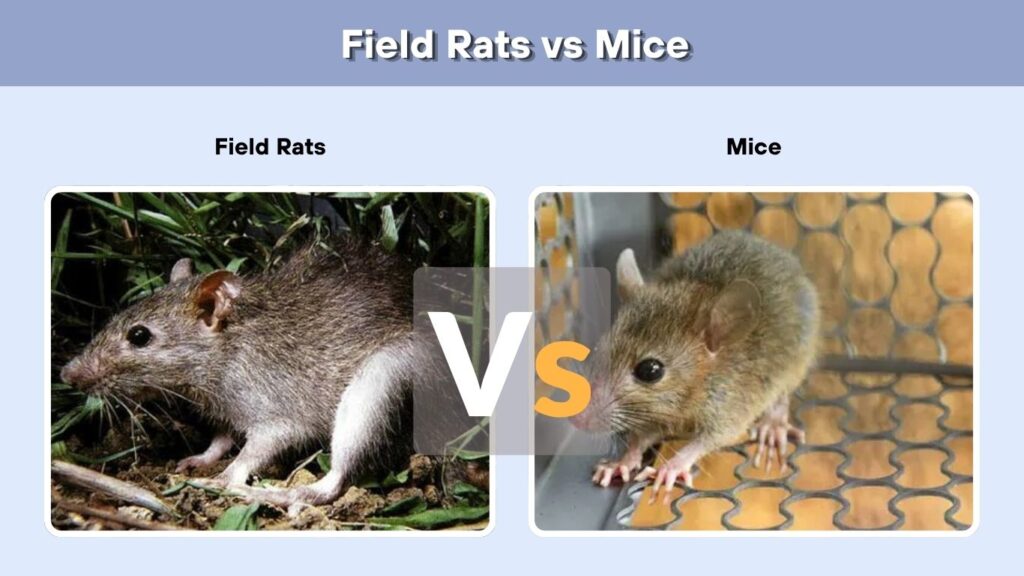
Field rats and field mice may live in similar areas, but they differ in size and behavior.
| Feature | Field rat | Field mouse |
| Body size | Medium to large | Small |
| Droppings | Larger and thicker | Small and pointed |
| Burrows | Often large and complex | Smaller nests or burrows |
| Damage | Heavy gnawing and crop loss | Seed and food contamination |
| Tail | Usually thick and noticeable | Thin and delicate |
| Tracks | Larger footprints | Tiny footprints |
Young rats may sometimes be mistaken for adult mice. Rats generally have larger feet, thicker tails, and proportionally smaller ears.
FAQs
Are field rats the same as roof rats?
Not always. Roof rats may live around fields, orchards, and farms, so they are sometimes called field rats. However, the term can also describe cotton rats, rice rats, and other outdoor rodents. Identification depends on body shape, tail length, habitat, and nesting behavior.
Where do field rats build nests?
Field rats may build nests inside underground burrows, dense grass, shrubs, hollow logs, crop fields, barns, and brush piles. Some use shredded leaves and stems, while others occupy abandoned burrows or sheltered spaces beneath equipment and buildings.
What attracts field rats to a property?
Field rats are attracted by grain, pet food, livestock feed, fallen fruit, garbage, standing water, dense vegetation, and clutter. Farms and gardens may offer both food and nesting cover, making them especially attractive to outdoor rodents.
Will field rats attack people?
Field rats usually avoid people and attempt to escape. However, a cornered, trapped, sick, or injured rat may bite defensively. Never handle a wild rat directly. Keep children and pets away from live rodents, nests, and droppings.
Can field rats damage a garden?
Yes. Field rats may eat seeds, vegetables, fruits, roots, and young plants. They can also dig around beds, chew irrigation lines, and contaminate produce. Removing fallen food, reducing cover, and using protected traps can help limit damage.