
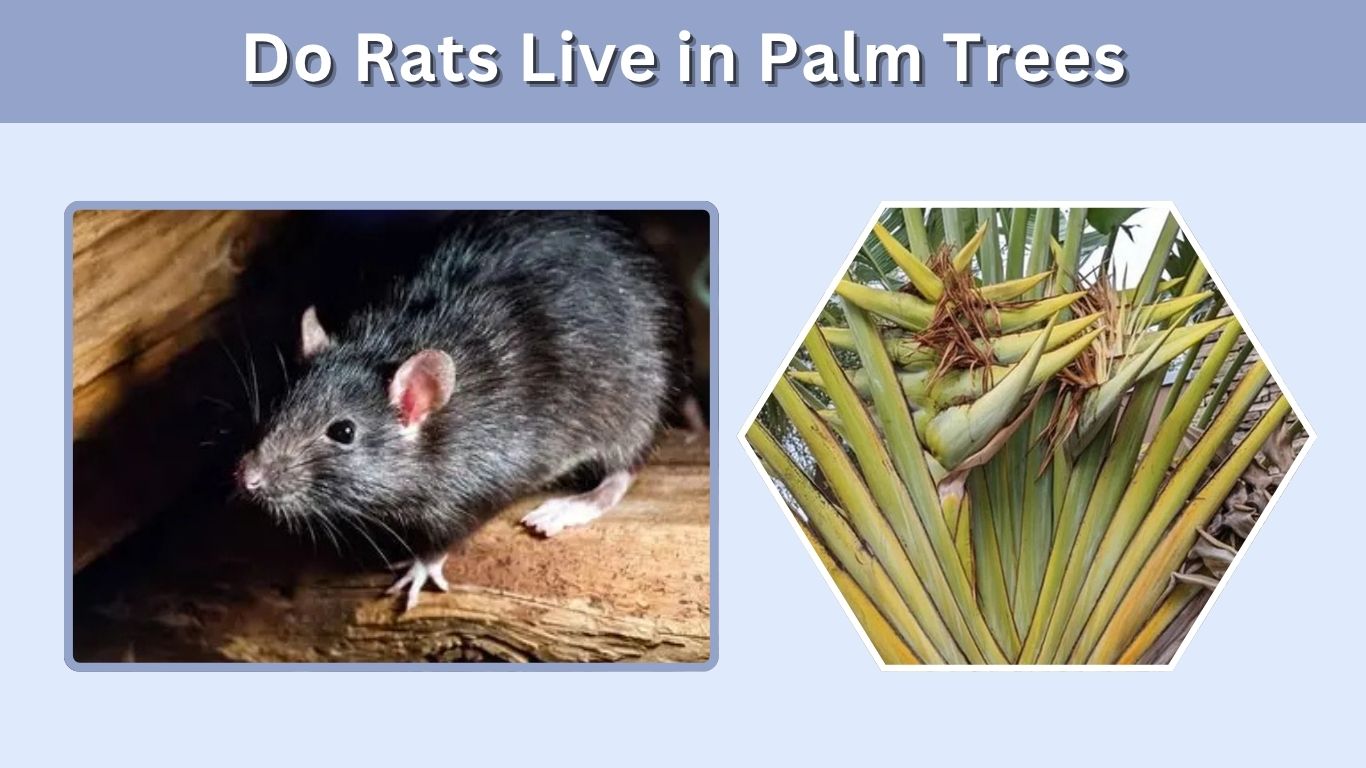
Yes, rats can live in palm trees, especially when the trees provide food, nesting material, and protection from predators. Roof rats are the rodents most commonly associated with palms because they are excellent climbers and prefer elevated nesting places. They may hide inside dense fronds, old leaf bases, or cavities near the crown of the tree. Palm trees located near roofs, fences, utility lines, or fruit trees can also help rats reach homes. Knowing why rats choose palms and how to spot them can prevent a larger infestation.
Do Rats Really Live in Palm Trees?
Rats do sometimes live in palm trees, although not every palm contains rodents. They are attracted to trees that offer reliable shelter, food, and access to nearby buildings.
Roof rats are particularly well suited to living above ground. They can climb rough palm trunks, move across branches, and hide in the dense canopy. A poorly maintained palm may provide enough protection for rats to rest, store food, or raise their young.
Do Roof Rats Live in Palm Trees?
Yes, roof rats commonly use palm trees for shelter and travel. Roof rats have slim bodies, pointed noses, large ears, and tails that are usually longer than their bodies.
Unlike Norway rats, which are more likely to burrow near the ground, roof rats prefer elevated areas such as:
- Palm crowns
- Attics
- Roof spaces
- Trees
- Dense vines
- Upper shelves in sheds
- Fences and utility lines
A roof rat may spend part of its time in a palm tree and then enter a nearby home to find additional food or nesting space.
Why Do Rats Live in Palm Trees?
Palm trees can provide several basic things rats need to survive. A tree becomes especially attractive when dead leaves, fruit, and thick vegetation remain undisturbed.
Shelter and Protection
The crown of a palm can be dense and difficult for people or predators to inspect. Overlapping fronds protect rats from rain, heat, owls, hawks, cats, and other threats.
Dead fronds and old leaf bases may form pockets where rats can sleep or build nests. Some palms also have hollow areas or loose fibers that provide extra cover.
Available Food
Many palms produce fruit, seeds, nuts, flowers, or seed pods. Rats are opportunistic feeders and may eat any of these materials.
They may also find insects, bird eggs, spilled birdseed, pet food, garbage, and fallen fruit beneath the tree. A palm surrounded by other food sources is much more likely to attract rodent activity.
Easy Access to Houses
Palm fronds can act like bridges when they touch roofs, balconies, walls, or utility lines. Rats may move from a tree to an attic without crossing open ground.
This is one reason palms planted close to houses can become part of a larger rodent problem.
Where Do Rats Live in Palm Trees?
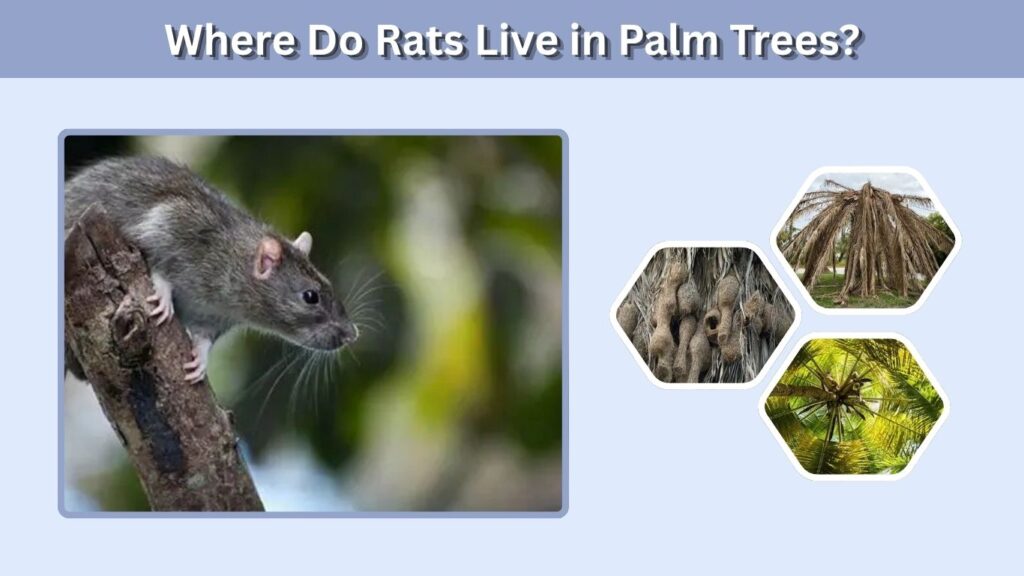
Rats usually hide in the upper portion of the palm rather than on the exposed trunk. Their preferred location depends on the tree’s structure and condition.
Common Hiding and Nesting Areas
Rats may live or rest in:
- Dense palm crowns
- Spaces between frond bases
- Dead hanging leaves
- Loose palm fibers
- Hollow or damaged sections
- Abandoned bird nests
- Thick seed clusters
- Debris trapped in the canopy
A rat nest may be made from shredded leaves, grass, paper, fabric, insulation, or palm fibers. However, the nest may be completely hidden from the ground.
Do Rats Stay in the Tree All Day?
Rats are mostly active at night. During the day, they may remain hidden inside the palm crown, an attic, a shed, or another protected space.
After dark, they come out to search for food and water. You may see them running along fronds, fences, rooflines, cables, or walls.
What Kind of Palm Trees Do Rats Live In?
Rats can use many different palm species. They are generally more interested in the condition of the tree than its exact variety.
Palms with dense foliage, edible fruit, dead fronds, or rough trunks are usually more attractive.
Palm Trees That May Attract Rats
| Palm type | Why rats may be attracted |
| Date palm | Produces sweet fruit and dense foliage |
| Queen palm | Drops fruit and seeds |
| Coconut palm | Produces edible coconuts and sheltered crowns |
| Mexican fan palm | Retains dead fronds when untrimmed |
| Canary Island date palm | Has thick crowns and fruit |
| Pygmy date palm | Produces fruit and dense lower foliage |
| Sabal palm | May retain old leaf bases and debris |
| California fan palm | Can develop a thick skirt of dead fronds |
This does not mean these palms always contain rats. A clean, well-maintained palm may never experience a rodent problem.
Do Rats Live in Palm Trees in Florida?
Yes, roof rats may live in palm trees in Florida. The state’s warm climate, abundant vegetation, fruit trees, outdoor food sources, and large number of palms create favorable conditions for rodents.
Rats may nest in palm crowns and travel to nearby homes, restaurants, sheds, and garages. They may also feed on citrus, avocados, mangoes, birdseed, pet food, and garbage.
Signs of Palm Tree Rats in Florida
Common signs include nighttime squeaking, droppings beneath trees, partially eaten fruit, and rats moving across rooflines. Homeowners may also hear scratching inside attics after rats use palm fronds to reach the building.
Regular palm maintenance and roof inspections are especially important in warm areas where rats can remain active throughout the year.
Do Rats Live in Palm Trees in California?
Yes, rats can live in palm trees in California, particularly in coastal and southern parts of the state. Southern California’s mild weather, palms, citrus trees, backyard gardens, and dense neighborhoods can support roof rat populations.
Palm trees may serve as shelter while nearby fruit trees, compost piles, pet food, or garbage provide meals.
Palm Tree Rats in Southern California
In Southern California, rats may travel between palms, roofs, fences, walls, and overhead wires. Mature palms with untrimmed fronds can provide hidden daytime resting places.
Rats may also eat palm seeds and fallen fruit. Keeping the ground clean beneath the tree can reduce the amount of food available to them.
Signs That Rats Are Living in Your Palm Tree
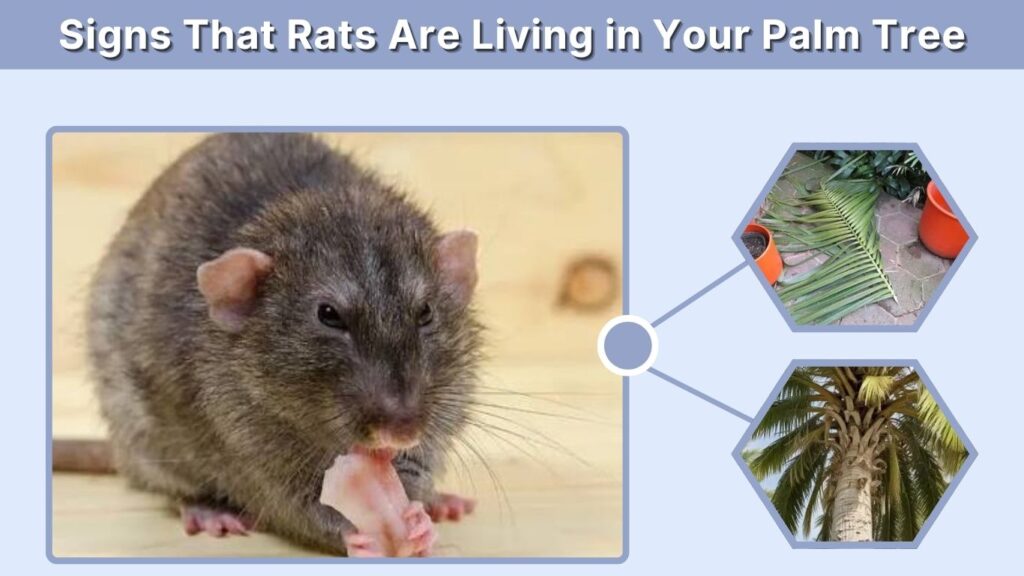
Because rats are nocturnal, you may notice evidence before seeing the animals themselves.
Common Signs
- Scratching or squeaking after dark
- Rats running along fronds or rooflines
- Droppings around the base of the tree
- Gnawed fruit, seeds, or nuts
- Shredded palm fibers
- Fallen nesting material
- Greasy rub marks on travel routes
- Food remains beneath the palm
- Damage near roof vents or soffits
- Strong musky odors near nesting areas
Fresh droppings are usually dark and shiny. Older droppings become dry and faded. Avoid touching them with bare hands.
Can Rats Climb Palm Trees?
Yes, rats can climb many palm trees. Roof rats have strong claws and excellent balance. They can scale rough trunks, old frond bases, vines, fences, and nearby walls.
Even palms with smooth trunks may be reached from:
- Neighboring branches
- Utility wires
- Roofs
- Fences
- Trellises
- Shrubs
- Other palm trees
Removing only the lower fronds may not stop rats when alternative climbing routes remain available.
Are Rats in Palm Trees Dangerous?
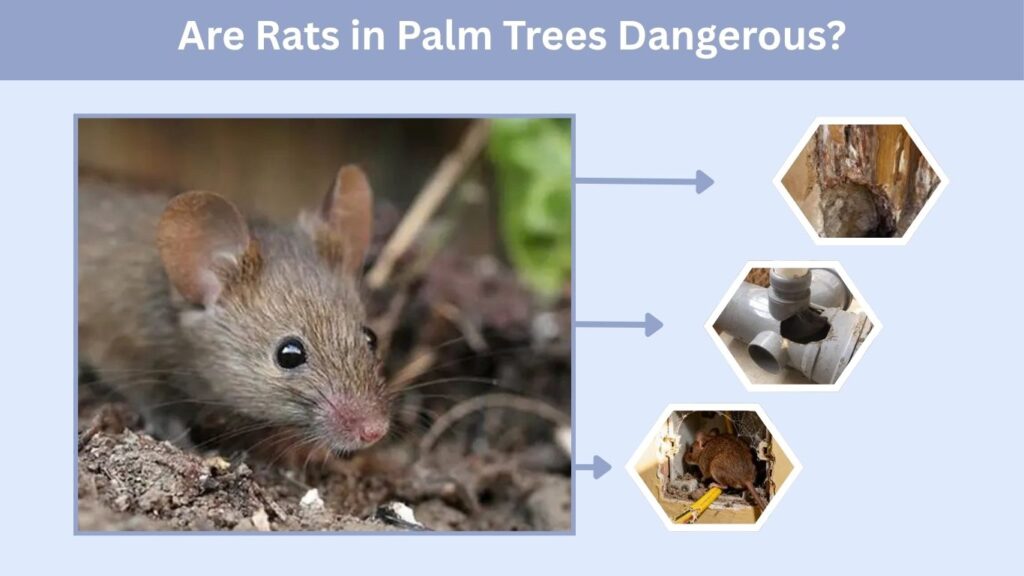
Rats in a palm tree can become a concern when they move close to homes, food-storage areas, or outdoor living spaces.
Property Damage
Once rats reach a building, they may chew:
- Electrical wires
- Insulation
- Plastic pipes
- Screens
- Wood
- Air-conditioning ducts
- Stored boxes
- Roof materials
Gnawed electrical wires can create a fire risk, while damaged ducts and insulation may be costly to repair.
Health Risks
Rats and their parasites can carry diseases. Droppings, urine, contaminated food, fleas, and direct contact can all create health concerns.
Do not sweep or vacuum dry droppings. Moisten them with an appropriate disinfectant, wear gloves, and remove them carefully.
How to Get Rats Out of Palm Trees
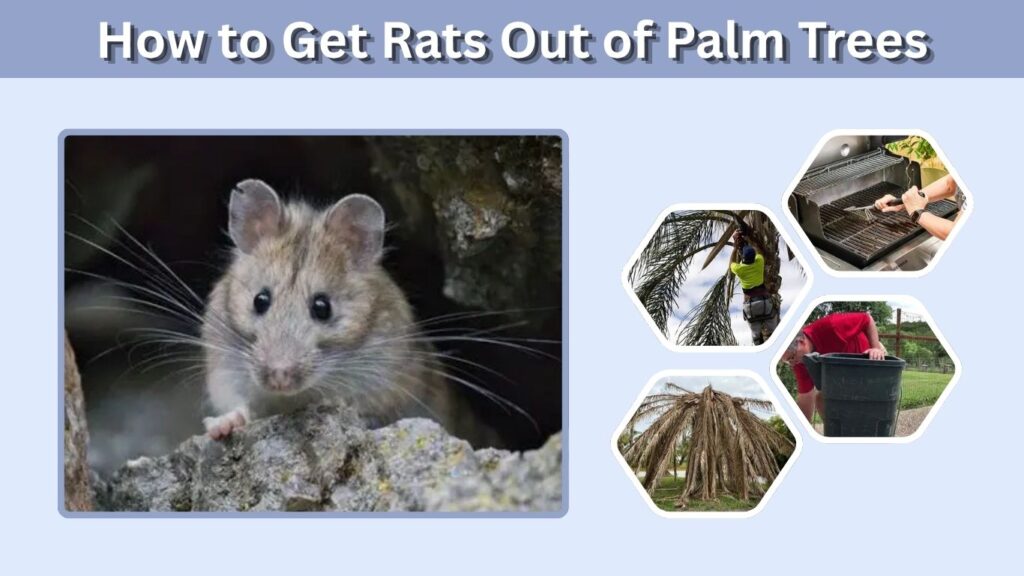
Removing rats requires a complete approach. Trimming one tree may not solve the problem when food and access routes remain available.
Trim Dead Fronds
Remove dead, hanging, or tightly packed fronds that provide shelter. Tall palm trimming should be handled by a qualified tree professional.
Avoid cutting too many healthy green fronds because excessive trimming can weaken the tree.
Remove Fruit and Seeds
Collect fallen fruit, nuts, and seeds frequently. Remove unnecessary seed pods when it is safe and appropriate for the palm.
Do not leave piles of trimmed fronds or garden debris near the tree.
Cut Off Access to the Roof
Trim fronds and nearby branches away from the house. Inspect roof vents, soffits, eaves, and pipe openings for gaps.
Seal entry points with rodent-resistant materials before rats establish an indoor nest.
Remove Outdoor Food
Bring pet food indoors at night, secure garbage cans, clean grills, and store birdseed in sealed containers. Pick ripe garden fruit and remove anything that falls to the ground.
Use Traps Safely
Snap traps may be useful along known travel paths or inside buildings. Keep traps away from children, pets, birds, and other wildlife.
Placing traps high in a palm is usually unsafe and difficult to monitor. Professional pest control may be a better option when rodents are nesting in the crown.
How to Keep Rats Out of Palm Trees
Prevention works best when the entire property is kept clean and less accessible.
Maintain palms regularly, clear fallen fruit, and reduce dense vegetation near buildings. Keep firewood, boxes, and clutter away from walls. Repair leaking faucets and remove standing water.
Inspect your attic and roof several times each year, especially when palm fronds grow toward the house.
FAQs
Do palm trees attract rats?
Palm trees do not automatically attract rats. However, palms with fruit, seeds, dead fronds, dense crowns, or access to nearby roofs can provide food and shelter. Maintaining the tree and removing other food sources can greatly reduce the risk.
Do rats build nests in palm trees?
Yes, rats may build nests in palm crowns, between old frond bases, or inside dense dead leaves. They use shredded vegetation, paper, fabric, and other soft materials. Some rats simply occupy protected cavities instead of creating a visible nest.
Can rats jump from palm trees onto roofs?
Yes, roof rats can jump between nearby surfaces. A palm frond touching or hanging close to a roof may provide an easy route. Trimming palms away from buildings and sealing roof openings can help prevent indoor infestations.
Will removing palm fruit get rid of rats?
Removing fruit and seeds reduces an important food source, but it may not eliminate all rats. Rodents may still find garbage, pet food, birdseed, insects, or shelter nearby. Fruit removal should be combined with trimming, trapping, sanitation, and exclusion.
Should I remove a palm tree because of rats?
Removing the entire palm is usually unnecessary. Proper trimming, fruit cleanup, exclusion, and rodent control can often solve the problem. Tree removal may be considered when a damaged or neglected palm continually creates unsafe nesting conditions near a building.