
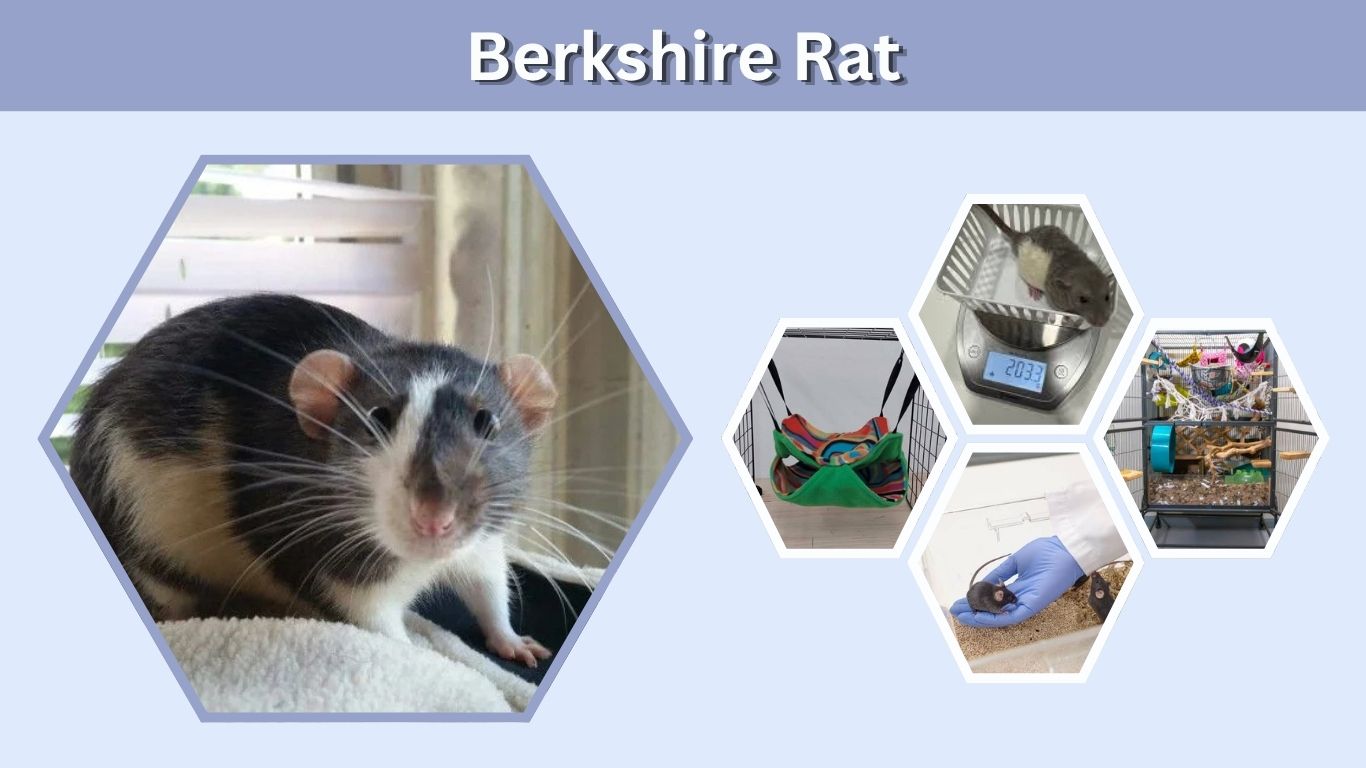
A Berkshire rat combines a colored upper body with a contrasting white underside, creating one of the recognizable patterns found in fancy rats. Black Berkshires may be especially easy to identify, but the same markings can appear with agouti, blue, mink, and other colors. Berkshire describes the pattern rather than a separate species or personality type. This guide explains the markings, common color combinations, differences from Irish and hooded rats, expected size and lifespan, and the daily care these intelligent social pets need to thrive.
What Is a Berkshire Rat?
A Berkshire rat is a domestic fancy rat, Rattus norvegicus, identified by the arrangement of colored and white areas on its body. The back and sides are mainly colored, while the underside is white. Show standards describe an ideal pattern, but pet rats often have less symmetrical markings. Their value as companions does not depend on matching those standards precisely.
Berkshire Rat Identification
- Upper body: Mainly colored across the head, back, and sides.
- Underside: A broad white area covering the belly and usually the chest.
- Feet: White markings on the feet and sometimes portions of the legs.
- Tail: Often includes a white section; the ideal amount varies between standards.
- Head: A small white spot may be present.
Pattern, Color, and Variety
“Black Berkshire Dumbo” describes three separate features: black coloration, Berkshire markings, and Dumbo ears. Likewise, “agouti Berkshire Rex” describes a ticked color, white underside, and curly coat. None of these labels alone predicts temperament.
Berkshire Rat Colors and Coat Types
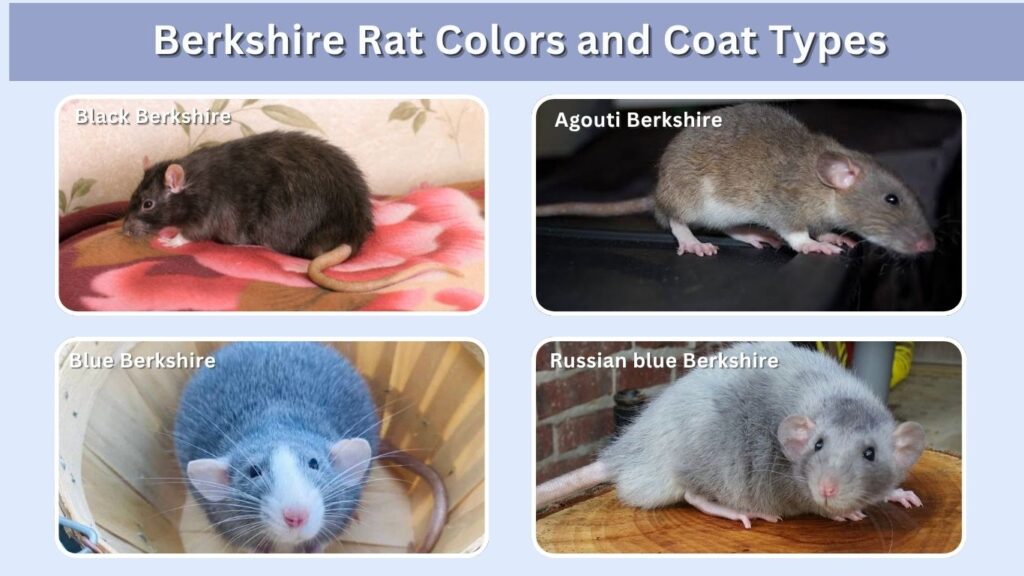
Berkshire markings can occur with many underlying colors, so these rats do not all look alike. The colored areas may be black, brown, gray, or warmer shades, while the white underside creates the contrast. Coat texture and ear shape add further variation. When identifying a rat, describe each feature separately rather than treating a long descriptive name as one breed.
Common Color Combinations
- Black Berkshire: Black upper coat contrasting with white underside markings.
- Agouti Berkshire: Brown upper coat with banded hairs and darker ticking.
- Blue Berkshire: Blue-gray colored areas above the white belly.
- Russian blue Berkshire: Dark slate-blue coloration with characteristic ticking.
- Mink Berkshire: Gray-brown upper coloring, sometimes with a bluish sheen.
- Cinnamon or fawn Berkshire: Warm brown or golden-orange coloration, respectively.
Dumbo and Rex Berkshires
A Berkshire Dumbo rat has the larger, lower-set ears associated with Dumbo rats. A Berkshire Rex has a curly coat and usually curly whiskers. Both features can occur together.
Berkshire Rat vs. Similar Markings
White markings occur in several fancy-rat patterns, which makes identification confusing when only the back or face is visible. To distinguish a Berkshire, look at the chest, belly, sides, and feet together. Also check which organization’s terminology is being used. British and American rat clubs do not always apply the word Irish to exactly the same distribution of white markings.
Berkshire vs. Irish Rat
Under NFRS standards, an Irish rat has a white triangle on its chest rather than the Berkshire’s extensive white underside.
AFRMA distinguishes English Irish, with a chest triangle, from Irish, with a moderately sized white belly marking. A Berkshire has substantially more white underneath. This explains why two guides may label a similar pet rat differently.
Berkshire vs. Hooded Rat
A hooded rat has a colored head and shoulders connected to a stripe along the back, with much of the remaining body white. A Berkshire generally has more continuously colored sides and back.
Blazed and Variegated Markings
A white facial blaze can occur with Berkshire markings. Variegated rats have patches or flecks across a largely white back. A facial marking alone cannot identify the body pattern.
Berkshire Rat Size and Lifespan
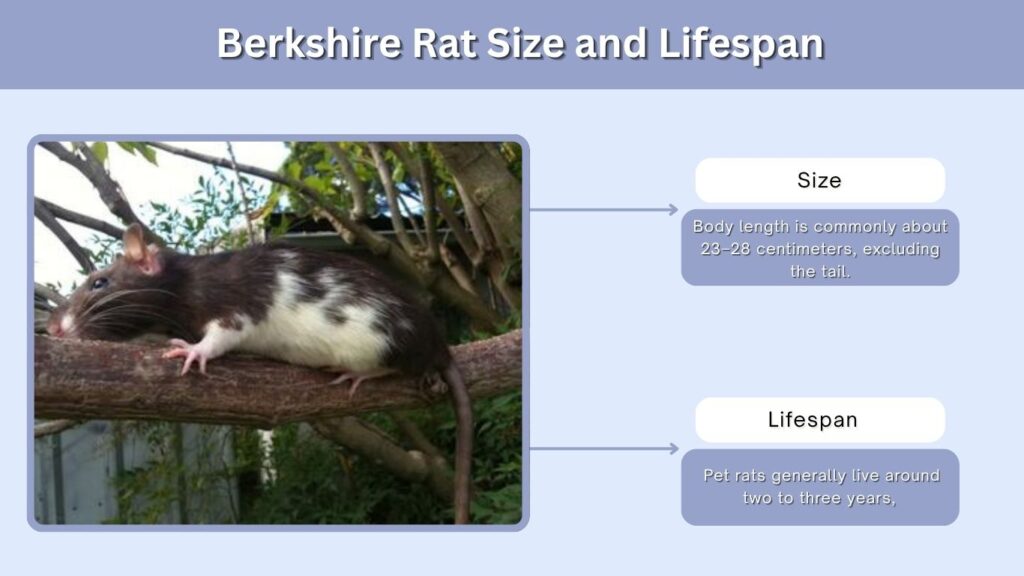
Berkshire markings do not determine adult size or how long a rat will live. Sex, inherited body size, health, and nutrition all influence development. A fully grown black Berkshire is therefore assessed like any other standard-sized fancy rat. Smaller dwarf rats can also carry Berkshire markings, so the pattern should not be used to estimate a young animal’s eventual weight.
How Big Do Berkshire Rats Get?
As a general guide for standard domestic rats, adult females often weigh around 350–450 grams and males around 450–650 grams. Body length is commonly about 23–28 centimeters, excluding the tail.
These are broad reference ranges, not target weights for every rat. Your veterinarian can assess a healthy weight for your rat.
How Long Do Berkshire Rats Live?
Pet rats generally live around two to three years, although individuals vary. Berkshire markings do not guarantee a longer or shorter lifespan.
Berkshire Rat Temperament and Companionship
Berkshire rats can be affectionate, playful, and interested in human company, but their markings do not create a separate temperament category. Genetics, socialization, handling, and individual experience all matter. Spend time observing the particular rat instead of choosing solely by appearance. A quiet animal may simply be resting, while confidence and friendliness often develop gradually after settling into a home.
Keeping Compatible Rats Together
Rats need the company of other rats. Keep compatible pairs or small groups, usually of the same sex unless reproduction has been prevented appropriately. Human attention cannot replace the social contact provided by cage mates.
Introduce unfamiliar rats carefully, with advice from an experienced rescue or veterinarian when needed.
Building Trust Through Handling
Allow the rat to investigate your hand and reward calm interaction. Support its body when lifting, and keep handling near a safe surface. Never pick a rat up by its tail. Sudden biting or withdrawal can indicate fear, stress, or pain.
Everyday Berkshire Rat Care
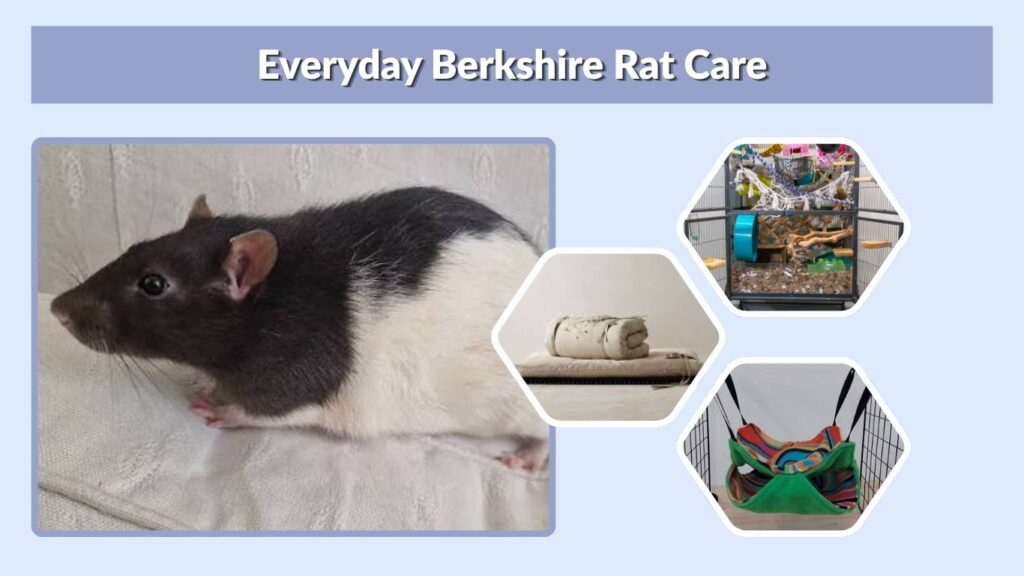
A Berkshire rat needs the same thoughtful housing, nutrition, and enrichment as other fancy rats. Its attractive markings do not call for a special diet or grooming routine. Focus on an environment that supports exploring, climbing, digging, resting, and social contact. Daily observation helps you recognize normal behavior and notice changes before small problems become difficult to manage at home.
Housing and Enrichment Essentials
- Provide a spacious, secure, well-ventilated cage with solid resting areas.
- Use comfortable, low-dust bedding and suitable nesting material.
- Offer shelters, hammocks, tunnels, and safe opportunities to climb.
- Provide foraging activities and supervised exploration outside the cage.
- Keep the enclosure away from direct sunlight, drafts, and excessive heat.
Remove soiled bedding regularly and keep sleeping areas dry. Adjust access to shelves and resources as rats age.
Food and Water
Use a nutritionally complete rat food as the dietary foundation, supplemented with small portions of suitable vegetables and occasional fruit. Limit treats and monitor body condition.
Provide fresh water continuously. Check drinking bottles daily for leaks or blockages, and ensure every rat can reach food and water.
Health, Genetics, and Choosing a Berkshire Rat
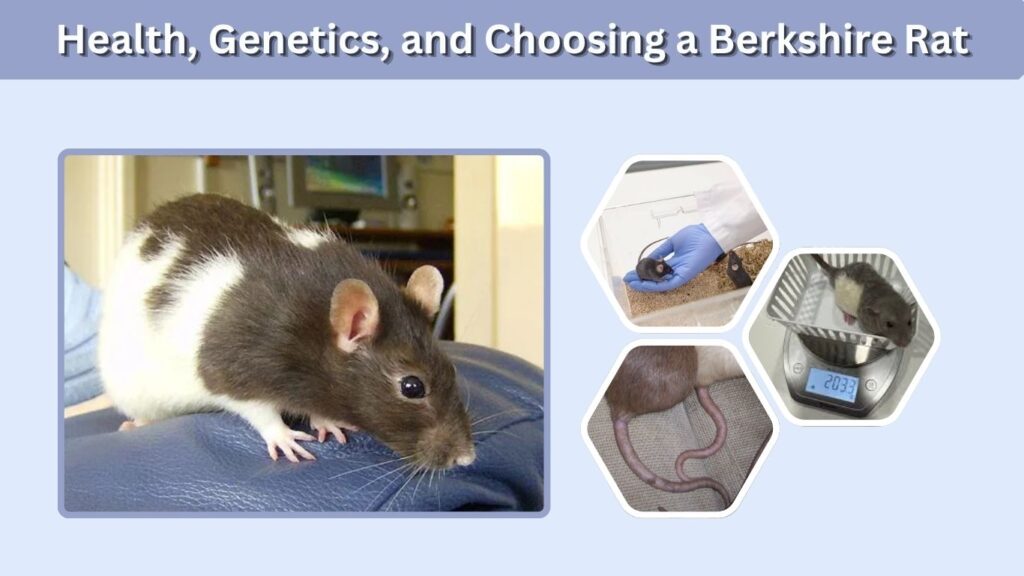
A neat white belly tells you little about a rat’s health. Before adoption, consider the animal’s condition, social history, living environment, and access to veterinary care. Afterward, monitor appetite, breathing, movement, weight, and interaction with companions. Berkshire is a descriptive marking, so neither perfect symmetry nor a fashionable color combination should be treated as evidence that an animal is healthy.
Health Changes to Watch For
- Persistent sneezing, wheezing, or changes in breathing.
- Reduced appetite, weight loss, or difficulty eating.
- New lumps, skin wounds, or unexplained hair loss.
- Unusual inactivity, hunched posture, or poor grooming.
- Changes in walking, balance, or social behavior.
Arrange veterinary advice concerning changes. Labored breathing or collapse requires urgent attention.
Choosing a Pet or Breeder
Ask about age, sex, previous illnesses, companion relationships, and the health of relatives when known. Observe the rat moving and interacting naturally. Look for clean housing and honest answers, whether adopting through a rescue or approaching a breeder.
Berkshire Rat Genetics
Similar Berkshire patterns can arise in different breeding backgrounds. The parents’ appearance alone does not reliably predict every offspring’s markings. Family history matters, and selecting for health and temperament should take priority over producing a precise white pattern.
FAQs
Berkshire descriptions often combine a marking with color, coat texture, or ear shape. Separating those terms makes photographs and breeder descriptions easier to understand. The questions below address common points of confusion, but remember that pet rats may fall between formal show categories. Their daily needs remain the same even when the most accurate marking label is uncertain or disputed.
Is a Berkshire Rat a Separate Breed?
Berkshire is primarily a marking pattern within domestic fancy rats. It describes the distribution of colored and white areas, not a separate species.
Can a Berkshire Rat Have Dumbo Ears?
Yes. Dumbo describes ear shape and position, while Berkshire describes body markings. A single rat can have both traits, alongside various colors and coat types.
Are All Berkshire Rats Black and White?
No. Black is one possibility, but Berkshire markings also occur with agouti, blue, Russian blue, mink, cinnamon, fawn, and other colors.
Does a Berkshire Rat Need a White Head Spot?
Show requirements differ. A head spot is included or preferred in major standards, but some pet rats described as Berkshire lack one.
Is an Agouti Rat With a Pale Belly Always Berkshire?
No. Ordinary agouti rats naturally have a lighter, grayish underside. Berkshire markings involve distinct white areas rather than merely the normal difference between the back and belly color.