
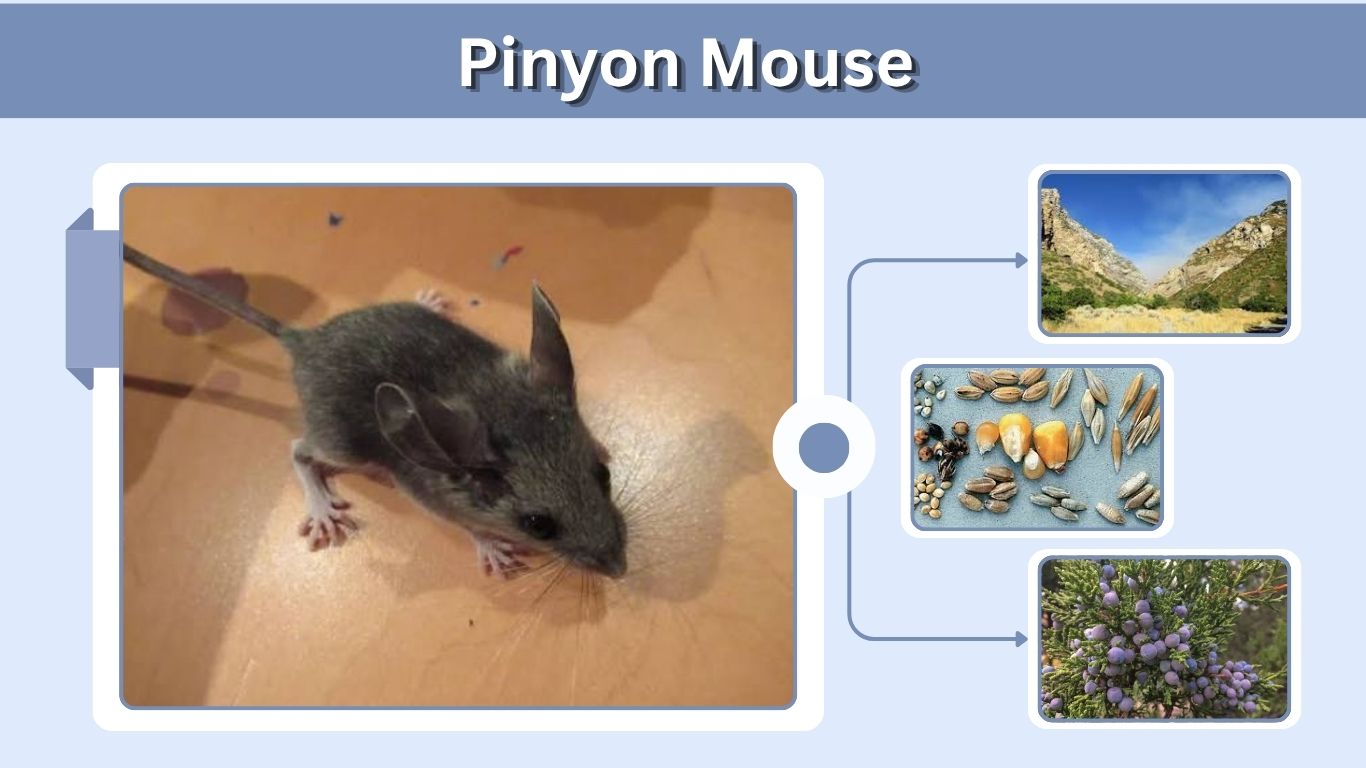
The pinyon mouse is a medium-sized native rodent found across much of the western and southwestern United States and parts of Mexico. Recognizable by its unusually large ears, long tail, dark eyes, and pale underside, it is commonly associated with rocky slopes, brushy woodlands, and pinyon-juniper forests. Despite its name, the mouse is not limited to pinyon trees and can occupy deserts, grasslands, chaparral, pine forests, and canyon habitats. It is a nocturnal omnivore that eats seeds, fruits, fungi, and invertebrates while using food caching, climbing, and water-conservation adaptations to survive dry environments.
What Is a Pinyon Mouse?
The pinyon mouse, scientifically known as Peromyscus truei, belongs to the same genus as deer mice, cactus mice, and white-footed mice. It is also called the pinyon deermouse because of its close relationship to other native Peromyscus species.
The name comes from its frequent association with pinyon-juniper woodland, where pinyon seeds, juniper berries, tree cover, rocks, and dense shrubs provide food and shelter. However, the species can live in many other environments.
Scientific Classification
| Category | Classification |
| Kingdom | Animalia |
| Class | Mammalia |
| Order | Rodentia |
| Family | Cricetidae |
| Genus | Peromyscus |
| Species | Peromyscus truei |
What Does a Pinyon Mouse Look Like?
The pinyon mouse has a slender body, pointed snout, large black eyes, prominent ears, white feet, and a long, lightly furred tail. Its soft upper fur may range from pale yellowish-brown to dark gray or nearly brown-black, while the belly and feet are usually white.
Its coat often matches the surrounding soil and vegetation, providing camouflage against predators. Juveniles are generally grayer than adults and gradually develop their mature coloring through several molts.
Identification
- Yellowish-brown, gray-brown, or dark upper fur
- White or pale belly and feet
- Very large, thinly furred ears
- Large, shiny black eyes
- Pointed nose and long whiskers
- Long tail with a dark upper stripe
- Long hairs around the tail tip
- Large hind feet
- Slender but moderately robust body
- Strong climbing ability
The ears are particularly useful for identification. In a pinyon mouse, ear length may equal or exceed the length of the hind foot, helping separate it from certain similar mice.
Pinyon Mouse Size
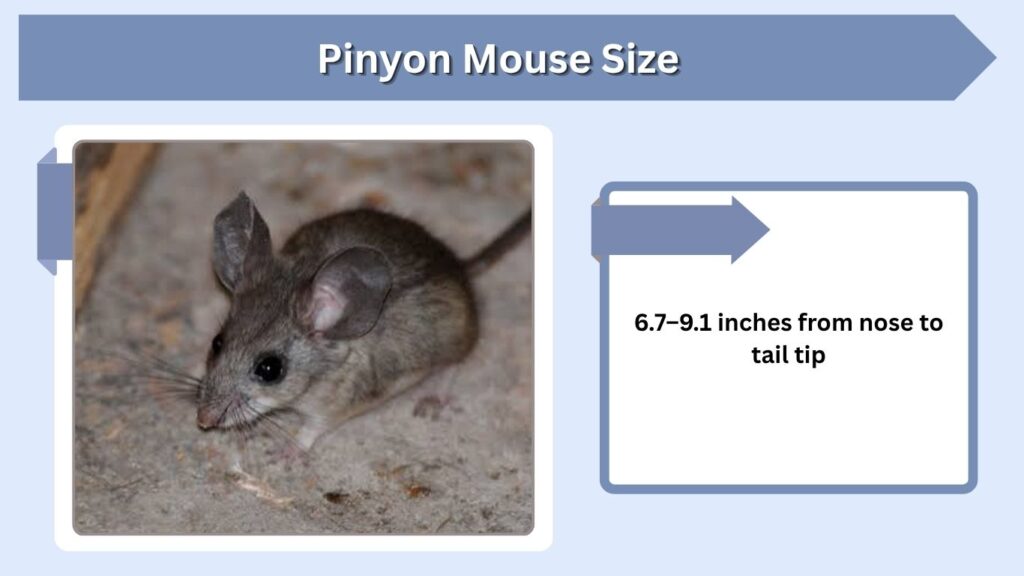
Adult pinyon mice generally measure approximately 6.7–9.1 inches from nose to tail tip. The tail alone may measure about 3–4.8 inches, depending on the individual and geographic population.
Adults commonly weigh around 20–25 grams, or approximately 0.7–0.9 ounces. Males and females are generally similar in size. Populations in different areas may vary in body length, tail length, ear size, and foot measurements.
| Feature | Typical measurement |
| Total length | 6.7–9.1 inches |
| Tail length | 3–4.8 inches |
| Average weight | 20–25 grams |
| Hind-foot length | Commonly 22 mm or more |
| Ear size | Often equal to or longer than hind foot |
Where Do Pinyon Mice Live?
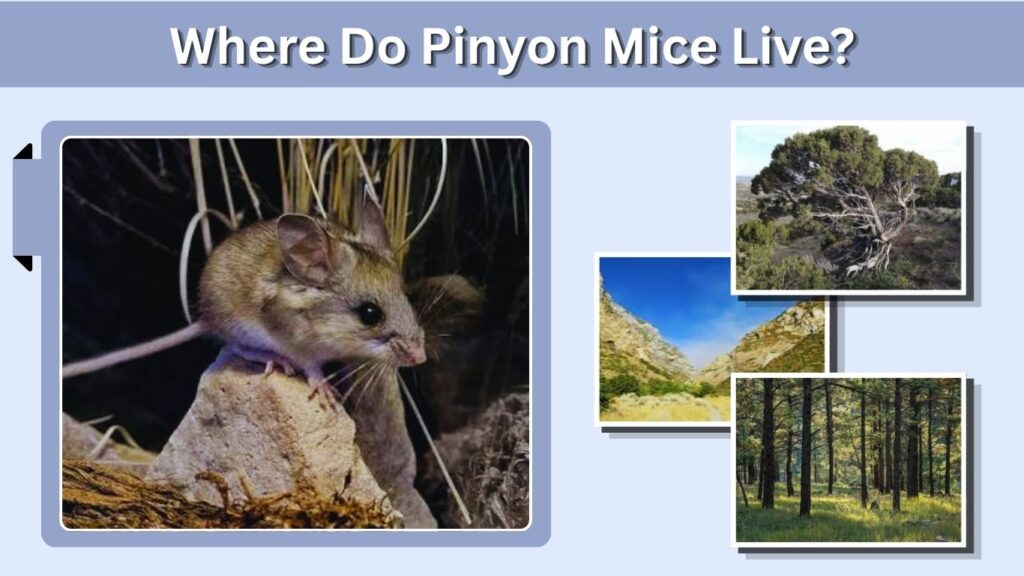
Pinyon mice are native to western North America. Their range extends from parts of Oregon and Wyoming southward through the western and southwestern United States into Mexico, including Baja California. A geographically separated population also occurs around Palo Duro Canyon in the Texas Panhandle.
Preferred Habitat
Pinyon mice may inhabit:
- Pinyon-juniper woodland
- Ponderosa pine forest
- Rocky slopes and canyons
- Chaparral and brushland
- Sagebrush habitat
- Oak woodland
- Redwood forest
- Grassland
- Desert scrub
- Areas containing boulders and cacti
They usually prefer places with some combination of shrubs, trees, rocks, logs, leaf litter, and ground cover. In California, they occur from sea level to approximately 8,600 feet and are especially abundant in rocky, brushy, and open woodland habitats.
Nesting and Shelter
Pinyon mice do not depend on one type of nest. They may shelter beneath rock ledges, inside cracks, under fallen logs, in hollow branches, within dead trees, or near the bases of shrubs.
A mouse may use several daytime den sites within its territory. These protected spaces offer cooler temperatures, reduced water loss, and protection from predators.
What Do Pinyon Mice Eat?
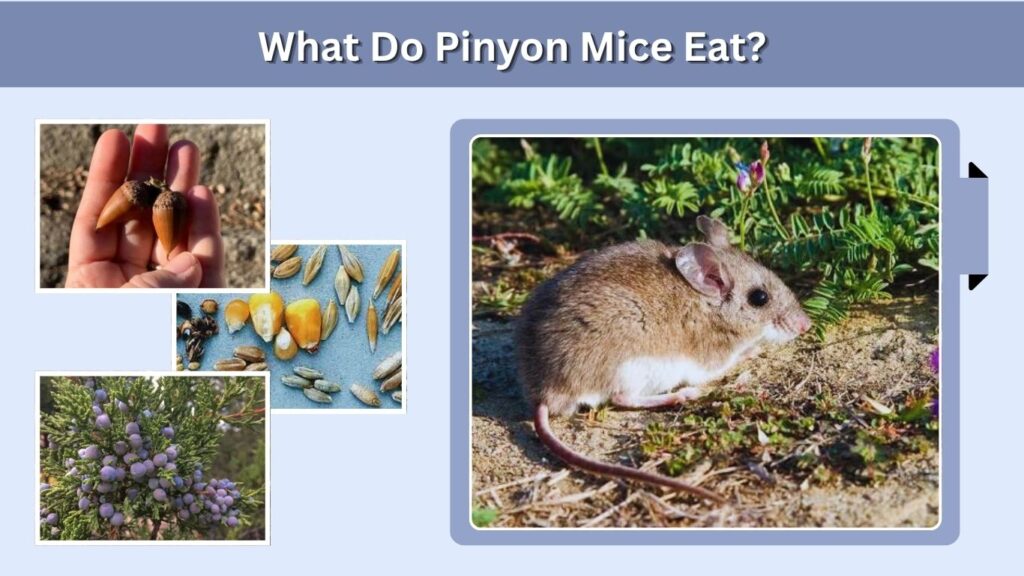
Pinyon mice are omnivores, although seeds and fruits form a major part of their diet. They forage mainly on the ground beneath shrubs but can climb small trees and bushes to reach food.
Common Foods
Their diet includes:
- Pinyon and juniper seeds
- Juniper berries
- Acorns
- Grains
- Other nuts and seeds
- Berries and fruits
- Leaves
- Fungi
- Insects
- Spiders and other invertebrates
Seasonal food availability influences their diet. Juniper seeds and berries may be important in winter, while acorns and other plant foods become more available during warmer months.
Food Caching
Pinyon mice frequently store food for later use. They may bury seeds in small holes or create multiple caches around their dens and foraging territory.
Some cached seeds are never recovered. Those forgotten seeds may germinate, meaning the mice can act as both seed predators and occasional seed dispersers.
Pinyon Mouse Adaptations
Pinyon mice occupy environments where water and food may become scarce. Their behavior and body functions help them survive warm summers, cold winters, drought, and unpredictable food supplies.
Water Conservation
A pinyon mouse may obtain much of its water from food and dew. During dry periods, it can produce more concentrated urine and drier feces, reducing the amount of moisture lost from its body.
The mouse may also lower its activity and enter short periods of torpor, during which metabolism and energy use decline.
Nocturnal Behavior
Pinyon mice are primarily active at night. Resting in protected dens during daylight helps them avoid high daytime temperatures and many visual predators.
They may be less active on bright, moonlit nights because increased visibility makes them easier for owls and other predators to locate.
Climbing Ability
Large feet, flexible bodies, and long tails make pinyon mice capable climbers. The tail helps with balance as they move over rocks, logs, shrubs, and small trees.
Climbing allows them to reach fruit and seeds while also providing additional escape routes when threatened.
Behavior and Home Range
Pinyon mice are generally solitary and territorial around their nesting areas. Males usually occupy larger areas than females, and their ranges may overlap with those of several females.
A study from Colorado recorded average home ranges of approximately 0.79 acre for males and 0.62 acre for females, although the actual area varies with habitat, population density, food, and water availability.
They rely heavily on smell, hearing, touch, and low-light vision. Their long whiskers help them feel nearby objects while moving through dense vegetation or dark rock crevices.
Pinyon Mouse Lifecycle and Reproduction
Pinyon mice may breed from late winter through fall, with the greatest activity generally occurring during spring and early summer. Breeding timing varies with climate, elevation, rainfall, and available food.
After a gestation period of approximately 26 days, a female usually gives birth to three to six pups. Nursing females may have a longer gestation.
Young Pinyon Mice
Newborns are hairless, blind, and unable to survive without maternal care. Their eyes and ears remain closed, and each pup weighs only a few grams.
Hair covers the body by about two weeks of age. The young are nursed inside the nest until they are weaned and capable of living independently. Females provide the parental care.
Pinyon Mouse Lifespan
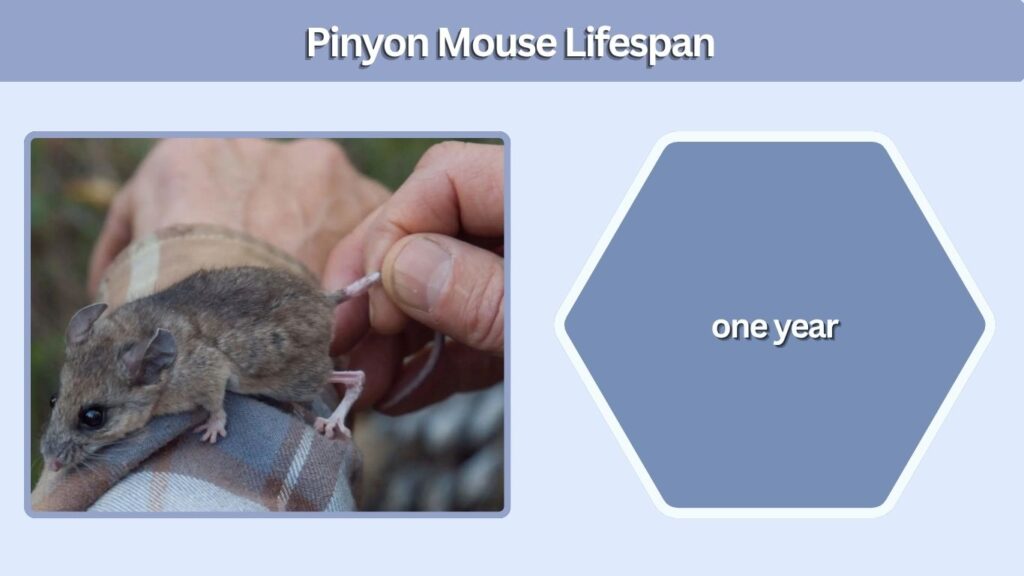
Wild pinyon mice commonly live for approximately one year, although some may survive longer. Predation, drought, disease, food shortages, and harsh weather contribute to high mortality.
Captive animals can live considerably longer. One recorded captive pinyon mouse reached approximately 5.4 years, but such longevity is unlikely in the wild.
Predators and Food-Web Role
Pinyon mice are hunted by:
- Owls
- Hawks and other birds of prey
- Rattlesnakes
- Weasels
- Coyotes
- Feral cats
- Other carnivorous mammals
Their nocturnal activity, camouflaged fur, quick movement, sheltered dens, and sensitive hearing help them avoid predators. Nevertheless, they remain an important food source in woodland and desert ecosystems.
Pinyon Mouse vs. Deer Mouse
The pinyon mouse is a type of deermouse, but it is a separate species from the common deer mouse, Peromyscus maniculatus.
| Feature | Pinyon mouse | Common deer mouse |
| Scientific name | P. truei | P. maniculatus |
| Ears | Especially large | Large but usually less distinctive |
| Tail | Long and hairy-tipped | Commonly sharply two-toned |
| Habitat | Rocky slopes and open woodland | Very broad range of habitats |
| Association | Pinyon-juniper and brush | Grassland, forest, farms, mountains |
| Body size | Usually medium-sized | Highly variable, often smaller |
Appearance varies geographically, so reliable identification may require measurements or examination by a wildlife specialist. Deer mice occupy a much broader range of habitats and commonly show a strongly bicolored body and tail.
Interaction With Humans
Pinyon mice usually avoid people, but they may enter cabins, garages, sheds, campers, or homes near natural habitat. Indoors, they can contaminate food, gnaw packaging, store seeds, and leave nesting material or droppings.
Never sweep or vacuum dry rodent waste. Wear gloves, soak droppings and nesting material thoroughly with an appropriate disinfectant, allow sufficient contact time, and wipe everything up with paper towels. This reduces the risk of sending contaminated particles into the air.
FAQs
Is a pinyon mouse the same as a deer mouse?
No. The pinyon mouse belongs to the deermouse genus Peromyscus, but it is a separate species from the common deer mouse. It generally has larger ears and is more closely associated with rocky woodland habitats.
Why does the pinyon mouse have large ears?
Its large ears support sensitive hearing, helping it detect predators and communicate at night. They may also help release body heat, although predator detection and nighttime awareness are especially important.
Do pinyon mice eat pinyon seeds?
Yes. Pinyon and juniper seeds can be important foods, but the mouse also eats acorns, berries, fungi, leaves, insects, spiders, and other available foods.
Are pinyon mice active during the day?
They are mainly nocturnal and spend much of the day inside protected dens. Disturbance, food shortages, or unusual conditions may occasionally cause daytime activity.
Can a pinyon mouse be kept as a pet?
Pinyon mice are wild native rodents, not domesticated pet mice. Wildlife laws may restrict possession, and their natural behavior, disease risks, escape ability, and specialized needs make them unsuitable for most households.