
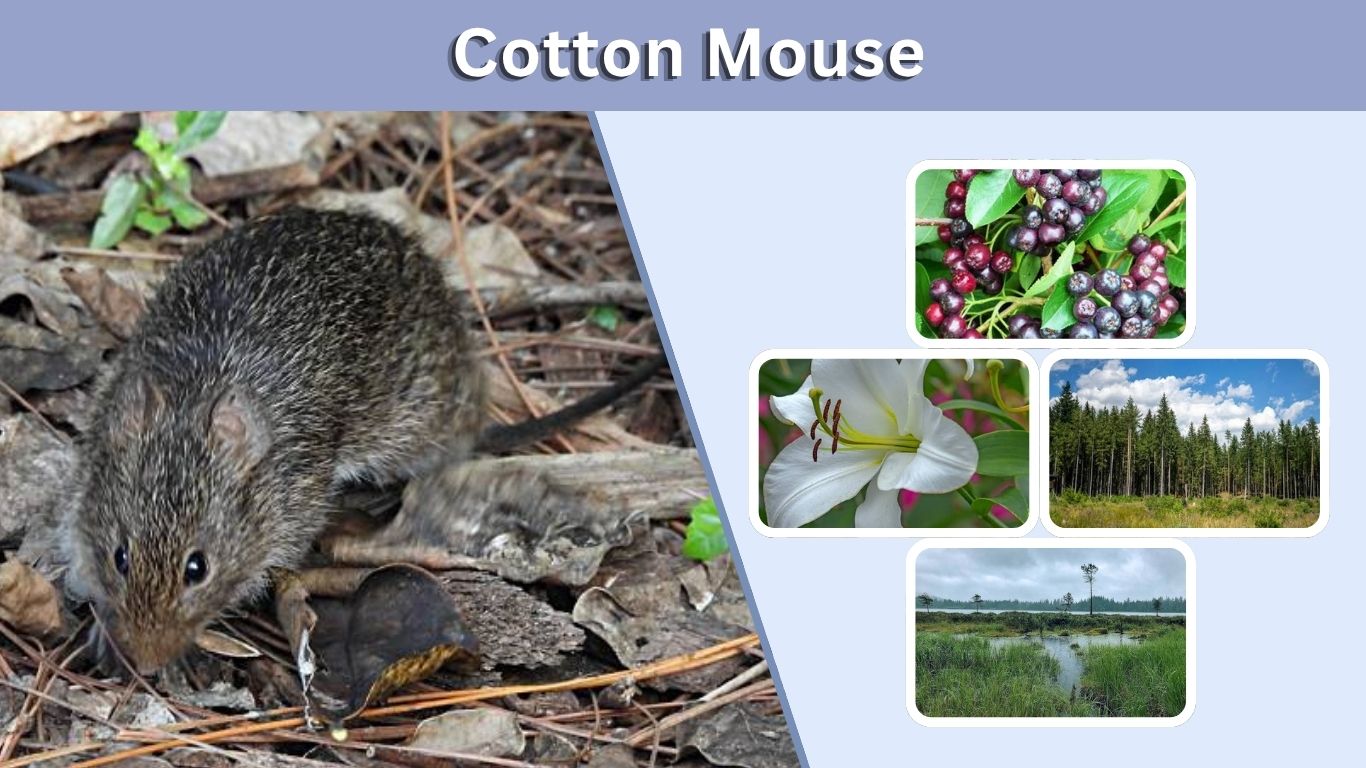
The cotton mouse is a native North American rodent found mainly in the southeastern United States. It has brown upper fur, a pale belly, white feet, and a tail that is darker above than below. Although it resembles the white-footed mouse and deer mouse, the cotton mouse generally has a heavier body and a shorter, less distinctly two-colored tail. One endangered subspecies, the Key Largo cotton mouse, survives only in a restricted area of southern Florida.
What Is a Cotton Mouse?
The cotton mouse, or cotton deermouse, has the scientific name Peromyscus gossypinus. It belongs to the family Cricetidae and the same genus as many animals commonly called deer mice.
Its name does not mean that it primarily eats cotton. The name originated from observations of these mice collecting raw cotton and using it as soft nesting material. They may also build nests from grass, leaves, moss, bark and other plant fibers.
Scientific Classification
| Classification | Name |
| Kingdom | Animalia |
| Class | Mammalia |
| Order | Rodentia |
| Family | Cricetidae |
| Genus | Peromyscus |
| Species | Peromyscus gossypinus |
Both “cotton mouse” and “cotton deermouse” are accepted common names for this species.
Cotton Mouse Identification
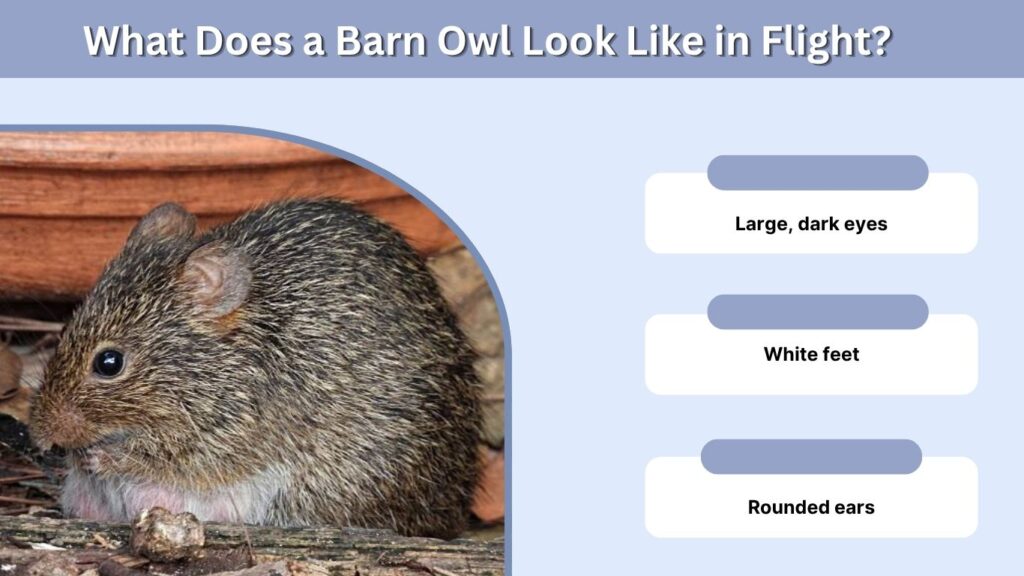
The cotton mouse is a medium-sized, strongly built member of the genus Peromyscus. Its coat provides camouflage among leaf litter, fallen wood and dense forest vegetation.
Physical Characteristics
- Brown or dark brown fur across the back
- Black hairs mixed through the upper coat
- Reddish-brown coloring along the sides
- Creamy white or gray-white belly
- White feet
- Large, dark eyes
- Rounded ears
- Tail darker above than underneath
- Tail shorter than the combined head-and-body length
An adult averages approximately 7 inches in total length, including a tail of about 3 inches. Adults commonly weigh around 34–51 grams, although size varies geographically and between individuals.
Cotton Mouse vs White-Footed Mouse
Cotton mice can be difficult to distinguish from white-footed mice because both have brown backs, white bellies and white feet. The cotton mouse is generally larger and heavier.
| Feature | Cotton mouse | White-footed mouse |
| Scientific name | Peromyscus gossypinus | Peromyscus leucopus |
| Typical adult weight | About 34–51 grams | About 15–25 grams |
| Body shape | Heavier and more robust | Smaller and more slender |
| Tail | Shorter and weakly two-toned | Often more clearly two-toned |
| Habitat | Moist southeastern woodlands | Forests and brush across a wider range |
Size can help with identification, but young cotton mice may overlap with adult white-footed mice. Researchers may need skull measurements, genetic testing or other specialized methods to confirm the species.
Cotton Mouse Range and Habitat

Cotton mice inhabit the southeastern United States. Their distribution extends through parts of Florida, Georgia, Alabama, Mississippi, Louisiana, Texas, Arkansas, Oklahoma, Tennessee, Kentucky, the Carolinas and southeastern Virginia. Small populations also occur near the northern edge of their range, including southern Illinois.
Preferred Habitat
Cotton mice commonly occupy:
- Hardwood forests
- Bottomland woodlands
- Swamps and wetland margins
- Pine forests
- Brushy field edges
- River and stream corridors
- Rocky bluffs
- Coastal scrub
- Wooded areas containing fallen logs and stumps
They often shelter inside tree cavities, root spaces, hollow logs, burrows and tangles of vines or brush. Studies in southeastern pine forests show that root boles and fallen woody material provide important daytime refuges.
Cotton mice can occasionally occupy old barns, sheds or deteriorating buildings near woodland habitat. However, they are primarily wild forest rodents rather than mice that depend on houses.
What Does a Cotton Mouse Eat?
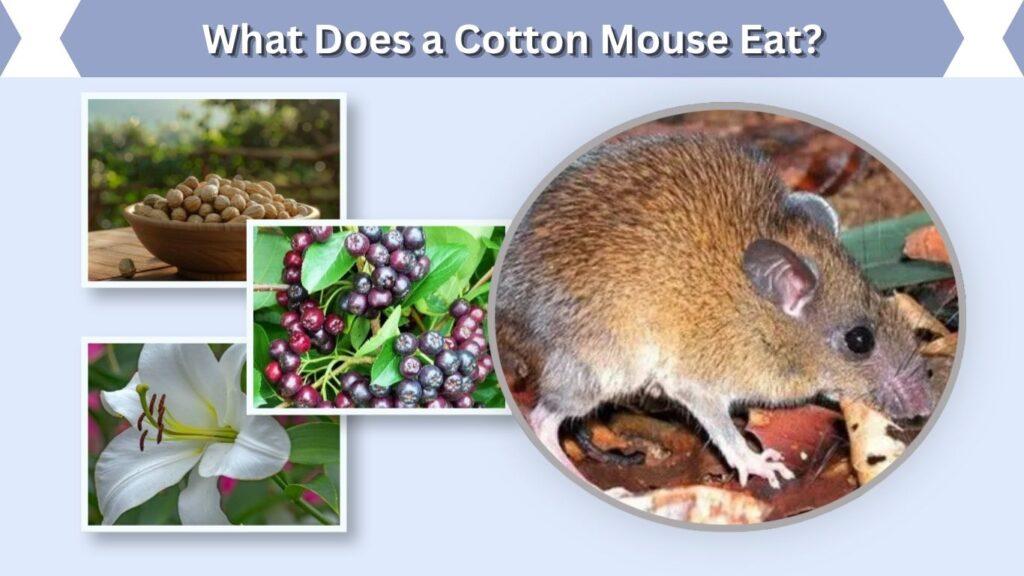
The cotton mouse is an omnivore and opportunistic feeder. It consumes whatever suitable foods are abundant in its surroundings, and its diet changes with the season.
Common Foods
Cotton mice eat:
- Seeds
- Nuts
- Fruits and berries
- Flowers
- Fungi
- Beetles and other insects
- Spiders
- Slugs
- Other small invertebrates
- Occasional animal remains
Animal matter may account for a significant portion of the diet. Most feeding takes place at night, when the mouse searches through vegetation, logs and leaf litter.
By eating insects, cotton mice may help regulate some invertebrate populations. They also disperse seeds and serve as an important food source for woodland predators.
Cotton Mouse Behavior
Cotton mice are primarily nocturnal. They remain sheltered during much of the day and emerge after dark to feed and explore.
They are strong climbers, capable swimmers and effective diggers. These abilities allow them to move through swampy forests, climb vegetation and create underground refuges. They do not normally migrate or hibernate, although they may enter short periods of reduced activity under extreme environmental conditions.
Cotton mice communicate through scent, touch and high-pitched sounds. Like other Peromyscus mice, an excited individual may rapidly strike its front feet against a surface, producing a drumming sound.
Cotton Mouse Predators
Cotton mice are preyed upon by numerous forest animals, including:
- Snakes
- Owls
- Foxes
- Weasels
- Skunks
- Bobcats
- Domestic and free-roaming cats
Their brown coloring, nocturnal activity and secretive behavior help them avoid detection. Nevertheless, predation is one reason their average wild lifespan is relatively brief.
“Cotton mouse snake” is not a recognized animal name. The phrase may refer to a snake eating a cotton mouse or result from confusion between the names cotton mouse and cottonmouth. Snakes are natural predators of cotton mice, and Burmese python predation has been documented specifically involving the endangered Key Largo subspecies.
Cotton Mouse Reproduction and Life Cycle
Breeding time varies with climate. Cotton mice can reproduce throughout the year in Florida, while populations in cooler areas may breed mainly during spring, summer and autumn.
Babies and Development
Pregnancy normally lasts approximately 23 days. A litter can contain one to seven babies, with three or four being typical. Females may produce several litters during a favorable breeding season.
Baby cotton mice are born blind, hairless and helpless. Their ears open after approximately five or six days, their eyes open at around 13 days, and they begin eating solid food soon afterward. Most are weaned and capable of living independently at approximately three to four weeks old.
How Long Does a Cotton Mouse Live?
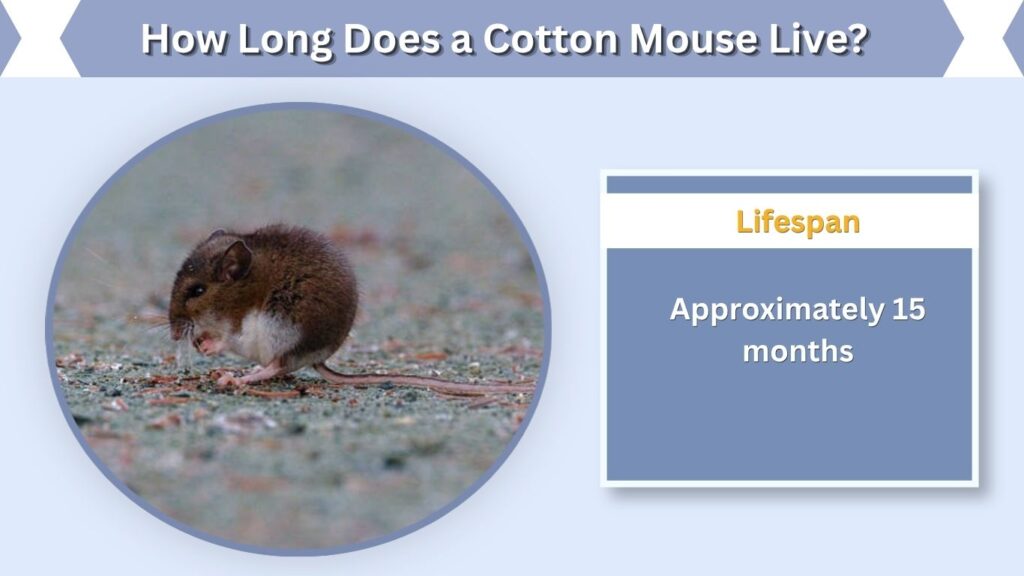
The average wild lifespan is only around four to five months. Many young mice are lost to predators, weather, food shortages, parasites and other hazards. Individuals that survive these threats may live considerably longer, with a reported maximum wild lifespan of approximately 15 months.
Key Largo Cotton Mouse
The Key Largo cotton mouse, Peromyscus gossypinus allapaticola, is an endangered subspecies native to Key Largo, Florida. It depends heavily on tropical hardwood hammock forests, especially in the northern part of the island.
Why Is the Key Largo Cotton Mouse Endangered?
Its major threats include:
- Destruction and fragmentation of hardwood hammock habitat
- Roads and expanding development
- Predation by free-roaming cats
- Invasive predators, including Burmese pythons
- Competition from introduced rodents
- Hurricanes and severe environmental events
- Rising seas and changes to coastal habitat
The small distribution of this subspecies makes it particularly vulnerable. Losing even a limited amount of habitat can isolate populations and reduce access to nesting sites, food and breeding partners.
The cotton mouse species as a whole is not federally endangered. The protected status applies specifically to the geographically restricted Key Largo cotton mouse.
FAQs
Is a cotton mouse the same as a cotton rat?
No. The cotton mouse is Peromyscus gossypinus, while cotton rats belong to the genus Sigmodon. Cotton rats are generally more heavily built, have coarser fur and are commonly associated with grassy habitats. Cotton mice are more closely connected with wooded and brushy environments.
Why is it called a cotton mouse?
The name developed because early observers found these mice using cotton fibers to construct their nests. Cotton is nesting material rather than their main food. In natural habitats, they use leaves, grass, moss, bark and other soft vegetation.
Can cotton mice enter houses?
Cotton mice sometimes enter old buildings, sheds and structures located near wooded habitat. They may seek shelter or nesting material inside, but they are less closely associated with human buildings than house mice.
Are cotton mice dangerous?
Cotton mice normally avoid people and are not naturally aggressive. However, any wild rodent may bite when trapped or handled. People should avoid touching wild mice, nests, urine or droppings directly and should use safe sanitation methods when cleaning rodent-contaminated areas.
Can a cotton mouse be kept as a pet?
A wild cotton mouse is unsuitable as a household pet. It can become severely stressed in captivity, may bite defensively and requires specialized care. An injured or genuinely orphaned mouse should be taken to a licensed wildlife rehabilitator rather than raised without professional guidance.