
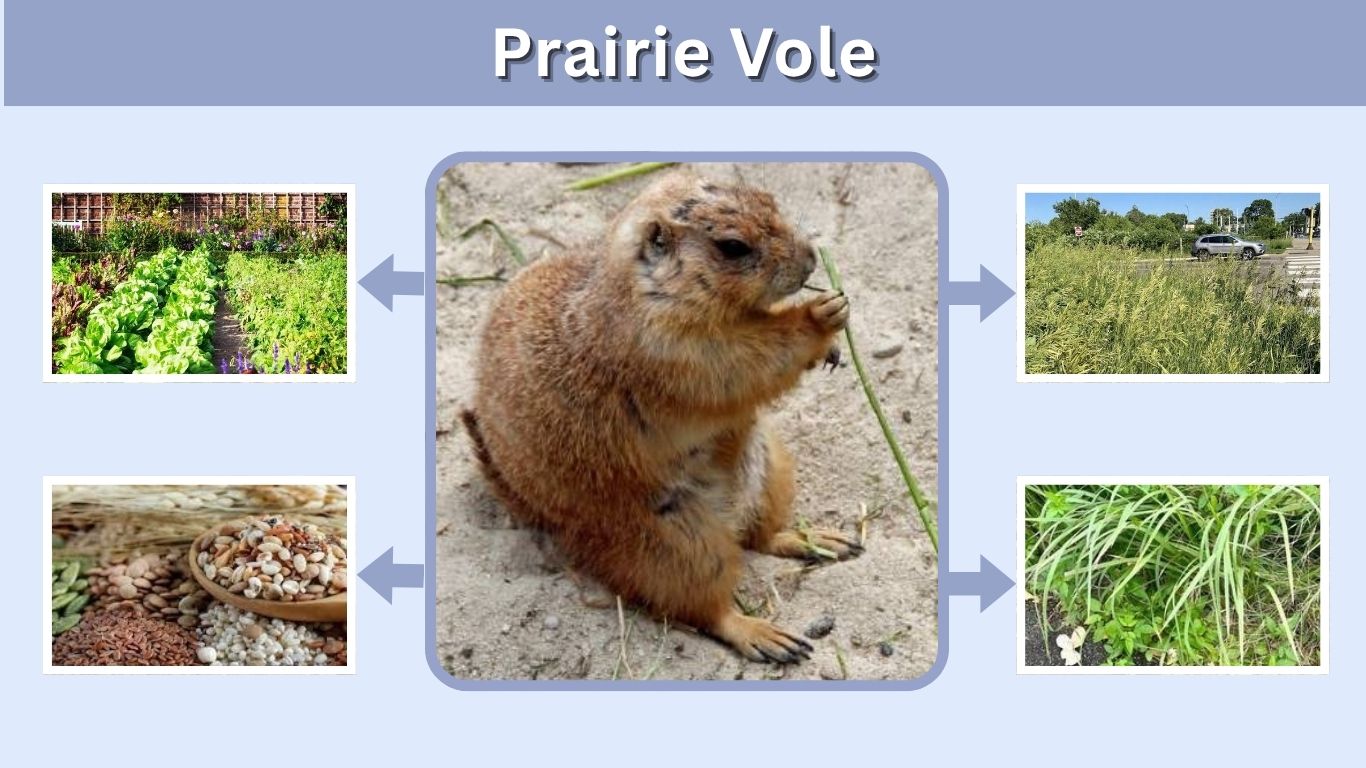
The prairie vole is a small North American rodent recognized for its rounded body, short tail, plant-based diet, and unusually strong social bonds. It inhabits prairies, dry grasslands, pastures, agricultural fields, and roadside vegetation, where it builds grassy runways and underground nests. Prairie voles are widely studied because males and females often form lasting partnerships and share responsibility for raising their young. However, calling them completely faithful for life oversimplifies their behavior because some individuals mate with additional partners or establish new bonds. Beyond research, prairie voles are important prey for owls, hawks, snakes, foxes, and weasels.
What Is a Prairie Vole?
The prairie vole, scientifically named Microtus ochrogaster, is a member of the rodent family Cricetidae. It is related to meadow voles, montane voles, woodland voles, hamsters, and several other small rodents.
Prairie voles are ground-dwelling animals adapted to living beneath grasses and low vegetation. They are native to central North America, with a range extending from parts of Canada through the central United States.
| Feature | Description |
| Scientific name | Microtus ochrogaster |
| Family | Cricetidae |
| Average length | About 5–7 inches |
| Weight | Approximately 1–2.5 ounces |
| Diet | Mainly grasses, roots, seeds, and plants |
| Habitat | Prairies, pastures, fields, and grassy roadsides |
| Wild lifespan | Usually less than one year |
| Social behavior | Often forms long-term pair bonds |
Prairie Vole Identification
Prairie voles have compact bodies that may initially make them look like mice. However, they have shorter tails, smaller ears, and blunter faces than most true mice.
Identification Features
- Body: Rounded, stocky, and close to the ground
- Fur: Coarse brown, gray-brown, or blackish-brown
- Underside: Pale tan, grayish, or yellowish
- Face: Broad with a short, blunt muzzle
- Eyes: Small, dark, and rounded
- Ears: Short and partly concealed by fur
- Tail: Short, hairy, and usually darker above
- Legs: Short and suited to ground-level movement
Their grizzled appearance comes from dark hairs mixed with brown or yellowish tips. Males and females are generally similar in size and coloration.
Prairie Vole Size
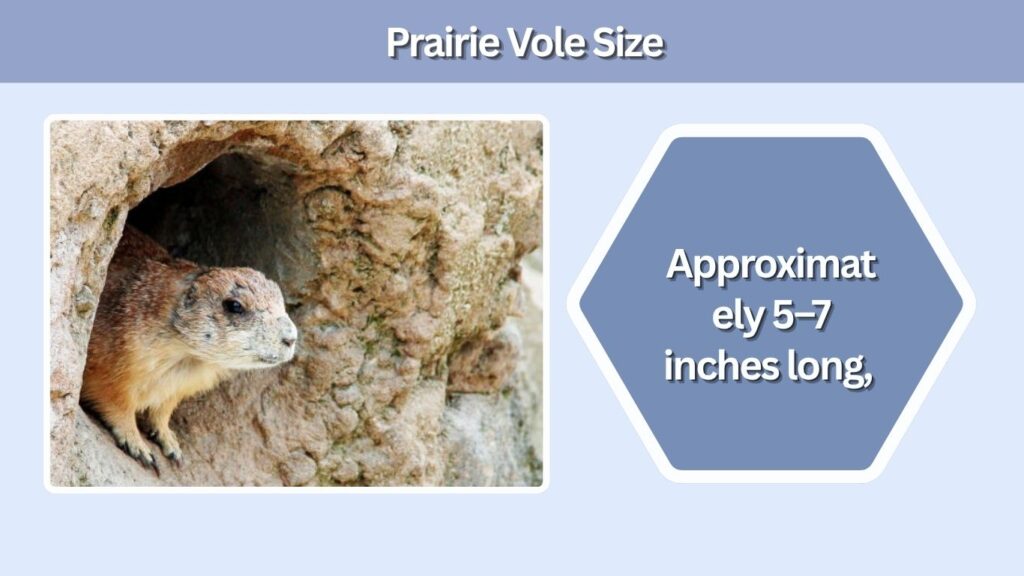
Adult prairie voles normally measure approximately 5–7 inches long, including the tail. The tail usually measures about 1–1.8 inches, making it considerably shorter than the tail of a house mouse.
Adults generally weigh between 1 and 2.5 ounces. Size varies according to age, food availability, season, genetics, and local environmental conditions. Their thick fur and round shape may make them appear heavier than they actually are.
Where Do Prairie Voles Live?
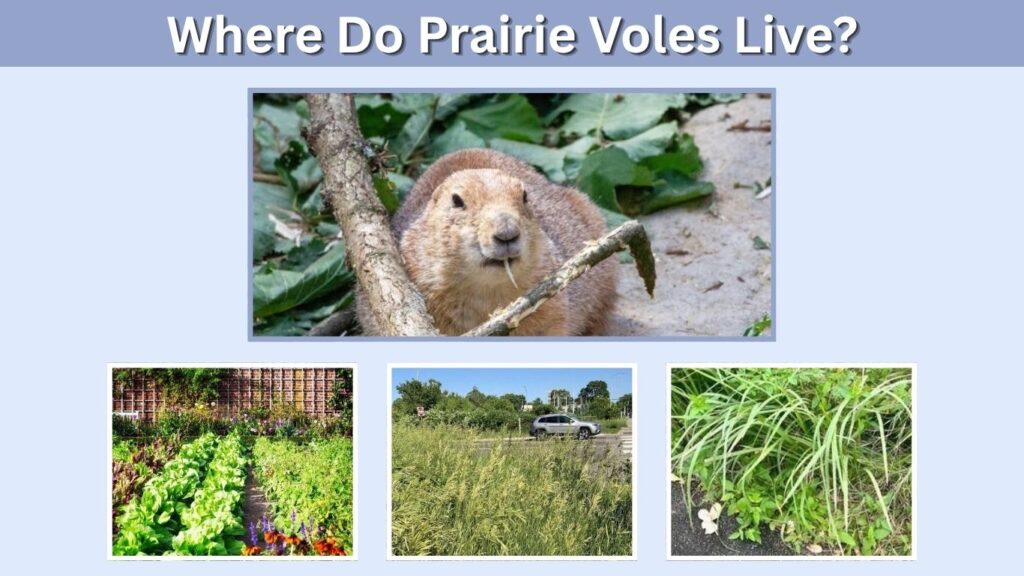
Prairie voles favor open environments with grasses, weeds, and other low-growing vegetation. They generally prefer drier and shorter vegetation than meadow voles.
Common habitats include:
- Native prairies
- Ungrazed pastures
- Fallow agricultural fields
- Grassy roadsides
- Weedy areas
- Alfalfa and soybean fields
- Lawns and gardens near grasslands
- Field edges and drainage areas
They build underground burrows and narrow runways through vegetation. These covered routes connect nests, feeding areas, burrow entrances, and food-storage locations while helping conceal the voles from predators.
Prairie Vole Nests
A prairie vole nest is commonly made from dry grass and plant fibers. It may be placed underground or beneath dense surface vegetation.
A nest can contain an adult pair, their current litter, and sometimes older offspring. During colder periods, several voles may share a nesting area, forming a small communal group that helps conserve body heat.
What Do Prairie Voles Eat?
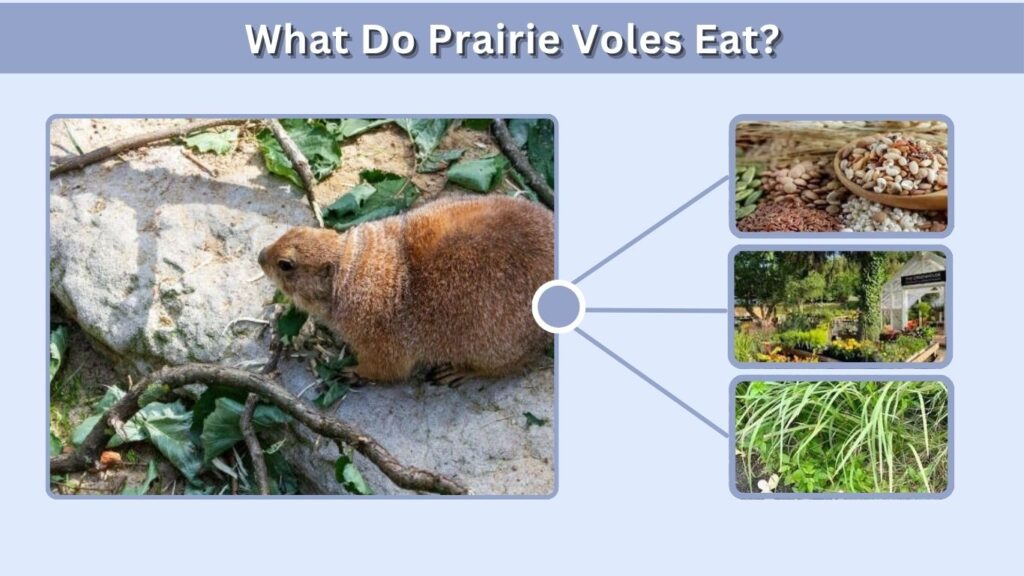
Prairie voles are primarily herbivorous, meaning most of their diet consists of plant material. They feed close to the ground and may store seeds or other foods inside underground chambers.
Prairie Vole Diet
Common foods include:
- Grasses
- Leaves and stems
- Seeds and grains
- Roots and tubers
- Clover and alfalfa
- Agricultural plants
- Tree bark
- Occasional insects
Soft sections near the bases of grasses are especially important. In winter, when fresh vegetation becomes scarce, prairie voles may consume roots, stored seeds, stems, and bark from woody plants.
Prairie voles can occasionally damage gardens, crops, and young trees. Bark removal around an entire trunk may girdle the plant, interfering with the movement of water and nutrients.
Are Prairie Voles Monogamous?
Prairie voles are often described as monogamous because many males and females establish selective, long-term social partnerships. Paired animals may share a nest, defend a territory, groom one another, huddle together, and raise offspring cooperatively.
However, social monogamy does not always mean complete sexual exclusivity. Some individuals mate outside their established partnerships, and wandering males and females may not maintain permanent bonds. Social organization can also change with season, population density, and food availability.
Do Prairie Voles Mate for Life?
Some pairs remain together for extended periods, potentially until one partner dies. Nevertheless, prairie voles should not be described as animals that always mate for life.
A surviving individual may establish another bond after losing its partner. Research has also shown that males can form new pair bonds after previous partnerships end.
Prairie Voles, Oxytocin, and Vasopressin
Prairie voles are extensively studied to understand the biology of social attachment. Laboratory experiments indicate that oxytocin, vasopressin, dopamine, and particular brain reward pathways contribute to partner-preference formation.
Oxytocin signaling has been strongly associated with bonding in female prairie voles, while vasopressin has been especially important in many studies of male bonding and partner-directed behavior. However, pair bonding is produced by complex interactions among hormones, receptors, previous experiences, mating, and the social environment—not by one simple “love hormone.”
Scientists often compare prairie voles with less socially monogamous meadow and montane voles. Differences in the distribution of oxytocin and vasopressin receptors within brain reward regions may help explain their contrasting social behavior.
Prairie Vole Reproduction
Prairie voles can reproduce during much of the year, although activity may decline during extremely hot summers or severe winters.
Mating and Pregnancy
Pregnancy lasts approximately 21 days. A typical litter contains three or four pups, although litter size can vary according to the mother’s age, health, and environmental conditions.
Newborn prairie voles are:
- Hairless
- Blind
- Unable to walk properly
- Completely dependent on adults
- Usually born inside a grass-lined nest
The pups develop rapidly. They begin crawling within several days, try solid food at around 12 days, and are commonly weaned when they are two or three weeks old.
Biparental Care
One remarkable feature of prairie vole reproduction is biparental care. Both the mother and father may warm, groom, retrieve, protect, and remain near the pups.
Older offspring may also remain in the nest and help care for younger siblings. This creates family groups rather than leaving the mother entirely responsible for raising each litter.
Prairie Vole Lifespan
The average prairie vole lifespan in the wild is usually less than one year. Many individuals survive only a few months because they face predators, weather extremes, competition, disease, and food shortages.
Under protected captive conditions, prairie voles may live for as long as three years. Captive animals generally avoid predation and receive consistent food, water, and shelter.
Prairie Vole Predators
Prairie voles occupy an important position in grassland food webs. Their high reproductive rate and local abundance make them dependable prey for many animals.
Common predators include:
- Owls
- Hawks
- Northern harriers
- Shrikes
- Foxes
- Coyotes
- Bobcats
- Weasels
- Snakes
Their brown coloring helps them blend into soil and vegetation, while their grassy runways provide covered travel routes. Even with these defenses, predation remains one of the main reasons their wild lifespan is so short.
Prairie Vole vs. Meadow Vole
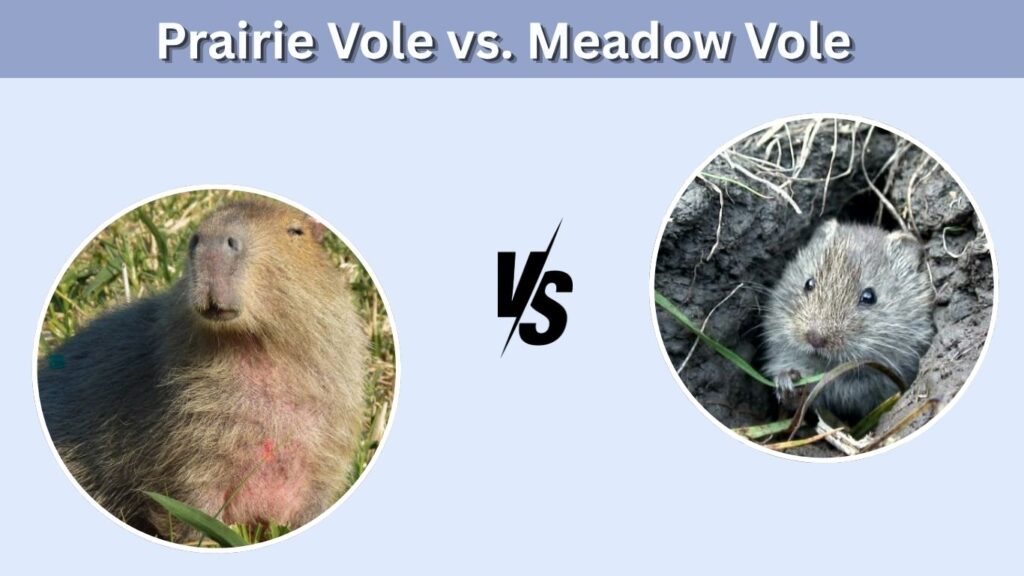
Prairie and meadow voles look similar, but they differ in habitat and social behavior.
| Feature | Prairie vole | Meadow vole |
| Scientific name | Microtus ochrogaster | Microtus pennsylvanicus |
| Preferred habitat | Shorter, drier grasslands | Taller, wetter meadows |
| Social behavior | Often pair-bonded | Usually less pair-oriented |
| Body color | Brown with yellowish underside | Dark brown with grayish underside |
| Tail | Relatively short | Often slightly longer |
| Diet | Grasses, roots, seeds, and bark | Grasses, sedges, roots, and bark |
Physical identification can be difficult where their ranges overlap. Habitat and social behavior may provide useful clues, but teeth, skull structure, or genetic examination may be needed for reliable scientific identification.
Prairie Vole vs. Montane Vole
The montane vole, Microtus montanus, generally occupies mountain meadows and western grasslands. It does not normally form the strong selective pair bonds associated with prairie voles.
Scientists frequently compare the two species because they have similar body structures but different mating systems. These comparisons have helped researchers investigate how brain receptors and environmental conditions influence attachment and parental behavior.
Are Prairie Voles Good Pets?
Prairie voles are wild animals rather than domesticated pets. They have specialized social, dietary, nesting, and environmental requirements that can be difficult to provide in an ordinary home.
A prairie vole kept alone may experience stress because of its social nature, while housing unfamiliar adults together can lead to territorial conflict. Wildlife possession may also be regulated locally. Domesticated mice, rats, or hamsters are generally more appropriate companion animals.
FAQs
What is the scientific name of the prairie vole?
The prairie vole’s scientific name is Microtus ochrogaster. It belongs to the family Cricetidae, which includes voles, hamsters, and several groups of New World rats and mice.
Why are prairie voles famous?
Prairie voles are famous for forming selective social partnerships and sharing parental care. Researchers study them to understand the biological mechanisms associated with attachment, social recognition, stress, and cooperative parenting.
Do prairie voles cuddle?
Yes. Bonded prairie voles commonly sit close together, huddle, groom one another, and share a nest. Researchers use selective contact with a familiar partner as one sign that a pair bond has formed.
Are prairie voles dangerous?
Prairie voles are not normally dangerous and generally avoid people. Like any wild rodent, one may bite when trapped or handled. Avoid touching wild voles, nests, droppings, or urine with bare hands.
What is the difference between a prairie vole and a prairie dog?
A prairie vole is a mouse-sized rodent measuring about 5–7 inches long. A prairie dog is a much larger ground squirrel that lives in visible colonies and constructs extensive burrow systems across open grasslands.