
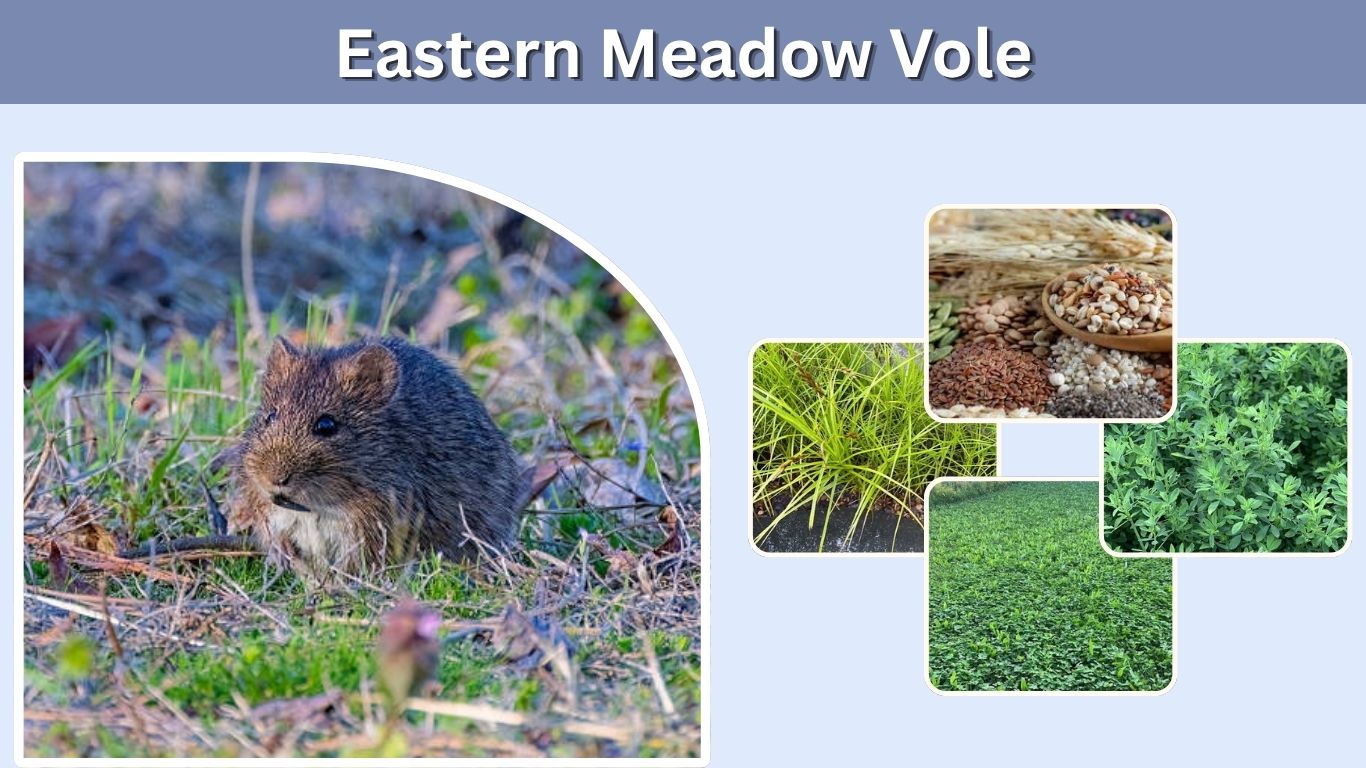
The eastern meadow vole is a small, stocky rodent found in grassy fields, wet meadows, marshes, orchards, and other areas with thick ground vegetation. Often called a meadow mouse or field mouse, it has a blunt face, partly hidden ears, and a short, furry tail. Eastern meadow voles mainly eat grasses and other plants, creating narrow runways as they travel beneath vegetation. Although they can damage lawns, crops, and young trees, they are also an essential food source for owls, hawks, foxes, snakes, and other predators.
What Is an Eastern Meadow Vole?
The eastern meadow vole, scientifically known as Microtus pennsylvanicus, is a North American rodent in the family Cricetidae. It is closely related to prairie voles, woodland voles, and other members of the genus Microtus.
Eastern meadow voles are adapted to living close to the ground beneath grass and other dense vegetation. They remain active throughout the year, including winter, when they may construct tunnels beneath the snow.
| Feature | Description |
| Scientific name | Microtus pennsylvanicus |
| Other names | Meadow mouse, field mouse |
| Animal type | Rodent |
| Body shape | Short, rounded, and stocky |
| Main color | Brown or grayish-brown |
| Diet | Primarily grasses and plants |
| Habitat | Fields, meadows, marshes, and orchards |
| Activity | Active throughout the year |
Eastern Meadow Vole Identification
Eastern meadow voles have compact bodies designed for moving through thick grass and narrow ground-level pathways. Their small ears and short tails distinguish them from most true mice.
Identification Features
- Body: Rounded, compact, and heavily built
- Fur: Coarse brown, reddish-brown, or dark gray-brown
- Underside: Grayish or silvery
- Head: Broad with a blunt nose
- Eyes: Small, dark, and round
- Ears: Short, rounded, and partly concealed by fur
- Tail: Short, hairy, and darker above than below
- Teeth: Prominent orange or yellowish incisors
A mouse usually has a more pointed muzzle, larger ears, and a tail approaching the length of its body. A vole’s shorter tail, blunt face, and stocky shape create a noticeably different appearance.
Eastern Meadow Vole Size
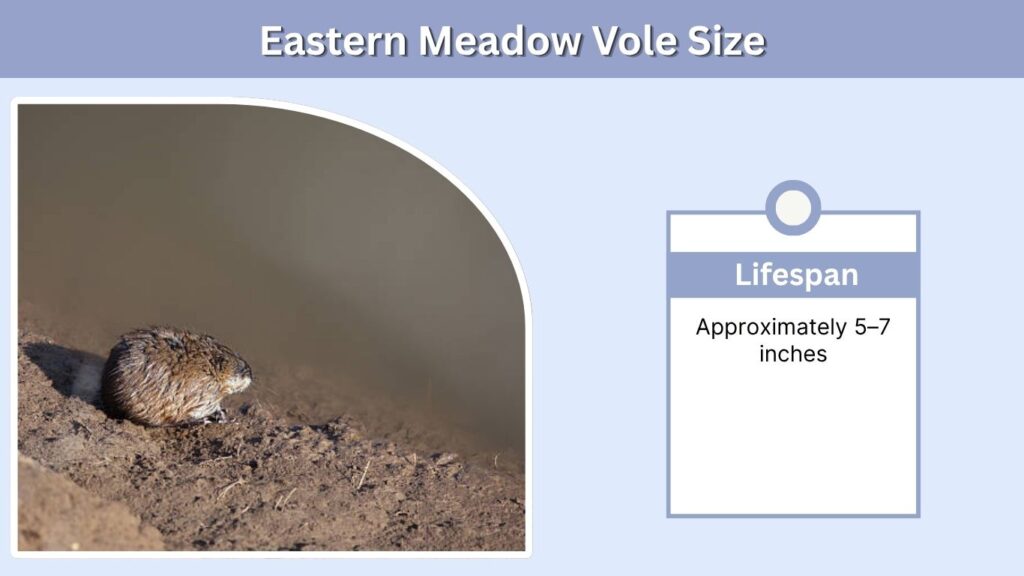
An adult eastern meadow vole generally measures approximately 5–7 inches from its nose to the end of its tail. Its body typically accounts for around 4–6 inches, while the tail is usually only 1–2½ inches long.
Adults commonly weigh approximately 1–3 ounces, although body size varies according to age, sex, season, food availability, and geographic population. Their dense fur can make them appear larger and rounder than their actual measurements suggest.
Where Do Eastern Meadow Voles Live?
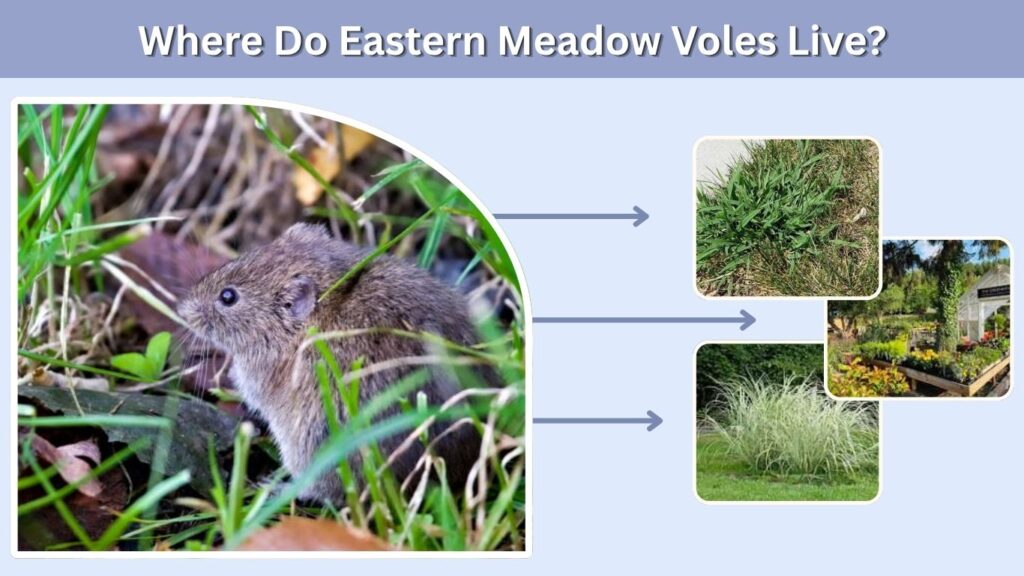
Eastern meadow voles prefer open habitats containing thick grasses, sedges, weeds, or plant litter. Dense vegetation gives them food, nesting material, and protection from predators.
Common habitats include:
- Moist meadows
- Grasslands and pastures
- Marshes and wetland edges
- Hay and agricultural fields
- Orchards and nurseries
- Roadside vegetation
- Gardens and lawns
- Stream and pond banks
The species occurs through much of eastern and northern North America. Suitable habitat can support large populations, especially when food is abundant and thick vegetation provides protection.
Do Eastern Meadow Voles Live in Houses?
Eastern meadow voles are primarily outdoor animals. An individual may occasionally enter a shed, garage, basement, or crawl space during cold weather, but it is less likely than a house mouse to establish a permanent indoor population.
Repeated indoor sightings may indicate gaps beneath doors, openings around pipes, damaged vents, or dense vegetation growing against the foundation.
Eastern Meadow Vole Diet
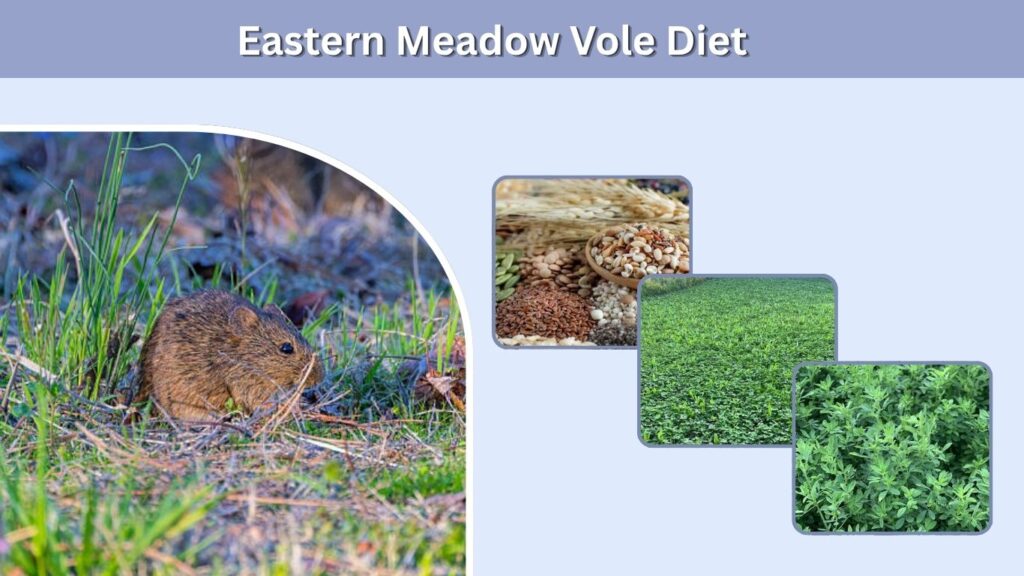
Eastern meadow voles are primarily herbivores. Their diet changes with the season because different plant foods become available throughout the year.
What Do Eastern Meadow Voles Eat?
Their diet may include:
- Grasses and sedges
- Clover and alfalfa
- Plant leaves and stems
- Seeds and grains
- Roots and tubers
- Flower bulbs
- Garden vegetables
- Tree and shrub bark
Green vegetation forms much of the diet during spring and summer. Seeds and grains become increasingly important during fall. In winter, voles may feed on roots and chew bark from young trees and shrubs, particularly beneath protective snow cover.
They may occasionally consume fungi or small invertebrates, but plant material makes up most of their food.
Runways, Holes, and Nests
Eastern meadow voles create narrow surface runways through grass and ground cover. These pathways connect feeding areas, nests, burrows, and hiding places.
Runways are usually around 1–2 inches wide and may contain clipped grass and small droppings. They become particularly noticeable after snow melts, revealing networks of flattened grass across lawns.
Vole burrow entrances are relatively small and generally lack large piles of loose soil. This differs from mole tunnels, which often produce raised ridges and soil mounds.
Eastern Meadow Vole Nest
The nest is usually made from dry grass, stems, and other plant fibers. It may be positioned underground, beneath thick vegetation, under a log, or within a tunnel beneath winter snow.
Several pathways may lead to one nesting area. Thick grass and mulch provide additional insulation and protection from cold temperatures and predators.
Behavior and Daily Activity
Eastern meadow voles may be active during both daylight and nighttime. Instead of remaining active for one long period, they commonly alternate between short sessions of feeding, traveling, grooming, and resting.
They do not hibernate. During winter, they continue moving and feeding beneath grass, leaf litter, and snow. Snow cover protects them from cold temperatures and conceals them from some predators.
Although they can dig shallow burrows, much of their movement occurs through surface runways. Eastern meadow voles are also capable swimmers and may cross shallow water in wetland habitats.
Eastern Meadow Vole Reproduction
Eastern meadow voles reproduce quickly when food and cover are plentiful. Breeding commonly occurs from spring through fall, but reproduction may continue during winter under favorable conditions.
Females can produce several litters in a year, and each litter may contain multiple young. The babies are born hairless and dependent on their mother but develop rapidly.
This high reproductive rate causes vole populations to rise sharply during favorable years. Population numbers may later decline because of predation, limited food, severe weather, disease, or competition.
Eastern Meadow Vole Lifespan
Most eastern meadow voles have short lives in the wild. Many survive only a few months because they face heavy predation and changing environmental conditions.
Individuals that avoid predators and find sufficient food may live for approximately a year or longer. However, their reproductive strategy depends on producing young quickly rather than maintaining a long individual lifespan.
Predators of Eastern Meadow Voles
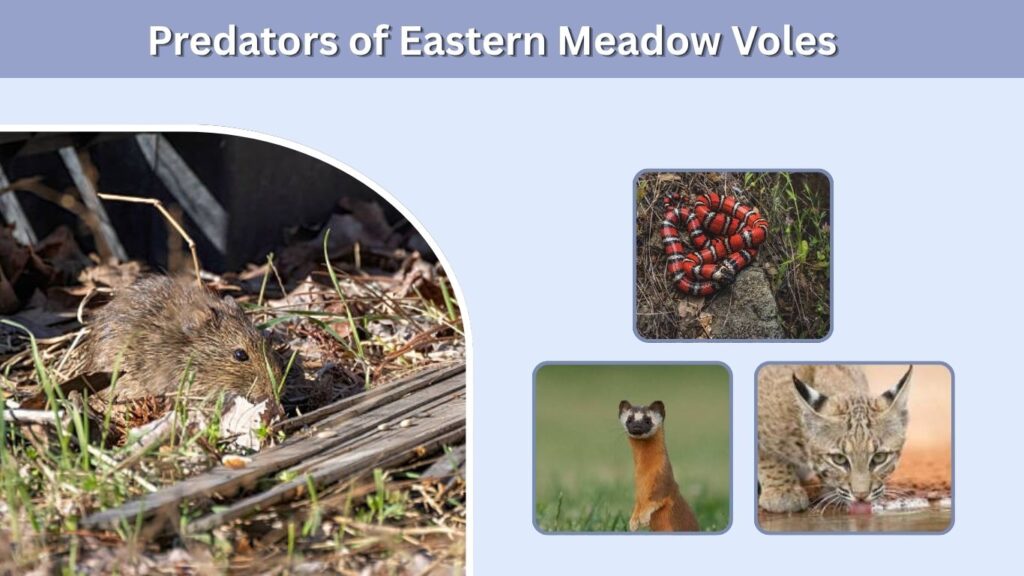
Eastern meadow voles are an important part of the North American food web. Their abundance makes them a major food source for numerous predators.
Common predators include:
- Barn owls and other owls
- Hawks and northern harriers
- Foxes and coyotes
- Weasels
- Bobcats
- Snakes
- Short-tailed shrews
- Domestic and feral cats
Their populations can influence the breeding success and local abundance of predators that depend heavily on small mammals.
Eastern Meadow Vole Damage
Eastern meadow voles usually cause problems by feeding on plants rather than entering buildings. Damage is most noticeable when vole numbers become unusually high.
Lawn and Garden Damage
Signs may include winding surface pathways, clipped grass, small burrow openings, missing seedlings, damaged bulbs, and chewed vegetables.
Lawn runways often look serious immediately after winter, but lightly damaged grass may recover after raking, fertilizing appropriately, and reseeding bare areas.
Tree and Shrub Damage
Winter feeding can seriously damage young trees. Voles chew bark near ground level or beneath the snowline. If bark is removed completely around the trunk, the tree may become girdled and die.
Hardware-cloth guards can protect young trunks. The guard should extend below the soil surface and remain tall enough to rise above expected snow levels.
Are Eastern Meadow Voles Dangerous?
Eastern meadow voles are shy and generally avoid people. They do not chase or intentionally attack humans.
A frightened vole may bite when captured or handled, so wild individuals should not be picked up with bare hands. As with other wild rodents, avoid direct contact with urine, droppings, nests, and dead animals. Wear gloves during cleanup and wash your hands afterward.
Their primary concern around homes is damage to vegetation, lawns, and young trees rather than direct physical danger.
FAQs
Is an eastern meadow vole a mouse?
No. It is a vole, although it is sometimes called a meadow mouse or field mouse. Voles have stockier bodies, shorter tails, smaller ears, and blunter faces than most true mice.
How large does an eastern meadow vole grow?
Adults commonly measure approximately 5–7 inches long, including the tail. The tail is relatively short and generally accounts for only 1–2½ inches of the total length.
What does an eastern meadow vole eat?
It primarily eats grasses, sedges, leaves, stems, seeds, roots, bulbs, and bark. Green plants dominate its warm-season diet, while roots and bark become more important during winter.
Where does the eastern meadow vole make its nest?
It builds a nest from dry grass and plant fibers. The nest may be underground, beneath dense vegetation, under logs, or within protected tunnels beneath winter snow.
Should eastern meadow voles be removed from a yard?
Removal is unnecessary when they are not causing significant damage. When control is needed, reduce tall vegetation, protect young trees with guards, and use properly positioned snap traps rather than relying immediately on poison.