
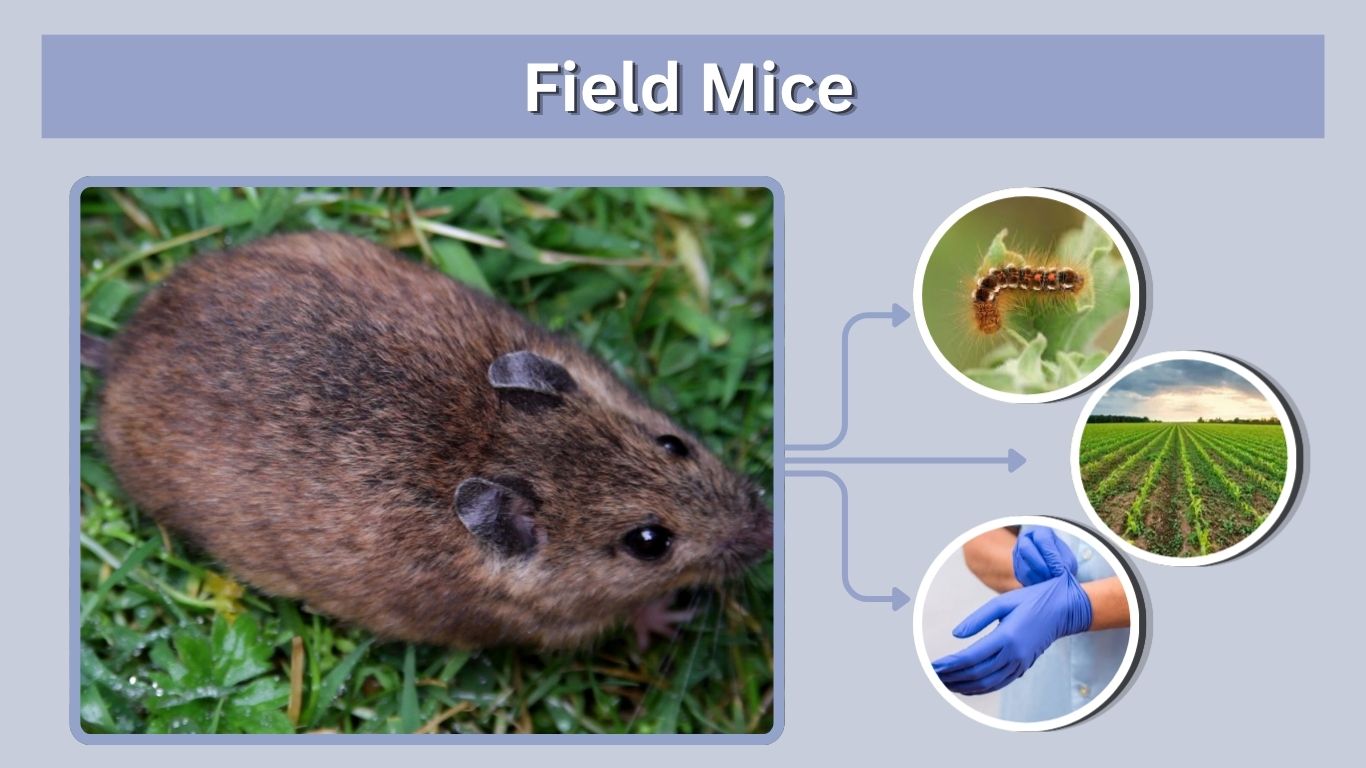
Field mice are small rodents commonly found in grasslands, farms, gardens, woodland edges and vegetation surrounding buildings. During cold weather or when outdoor food becomes scarce, some may enter houses, garages, sheds and barns. The term “field mouse” is informal rather than the name of one species. In North America, it often describes deer mice and similar wild mice, while in Britain it commonly refers to the wood mouse. Correct identification helps determine the safest and most effective control method.
Field Mice Quick Facts
Field mice generally have brown or gray upper fur, lighter underparts, prominent eyes and a relatively long tail. Their exact appearance, size and behavior depend on the species.
| Feature | General description |
| Classification | Several wild mouse species |
| Common color | Brown, gray or reddish brown |
| Typical habitat | Fields, farms, gardens and woodland |
| Diet | Seeds, fruit, vegetation, nuts and insects |
| Activity | Mainly nocturnal |
| Nest location | Burrows, logs, sheds and wall spaces |
| Indoor status | Usually an occasional invader |
| Main concerns | Food contamination, droppings and chewing |
| Control | Exclusion, sanitation and trapping |
What Do Field Mice Look Like?
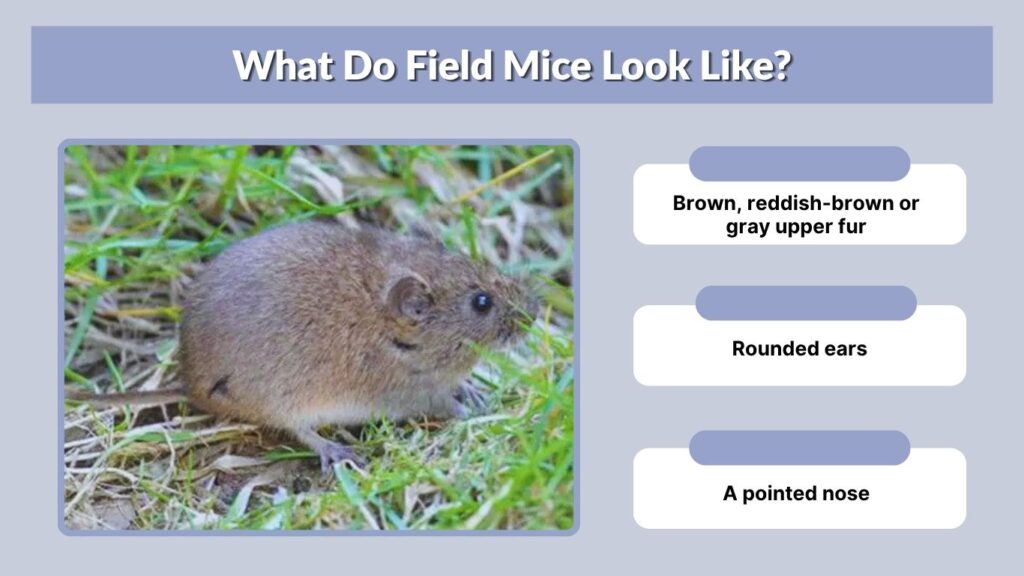
Field mice are usually small, lightweight rodents with pointed noses, whiskers and large dark eyes. Many have brown or gray fur across the back and white or cream fur on the belly.
Identification Features
Common features include:
- Brown, reddish-brown or gray upper fur
- White or cream-colored underside
- Large eyes suited to nighttime activity
- Rounded ears
- A pointed nose
- A long tail
- Small feet and a lightweight body
- Quick running and jumping movements
Deer mice, which are frequently called field mice in North America, commonly have a brown-to-gray back, white belly and distinctly two-toned tail. Adults may measure about six inches in total length, including the tail.
Field Mice vs. House Mice
A mouse found indoors is not automatically a house mouse. Wild mice may enter buildings for warmth and shelter, particularly during autumn and winter.
| Feature | Field or deer mouse | House mouse |
| Back color | Brown or reddish brown | Dusty gray or brown-gray |
| Belly | Usually clearly white | Gray or slightly lighter |
| Tail | Often furry and two-toned | Mostly uniform in color |
| Eyes | Relatively large | Smaller |
| Natural habitat | Fields, woodland and farms | Closely associated with buildings |
| Indoor behavior | Often seasonal | Can live and reproduce indoors year-round |
House mice are more strongly associated with human buildings, while deer mice prefer fields, pastures and vegetation surrounding structures. Deer mice may still move indoors when temperatures drop.
Field Mice vs. Voles
Voles are frequently mistaken for field mice. However, voles have stockier bodies, blunt noses, small eyes and short tails. Mice generally have pointed faces, larger ears and tails that are noticeably longer.
Voles primarily damage lawns and plants by eating grass, stems, bark and roots. Field mice are more likely to eat seeds, insects and stored food. A network of shallow surface tunnels through grass is more characteristic of voles than mice.
Where Do Field Mice Live?

Field mice occupy a variety of environments that provide food, ground cover and nesting material.
Common habitats include:
- Crop fields
- Pastures
- Meadows
- Woodland edges
- Hedgerows
- Gardens
- Brush piles
- Stone walls
- Sheds and barns
- Vegetation surrounding houses
Deer mice favor rural areas such as fields, pastures and vegetated spaces around buildings. Wood mice are widespread in woodland, rough grassland and gardens.
Field mice do not truly hibernate. They remain active throughout winter, although they may spend more time in sheltered nests and rely on stored food. Cold weather often encourages them to enter garages, cabins and houses.
What Do Field Mice Eat?
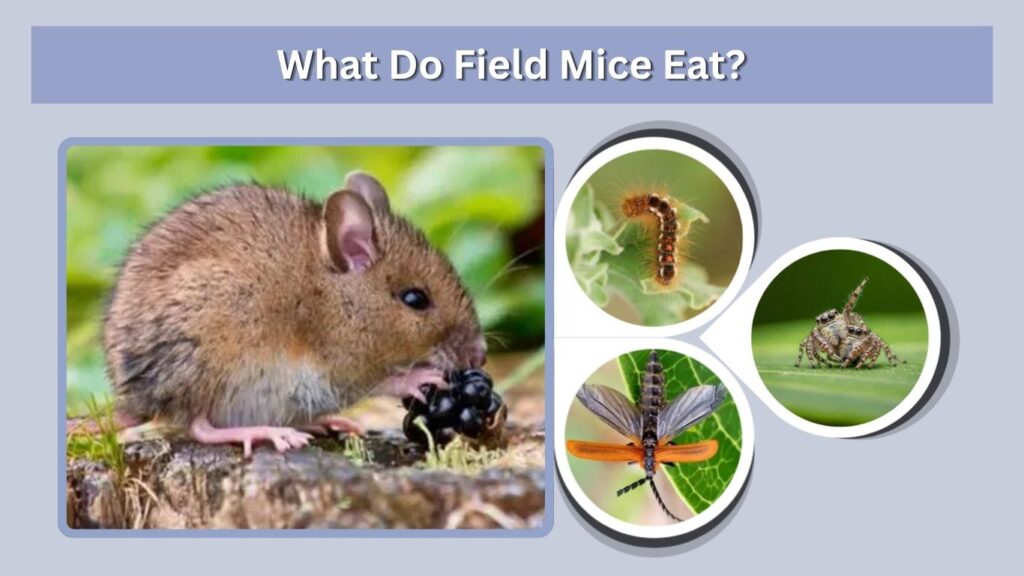
Most field mice are opportunistic omnivores. Their diets change with species, season and local food availability.
Common Foods
Field mice may eat:
- Grass and weed seeds
- Grain
- Berries
- Fruit
- Nuts and acorns
- Green vegetation
- Beetles
- Caterpillars
- Spiders
- Other small invertebrates
- Pet food
- Birdseed
- Stored pantry products
Deer mice commonly consume seeds, fruits, berries, nuts, vegetation and insects. This flexible diet helps them survive in both natural habitats and areas surrounding homes.
Inside a house, mice may chew through paper, cardboard or plastic packaging to reach cereal, rice, flour, seeds and other foods. Removing accessible food is therefore an important part of control.
Signs of Field Mice in a House
You may not see a live mouse because these rodents are mainly active at night. Instead, look for physical evidence.
Common Signs
- Small dark droppings
- Shredded paper, insulation or fabric
- Gnawed food packaging
- Chewed wires or wooden edges
- Scratching sounds at night
- Greasy marks along walls
- A stale odor in enclosed spaces
- Food stored in hidden locations
The EPA lists droppings, shredded nesting material, chewed packages, holes through walls and stale odors among the major signs of a rodent problem.
Are Field Mice Dangerous?
Field mice do not normally approach or attack people. However, an indoor population can contaminate food and surfaces with urine, saliva and droppings. Mice may also damage packaging, insulation and electrical wiring through gnawing.
Wild rodents can carry disease-causing organisms, but seeing one mouse does not mean that it is infected. Risk is reduced by avoiding direct contact and cleaning contaminated areas correctly.
Do Field Mice Carry Hantavirus?
Some wild rodents carry hantaviruses. In the United States, the deer mouse is the main carrier associated with hantavirus pulmonary syndrome. Infection can occur when contaminated urine, droppings or nesting material is disturbed and particles become airborne.
Never sweep or vacuum dry rodent droppings. This can send contaminated particles into the air.
Do Field Mice Carry Rabies?
Rabies infection in small rodents such as mice is rare. In the United States, mice have not been recognized as common transmitters of rabies to people. However, any wild-animal bite should be washed immediately and discussed with a healthcare professional or local public-health authority.
How to Clean Field Mouse Droppings Safely
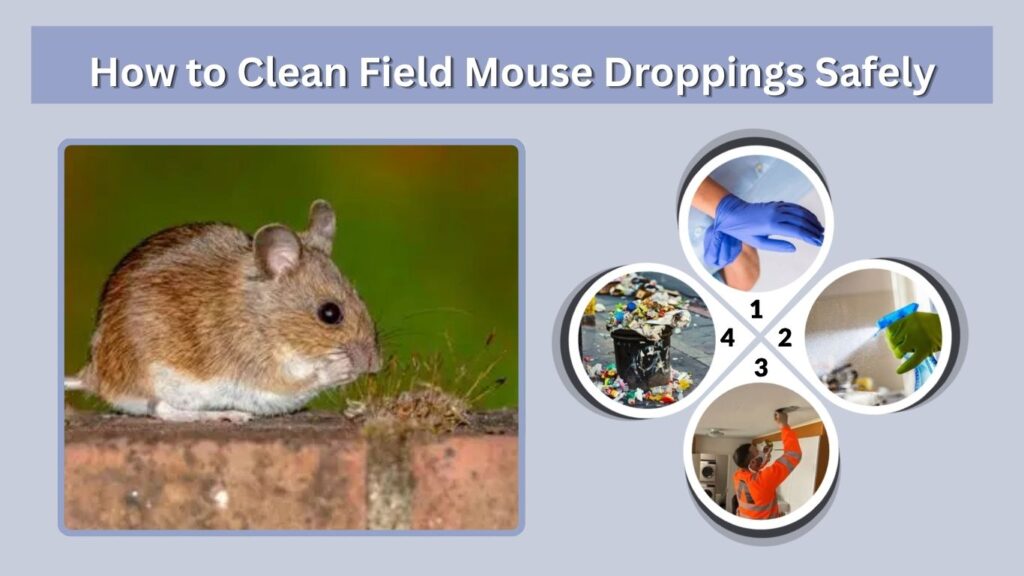
Rodent droppings should be disinfected before removal.
- Ventilate closed rooms before cleaning.
- Wear rubber or plastic gloves.
- Spray droppings and surrounding surfaces with disinfectant until thoroughly wet.
- Allow the disinfectant to remain for at least five minutes or for the label-directed time.
- Wipe up the material with paper towels.
- Place the waste in a covered rubbish container.
- Disinfect the surface again.
- Wash gloved hands before removing the gloves, then wash bare hands with soap and water.
Do not sweep or vacuum urine, nests or droppings before they have been disinfected. Heavy infestations may require professional cleaning and additional protective equipment.
How to Get Rid of Field Mice Permanently
Long-term control requires removing the mice already inside and preventing others from entering.
1. Seal Entry Points
Inspect the foundation, roofline, vents, pipes, doors and windows. Seal small holes with durable materials such as metal mesh, hardware cloth, mortar or suitable sealant. Install tight-fitting door sweeps.
The EPA recommends sealing holes inside and outside the building, including small openings that can be filled with steel wool before being properly patched.
2. Remove Food and Shelter
Store cereal, grain, birdseed and pet food in hard containers with secure lids. Clean crumbs and spills promptly, avoid leaving pet food out overnight and keep rubbish covered.
Outside, remove deep leaf piles, excess mulch, tall weeds and clutter next to the foundation. These materials provide food, cover and nesting sites.
3. Use Mouse Traps
Snap traps are a practical option for small indoor infestations. Place them along walls, behind appliances and near droppings, with the trigger facing the wall. Keep traps where children and pets cannot reach them.
Continue trapping until no mouse is caught and no new droppings, urine spots or gnaw marks appear for at least one week.
4. Do Not Depend on Repellents Alone
Peppermint oil, ultrasonic devices and strongly scented home remedies may temporarily disturb mice, but they do not remove food, nests or entry points. Exclusion, sanitation and trapping provide more reliable long-term control.
5. Contact a Professional When Necessary
Professional help may be appropriate when mice are repeatedly entering, contaminating air ducts, occupying inaccessible wall spaces or producing large amounts of droppings. A professional can identify entry points and create a safer control plan.
Field Mouse Nests and Reproduction
Field mice build nests from dry grass, leaves, shredded paper, insulation and fabric. Outdoor nests may be placed in burrows, hollow logs, thick vegetation or abandoned animal tunnels. Indoors, mice often use wall voids, cupboards, attics and stored boxes.
They can produce multiple litters when food, shelter and temperatures are favorable. This rapid reproduction is why a small problem can grow unless entry points and food sources are addressed.
FAQs
How big do field mice get?
Size varies by species. Many are approximately five to eight inches long when the tail is included. Deer mice commonly reach around six inches in total length, while some wood mice and related species may be slightly larger.
How long do field mice live?
Most small wild mice have short lives because they face predators, weather and food shortages. Many survive for about a year or less in the wild, although individuals protected from predators may live longer.
Do field mice bite humans?
They usually flee rather than attack. A frightened or trapped mouse may bite defensively if handled. Wash any bite immediately with soap and water, and seek medical advice for deep wounds, infection signs or unusual animal behavior.
Can field mice be kept as pets?
Wild field mice are unsuitable pets. They may carry parasites or germs, experience severe captivity stress and be protected by local wildlife rules. Domesticated pet mice from responsible breeders are safer and easier to care for.
What animals eat field mice?
Field mice provide food for owls, hawks, foxes, snakes, weasels, cats and other predators. Their place in the food web is valuable outdoors, even though they require control when they enter houses.