
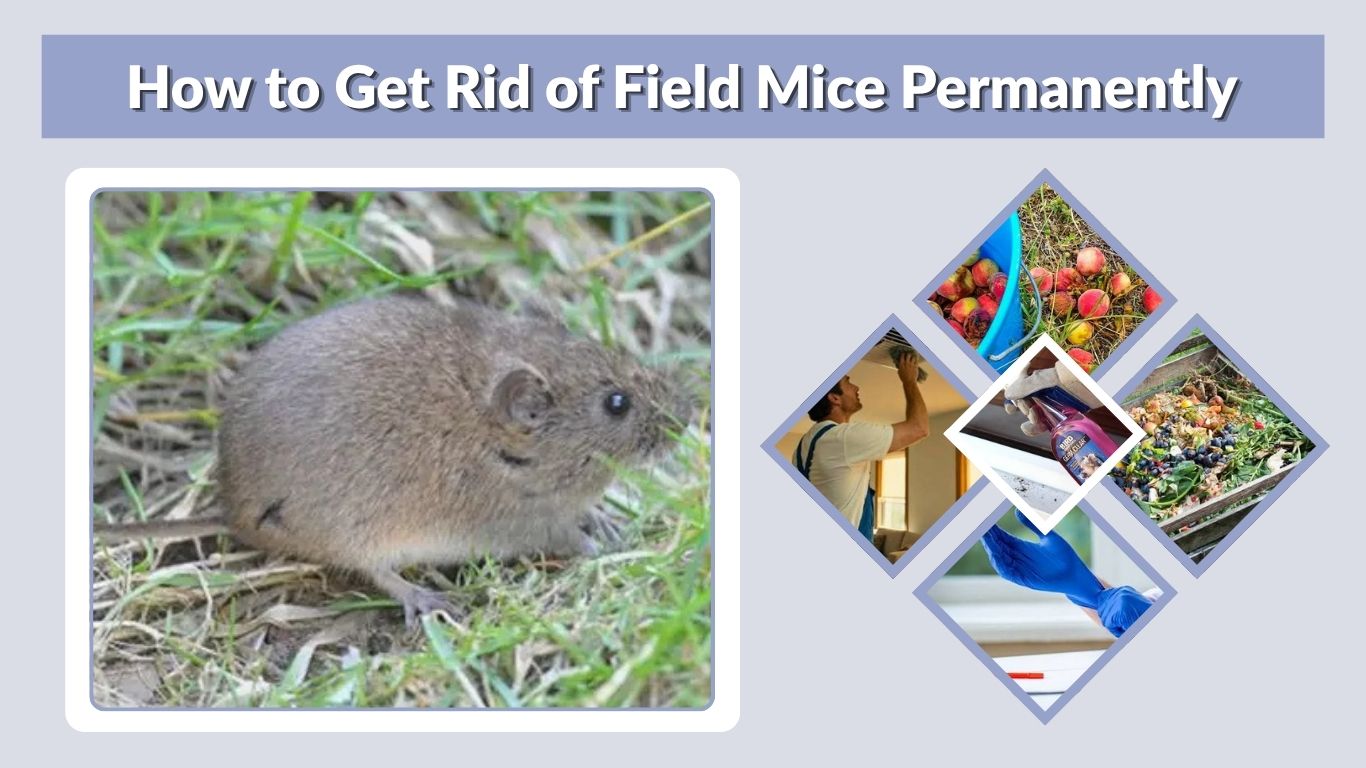
Getting rid of field mice permanently requires more than setting one trap or spraying a strong-smelling home remedy. The reliable approach is to remove the mice already present, seal every possible entrance, eliminate food and nesting material, and monitor for new activity. “Field mouse” is an informal name that may describe deer mice, wood mice, house mice or even voles, depending on the location. Correctly identifying the rodent is especially important when the damage is occurring outdoors.
The Best Way to Remove Field Mice
Permanent mouse control depends on several methods working together. Trapping may remove the current mice, but more will enter unless openings, food and shelter are also addressed.
| Step | Required action |
| 1 | Confirm that mice are active |
| 2 | Seal holes and gaps |
| 3 | Remove accessible food and water |
| 4 | Set enough traps in active areas |
| 5 | Clean droppings safely |
| 6 | Reduce outdoor shelter |
| 7 | Continue monitoring |
The EPA recommends sealing openings, removing food and water sources, and using appropriate control measures rather than relying on pesticides alone.
1. Find Where the Field Mice Are Active
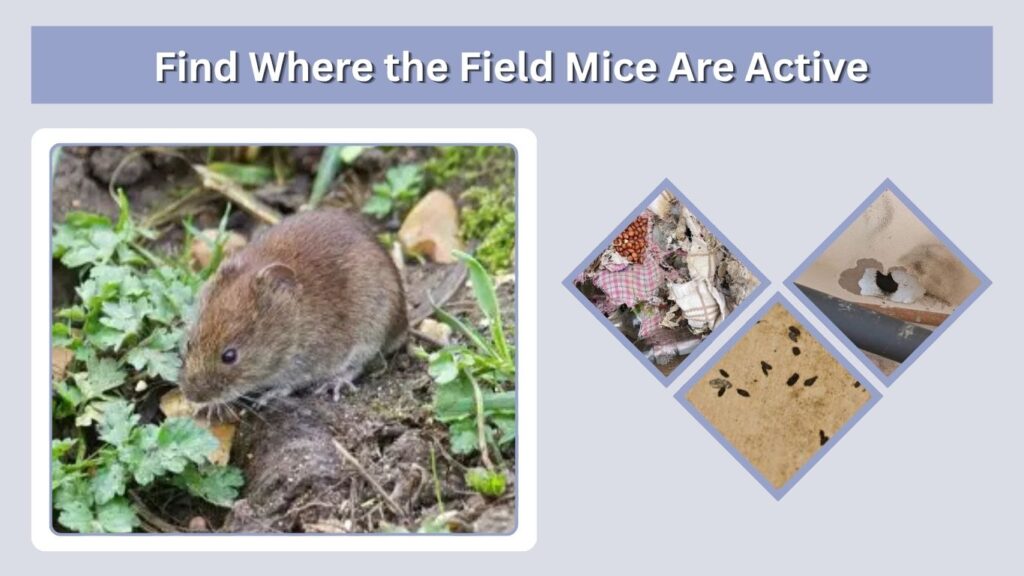
Field mice are mainly active after dark, so homeowners often notice droppings or damage before seeing a live mouse.
Common Signs of Mice
Look for:
- Small, dark droppings
- Torn food packaging
- Shredded paper or insulation
- Gnaw marks on wood or wiring
- Scratching sounds at night
- Greasy marks along walls
- Hidden piles of seeds or pet food
- A stale odor in enclosed areas
Fresh evidence appearing after an area has been cleaned usually indicates that mice remain active.
Inspect behind appliances, beneath sinks, inside lower cabinets, around stored boxes and along basement or garage walls. In attics, check insulation, roof openings and spaces around cables or pipes.
2. Seal Every Mouse Entry Point
Exclusion is the most important step for permanent control. A mouse can squeeze through a hole approximately ¼ inch, or 6 millimetres, wide. Inspect both the interior and exterior of the building rather than sealing only the most obvious opening.
Where Field Mice Enter a House
Check for gaps around:
- Exterior doors
- Garage doors
- Basement windows
- Foundations
- Roof vents
- Utility pipes
- Electrical cables
- Air-conditioning lines
- Siding and brickwork
- Chimneys
- Attic vents
- Spaces beneath decks
Seal small openings with copper mesh, metal flashing, hardware cloth, mortar or another durable, chew-resistant material. Caulk can secure mesh and close narrow cracks, but soft foam alone may be chewed. Install tight door sweeps and repair damaged screens.
Do not accidentally trap mice inside inaccessible walls. Begin intensive trapping while sealing obvious exterior routes, and continue monitoring until activity stops.
3. Remove Food, Water and Nesting Material
Mice remain where they can easily find food and shelter. Even a clean-looking house may provide enough crumbs, grain or pet food to support them.
Indoor Sanitation
Take these actions:
- Store flour, cereal, rice and seeds in hard containers.
- Keep pet food in containers with secure lids.
- Do not leave pet bowls out overnight.
- Clean crumbs and cooking grease promptly.
- Empty household rubbish regularly.
- Repair leaking pipes and taps.
- Reduce clutter in cabinets, attics and basements.
- Discard food packages damaged by rodents.
The CDC recommends sealing food and water sources, cleaning spills quickly and keeping food in thick plastic, metal or glass containers with tight lids.
Remove cardboard, fabric scraps, paper piles and loose insulation that mice can use to build nests.
4. Use Enough Snap Traps
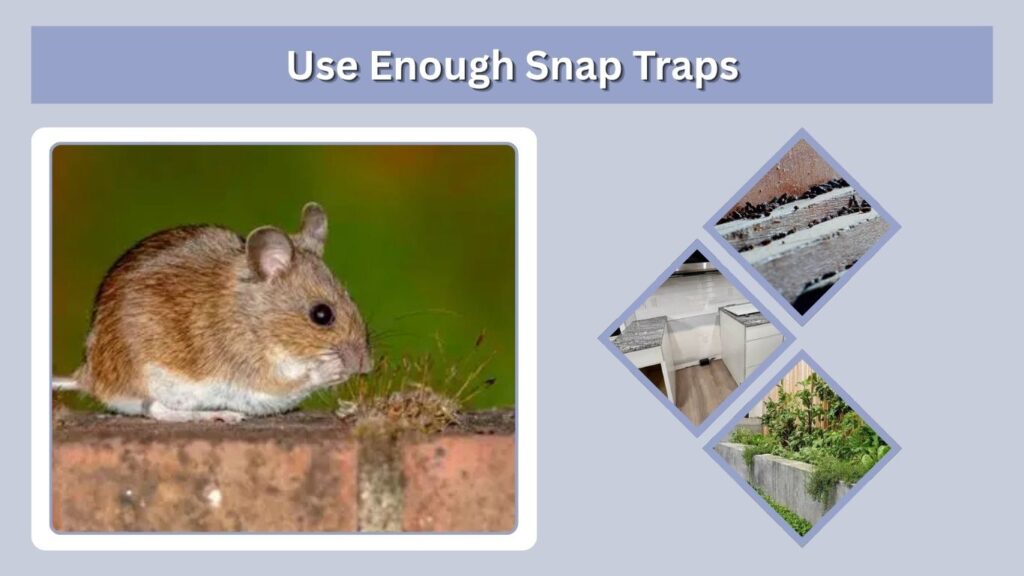
Snap traps are one of the fastest methods for controlling a small indoor mouse population without leaving poison inside walls. A common mistake is using only one or two traps when several mice or travel routes may be present.
How to Position Mouse Traps
Place traps:
- Along walls
- Behind appliances
- Near fresh droppings
- Inside cabinets
- Beside holes or suspected entrances
- In attics and garages
- Near stored food damage
Position the baited end against the wall because mice commonly travel with their bodies close to an edge. Place traps where children and pets cannot reach them, or use protective trap boxes.
A small amount of peanut butter, oatmeal, seeds or nesting material can be used as bait. Too much bait may allow a mouse to feed without triggering the trap.
Check traps every day. Continue trapping until no mice are caught and no new droppings, urine spots or gnawing appear for at least one week.
How to Remove Field Mice Without Poison
Poison is not required for many small household infestations. A non-poison control plan combines snap traps, exclusion, sanitation and regular inspection.
Poisons may create additional risks when children, pets or wildlife can reach the bait. A poisoned mouse may also die inside a wall or ceiling. When rodenticide is necessary, the EPA advises using tamper-resistant bait stations and following every product-label precaution.
Live traps are another option, but they must be checked frequently. Releasing wild mice may be restricted by local regulations, and relocated animals may not survive or may return when released nearby. Sealing entry points remains essential regardless of the trap type.
Do Home Remedies Get Rid of Field Mice?
Peppermint oil, vinegar, ammonia, dryer sheets and ultrasonic devices are often recommended as natural repellents. Their strong odors or sounds may temporarily disturb a mouse, but they rarely provide permanent control.
A mouse may simply avoid the treated area while continuing to live elsewhere in the house. Repellents do not remove nests, seal entrances or eliminate food. Use cleaning products for sanitation, not as substitutes for traps and exclusion.
Cats may catch individual mice, but they cannot reliably reach rodents nesting in ceilings, walls or insulation. A pet should not be treated as the main control method.
How to Get Rid of Field Mice in Specific Areas
Different parts of a property require slightly different approaches, but sealing, trapping and sanitation remain the foundation.
Attic
Inspect roof vents, soffits, cables and gaps along the roofline. Place traps on stable surfaces along beams or walls, and remove nesting material only after it has been disinfected.
Basement
Seal foundation cracks, basement windows and utility penetrations. Reduce cardboard storage, place belongings in lidded containers and set traps along walls near droppings.
Garage or Shed
Install a door sweep, seal wall gaps and store grass seed, birdseed and animal feed in metal or heavy-duty plastic containers. Avoid leaving rubbish, fabric or cardboard undisturbed.
Under a Deck
Remove seed, pet food and rubbish. Thin dense vegetation and block access with properly installed hardware cloth after confirming that animals are not trapped underneath.
How to Get Rid of Field Mice in a Yard or Garden
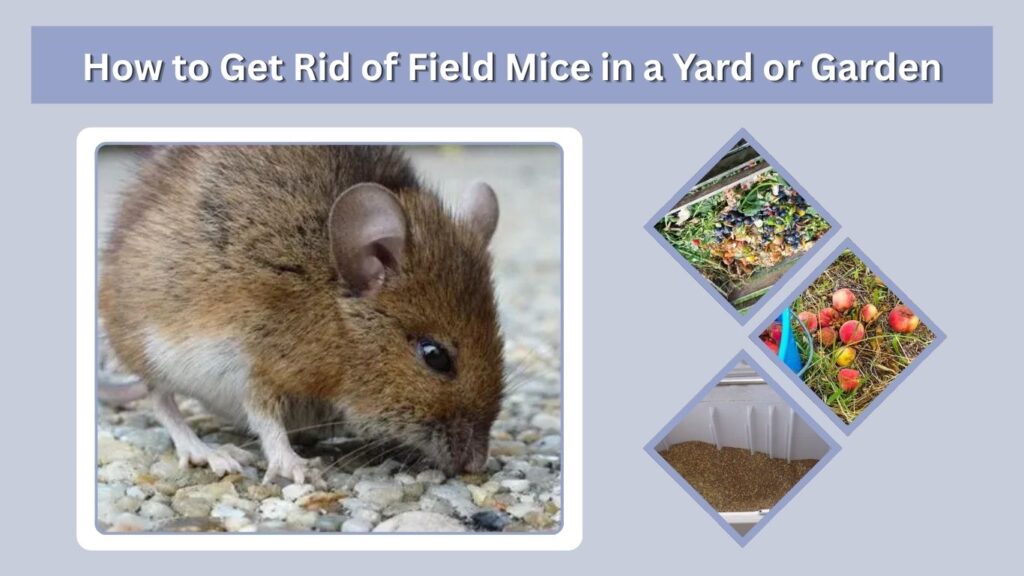
First determine whether the animal is a mouse or a vole. Voles have short tails, small ears and blunt faces. They create surface runways and may damage roots, bulbs and tree bark. Mice have longer tails and more pointed faces.
Outdoor mice are part of the natural food web, so complete elimination from an open yard is neither practical nor usually necessary. The goal should be reducing shelter near buildings and protecting vulnerable plants.
Outdoor Control Steps
- Cut tall weeds beside the house.
- Remove brush and unnecessary ground debris.
- Move firewood away from exterior walls.
- Clean spilled birdseed.
- Store animal feed securely.
- Keep compost properly contained.
- Remove fallen fruit.
- Protect young trees with suitable guards.
- Set traps only in protected locations where pets and wildlife cannot reach them.
For vole damage, snap traps can be positioned near active runways or burrow openings. Correct identification matters because outdoor rodents use different travel routes and habitats.
How to Clean Field Mouse Droppings Safely
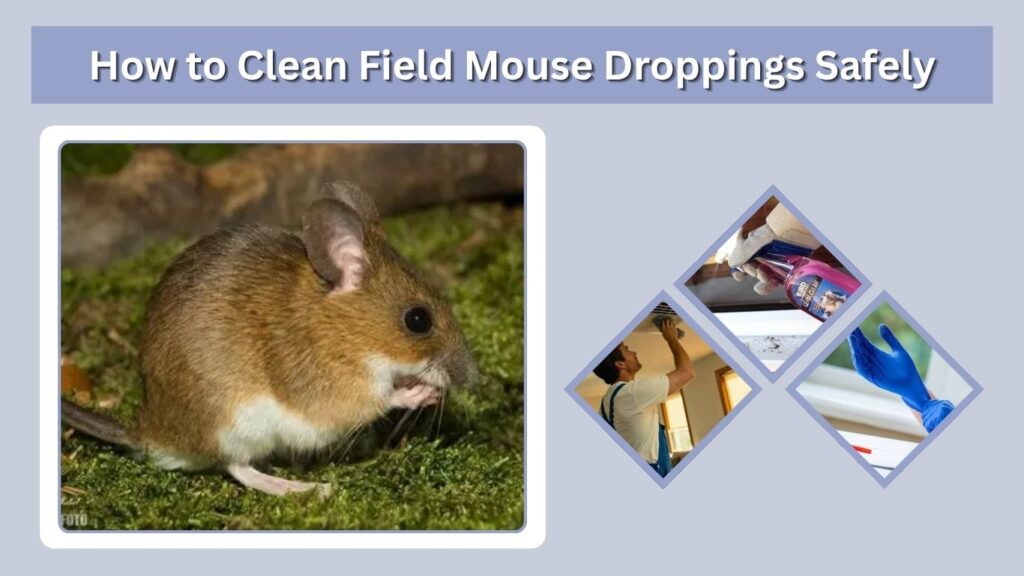
Do not sweep or vacuum dry droppings, urine or nesting material. Disturbing contaminated material can release particles into the air. Some wild rodents, including deer mice in North America, can carry hantaviruses.
Safe Cleaning Steps
- Ventilate a closed room before cleaning.
- Wear rubber or plastic gloves.
- Spray the droppings and surrounding area with disinfectant.
- Allow the surface to remain wet for the label-directed contact time.
- Wipe everything up with paper towels.
- Place the waste in a covered rubbish container.
- Disinfect the cleaned surface again.
- Wash gloved hands, remove the gloves and wash bare hands.
The CDC recommends wetting rodent waste thoroughly before wiping it up and provides additional precautions for heavy infestations, sheds, cabins and enclosed spaces.
When to Call a Pest-Control Professional
Professional help may be appropriate when:
- Droppings return despite trapping.
- Mice are inside inaccessible walls or ventilation systems.
- Electrical wiring has been damaged.
- A large attic, barn or shed is heavily contaminated.
- Children or vulnerable adults may be exposed.
- You cannot identify or seal the entry points.
- Safe placement of traps is difficult because of pets.
Choose a company that includes inspection, exclusion and follow-up monitoring rather than offering poison alone. The EPA recommends checking qualifications, discussing the proposed control methods and requesting information about safety precautions.
FAQs
How big do field mice get?
Size depends on the species. Many mice called field mice have bodies approximately 2½–4 inches long, excluding the tail. A mouse that appears unusually large could be a wood mouse, deer mouse, vole, juvenile rat or another small rodent.
Can vinegar get rid of field mice?
Vinegar may temporarily discourage a mouse from crossing a freshly treated area, but its smell fades quickly. It will not remove a nest or block entrances. Permanent control requires traps, sealed openings, protected food and continued monitoring.
What is the fastest way to remove field mice?
Set multiple snap traps beside walls in areas with fresh activity, remove accessible food and begin sealing entry points. Traps should be checked daily and kept away from children and pets.
Can field mice get into a bed?
Mice can climb furniture and may investigate a bed when food, nesting material or severe clutter attracts them. Remove food from bedrooms, reduce clutter, seal openings and trap active mice rather than relying on repellents.
How do I know when all the mice are gone?
Clean existing signs and continue monitoring. When traps remain empty and no new droppings, urine marks, sounds or gnawing appear for at least one week, the active indoor problem is likely controlled. Continue exclusion and sanitation to prevent their return.