
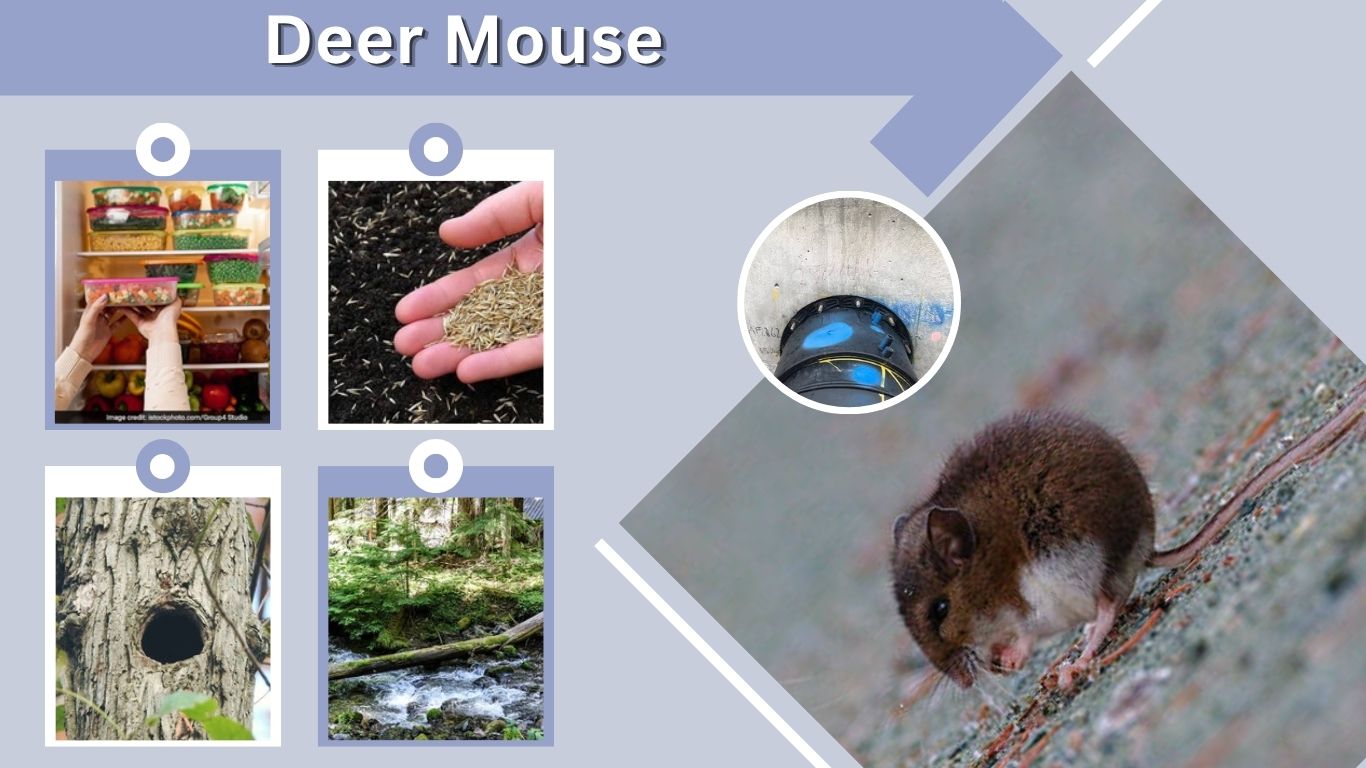
The deer mouse is a small North American rodent recognized by its large dark eyes, prominent ears, white belly, and sharply two-colored tail. It usually lives outdoors in forests, grasslands, farms, and brushy areas, but it may enter homes, cabins, garages, and sheds for food or shelter. Deer mice play an important ecological role as seed dispersers and prey for wildlife. However, indoor infestations require careful control because some deer mice can carry hantaviruses.
What Is a Deer Mouse?
The deer mouse, commonly identified as Peromyscus maniculatus, is one of North America’s most widespread small rodents. Its range extends through much of Canada, the United States, and parts of Mexico. It occupies an unusually broad selection of environments, from forests and agricultural fields to grasslands, deserts, mountains, and islands.
| Feature | Description |
| Scientific name | Peromyscus maniculatus |
| Body color | Gray, brown, or reddish brown |
| Underside | Clearly white or pale |
| Total length | Approximately 4.7–8.7 inches |
| Weight | Approximately 10–24 grams |
| Activity | Primarily nocturnal |
| Diet | Seeds, fruit, nuts, fungi, and invertebrates |
| Typical wild lifespan | Usually less than one year |
The name “deer mouse” comes from its brown upper body and white underside, which resemble the contrasting coloration of some deer.
What Does a Deer Mouse Look Like?
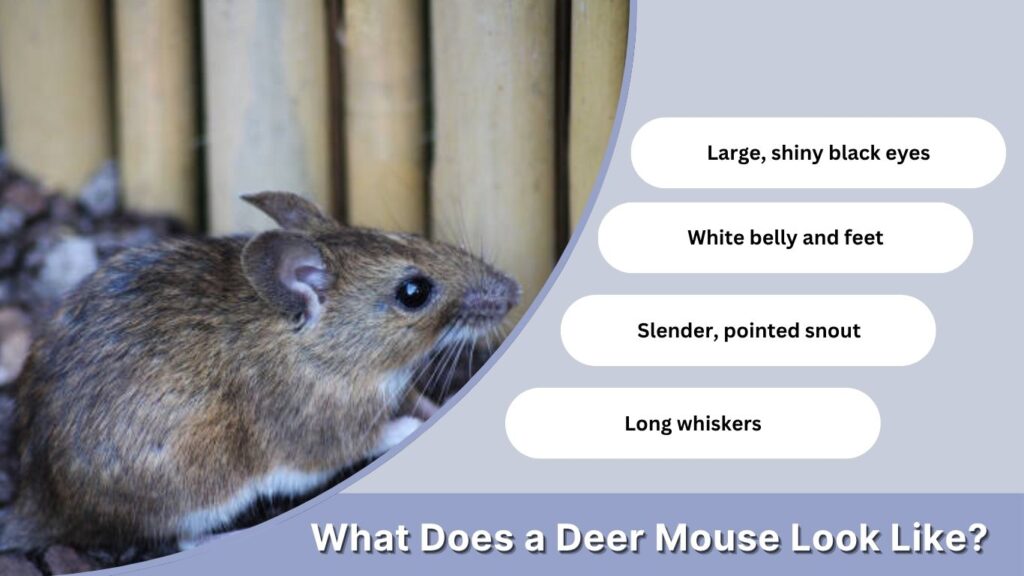
A deer mouse has a slender body, pointed nose, long whiskers, large rounded ears, and prominent black eyes. Its back may be grayish, tawny, reddish brown, or nearly black, depending on the population and habitat. The belly and feet are white.
Main Identification Features
Look for these characteristics:
- Large, shiny black eyes
- Rounded ears with relatively little fur
- Brown or gray upper body
- White belly and feet
- Slender, pointed snout
- Long whiskers
- Tail that is dark above and pale below
The two-colored tail is one of the most useful identification features. However, deer mice and white-footed mice can look extremely similar, and visual identification may be difficult in regions where both occur.
Deer Mouse vs House Mouse
Deer mice and house mice are similar in overall size, but their markings and relationships with buildings differ. House mice are strongly associated with people, while deer mice are native outdoor rodents that sometimes enter structures.
| Feature | Deer mouse | House mouse |
| Upper color | Gray, brown, or reddish brown | Usually grayish or dull brown |
| Belly | Clearly white | Gray, buff, or only slightly lighter |
| Tail | Hairy and sharply two-colored | Less hairy and more uniformly colored |
| Eyes | Large and prominent | Relatively smaller |
| Main habitat | Forests, fields, farms, and brush | Homes, warehouses, and farms |
| Indoor presence | Often seasonal | May live indoors continuously |
A deer mouse’s white feet, sharply pale belly, and two-colored tail are usually more noticeable than those of a house mouse. Deer mice also tend to have larger-looking eyes.
Where Do Deer Mice Live?
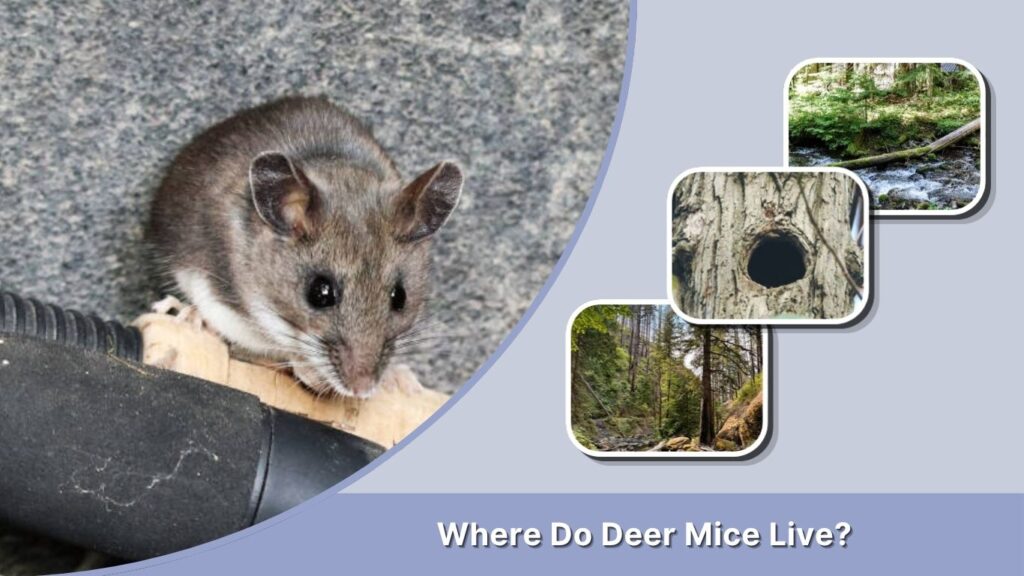
Deer mice inhabit forests, woodland edges, prairies, deserts, agricultural fields, meadows, mountains, and suburban areas. They are adaptable and can live anywhere that provides food, nesting material, and protection from predators.
Nests and Shelter
Deer mice construct nests from grass, leaves, shredded bark, feathers, and other soft materials. Depending on the habitat, nests may be found:
- Beneath logs or rocks
- Inside tree cavities and stumps
- In abandoned burrows
- Beneath dense vegetation
- In bird nests or nest boxes
- Inside sheds, barns, garages, and cabins
They are primarily ground-dwelling but are also capable climbers. Their activity generally centers around a nest and one or more hidden food caches.
Why Deer Mice Enter Houses
Deer mice may enter buildings when outdoor temperatures fall or natural food becomes scarce. Quiet seasonal properties, storage buildings, cabins, and garages are particularly attractive because they provide undisturbed shelter.
Food packages, pet food, birdseed, stored grain, clutter, and gaps around foundations can encourage them to remain indoors.
What Do Deer Mice Eat?
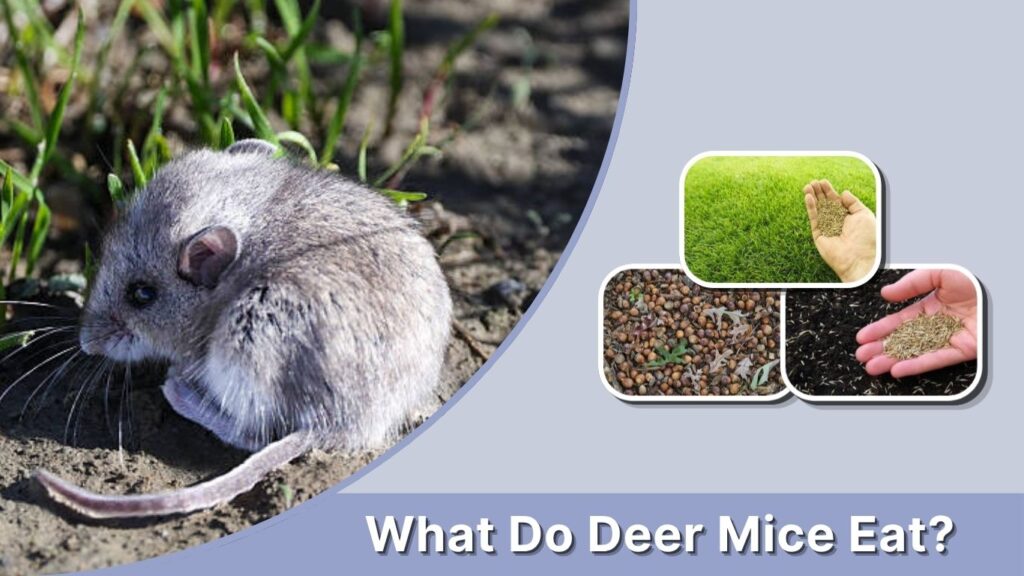
Deer mice are omnivores. Their diet changes according to habitat, season, and food availability.
Common foods include:
- Grass and plant seeds
- Nuts and acorns
- Berries and other fruit
- Flowers and green vegetation
- Fungi
- Beetles and other insects
- Spiders
- Caterpillars and insect larvae
They frequently collect food and store it near their nests for later use. By moving and forgetting some seeds, deer mice can contribute to seed and fungal-spore dispersal. They are also an important food source for owls, snakes, foxes, coyotes, weasels, and bobcats.
What Do Deer Mouse Droppings Look Like?
Deer mouse droppings are small, dark pellets commonly discovered in drawers, cupboards, storage boxes, garages, cabins, or beside nesting materials. They may resemble dark grains of rice.
Droppings, gnaw marks, and nests left by deer mice can look very similar to evidence produced by house mice. Therefore, droppings alone usually cannot confirm which species is present. The animal’s fur coloration, feet, tail, and face provide better identification clues.
Deer Mice and Hantavirus Risk
Some deer mice can carry Sin Nombre virus, a hantavirus associated with hantavirus pulmonary syndrome in the United States. This does not mean every deer mouse is infected, but all unidentified rodent waste should be treated cautiously.
People may be exposed when contaminated urine, droppings, saliva, or nesting material is disturbed and particles become airborne. Infection may also occur if contaminated material reaches the eyes, nose, mouth, or broken skin.
How to Clean Droppings Safely
Never sweep or vacuum dry mouse droppings, urine, or nesting material. Instead:
- Ventilate an enclosed room for about 30 minutes before cleaning.
- Wear rubber or plastic gloves.
- Thoroughly wet the waste with household disinfectant or a fresh bleach solution.
- Allow it to remain wet for five minutes or for the time stated on the label.
- Wipe it up using paper towels.
- Place the waste in a covered trash container.
- Disinfect the surrounding surface and wash your hands afterward.
Heavy infestations may require professional cleaning and additional protective equipment.
How to Control Deer Mice in a House
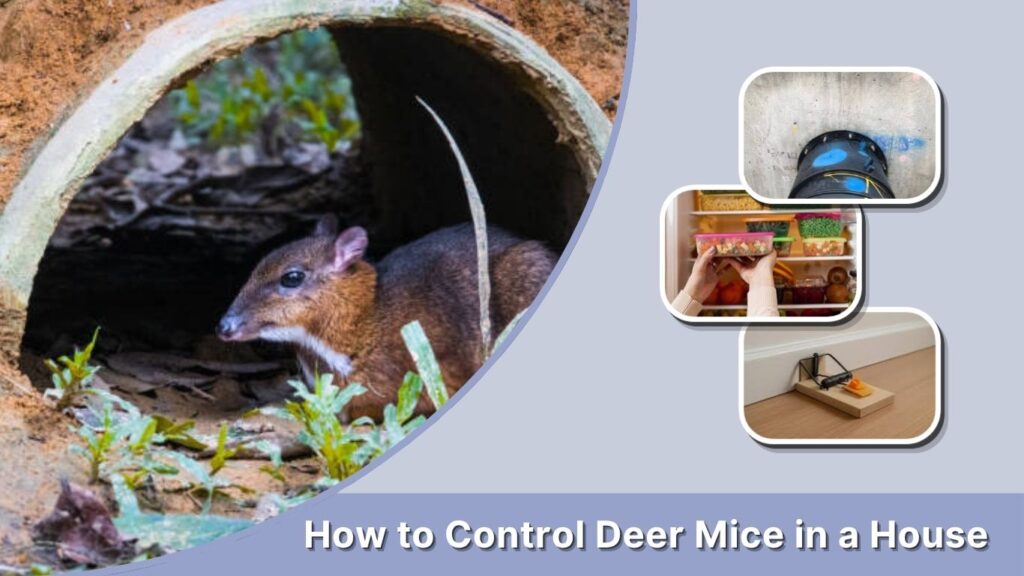
Successful control should combine removal with exclusion. Simply trapping mice without sealing entry points may allow new deer mice to replace those removed.
Remove Food and Nesting Sources
Store human food, pet food, birdseed, and livestock feed in tightly sealed containers. Clean spills and crumbs promptly, remove indoor clutter, and avoid leaving pet food available overnight.
Seal Entry Openings
Inspect gaps around:
- Foundations
- Doors and windows
- Rooflines and vents
- Utility wires
- Plumbing pipes
- Garage-door edges
- Siding and wall joints
Seal accessible openings with durable rodent-resistant materials. Repairing entry points is essential for preventing a repeated infestation.
Use Traps Carefully
Place snap traps along walls and near droppings, gnaw marks, or other signs of activity. Keep traps away from children and pets. Wear gloves when disposing of trapped rodents, disinfect the rodent and trap, and double-bag the carcass before placing it in a covered trash container.
FAQs
Are deer mice dangerous?
Deer mice normally avoid people and do not aggressively attack humans. Their main health concern is contamination from urine, droppings, saliva, or nesting materials. Because some can carry hantaviruses, avoid direct contact and follow proper disinfection procedures whenever rodent evidence is discovered.
Do deer mice bite?
A deer mouse may bite when trapped, frightened, injured, or handled. It does not normally approach people to bite them. Never pick up a wild mouse with bare hands. Wash any bite thoroughly and contact a healthcare professional for advice.
How can I tell a deer mouse from a house mouse?
Deer mice usually have white feet, a sharply white belly, large dark eyes, and a hairy tail that is dark above and pale below. House mice tend to be more uniformly gray or brown and have less contrast between the back and underside.
How long do deer mice live?
Most wild deer mice survive for less than one year because they face predators, severe weather, food shortages, and disease. Individuals kept under protected conditions can live much longer, but such lifespans are not representative of mice living in natural habitats.
Can deer mice be kept as pets?
Wild deer mice are unsuitable pets. They can bite, escape through small spaces, experience severe stress in captivity, and may carry pathogens. A wild mouse found indoors should be removed safely, and openings should be sealed to prevent additional animals from entering.