
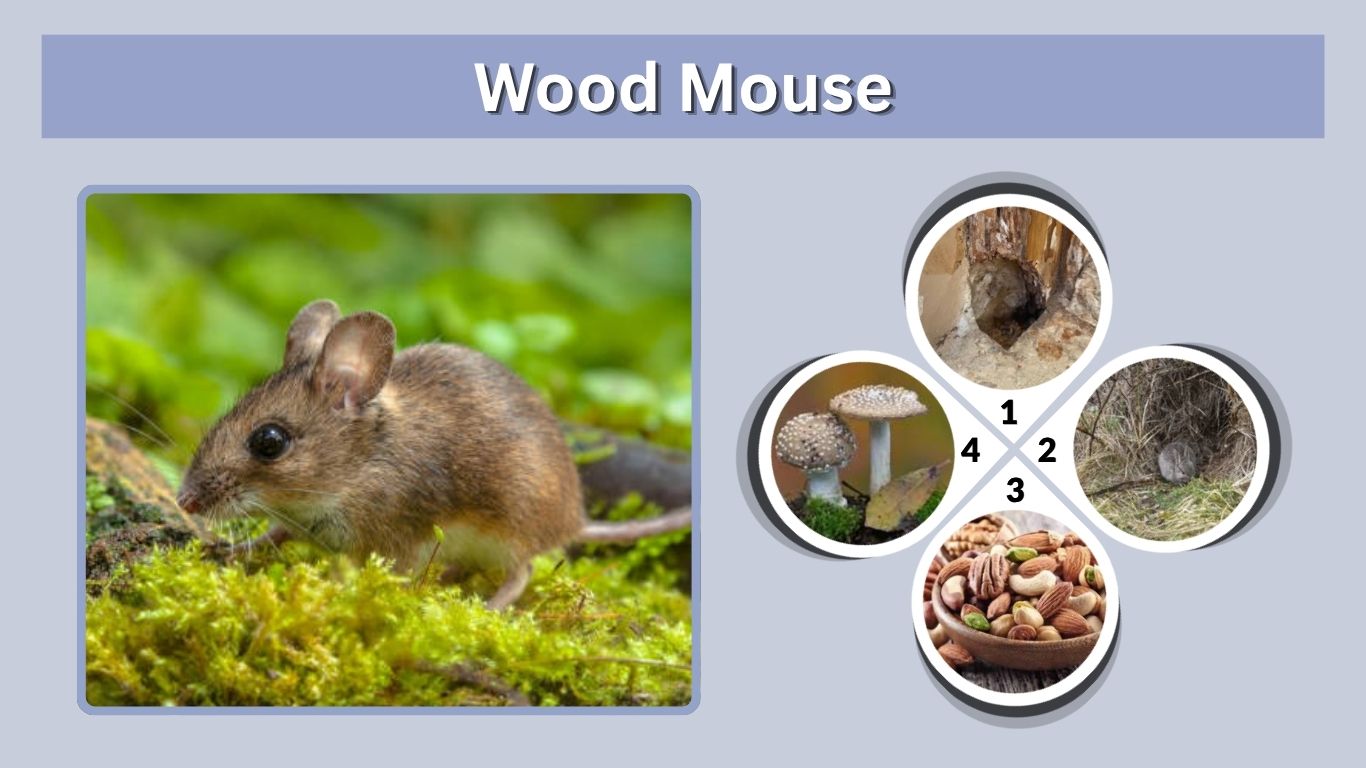
The wood mouse is a small, quick-moving rodent recognized by its sandy-brown coat, pale belly, large dark eyes and prominent ears. Also called the field mouse or long-tailed field mouse, it commonly inhabits woodlands, farms, hedgerows, parks and gardens. Wood mice usually remain outdoors, although they may enter sheds, garages or houses when cold weather reduces food and shelter. Their habit of collecting and burying seeds also gives them an important role in woodland ecosystems.
What Is a Wood Mouse?
The wood mouse’s scientific name is Apodemus sylvaticus. It belongs to the Muridae family, which includes many Old World mice and rats. It is a widespread wild rodent found across much of Europe, parts of western Asia, northwestern Africa and numerous nearby islands.
| Feature | Description |
| Scientific name | Apodemus sylvaticus |
| Other names | Field mouse, long-tailed field mouse |
| Body length | Approximately 8–11 cm |
| Tail length | Approximately 7–11 cm |
| Color | Sandy or reddish brown with a pale underside |
| Diet | Seeds, fruit, nuts, fungi and invertebrates |
| Activity | Mainly nocturnal |
| Typical lifespan | Usually less than one year in the wild |
Despite its name, the wood mouse is not restricted to forests. It adapts to many environments that provide dense cover, food and suitable places for underground burrows.
What Does a Wood Mouse Look Like?
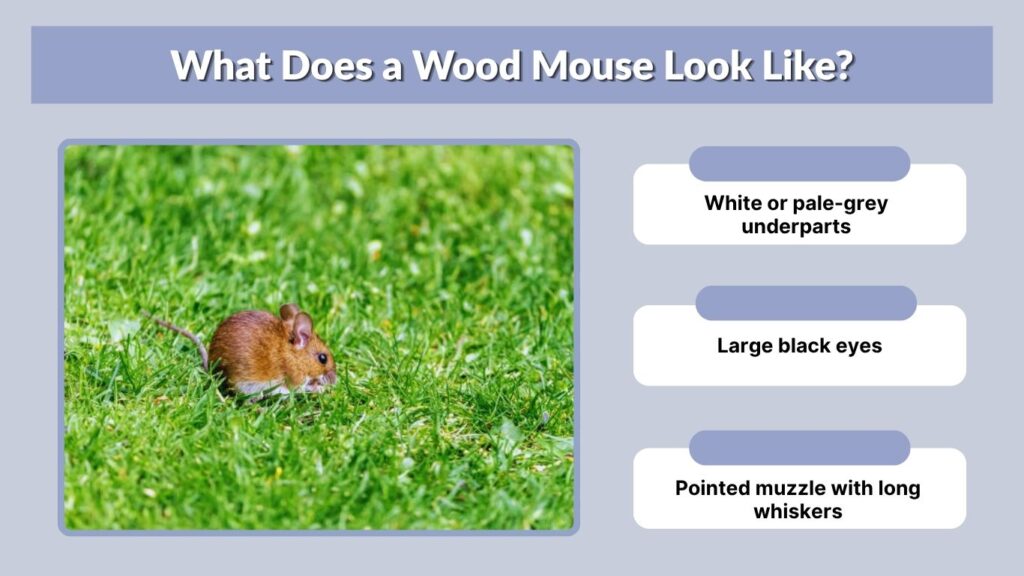
Wood mice have slender bodies, pointed snouts, large black eyes and rounded ears that project clearly above the fur. Adults generally have sandy-brown or reddish-brown upperparts and a sharply contrasting white or greyish belly. Their tails are long, dark and lightly haired.
Main Identification Features
Look for the following characteristics:
- Sandy, golden or reddish-brown back
- White or pale-grey underparts
- Large, rounded and prominent ears
- Large black eyes
- Long tail nearly equal to the body length
- White feet and relatively large hind feet
- Pointed muzzle with long whiskers
The large eyes and ears support movement and predator detection at night. Powerful hind feet also allow the mouse to run quickly and make sudden leaps when escaping danger.
Wood Mouse vs Yellow-Necked Mouse
The yellow-necked mouse looks very similar but usually has a complete yellow band or collar across the chest. A wood mouse may have a small yellowish chest patch, but it does not normally form an unbroken collar around the neck. Close inspection may be necessary to distinguish these species reliably.
Where Do Wood Mice Live?
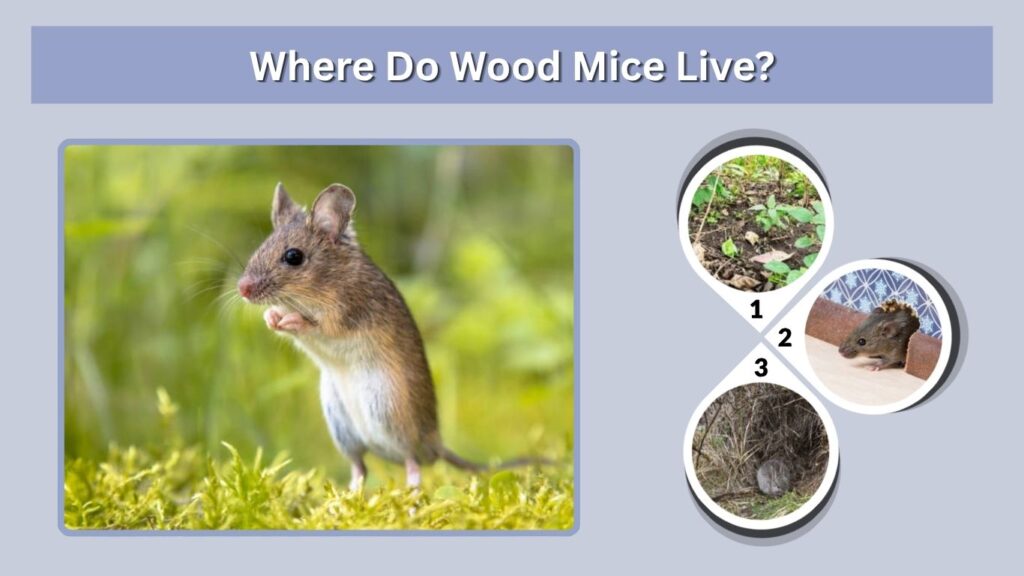
Wood mice occupy broadleaf and mixed woodland, grassland, farmland, hedgerows, gardens and parks. They prefer areas with dense plants, leaf litter, fallen branches or other cover that protects them while they search for food.
Burrows and Nests
Most wood mice live in underground burrows. A burrow may contain sleeping chambers, nesting areas, tunnels and food-storage spaces. Nests are made from materials such as grass, leaves and moss and are commonly positioned beneath shrubs or tree roots.
Wood mice sometimes nest above ground in hollow trees, old bird nests, nest boxes and sheltered parts of buildings. During colder months, they may add more nesting material or block a burrow entrance with leaves, stones and twigs.
Do Wood Mice Enter Houses?
Wood mice occasionally enter buildings, especially during autumn and winter. They may shelter in garages, sheds, lofts, wall spaces and quiet storage areas. However, they are less closely associated with human buildings than house mice and generally prefer outdoor habitats.
What Do Wood Mice Eat?
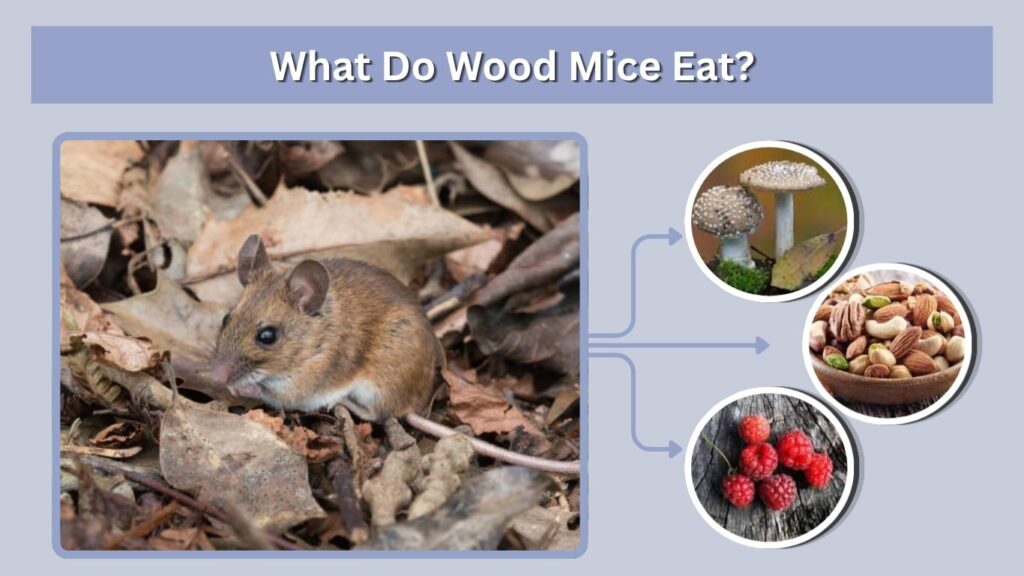
Wood mice are omnivores with a diet that changes according to season and availability. Seeds, nuts and fruit become especially important during autumn and winter, while insects and other invertebrates provide additional protein.
Common foods include:
- Acorns
- Tree and grass seeds
- Berries and other fruit
- Nuts
- Fungi
- Green plant material
- Caterpillars
- Earthworms
- Centipedes
- Snails and other small invertebrates
Wood mice often carry food to protected feeding places or store it in underground chambers. Forgotten seeds may later germinate, helping some trees and shrubs spread into new areas.
Wood Mouse vs House Mouse
Although both species may enter buildings, they can usually be separated by their coloration, proportions and behavior.
| Feature | Wood mouse | House mouse |
| Scientific name | Apodemus sylvaticus | Mus musculus |
| Coat | Sandy brown with pale belly | More uniformly grey-brown |
| Ears | Large and prominent | Proportionally smaller |
| Eyes | Large and dark | Smaller relative to the head |
| Hind feet | Relatively large | Smaller |
| Odor | Usually no strong smell | Often produces a strong musky smell |
| Main habitat | Woods, fields, hedges and gardens | Buildings and areas near people |
| Indoor presence | Occasional | Common |
A house mouse generally has little contrast between its back and belly, whereas a wood mouse has a noticeably lighter underside. House mice may also leave greasy marks along frequently used indoor routes and produce a stronger odor.
Wood Mouse Behavior
Wood mice are mainly active at night, when they search for food while remaining close to vegetation or other cover. They use their strong sense of smell to find food and can locate buried seeds beneath the soil.
They do not truly hibernate. During very cold conditions, however, they may enter short periods of reduced activity known as torpor. Some individuals also share nests during winter, which may help them conserve warmth.
Predators
Wood mice are important prey for many animals, including:
- Owls and kestrels
- Foxes
- Weasels and stoats
- Badgers
- Domestic cats
Their abundance can influence breeding success among predators that depend heavily on small mammals for food.
Wood Mouse Life Cycle
Breeding generally occurs from spring through autumn, although reproduction may continue during a mild winter when food is plentiful. Females commonly produce four to seven young per litter, and several litters may be born within one year.
Baby wood mice are born blind and largely helpless. They develop quickly, are usually weaned after approximately three weeks and may become reproductively mature within about two months. Most wild individuals do not survive beyond their first year because of predation, weather and food shortages.
Can Wood Mice Chew Through Wood?
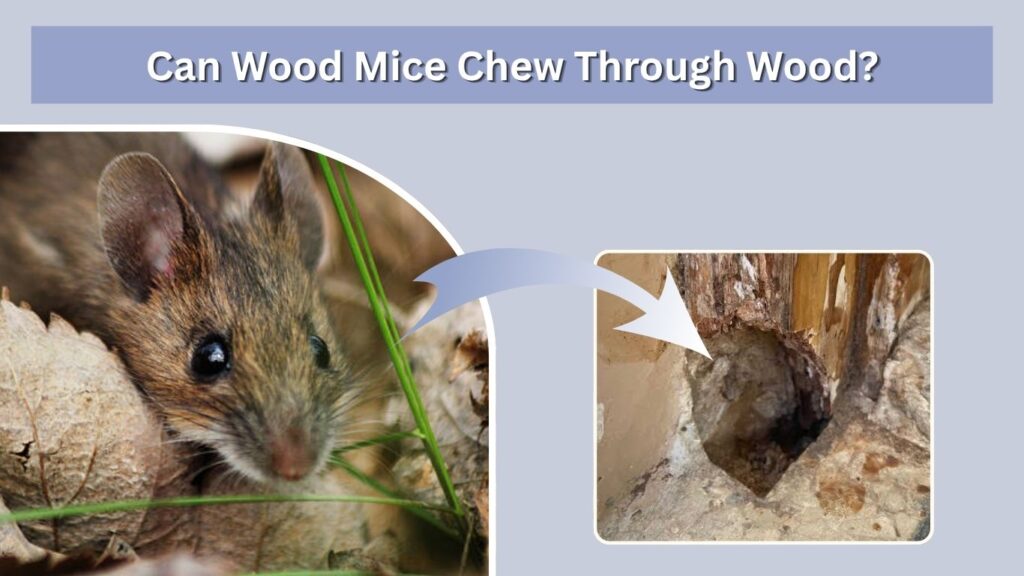
Like other rodents, wood mice have continuously growing incisors and must gnaw to keep their teeth properly worn. They can damage soft or weakened wood, cardboard, insulation, food packaging and other relatively easy-to-chew materials. However, they do not consume wood as food.
Fresh mouse damage may appear as small paired grooves with lighter-colored wood exposed beneath the surface. Gnawing alone cannot reliably identify the exact mouse species because house mice and other rodents leave similar marks.
What to Do if a Wood Mouse Enters Your Home
Begin by removing accessible food, sealing containers and checking for gaps around doors, pipes, vents and foundations. Avoid sealing the only exit while a mouse is trapped indoors.
Humane live traps may be used where local wildlife rules allow, but they must be inspected frequently to prevent stress, dehydration or injury. Wear gloves when cleaning areas contaminated with urine or droppings, ventilate the space and avoid sweeping dry waste into the air.
After the mouse has been removed, seal openings and reduce vegetation, stored materials and fallen food immediately beside the building.
FAQs
Are wood mice dangerous?
Wood mice normally avoid people and are not aggressive. Like other wild rodents, however, they may contaminate food or surfaces with droppings and urine when they enter buildings. Avoid touching wild mice directly, and use gloves when cleaning contaminated areas.
Do wood mice bite humans?
A wood mouse may bite when trapped, injured or handled, but it does not normally approach people to attack them. Never pick up a wild mouse with bare hands. A bite that breaks the skin should be washed thoroughly and assessed by a healthcare professional.
Are wood mice pests?
Outdoors, wood mice are valuable members of the ecosystem and provide food for many predators. They may become temporary pests when they enter buildings, damage stored materials or contaminate food, but they are not as strongly associated with houses as house mice.
How can you tell whether a mouse is a wood mouse?
A wood mouse usually has sandy-brown upper fur, a pale belly, large eyes, prominent ears and a long tail. House mice are generally more uniformly grey-brown and have proportionally smaller ears. Close photographs may be needed for confident identification.
How long do wood mice live?
Most wood mice survive for less than one year in the wild. Predators, harsh weather, food shortages and disease contribute to their short lives. Some individuals can live longer under protected conditions, but multi-year survival in the wild is uncommon.