
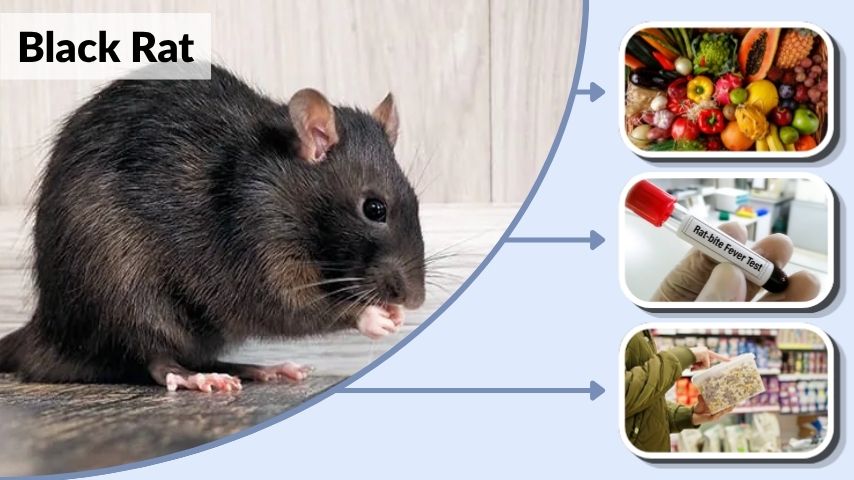
The black rat (Rattus rattus) is one of the most widespread rodent species in the world. Also known as the roof rat or ship rat, it has adapted to a wide range of environments and often lives close to human settlements. Black rats are known for their climbing abilities, intelligence, and remarkable adaptability. While they play a role in ecosystems, they are also considered significant pests due to property damage, food contamination, and disease transmission. Understanding their habits is essential for effective management.
What Is a Black Rat?
The black rat is a medium-sized rodent that belongs to the Muridae family. It is one of the oldest commensal rodents, meaning it has lived alongside humans for centuries. Black rats are highly adaptable and can thrive in urban, suburban, agricultural, and natural environments. Their ability to climb and nest in elevated locations distinguishes them from many other rat species.
Black Rat Scientific Name
The scientific name of the black rat is Rattus rattus. It is commonly referred to as the roof rat because of its tendency to inhabit attics, roofs, and upper portions of buildings. In some regions, it is also known as the ship rat due to its historical spread through maritime trade routes.
Physical Characteristics
Several features help identify a black rat:
- Dark gray or black fur
- Large ears relative to body size
- Pointed muzzle
- Long, slender tail
- Lightweight body structure
These characteristics make black rats noticeably different from brown rats and many other rodent species.
How to Identify a Black Rat
Black rats are generally slimmer and more agile than brown rats. Their tails are often longer than their body length, and they are excellent climbers. Observing these traits can help distinguish them from other rodents commonly found around homes and businesses.
Black Rat Classification and Origins
The black rat has a long history of association with humans. Scientists believe it originated in tropical regions of Asia before spreading worldwide through trade and transportation networks. Today, it is considered one of the most successful invasive mammal species on Earth.
Where Did Black Rats Originate?
Evidence suggests that black rats first evolved in South and Southeast Asia. As human trade expanded, the species traveled aboard ships and established populations on multiple continents.
Global Distribution
Black rats are now found in many parts of the world, including:
- North America
- South America
- Europe
- Africa
- Australia
Their widespread distribution is largely due to their close relationship with human activity.
How Black Rats Spread Worldwide
Historical shipping routes played a major role in the expansion of black rat populations. Their ability to survive aboard vessels allowed them to colonize ports, cities, and islands around the globe.
Black Rat Habitat
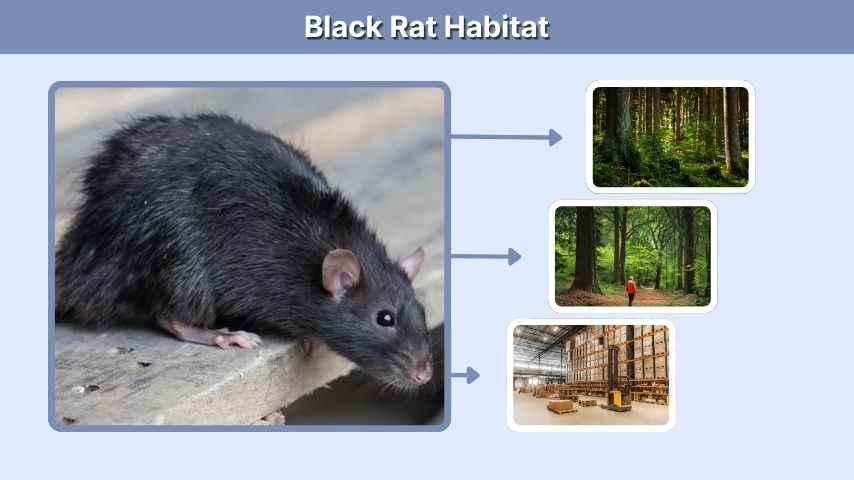
Black rats occupy a wide variety of habitats, but they generally prefer locations that provide shelter, food, and opportunities for climbing. Their strong climbing abilities allow them to exploit areas that many other rodent species cannot easily access.
Natural Habitat
In natural settings, black rats inhabit forests, woodlands, and areas with dense vegetation. They often build nests in trees, shrubs, or elevated locations where they can avoid predators.
Urban and Rural Habitats
Black rats have adapted extremely well to human environments. In urban areas, they commonly occupy attics, ceilings, warehouses, and commercial buildings. In rural locations, they may be found in barns, grain storage facilities, and agricultural structures.
Why They Prefer Elevated Locations
Unlike brown rats, which often live underground, black rats prefer higher nesting sites. Their lightweight bodies and excellent balance make climbing easier and allow them to access food sources above ground.
Black Rat Size and Appearance
Although black rats vary somewhat in size depending on environmental conditions, they generally maintain a slender and agile build. Their physical features reflect a lifestyle that depends heavily on climbing and exploring elevated environments.
Average Body Length
Adult black rats typically measure between 6 and 8 inches in body length. Their tails often exceed the length of their bodies, contributing to their distinctive appearance.
Tail Length and Function
The long tail serves several purposes. It helps maintain balance while climbing and allows the rat to move confidently along narrow surfaces such as branches, cables, and roof beams.
Male vs Female Black Rats
Male and female black rats appear very similar. Males are usually slightly larger and heavier, but both sexes share the same general body shape, coloration, and climbing abilities.
Black Rat Behavior
The behavior of black rats contributes significantly to their success as a species. Their intelligence, adaptability, and cautious nature make them difficult to detect and control. Most activity occurs during nighttime hours when they can forage with reduced risk from predators and human disturbances.
Nocturnal Activity
Black rats are primarily nocturnal animals. They leave their nests after dark to search for food and water. This nighttime behavior often allows infestations to remain unnoticed for long periods.
Climbing Ability
One of the black rat’s most impressive traits is its climbing skill. These rodents can easily scale walls, trees, pipes, and utility lines. Their agility allows them to access food sources and nesting locations that other rodents cannot reach.
What Do Black Rats Eat?
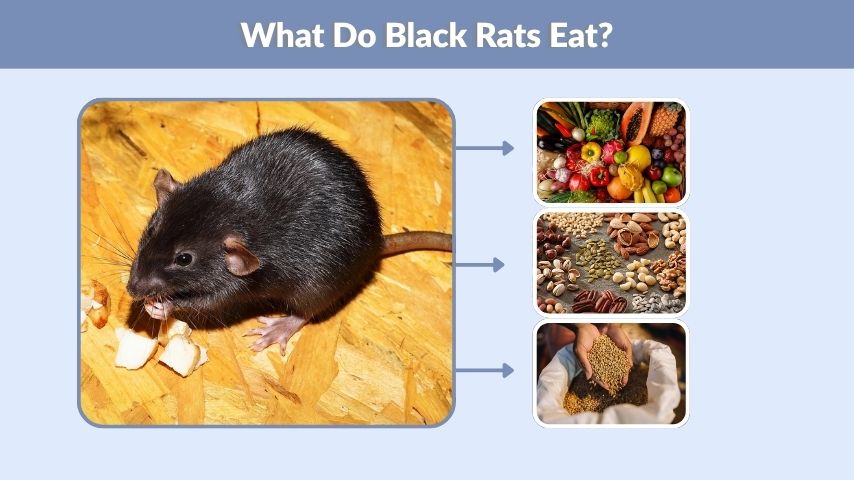
Black rats are opportunistic feeders capable of consuming a wide variety of foods. Although they prefer plant-based materials, they will adapt their diet based on what is available in their environment. Their flexibility helps them survive in both natural habitats and human settlements.
Natural Diet
In the wild, black rats primarily feed on fruits, seeds, nuts, and other plant materials. Their climbing ability allows them to access food sources located in trees and shrubs, giving them an advantage over many ground-dwelling rodents.
Favorite Food Sources
Black rats commonly consume:
- Fruits
- Seeds
- Nuts
- Grains
- Insects
These foods provide the nutrients needed for growth, reproduction, and survival.
Feeding Habits
Black rats usually forage at night and often transport food back to their nests. They are cautious feeders and may sample small amounts of new foods before consuming larger quantities. This behavior helps reduce the risk of poisoning and contributes to their reputation as intelligent pests.
Black Rat Life Cycle
The black rat reproduces rapidly under favorable conditions, allowing populations to expand quickly when food and shelter are abundant. Understanding the life cycle helps explain why infestations can become serious if left unmanaged.
Reproduction
Female black rats can produce several litters each year. Under ideal conditions, breeding may occur year-round, especially in warm climates and indoor environments.
Gestation Period
The gestation period typically lasts about three weeks. After birth, young rats develop quickly and become independent within a relatively short time.
Growth Stages
The black rat life cycle includes several stages:
- Newborn pups
- Juvenile rats
- Subadults
- Reproductive adults
Because they mature rapidly, population growth can occur at an alarming rate.
Black Rat Lifespan
Most black rats live between one and two years in the wild. However, environmental conditions, predators, disease, and food availability can significantly influence lifespan.
Black Rat vs Brown Rat
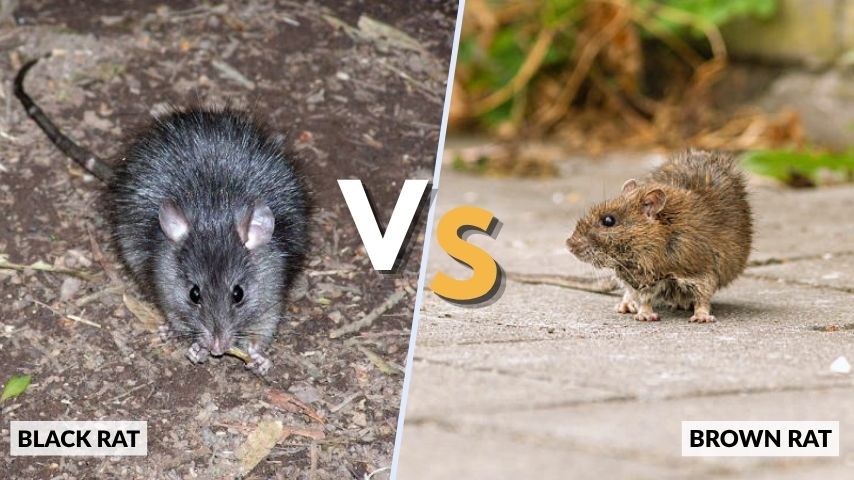
Black rats and brown rats are often confused because both species commonly live near humans. However, several physical and behavioral differences make identification possible. Understanding these distinctions is important for pest management and ecological studies.
Appearance Differences
Black rats are generally smaller, slimmer, and more agile than brown rats. They have larger ears, more pointed noses, and tails that are often longer than their bodies.
Habitat Differences
Brown rats usually prefer ground-level environments such as basements, sewers, and burrows. Black rats, in contrast, favor elevated locations including roofs, attics, and trees.
Behavior Differences
Black rats tend to be more cautious and better climbers than brown rats. Their arboreal tendencies often influence where signs of infestation are discovered.
Signs of a Black Rat Infestation
Early detection is one of the most effective ways to prevent a minor rat problem from becoming a major infestation. Black rats leave behind several clues that indicate their presence in a home, business, or agricultural structure.
Black Rat Droppings
Droppings are among the most common indicators of rat activity. Black rat droppings are typically small, dark, and spindle-shaped with pointed ends.
Gnaw Marks and Damage
Because their teeth continuously grow, black rats constantly gnaw on various materials. Damage may appear on wood, plastic, food packaging, and even electrical wiring.
Common Warning Signs
Look for these signs of infestation:
- Droppings near food sources
- Chewed wires and cables
- Grease marks along walls
- Nesting materials
- Scratching noises in ceilings
Prompt action can prevent extensive property damage and population growth.
Diseases Associated With Black Rats

Black rats have long been associated with disease transmission. Although modern sanitation has reduced many risks, infestations can still create health concerns for humans and pets.
Diseases They Can Carry
Black rats may contribute to the spread of several diseases and pathogens, including:
- Leptospirosis
- Salmonellosis
- Rat-bite fever
- Historically, plague-related bacteria
The risk varies depending on environmental conditions and exposure levels.
Health Risks to Humans
Contaminated food, surfaces, and water sources can create health hazards when rat populations are present. Their droppings and urine may also contribute to sanitation concerns.
Pet Safety Concerns
Pets can encounter risks through direct contact with rats, contaminated food sources, or parasites associated with rodent populations. Proper pest management helps reduce these dangers.
How to Get Rid of Black Rats
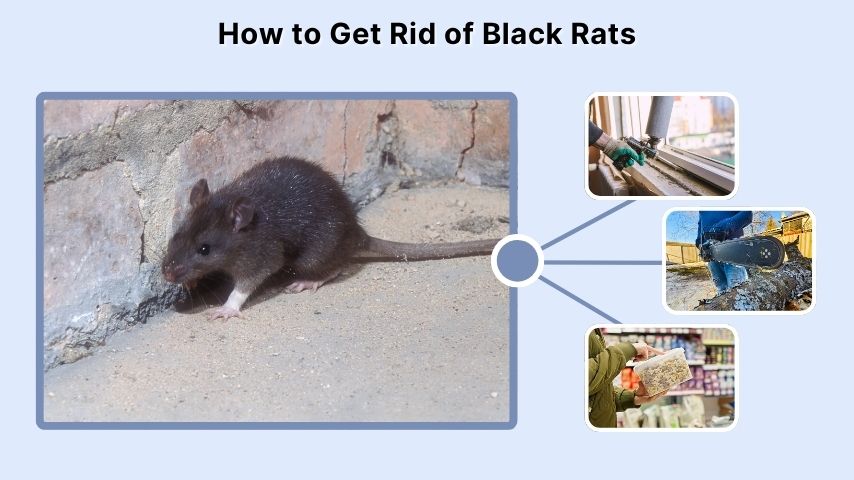
Effective black rat control requires a combination of sanitation, exclusion, and population reduction methods. Addressing only one aspect of the problem often produces temporary results.
Eliminate Food Sources
Reducing access to food is one of the most important control strategies. Store food in sealed containers and clean up spills promptly.
Long-Term Prevention
Several preventive measures can discourage black rats from establishing populations:
- Secure garbage containers
- Seal building entry points
- Trim tree branches near structures
- Store pet food properly
- Inspect buildings regularly
Consistent prevention greatly reduces the likelihood of future infestations.
When to Contact Professionals
Large infestations or recurring problems may require professional pest control services. Experts can identify entry points, assess population levels, and implement targeted management strategies.
FAQs
What is the difference between a black rat and a roof rat?
There is no difference. “Roof rat” is one of the common names used for the black rat (Rattus rattus).
Are black rats dangerous to humans?
Black rats can pose health risks by contaminating food and potentially spreading diseases through their droppings, urine, and parasites.
Where do black rats usually nest?
Black rats prefer elevated nesting locations such as attics, roofs, trees, wall voids, and upper sections of buildings.
Can black rats climb walls?
Yes. Black rats are excellent climbers and can scale rough walls, trees, pipes, and utility lines with ease.
What attracts black rats to a property?
Food, water, shelter, cluttered storage areas, unsealed garbage, and easy entry points can all attract black rats to homes and buildings.