
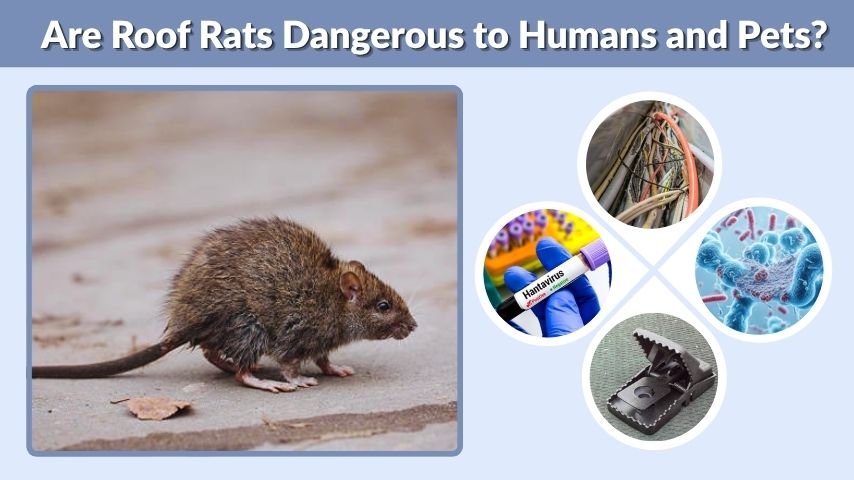
Roof rats are common rodents known for nesting in attics, ceilings, roofs, and trees. Many homeowners worry about these pests because they can spread diseases, contaminate food, and damage property. Roof rats are excellent climbers and often enter homes through small openings near roofs or utility lines.
Although roof rats may appear smaller and less aggressive than some other rat species, they can still create serious health and safety problems. Their droppings, urine, chewing habits, and parasites may affect both humans and pets. Understanding the dangers of roof rats can help homeowners prevent infestations and protect their living spaces.
What Are Roof Rats?
Roof rats are slender climbing rodents commonly found in warm climates and urban environments. They prefer elevated nesting areas such as roofs, attics, trees, and upper floors of buildings. Their climbing ability and nighttime activity make them difficult pests to detect early.
Scientific Name and Classification
The scientific name of the roof rat is Rattus rattus. It belongs to the rodent family Muridae, which includes mice and other rat species found worldwide.
Physical Appearance
- Long thin tail longer than body
- Slim body shape
- Large ears and pointed nose
- Dark brown or black fur
- Agile climbing feet
- Long whiskers for navigation
Why They Are Called Roof Rats
Roof rats often nest in roofs, attics, and trees rather than underground areas. Their excellent climbing skills allow them to move across branches, wires, fences, and rooftops with ease.
Are Roof Rats Dangerous?
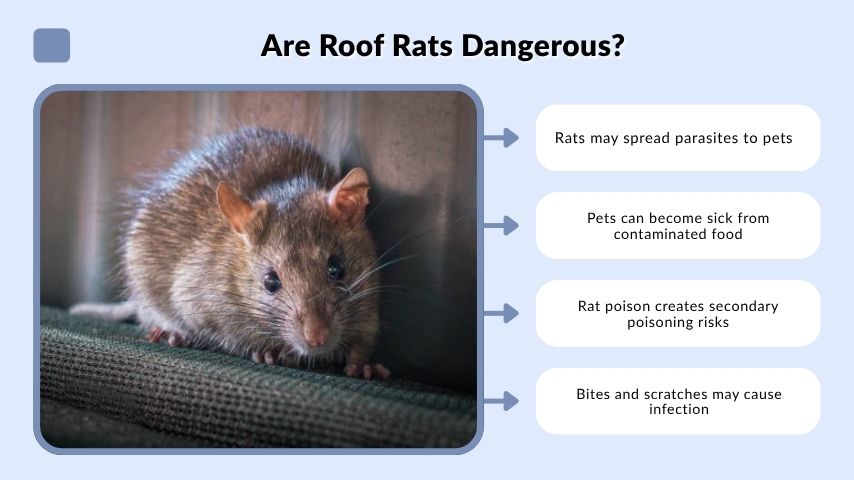
Roof rats can become dangerous because they spread diseases, contaminate surfaces, and damage homes. Large infestations increase the risk of health problems and property destruction. While rats usually avoid people, their presence can still create unsafe living conditions.
Are Roof Rats Dangerous to Humans?
Roof rats may spread harmful bacteria and viruses through droppings, urine, saliva, and contaminated food. Humans may also become exposed to parasites such as fleas carried by rats.
Are Roof Rats Dangerous to Dogs and Cats?
- Rats may spread parasites to pets
- Pets can become sick from contaminated food
- Rat poison creates secondary poisoning risks
- Bites and scratches may cause infection
- Hunting infected rats may expose pets to disease
Are Rats in the Roof Dangerous?
Rats living inside roofs or ceilings may chew electrical wiring, insulation, wood, and pipes. Their nesting activity can create fire hazards, unpleasant odors, and contamination inside homes.
Are Roof Rat Droppings Dangerous?
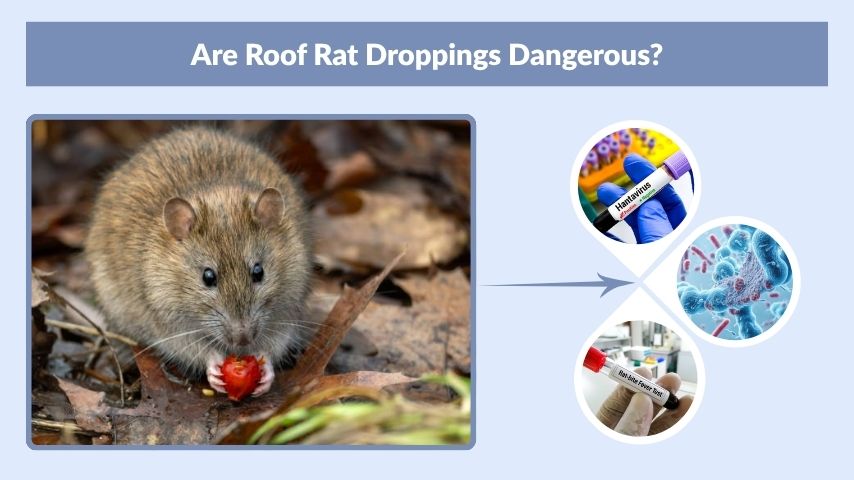
Roof rat droppings and urine can carry dangerous bacteria and viruses. Exposure to contaminated dust or surfaces may increase the risk of illness, especially in enclosed spaces such as attics and storage rooms.
Diseases Spread by Droppings
- Hantavirus
- Salmonella
- Leptospirosis
- Rat-bite fever bacteria
- Respiratory infections from contamination
Health Risks From Rat Urine
Rat urine can contaminate food, insulation, and surfaces. In enclosed areas, dried urine particles may become airborne and increase exposure risks for humans and pets.
Safe Cleanup Methods
Cleaning rat droppings safely is important because sweeping or vacuuming dry droppings may spread contaminated dust into the air. Protective gloves and disinfectants should always be used during cleanup.
Signs of a Roof Rat Infestation
Roof rats are usually most active at night, so homeowners often notice indirect signs before seeing the animals themselves. Early detection can help prevent larger infestations and serious property damage.
Noises in Walls or Ceilings
Many people first notice roof rats because of scratching, running, or gnawing sounds in ceilings, attics, and walls during nighttime hours.
Visible Droppings and Gnaw Marks
- Small dark droppings near food areas
- Chewed wires and wood
- Grease marks along walls
- Damaged food packaging
- Bite marks on insulation
Nesting Evidence
Roof rats create nests using shredded paper, fabric, insulation, and plant material. Nests are commonly hidden inside attics, wall spaces, storage boxes, and roof corners.
Damage Caused by Roof Rats
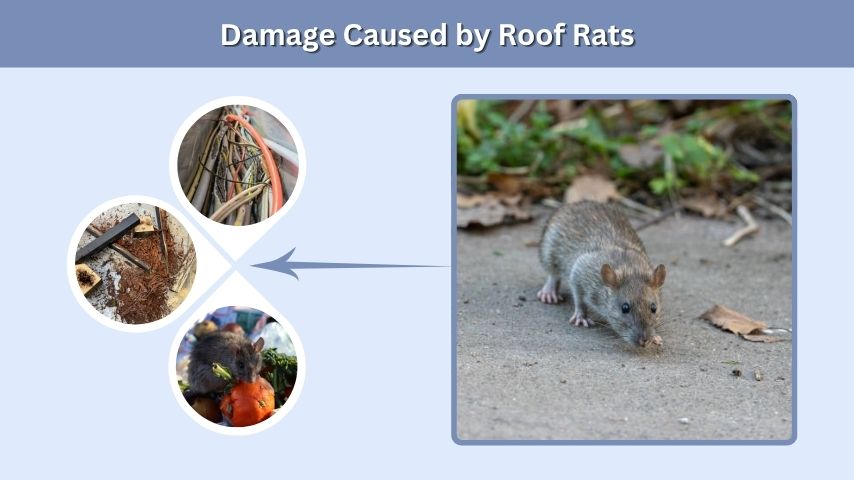
Roof rats can cause serious damage inside homes and buildings because of their constant chewing and nesting behavior. Their sharp teeth allow them to gnaw through many materials, increasing both repair costs and safety risks for homeowners.
Electrical Damage
Roof rats frequently chew electrical wires while exploring walls and attic spaces. Damaged wiring may create short circuits and increase the risk of house fires.
Structural Damage
- Torn insulation in attics
- Damaged roof vents
- Chewed wooden beams
- Contaminated storage areas
- Damage to pipes and cables
Food Contamination
Roof rats often invade kitchens, pantries, and storage areas while searching for food. Their droppings, urine, and saliva may contaminate food supplies and create health hazards inside homes.
Diseases Spread by Roof Rats
Roof rats are known carriers of several diseases and parasites that can affect humans and animals. The risk increases when infestations are large or when droppings and urine are left untreated.
Hantavirus Risks
Hantavirus exposure may occur through contact with contaminated droppings, urine, or dust particles. Symptoms can include fever, fatigue, and serious breathing problems in severe cases.
Leptospirosis
Leptospirosis is a bacterial disease spread through contaminated water or surfaces exposed to rat urine. Infection may cause fever, headaches, muscle pain, and kidney complications.
Rat-Bite Fever
- Spread through bites or scratches
- Can also spread through contaminated food
- Symptoms include fever and joint pain
- Requires medical treatment
- Untreated cases may become serious
Fleas and Parasites
Roof rats often carry fleas, mites, and ticks that may spread additional diseases. Pets and humans living near infestations can become exposed to these parasites.
Roof Rats and Pets
Roof rats can create dangers for dogs and cats through disease exposure, parasites, and accidental poisoning. Curious pets may chase or attack rats, increasing the chance of bites or infections.
Are Roof Rats Dangerous to Dogs?
Dogs may become exposed to diseases, fleas, or harmful bacteria after contact with roof rats or contaminated areas. Rat poison also creates serious poisoning risks for pets.
Risks to Cats
Cats that hunt rats may swallow infected rodents or poisoned rats. This can expose them to parasites, bacteria, and dangerous secondary poisoning.
Pet Safety Tips
- Keep pet food sealed securely
- Prevent pets from accessing attics
- Avoid leaving food outdoors overnight
- Monitor pets around rodent traps
- Use pet-safe pest control methods
How To Get Rid of Roof Rats
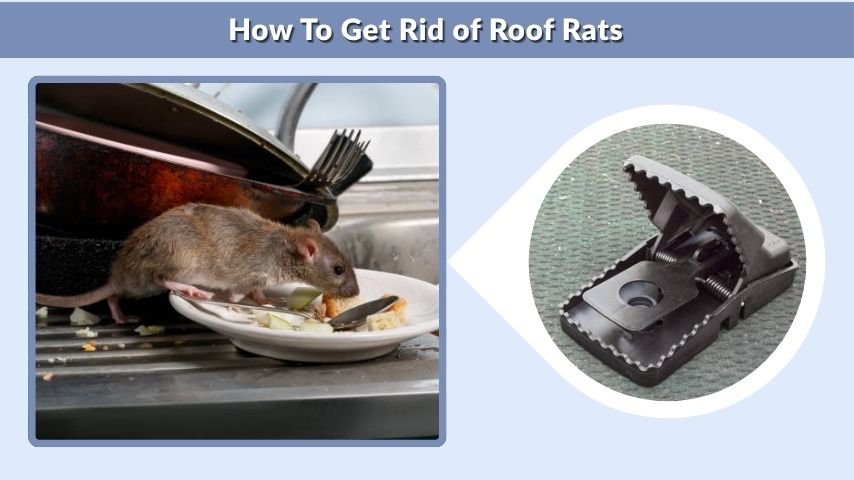
Removing roof rats requires a combination of trapping, sanitation, and blocking entry points. Preventing future infestations is just as important as eliminating current rat activity.
Trapping Methods
Snap traps and live traps are commonly used to control roof rat populations. Traps work best when placed near travel routes, attic spaces, and food sources.
Sealing Entry Points
Closing gaps around roofs, vents, pipes, and utility lines helps stop rats from entering homes. Roof rats can squeeze through surprisingly small openings.
Reducing Food Sources
- Secure trash containers
- Remove fallen fruit outdoors
- Store food in sealed containers
- Clean kitchens regularly
- Trim tree branches near roofs
Professional Pest Control
Professional pest control services may be necessary for severe infestations. Experts can safely remove rats, disinfect contaminated areas, and help prevent future problems.
Roof Rats vs Norway Rats
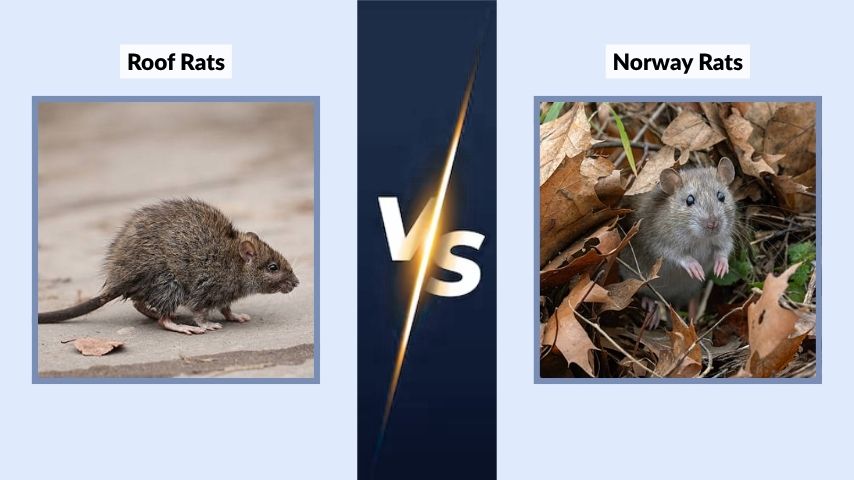
Roof rats are often confused with Norway rats, but the two species differ in appearance, behavior, and nesting habits.
Physical Differences
| Feature | Roof Rat | Norway Rat |
| Body Shape | Slim | Stocky |
| Tail Length | Longer than body | Shorter than body |
| Ears | Larger | Smaller |
| Nose Shape | Pointed | Blunt |
Behavior Differences
| Feature | Roof Rat | Norway Rat |
| Climbing Ability | Excellent climber | Limited climber |
| Nesting Area | Roofs and attics | Basements and burrows |
| Activity | Tree and roof travel | Ground travel |
FAQs
Are roof rats dangerous to humans?
Yes, roof rats can be dangerous to humans because they may spread diseases through droppings, urine, saliva, and parasites such as fleas. They can also contaminate food and damage electrical wiring inside homes.
Are roof rat droppings dangerous?
Roof rat droppings can carry harmful bacteria and viruses, including hantavirus and salmonella. Dried droppings may release contaminated dust into the air if cleaned improperly.
Are roof rats dangerous to dogs?
Yes, roof rats may expose dogs to diseases, parasites, and harmful bacteria. Dogs can also become sick from eating poisoned rats or coming into contact with contaminated areas.
What diseases do roof rats spread?
Roof rats may spread diseases such as hantavirus, leptospirosis, salmonella, and rat-bite fever. Their fleas and parasites can also carry additional illnesses.
How do you get rid of roof rats?
Roof rats can be controlled using traps, sealing entry points, removing food sources, and maintaining clean surroundings. Severe infestations may require professional pest control services.