
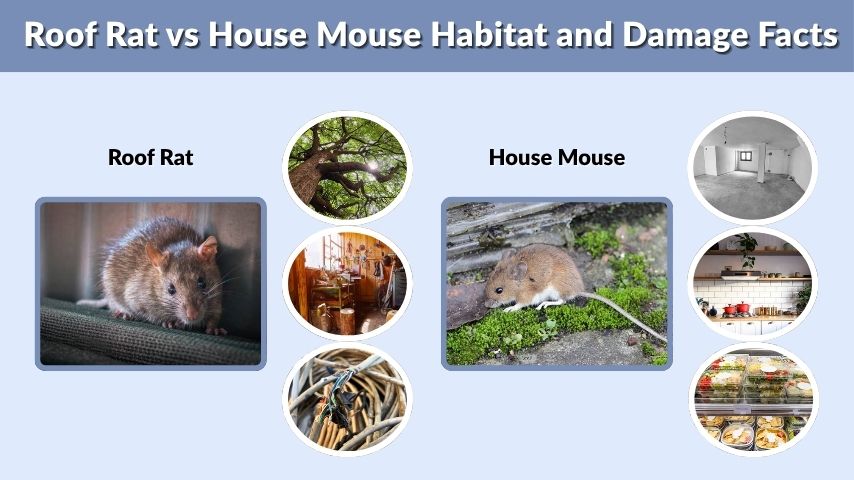
Roof rats and house mice are two of the most common rodents found inside homes and buildings. Although they may seem similar at first, these pests differ in size, behavior, nesting habits, and the type of damage they cause. Correct identification is important because roof rats and house mice require different control and prevention methods. Homeowners often notice scratching sounds, droppings, gnaw marks, or food contamination before actually seeing the rodents themselves.
Both rodents can spread diseases and damage property by chewing wires, insulation, wood, and stored food. Understanding the differences between roof rats and house mice can help people identify infestations early and choose the best pest control solutions for their homes and businesses.
Roof Rat vs House Mouse Overview
Roof rats and house mice are both rodents commonly associated with human buildings, but they behave differently and occupy different parts of a structure. Roof rats are larger climbing rodents, while house mice are smaller and more adaptable indoor pests.
What Is a Roof Rat?
Roof rats, also called black rats, are slender rodents known for their excellent climbing abilities. They commonly live in attics, roofs, trees, and upper areas of buildings where they search for food and nesting locations.
What Is a House Mouse?
House mice are small rodents that adapt easily to indoor living. They commonly infest kitchens, storage rooms, wall voids, and cluttered areas where food and shelter are easily available.
Why Correct Identification Matters
- Different trapping methods
- Different nesting behaviors
- Different entry points
- Different food preferences
- Different infestation patterns
Physical Differences Between Roof Rats and House Mice
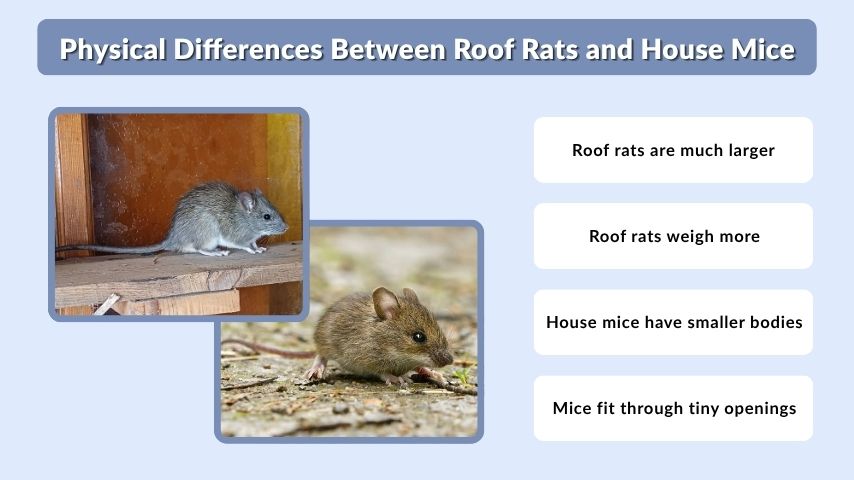
Physical appearance is one of the easiest ways to tell roof rats and house mice apart. Differences in body size, tail length, ears, and overall shape help identify which rodent is causing problems inside a building.
Size Comparison
- Roof rats are much larger
- House mice have smaller bodies
- Roof rats weigh more
- Mice fit through tiny openings
- Rats leave larger droppings
Tail, Ears, and Body Shape
Roof rats usually have long tails that are often longer than their bodies. House mice also have long tails, but their bodies are much smaller and lighter. Mice often have proportionally larger ears and a more delicate appearance.
Fur Color and Appearance
Roof rats are usually dark brown or black with sleek fur and pointed noses. House mice are commonly gray or light brown with softer fur and smaller facial features.
Roof Rat vs House Mouse Behavior
Roof rats and house mice behave differently when searching for food, building nests, and moving through homes. Understanding these habits can help identify infestations and locate hiding places more effectively.
Climbing and Movement
- Roof rats are strong climbers
- House mice run along walls
- Roof rats prefer upper areas
- Mice enter through tiny gaps
- Rats travel along utility lines
Feeding Habits
Roof rats often prefer fruits, nuts, seeds, and plant-based foods, while house mice eat grains, crumbs, pet food, and many household food products. Both rodents may contaminate stored food with urine and droppings.
Activity Times
Both roof rats and house mice are mostly nocturnal, meaning they are most active at night. Homeowners often hear scratching sounds in ceilings, walls, or kitchens after dark when rodents begin searching for food.
Roof Rat vs House Mouse Habitat and Nesting Differences
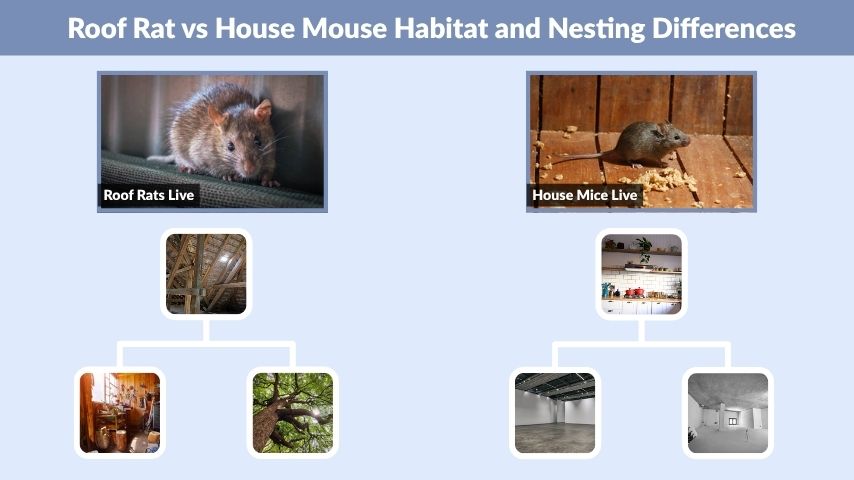
Roof rats and house mice choose different nesting areas depending on their climbing ability, food access, and safety needs. Their preferred habitats often reveal which rodent species is present inside a home or building.
Where Roof Rats Live
- Attics and roof spaces
- Trees and branches
- Garages and sheds
- Upper wall voids
- Storage lofts
Where House Mice Live
- Kitchens and pantries
- Wall voids
- Basements
- Cluttered storage areas
- Behind appliances
Nesting Materials and Habits
Both rodents build nests using shredded paper, insulation, cloth, cardboard, and other soft materials. House mice usually nest close to food sources, while roof rats often build nests in elevated hidden locations.
Roof Rat vs House Mouse Droppings
Droppings are one of the clearest signs of rodent activity and can help identify whether roof rats or house mice are present. Size, shape, and location of droppings provide important clues during inspections.
Roof Rat Droppings
- Larger capsule-shaped pellets
- Pointed ends
- Dark coloration
- Common near attic spaces
- Usually around half an inch long
House Mouse Droppings
House mouse droppings are much smaller and resemble dark grains of rice. They are commonly found near kitchen cabinets, pantries, drawers, and along walls where mice travel frequently.
Why Dropping Identification Matters
Correctly identifying rodent droppings helps determine the type of infestation and the best control strategy. Rat infestations often require larger traps and stronger exclusion methods than mouse infestations.
Roof Rat vs House Mouse Signs of Infestation
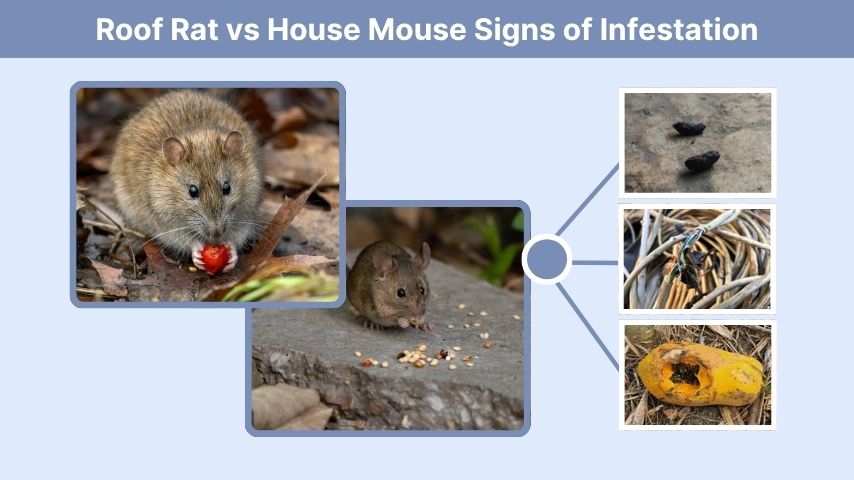
Roof rats and house mice often leave behind warning signs before homeowners ever see the animals themselves. Recognizing these clues early can help prevent larger infestations and reduce property damage caused by rodents.
Common Roof Rat Signs
- Scratching sounds in ceilings
- Gnawed electrical wires
- Droppings in attics
- Fruit damage outdoors
- Grease marks along rafters
Common House Mouse Signs
House mice often leave tiny droppings near food storage areas and chew through packaging to reach food sources. Small gnaw marks, nesting materials, and musky odors may also appear around walls, cabinets, and appliances.
Strange Noises and Smells
Rodent infestations commonly produce scratching, squeaking, or movement sounds at night. Strong musky odors may develop when nests, droppings, and urine accumulate inside hidden areas of a home.
Damage Caused by Roof Rats and House Mice
Both roof rats and house mice can cause serious damage to homes, businesses, and stored food. Their constant gnawing behavior creates structural problems while also increasing fire and health risks.
Structural Damage
- Chewed electrical wiring
- Damaged insulation
- Gnawed wood and plastic
- Torn storage materials
- Damaged pipes and vents
Food Contamination
Rodents contaminate food with droppings, urine, and hair while searching for meals. Infested food products often become unsafe for humans and pets because rodents may carry harmful bacteria and parasites.
Disease Risks
Roof rats and house mice may spread diseases through droppings, urine, saliva, and parasites such as fleas and mites. Health concerns linked to rodents include salmonella contamination and respiratory risks from airborne particles.
Roof Rat vs House Mouse Control Methods
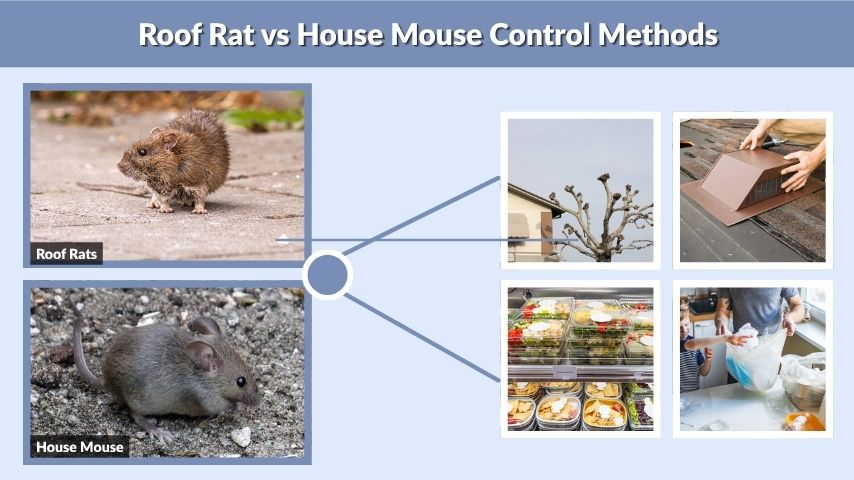
Effective rodent control depends on identifying the correct species and removing food, water, and shelter sources. Roof rats and house mice often require different trapping locations and prevention methods because of their unique behaviors.
Preventing Roof Rats
- Trim tree branches near roofs
- Seal roof openings and vents
- Remove outdoor food sources
- Inspect attic entry points
- Secure garbage containers
Preventing House Mice
- Seal cracks and wall gaps
- Store food in sealed containers
- Reduce clutter indoors
- Clean food crumbs regularly
- Remove nesting materials
Traps and Pest Control Options
Snap traps, bait stations, and professional pest control services are commonly used to remove rodent infestations. Proper trap placement is important because roof rats and house mice travel in different parts of a building.
Roof Rat vs House Mouse vs Norway Rat
Roof rats, house mice, and Norway rats are among the most common rodent pests found around homes. Although all three species invade buildings, they differ greatly in body size, nesting habits, and movement patterns.
Norway Rat Appearance and Behavior
Norway rats are larger and heavier than roof rats and house mice. They usually prefer ground-level environments, basements, sewers, and burrows rather than attics or elevated areas.
Habitat Differences
- Roof rats prefer high locations
- Norway rats stay near the ground
- House mice adapt indoors easily
- Roof rats climb extremely well
- Norway rats often burrow outdoors
Quick Comparison Chart
Roof rats are medium-sized climbers with long tails and sleek bodies. House mice are much smaller indoor rodents, while Norway rats are heavy-bodied ground dwellers commonly associated with sewers and basements.
Common Myths About Rats and Mice
Many people misunderstand rodent behavior and infestations. Learning the facts about roof rats and house mice can help homeowners respond more effectively to infestations and avoid common mistakes.
Myth: Mice and Rats Are the Same
Mice and rats belong to different rodent species with different behaviors, sizes, diets, and nesting habits. Proper identification is important because pest control methods may vary greatly between them.
Myth: Only Dirty Homes Get Rodents
Even clean homes can attract rodents if food, shelter, or entry points are available. Seasonal weather changes, nearby vegetation, and structural gaps can encourage infestations in almost any building.
Myth: One Rodent Means No Infestation
Seeing a single rodent often indicates additional hidden rodents nearby. Both roof rats and house mice reproduce quickly, allowing small infestations to grow rapidly if left untreated.
FAQs
How can you tell a roof rat from a house mouse?
Roof rats are much larger than house mice and usually have longer tails, sleeker bodies, and pointed noses. House mice are smaller with larger ears and lighter bodies. Roof rats also prefer higher nesting areas like attics and roofs.
Do roof rats live in attics?
Yes, roof rats commonly live in attics, roof spaces, trees, and upper parts of buildings. They are excellent climbers and often travel along power lines, branches, and fences to reach elevated nesting areas.
What do house mouse droppings look like?
House mouse droppings are small, dark, and shaped like grains of rice. They are commonly found near kitchen cabinets, food storage areas, drawers, and along walls where mice travel frequently during nighttime activity.
Which rodent causes more property damage?
Both rodents can cause serious damage, but roof rats often create larger structural problems because of their size and stronger gnawing ability. They may chew wires, insulation, wood, and pipes, increasing fire and repair risks inside homes.
When should you call pest control for rodents?
Professional pest control may be needed if you notice repeated rodent sightings, large amounts of droppings, scratching noises, gnaw damage, or persistent infestations that traps and prevention methods cannot control effectively.