
Rats outside your home can quickly become a serious problem if they are not removed early. Outdoor rats often live in yards, gardens, sheds, garages, wood piles, and trash areas where they can easily find food, water, and shelter. While they may initially stay outside, rats frequently move indoors once they discover safe entry points and reliable food sources near homes.
Besides damaging property, rats can spread bacteria, contaminate outdoor areas, dig burrows, and attract even more pests. The good news is that outdoor rat problems can usually be controlled by combining cleanup, trapping, exclusion, and prevention methods. This guide explains how to get rid of rats outside step by step and how to stop them from returning.
Why Do Rats Live Outside Your House?
Rats stay outside because yards and outdoor spaces often provide ideal living conditions. They search for places with easy access to food, water, and hidden nesting areas where predators cannot easily reach them.
Common Reasons Rats Come Outside
Outdoor rat infestations usually happen because something around the property is attracting them.
Common attractants include:
- Open garbage bins
- Pet food left outdoors
- Fallen fruit from trees
- Bird seed scattered on the ground
- Compost piles with food scraps
Even small food sources can support rat activity. Once rats discover a dependable supply of food and shelter, they often stay nearby and begin building nests.
Dense vegetation and cluttered storage areas also make excellent hiding spots. Overgrown bushes, piles of wood, cardboard, and unused equipment can create safe nesting environments.
Where Rats Hide Outside
Rats prefer dark, protected locations where they can move safely without being disturbed.
Common outdoor hiding places include:
- Under decks and porches
- Beneath sheds or garages
- Inside wood piles
- Along fences and walls
- Underground burrows in yards
Many rats create tunnels or burrows near foundations, gardens, and heavy vegetation. These hidden nesting areas make infestations harder to notice during the early stages.
Signs of Rats Outside
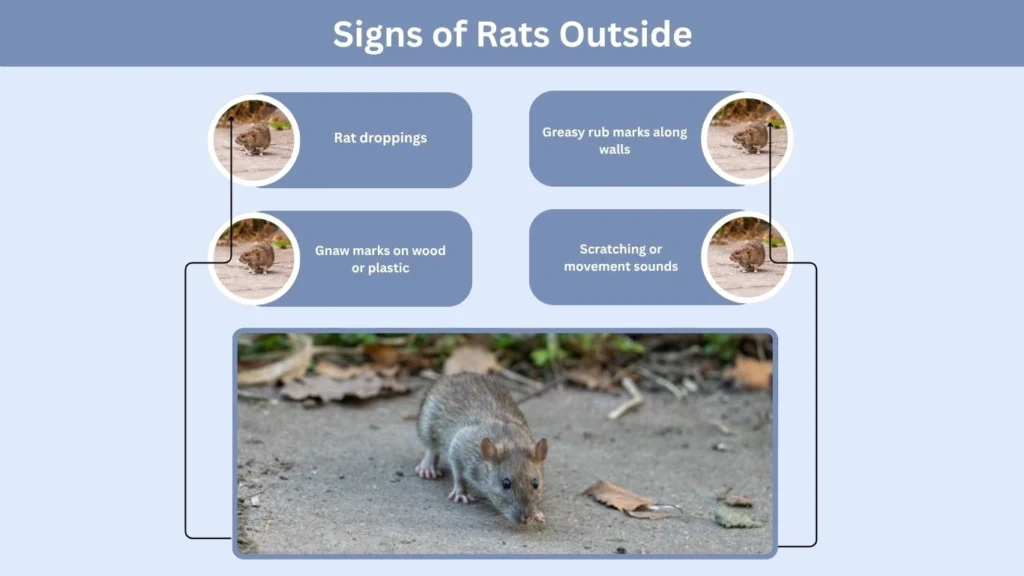
Outdoor rat activity is not always obvious at first. Identifying the warning signs early can help prevent the infestation from growing larger.
Common Outdoor Rat Signs
Rats leave behind several visible signs while searching for food and moving around outdoor spaces.
Common indicators include:
- Rat droppings
- Gnaw marks on wood or plastic
- Greasy rub marks along walls
- Scratching or movement sounds
- Strong unpleasant odors
Fresh droppings are one of the clearest signs of active rats. You may also notice chewed garbage bags, damaged containers, or disturbed garden areas.
Greasy rub marks occur because rats repeatedly travel along the same paths, leaving body oils on surfaces.
Rat Holes in Yard
Burrows are another strong sign of outdoor rats. These holes are often found near foundations, fences, bushes, compost piles, or sheds.
Rat burrows usually appear as:
- Small round openings in soil
- Loose dirt around the entrance
- Smooth pathways nearby
- Multiple connected holes
Some burrows may lead to complex underground nesting systems with several escape routes.
Step-by-Step Guide to Get Rid of Rats Outside
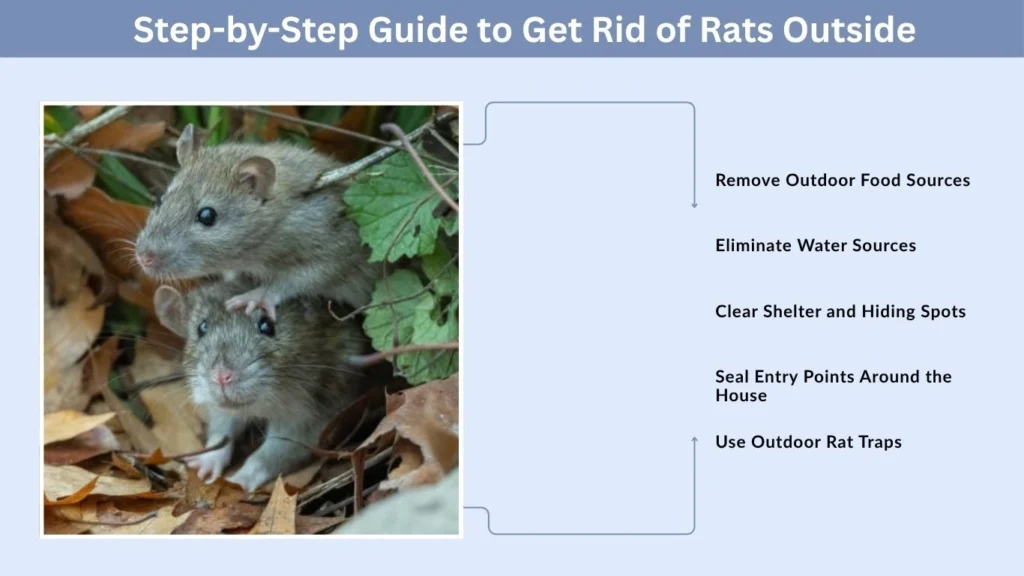
Removing rats outside requires more than simply setting traps. Long-term success depends on removing the conditions that attract rats in the first place.
Step 1: Remove Outdoor Food Sources
Food is the main reason rats remain near homes. Eliminating food sources forces them to search elsewhere.
Important cleanup steps include:
- Secure garbage bins tightly
- Remove fallen fruit quickly
- Stop leaving pet food outdoors
- Store bird seed in sealed containers
- Clean outdoor cooking areas
Bird feeders commonly attract rats because spilled seeds collect underneath. Reducing spilled food can make a major difference.
Compost piles should also be managed carefully. Avoid placing meat, grease, or cooked food scraps in outdoor compost because these strongly attract rodents.
Step 2: Eliminate Water Sources
Rats need water regularly, especially during warm weather. Even small amounts of standing water can support outdoor rat populations.
Check for:
- Leaking outdoor faucets
- Standing water in containers
- Clogged gutters
- Pet water bowls left overnight
- Poor drainage areas
Removing water sources makes outdoor areas less attractive and reduces the likelihood of rats settling nearby.
Step 3: Clear Shelter and Hiding Spots
Rats avoid open areas and prefer protected spaces where they can hide safely during the day.
To reduce shelter opportunities:
- Trim overgrown bushes
- Remove yard clutter
- Store firewood off the ground
- Clean storage areas regularly
- Keep grass cut short
Wood piles should be elevated several inches above ground level and kept away from walls whenever possible.
Dense vegetation around foundations also provides excellent hiding spots and travel routes for rats.
Step 4: Seal Entry Points Around the House
Outdoor rats often attempt to move indoors if they find easy access points. Sealing openings around the home is an important prevention step.
Inspect areas such as:
- Foundation cracks
- Garage door gaps
- Utility pipe openings
- Roof vents
- Damaged screens
Rats can squeeze through surprisingly small openings. Covering holes with metal mesh or durable materials helps block entry.
Regular inspections are important because rats may create new access points over time.
Step 5: Use Outdoor Rat Traps
Traps are one of the most effective ways to reduce active outdoor rat populations. Proper placement is essential for success.
Common outdoor trap options include:
- Snap traps
- Covered bait stations
- Electronic traps
- Enclosed trap boxes
Place traps along walls, fences, and known rat pathways because rats usually travel close to edges for protection. Using enclosed bait stations helps protect children, pets, and wildlife from accidental contact.
Best Outdoor Rat Control Methods
Different outdoor rat control methods work better depending on the size and severity of the infestation.
| Method | Best For | Effectiveness |
| Yard cleanup | Prevention | High |
| Snap traps | Small infestations | High |
| Bait stations | Larger infestations | Moderate to high |
| Repellents | Temporary deterrent | Moderate |
| Professional pest control | Severe infestations | Very high |
No single method works perfectly by itself. The best results usually come from combining cleanup, trapping, exclusion, and prevention strategies together.
For example, traps may reduce current rat numbers, but the infestation often returns if food and shelter remain available nearby.
Natural Ways to Get Rid of Rats Outside
Natural methods may help discourage rats, especially when combined with proper sanitation and yard maintenance.
- Remove food and water sources
- Keep grass and vegetation trimmed
- Use strong-smelling repellents
- Encourage natural predators
- Maintain a clean outdoor environment
Peppermint oil and commercial scent repellents are commonly used as temporary deterrents, although they are rarely effective as standalone solutions. Owls, hawks, and outdoor cats may also help reduce rodent activity naturally in some areas.
What Not to Do When Removing Rats Outside
Some common mistakes can make outdoor rat problems worse or create safety hazards during treatment.
Common Mistakes
Several ineffective approaches often fail to solve infestations completely.
Avoid these mistakes:
- Leaving poison exposed outdoors
- Ignoring food sources
- Blocking active burrows too early
- Relying only on repellents
- Waiting too long to take action
Blocking rat holes before reducing the population may force rats to create new escape routes around the property.
Poisons should also be used carefully because they may harm pets, wildlife, or scavenging animals if not properly contained.
How to Prevent Rats From Coming Back
Getting rid of rats outside is only part of the solution. Long-term prevention is essential because outdoor rats often return if food, shelter, and nesting areas remain available.
Yard Maintenance Tips
A clean and organized yard makes the environment much less attractive to rodents.
Important prevention steps include:
- Keep garbage bins tightly sealed
- Clean outdoor eating areas regularly
- Remove fallen fruit and food scraps
- Trim bushes and overgrown vegetation
- Store garden supplies properly
Trash management is especially important because exposed garbage provides a reliable food source for rats. Heavy-duty lids and secure storage containers help reduce attraction.
Regular yard maintenance also eliminates many hiding spots rats depend on for safety during the daytime.
Home Protection Tips
Outdoor rats frequently attempt to move indoors once they establish nests nearby. Protecting the home’s exterior helps stop this transition.
Focus on areas such as:
- Foundation gaps
- Utility pipe openings
- Roof vents
- Garage doors
- Crawl spaces
Metal mesh, steel wool, and durable sealants are commonly used to block entry points because rats can chew through weaker materials.
Routine inspections are important since even small openings can become entry routes for rodents.
When to Call a Professional
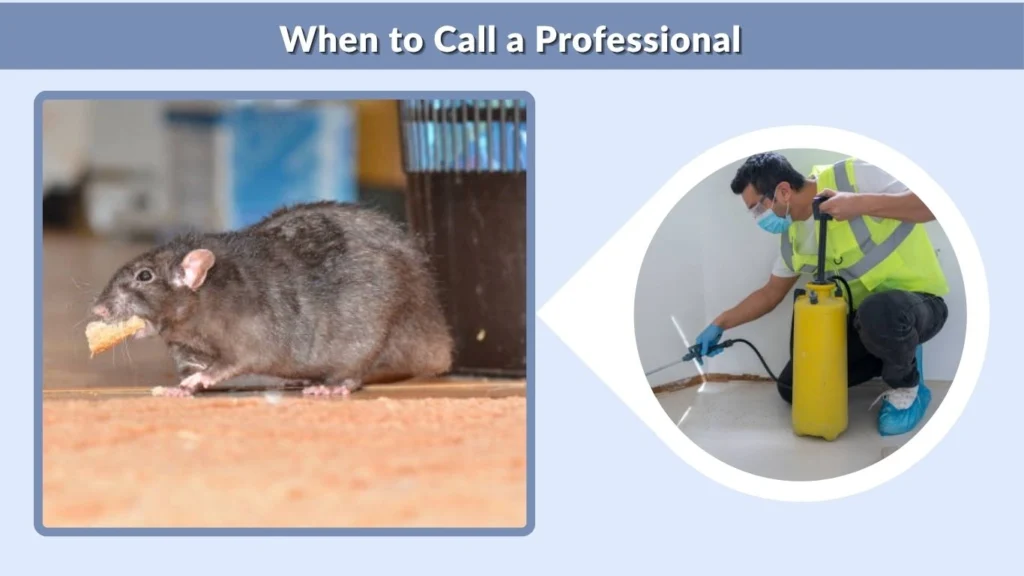
Some outdoor rat infestations become too large or difficult to manage without professional help. Pest control professionals have access to stronger treatment methods and can identify nesting areas more effectively.
Signs You Need Pest Control
Professional assistance may be necessary if you notice:
- Multiple active burrows
- Rats seen frequently during daytime
- Rapidly increasing droppings
- Repeated trap failure
- Rats entering the home
Daytime rat activity often indicates a large infestation because overcrowded rats become more active during daylight hours when competition increases.
Professionals can also inspect hidden nesting areas and determine whether rats have already entered walls, attics, or crawl spaces.
Benefits of Professional Rat Removal
Professional pest control companies often provide more complete long-term solutions.
Advantages may include:
- Detailed property inspections
- Safe bait station placement
- Large-scale trapping strategies
- Entry-point sealing recommendations
- Ongoing monitoring programs
For severe infestations, professional treatment is usually faster and more effective than relying only on DIY methods.
Outdoor Rat Repellents: Do They Work?
Many homeowners try repellents first because they seem easier than trapping or exclusion methods. While repellents may temporarily discourage rats, they usually work best when combined with sanitation and prevention.
Common Outdoor Rat Repellents
Popular repellent options include:
- Peppermint oil sprays
- Predator urine products
- Ultrasonic devices
- Commercial scent repellents
- Natural essential oil mixtures
Strong smells may temporarily disrupt rat activity in certain areas, but hungry rats often ignore repellents when food and shelter remain available.
Ultrasonic devices also produce mixed results because rats may become accustomed to the sound over time.
Best Way to Use Repellents
Repellents work most effectively when paired with:
- Food removal
- Trap placement
- Burrow control
- Yard cleanup
- Entry-point sealing
Using repellents alone rarely solves a serious infestation permanently.
How to Handle Rat Burrows in the Yard
Rat burrows are common in outdoor infestations and should be handled carefully to avoid spreading activity to new areas.
Identifying Active Burrows
Active burrows usually show signs such as:
- Fresh dirt near openings
- Smooth travel paths
- Recent droppings nearby
- Multiple connected holes
Inactive holes often appear collapsed or undisturbed over time.
Safely Closing Rat Holes
Burrows should only be sealed after confirming rat activity has been reduced through trapping or other control methods.
Recommended steps include:
- Eliminate active rats first
- Fill holes with dirt or gravel
- Add wire mesh if needed
- Monitor for reopening
Closing holes too early may force rats to dig new tunnels elsewhere around the property.
Are Outdoor Rats Dangerous?
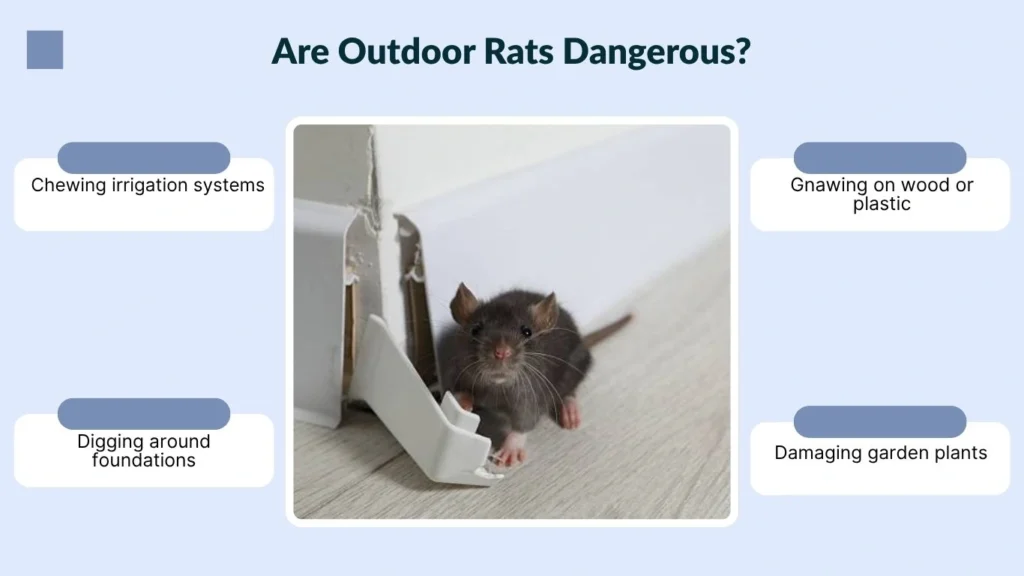
Outdoor rats can create health and property risks even when they stay outside.
Health Risks
Rats may spread bacteria and diseases through:
- Droppings
- Urine contamination
- Parasites such as fleas and ticks
Areas contaminated by rats should always be cleaned carefully using gloves and proper sanitation methods.
Property Damage Risks
Outdoor rats may also damage property by:
- Gnawing on wood or plastic
- Damaging garden plants
- Chewing irrigation systems
- Digging around foundations
If rats eventually move indoors, the damage risks become even greater.
Common Myths About Outdoor Rats
Many misconceptions about outdoor rats can delay proper treatment or lead to ineffective control methods.
- Outdoor rats rarely stay outside permanently
- Clean homes can still attract rats
- Repellents alone usually do not solve infestations
- Seeing one rat may indicate more nearby
- Poison is not always the safest solution
One common myth is that rats only appear in dirty environments. In reality, even clean yards may attract rats if food, water, and shelter are available nearby.
Another misconception is that a single rat means the problem is minor. Rats reproduce quickly, so early action is important before populations grow larger.
FAQs
What is the fastest way to get rid of rats outside?
The fastest approach combines food removal, yard cleanup, sealing entry points, and properly placed outdoor traps.
What attracts rats to your yard?
Rats are attracted to garbage, bird seed, pet food, standing water, compost piles, and cluttered hiding areas.
Do outdoor rats eventually come inside?
Yes, outdoor rats often enter homes when they find food, warmth, or accessible openings around foundations and walls.
What smell keeps rats away outside?
Strong scents such as peppermint oil may discourage rats temporarily, but repellents work best alongside cleanup and exclusion methods.
Should I fill rat holes in my yard?
Yes, but only after reducing active rat populations first. Otherwise, rats may simply dig new tunnels nearby.