
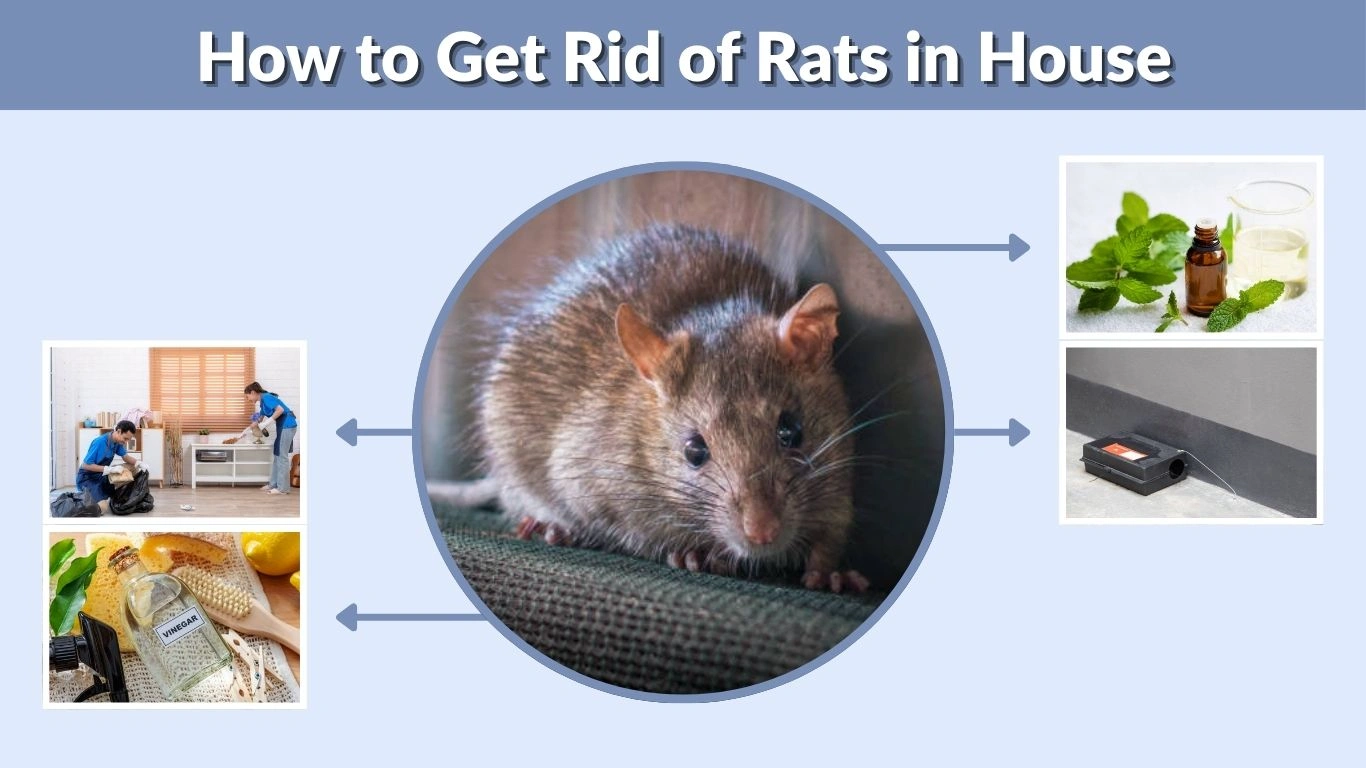
Rats inside a home can quickly become a serious problem. They damage furniture, chew electrical wires, contaminate food, and spread harmful diseases. Many homeowners notice scratching sounds, droppings, or strong odors before realizing they have an infestation. The good news is that you can remove rats effectively with the right approach. This guide explains how to get rid of rats in house using practical methods, fast solutions, and long-term prevention steps that help keep your home clean, safe, and rat-free.
Signs You Have Rats in Your House
Before starting any treatment, it is important to confirm rat activity inside your home. Rats usually stay hidden during the day, so early warning signs can help you identify the problem before it becomes severe. Recognizing these signs allows you to take action quickly and prevent further damage.
Rat Droppings Around the House
Rat droppings are one of the clearest signs of an infestation. You may find them in kitchen cabinets, behind appliances, under sinks, or near food storage areas. Fresh droppings are dark and moist, while older ones become dry and gray.
Scratching Sounds at Night
Rats are most active after dark. If you hear scratching, running, or squeaking noises in the ceiling, attic, or walls during the night, rats may be nesting nearby. These sounds are commonly heard in quiet areas of the home.
Chewed Wires and Furniture
Rats constantly gnaw to keep their teeth from growing too long. They often chew electrical wires, cardboard, wood, and furniture. Damaged wires are especially dangerous because they can increase the risk of electrical fires.
Strong Unpleasant Odors
A strong ammonia-like smell may indicate rat urine. The odor becomes stronger as the infestation grows. In severe cases, dead rats hidden inside walls or ceilings can create an unbearable smell throughout the house.
Why Rats Enter Your Home
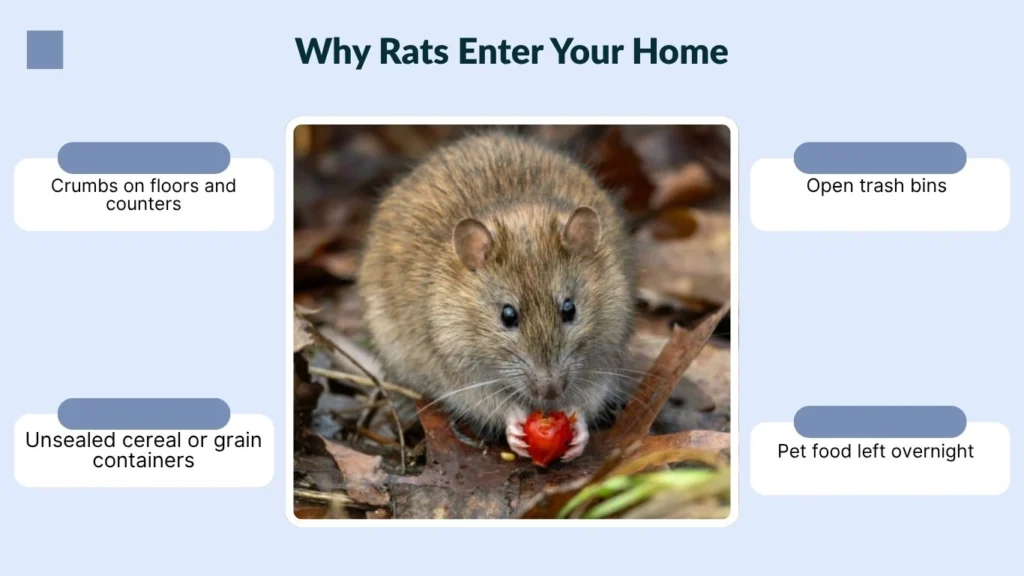
Rats usually enter homes searching for food, water, and shelter. Even a clean house can attract rodents if easy access points and food sources are available. Understanding why rats invade homes can help you stop them from returning after removal.
Easy Access to Food
Rats are attracted to exposed food and garbage. Common food sources include:
- Open trash bins
- Pet food left overnight
- Crumbs on floors and counters
- Unsealed cereal or grain containers
Keeping food sealed and maintaining a clean kitchen reduces the chances of attracting rats.
Water Sources Inside the House
Like all animals, rats need water to survive. They are often drawn to leaking pipes, dripping faucets, and standing water near sinks or bathrooms. Even small amounts of moisture can support rat activity indoors.
Warm Shelter and Hiding Spots
Rats prefer dark and quiet areas where they can hide and build nests. Common nesting locations include:
- Attics
- Basements
- Garages
- Storage rooms
- Wall cavities
Cluttered spaces provide perfect protection for rats and allow infestations to grow unnoticed.
How to Get Rid of Rats in House Step by Step
Removing rats successfully requires more than setting a single trap. You need a complete strategy that targets food sources, entry points, and nesting areas at the same time. Following these steps carefully can help eliminate rats faster and prevent future infestations.
Step 1 – Find Where Rats Are Hiding
Start by inspecting the entire house for signs of rat activity. Look behind kitchen appliances, inside cabinets, near garbage bins, and in attic spaces. Rats usually travel along walls and dark corners, so focus on these areas first.
You should also check for:
- Droppings
- Grease marks along walls
- Torn insulation
- Gnawed materials
- Nesting debris
Identifying active locations helps you place traps more effectively.
Step 2 – Remove Food and Water Sources
Rats stay where food and water are easy to find. Clean all kitchen surfaces thoroughly and store food in airtight containers. Sweep crumbs daily and avoid leaving dirty dishes overnight.
Fix leaking pipes and remove standing water immediately. If rats cannot access food or water, they are more likely to enter traps and eventually leave the area.
Step 3 – Seal All Entry Points
One of the most important steps is preventing rats from entering your home again. Rats can squeeze through surprisingly small gaps, including holes around pipes, vents, and doors.
Common materials used to block entry points include:
- Steel wool
- Metal mesh
- Caulk sealant
- Cement filler
Inspect both the inside and outside of the house carefully. Pay close attention to roof edges, basement openings, and utility pipe gaps.
How to Get Rid of Rats in House Fast
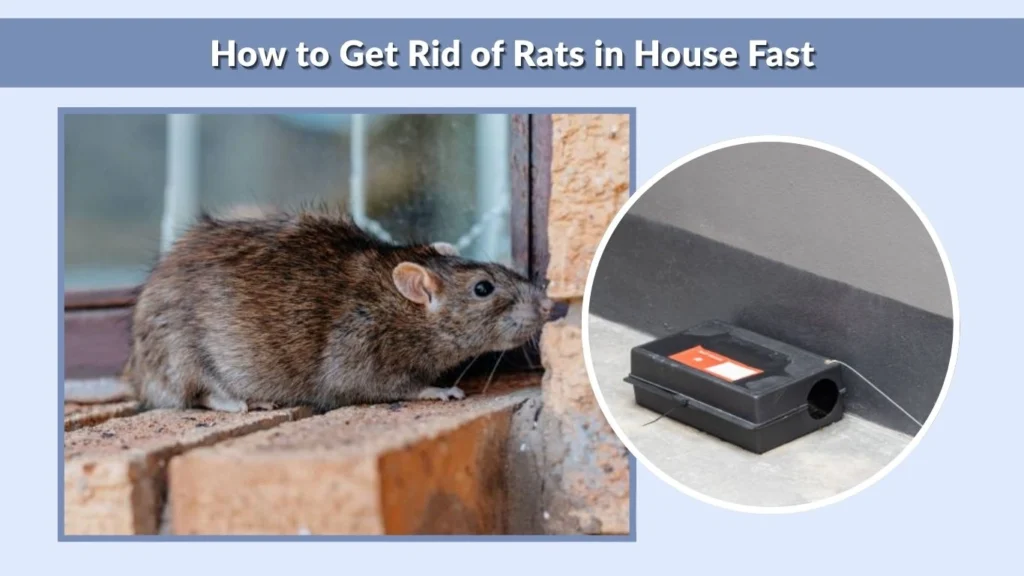
Many homeowners want immediate results after discovering rats indoors. While complete removal may take time, certain methods can speed up the process significantly. Combining traps, proper bait placement, and sanitation creates the fastest results.
Use Multiple Traps at Once
Using only one trap is rarely effective. Place several traps in areas where rat activity is highest. Position traps along walls because rats usually travel close to edges rather than open spaces.
Choose Effective Rat Bait
The right bait can improve trap success dramatically. Popular bait choices include peanut butter, dried fruit, nuts, and small pieces of meat. Replace old bait regularly to keep it fresh and attractive.
Consider Electronic Traps
Electronic traps kill rats quickly using a high-voltage shock. These traps are easy to clean, reduce direct contact, and work well for indoor infestations. They are often more effective than traditional traps for larger rats.
How to Get Rid of Rats in House Naturally
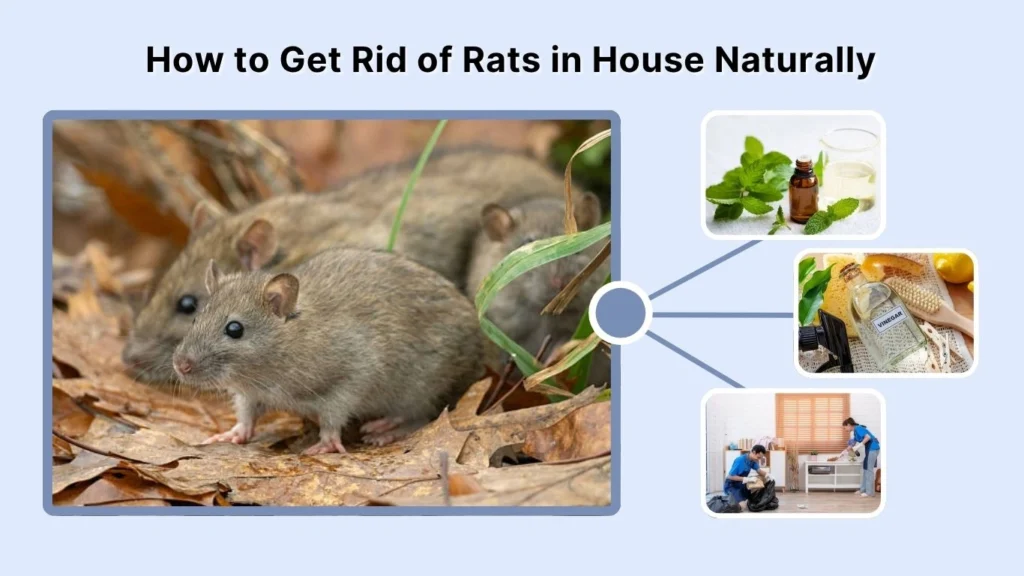
Many people prefer natural methods before using poison or professional extermination. Natural remedies can help discourage rats from staying in your home, especially during the early stages of an infestation. While these methods may not solve severe problems alone, they can support other rat control strategies effectively.
Peppermint Oil as a Natural Repellent
Peppermint oil has a strong smell that rats dislike. Soak cotton balls in peppermint oil and place them near entry points, corners, and areas where rats are active. Replace the cotton regularly to maintain the scent.
Vinegar and Ammonia Solutions
Strong-smelling liquids like vinegar and ammonia can help deter rats temporarily. These odors make areas less attractive for nesting and movement. However, they should never replace proper trapping and sanitation methods.
Keep Your House Clean and Clutter-Free
A clean environment naturally reduces rat activity. Focus on:
- Removing cardboard piles
- Organizing storage spaces
- Cleaning under appliances
- Emptying trash bins regularly
Reducing clutter removes hiding spots and makes rats feel unsafe inside the home.
How to Get Rid of Rats in Walls
Rats inside walls are one of the most frustrating problems homeowners face. They create scratching noises at night, leave unpleasant odors, and can damage insulation or electrical wiring. Removing wall rats requires patience and careful trap placement.
Identify the Area of Activity
Listen carefully for scratching or movement sounds, especially at night. Rats in walls are usually active near kitchens, attics, and storage areas. You may also notice small holes, grease marks, or droppings near wall edges.
Place Traps Near Wall Entry Points
Instead of placing traps in the middle of rooms, position them near suspected entry routes. Rats prefer to move along walls because they feel safer staying close to surfaces.
Snap traps often work best for wall activity because they respond quickly once rats begin traveling through the same routes repeatedly.
Seal Openings After Removal
Never seal holes while rats are still trapped inside walls. Once you confirm activity has stopped, close all wall openings carefully to prevent future infestations.
How to Get Rid of Rats in House Permanently
Permanent rat control requires long-term prevention instead of temporary solutions. Even after removing visible rats, new rodents can return if food, water, and shelter remain available.
Rat-Proof Your Home Completely
Inspect the entire property for possible entry points. Rats can squeeze through small gaps around pipes, vents, and doors. Seal these areas carefully to stop future access.
Important prevention areas include:
- Roof openings
- Garage doors
- Pipe gaps
- Basement cracks
- Air vents
Blocking entry points is one of the most effective ways to prevent recurring infestations.
Maintain Proper Food Storage
Food attracts rats faster than almost anything else. Store dry goods in sealed containers and avoid leaving food uncovered overnight. Pet food should also be removed after feeding times.
Consistent cleaning habits make your home far less attractive to rodents.
Keep Outdoor Areas Maintained
Outdoor conditions can strongly influence indoor infestations. Overgrown vegetation, wood piles, and garbage near the house create ideal hiding spots for rats.
Trim bushes regularly and keep storage materials away from exterior walls. Reducing outdoor shelter lowers the chance of rats entering your home.
Common Mistakes People Make When Removing Rats
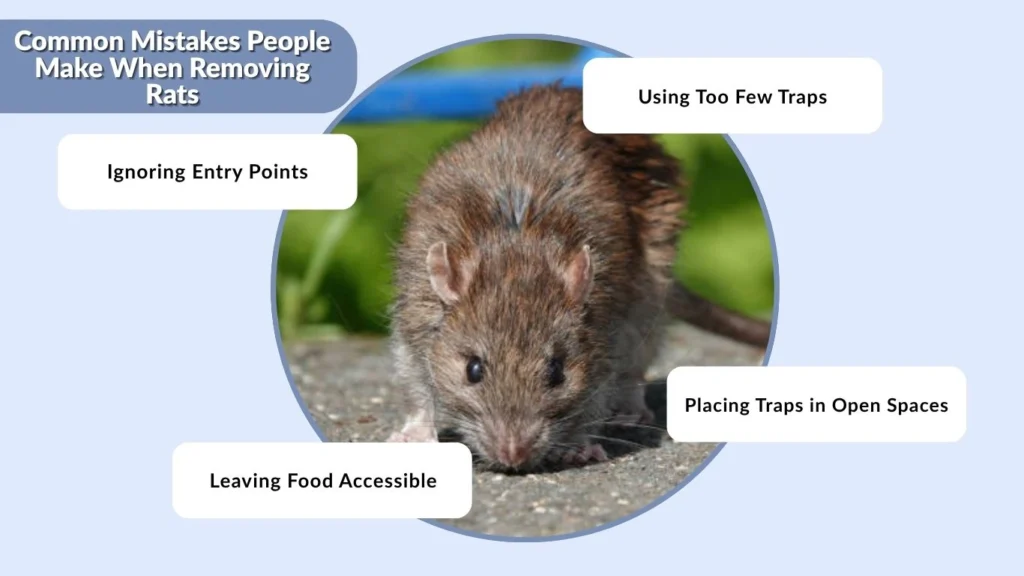
Many homeowners struggle with rat control because of simple mistakes that reduce treatment effectiveness. Avoiding these errors can save time and prevent infestations from getting worse.
Using Too Few Traps
One trap is rarely enough for an active infestation. Rats reproduce quickly, so multiple traps are usually necessary for proper control.
Placing Traps in Open Spaces
Rats avoid open areas whenever possible. Traps placed in the middle of rooms often fail because rats prefer traveling close to walls and corners.
Ignoring Entry Points
Some people focus only on catching rats without sealing access holes. Even if current rats are removed, new ones can enter through the same openings later.
Leaving Food Accessible
Rats are less likely to enter traps when food sources remain available nearby. Proper sanitation is essential for successful removal.
When to Call a Professional Exterminator
DIY methods work well for small infestations, but larger rat problems may require professional help. If rats continue returning despite repeated trapping efforts, hidden nests or structural entry points may still exist.
Professional exterminators have specialized equipment and experience locating severe infestations inside walls, ceilings, and crawl spaces. They can also provide long-term prevention plans tailored to your home.
FAQs
How do I get rid of rats in the house fast?
The fastest way to remove rats is by combining snap traps, strong bait, and proper sanitation. Place multiple traps along walls where rats travel most often. Remove food and water sources immediately to force rats toward the traps and reduce infestation growth.
What smell keeps rats away permanently?
Rats dislike strong smells like peppermint oil, ammonia, vinegar, and garlic. While these odors may help repel rats temporarily, they do not permanently solve infestations. Sealing entry points and removing food sources are necessary for long-term rat control.
Can rats leave a house on their own?
Rats rarely leave on their own if food, water, and shelter are available. They usually continue nesting and reproducing inside the home. Removing attractants and using traps are the most effective ways to force rats out permanently.
How do I know if rats are inside my walls?
Common signs include scratching noises at night, unpleasant odors, droppings near walls, and grease marks around openings. Rats inside walls may also chew wiring and insulation, causing damage that worsens over time if untreated.
Are rats dangerous to humans?
Yes, rats can spread diseases, contaminate food, and trigger allergies. They can also chew electrical wires, increasing the risk of house fires. Quick removal and proper cleaning are important to protect both your health and your property.