
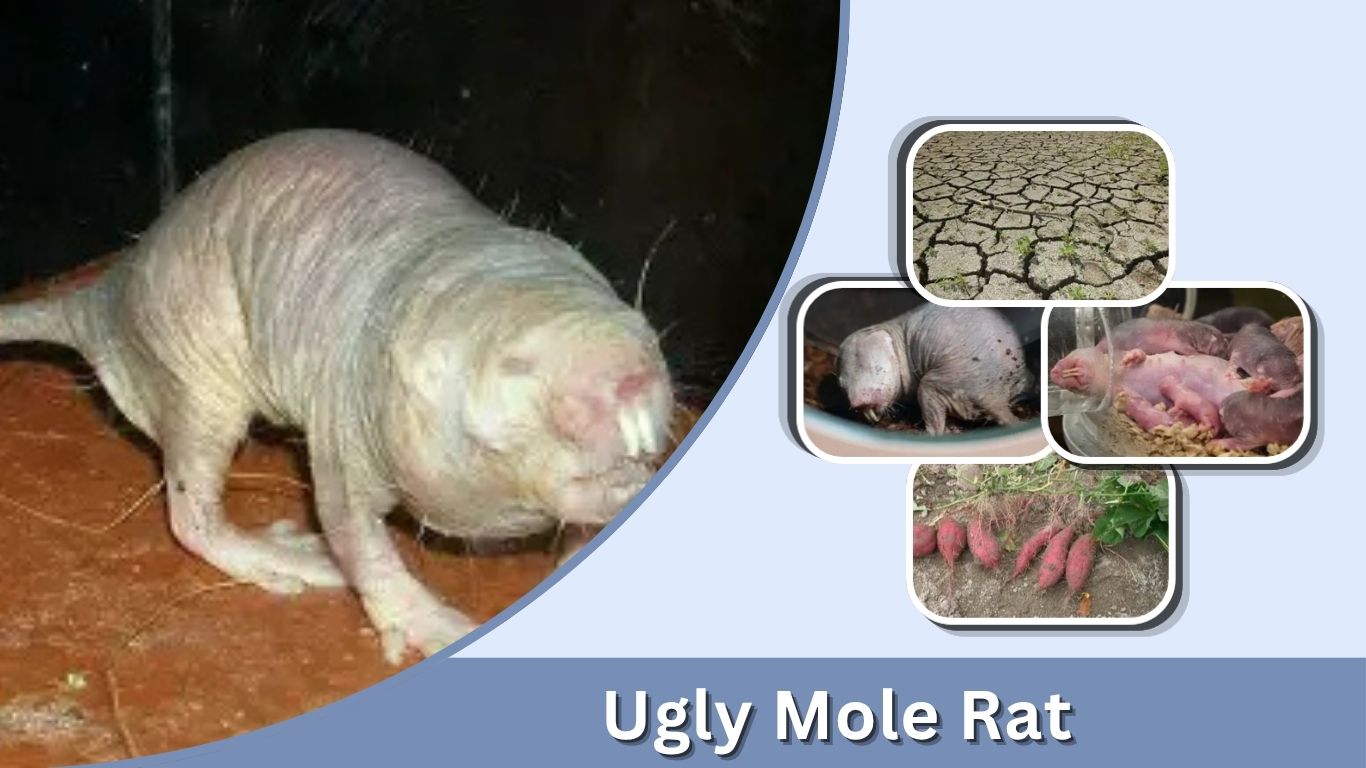
The “ugly mole rat” usually refers to the naked mole-rat, one of the strangest mammals on Earth. With wrinkled pink skin, tiny eyes, large teeth, and almost no fur, it may not look beautiful at first glance. However, this unusual rodent is famous for its underground lifestyle, strong social colonies, long lifespan, and surprising resistance to many health problems. The ugly mole rat is a perfect example of how nature values survival over appearance.
What Is an Ugly Mole Rat?
The ugly mole rat is commonly known as the naked mole-rat. Despite its name, it is not a true mole or a rat. It is a burrowing rodent that lives mostly underground in parts of East Africa. Its unusual body helps it survive in dark tunnels where food is limited, oxygen can be low, and predators are a constant danger.
Naked mole-rats are small, hairless-looking mammals with loose skin and powerful front teeth. Their appearance may seem strange to humans, but every part of their body has a purpose.
| Feature | Description |
|---|---|
| Common name | Naked mole-rat |
| Nickname | Ugly mole rat |
| Animal type | Burrowing rodent |
| Body covering | Mostly hairless, wrinkled skin |
| Habitat | Underground tunnels |
| Diet | Roots, tubers, bulbs |
| Social behavior | Lives in large colonies |
| Lifespan | Much longer than most rodents |
Ugly Mole Rat Identification
The ugly mole rat has a very unusual appearance. Its body is designed for digging, squeezing through tunnels, and living in darkness.
Key Identification Features
- Wrinkled, almost hairless skin
The skin looks pink, grayish, or pale brown. It appears loose and wrinkled, which helps the animal move easily inside tight tunnels. - Large front teeth
Its long, sharp incisors stick out in front of the mouth. These teeth are used for digging through hard soil and chewing underground plant parts. - Tiny eyes
Naked mole-rats have very small eyes because they spend most of their lives underground. Their vision is poor, but they do not depend on sight very much. - Small ears
Their ears are tiny and simple, which helps prevent dirt from entering while they dig. - Short legs and long body
Their body shape makes it easier to move forward and backward through narrow tunnels. - Sparse sensory hairs
Although they look hairless, they do have a few sensitive hairs on their body. These help them feel their way around in darkness.
Where Do Ugly Mole Rats Live?
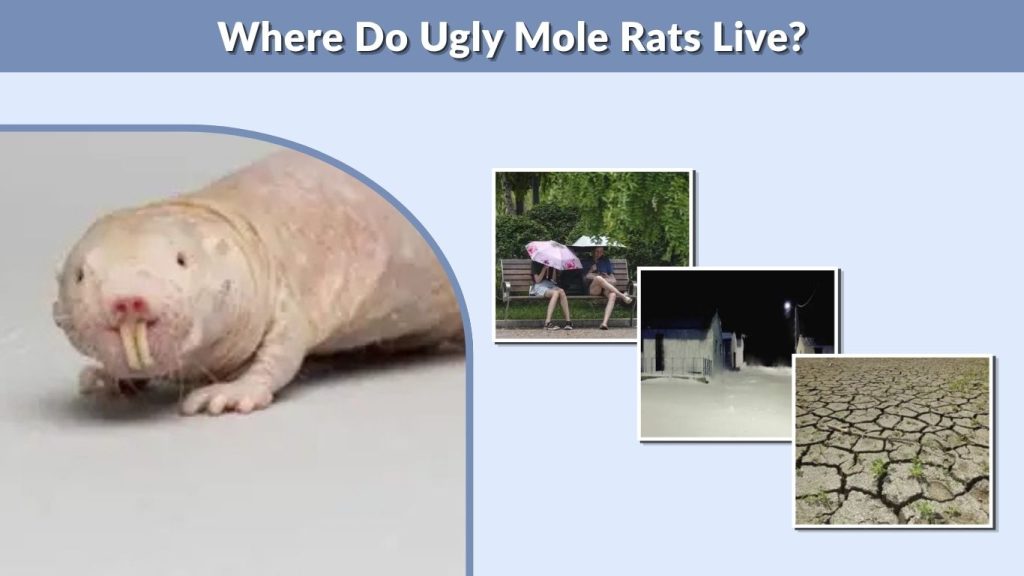
Ugly mole rats live mainly in dry regions of East Africa. They are found in countries such as Ethiopia, Kenya, Somalia, and nearby areas. These places are often hot and dry above ground, but the soil below the surface provides shelter and protection.
Their underground homes are complex tunnel systems. A single colony may create long networks of tunnels that connect nesting areas, food storage spaces, toilet chambers, and feeding zones. Because they rarely come above ground, most people never see them in the wild.
Habitat and Distribution
Naked mole-rats prefer dry grasslands, savannas, and semi-arid areas. These habitats may seem harsh, but underground plant roots and tubers give them a reliable food source.
Their tunnels help them avoid:
- Hot daytime temperatures
- Cold nights
- Birds of prey
- Snakes and other predators
- Dry surface conditions
Living underground also helps them stay close to their food. Instead of searching above ground like many animals, they dig until they find edible roots or underground storage organs of plants.
What Do Ugly Mole Rats Eat?
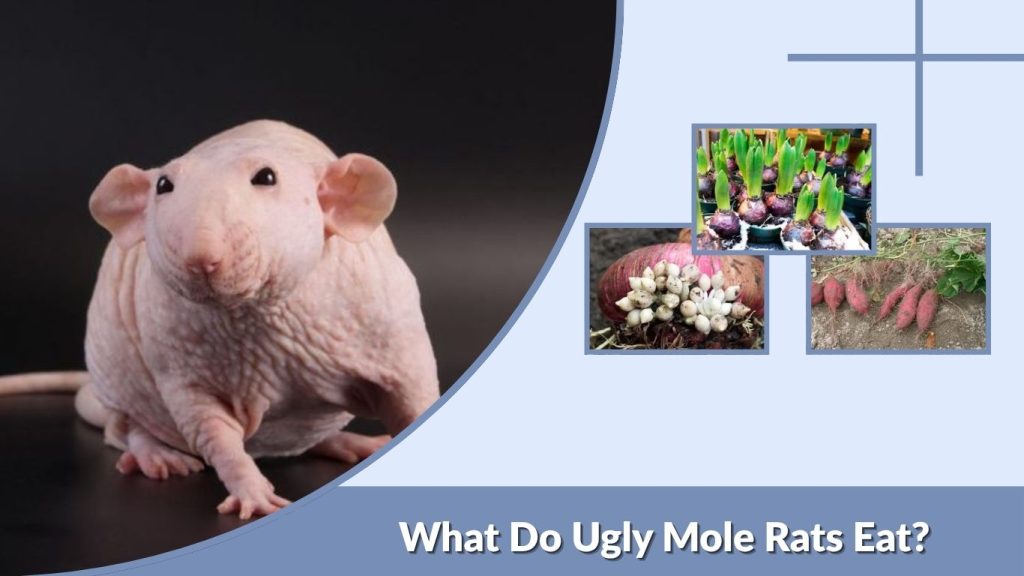
Ugly mole rats are herbivores. They feed mostly on underground plant parts such as roots, tubers, bulbs, and corms. These foods are rich in water and energy, which is important because naked mole-rats do not drink water in the usual way. They get most of their moisture from the plants they eat.
Their large front teeth are useful for biting into tough underground food. When a colony finds a large tuber, they may eat parts of it slowly without destroying the whole plant. This allows the food source to regrow and remain available later.
| Food Type | Why It Matters |
|---|---|
| Roots | Common underground food source |
| Tubers | Provide energy and moisture |
| Bulbs | Nutrient-rich plant storage organs |
| Corms | Help colonies survive dry periods |
| Underground stems | Easy to reach through tunnels |
Behavior and Social Life
One of the most amazing things about the ugly mole rat is its social system. Naked mole-rats live in colonies, and their society is more similar to ants, bees, or termites than to most mammals.
A colony may contain dozens or even hundreds of individuals. Each animal has a job. Some dig tunnels, some search for food, some defend the colony, and others care for young.
Colony Structure
The colony is ruled by a breeding female known as the queen. She is usually the only female that produces babies. A few males mate with her, while the rest of the colony members are workers or soldiers.
This type of social system is called eusociality. It is extremely rare in mammals. Naked mole-rats are one of the best-known examples of eusocial mammals.
Worker Mole Rats
Worker mole rats dig tunnels, gather food, clean chambers, and help maintain the colony. Smaller workers often handle daily tasks, while larger individuals may help defend the tunnel system.
Soldier Mole Rats
Larger colony members may act as defenders. They protect the tunnels from snakes and rival colonies. Since tunnels are narrow, defense can be intense and direct.
Why Are Ugly Mole Rats Hairless?
Ugly mole rats appear almost completely hairless because fur is not very useful in their underground environment. In hot, crowded tunnels, thick fur could trap heat and dirt. Their bare skin helps them move smoothly through tight spaces.
However, they are not truly hairless. They have fine hairs between their toes and sensory hairs on different parts of the body. These hairs help them detect tunnel walls and move in the dark.
Their skin also helps them tolerate the underground lifestyle. Loose skin makes it easier to turn, twist, and back up inside tunnels. Since they often move both forward and backward, this flexibility is useful.
Special Adaptations of Ugly Mole Rats
Ugly mole rats are famous for their unusual biological abilities. Scientists study them because they can survive in conditions that would be difficult or dangerous for many other mammals.
Low Oxygen Survival
Underground tunnels can have low oxygen and high carbon dioxide levels, especially when many animals live together. Naked mole-rats are adapted to survive in this environment. Their bodies can slow down energy use when oxygen is limited.
This ability helps them remain active in crowded tunnel systems where fresh air is not always available.
Long Lifespan
Most small rodents live only a few years, but naked mole-rats can live for decades. This makes them very unusual among rodents. Their long life has made them important in scientific research on aging.
Pain Resistance
Naked mole-rats show reduced sensitivity to certain types of pain, especially pain caused by acid or irritating substances. This may be connected to their underground environment, where carbon dioxide can build up and create acidic conditions.
Strong Teeth for Digging
Their front teeth are outside their lips. This allows them to dig with their teeth while keeping dirt out of their mouth. Their teeth grow continuously, so they can handle heavy use.
| Adaptation | Survival Benefit |
|---|---|
| Tiny eyes | Less need for vision underground |
| Large incisors | Digging and chewing roots |
| Loose skin | Easy movement in tunnels |
| Low oxygen tolerance | Survival in crowded burrows |
| Social colonies | Better defense and food finding |
| Long lifespan | Unusual survival advantage |
Reproduction and Life Cycle
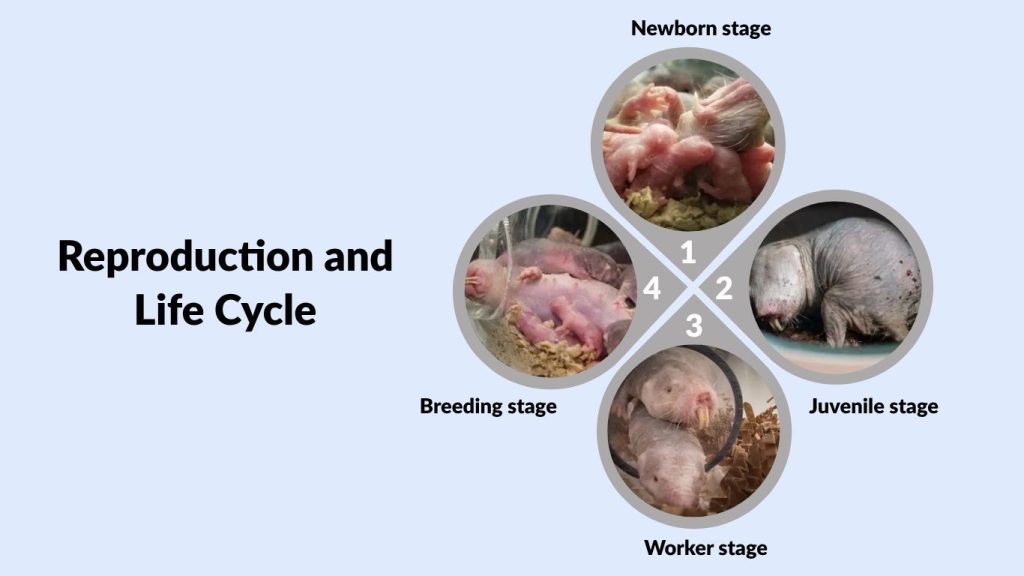
The ugly mole rat’s life cycle is closely linked to its colony system. In most colonies, only the queen gives birth. She mates with a few selected males, while the other members do not usually reproduce.
The queen can produce several litters in a year. Her babies are born small and helpless. Worker mole rats help care for them by keeping them warm, protecting them, and helping maintain the nest.
As young mole rats grow, they become part of the colony workforce. Some may dig, clean, gather food, or defend the tunnels. In rare cases, when a queen dies, females may compete to become the new queen.
Life Stages
- Newborn stage
Babies are tiny, helpless, and depend on the queen and colony care. - Juvenile stage
Young mole rats begin moving around the nest and learning colony behavior. - Worker stage
Most individuals become workers and help with digging, cleaning, and food gathering. - Breeding stage
Only the queen and a few males usually reproduce.
Are Ugly Mole Rats Blind?
Ugly mole rats are not completely blind, but their eyesight is very poor. Since they live underground, they do not need sharp vision. Their eyes can detect light and darkness, but they rely more on touch, smell, hearing, and vibrations.
In dark tunnels, strong vision would not be very useful. Instead, their sensory hairs and awareness of tunnel structure help them move around. They can travel forward and backward through tunnels with impressive speed.
Are Ugly Mole Rats Dangerous?
Ugly mole rats are not dangerous to humans. They are wild animals and should not be handled, but they are not aggressive toward people. Their large teeth can bite if they feel threatened, but they spend almost all their lives underground and rarely interact with humans.
In their natural habitat, they are more important as part of the ecosystem. Their digging can affect soil structure, and their feeding behavior influences underground plant growth.
Why Do People Call Them Ugly?
People often call naked mole-rats ugly because they look very different from furry mammals. Their wrinkled skin, exposed teeth, tiny eyes, and hairless body can seem strange. But from a survival point of view, their appearance is highly effective.
Beauty in nature is not always about color, fur, or symmetry. Sometimes, the most successful animals are the ones with the strangest features. The ugly mole rat may look odd, but it is one of the most fascinating mammals on Earth.
Ugly Mole Rat vs Regular Rat
Although the ugly mole rat is sometimes compared to a rat, it is very different from common rats. Regular rats often live above ground, have fur, strong eyesight compared to mole-rats, and a more flexible diet. Naked mole-rats are specialized underground animals with a strict colony lifestyle.
| Feature | Ugly Mole Rat | Regular Rat |
|---|---|---|
| Body covering | Mostly hairless | Fur-covered |
| Habitat | Underground tunnels | Many habitats |
| Diet | Roots and tubers | Omnivorous |
| Eyesight | Very poor | Better developed |
| Social system | Queen-led colony | Social groups, not eusocial |
| Lifespan | Very long for a rodent | Usually much shorter |
| Digging style | Uses teeth heavily | Uses claws and teeth |
Importance in Science
Scientists are very interested in ugly mole rats because they have rare traits among mammals. Their long lifespan, low oxygen tolerance, social structure, and unusual pain resistance make them valuable for research.
Researchers study naked mole-rats to better understand aging, cancer resistance, metabolism, pain, and social behavior. While they may look simple, their biology is highly complex.
Their unusual body has helped scientists ask important questions, such as why some animals age more slowly than others and how mammals survive in extreme underground environments.
FAQs
Why is the naked mole-rat called an ugly mole rat?
It is often called an ugly mole rat because of its wrinkled skin, almost hairless body, tiny eyes, and large front teeth. However, these features help it survive underground.
Is the ugly mole rat actually a rat?
No, the ugly mole rat is not a true rat. It is a burrowing rodent known as the naked mole-rat. It belongs to a different rodent group than common rats.
What does an ugly mole rat eat?
An ugly mole rat mainly eats underground plant parts, including roots, tubers, bulbs, and corms. These foods provide both energy and moisture.
Where can ugly mole rats be found?
Ugly mole rats live in parts of East Africa, especially dry grasslands and semi-arid regions. They spend most of their lives inside underground tunnel systems.
Can ugly mole rats live as pets?
Naked mole-rats are not suitable pets. They are wild, social animals that need complex colonies, special tunnel systems, controlled conditions, and expert care.