
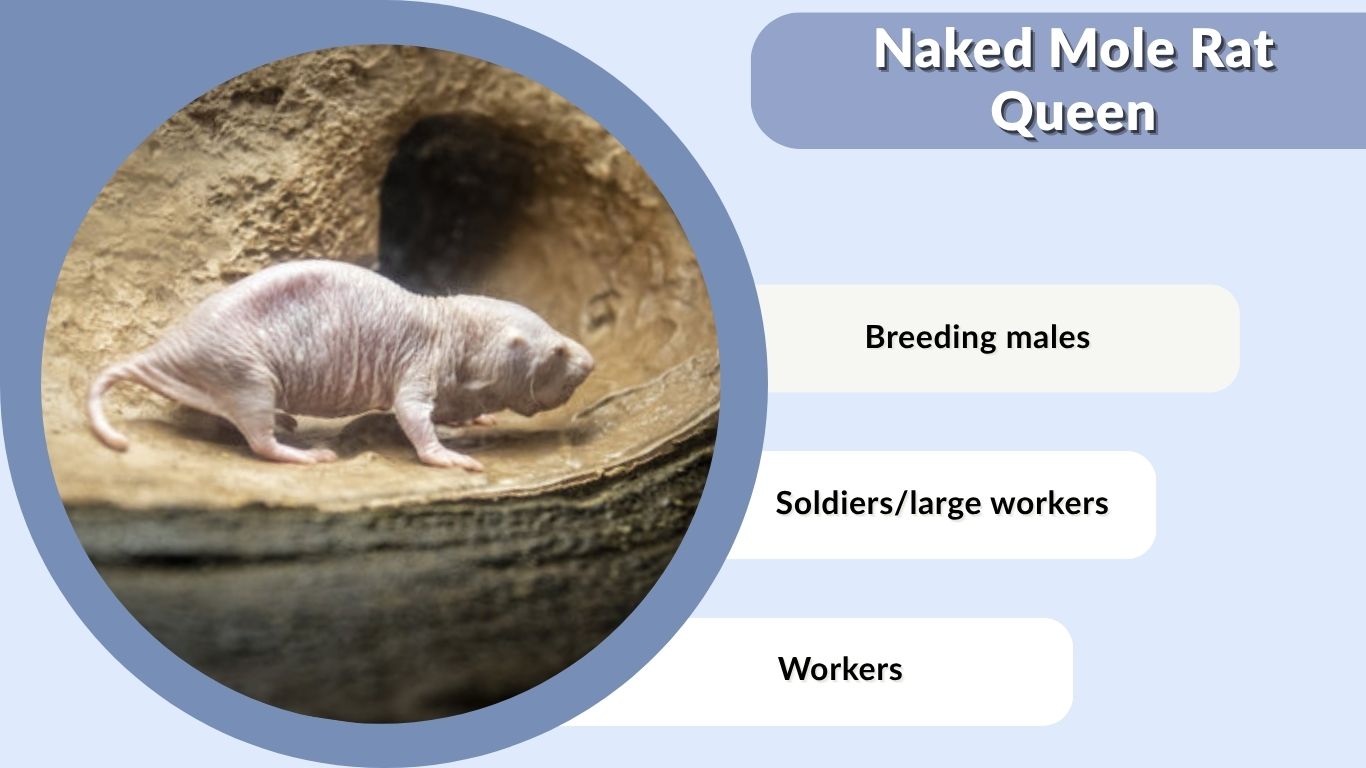
The naked mole rat queen is one of the most unusual breeding females in the animal kingdom. Unlike most mammals, naked mole-rats live in colonies with a social system similar to ants, bees, and termites. In each colony, one dominant female becomes the queen and produces nearly all the babies. Her role shapes the colony’s behavior, reproduction, hierarchy, and survival underground.
What Is a Naked Mole Rat Queen?
A naked mole rat queen is the main breeding female in a naked mole-rat colony. She is not a “queen” in the human royal sense, but she controls reproduction and holds the highest position in the colony’s social structure.
Naked mole-rats are eusocial mammals, meaning their colonies have a division between breeders and nonbreeding workers. The Smithsonian’s National Zoo explains that worker naked mole-rats are physically capable of reproduction, but they usually do not reproduce while they remain in the colony.
In most colonies, the queen mates with a small number of breeding males. The rest of the colony members work, dig tunnels, find food, defend the burrow, and help care for the young.
| Colony Role | Main Function |
|---|---|
| Queen | Main breeding female |
| Breeding males | Mate with the queen |
| Workers | Dig tunnels, gather food, clean, care for young |
| Soldiers/large workers | Defend the colony |
| Pups | Young naked mole-rats raised inside the colony |
Do Naked Mole Rats Have a Queen?
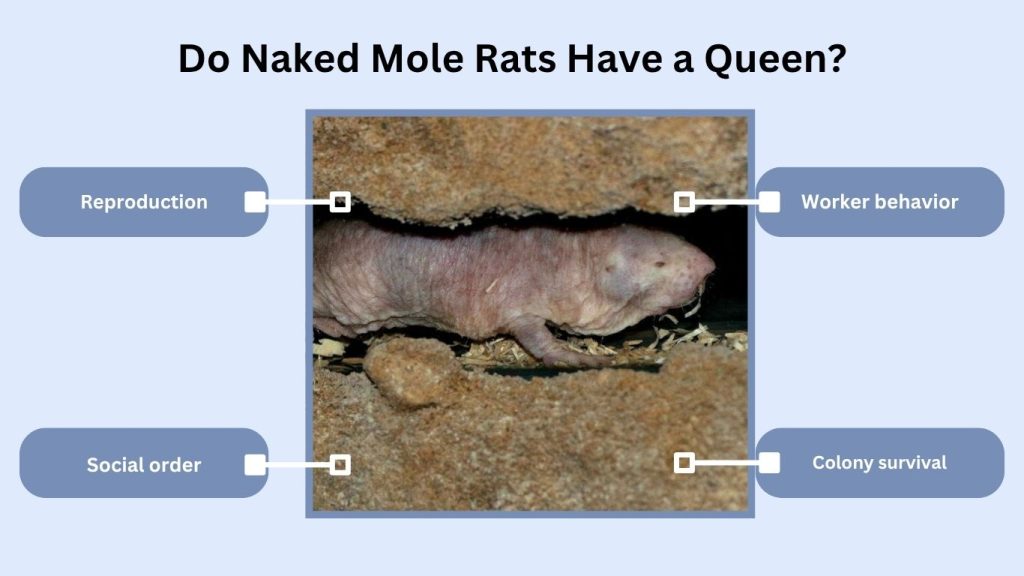
Yes, naked mole-rats do have a queen. This is one of the main reasons they are so famous among scientists. Most mammals live in pairs, family groups, herds, or loose social groups. Naked mole-rats are different because they live in large underground colonies where reproduction is controlled by one dominant female.
This system is rare in mammals. It is more commonly seen in social insects such as bees and termites. In naked mole-rats, the queen is the only female that usually gives birth. Her presence helps organize the colony and suppresses reproduction in most other females.
Why the Queen Matters
The queen is important because she keeps the colony’s reproductive system stable. Without a queen, several females may compete for dominance. This can create fighting, stress, and instability in the colony.
The queen’s role affects:
- Reproduction
She produces most or all of the colony’s pups. - Social order
Her dominance helps organize colony hierarchy. - Worker behavior
Nonbreeding colony members help raise pups and maintain tunnels. - Colony survival
A strong queen helps the colony continue across generations.
Naked Mole Rat Queen Behavior
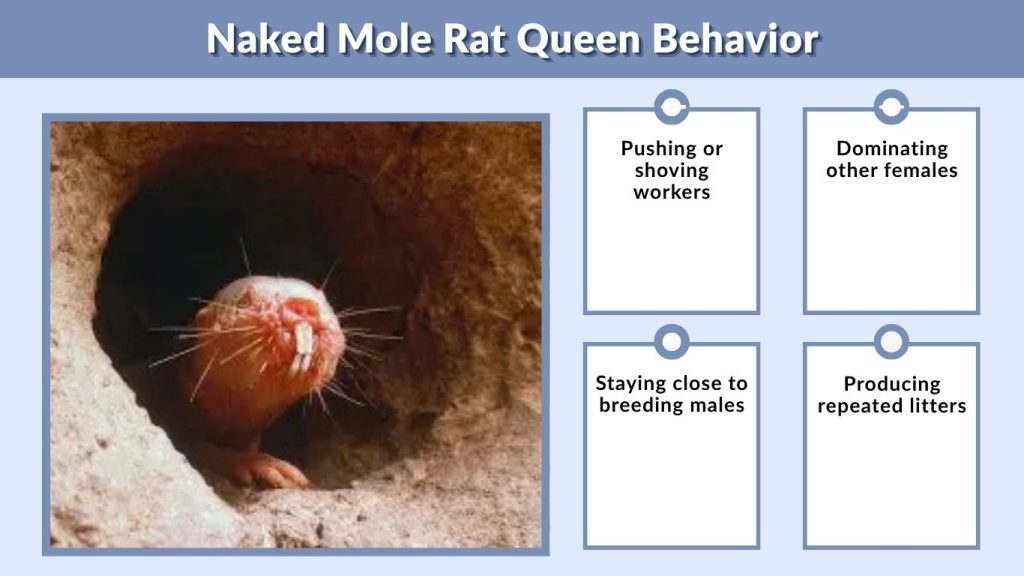
The queen naked mole rat is dominant, active, and often aggressive toward other females. Her behavior helps her keep control of the colony. She may shove, push, or challenge colony members, especially females that could become reproductive rivals.
This dominance is not just about strength. It is also connected to the reproductive system of the entire colony. Research on naked and Damaraland mole-rats shows that the presence of the queen is linked to reproductive suppression in nonbreeding females. When the queen is removed, those effects can reverse, and other females may become reproductively active.
Common Behaviors of the Queen
The queen may show several behaviors that separate her from other colony members:
- Pushing or shoving workers
- Dominating other females
- Staying close to breeding males
- Producing repeated litters
- Defending her reproductive position
- Influencing the colony’s social structure
These behaviors help explain why searches such as “behaviors of the naked mole rat queen” and “queen naked mole rat suppresses reproduction in other females” are important informational keywords.
How Does a Naked Mole Rat Become Queen?
A naked mole rat does not become queen by birth alone. Usually, a female becomes queen after the previous queen dies, weakens, or loses reproductive control. In many cases, females compete for the position.
This competition can be intense. Several females may fight to become the next queen. The winner becomes dominant, begins breeding, and may go through physical changes that help her carry more pups.
However, not every queen transition is violent. A recent report described an unusual peaceful queen transition observed in a naked mole-rat colony, suggesting that their social systems may be more flexible than scientists once believed.
New Queen Selection
When a new queen is selected, the process may include:
- Loss of the old queen
The previous queen dies, stops reproducing, or loses dominance. - Female competition
Other females may fight or challenge each other. - Dominance established
One female becomes the main breeding female. - Body changes begin
The new queen may develop physical changes linked to reproduction. - Colony adjusts
Workers and breeding males respond to the new hierarchy.
Naked Mole Rat Queen Body Size and Shape
The naked mole rat queen often becomes longer than nonbreeding females. This is not simply because she is older or heavier. Her body can physically change after she becomes reproductive.
One of the most fascinating changes happens in the spine. Studies show that breeding queens experience vertebral growth, especially in the lower back. This helps increase body length and may help the queen carry larger litters.
Another study found a direct link between pregnancy and vertebral lengthening in new queens. During pregnancy, the queen’s lumbar vertebrae grew faster, then slowed between pregnancies.
| Feature | Queen Naked Mole Rat | Worker Naked Mole Rat |
|---|---|---|
| Reproductive role | Main breeding female | Usually nonbreeding |
| Body length | Often longer | Usually shorter |
| Spine | Can lengthen after breeding begins | Does not show same queen-level change |
| Social rank | Highest female | Lower colony rank |
| Behavior | Dominant and reproductive | Worker or defensive role |
How Many Babies Does a Naked Mole Rat Queen Have?
A naked mole rat queen can produce many babies during her life. Litter size can vary, but naked mole-rat queens are known for producing repeated litters. In captivity, naked mole-rats may breed throughout the year under suitable conditions.
The queen is the mother of most colony members. After pups are born, workers help care for them. This cooperative care allows the queen to focus on reproduction while the colony helps raise the young.
Pregnancy and Pup Care
Naked mole-rat pregnancy lasts roughly around 70 days, although exact timing can vary. After birth, pups are small and helpless. The queen nurses them first, and workers later help care for them as they grow.
Pup care may include:
- Keeping young warm
- Cleaning nest areas
- Protecting pups from danger
- Helping young transition to solid food
- Maintaining tunnels around the nest chamber
This cooperative care system is one reason the queen can be so reproductively successful.
How Does the Queen Suppress Other Females?
The queen suppresses reproduction in other females through a mix of social pressure, dominance, and physiological effects. Nonbreeding females are not permanently sterile. Instead, their reproductive systems are usually inactive while the queen remains dominant.
Research shows that nonbreeding females can have low luteinizing hormone levels and reduced pituitary response. When the queen is removed, these reproductive conditions can change, allowing other females to become active.
This means the queen’s control is not only behavioral. Her dominance appears to affect the colony’s biology.
Reproductive Suppression Explained
Reproductive suppression may involve:
- Physical dominance
The queen may push or harass other females. - Social stress
Lower-ranking females remain reproductively inactive. - Hormonal changes
Nonbreeding females may have reduced reproductive hormone activity. - Colony structure
Workers focus on helping instead of breeding.
This system allows the colony to function as a cooperative unit, even though most individuals do not reproduce.
Naked Mole Rat Queen Lifespan
Naked mole-rats are famous for their long lives compared with many other rodents. Their unusual longevity has made them important animals in aging research. Studies describe naked mole-rats as having exceptionally long lifespans for small mammals, far beyond what is typical for mice-sized rodents.
The queen may remain in power for many years if she stays healthy and dominant. During that time, she can produce many litters and shape the future of the colony.
Unlike many animals where reproduction can come with a heavy aging cost, naked mole-rats are especially interesting because breeding queens can remain highly reproductive for a long time. Scientists continue to study how their bodies manage aging, fertility, and social dominance.
Naked Mole Rat Queen vs Damaraland Mole-Rat Queen
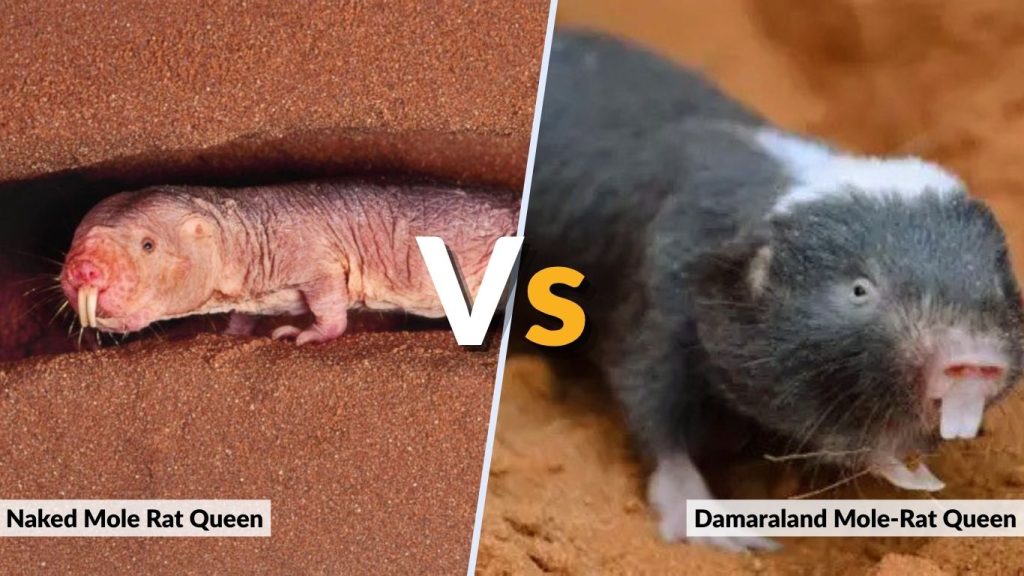
The Damaraland mole-rat is another social mole-rat species with a queen-like breeding female. Both naked mole-rats and Damaraland mole-rats show reproductive division between breeders and nonbreeders.
However, the details of reproductive suppression can differ between species. Research comparing naked and Damaraland mole-rats shows that queen removal can change reproductive hormone conditions in nonbreeding females, but male reproductive suppression may differ between the two species.
| Feature | Naked Mole-Rat Queen | Damaraland Mole-Rat Queen |
|---|---|---|
| Social system | Eusocial | Eusocial/social |
| Main breeder | One dominant female | One dominant female |
| Worker reproduction | Usually suppressed | Usually suppressed |
| Habitat style | Underground colonies | Underground colonies |
| Scientific interest | Aging, pain resistance, eusociality | Social behavior and reproduction |
Naked Mole Rat Queen in Captivity
Many people search for “mole rat queen National Zoo” or “Smithsonian mole rat queen” because naked mole-rats are often displayed in zoos and research centers. Captive colonies help scientists and visitors observe behaviors that are almost impossible to see underground in the wild.
In captivity, researchers can study queen behavior, pup care, colony roles, body changes, hormone patterns, and social hierarchy. The Smithsonian National Zoo notes that naked mole-rats live in colonies where only a few individuals reproduce and the rest perform colony jobs.
Captive colonies also show how sensitive the colony can be to changes in leadership. If a queen dies or stops breeding, the entire social balance may shift.
Why Scientists Study the Naked Mole Rat Queen
Scientists study the naked mole rat queen because she helps explain one of the strangest social systems in mammals. Her role connects behavior, hormones, reproduction, aging, and body structure.
The queen is especially important for research on:
- Eusocial mammals
- Reproductive suppression
- Hormonal control
- Lifelong fertility
- Spine and body changes
- Colony cooperation
- Aging and longevity
The naked mole-rat queen shows that mammal societies can be far more complex than simple family groups. Her colony works almost like a single living system, with the queen as the main reproductive center.
FAQs
What is a naked mole rat queen?
A naked mole rat queen is the dominant breeding female in a naked mole-rat colony. She produces most or all of the babies while other colony members work, dig, defend, and help care for young.
Do naked mole rats really have a queen?
Yes, naked mole-rats really have a queen. Their colonies usually have one main breeding female, a few breeding males, and many nonbreeding workers.
How does a naked mole rat queen control the colony?
She controls the colony through dominance behavior, reproductive status, and social pressure. Her presence helps suppress reproduction in most other females.
Why is the naked mole rat queen longer than workers?
The queen can become longer because her spine changes after she becomes reproductive. Research shows that queen naked mole-rats can experience vertebral growth linked to pregnancy and reproduction.
What happens when a naked mole rat queen dies?
When a queen dies, other females may compete to become the new queen. This can involve fighting, although some observations suggest peaceful transitions may also happen in rare cases.